If you’d like a shorter/summarized version of our posts, read only the “Highlights” section below and stop before “The Captain’s Log“, which is much more detailed, more like a logbook / diary and contains information for our reference as well.
We write the text for our website in English. The multiple language selection feature is an auto-translation by Google. This translation is not perfect; it sometimes uses peculiar words and even expresses things in a very different way than what we actually meant. So, if you’re reading in a language other than English, and you read something strange, switch back to the English version to read what we actually meant to write!
Highlights – the overview
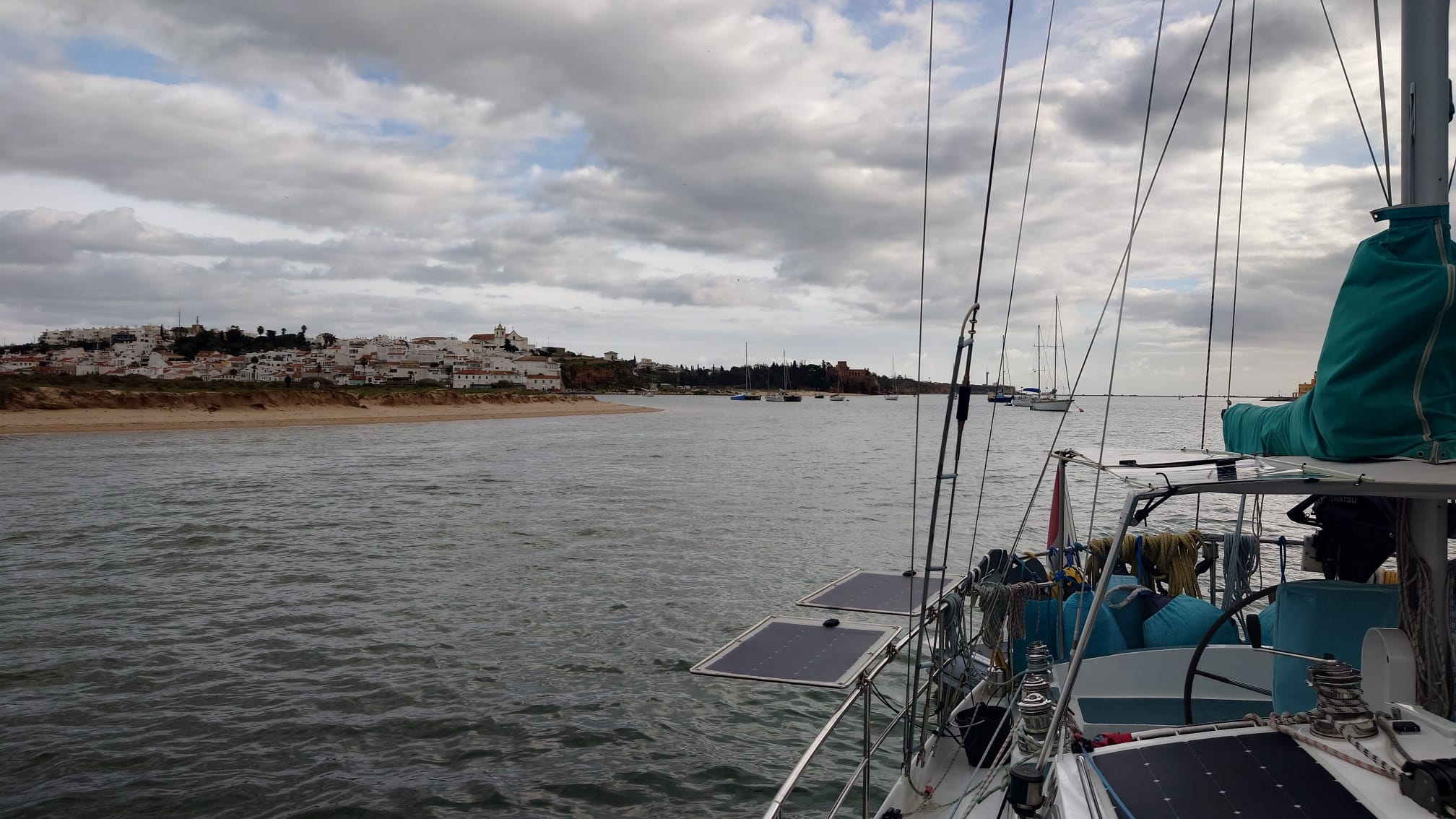
We leave Alvor and head back to Portimao. Here, about 2 miles up river, we will be well protected from the swell. There are about 10 boats anchored here and we drop our anchor at a good distance away from everybody. Holding is good.
In the morning, the wind shifts and there are strong gusts (25-30 knots) and rain showers. Although yesterday we anchored at a good distance from the other boats, now, after the wind shifted 90º, a French boat comes pretty close (about 15m away from us). Hm. He must have a huge length of anchor chain out. Perhaps we should re-anchor… But the weather is awful: heavy rain and 30 knots of wind. While we are discussing whether ,to postpone our maneuver until is clears up a bit a German catamaran on the other side loses its hold and comes towards us! Okay, NOW it’s time to get out of here, we say! We start the engine, put on our foul weather gear and while Sher is at the wheel Wim hoists the anchor. The Germans come really close and almost hit us. A guy in his underwear (😂) shouts: please wait! We have our engines running. Let us go first! Okay, we wait. They do all kinds of crazy maneuvers and almost hit our bowsprit while they are dragging backwards in the strong wind. Wim gives a loud whistle: “Look behind you! Throttle up!” Luckily they move to the middle of the river and try to anchor there. That gives us space to move. We drop our anchor at a free space but while we are turning behind the anchor we hit the chain of another boat. A Dutch guy on deck shouts and points out: my anchor is there! Okay, we hoist our chain again and re-anchor. This time, no problem. The Dutch guy shouts: thank you! We go inside, light our Dickinson heater and dry our clothes while the wind slowly eases down in the afternoon.
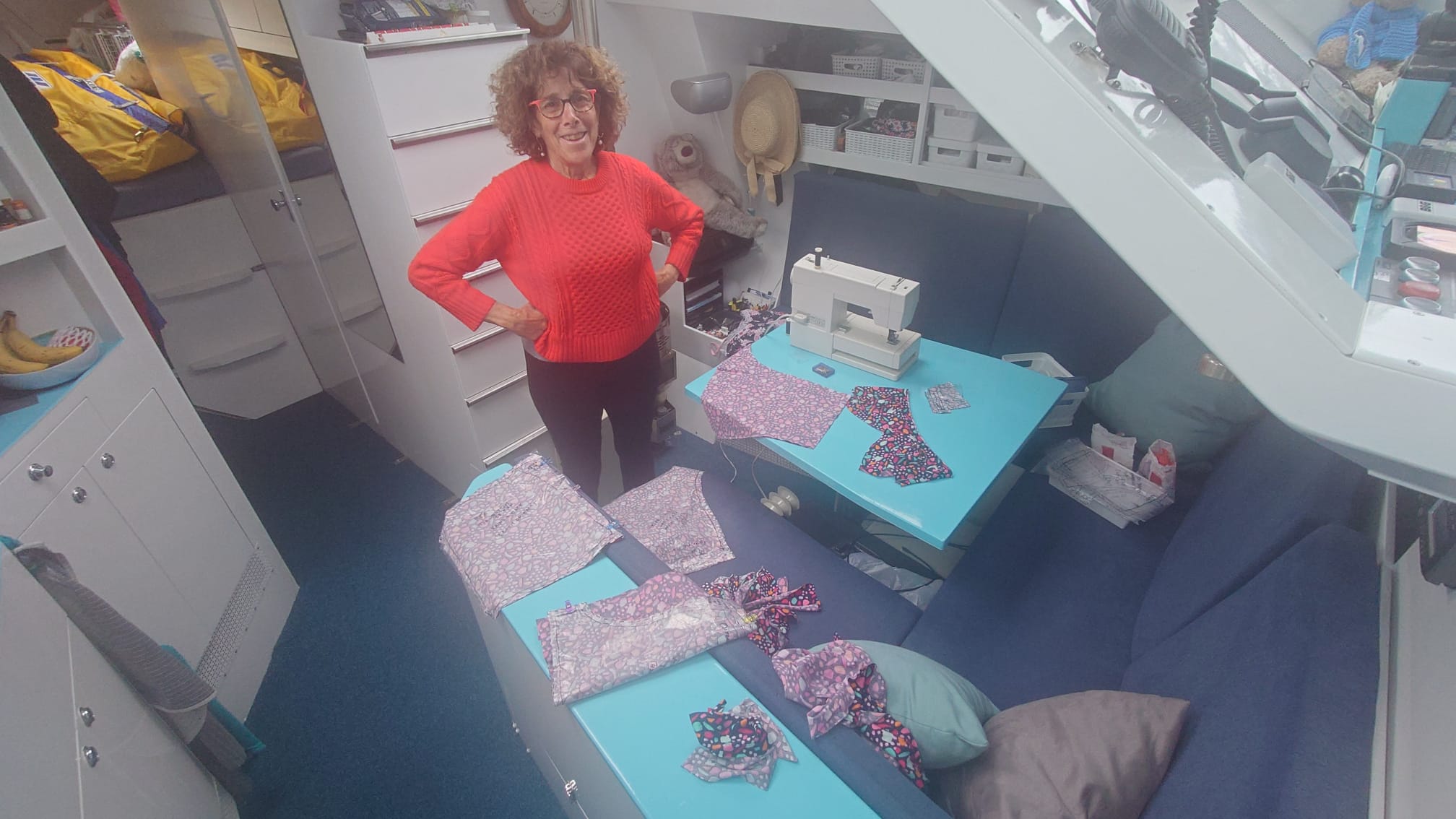
While our great new Vulcan anchor holds us firmly in position, Sher continues her sewing. 🙂
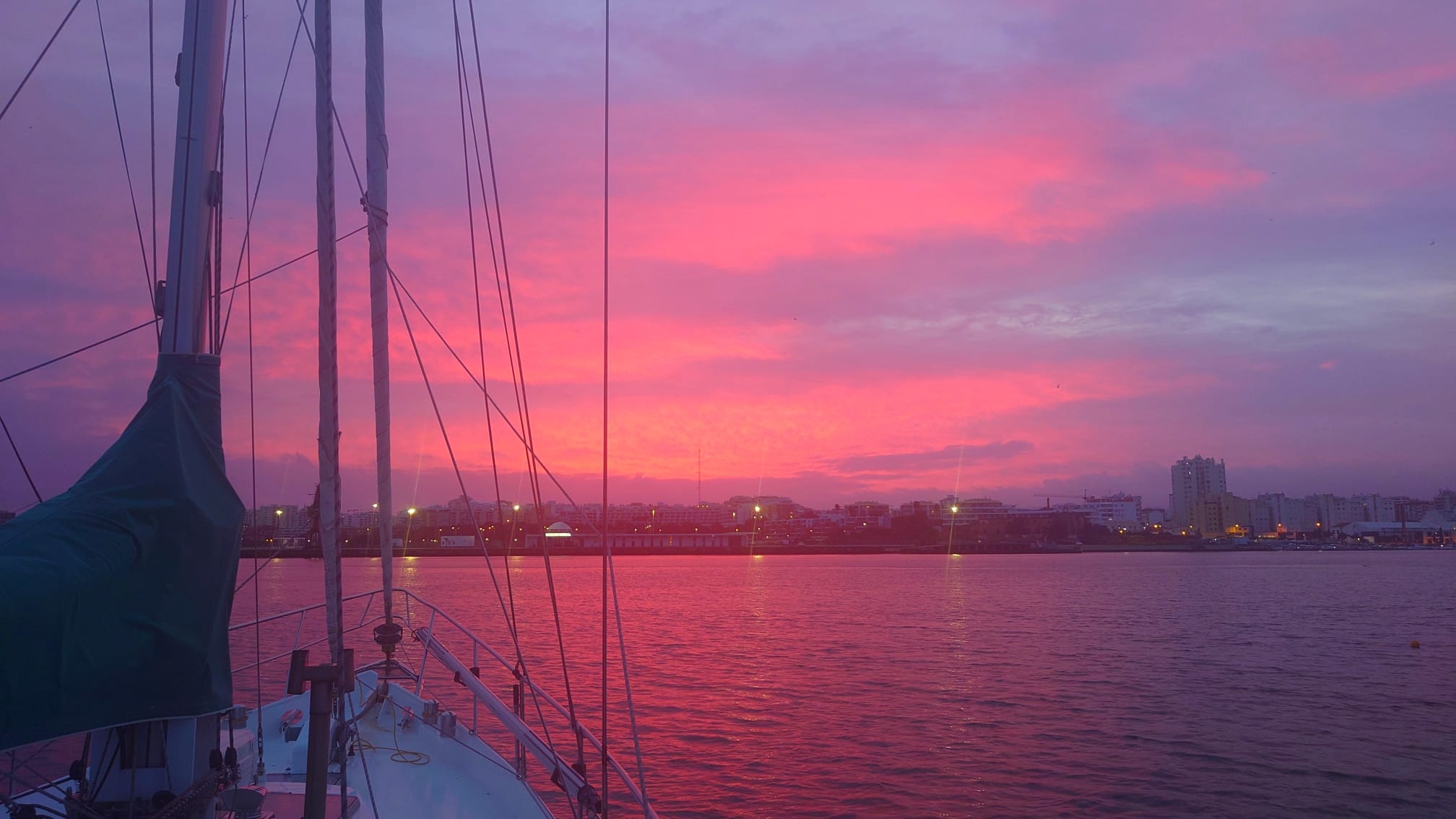
At sunset, the wind has eased down completely and the sky rewards us with a beautiful color.
Our new anchor spot is much closer to the beach. We have around 2m of depth at low tide, so no problem.
The advantage of this is that we can see the birds at the beach. Even storks! Sher gets very excited, of course! 😃
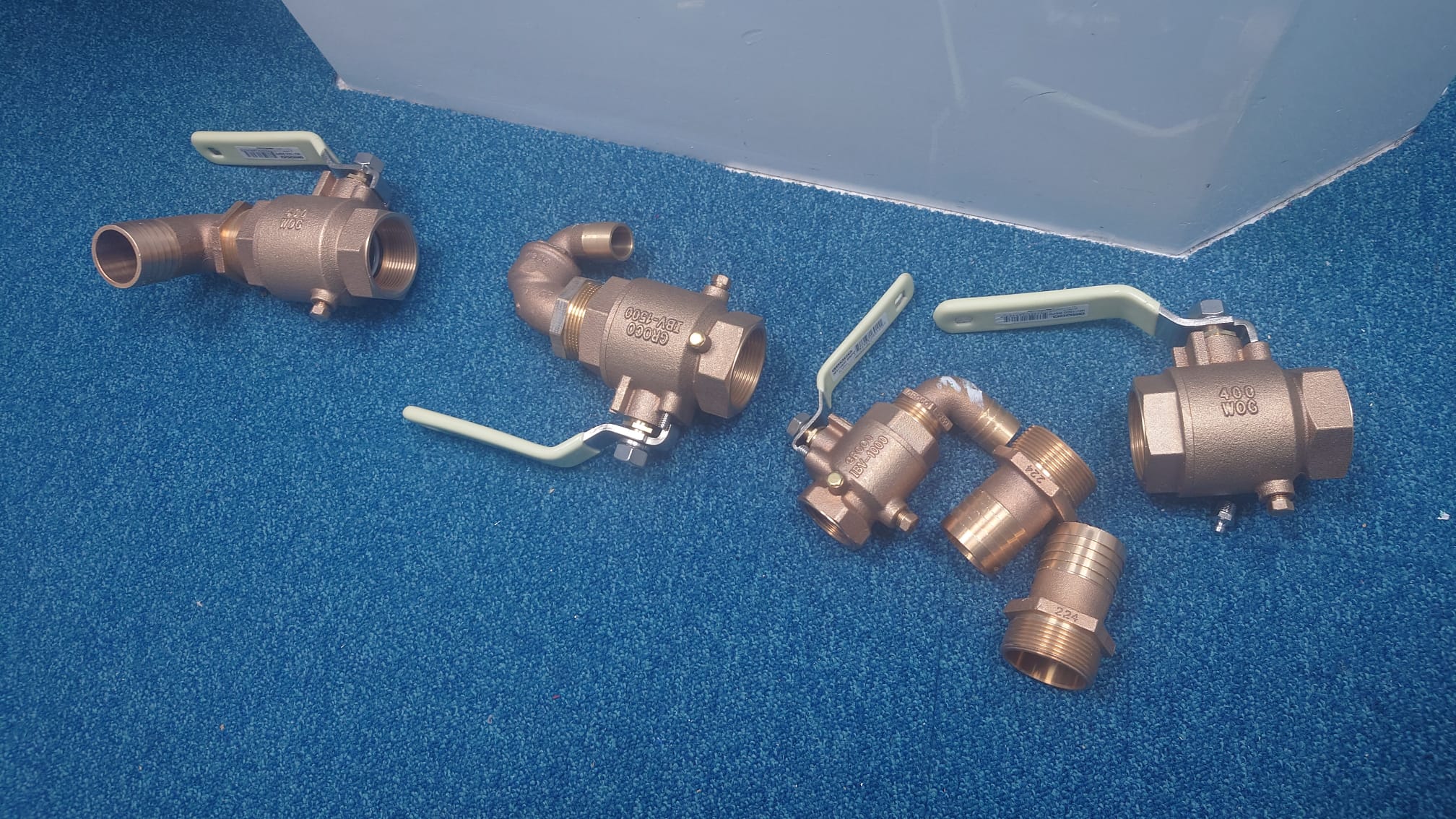
Today at 1400h our lift into the boatyard is planned. One of the things we are going to do is replace all our through-hull valves. We have ordered these Groco valves in the UK last summer… the best quality pure bronze valves. But the threads on one is damaged.
An old trick is to sand the pieces together. We have sanding paste that we got from Ingo (boat “Antares”) last summer. Let’s try! After moving both parts a thousands times they fit smoothly!
We move to the designated travel lift area, but no travel lift there, and no boatyard people. We call the office again. “Wait until you see the travel lift and our people”. Hm. We wait 45 minutes…hovering in the wind, in front of the entrance… and then the travel lift appears and the men wave us over. We have to go in, in reverse. The slot where the travel lift picks us up is all concrete, which is way too high for our boat fenders at half tide. We have two dinghies which offered to assist if we need help maneuvering. Well, with help of the bow thruster Wim manages to move Dione IV in without touching the concrete 🫡. Once we’re over the slings they quickly hoist a bit and we stay free of the concrete. It takes some adjustment to get the weight balanced and straps in place, but finally… up, up, up we go!
Finally they got the right positions and up she goes!
We almost forgot Sher! 😅
First they carry Dione IV to the area for high-pressure cleaning. We have only a very light layer of algae so this is an easy job.
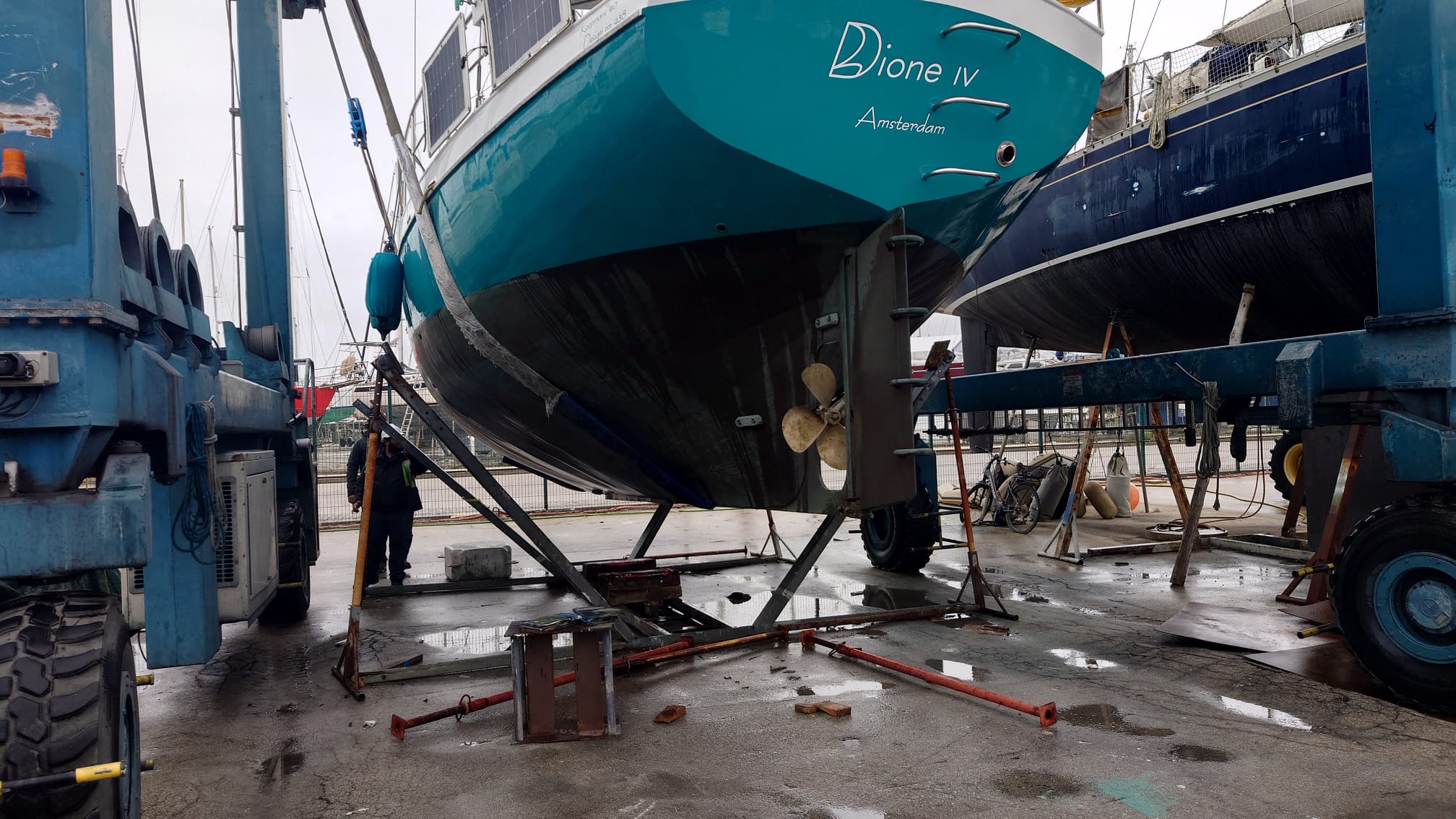
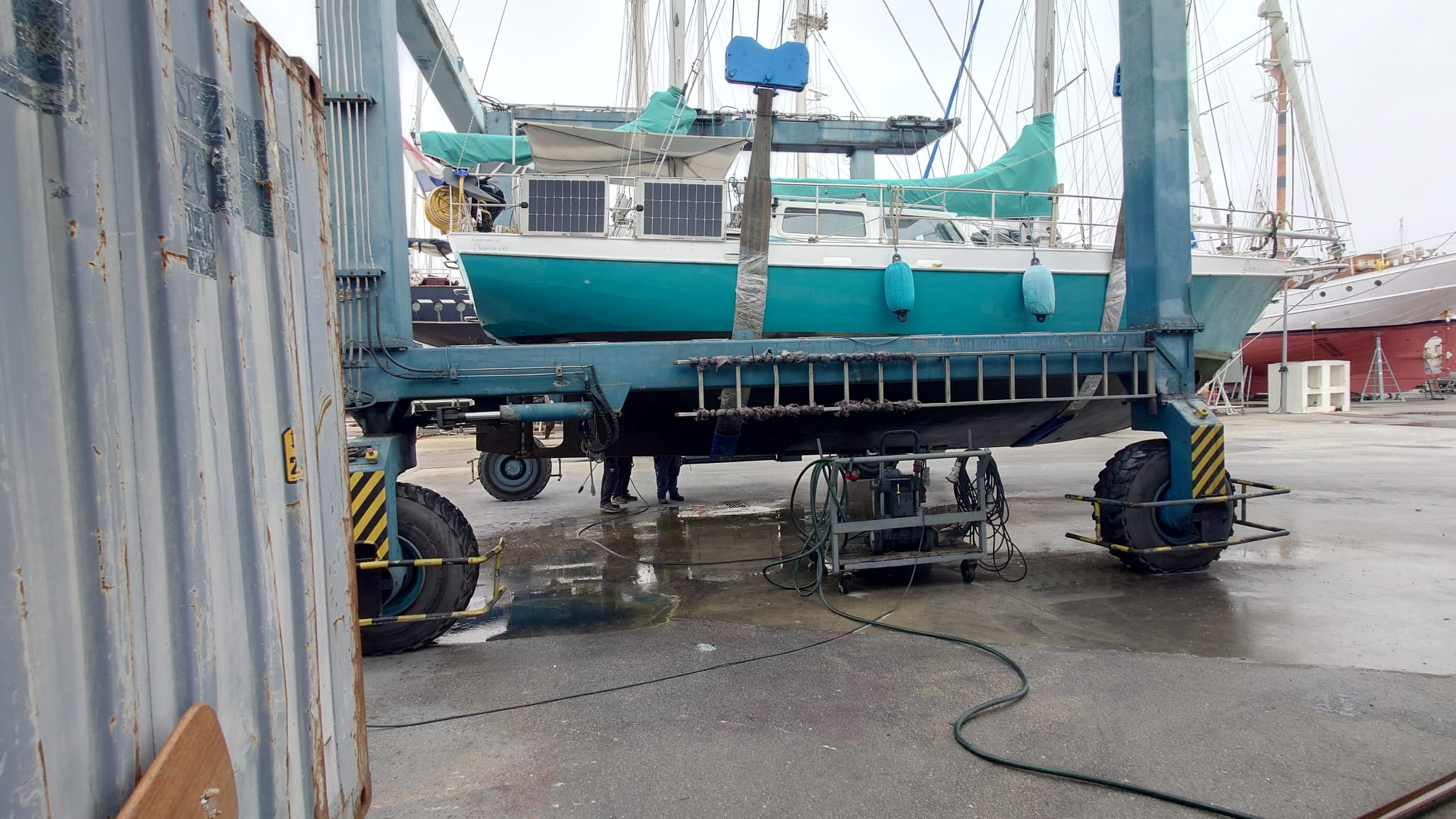
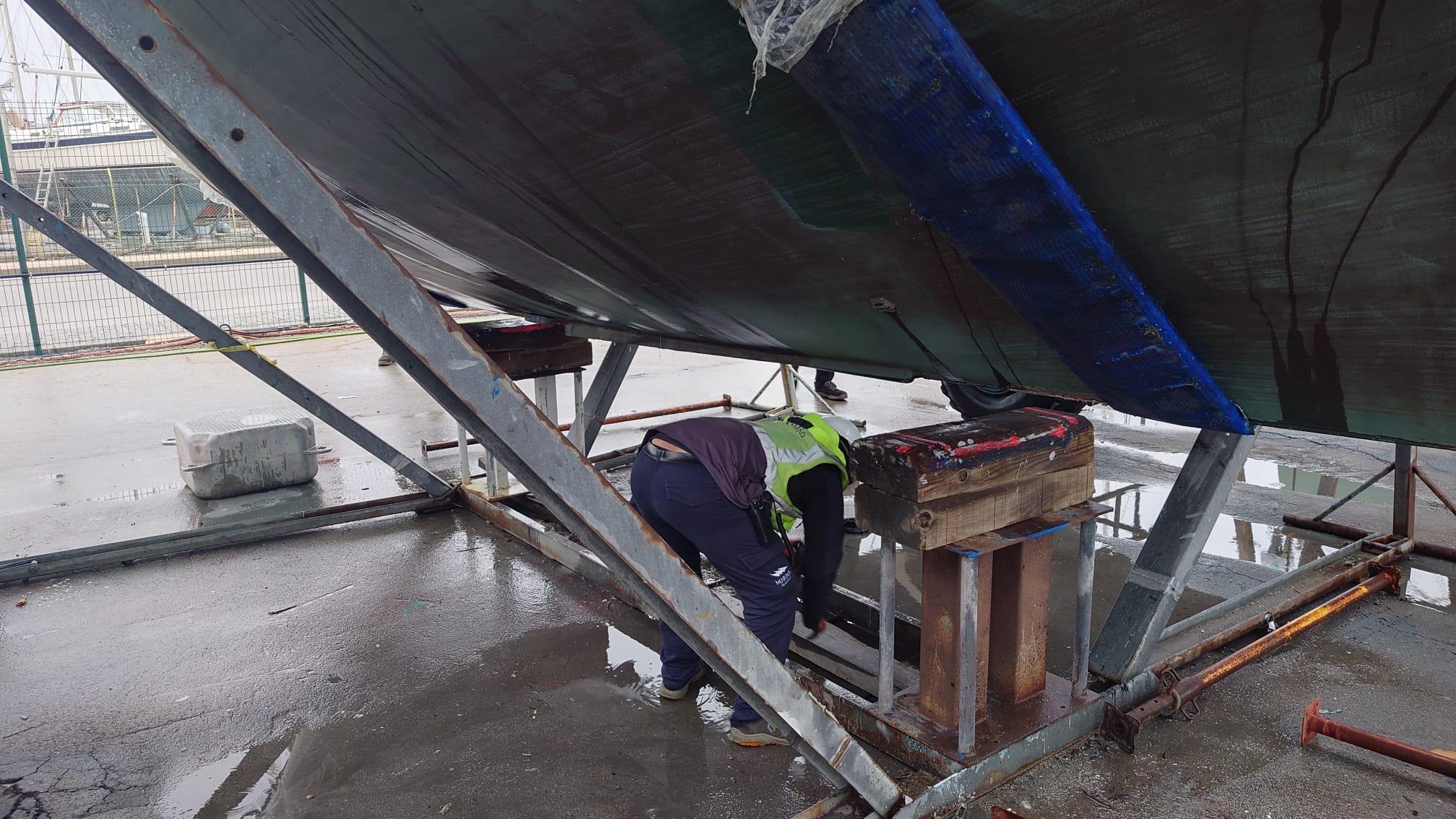
Then they move our girl over to where we’ll be put up on blocks and stay for the time we are in the boatyard and doing our work. Make sure she’s secure, guys!
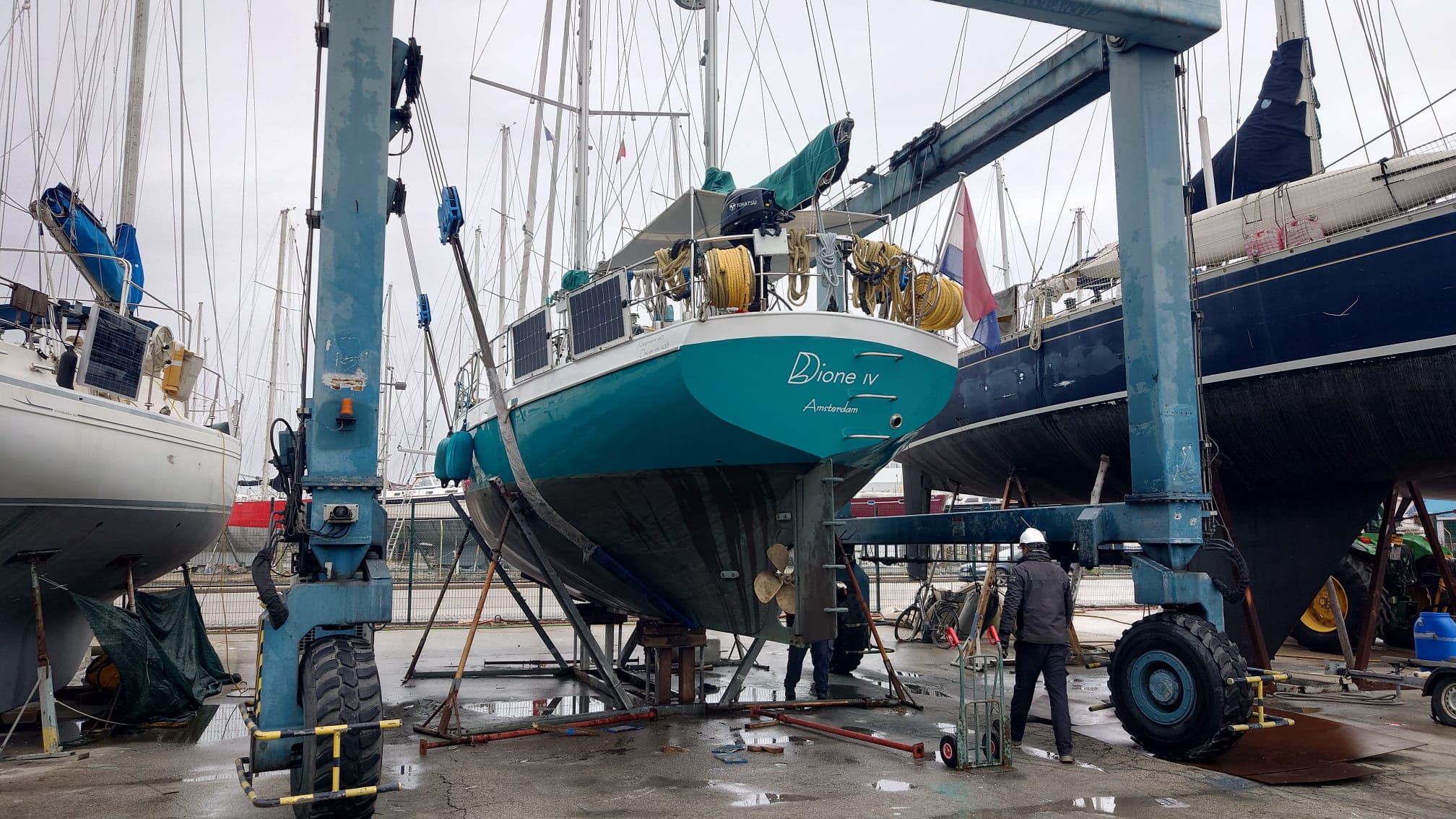
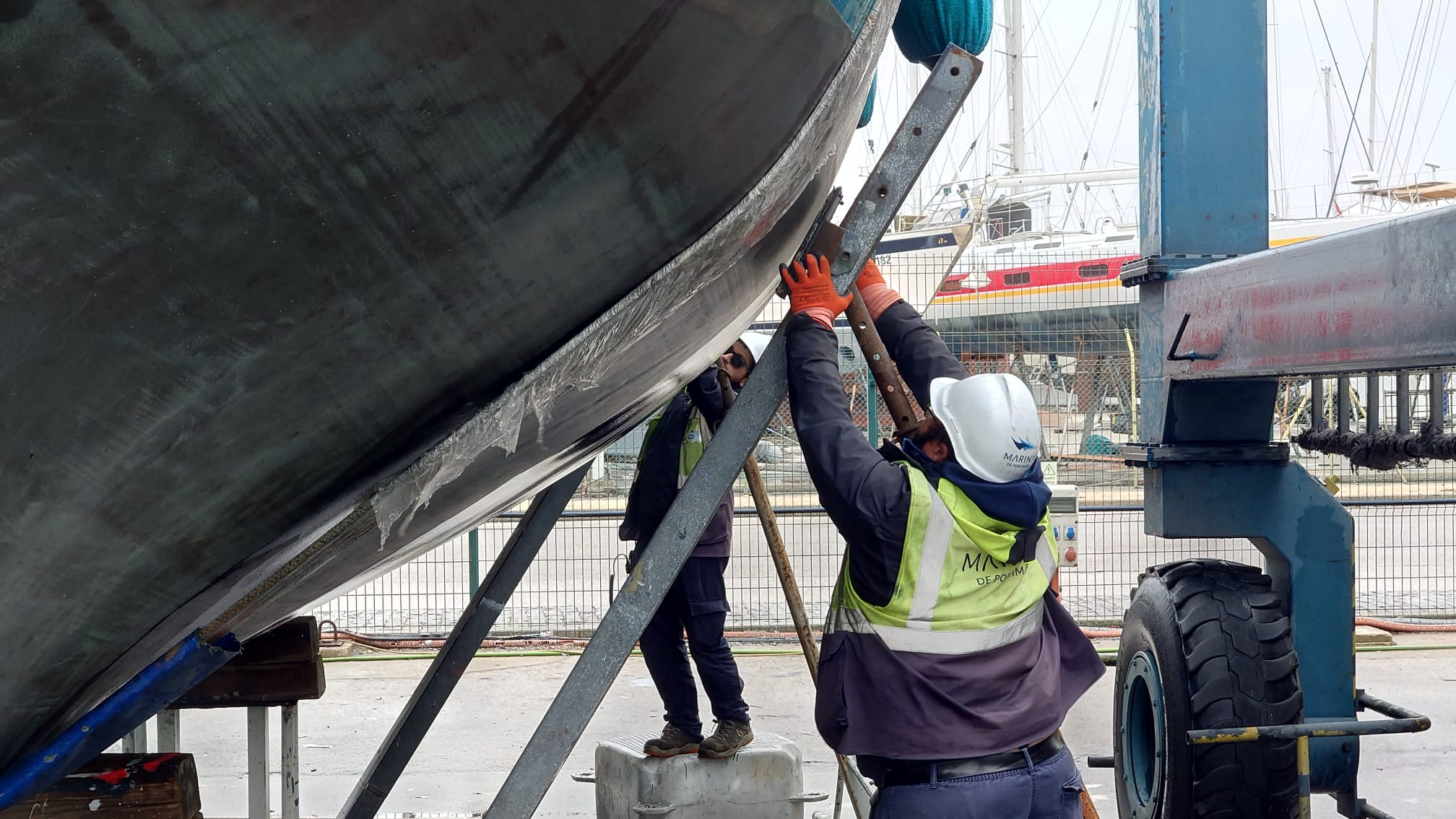
Storky Sher 😂
She walks to the supermarket and passes by several stork nests. Storks of the day, yay!!!
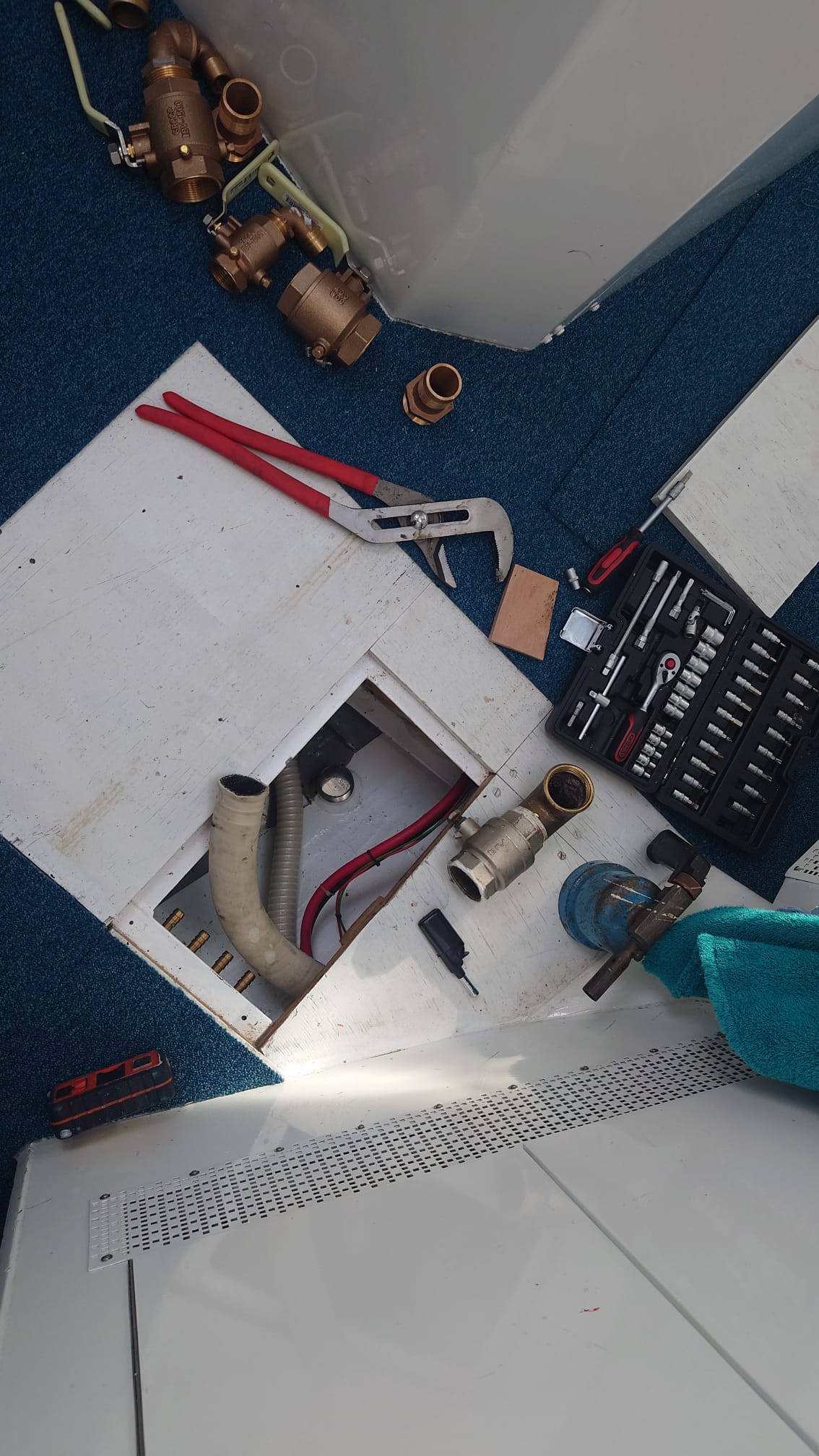
Okay,let’s get to work!
We’re going to replace all 4 of our through-hull valves. They are 20 years old and although they still look pretty fine, 20 years is considered end of lifetime for professional quality valves.
We thought this valve was malfunctioning. The reason we started thinking about replacing these valves in the first place.
But it’s not! It works just fine! It’s very dirty with a thick layer of limescale and it moves very hard but it opens and closes!
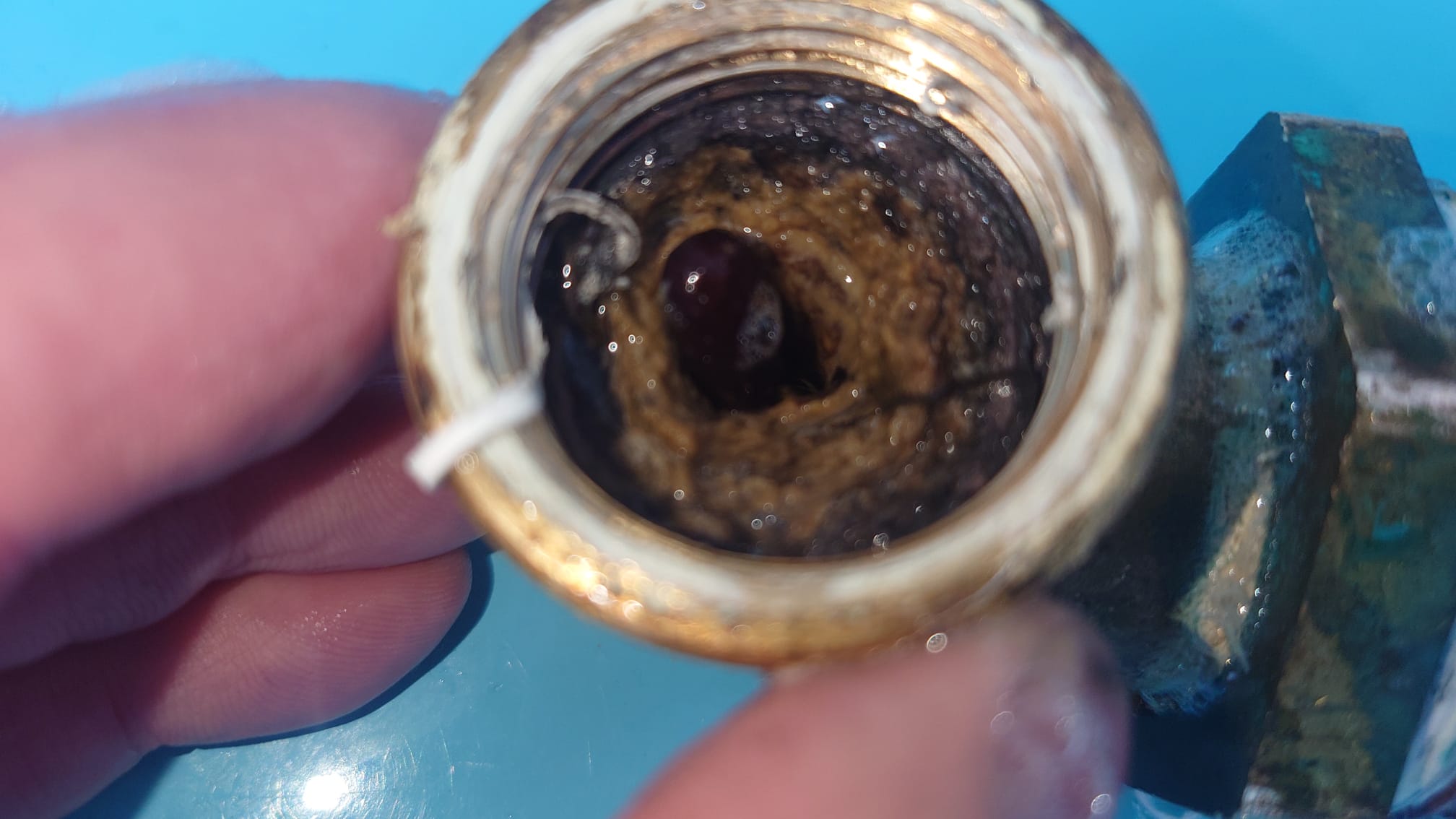
We thought it didn’t open any more… Now, then what caused the clogging?
This!
The big 1-1/4″ T-piece is full of limescale with only a 10mm hole left. In that hole sits an anona pit!
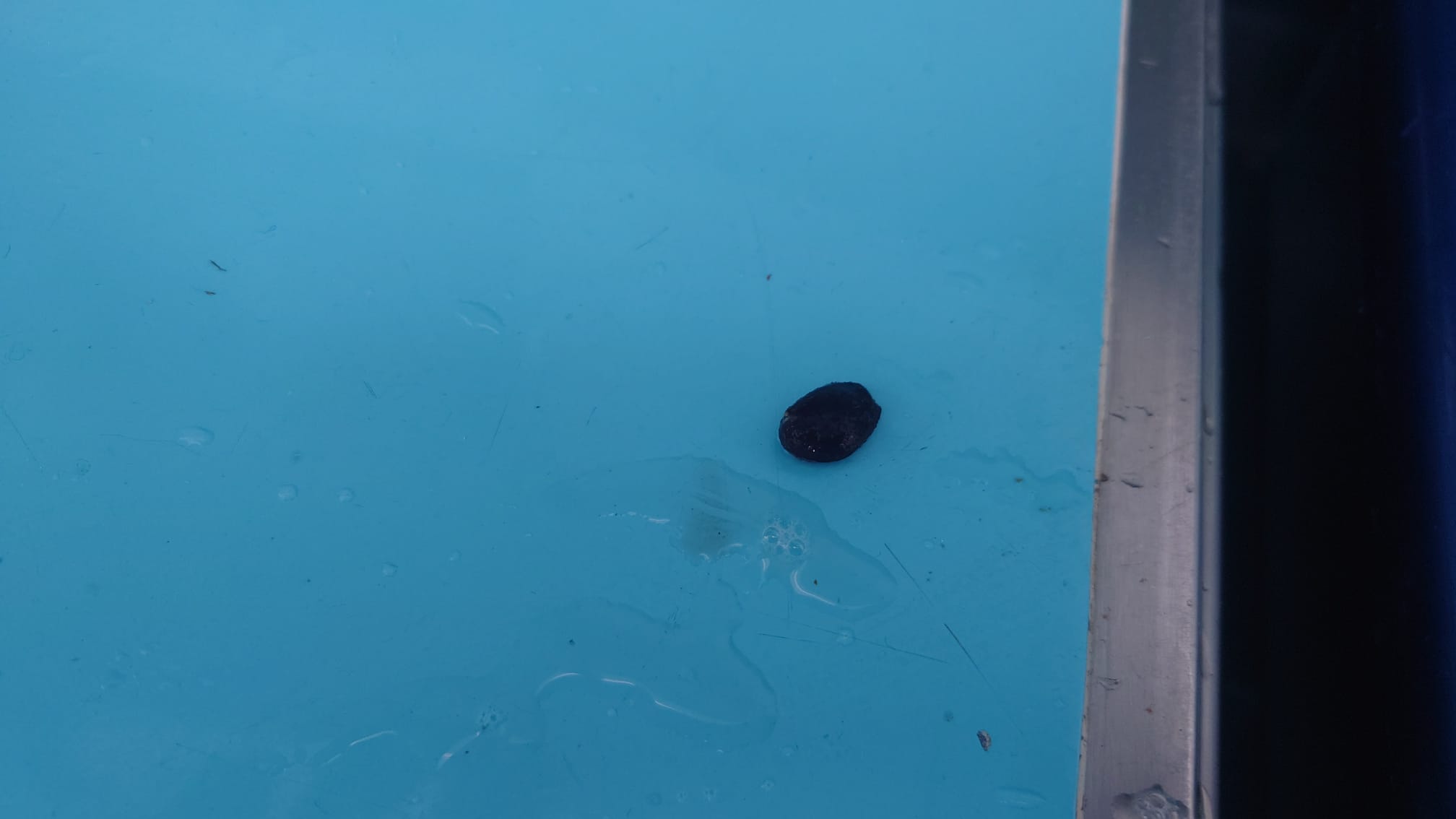
One of us swallowed an anona pit! Oops… they are very poisonous! So, Wim or Sher has been very lucky that it came out in one piece…🚾
And caused all this trouble… 😅
No, actually, the huge amount of limescale caused it. We have been cleaning the hose, and replacing it multiple times, but never looked into the t-piece because we thought that it’s so big, it won’t clog. Wrong! We have take care of cleaning the connections to the valve, too!
Anyway, after cleaning and gluing them in the same way, the new valves are in place:
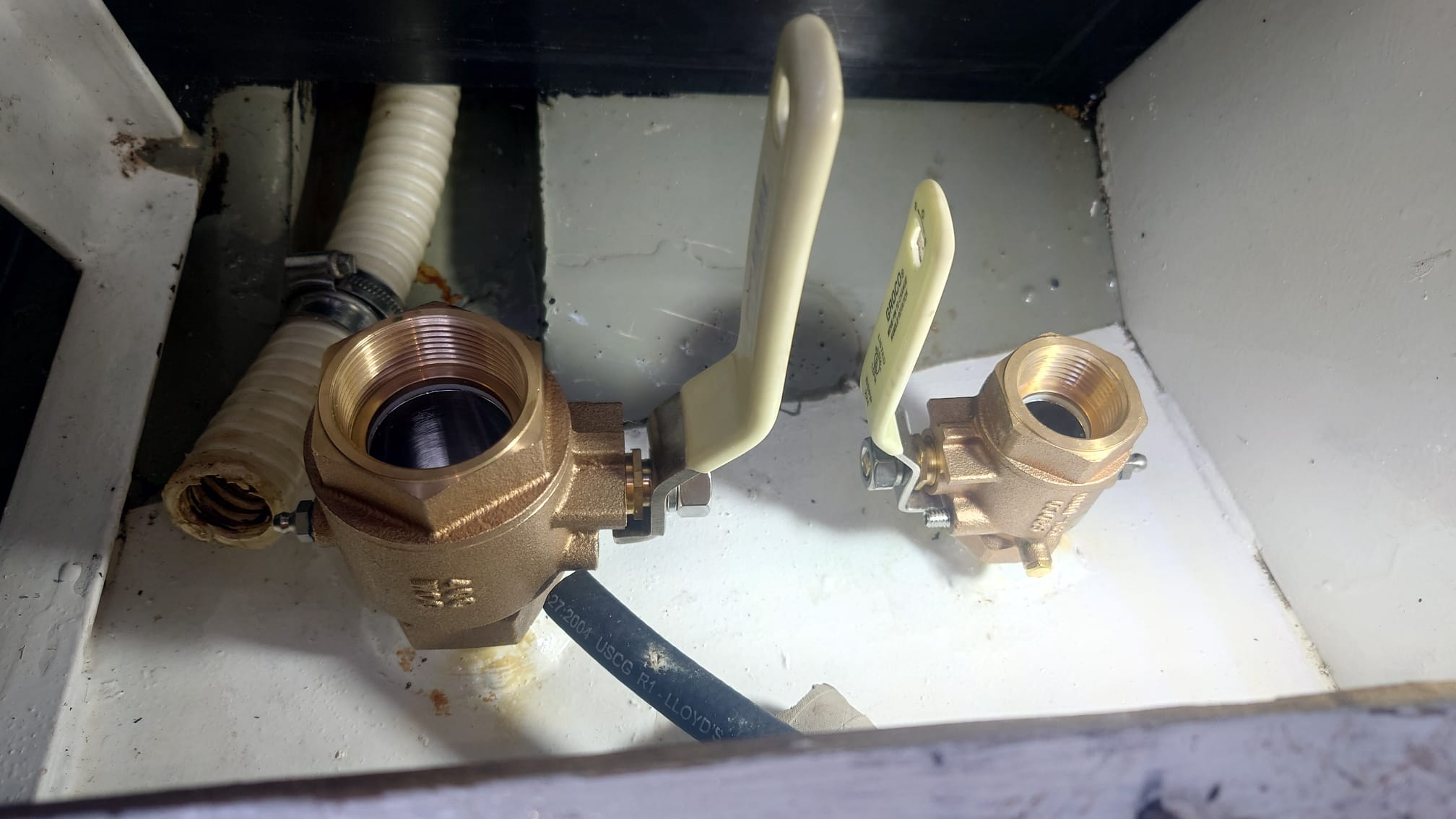
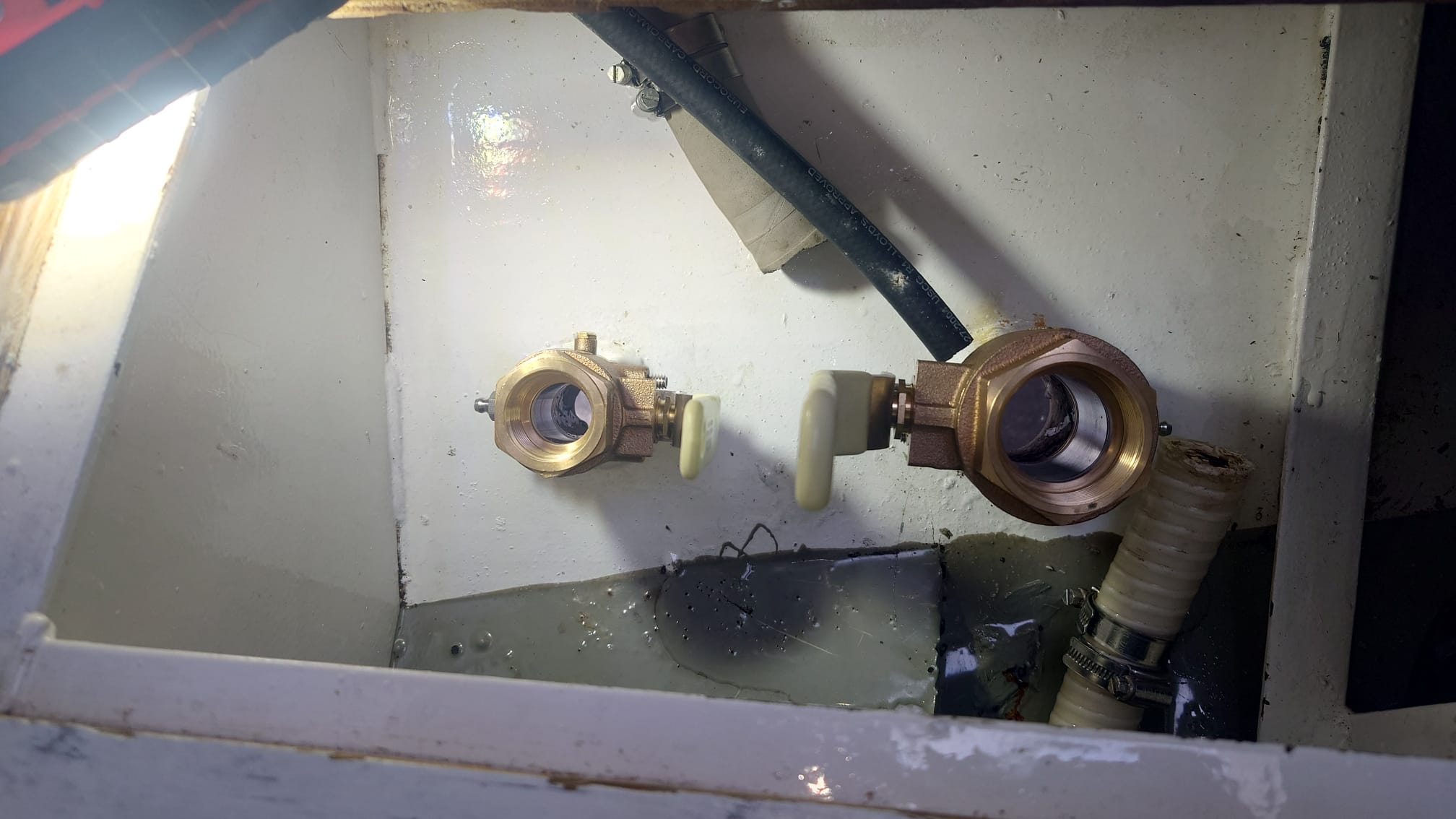
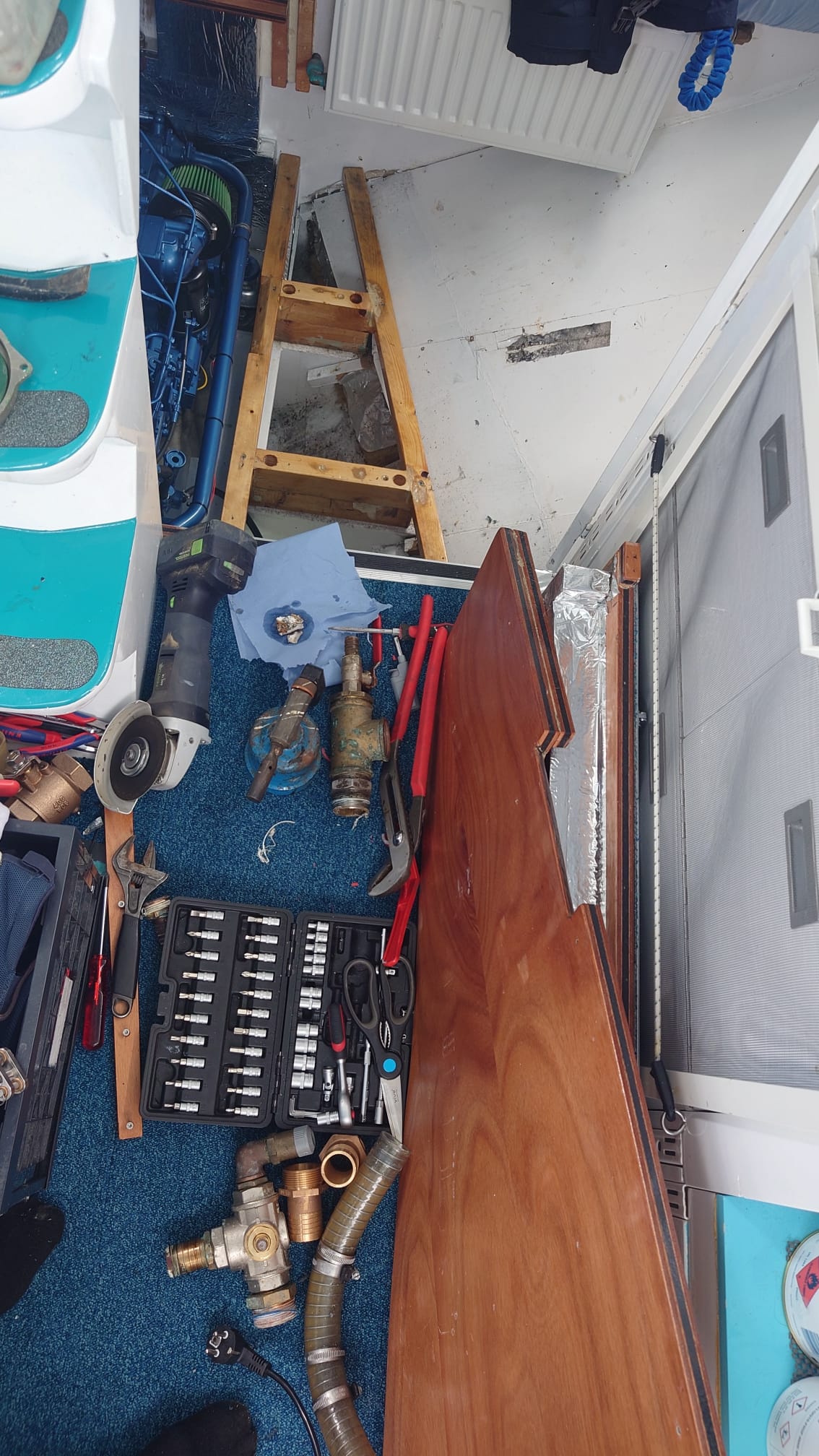
The last and most difficult valve to replace: the seawater inlet for the engine, toilet and water maker. We have to disassemble the side of the engine compartment and the floor in the aft cabin.
We have bad luck with the weather. It’s windy and rainy all the time. The Portuguese say it’s an extremely bad winter here (while the temperature is 16-20ºC day and night) .
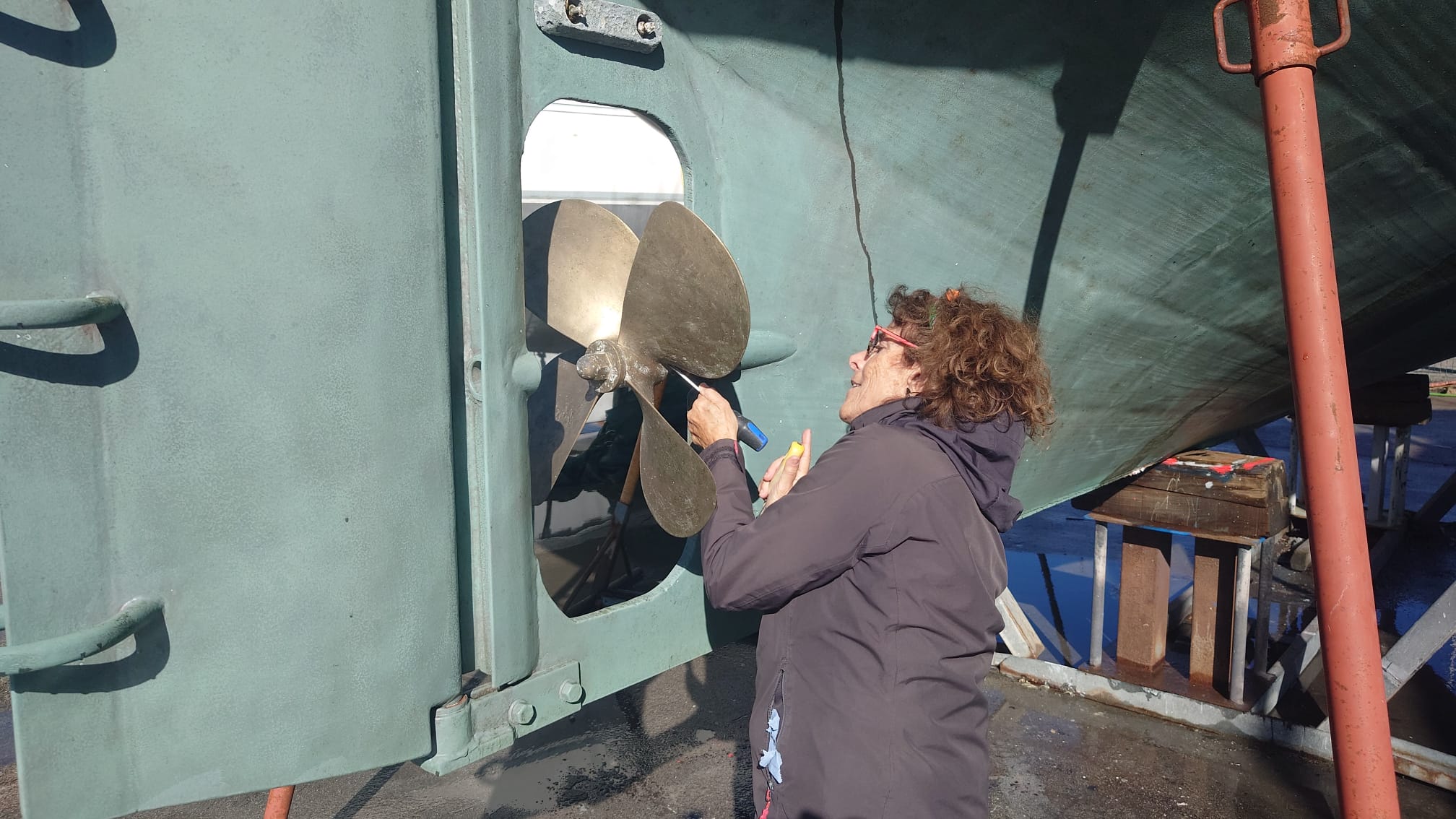
Well, in half a day with no rain Sher can scrape off some barnacles. Look how nice green our CopperCoat is! That is pure copper oxide. Means it’s doing a great job!
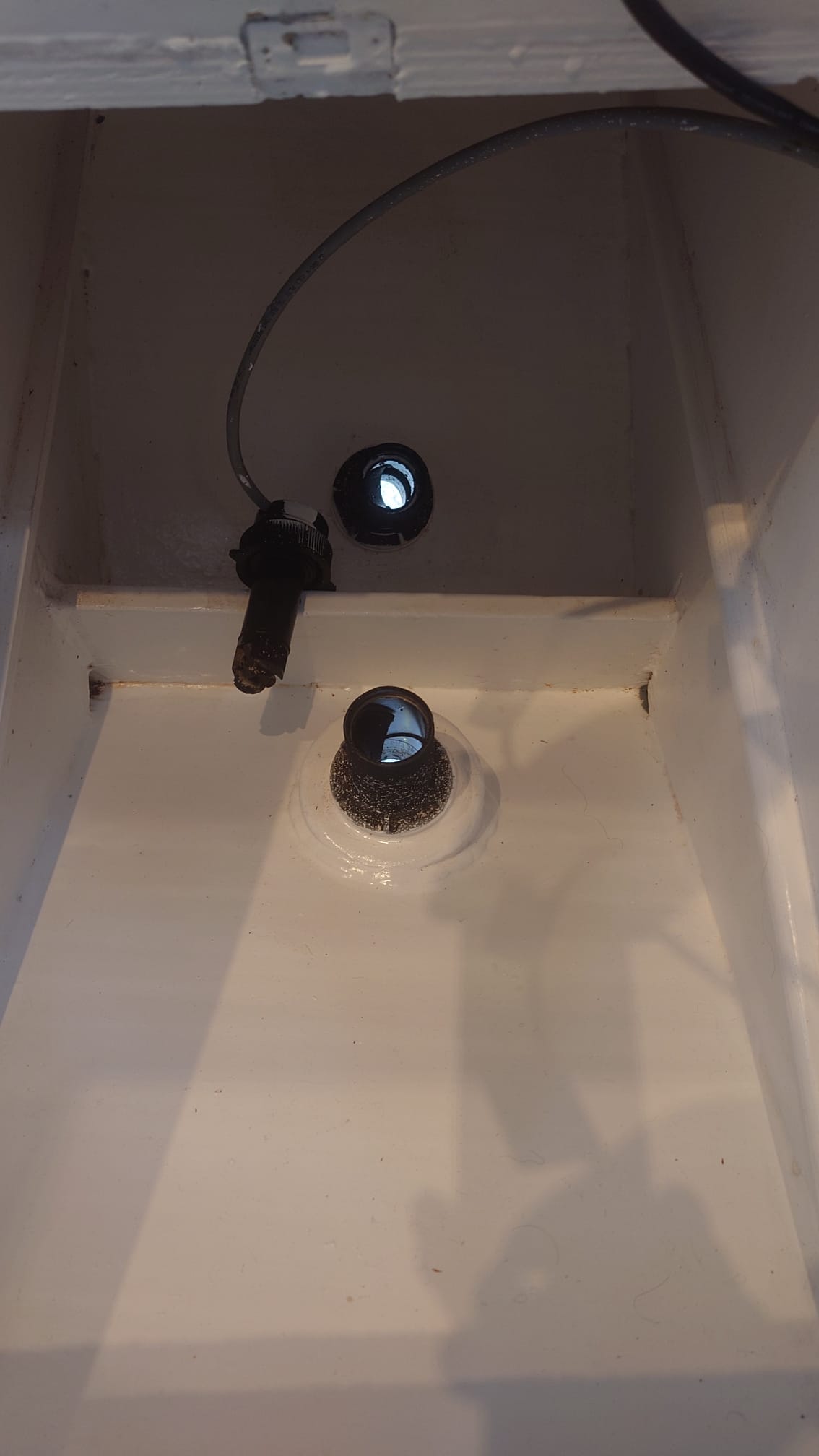
We start preparing another job which we are planning to do here: modify our speed and depth sensors.
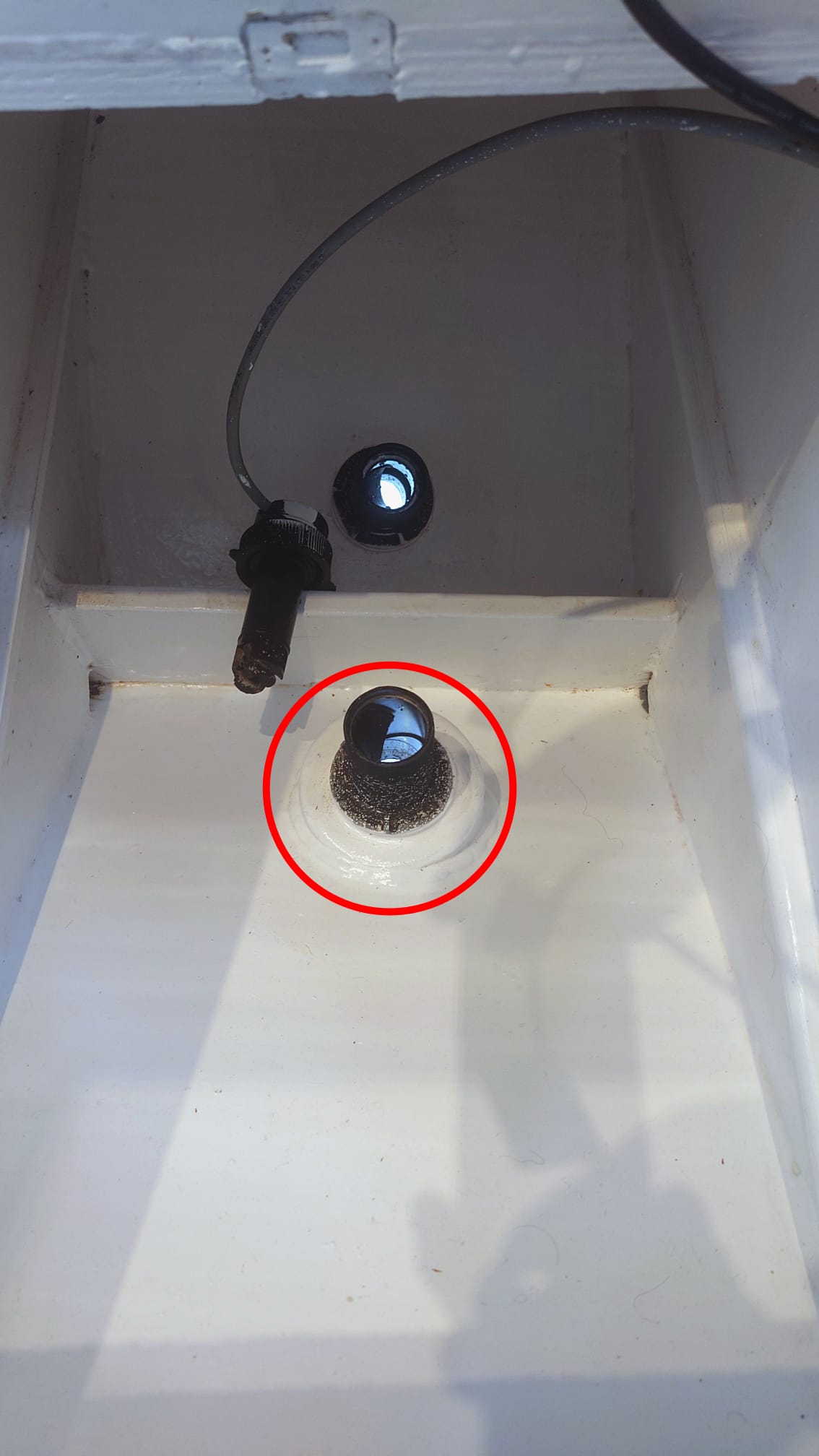
Dione IV had 2 transducers when these were installed in 2014: one for depth of the water (the bottom one on the photo) and one for speed through water (the top one).
A few years ago, the depth transducer got an electronic malfunction and this transducer appeared to be out of production and replaced by a combined one in the same housing, the Airmar DST850.
The old depth transducer had to be mounted horizontally. That’s why we welded a pot in the hull, correcting the angle of the V-shaped hull, the so called “dead rise” of the hull. Because there’s no flow of water inside that pot, the paddle wheel of the DST850 wasn’t running. No problem, we used it only as a depth transducer and used the speed from the other transducer.
But, of course there’s no antifouling on the transducers (they don’t work with paint on it) so all kinds of sea life (mussels, shrimps, barnacles, seaweed) grows on it and thus, they need regular cleaning. That is done by pulling out the transducer, sea water sprays in the boat and you must quickly insert a plug in the tube. Then, we clean the surfaces, pull out the plug, seawater sprays again and quickly insert the transducer. This is not only stressful but also messy. Everything gets wet and since we don’t want salt water in our bilges, we have to clean and dry everything with fresh water. One on the most tricky and stressful things is: what if the plastic tube breaks while we’re moving things in and out and we can’t close the hole any more? 😱
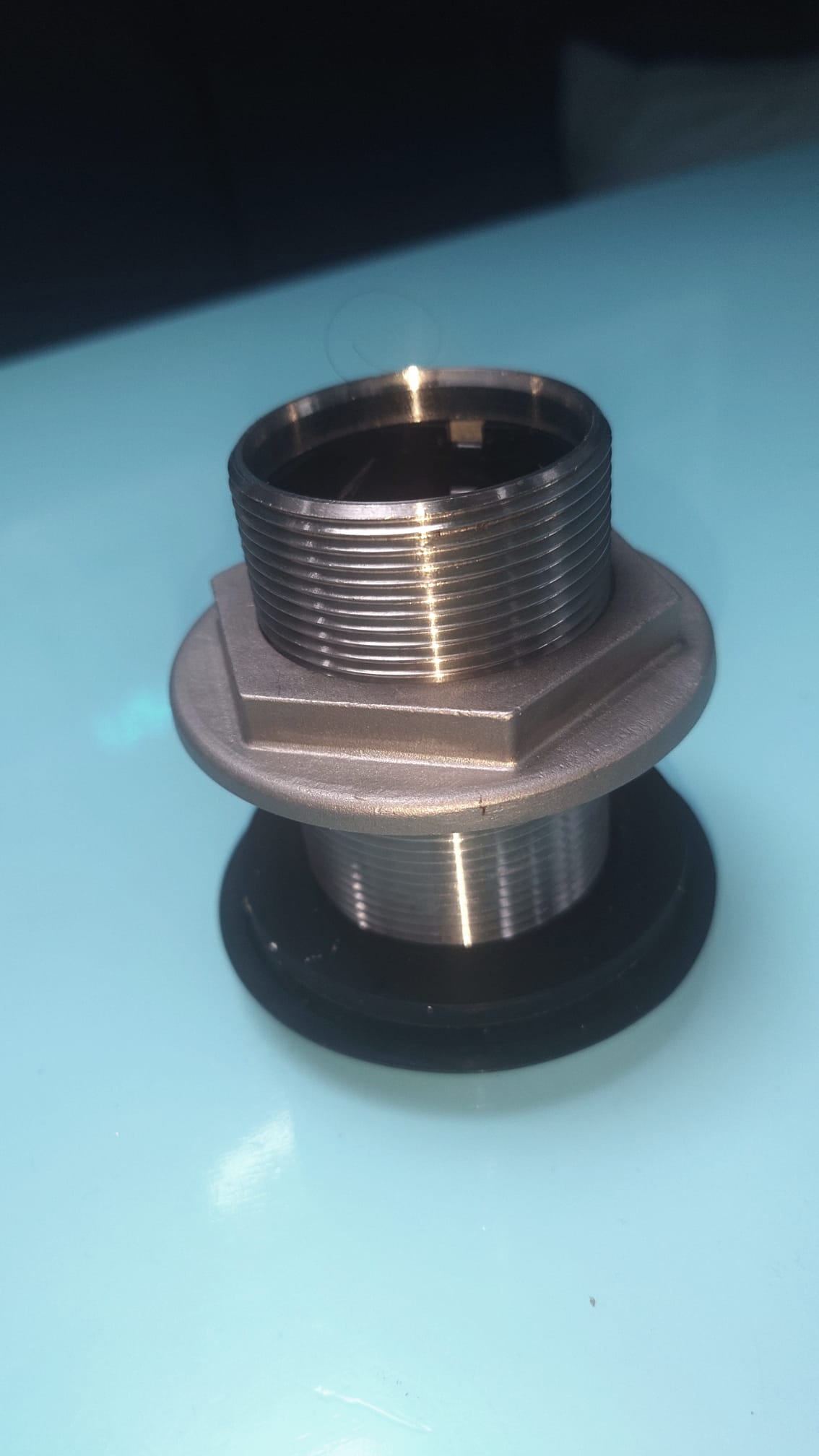
That’s why we bought this very sturdy stainless steel through hull fitting, last summer in the US, and we decided to move from 2 transducers to 1. So, the stressful cleaning job is only once instead of twice and a wrong movement, while exchanging transducer and plug, will not break it.
So, this hole has to be closed, welded. The pot has to be removed and a new hole has to be made for the DST850. So that its paddle wheel is fully in the water flow along the hull. The good thing about the intelligent DST850 is, that it can adjust for an angle, because it knows the heel angle. So, it doesn’t need the welded pot.
That’s what we’re going to do here, on the yard. We’ve contacted a welder guy named Rui last month. He has a good reputation and seems to be an excellent welder.
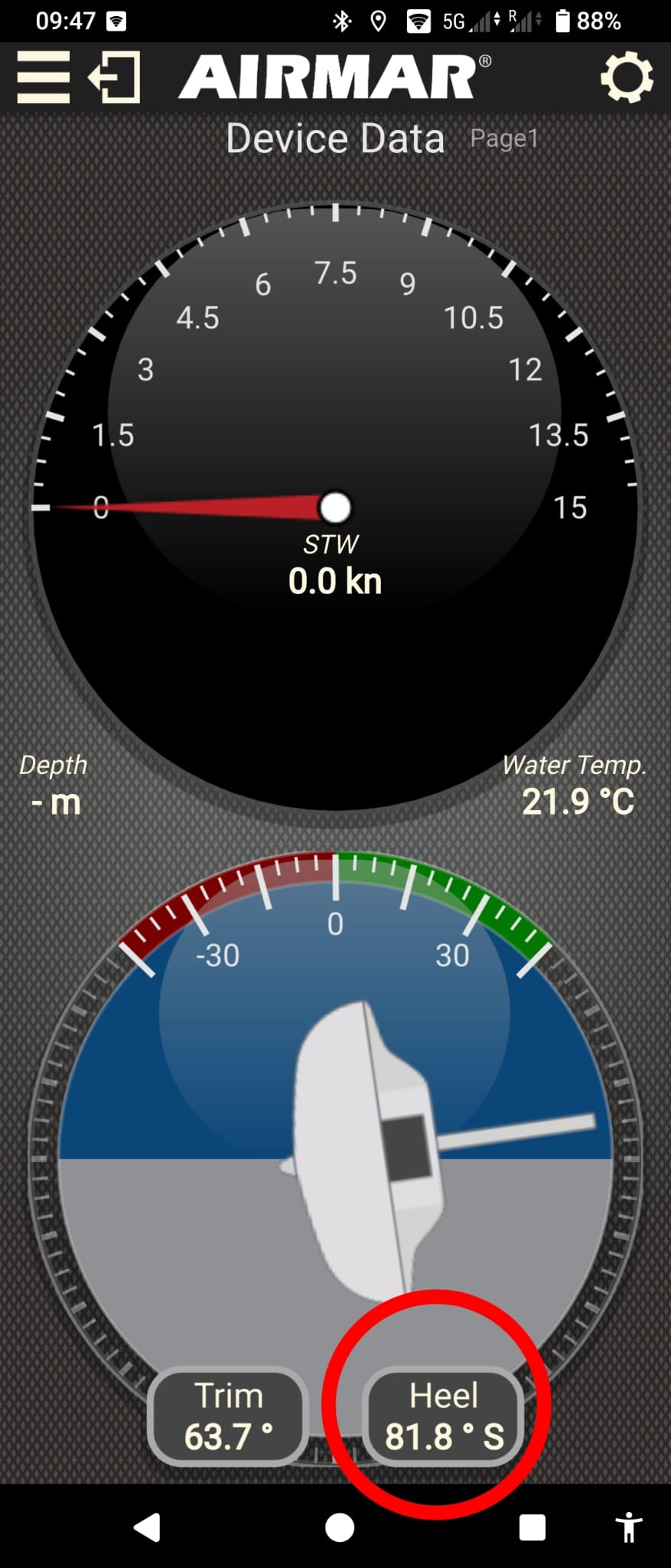
Here’s the display for the DST850. But look at our heel angle! 😱 Oh, no!!
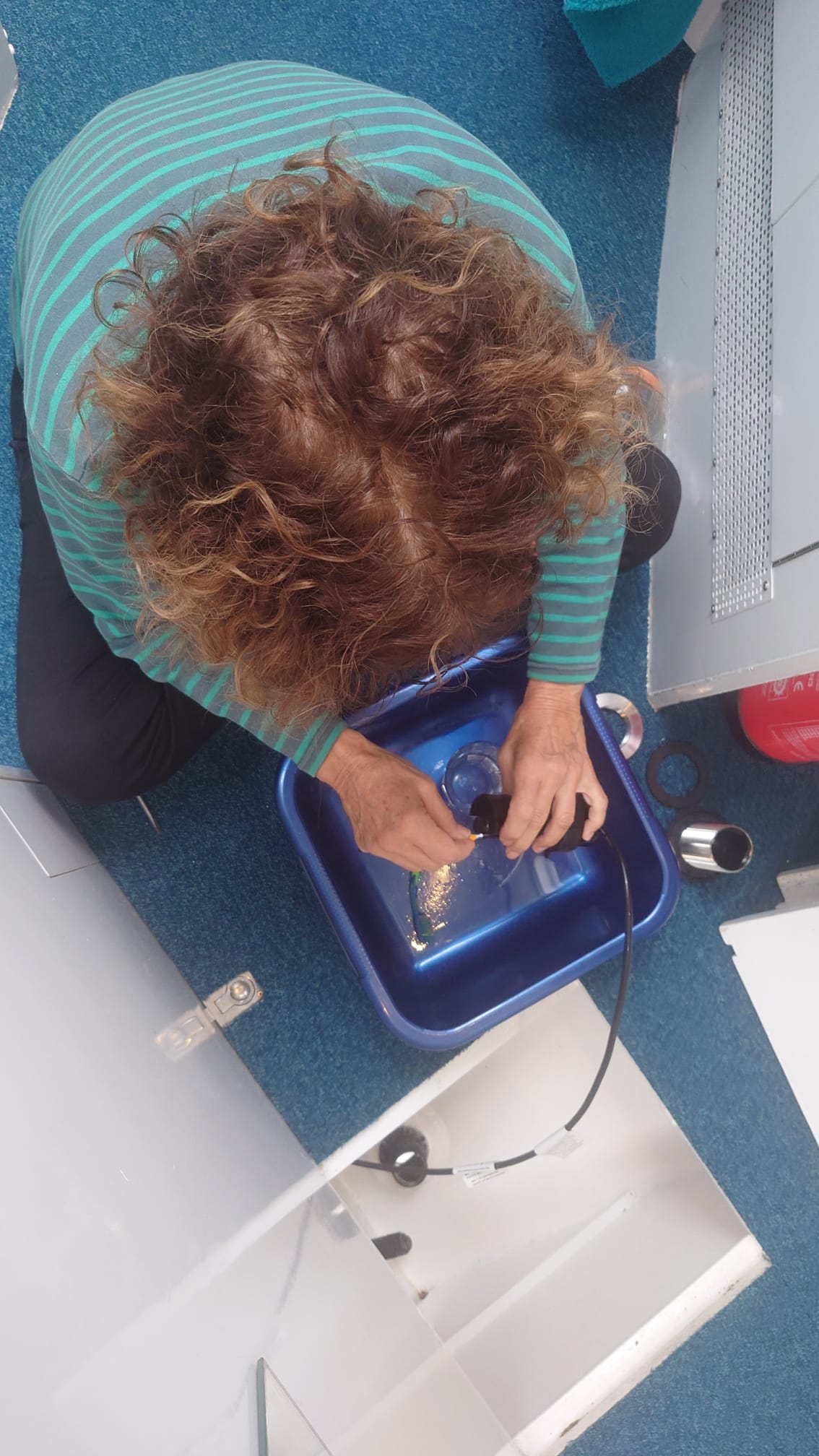
No! Nothing wrong! Sher is cleaning the sensor 😅 It is horizontally in the washing tub…
We test the rotation of the paddle wheel and in the app, it shows speed. So, it’s working fine.
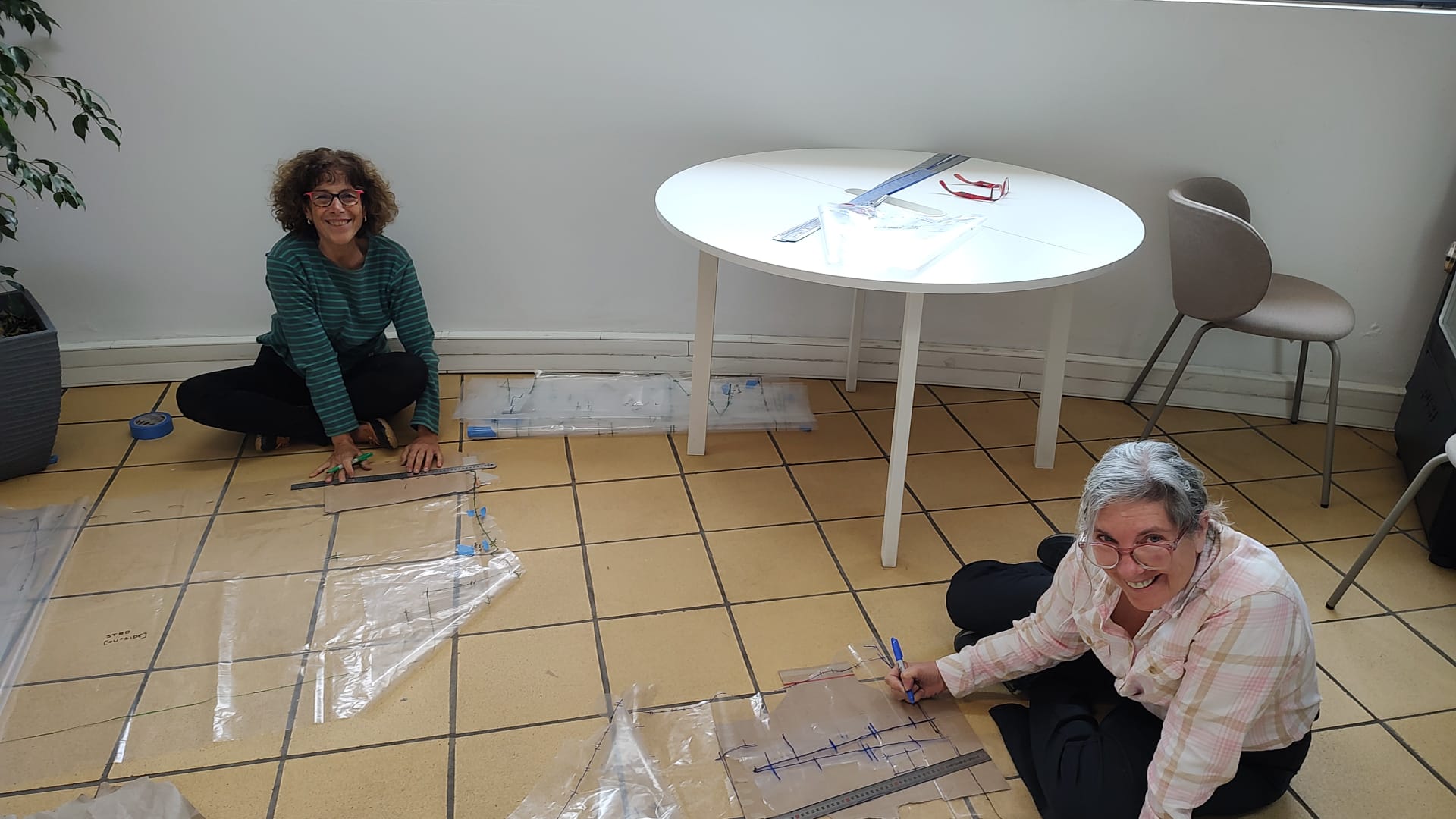
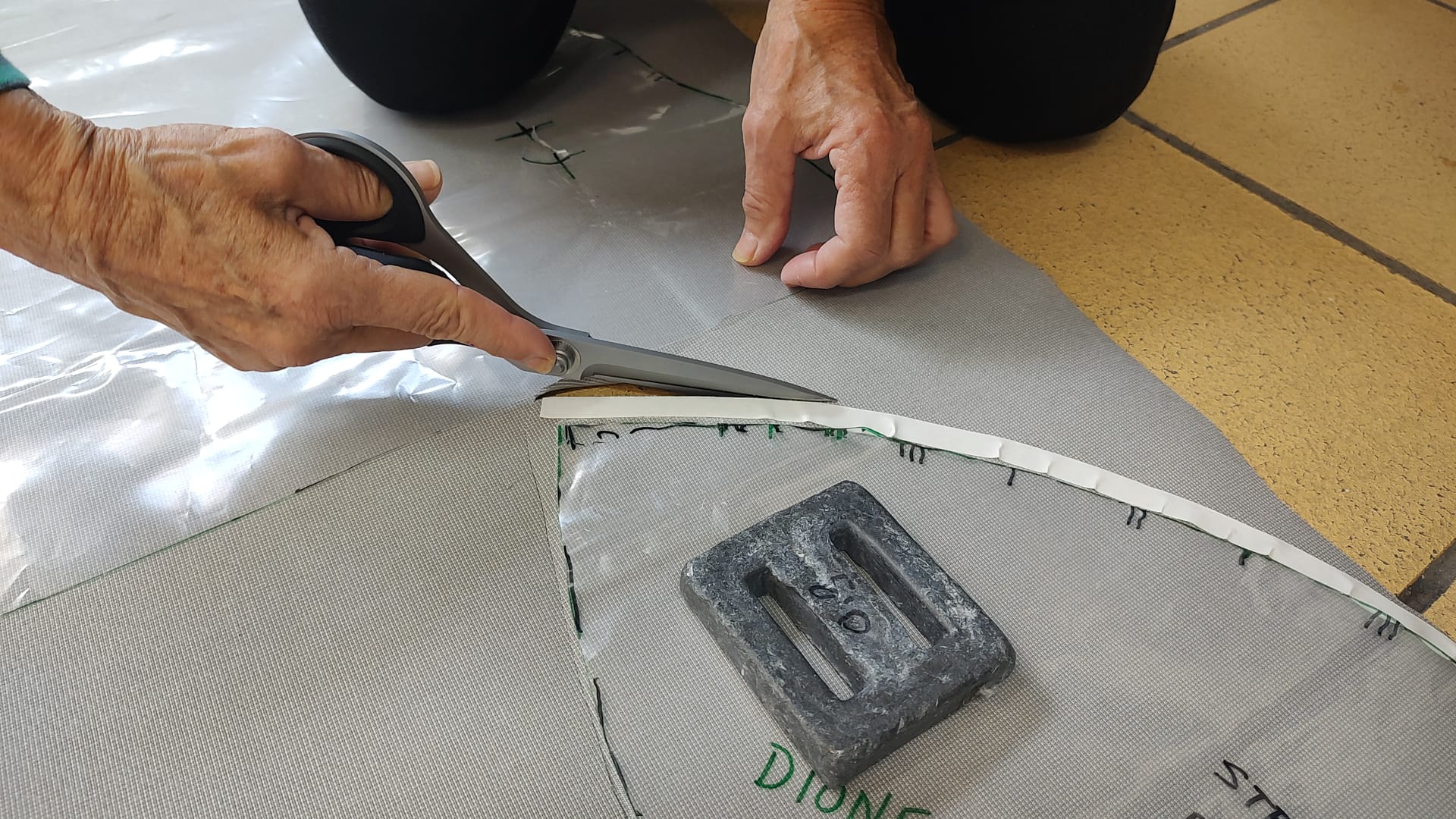
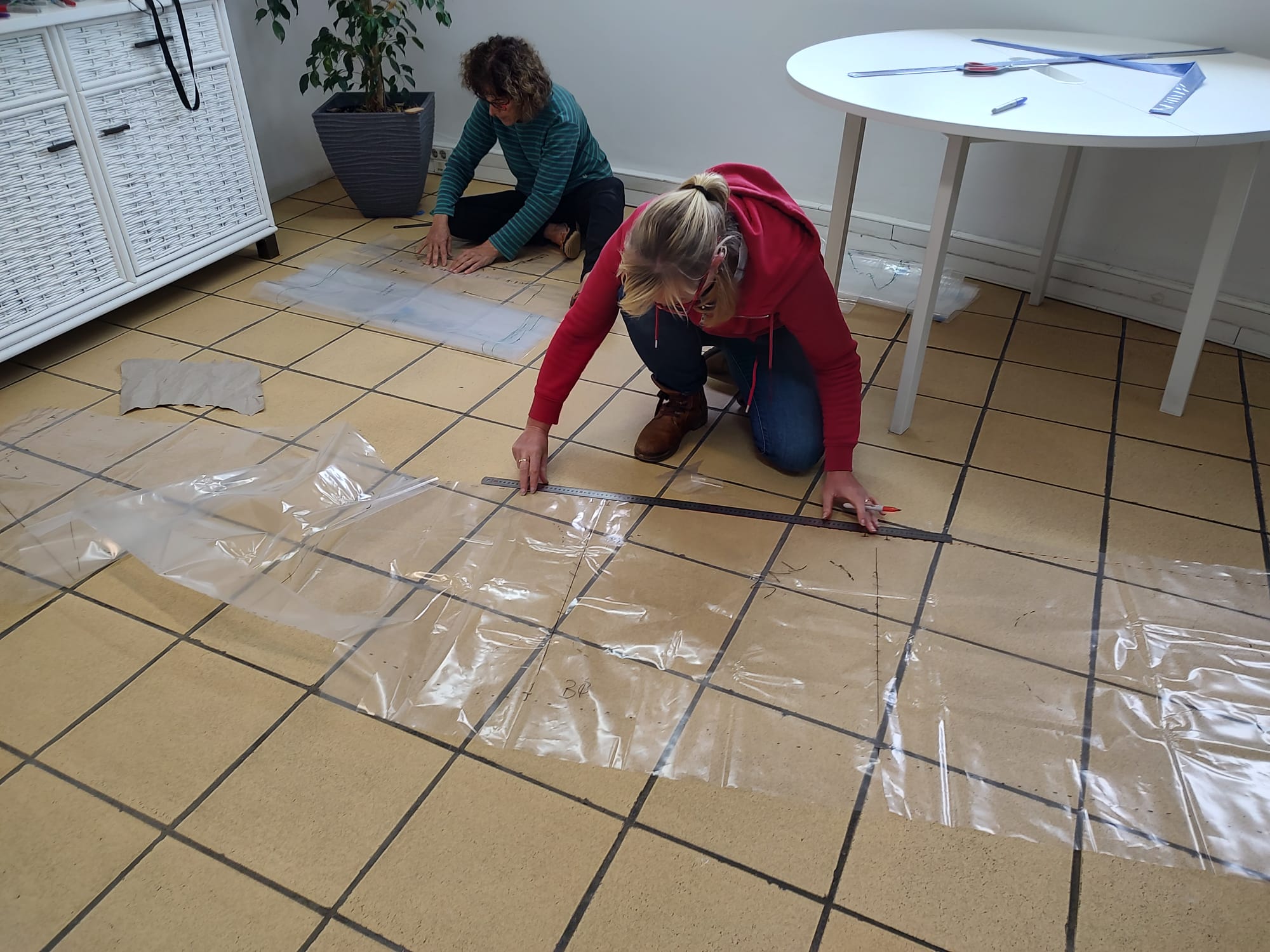
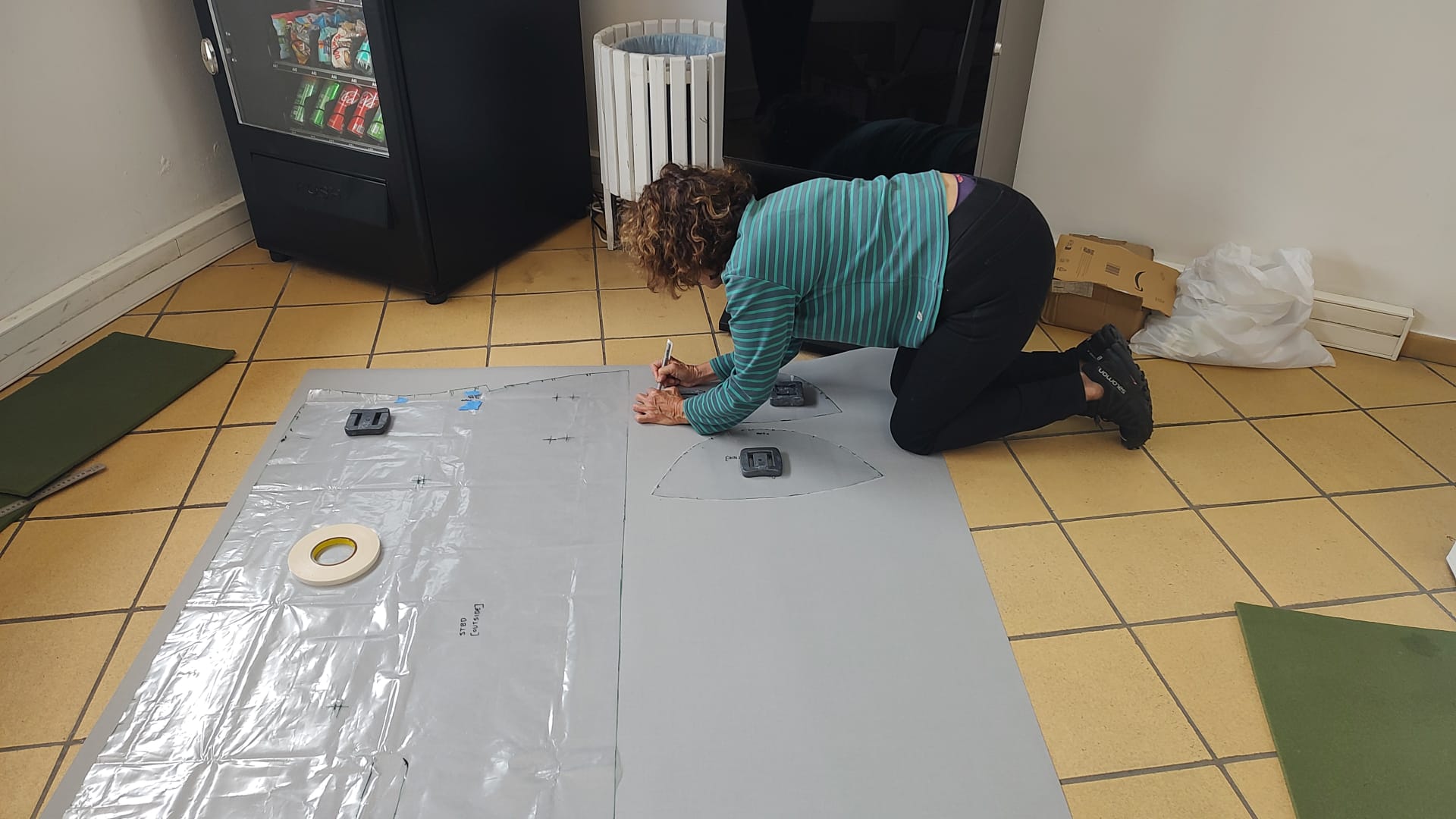
After that, Sher takes a Bolt taxi to the marina. Sacha (boat “Smile”) has arranged that the ladies can work on the dinghy chaps patterns in the marina office. They’re fitting the patterns together.
Meanwhile, Wim buys some hoses in the great marine chandler here (Sopromar) and continues installing the seawater strainer system.
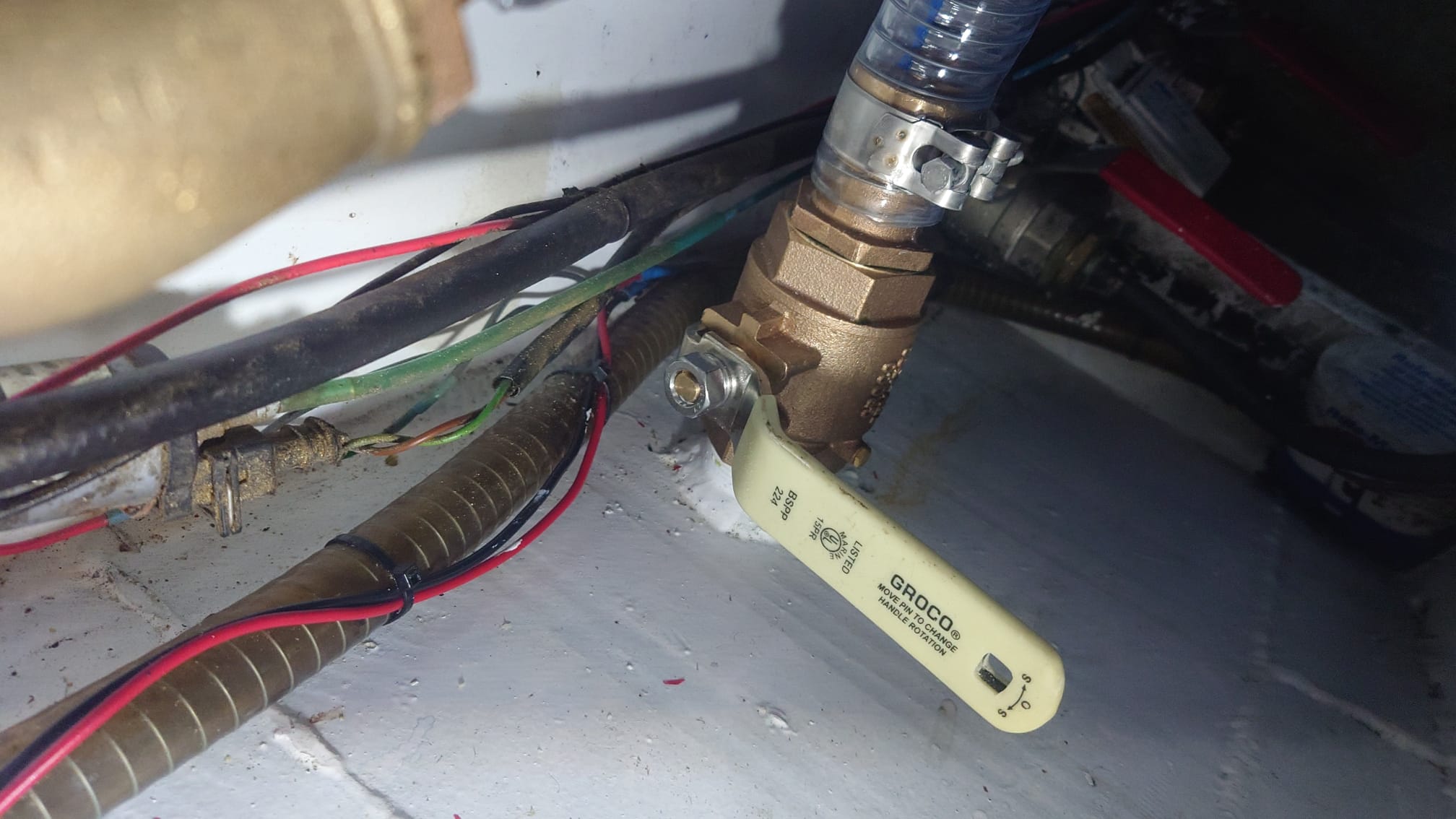
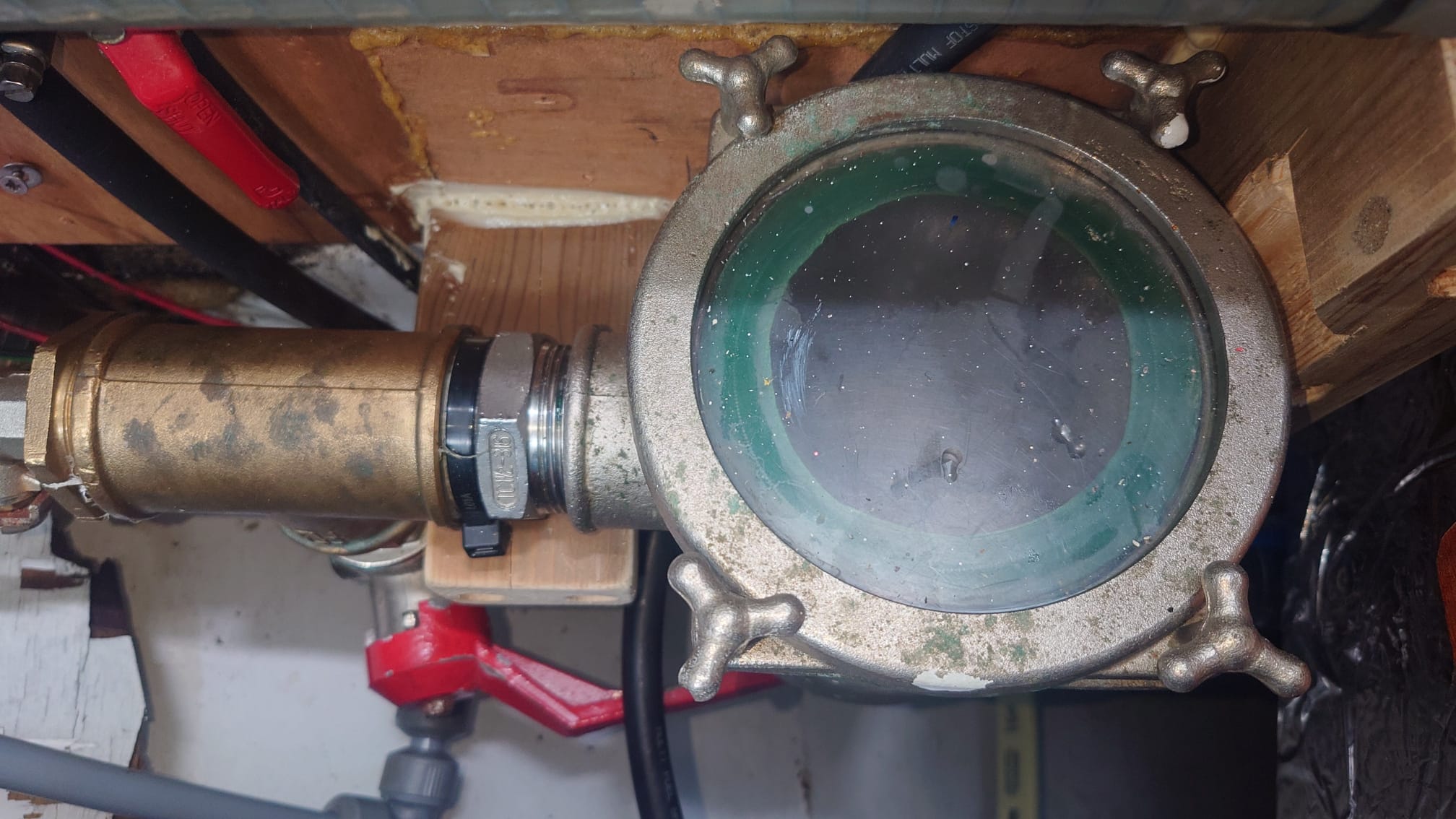
New strainer location…Yes, this is a big improvement! We can look into the strainer from the aft cabin floor.
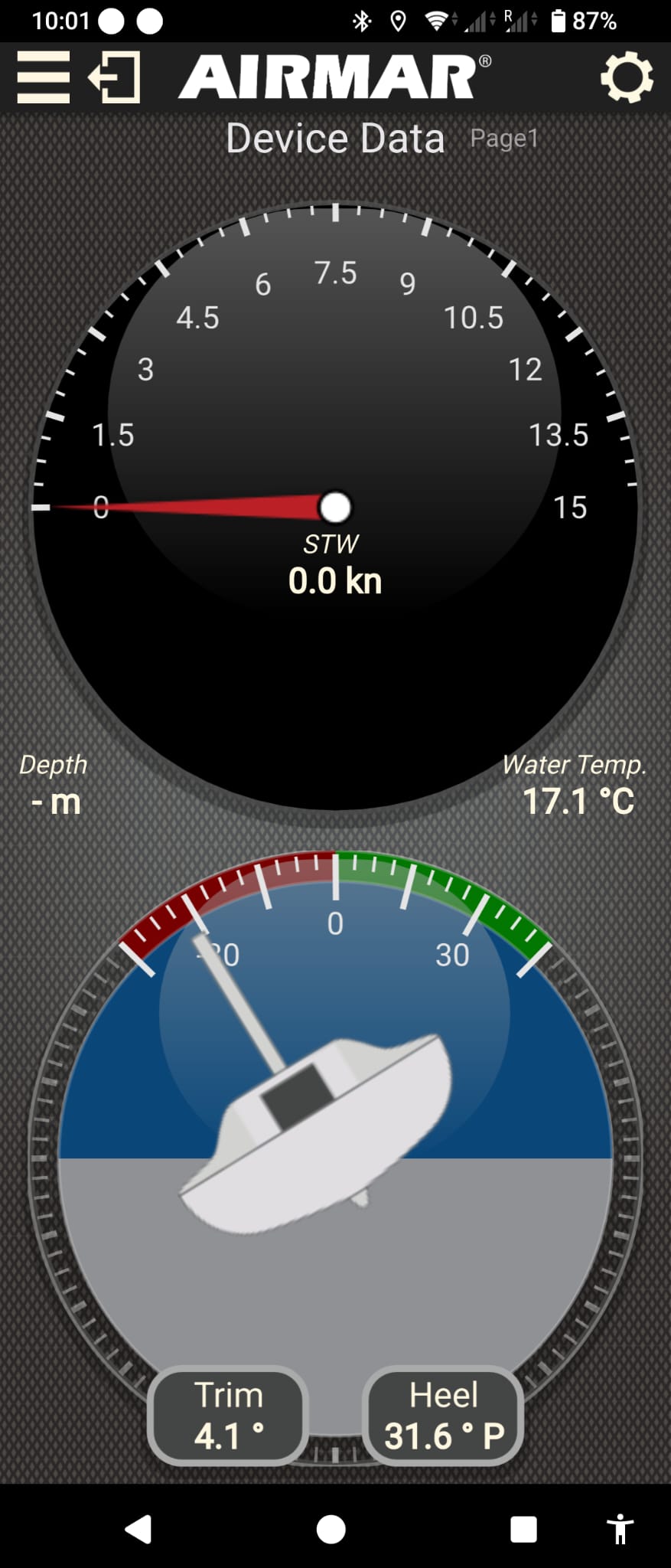
Hmmm, maybe everything isn’t okay after all. We realize that although the DST850 can correct for angle, it can’t correct for as much angle as we have. Oops! 31.6º! 😮 That is way too much for the transducer… Wim says: bloody hell, why didn’t I check this before?? How could I be so stupid to overlook that?? We’ve been thinking this thing over since last summer and we didn’t think of checking the angle!
Well, this means the angle has to be corrected in the construction after all.
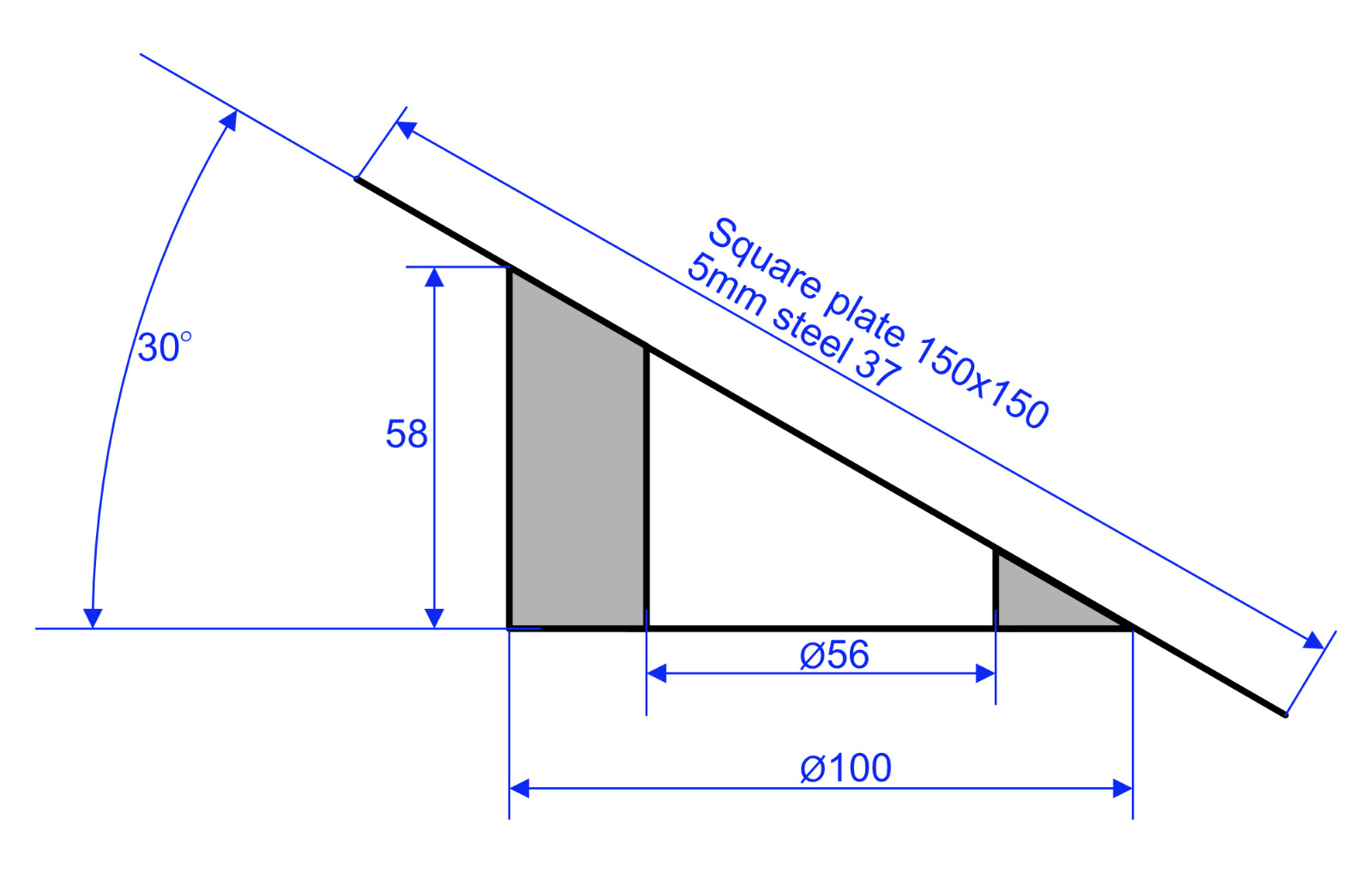
So, Wim makes a drawing for the welding guy (Rui) We will have to weld a bushing on the outside. But Rui says, why not just reverse the current construction?
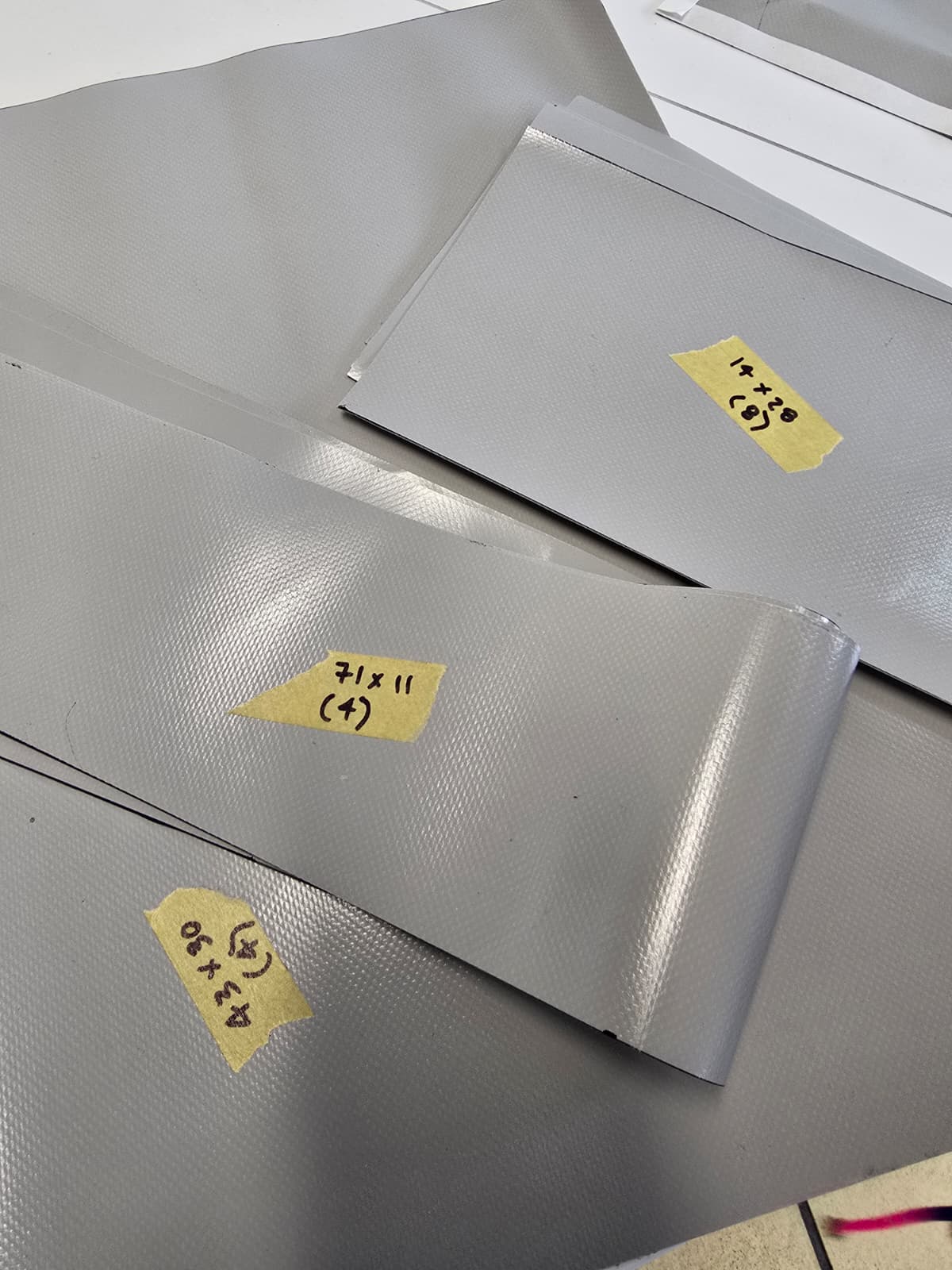
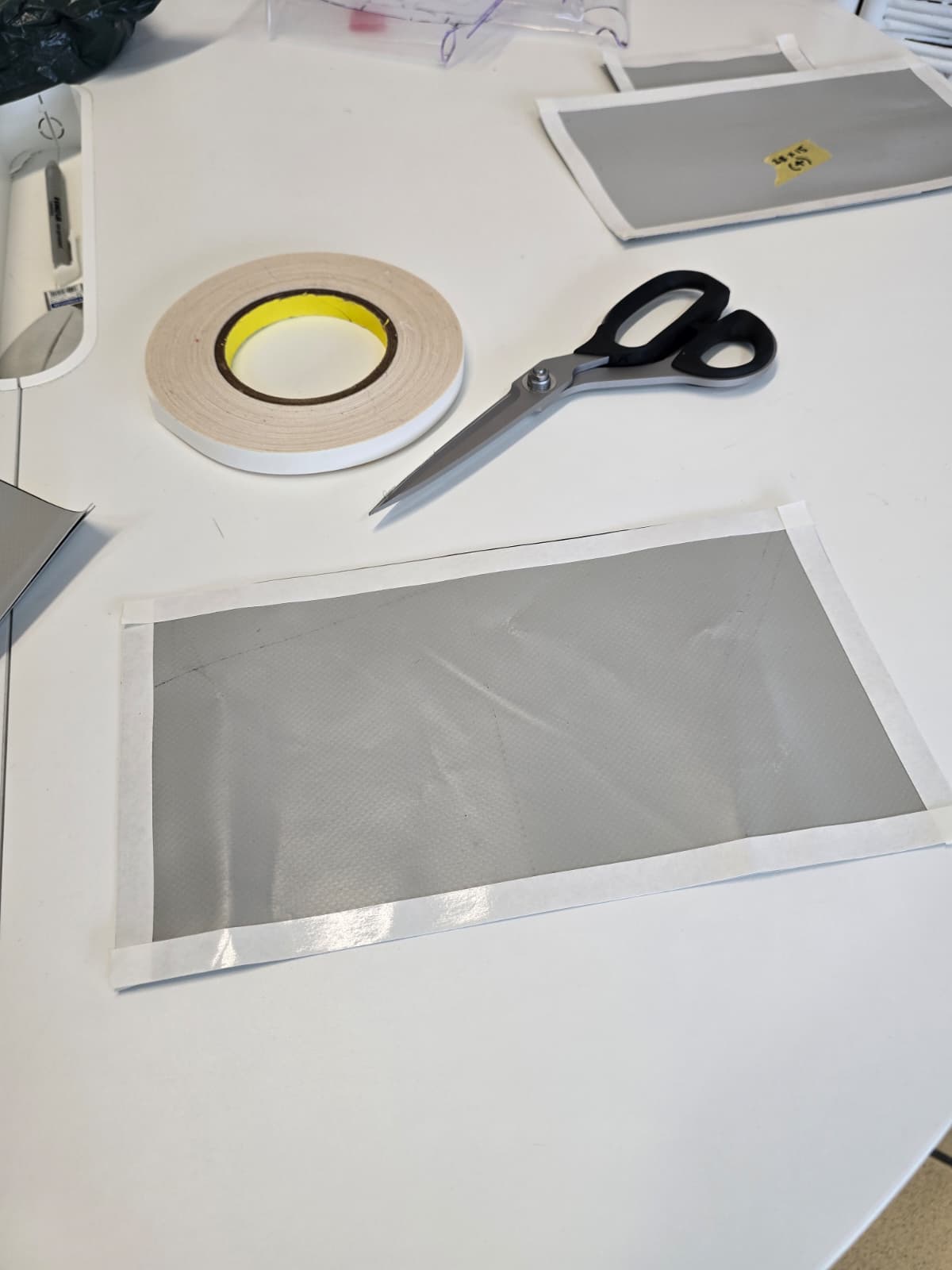
Meanwhile, Sher is going to the marina every day to work with Sacha and Marcia on the dinghy chaps. Sacha has arranged that they can work in a room in marina office building, which is great in this crappy weather!
We’re a week at the boatyard now and we haven’t a single day with nice weather… rain and wind but not cold. The temperature is around 17ºC, day and night. Westerly (Atlantic) winds all the time. The Atlantic depression train is running at a steady speed… This year, the low pressure systems are very big: they hit the entire Portuguese coast. Normally, they are smaller and move over Galicia to Biscay and the British channel. And the Algarve is under the influence of the warm southerly weather systems. But not this year! The locals say they have not seen such prolonged bad weather ever before. So, we have bad luck. We need to extend our stay at least another week. Stay tuned for part II of Portimão boatyard!
The Captain’s Log [T578,579,…587] – the complete story
January 20.
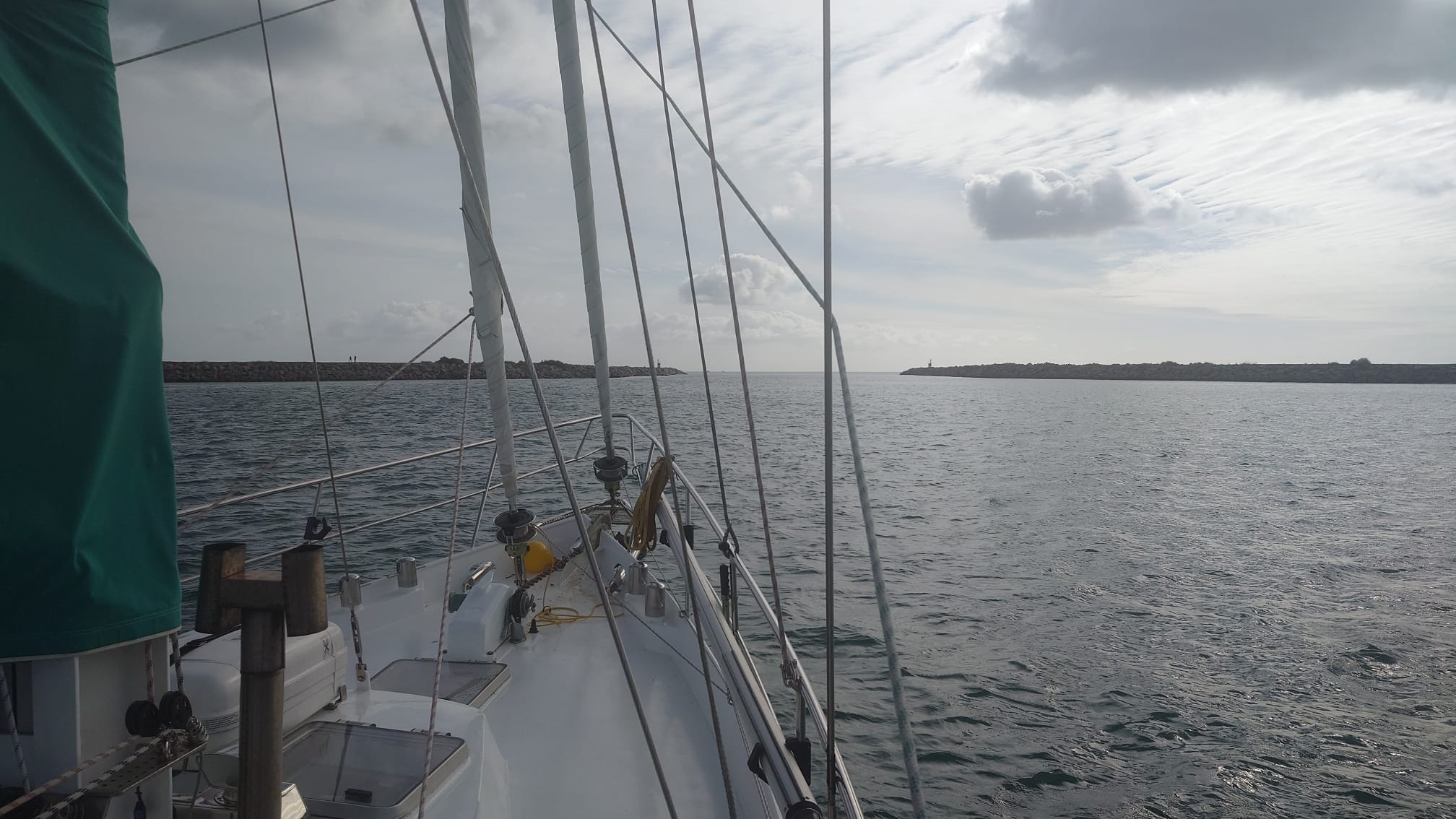
We head out of Rio de Alvor at almost high tide so, no problems with the shallows at all.
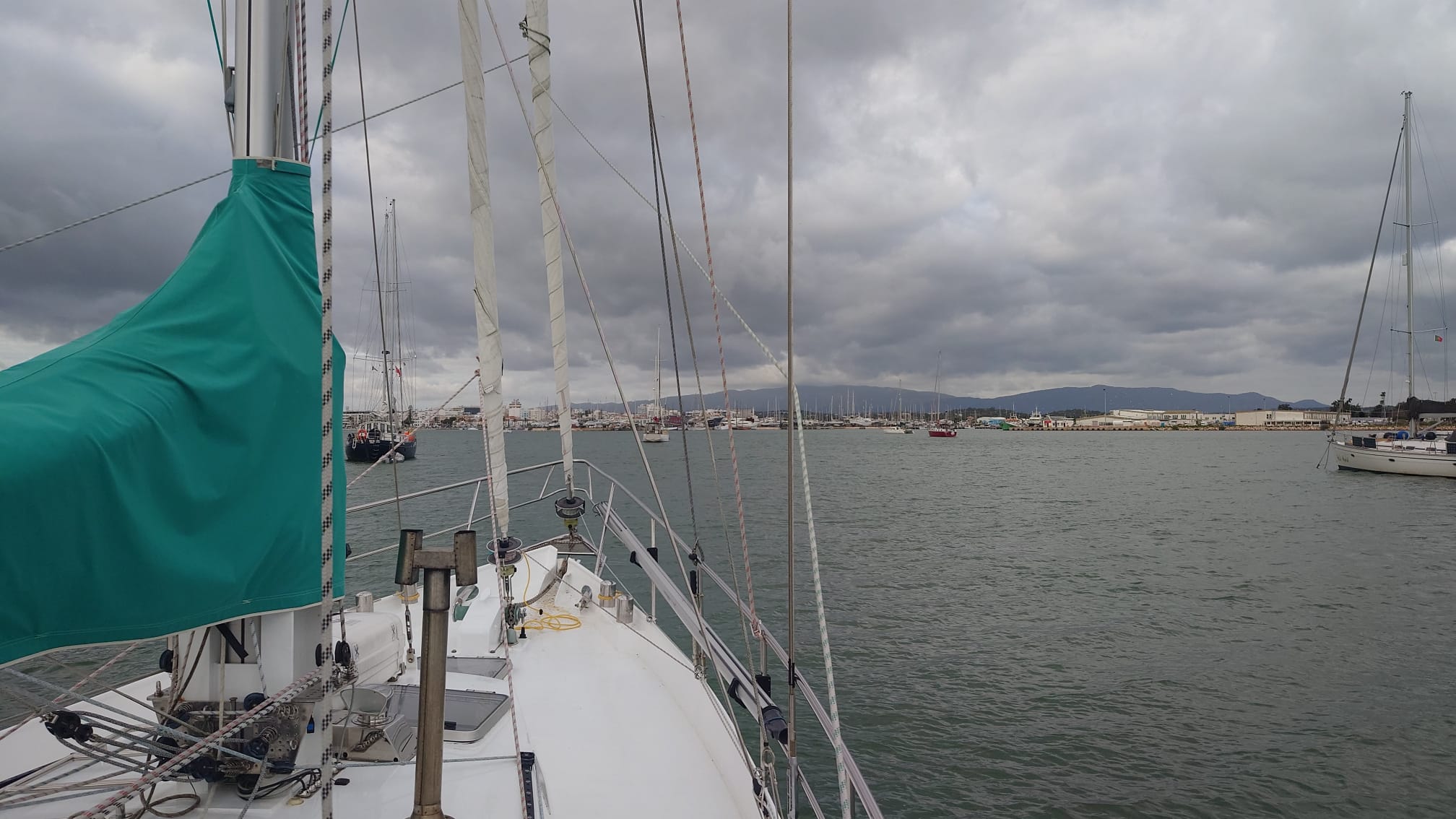
There’s almost no wind and some sunny intervals. We motor an hour and enter Portimão, the Rio Arade. We go up the river to the anchorage near the boatyard. Tomorrow, strong south-west wind is expected a swell will enter the entrance.
Here, about 2 miles up river, we will be well protected from the swell.
There are about 10 boats anchored here and we drop our anchor at a good distance away from everybody. Holding is good.
January 21.
In the morning, the wind shifts from the north-west to the south-west and in showers there are strong gusts (25-30 knots). Our anchor holds very well. Although yesterday we anchored at a good distance from the other boats, now, after the wind shifted 90º, a French boat comes pretty close (about 15m away from us). Hm. He must have a huge length of anchor chain out. We have 35m (at a depth of 8m at high tide) but this guy must have at least 60m out… That gives him a much bigger circle around his anchor than us and that’s why he came so close… We don’t feel comfortable with that. Perhaps we should re-anchor… But the weather is awful: heavy rain and 30 knots of wind… While we are discussing to postpone our maneuver until is clears up a bit a German catamaran looses its hold and comes towards us! Okay, NOW it’s time to get out of here, we say! We start the engine, put on our foul weather gear and while Sher is at the wheel Wim hoists the anchor. The Germans come really close and almost hit us. A guy in his underwear (😂) shouts: please wait! We have our engines running. Let us go first! Okay, we wait. They do all kinds of crazy maneuvers and almost hit our bowsprit while they are dragging backwards in the strong wind. Wim gives a loud whistle: “Look behind you! Throttle up!” Luckily they move to the middle of the river and try to anchor there. That gives us space to move. We drop our anchor at a free space but while we are turning behind the anchor we hit the chain of another boat. A Dutch guy on deck shouts and points out: my anchor is there! Okay, we hoist our chain again and re-anchor. This time, no problem. The Dutch guy shouts: thank you! We go inside, light our Dickinson heater and dry our clothes while the wind slowly eases down in the afternoon.
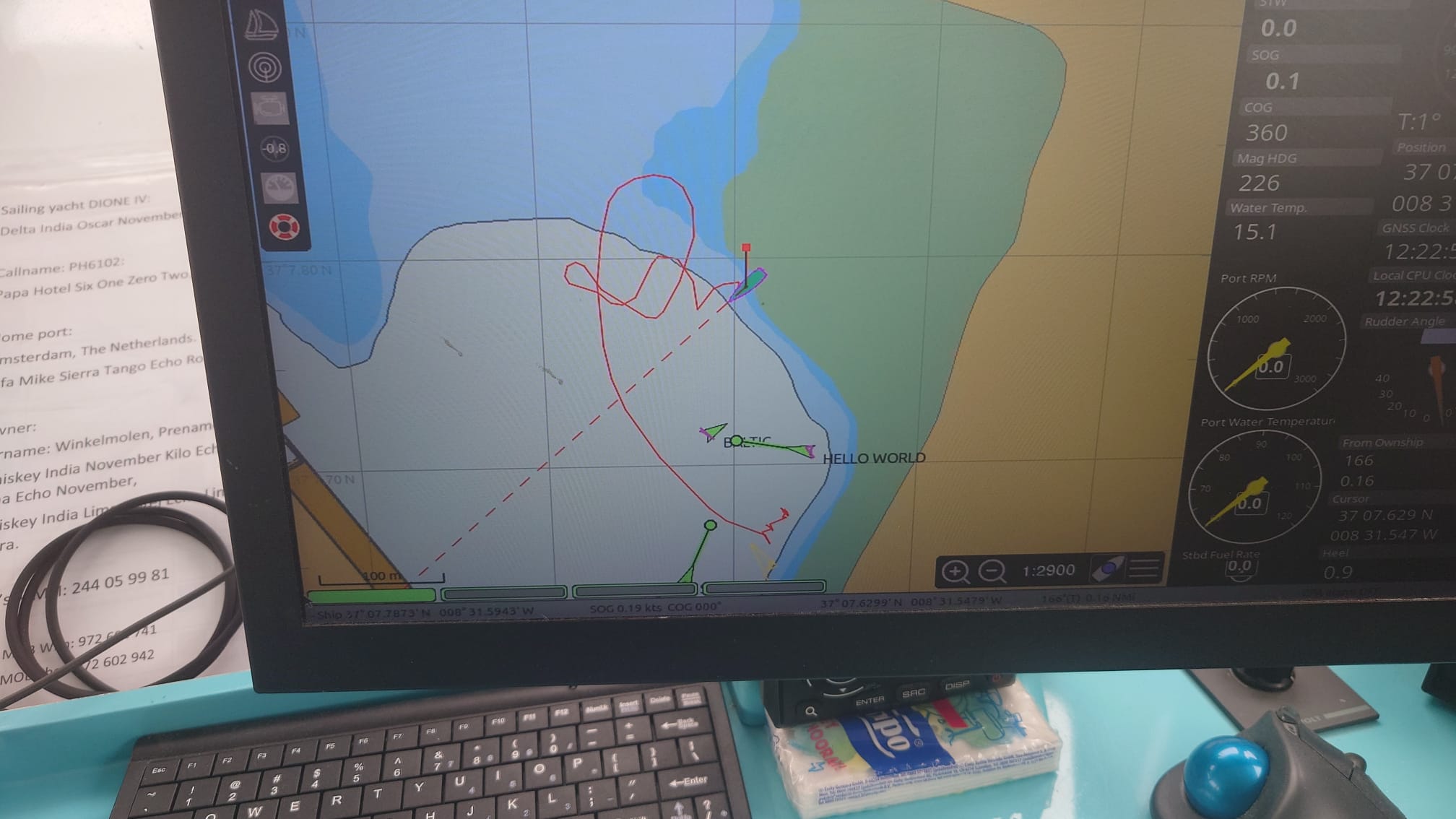
Here’s our track of this this narrow escape 😅
While our great new Vulcan anchor holds us firmly in position, Sher continues her sewing 🙂
At sunset, the wind has eased down completely and the sky rewards us with a beautiful color.
January 22.
Our new anchor spot is much closer to the beach. We have around 2m of depth at low tide, so no problem.
The advantage of this is that we can see the birds at the beach. Even storks! Sher gets very excited, of course! 😃
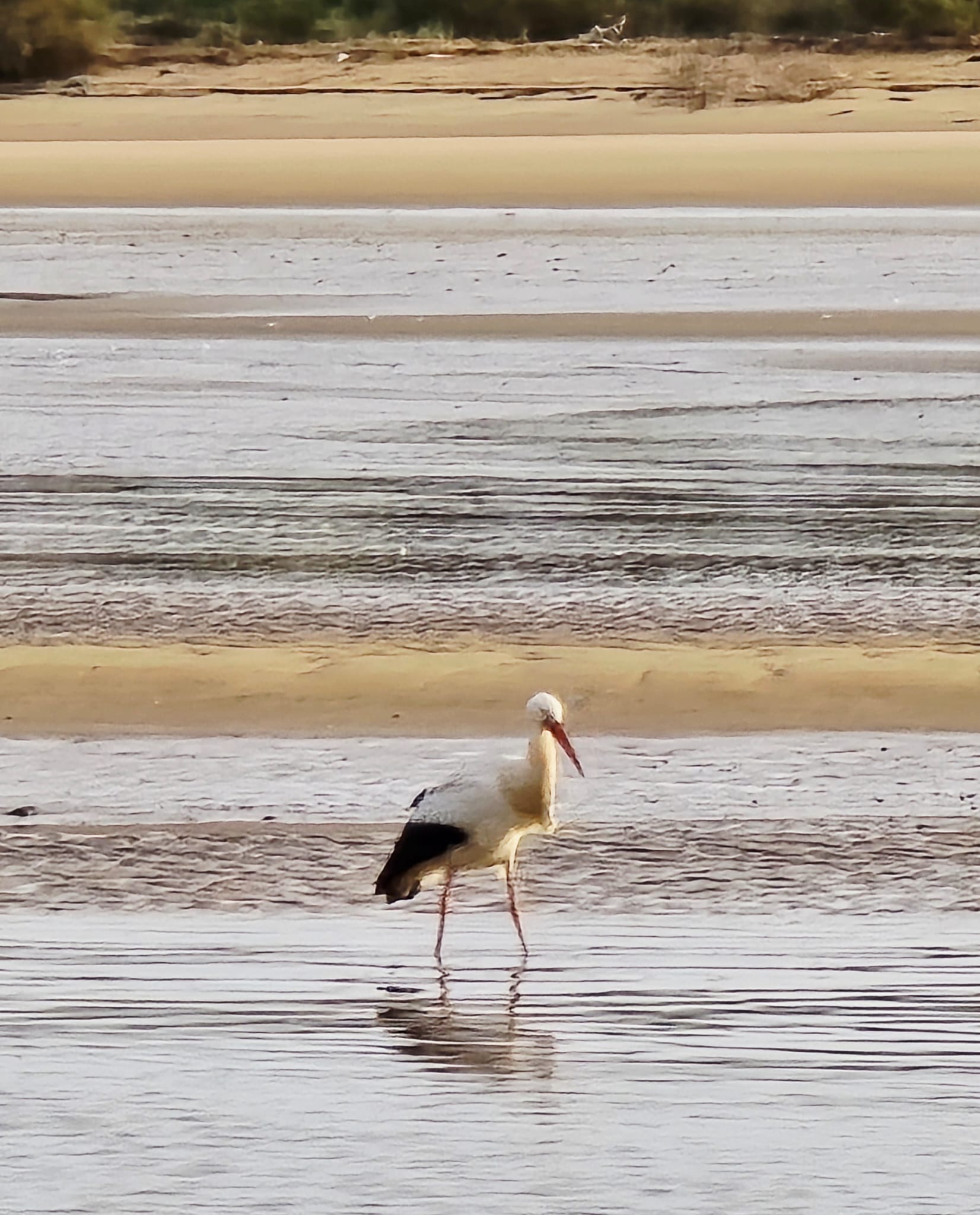
Beautiful!
Today at 1400h our lift on the boatyard is planned. One of the things we are going to do is replace all our through-hull valves. We have ordered these Groco valves in the UK last summer. Groco is the best quality pure bronze valves. We dive them from under the floor and prepare.
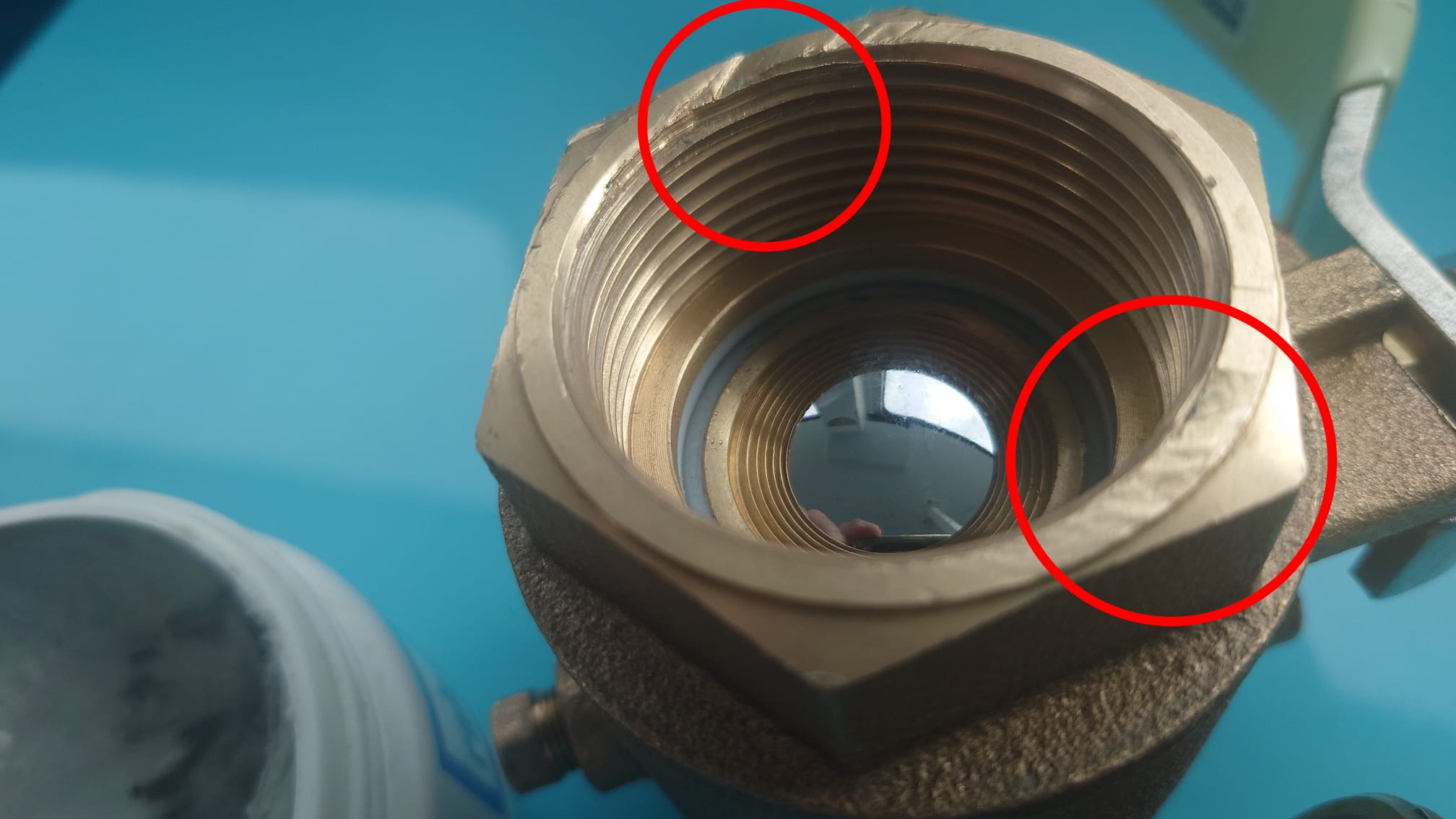
Hm. There is a problem with one of the valves. It seems to have suffered in transportation: the thread is damaged. The elbow doesn’t go in.
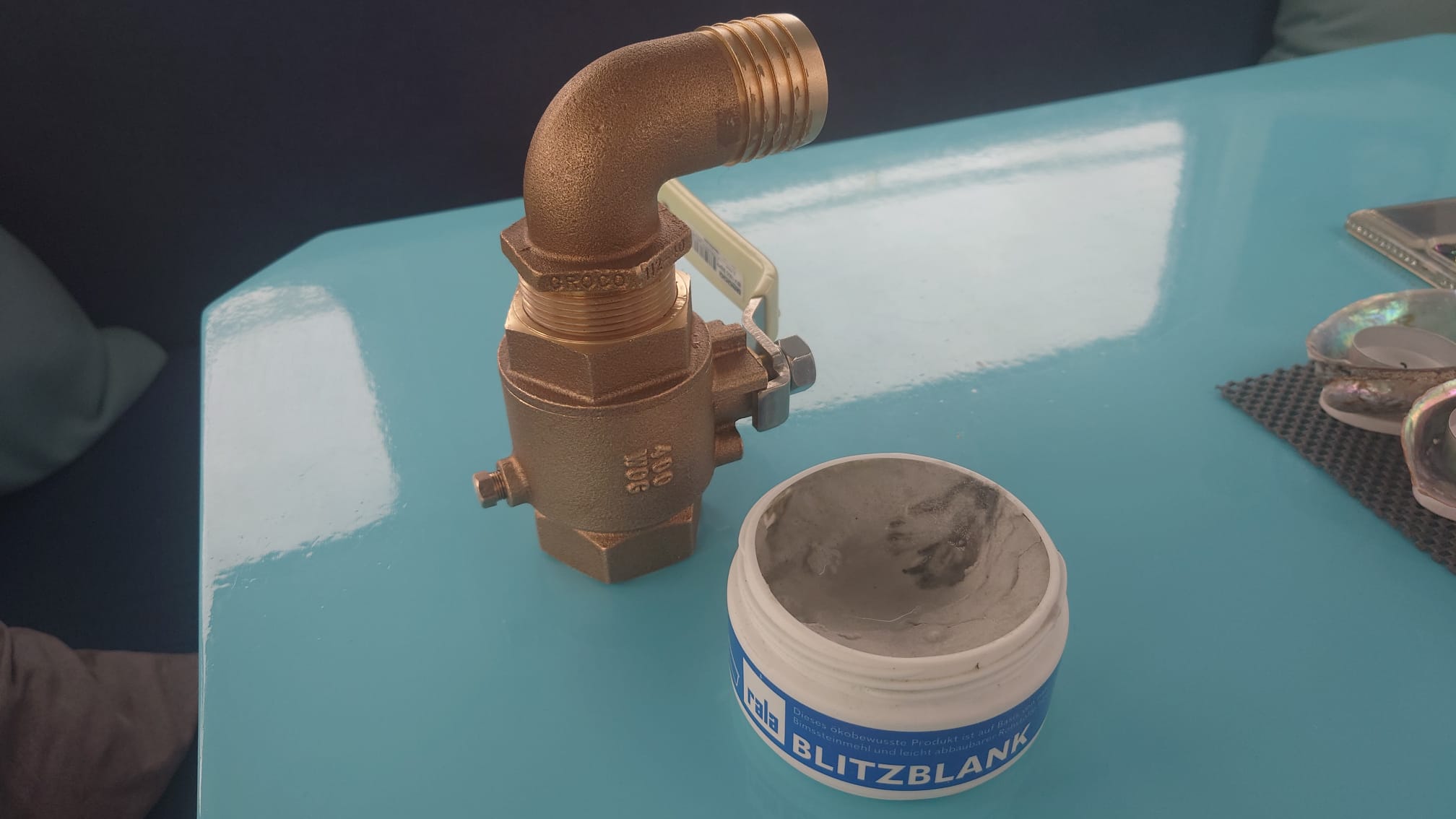
An old trick is to sand the pieces together. Well, we have sanding paste that we got from Ingo (boat “Antares”) last summer. Let’s try!
After moving both parts a thousands times they fit smoothly!
At 1330h, we call the boatyard to confirm. Yes, you can come now, they say. So, we hoist our anchor. It’s settled very firm! We have to sail over it with some real force to break it free.
Then we move to the travel lift portal. No travel lift there, no boatyard people. We call the office again. “Wait till you see the travel lift and our people”. Hm. We wait 45 minutes…hovering in the wind, in front of the portal… and then the travel lift appears and the men wave us. We have to go in, in reverse. The portal is all concrete which it way too high for our boat fenders at half tide. Well, with help of the bow thruster Wim manages to move Dione IV in without touching the concrete 🫡. Once we’re over the slings they quickly hoist a bit and we stay free of the concrete.
They have to try 4 times to find the balance, repositioning the slings. The travel lift operator says: you’re 19 tonnes. Huh? 2 years ago in Harlingen we were 22 and we estimated we had added another 2 tons… So, we lost some weight??? 🤔 Well, this travel lift is not the youngest and the pressure gauges look really ancient… We estimate Harlingen was more accurate…
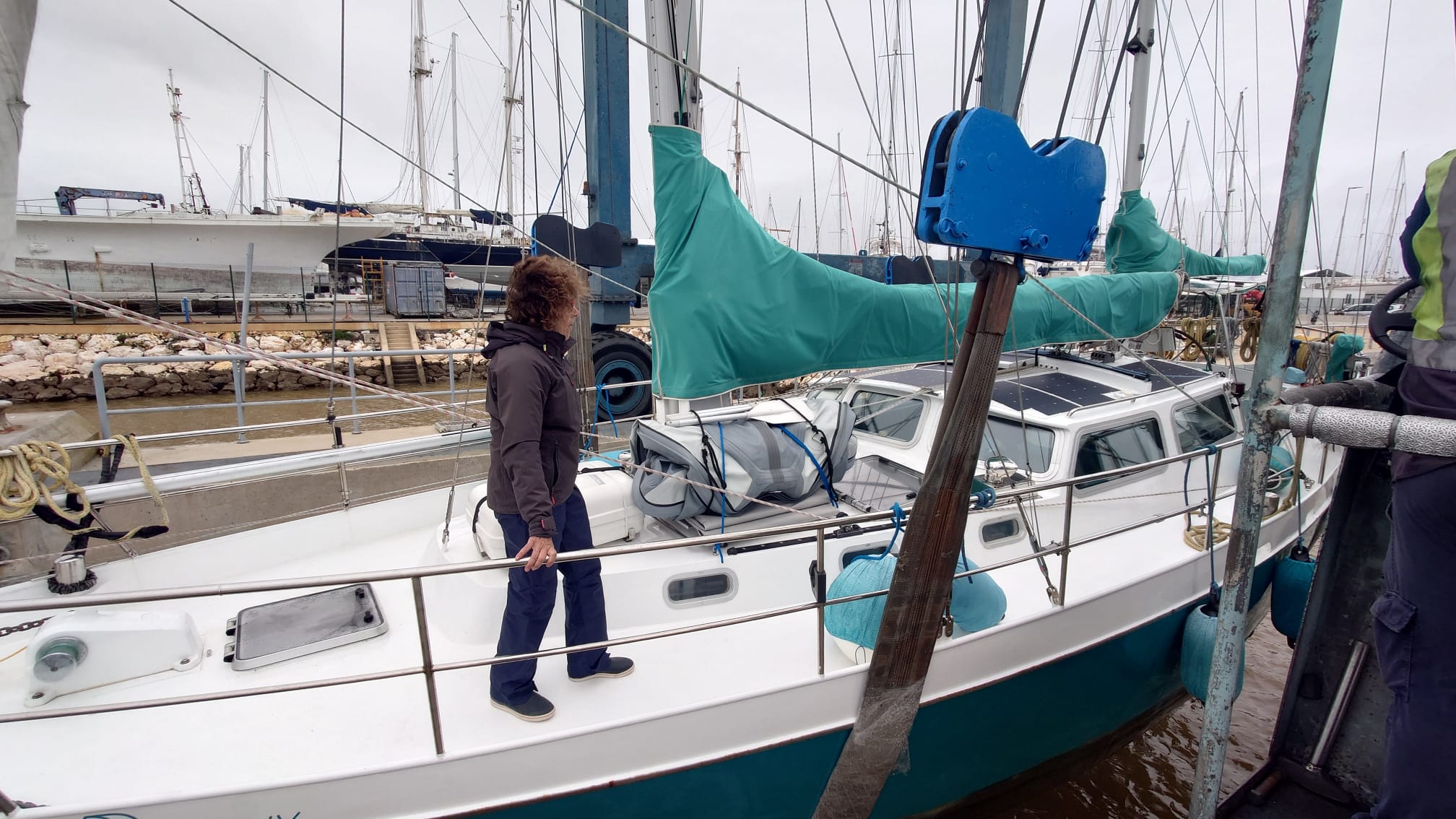
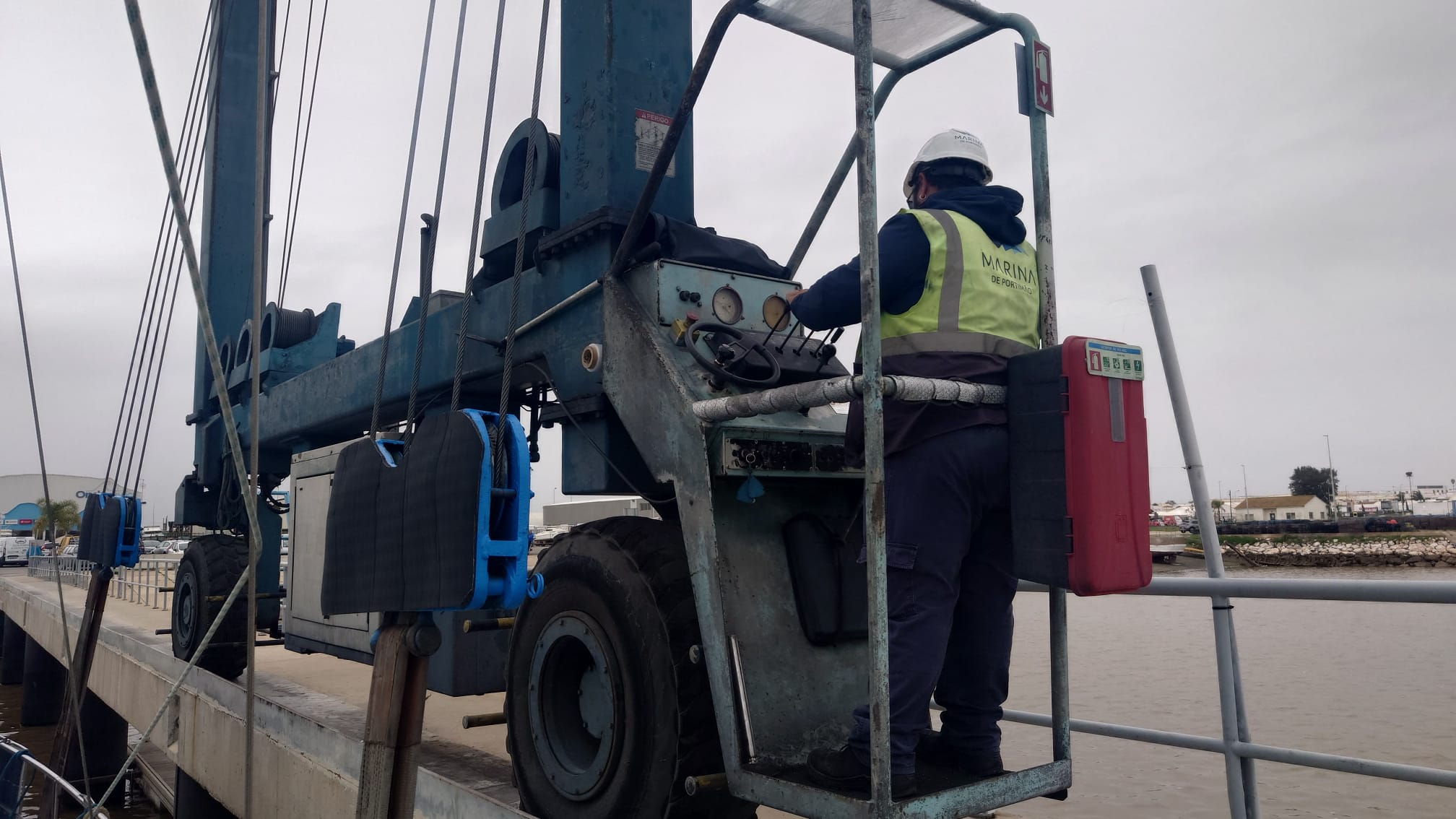
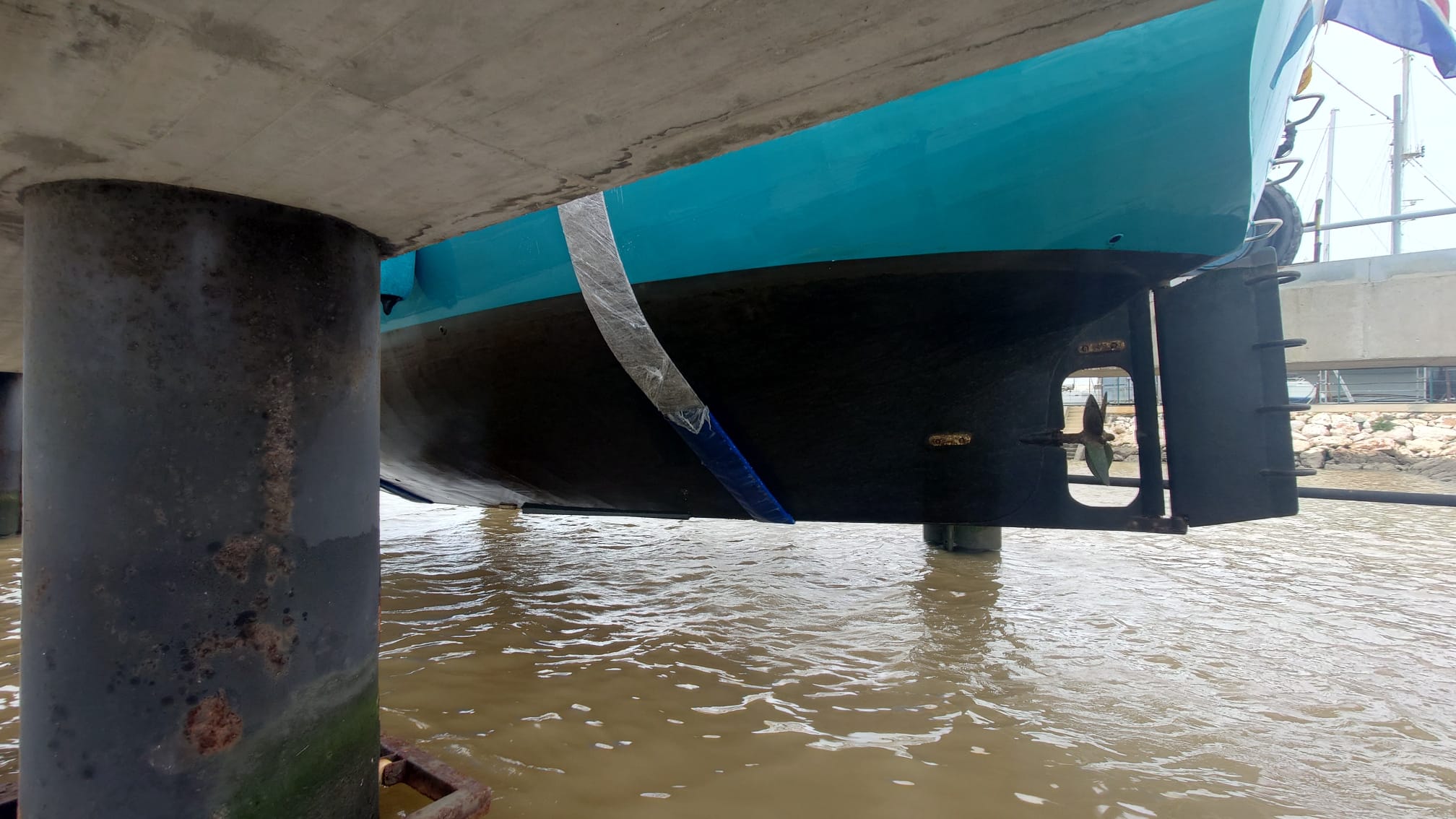
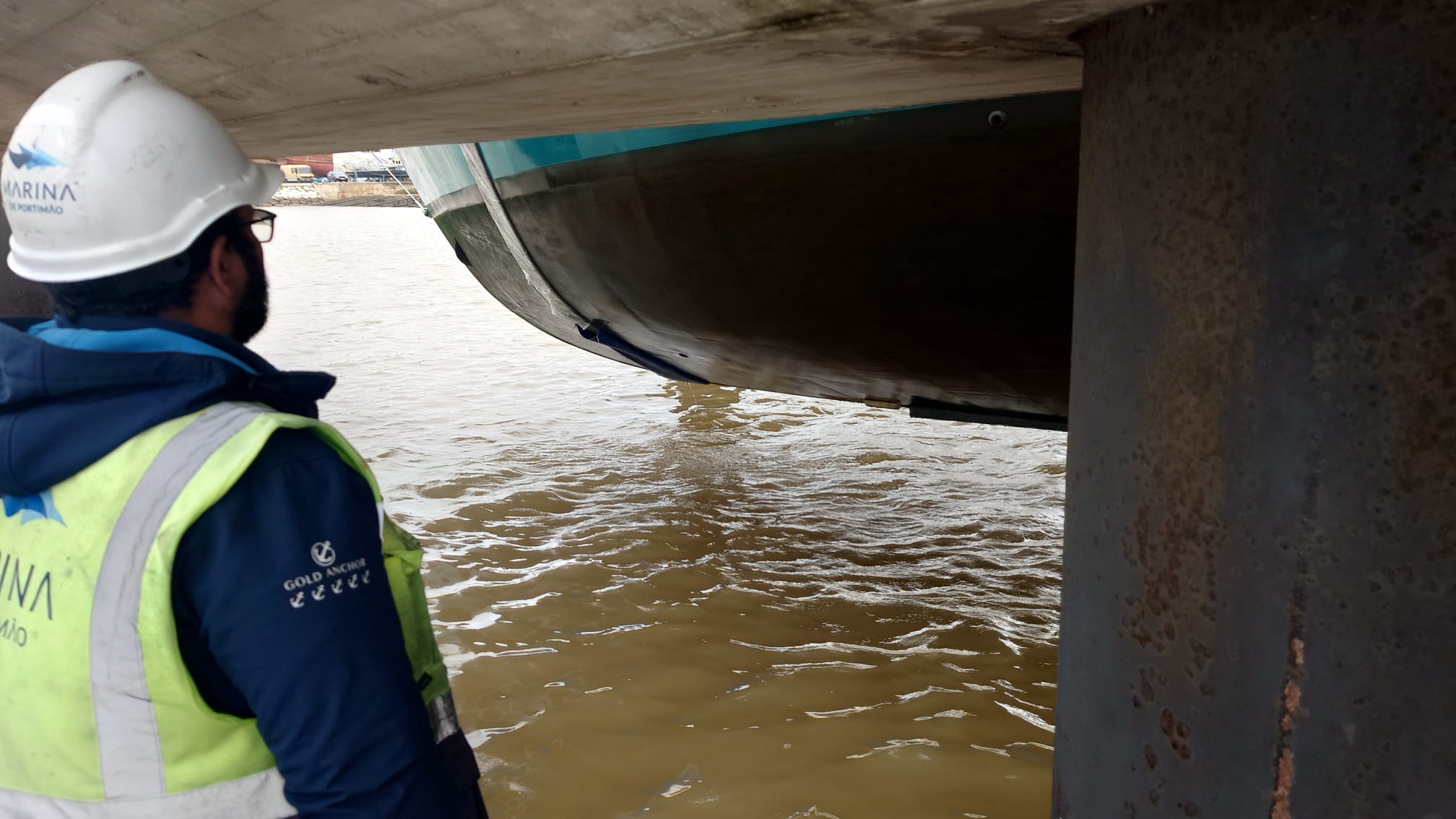
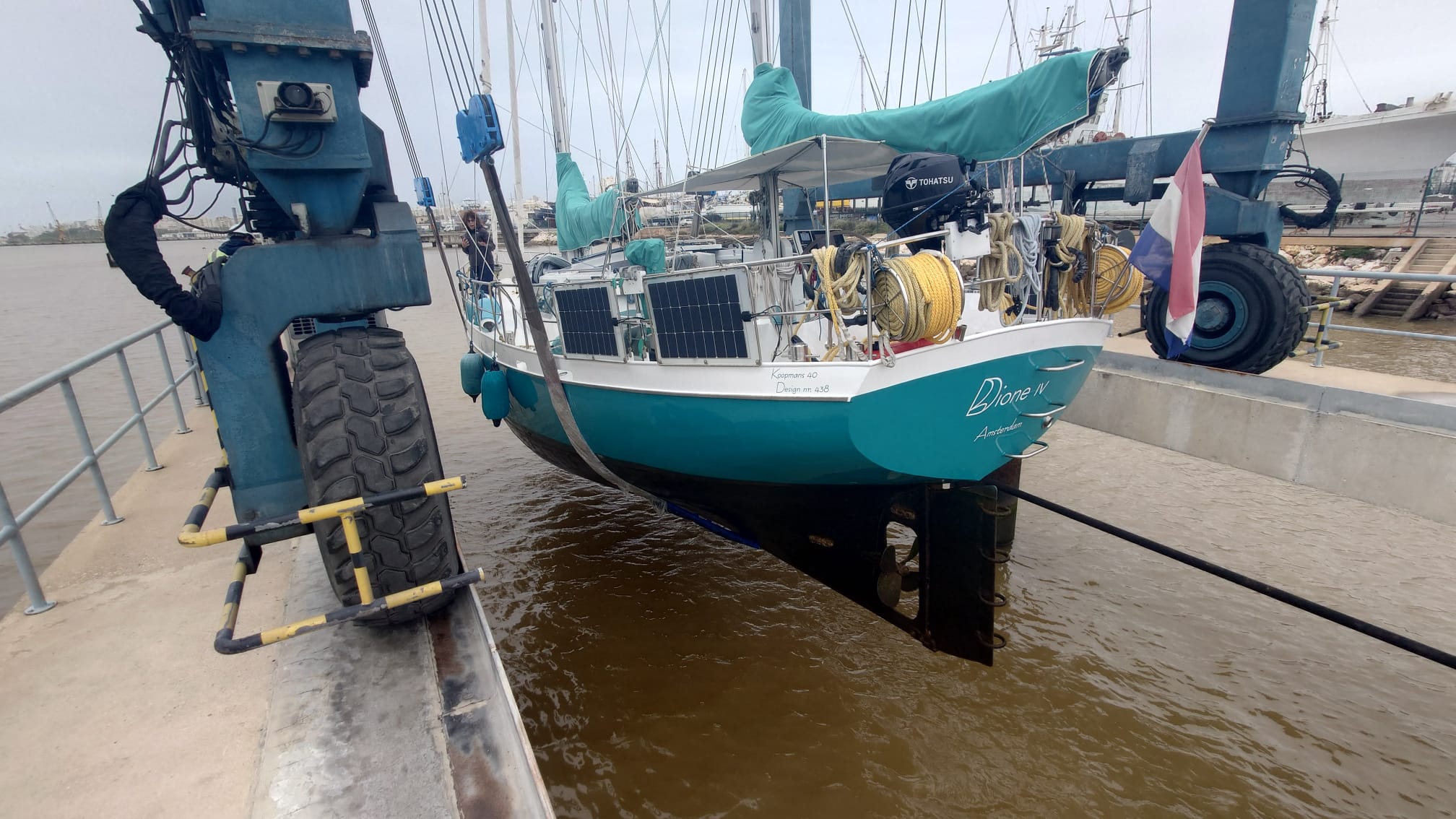
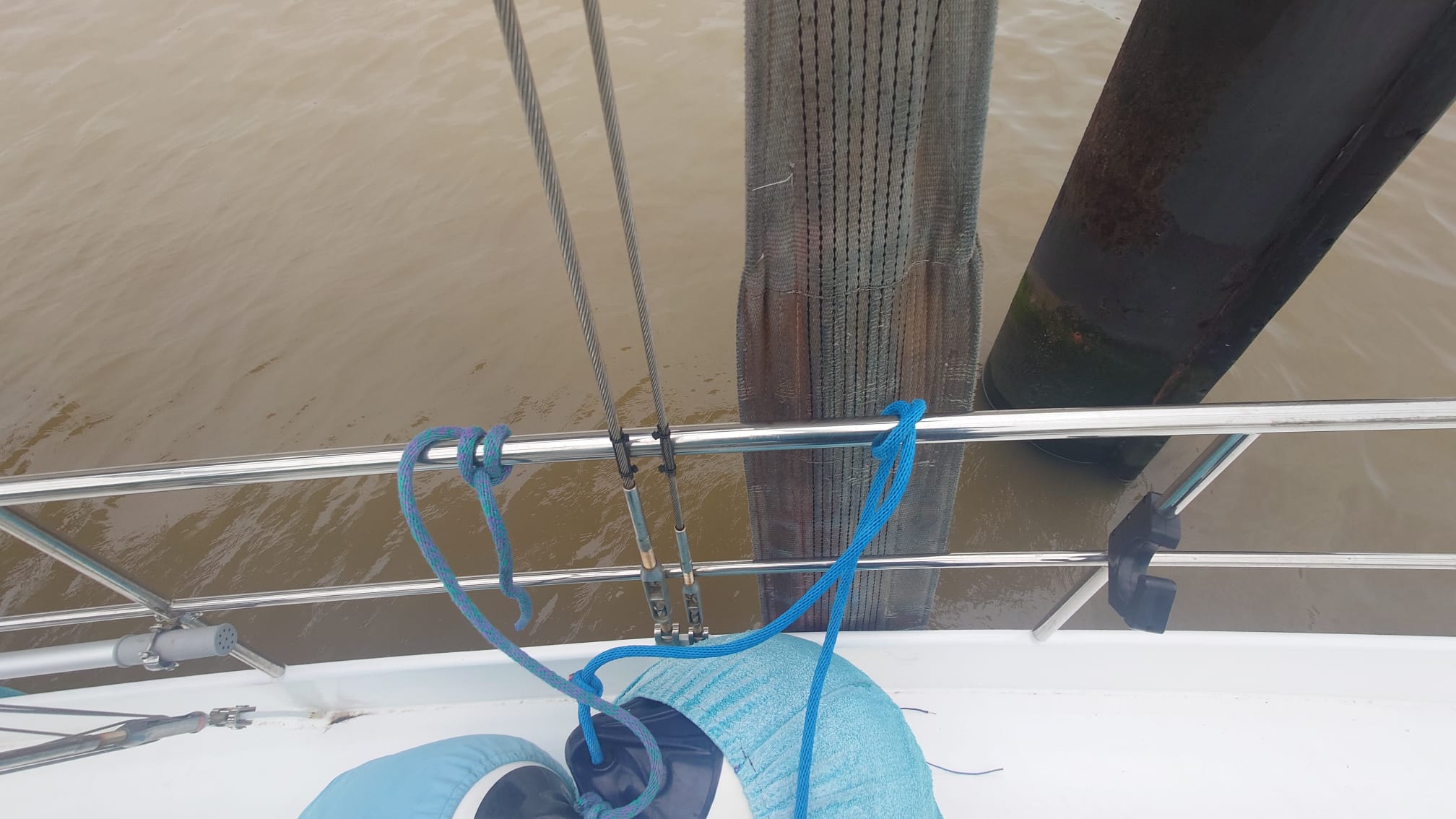
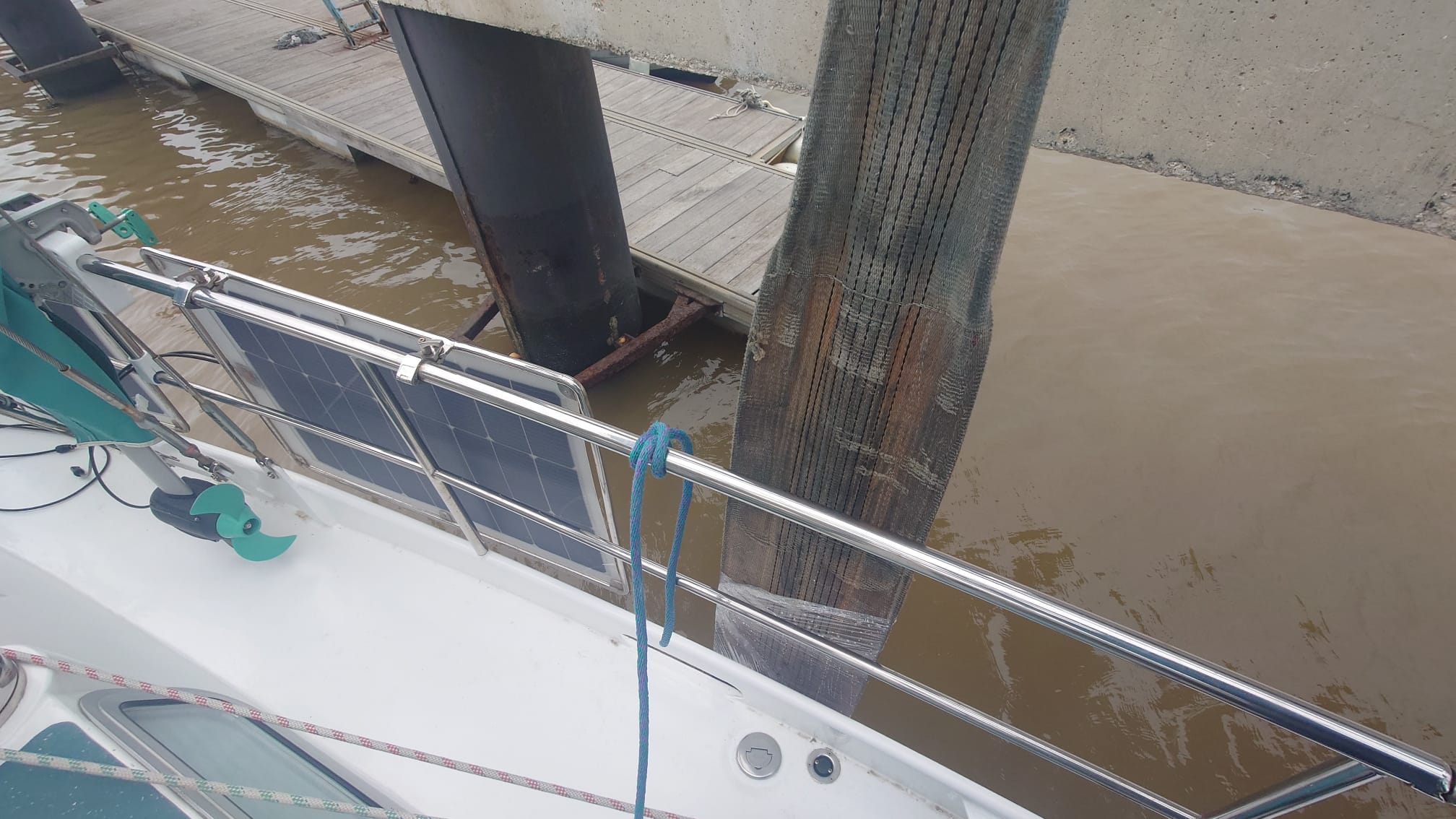
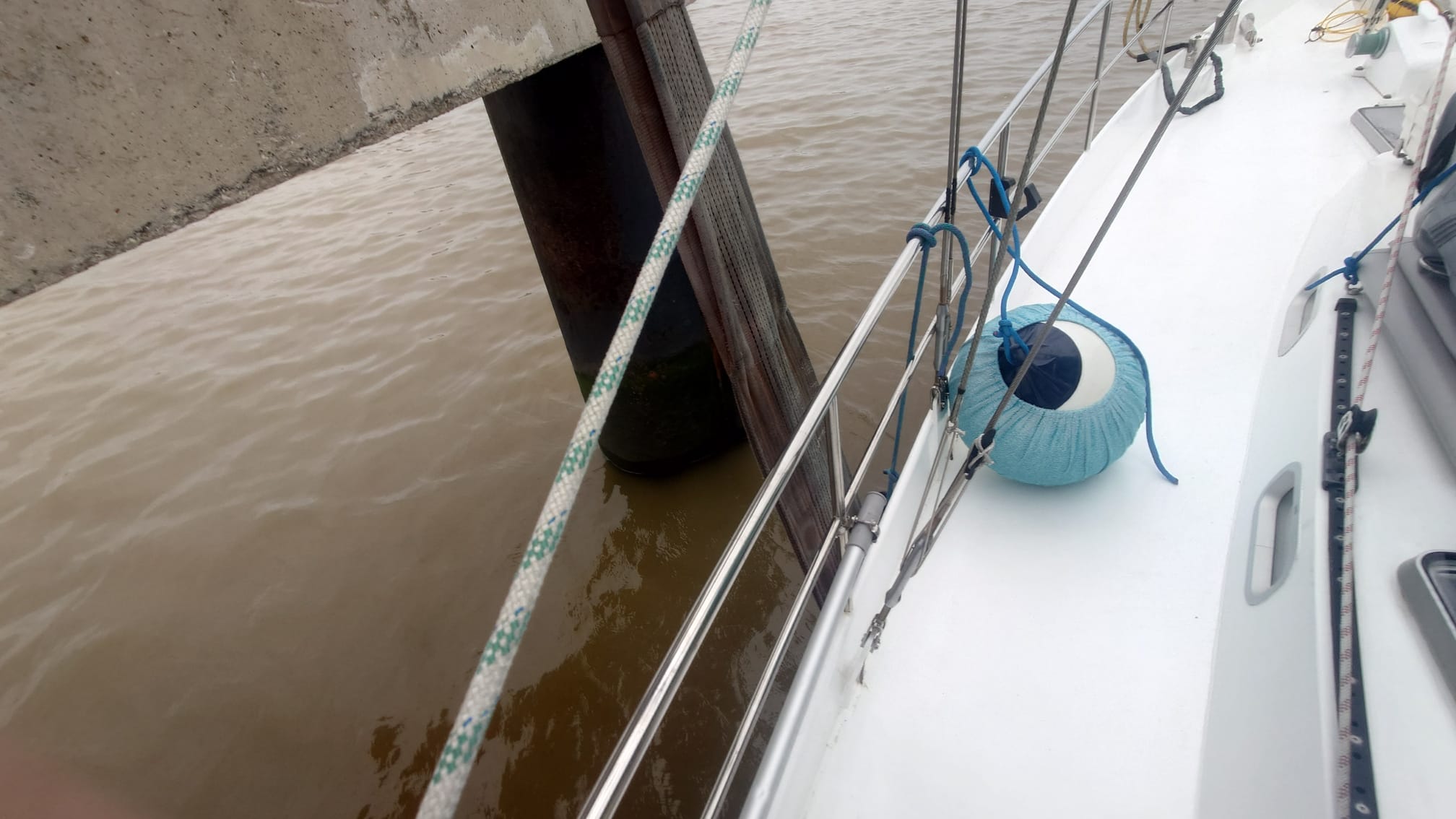
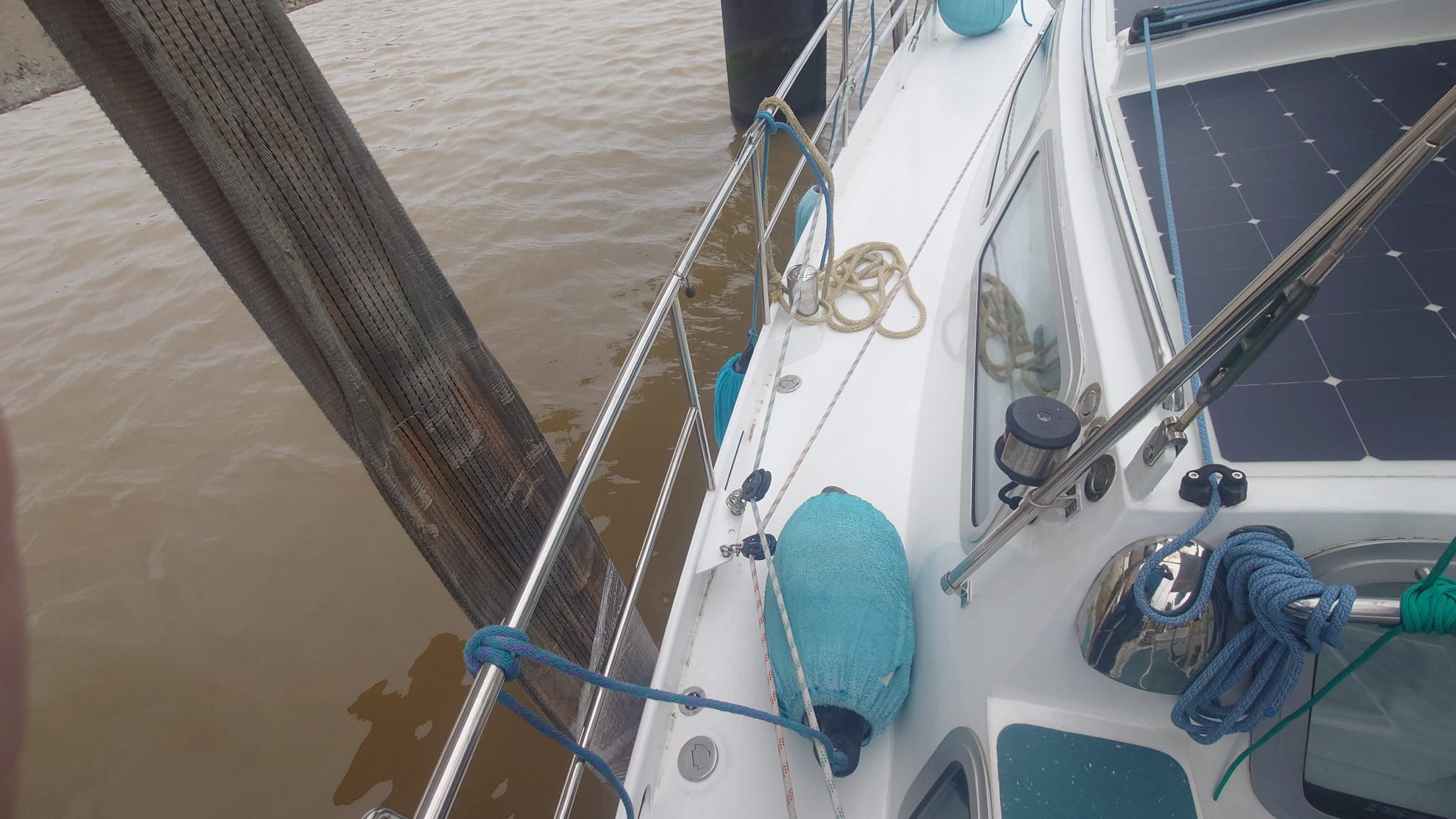
Finally they got the right positions and up she goes!
Moving ashore…
Move her ashore…
We almost forgot Sher! 😅
Move to the washing place…
High pressure cleaning. We have only a very light layer of algae so this is an easy job.
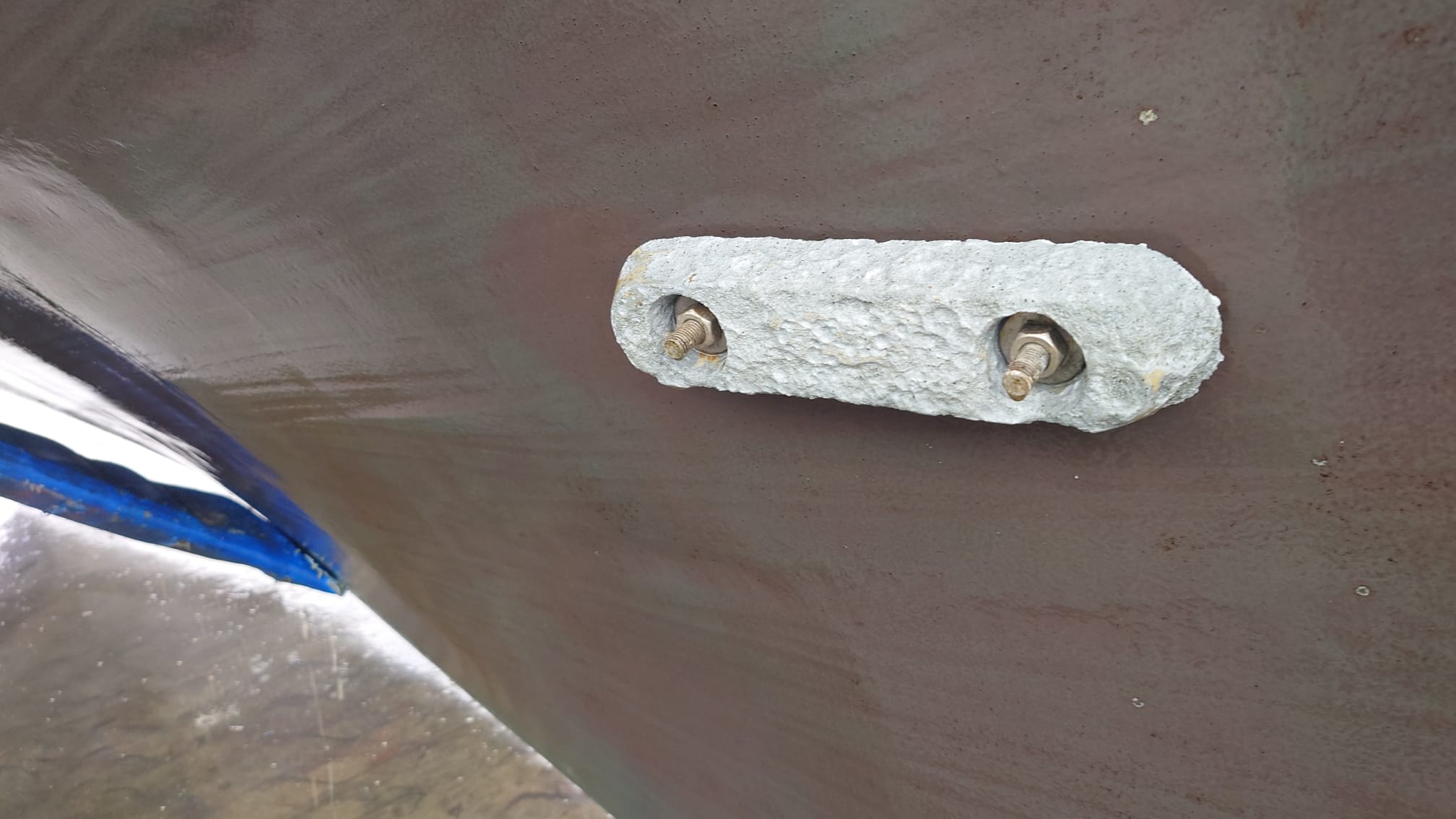
The anodes have bean doing their job but they are still good.
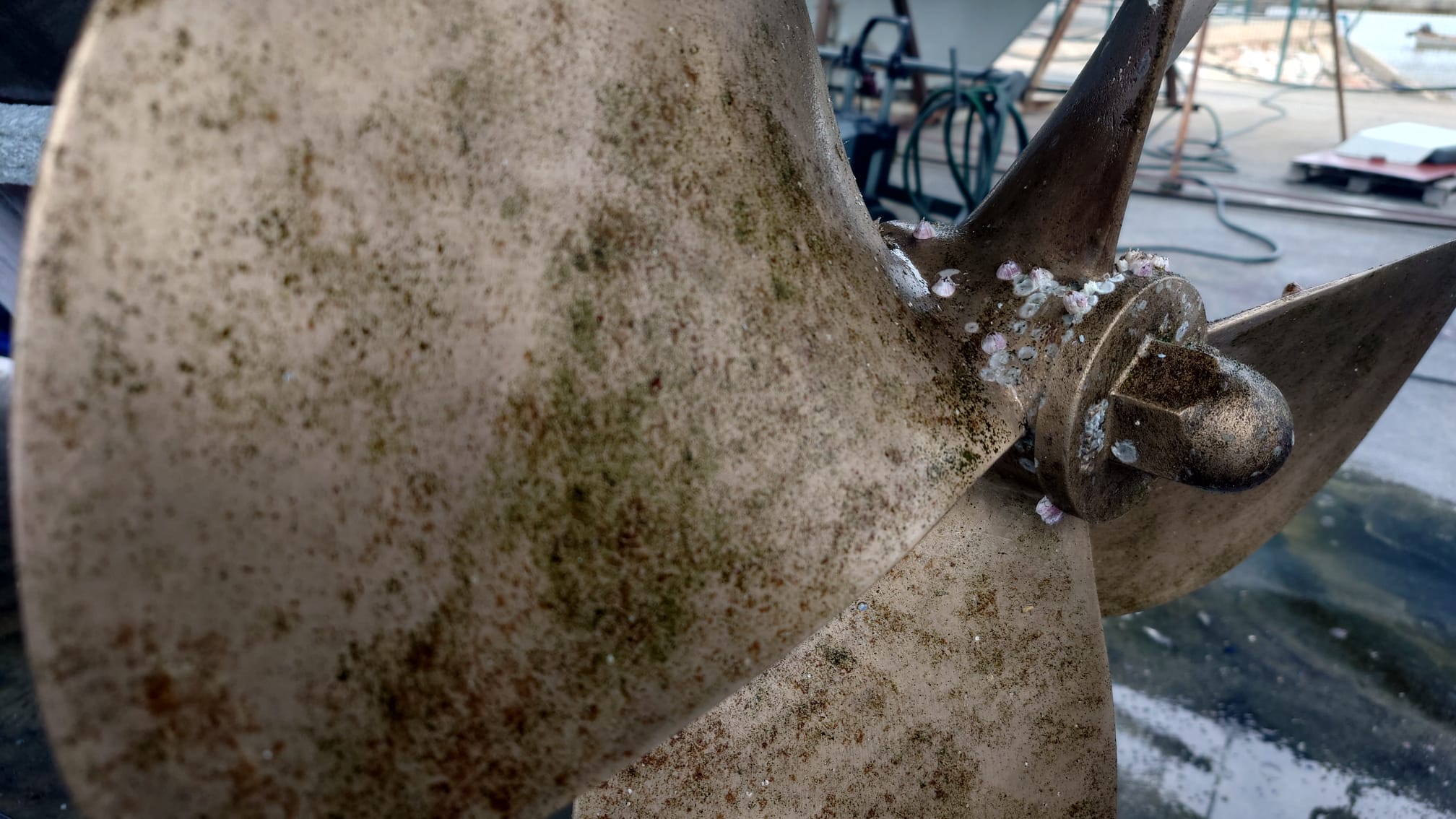
Some barnacles on the prop. But not too bad.
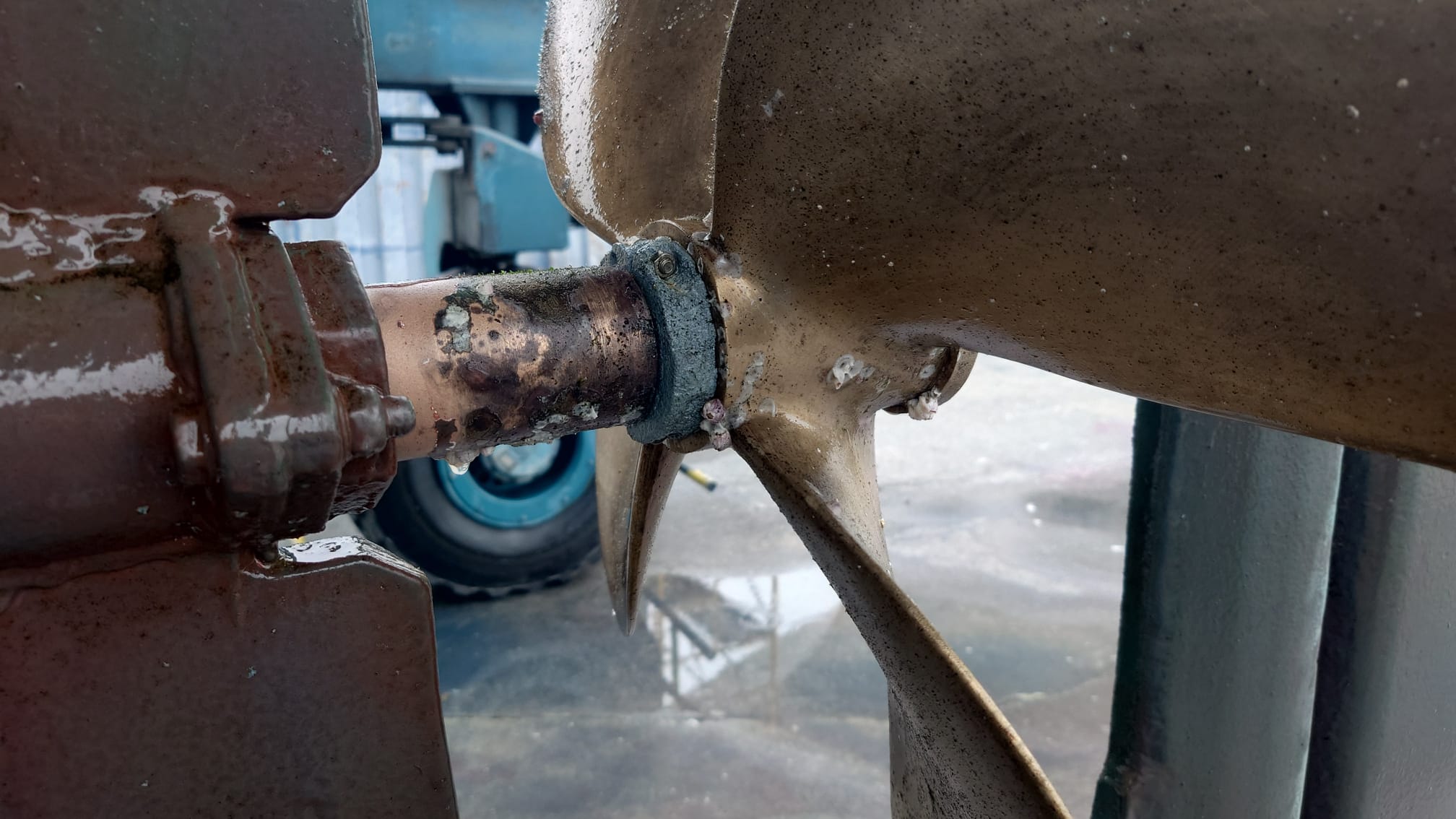
Then they put us in jack stands on the boatyard.
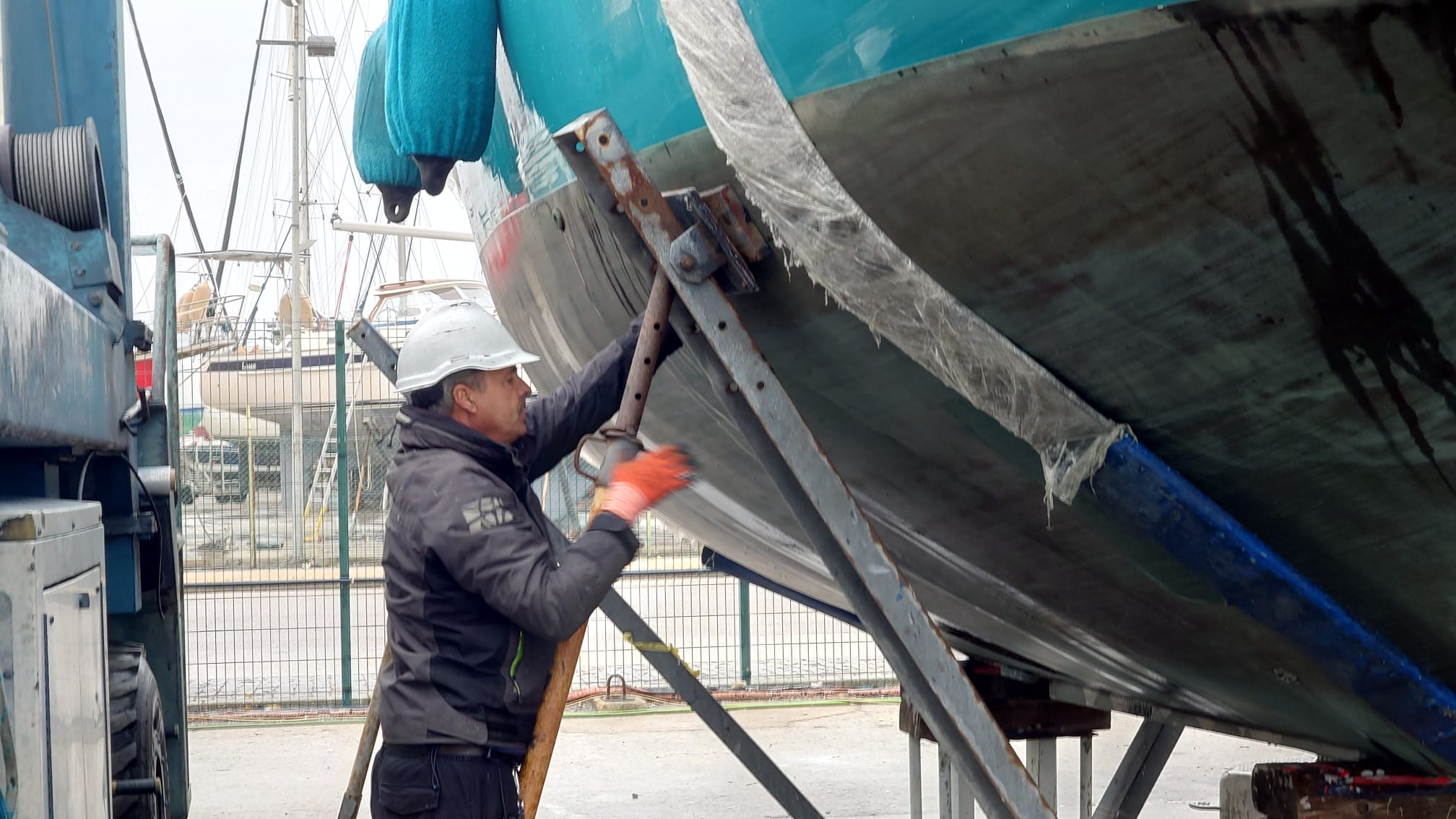
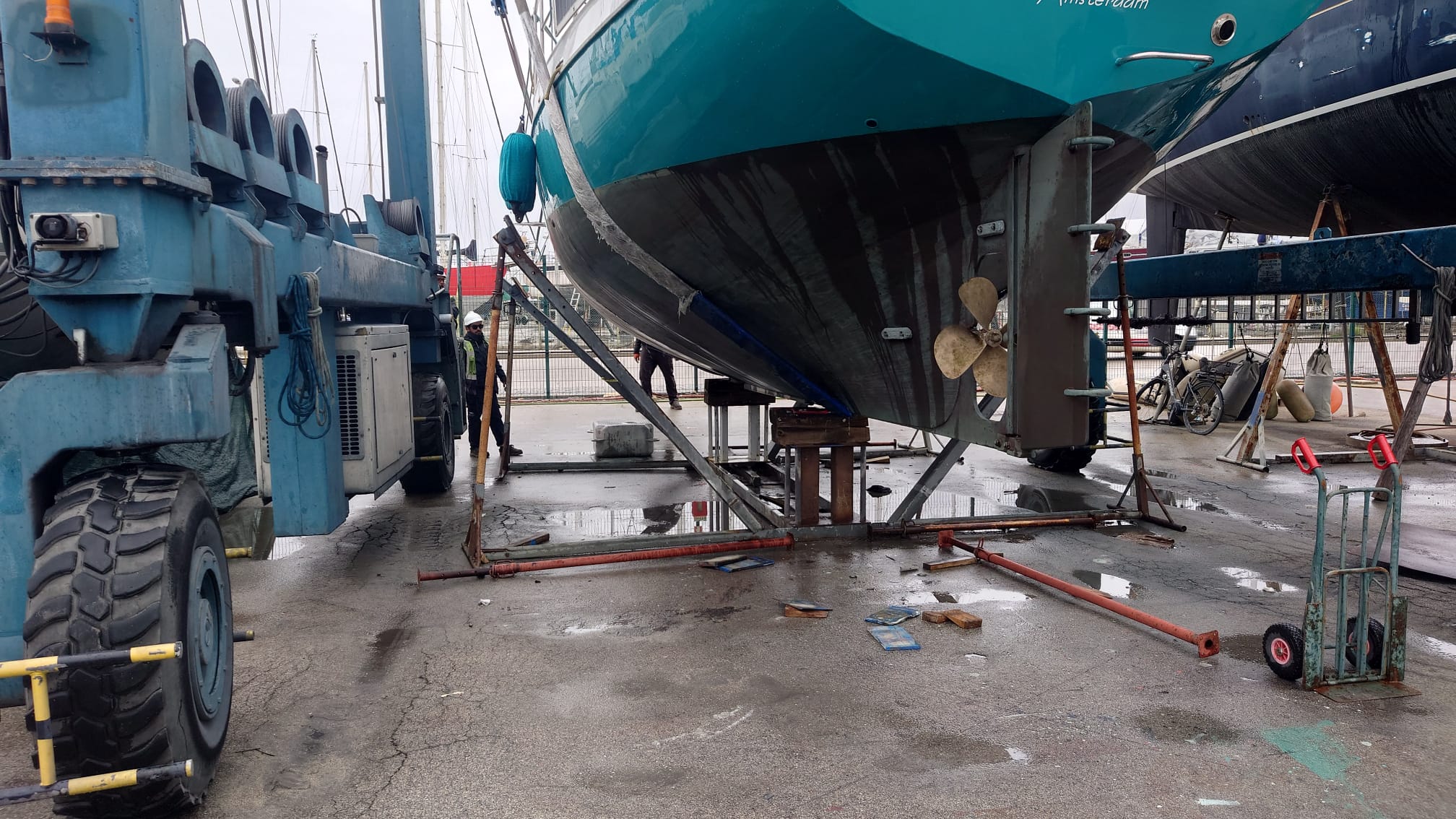
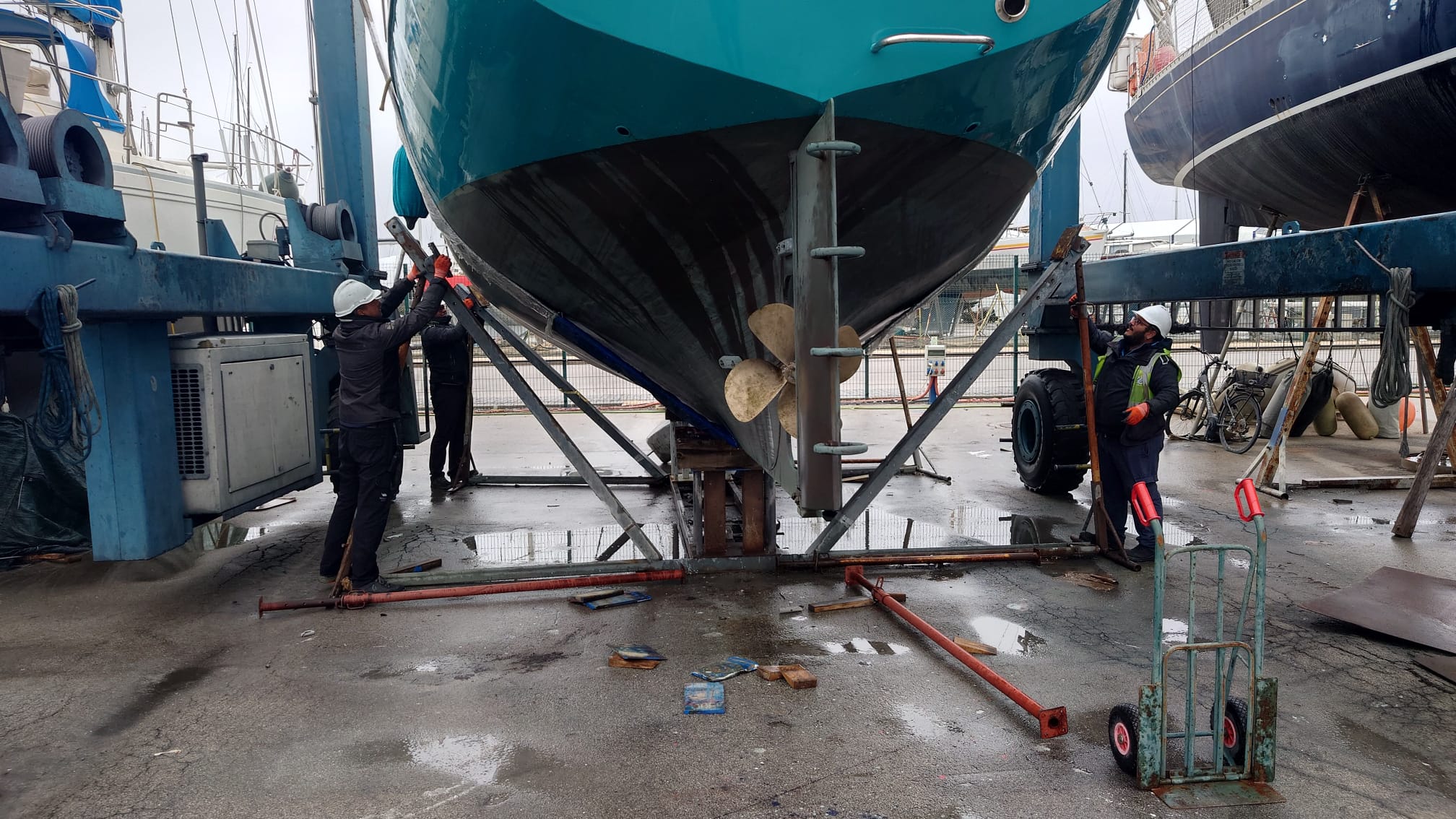
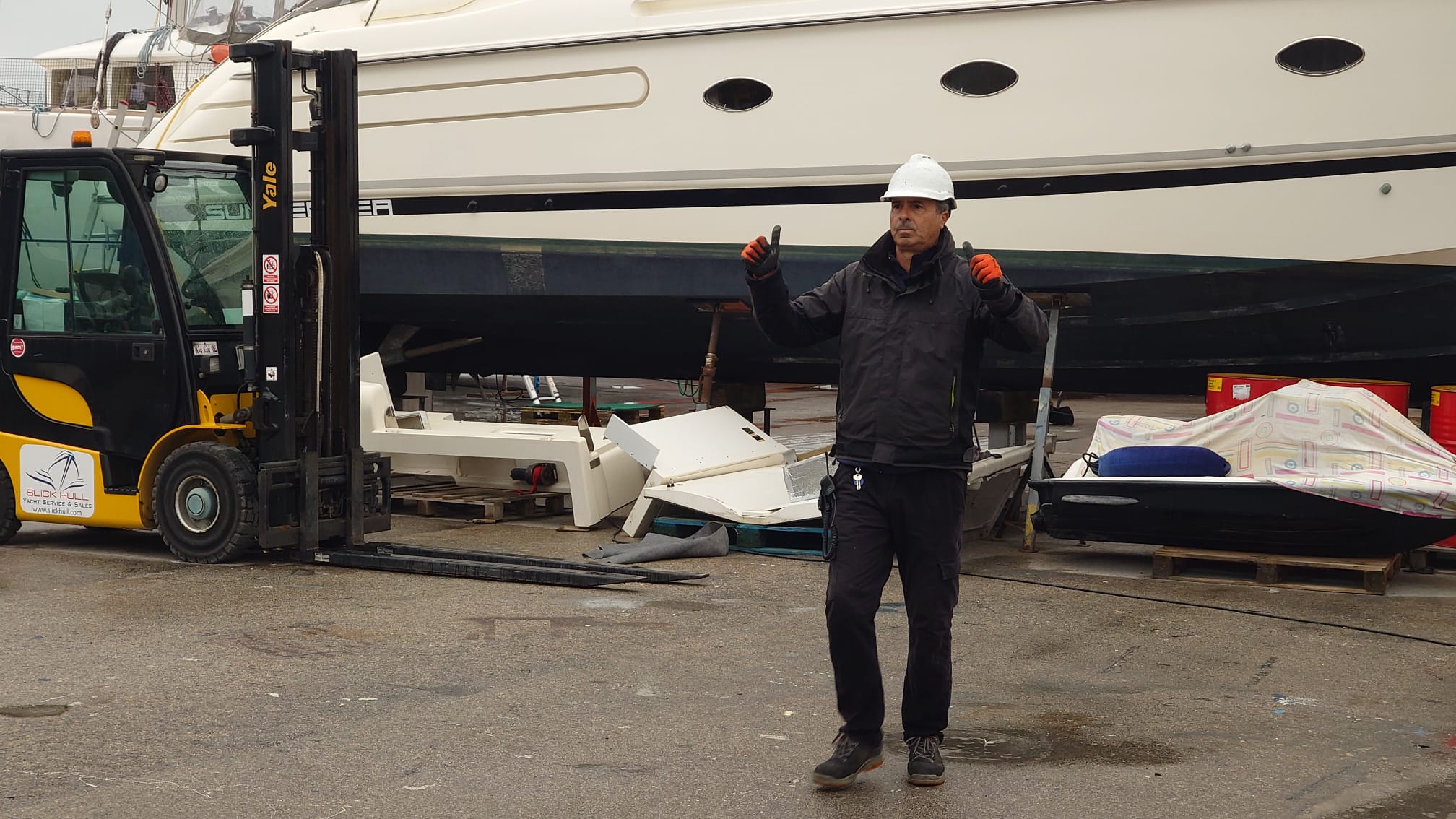
And the travel lift moves away. Obrigado, guys! Job well done!
January 23.
Storky Sher 😂
Let’s get to work!
We’re going to replace all 4 of our through-hull valves. They are 20 years old and although they still look pretty fine, 20 years is considered end of lifetime for professional quality valves.
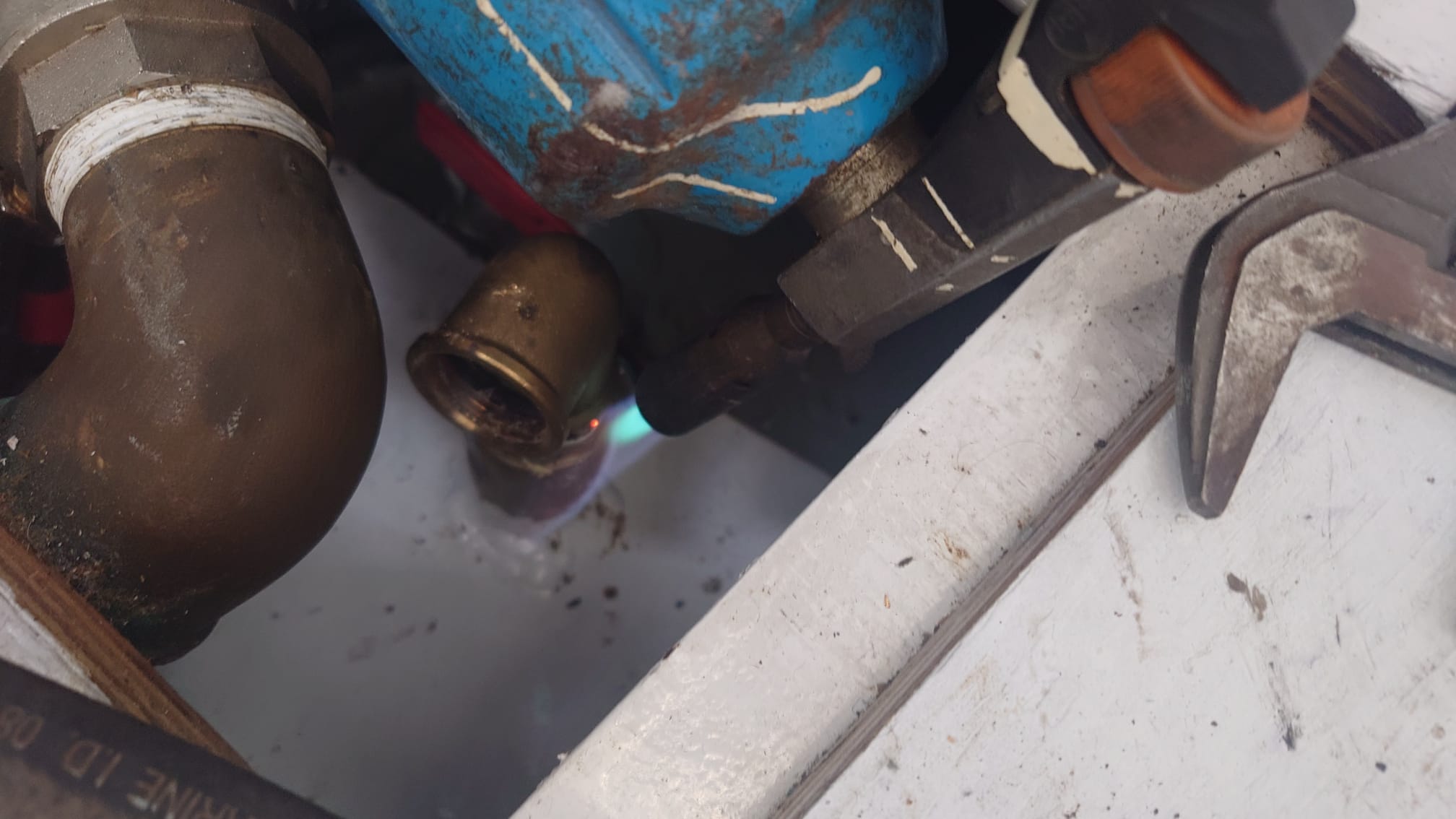
Wim installed the valves when the hull was built. He used Loctite 538 to glue them to the stainless steel (316) threaded pipes that were welded into the hull.
To release the valves, they have to be heated with the gas torch. The Loctite gets soft and then we can rotate the valve.
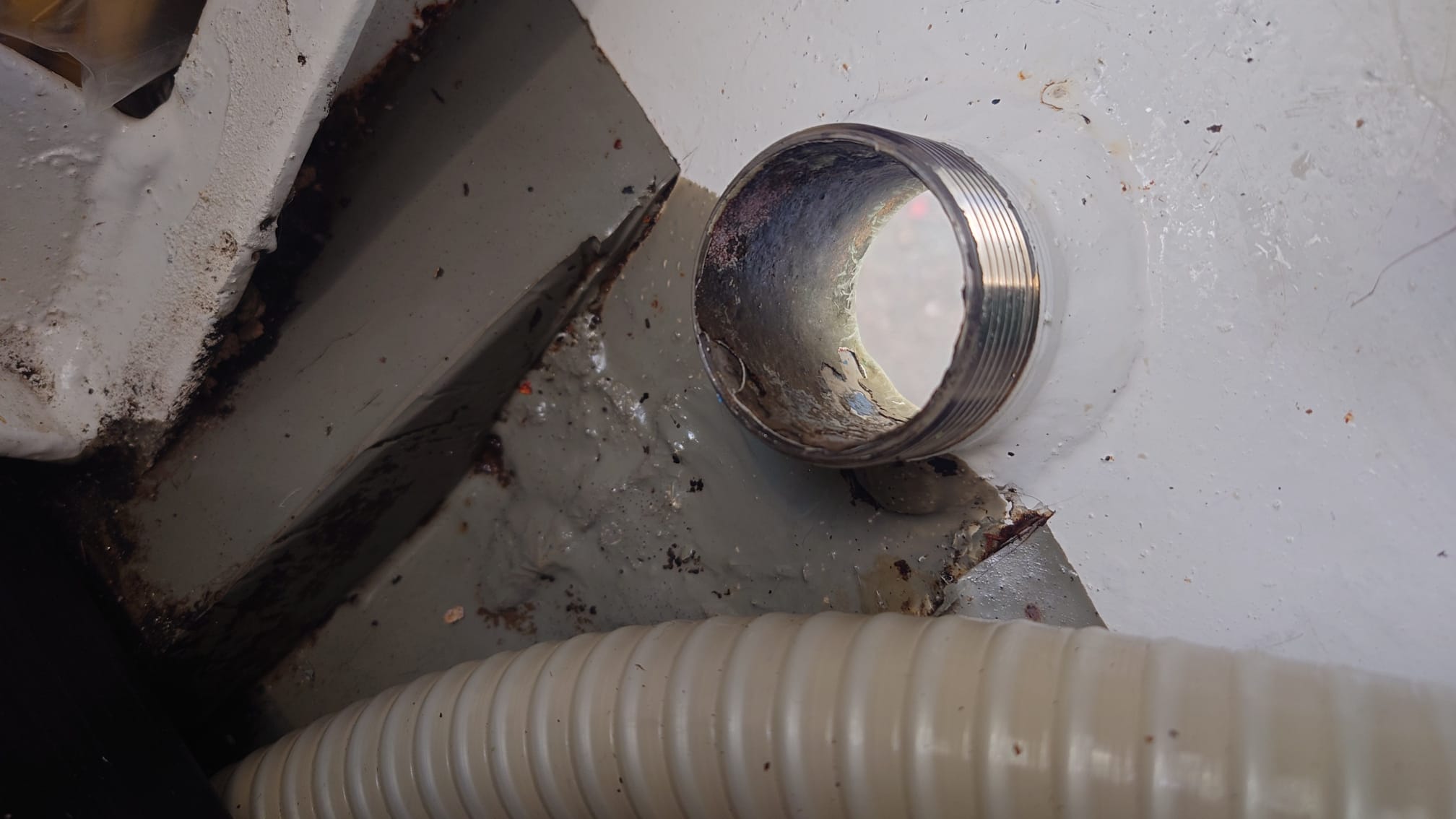
Even with the Loctite heated and softened, it’s a very hard job to turn the big (1-1/4″) valves. Using a very big pipe wrench it takes maximum force from Wim’s arms.
But the first one is gone! The galley drain. This was the easiest one. The stainless steel fitting looks like new! That is great! We were uncertain about corrosion. It’s different metals together: the bronze valve, the stainless steel fitting, the steel hull. That could cause a nasty electrolytic corrosion. But, nothing at all! That’s perfect! 🥳
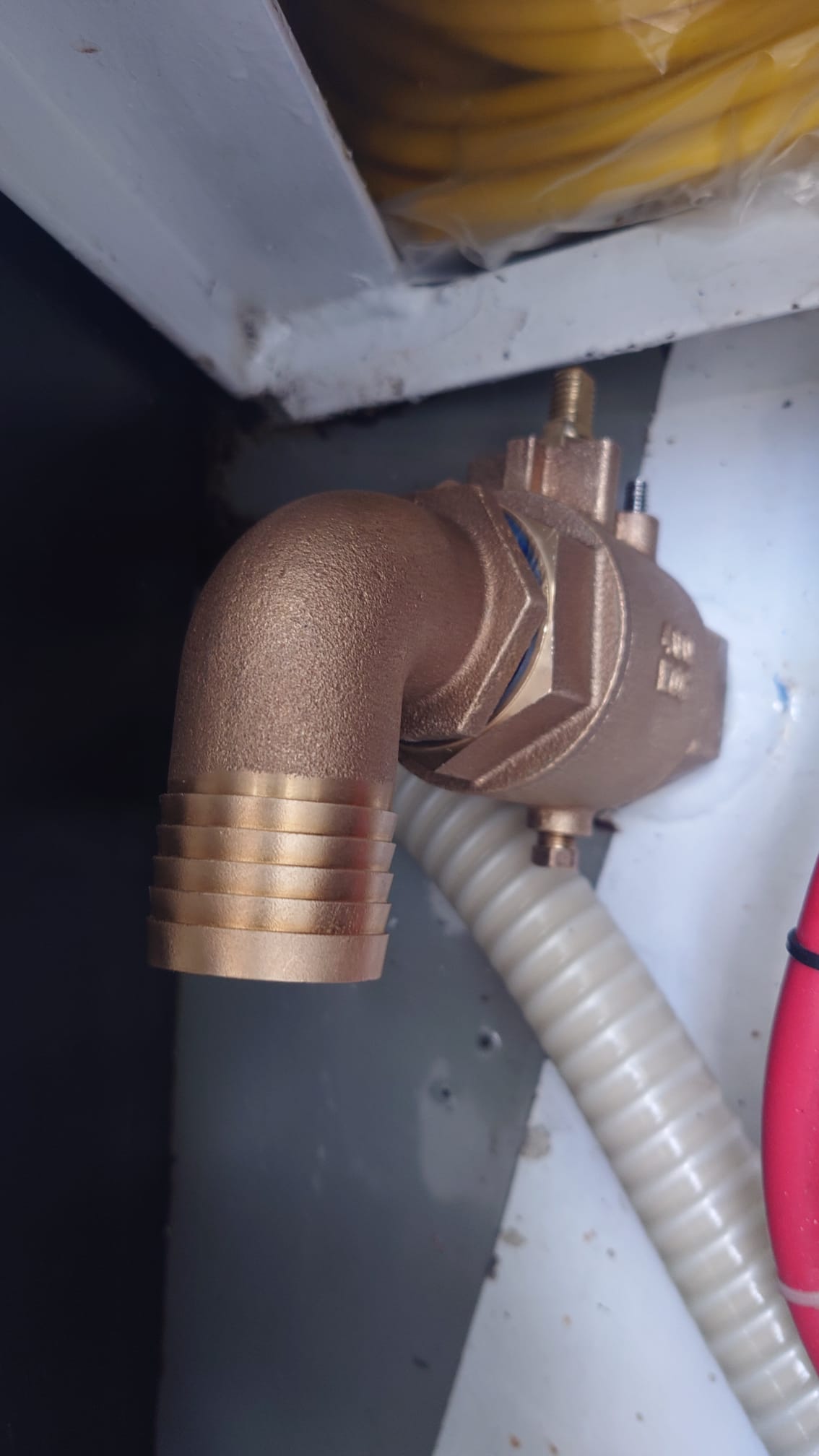
After cleaning with small steel brush and de-greasing all threads with professional disk brake de-greaser (tri-chloride-ethylene), the elbow is screwed into the valve using the blue thread sealant Loxeal 55-03.
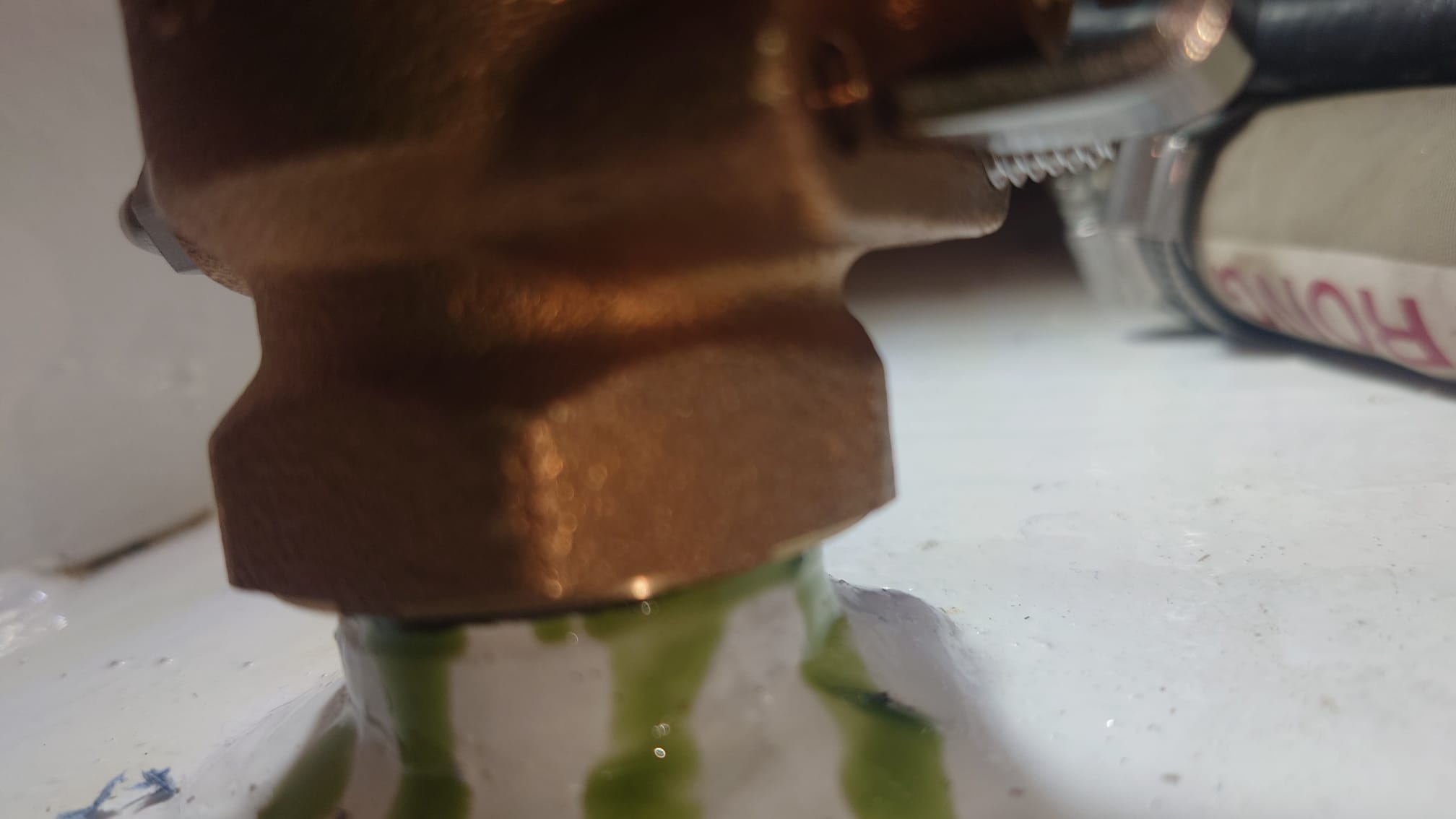
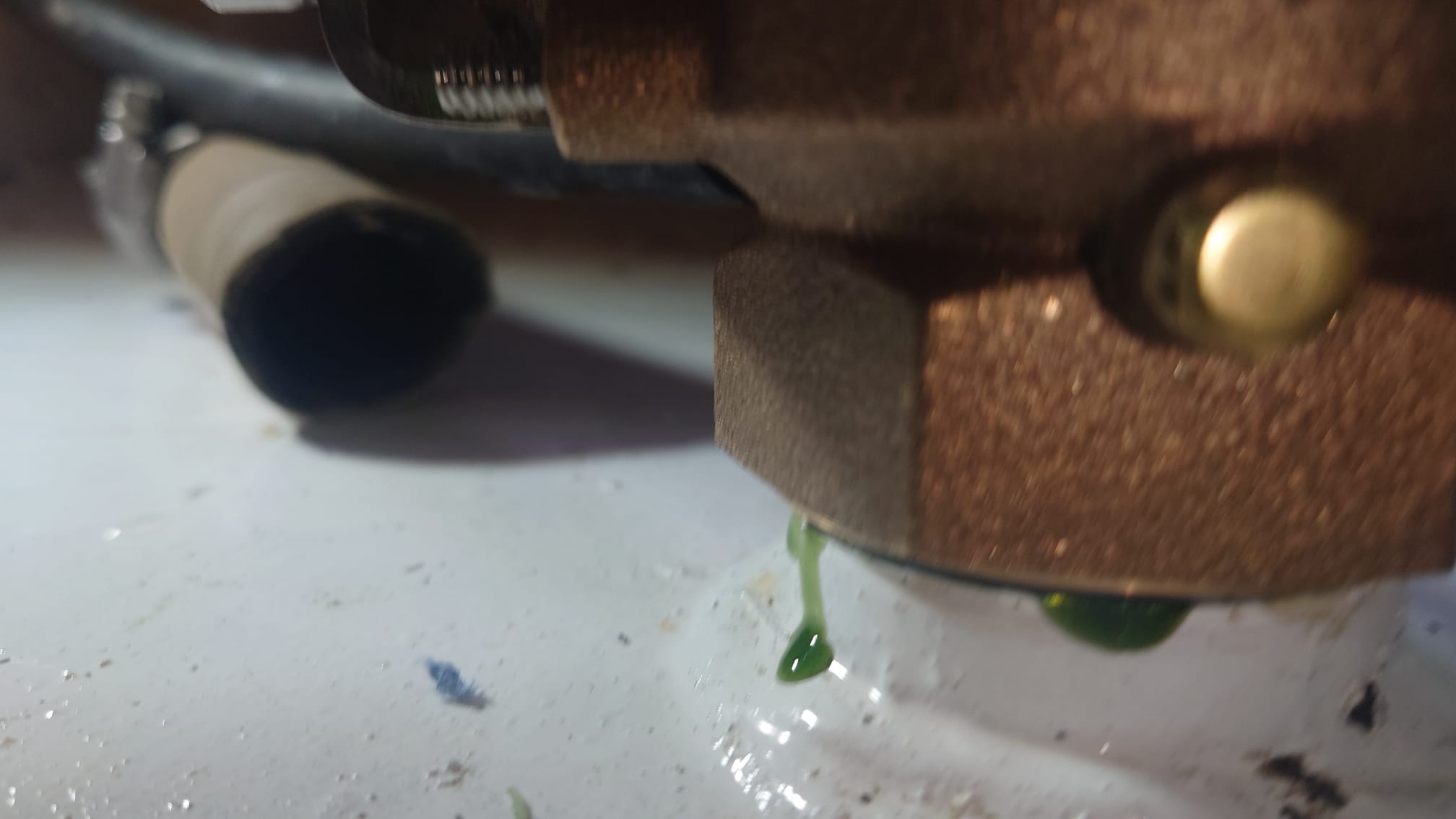
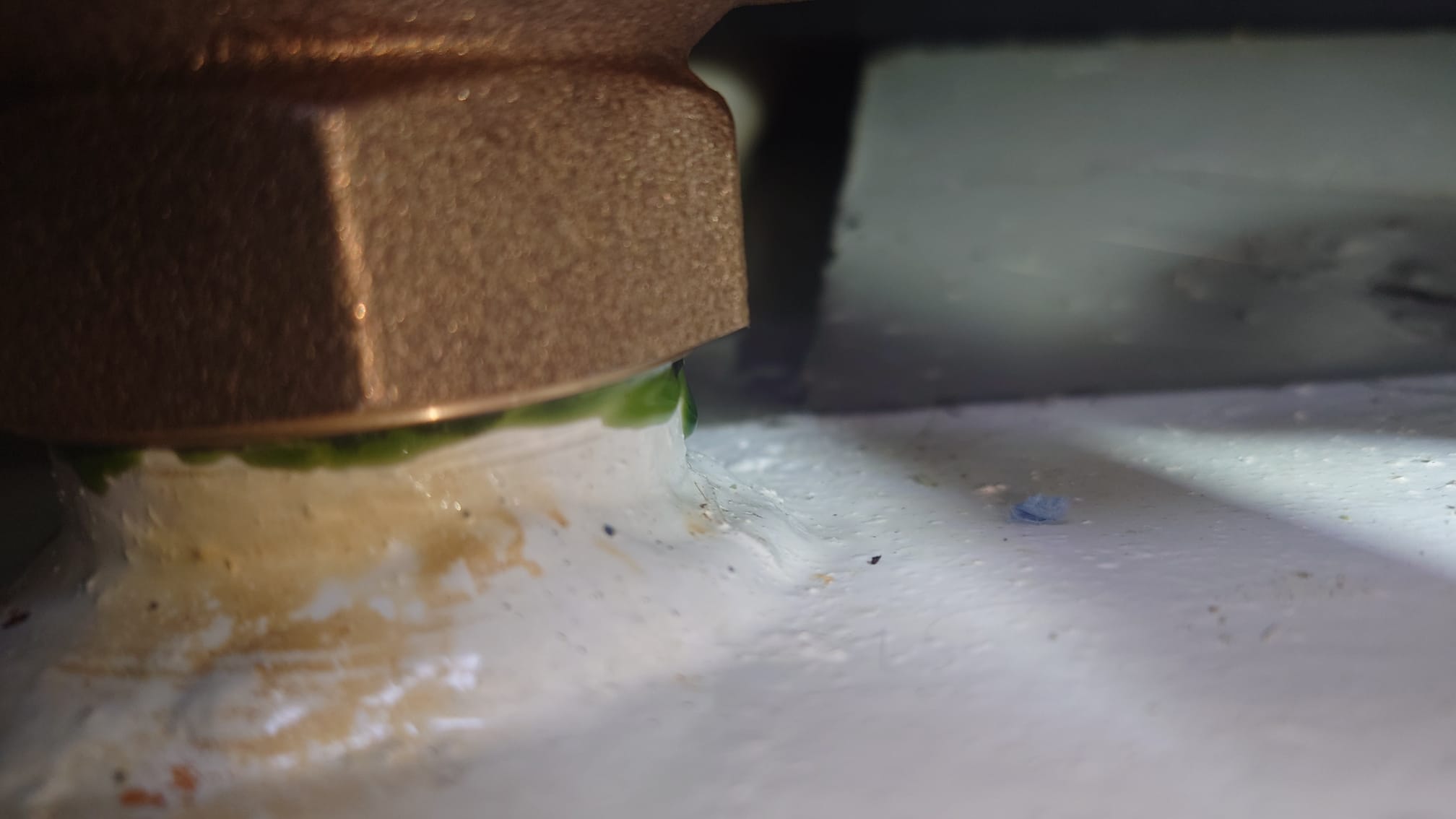
Then both threads of the valve and stainless steel pipe get an amount of Loctite 538 and are screwed on by hand.
This has to cure 24 hours for it’s maximum strength before we can fit the hose back.
The reason for using 2 different thread sealants is: if the elbow would have to be removed (for instance, if it gets clogged) while the boat is in the water, we can warm it a little bit and the Loxeal will easily release while the valve will stay in place because the Loctite 538 is extremely strong (if not heated, the housing of the valve will break before the Loctite breaks if one would put a huge spanner on it to try to turn it 💪🏻💪🏻).
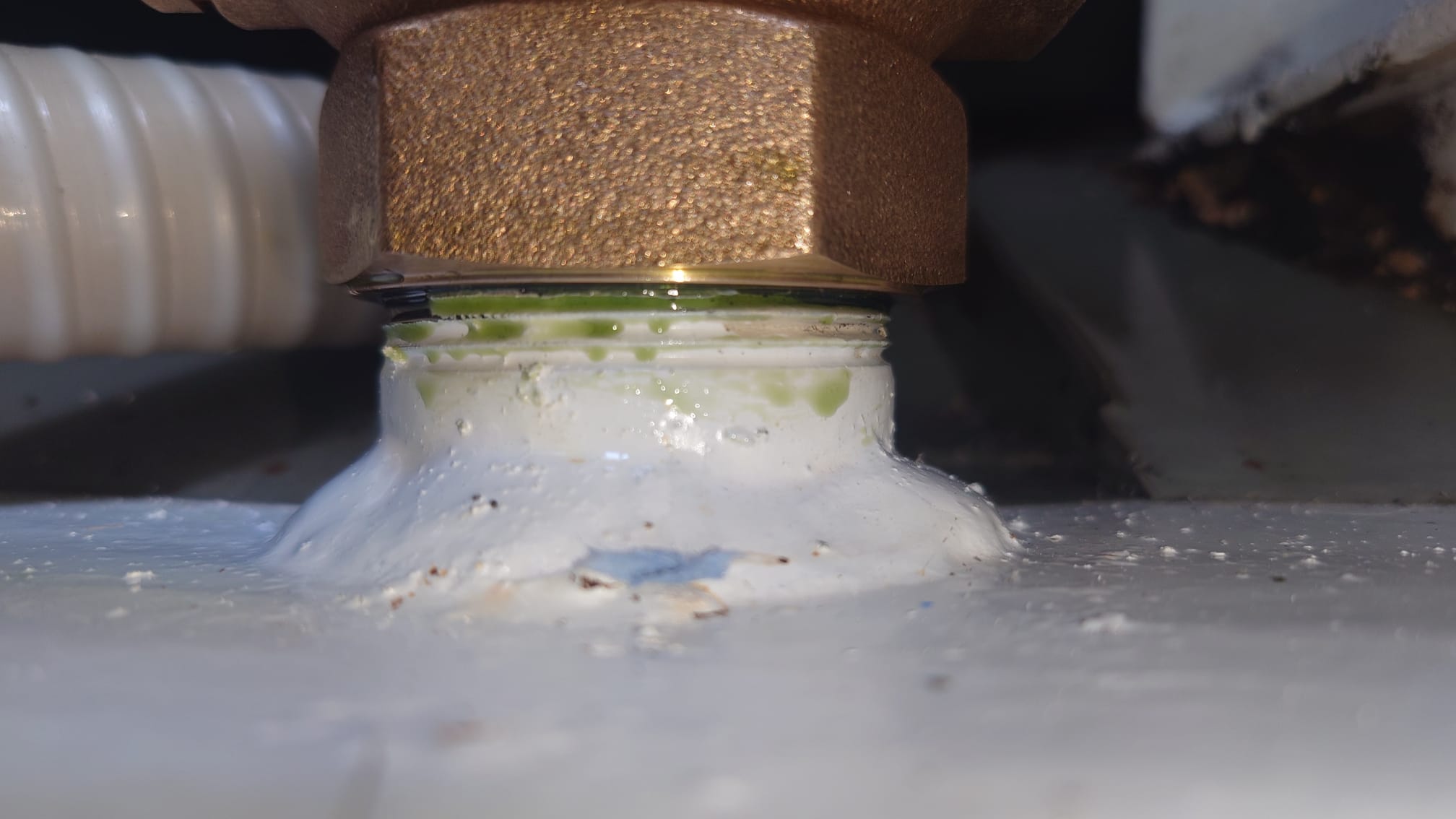
Wim takes a picture from below to check if excess Loctite drips out. Then we can be sure that the thread is fully filled with Loctite.
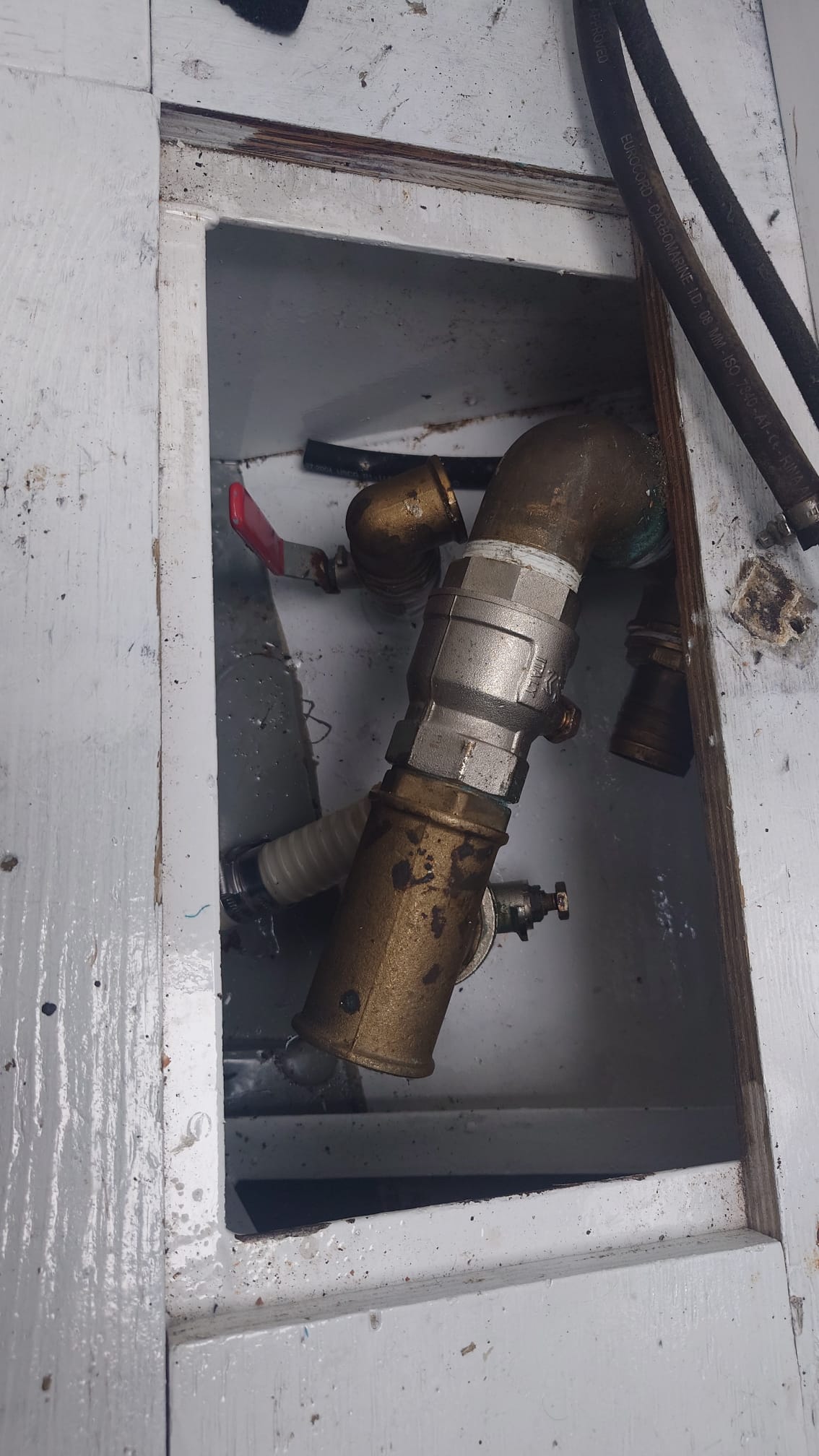
Then, we move on to the starboard side. Here are the valves for the sink in the bathroom and for the toilet.
To reach these, we have to remove the Dickinson heater first.
Here’s some old plumbing which was intended to use for pump-out the holding tank but that was never used. Not easy to reach with big heavy tools, everything turns very hard and it’s very a complicated order of disassembly. It takes Wim the entire day and sore muscles in his in hands, arms, neck and back 😫…
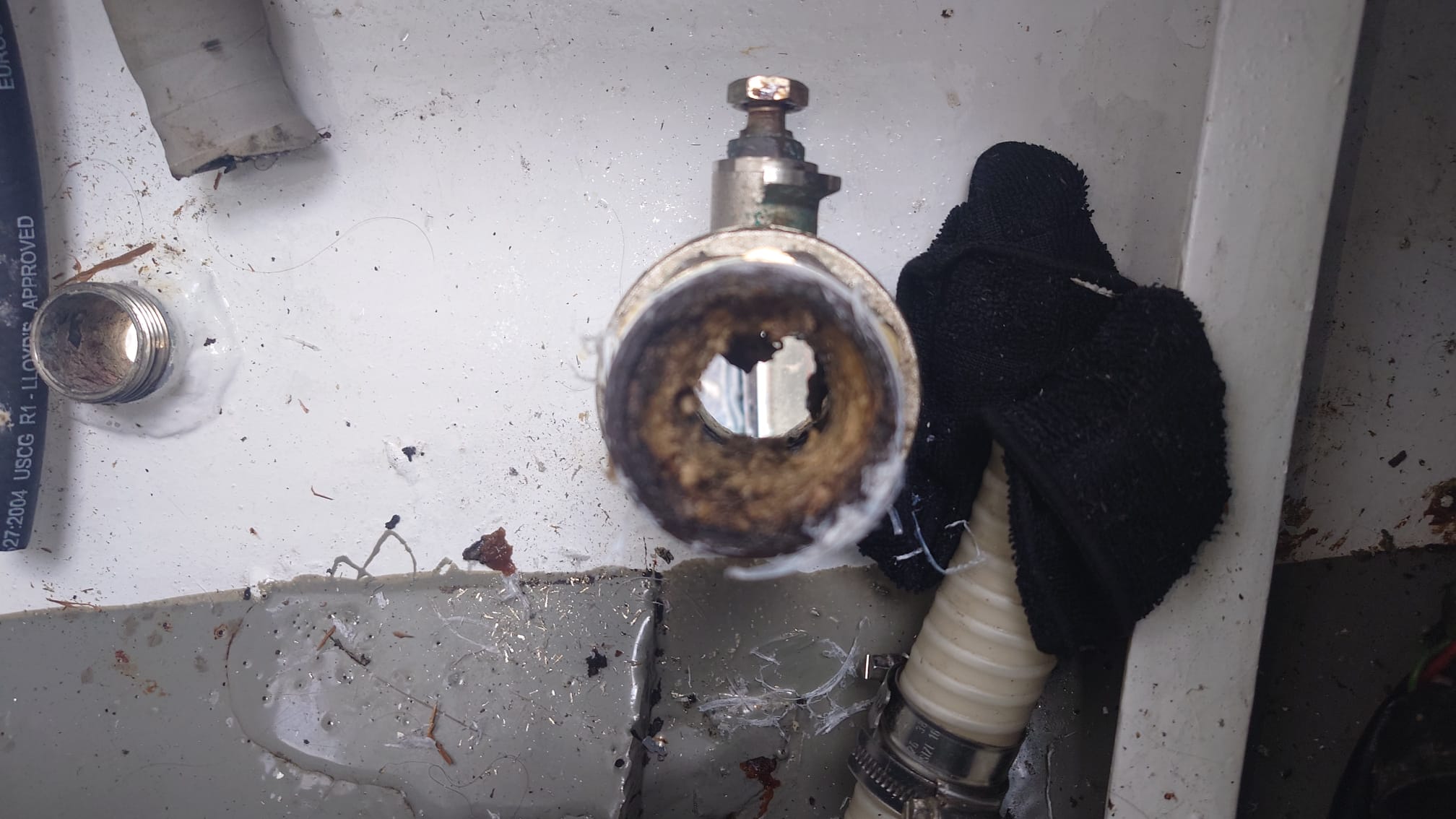
…but finally everything is removed.
(except for the old valve of the toilet)
The stainless steel pipes welded into the hull look perfect here, too! No corrosion.
We thought this valve was malfunctioning. The reason to start thinking about replacing valves in the first place.
But it’s not! It works just fine! It’s very dirty with a thick layer of limescale and it moves very hard but it opens and closes!
We thought it didn’t open any more… Now, then what caused the clogging?
This!
The big 1-1/4″ (38mm) T-piece is full of limescale with only a 10mm hole left. In that hole sits a pit of an anona fruit !
One of us swallowed an anona pit! Oops… they are very poisonous! So, Wim or Sher has been very lucky that it came out in one piece…🚾
And caused all this trouble… 😅
No, actually, the huge amount of limescale caused it. We have been cleaning (and multiple times replacing, over the years) the hose but never looked into the t-piece because we thought: that’s so big (38mm), that won’t clog. Wrong! We have take care of cleaning the connections to the valve, too!
Anyway, after cleaning and gluing the same way the new valves are in place:
Again, check for the amount of Loctite:
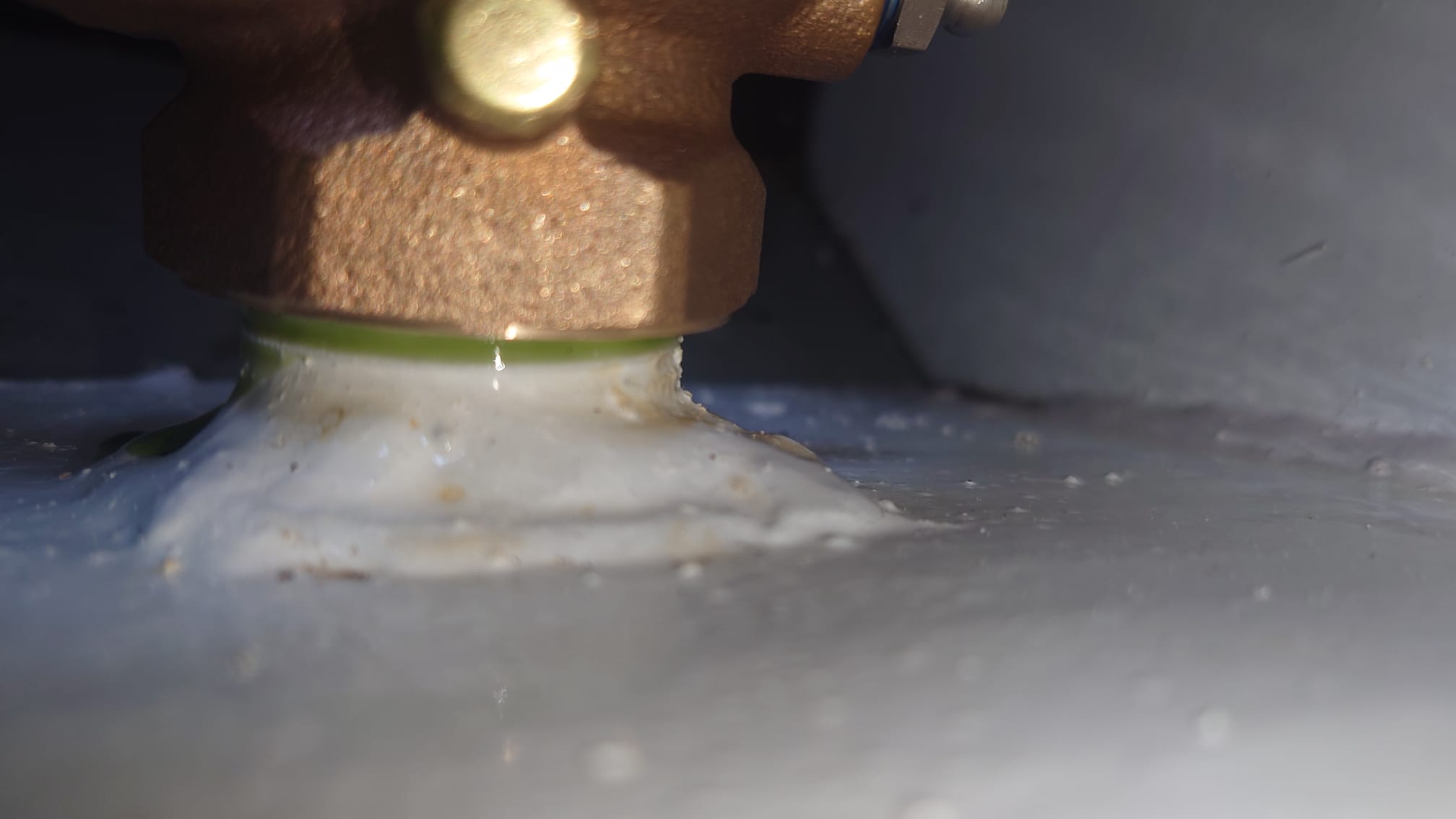
January 24.
The last and most difficult valve: the seawater inlet for the engine, toilet and water maker. We have to disassemble the side of the engine compartment and the floor in the aft cabin.
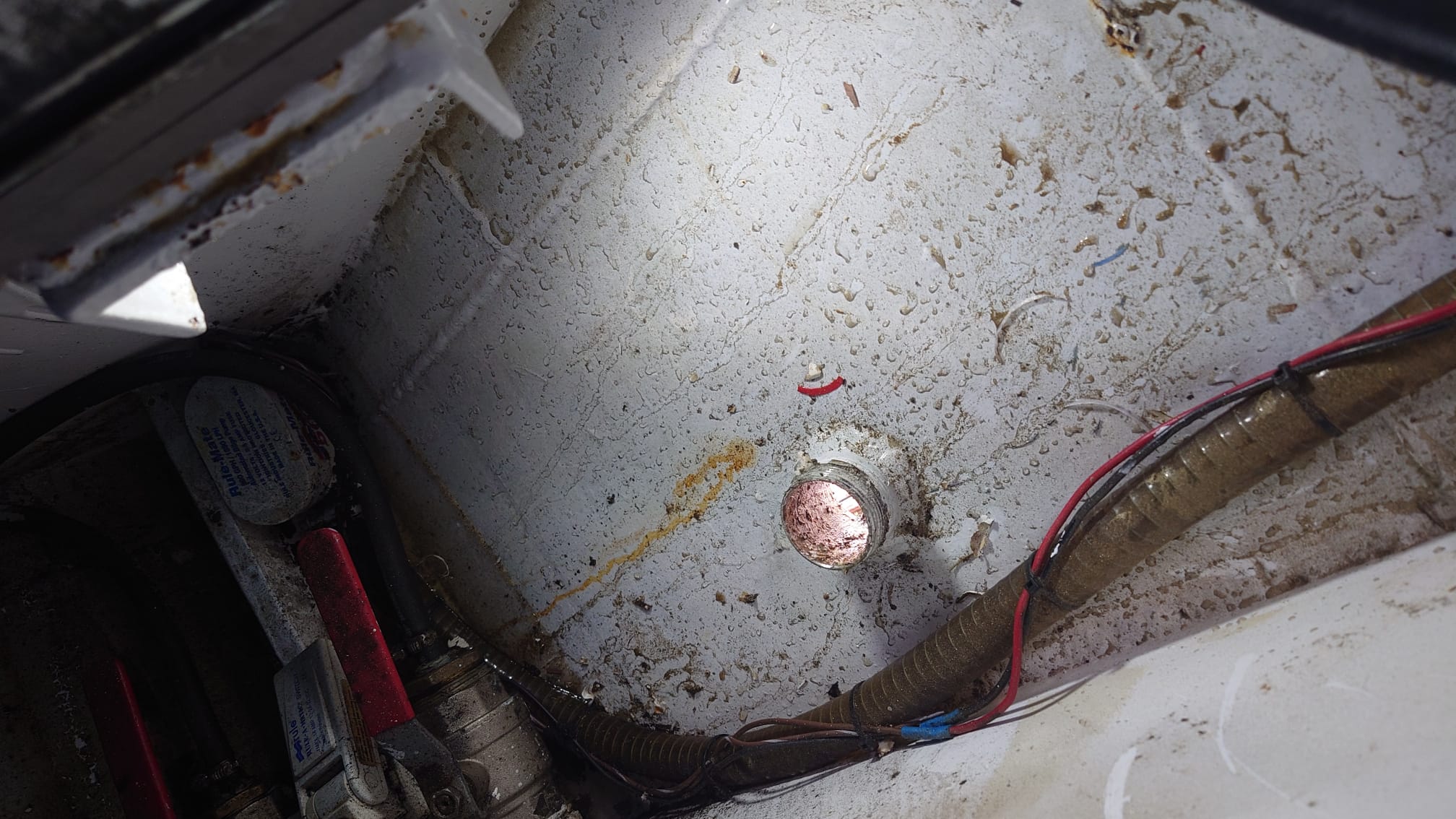
It appears to be impossible to rotate the strainer. Wim asks himself: how did I ever assemble this??
After a lot of failed efforts, the only way seems to be: the grinder. Big mess, but strainer and old valve are gone… And again: a great looking stainless steel fitting!
Remember we had some trouble with mussels in our seawater inlet in Ria de Arousa? Now that we have the valve removed we can have a look in the pipe. There is an oyster in it!!
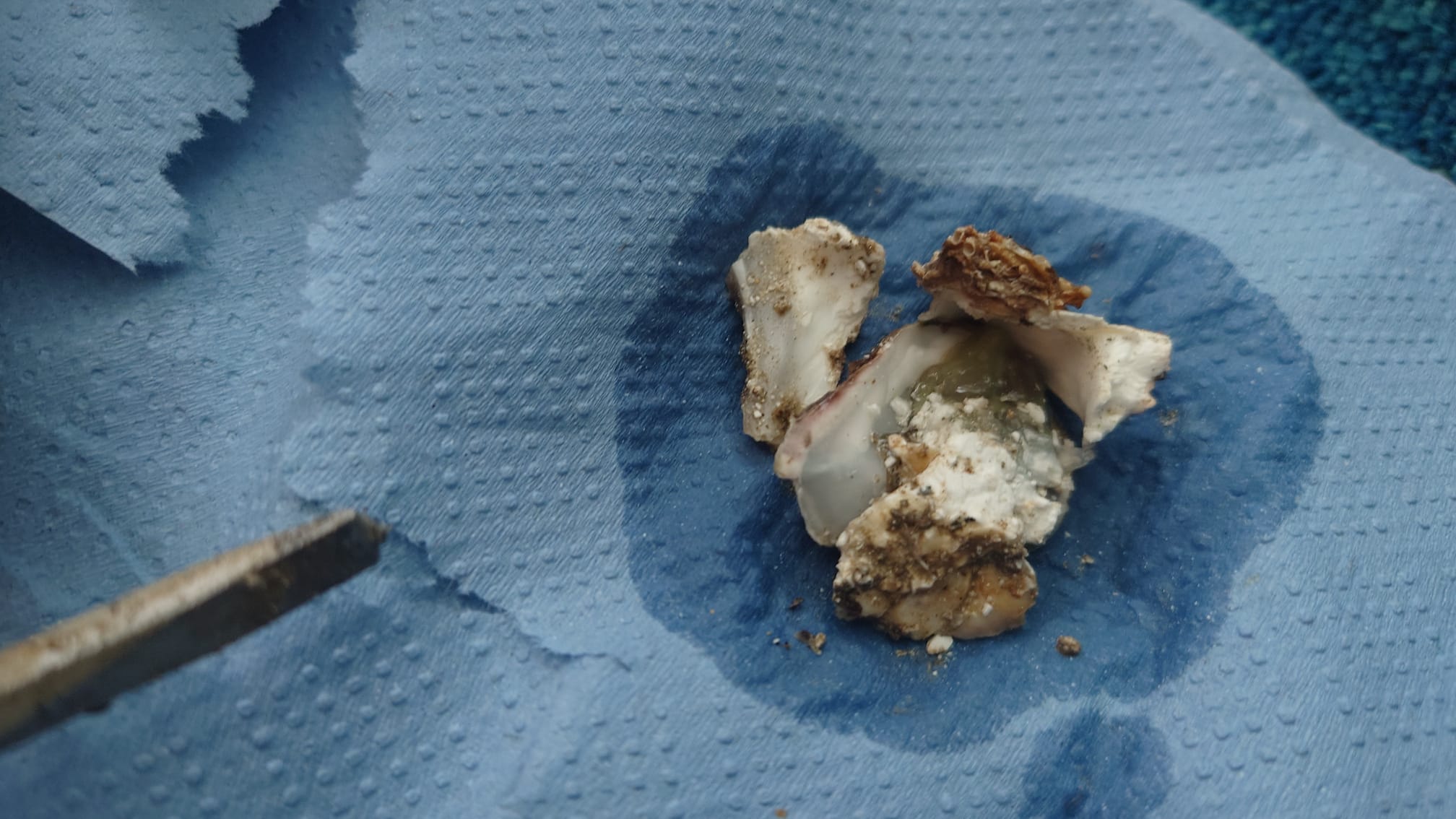
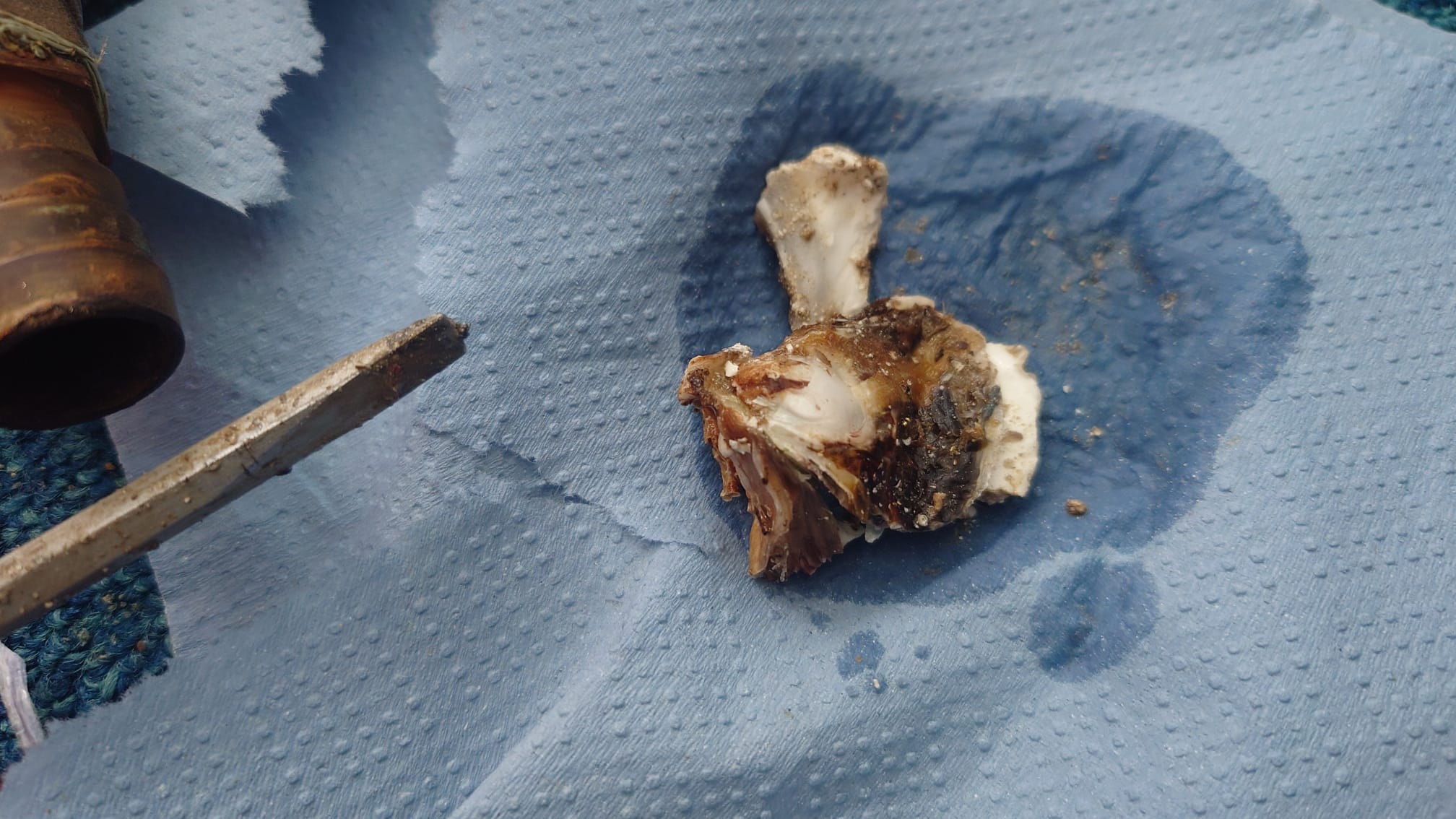
We look for the pearl but regretfully, there is none… Double bummer!
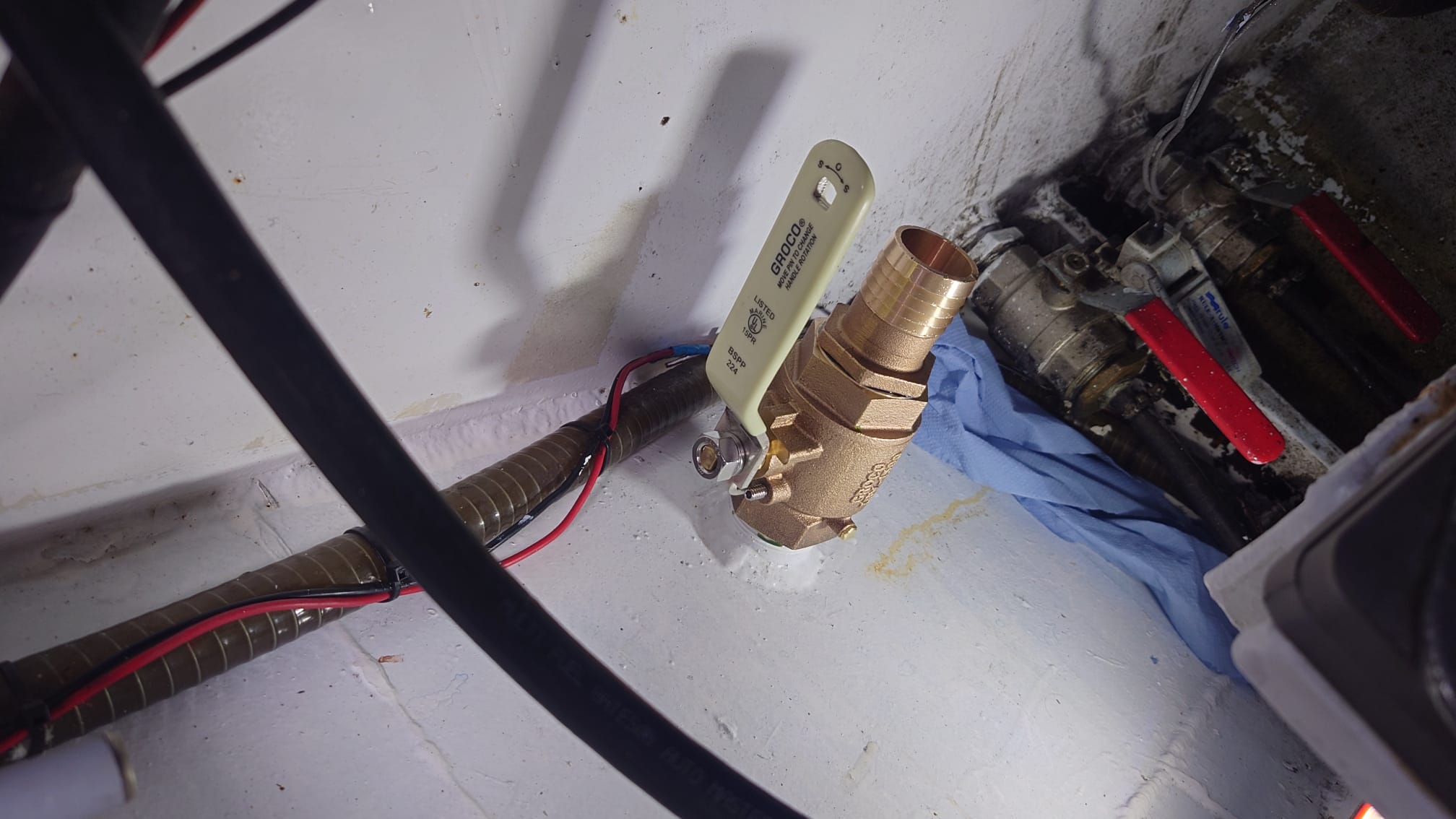
After a lot of cleaning the new valve is glued in place!
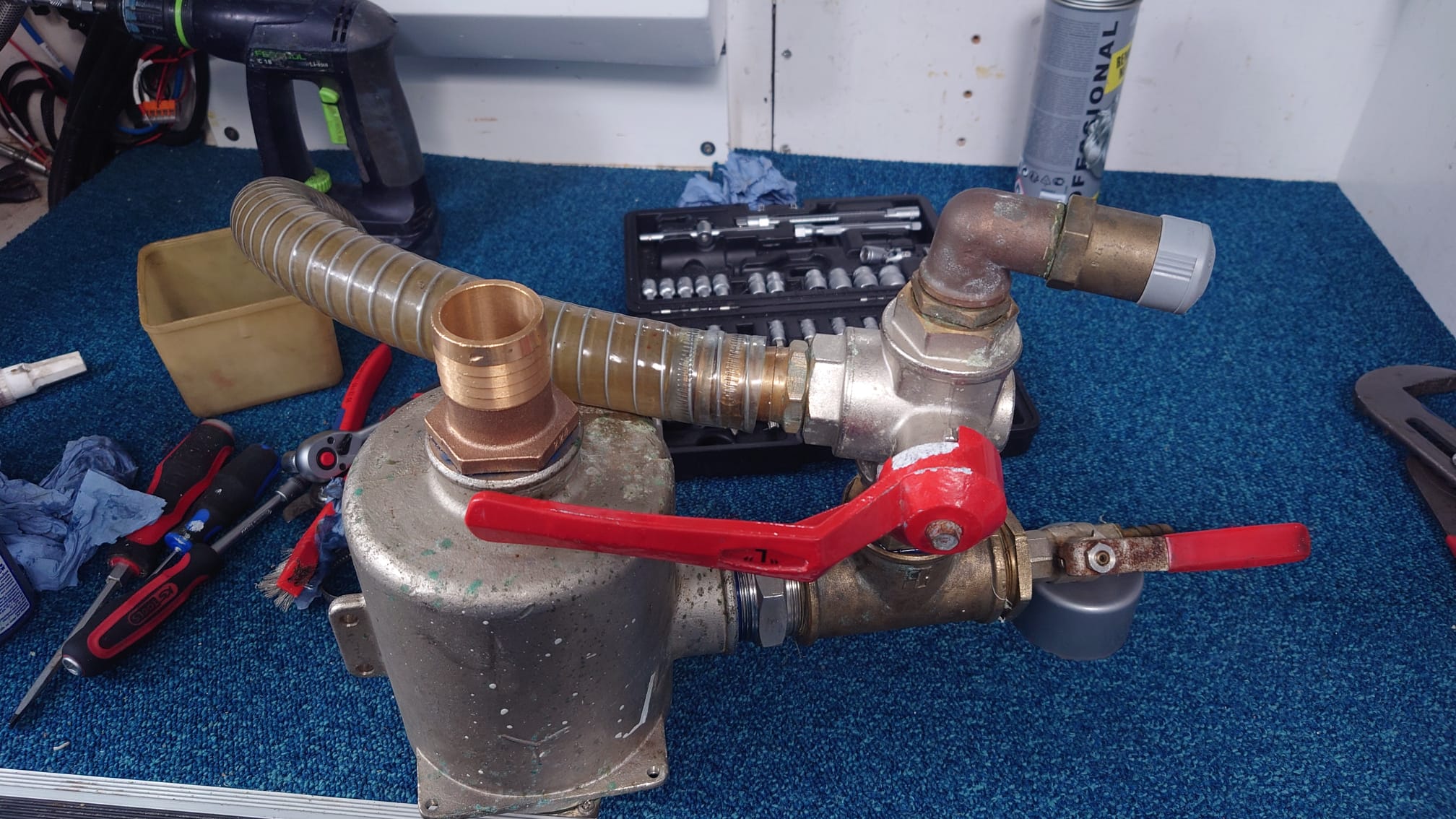
Next thing is, figuring out a new construction for the strainer. The position has always been a pain in the ass. Almost impossible to see and very hard to reach. We have to improve that drastically! Now is the time to do that…
We have bad luck with the weather. It’s windy and rainy all the time. The Portuguese say it’s an extremely bad winter here (while the temperature is 16-20ºC day and night) .
Well, in half a day with no rain Sher can scrape off some barnacles. Look how nice green our CopperCoat is! That is pure copper oxide. Means it’s doing a great job!
January 26.
We start preparing another job which we are planning to do here: modify our speed and depth sensors.
Dione IV had 2 transducers when these were installed in 2014: one for depth of the water (the bottom one on the photo) and one for speed through water (the top one).
A few years ago, the depth transducer got an electronic malfunction and this transducer appeared to be out of production and replaced by a combined one in the same housing:
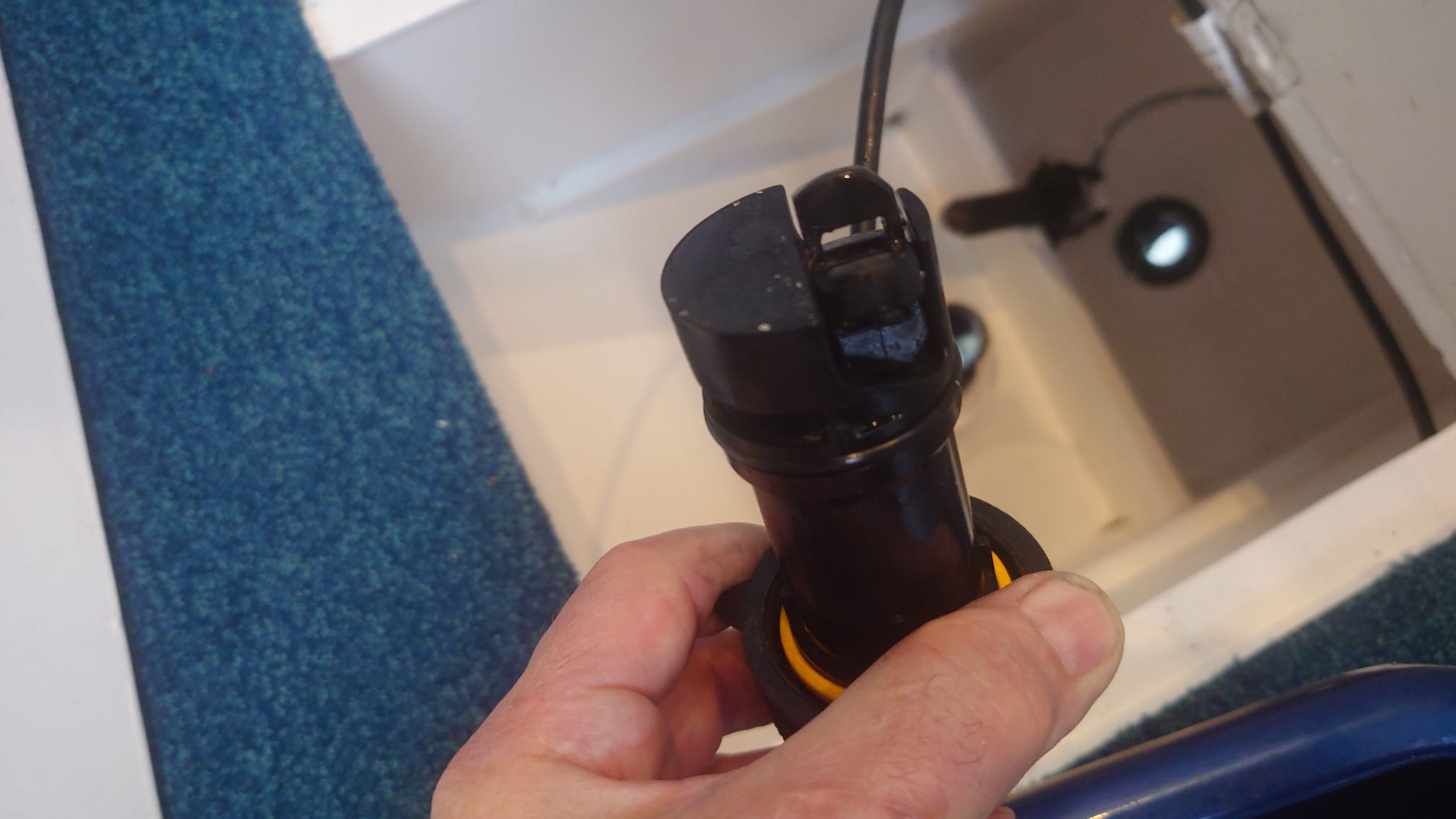
This is combined sensor, the Airmar DST850: left you see the ultrasonic depth transmitter/receiver and right is the paddle wheel that measures boat speed through the water.
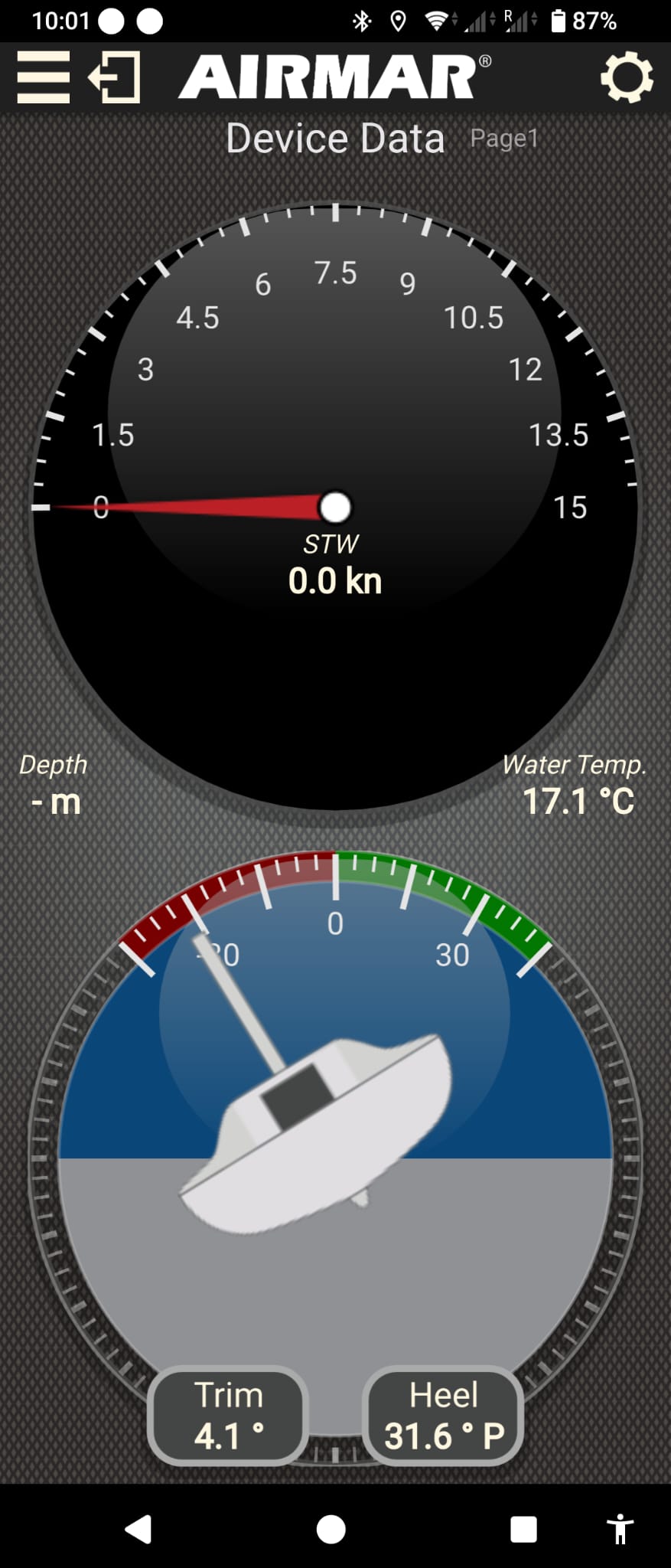
It’s a very nice piece of equipment. It has some intelligence built in, it has a motion sensor (so, it can measure angles of heel and trim), it has a Bluetooth interface that communicates with an app and it communicates via NMEA2000 with Dione IV’s board systems.
Back to the first photo.
The old depth transducer had to be mounted horizontally. That’s why we welded a pot in the hull, correcting the angle of the V-shaped hull, the so called dead rise of the hull. Because there’s no flow of water inside that pot, the paddle wheel of the DST850 wasn’t running. No problem, we used it only as a depth transducer and used the speed from the other transducer.
But, of course there’s no antifouling on the transducers (they don’t work with paint on it) so all kinds of sea life (mussels, shrimps, barnacles, seaweed) grows on it and thus, they need regular cleaning. That is done by pulling out the transducer, sea water sprays in the boat and you must quickly insert a plug in the tube. Then, we clean the surfaces, pull out the plug, seawater sprays again and quickly insert the transducer. This is not only stressful but also messy. Everything gets wet and since we don’t want salt water in our bilges, we have to clean and dry everything with fresh water. One on the most tricky and stressy things is: what if the plastic tube breaks while we’re moving things in and out? And we can’t close the hole any more? 😱
That’s why we bought this very sturdy stainless steel through hull fitting, last summer in the US.
And we decided to move from 2 transducers to 1. So, the stressy cleaning job is only once instead of twice… And a wrong movement, while exchanging transducer and plug, will not break it.
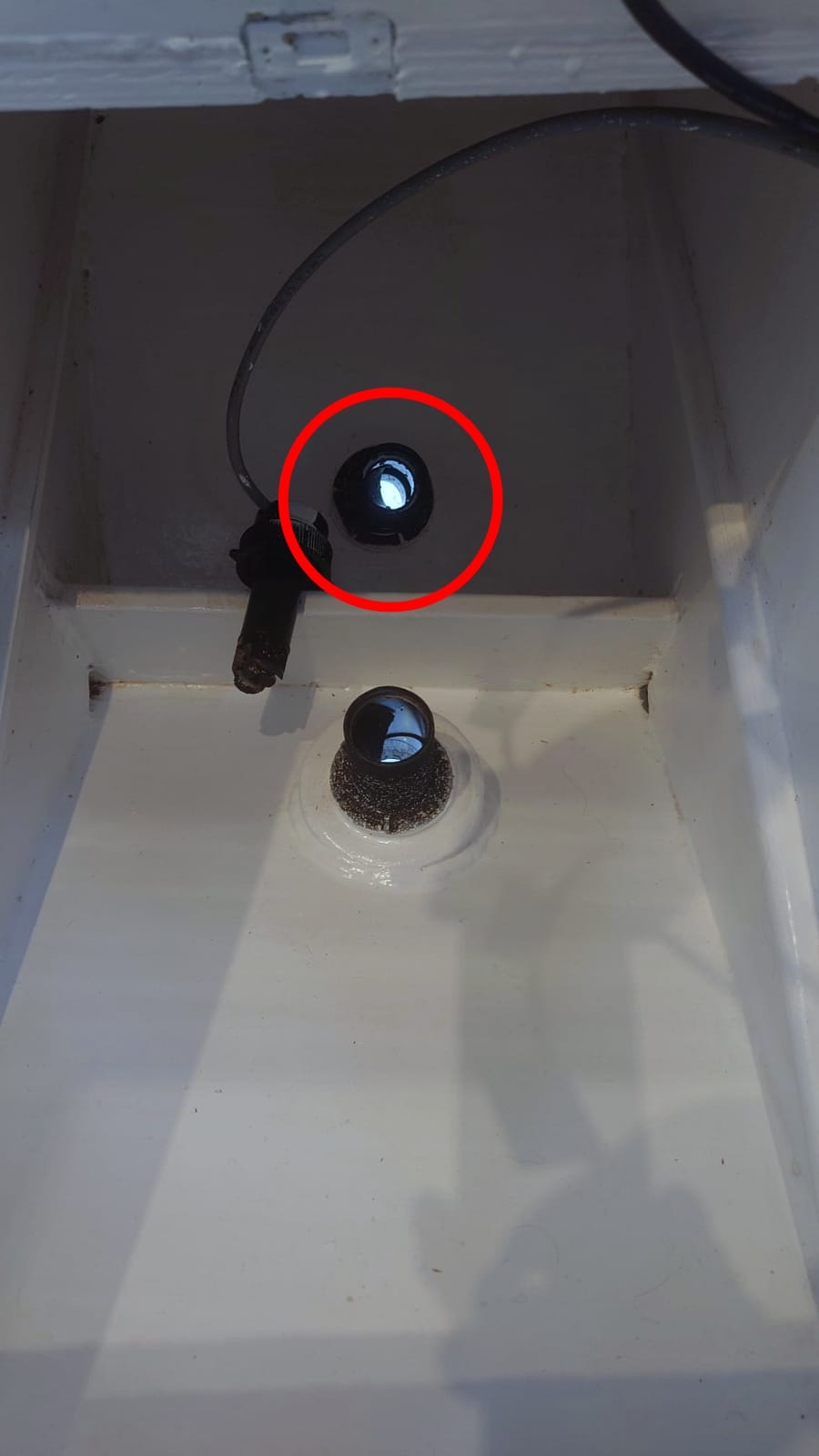
So, this hole has to be closed, welded.
The pot has to be removed and a new hole has to be made for the DST850. So that it’s paddle wheel is fully in the water flow along the hull.
The good thing about the intelligent DST850 is, that it can adjust for an angle, because it knows the heel angle. So, it doesn’t need the welded pot.
That’s what we’re going to do here, on the yard. We’ve contacted a welder guy named Rui last month. He has a good reputation and seems to be an excellent welder.
Last night we had a storm.
The weather is still really bad. Lots of rain and wind all the time. There are these very large Atlantic depressions hitting the Portuguese coast. Normally, they stay in Biscay and hit only the northern side of the Iberian peninsula but this year, they come much more south.
A couple of years ago, Portimão was hit but a severe storm and many boats tipped and fell over on this yard, like domino effect. Huge damages!
Now, look at our heel angle! 😱 Oh, no!!
No! Nothing wrong! Sher is cleaning the sensor 😅 It is horizontally in the washing tub…
We test the rotation of the paddle wheel and in the app, it shows speed. So, it’s working fine.
After that, Sher takes a Bolt taxi to the marina. Sacha (boat “Smile”) has arranged that the ladies can work on the dinghy chaps patterns in the marina office. They’re fitting the patterns together.
Meanwhile, Wim buys some hoses in the great marine chandler here (Sopromar) and continues installing the seawater strainer system.
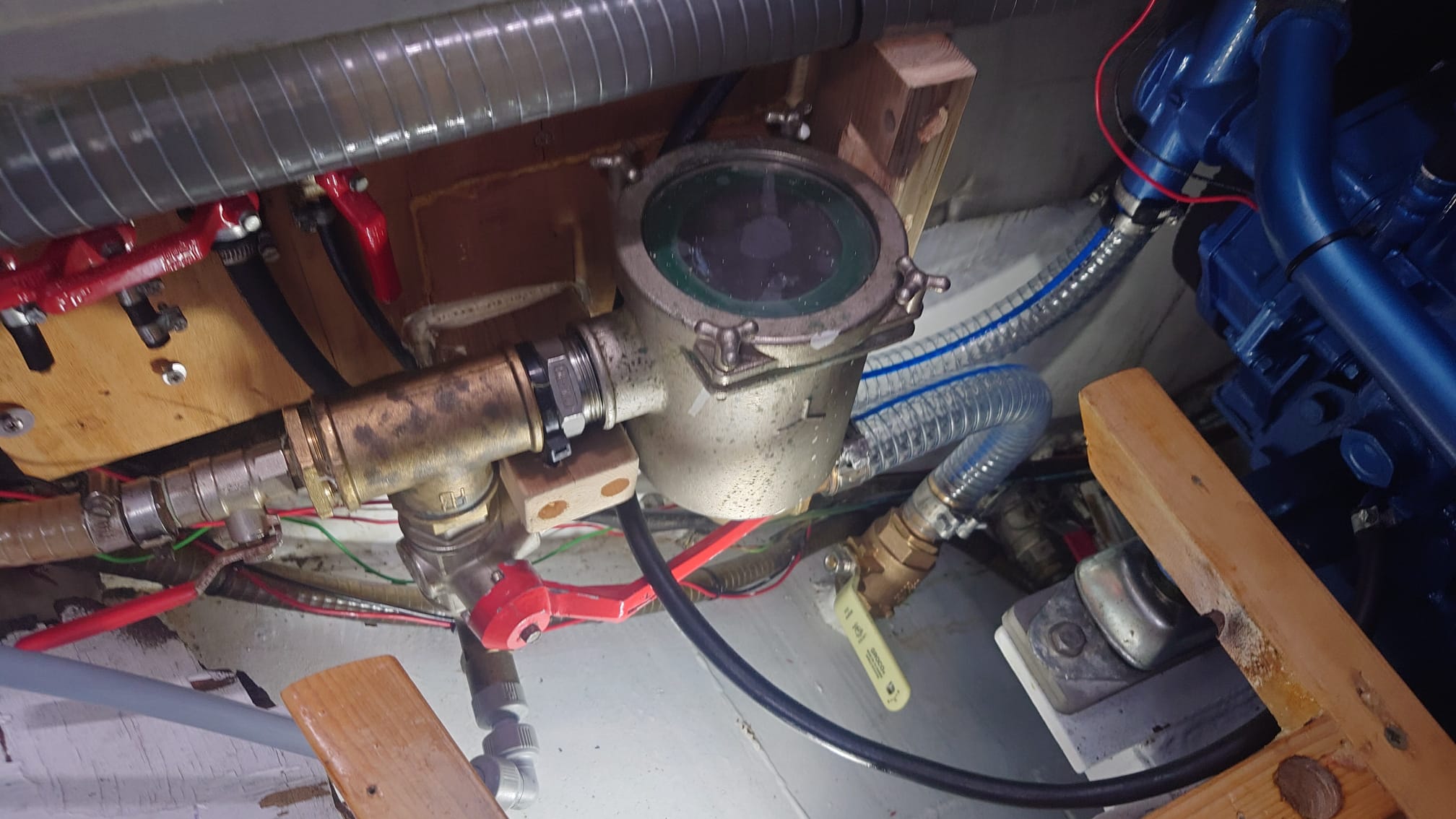
New strainer location, new hoses from the through hull valve and to the engine.
Yes, this is a big improvement! We can look into the strainer from the aft cabin floor.
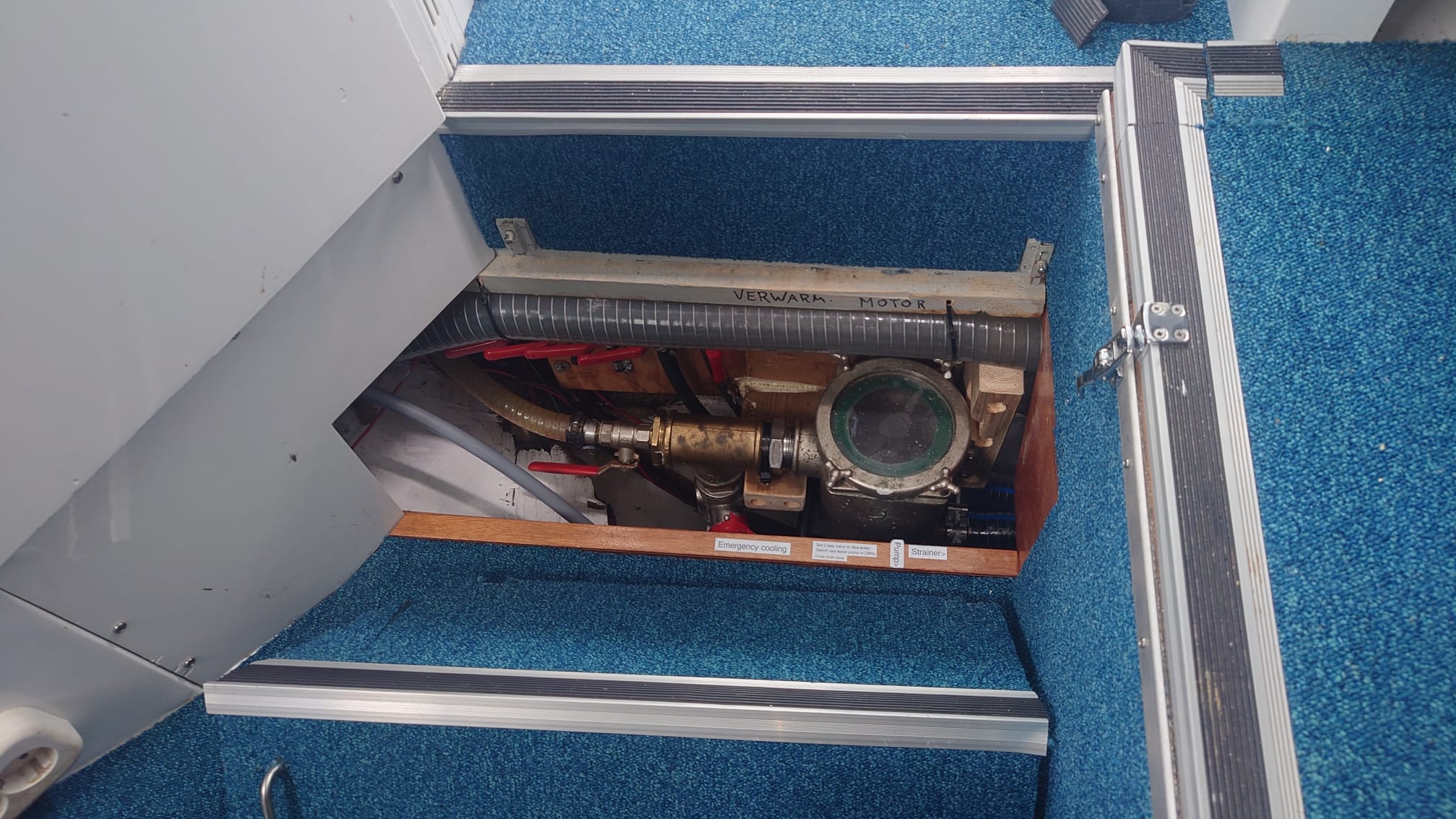
It’s under the steps now. Just remove the step and look into it or open it to clean the strainer.
Easy!
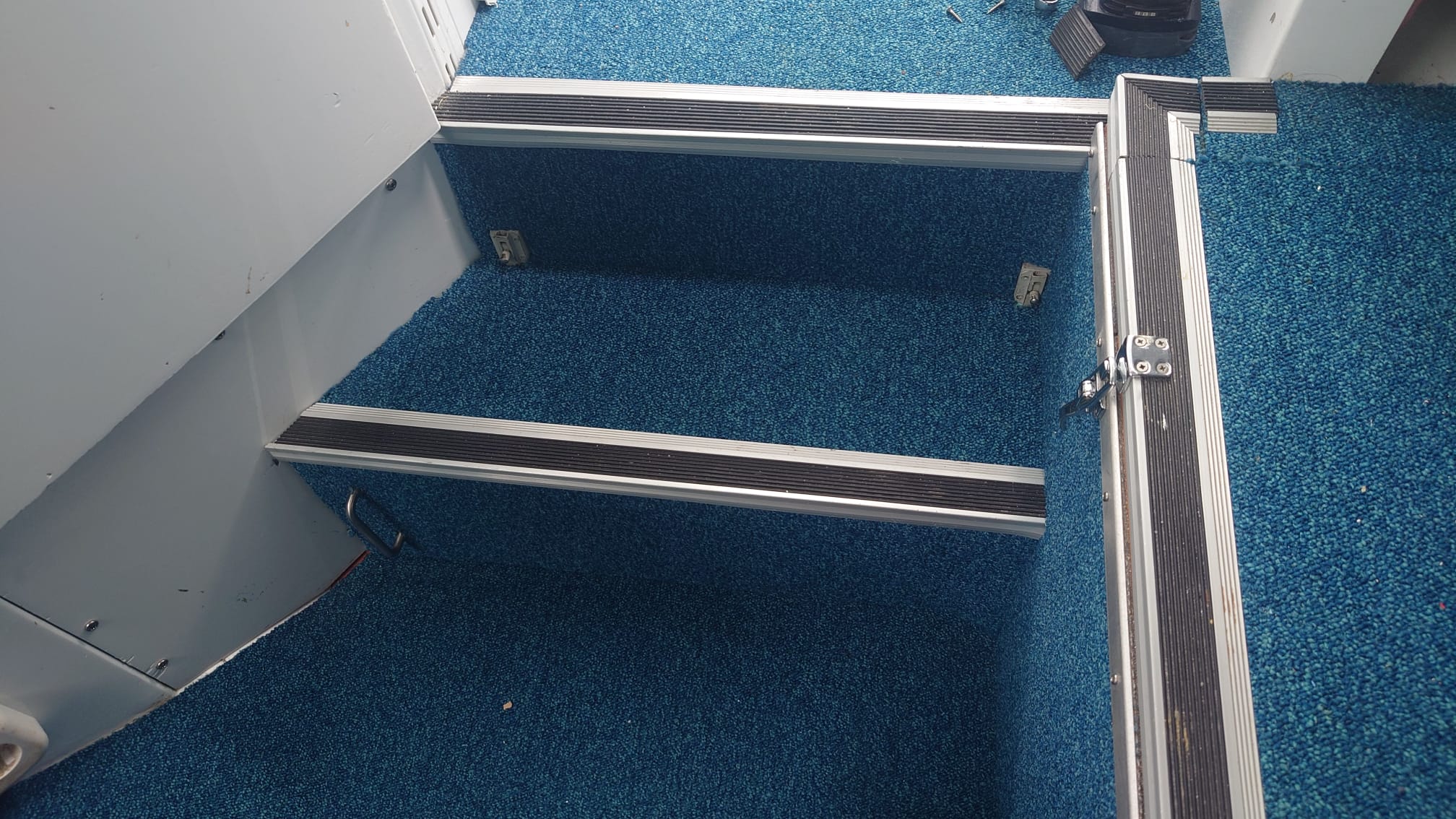
And put the step back.
January 27.
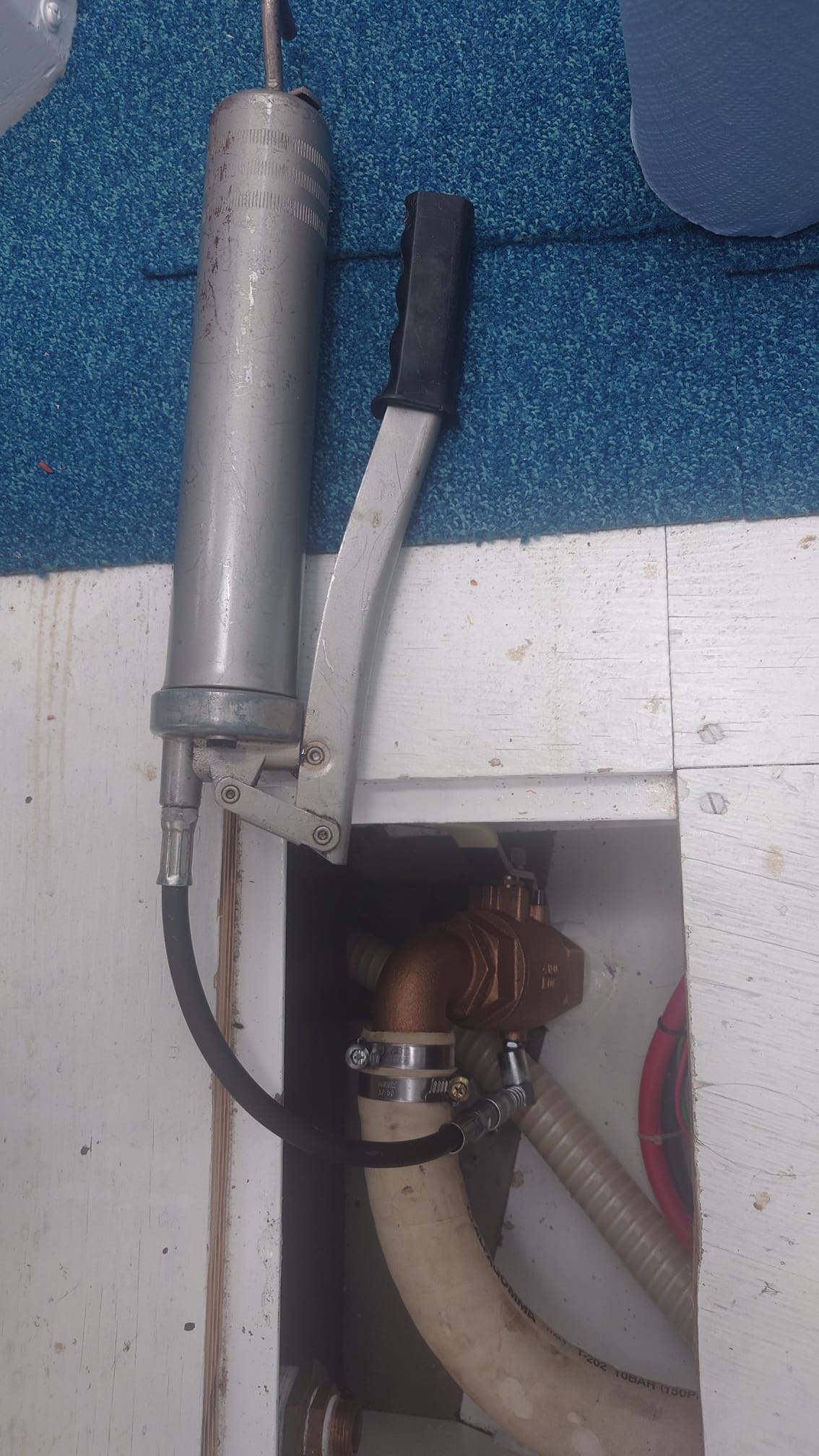
The Groco valves have a grease nozzle. That is such a great feature!! The outside of the ball is filled with grease under pressure. That keep the valve move smooth and keeping any seawater out of it, should the ball leak a bit (which they do, over the years. All our old valves were leaking a tiny little bit along the shaft. Maybe a drop per year, but enough to make things corrode).
So, we buy a special angular grease device that fit on the grease gun to reach the grease nozzles on the valves and we fill them with propeller shaft grease.
Very nice!!😊
January 28.
Last night, there was a severe storm! Dione IV was shaking on her jack stands in heavy gusts of wind. We were a little worried and we didn’t sleep well. While Wim was awake, listening to the howling wind and all the sounds around us, he started thinking of the works to do. Such as the DST850 depth/speed sensor. They said, it can be be mounted at an angle. But, at what angle, actually? It’s clear that if you mount it in a 90º angle, you will be measuring the distance to the shore instead of the depth… So, what is the maximum angle? And what angle is the position on our boat? We have to look into that. Okay, while we can’t sleep we can look it up on the internet… Let’s switch on the phone and look it up: Airmar says, it can go up to 22º but that’s not advisable. It’s better to stay within 7º. Oops! The position of the sensor in our V-shaped hull is certainly more than 7º! We should measure this in the morning!
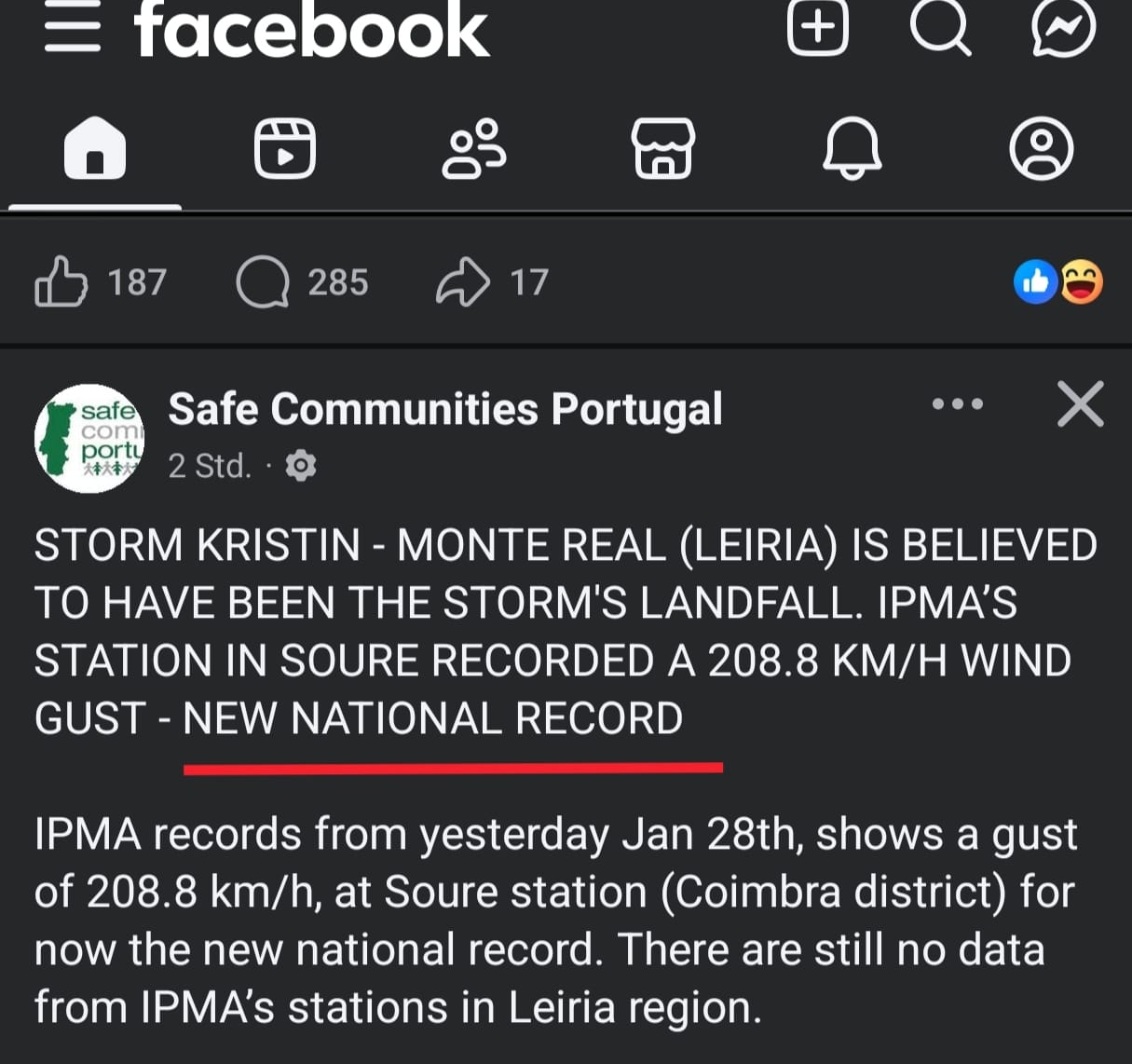
This is a real storm! At the Portuguese west coast, they had 70 knots of wind and in the mountains even almost 100 knots! Lots of damage everywhere.
We did not have that much wind and we didn’t look at our wind gauge but from the sound the gusts might have been 40-50 knots. Our friends anchored in Alvor had 55 knots.
Anyway, in the morning the wind eases and we screw the transducer in the starboard hole. Oops! 31.6º! 😮 That is way too much for the transducer… Wim says: bloody hell, why didn’t I check this before?? How could I be so stupid to overlook that?? We’ve been thinking this thing over since last summer and we didn’t think of checking the angle!
Well, this means the angle has to be corrected in the construction.
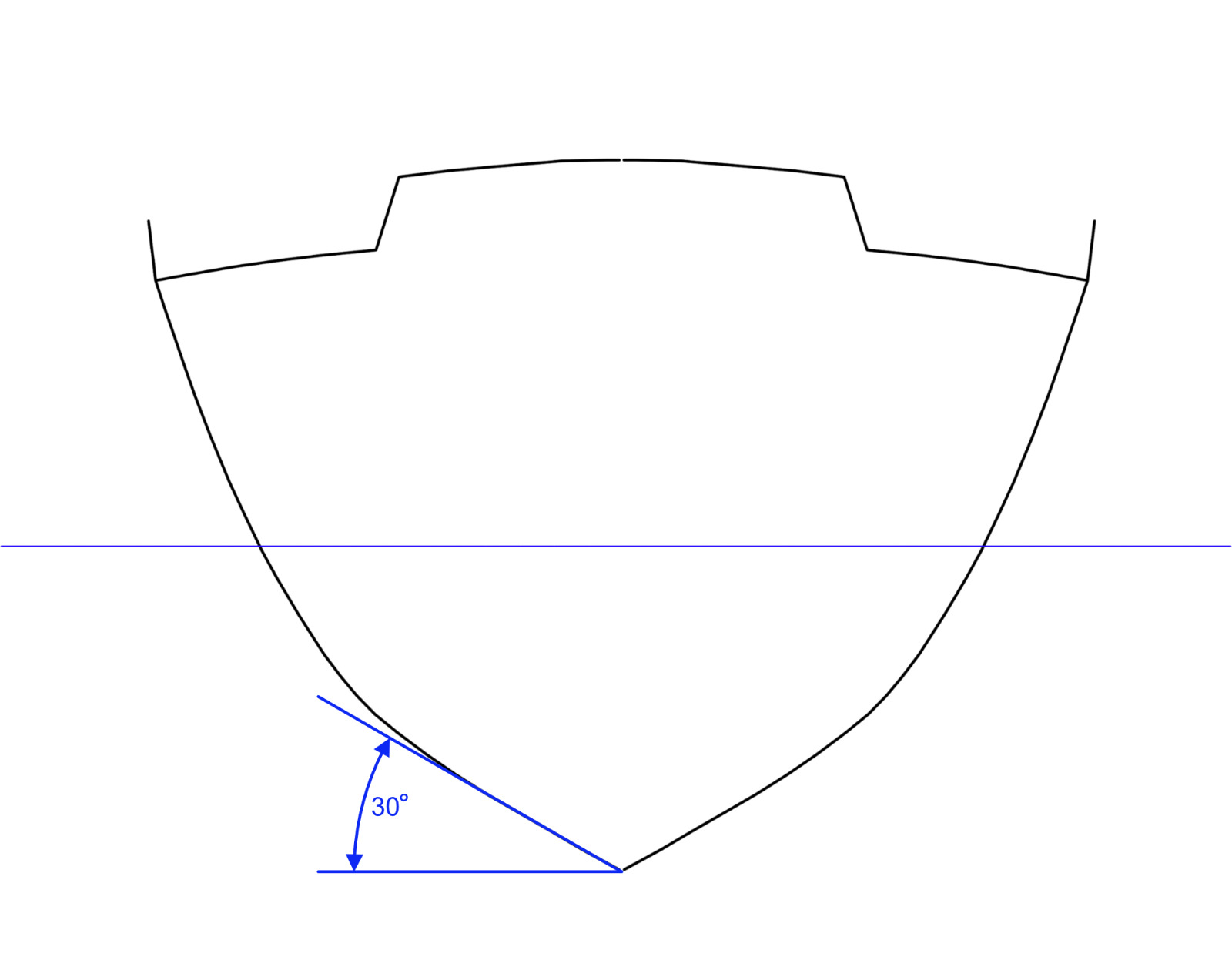
And it’s so simple to check. We have drawings of every frame in Dione IV. The transducer is near frame 20. Putting that in the drawing program shows that it’s 30º…
So, Wim makes a drawing for the welding guy (Rui) We will have to weld a bushing on the outside.
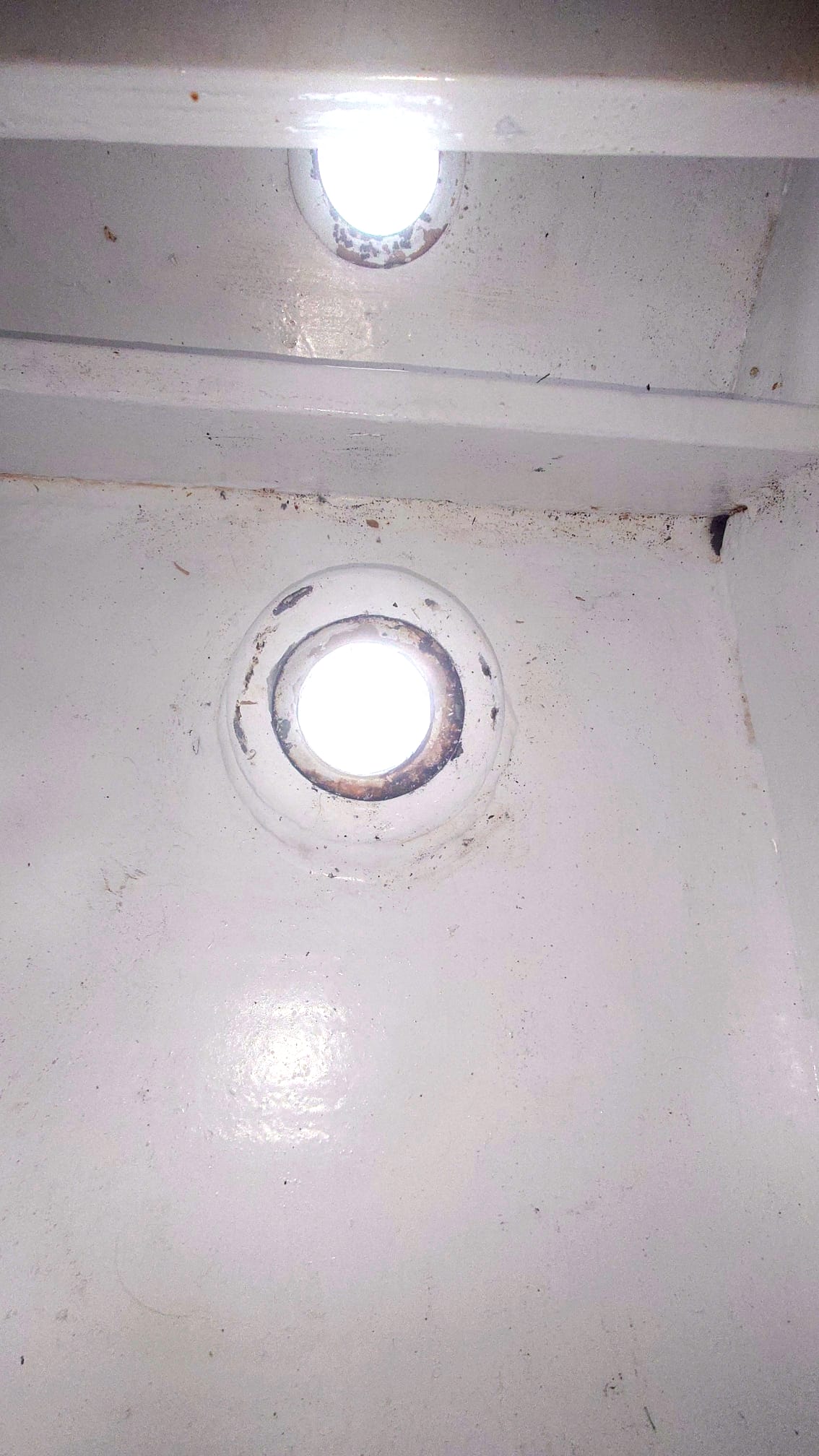
Rui responds: why not cut a square out of the hull and turn that around? Inside out. The pot becomes a bulb.
Hm, that’s not a bad idea… it will save a lot of work and it has the correct angle already. Provided that the steel of the welded pot is in good shape. Wim removes the transducer housing and everything looks in perfect shape. So, let’s do that!
The only thing is that we’ll have to wait for the weather to improve. We’re not going to do welding in storm and rain. The circumstances must be perfect for a good weld: this is our underwater hull and there should be no shitty welds!
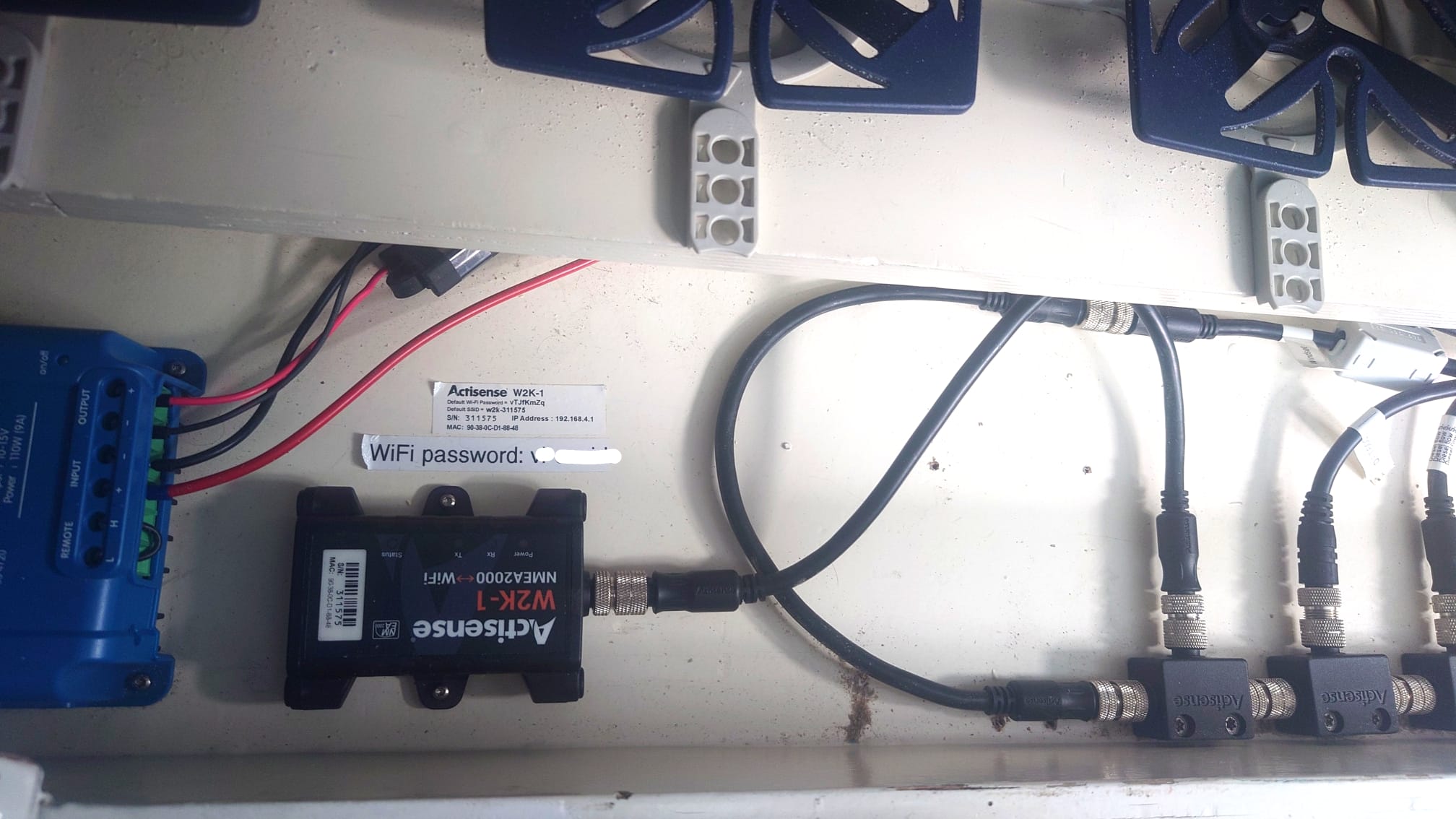
A small change to the NMEA2000 WiFi device.
2 nights ago, Wim couldn’t sleep and got a headache. For him, that means: either get sick (a cold or a flu) next day or there is radiation (WiFi or Bluetooth). At 3 o’clock he gets up and checks if the router has been switched off. It’s off. Everything is off. Even the inverter and the shore power. Hm. Bummer. I must be getting sick, he thinks… But, we didn’t meet anybody with a cold or such. Strange… While he climbs back into bed his eye catches a blinking LED. Ah, the NMEA2000 system is still on. We forgot to turn that off when we were testing the DST850. So, the WiFi device is on! And that’s right next to our heads while we’re in bed! He switches the NMEA2000 off and goes back to bed. In 20 minutes the headache is gone and after a while he sleeps like a baby…
So, there has to be way to switch that WiFi off when we’re on a passage and have our N2k system on for navigation. We don’t really need the N2k to WiFi. Except when we’re using our laptops or phones as a backup in case the board PC breaks down.
So, relocate the Actisense WiFi device so that is has a short cable that we can disconnect.
Meanwhile, Sher is going to the marina every day to work with Sacha and Marcia on the dinghy chaps. Sacha has arranged that they can work in a room in marina office building. Which is great in this crappy weather!
January 29.
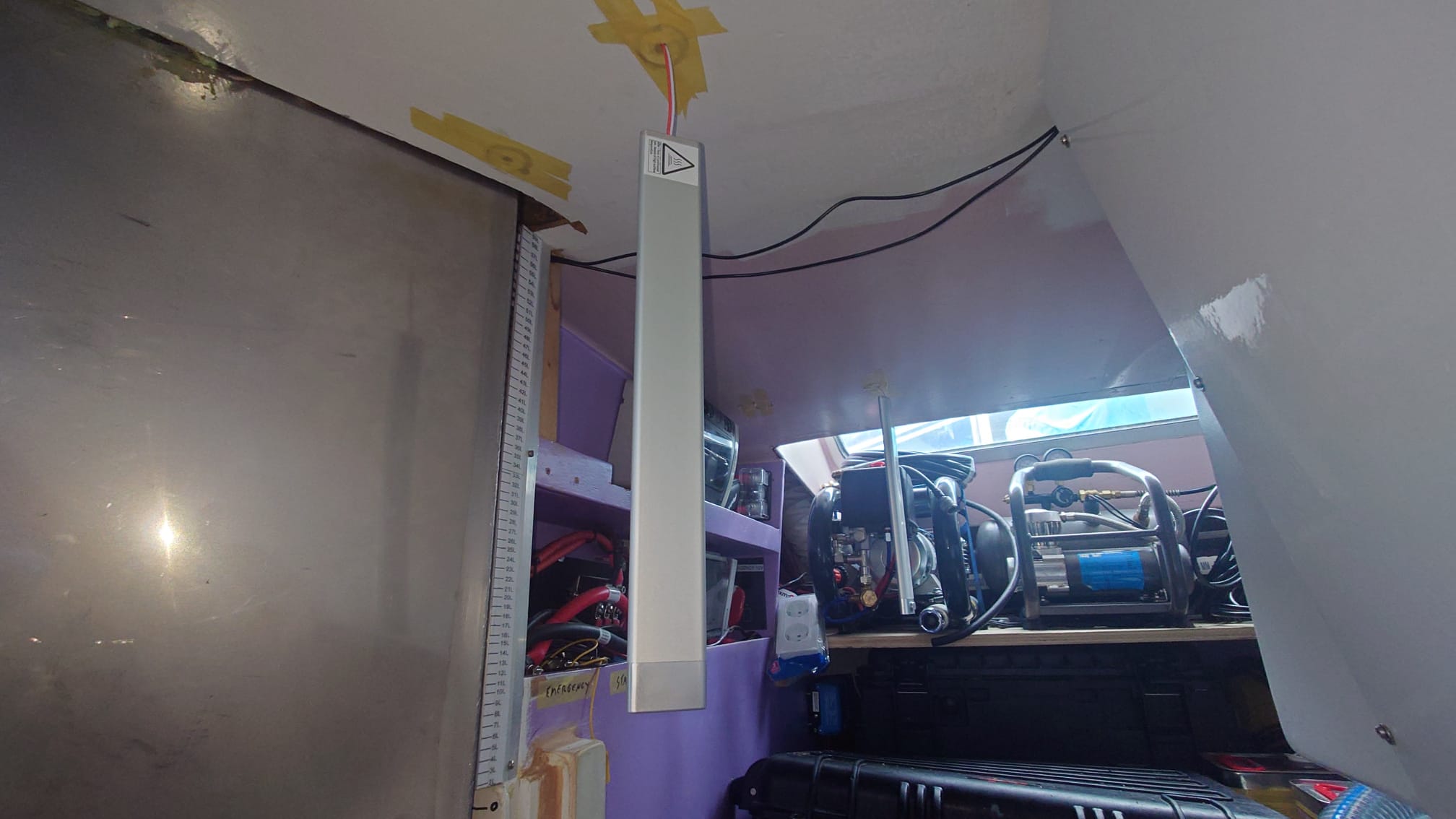
Installing some working lights in the lazarette.
We had no lights in the lazarette so often we had to use a torch to find things. On Amazon, we bought 2 bright LED bars.
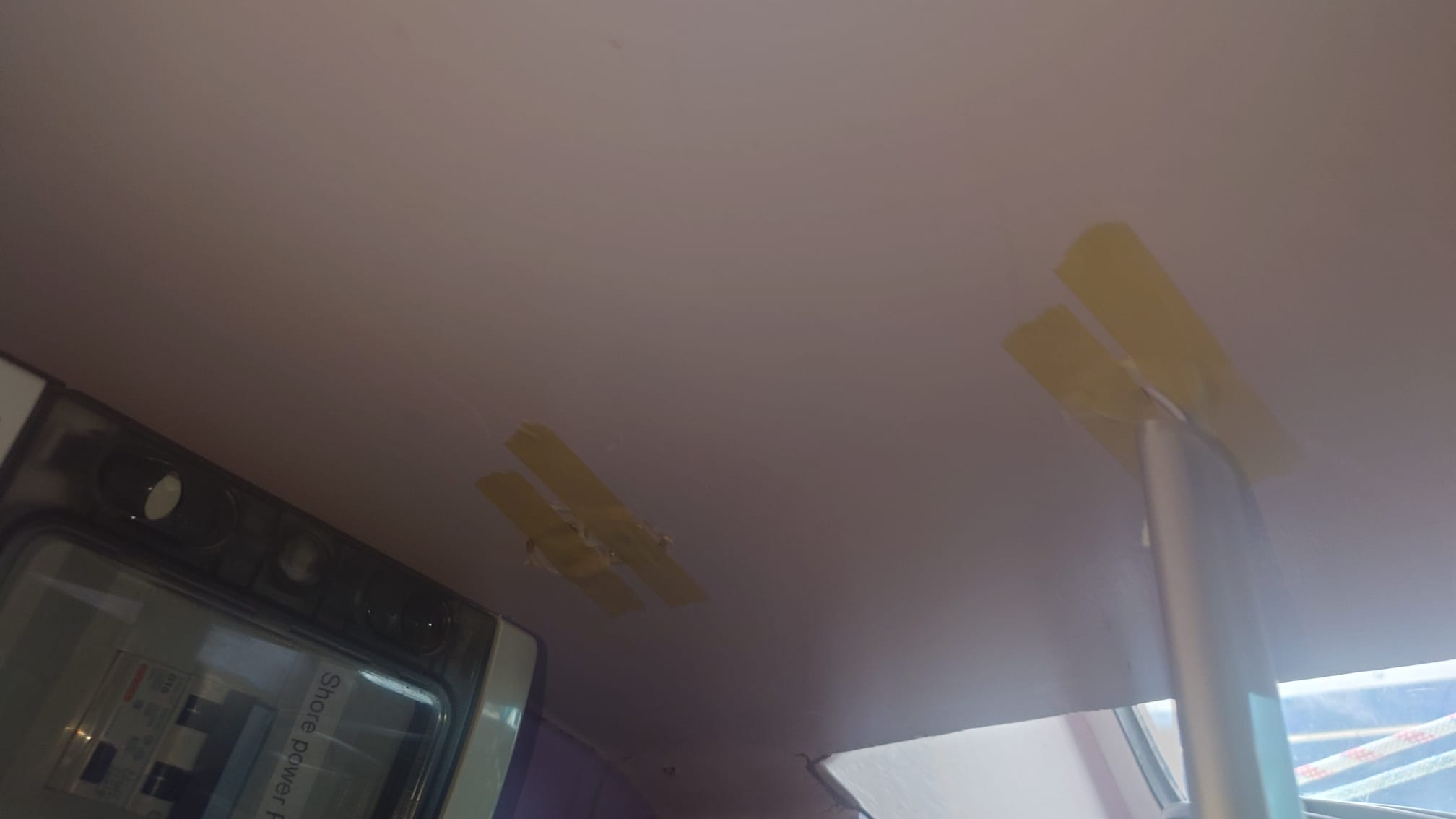
The power cables go in the ceiling so that means drilling holes in the ceiling, pulling cables and glue the holes again.
January 30.
We’re a week at the yard now and we haven’t a single day with nice weather. Rain and wind but not cold. The temperature is around 17ºC, day and night. Westerly (Atlantic) winds all the time. The Atlantic depression train is running at a steady speed… This year, the low pressure systems are very big: they hit the entire Portuguese coast. Normally, they are smaller and move over Galicia to Biscay and the British channel. And the Algarve is under the influence of the warm southerly weather systems. But not this year! The locals say they have not seen such prolonged bad weather ever before. So, we have bad luck.
We have to extend our stay in the boatyard at least another week… so stay tuned for part II or Portimao Boatyard!
Leave a Reply