We write the text for our website in English. The multiple language selection feature is an auto-translation by Google. This translation is not perfect; it sometimes uses peculiar words and even expresses things in a very different way than what we actually meant. So, if you’re reading in a language other than English, and you read something strange, switch back to the English version to read what we actually meant to write!
If you’d like a shorter/summarized version of our posts, read only the “Highlights” section below and stop before “The Captain’s Log“, which is much more detailed, more like a logbook / diary and contains information for our reference as well.
Highlights – the overview
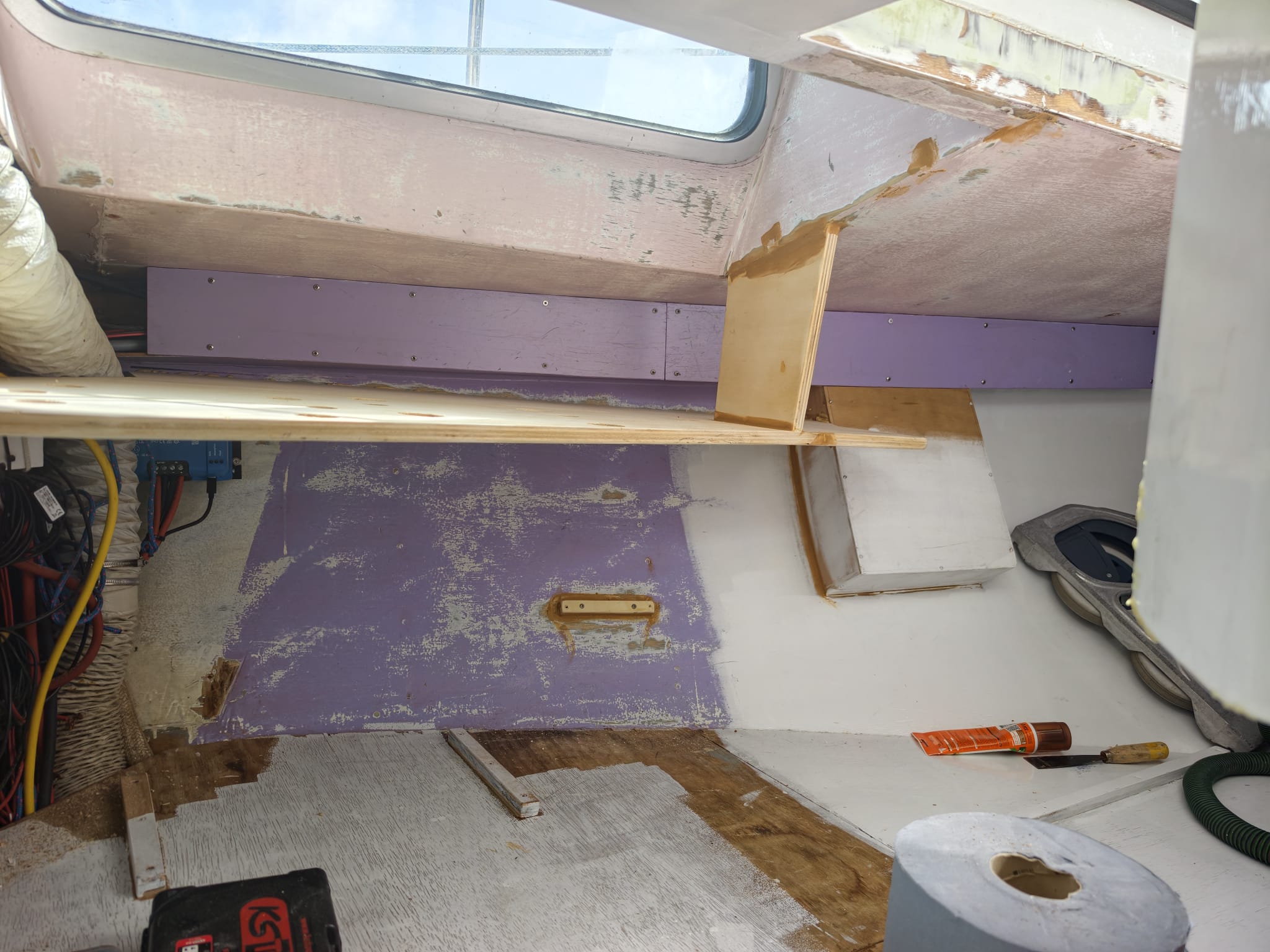
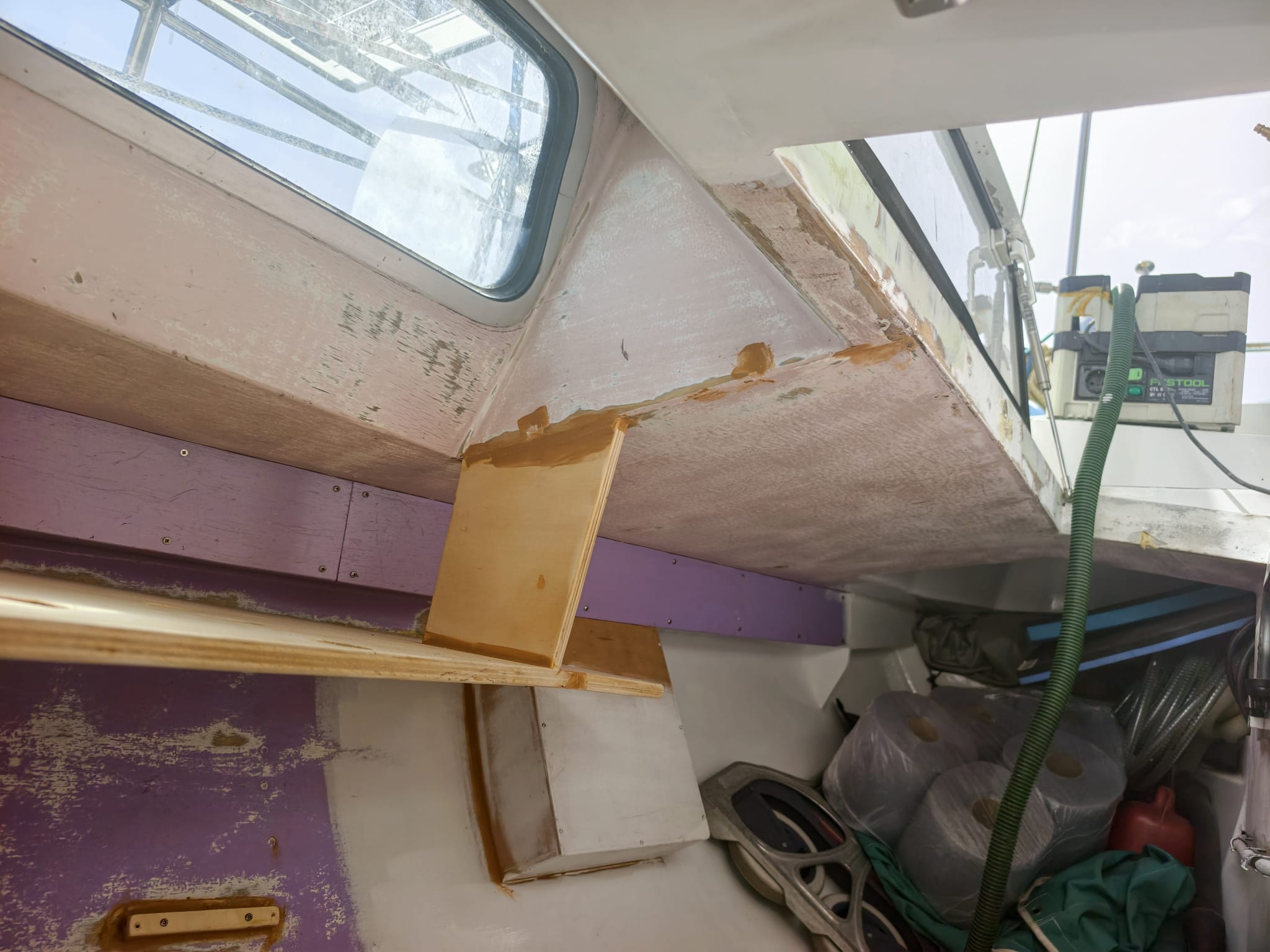
Wim starts painting the rest of the lazarette. Last autumn, the aft side was done so now it is time for the middle part.
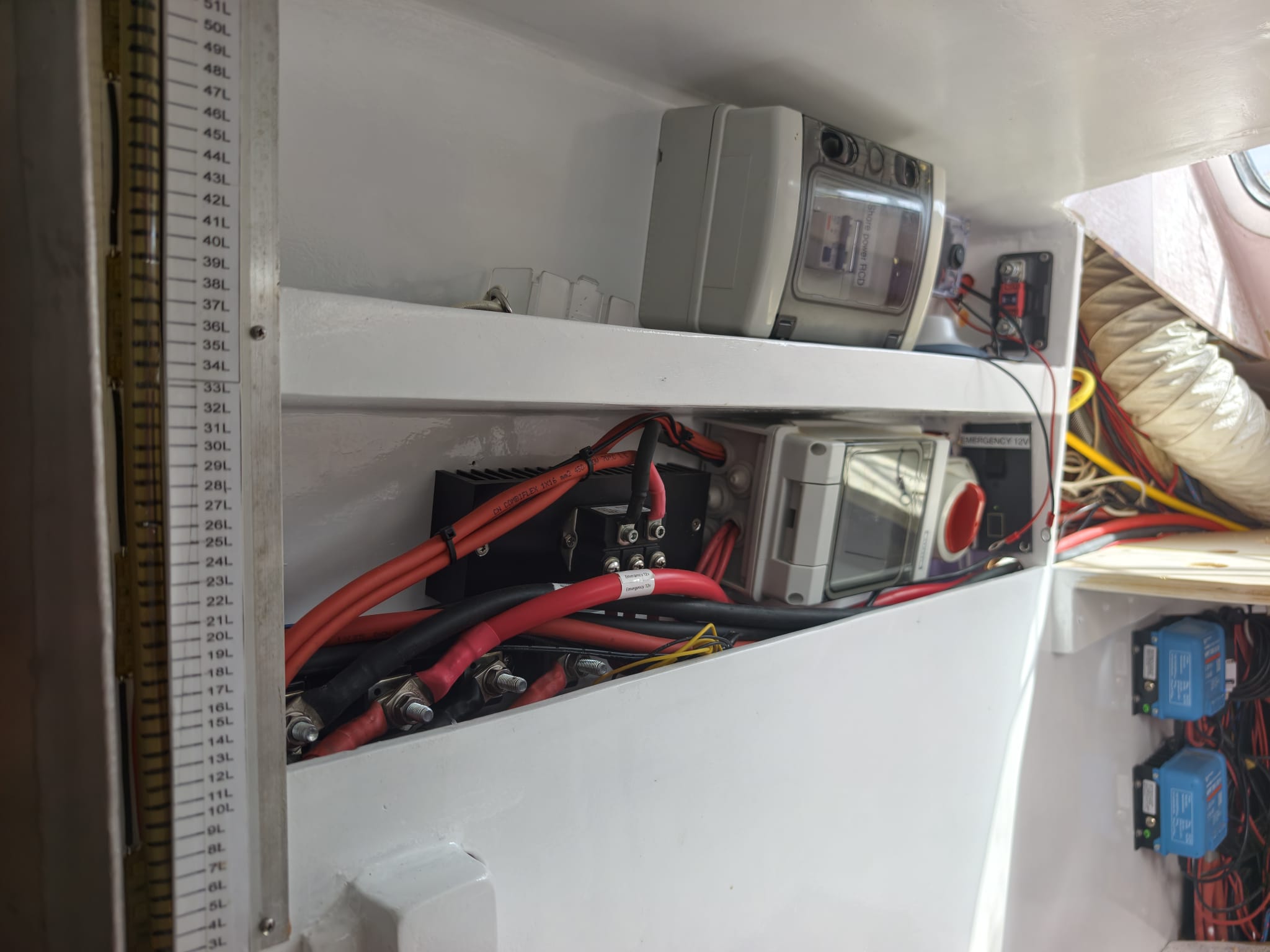
First, the front side of the lazarette gets painted in high gloss, and then all of the equipment gets back in place.
Next, everything comes out of the middle… then sanding and priming and painting and putting everything back again. Big job!
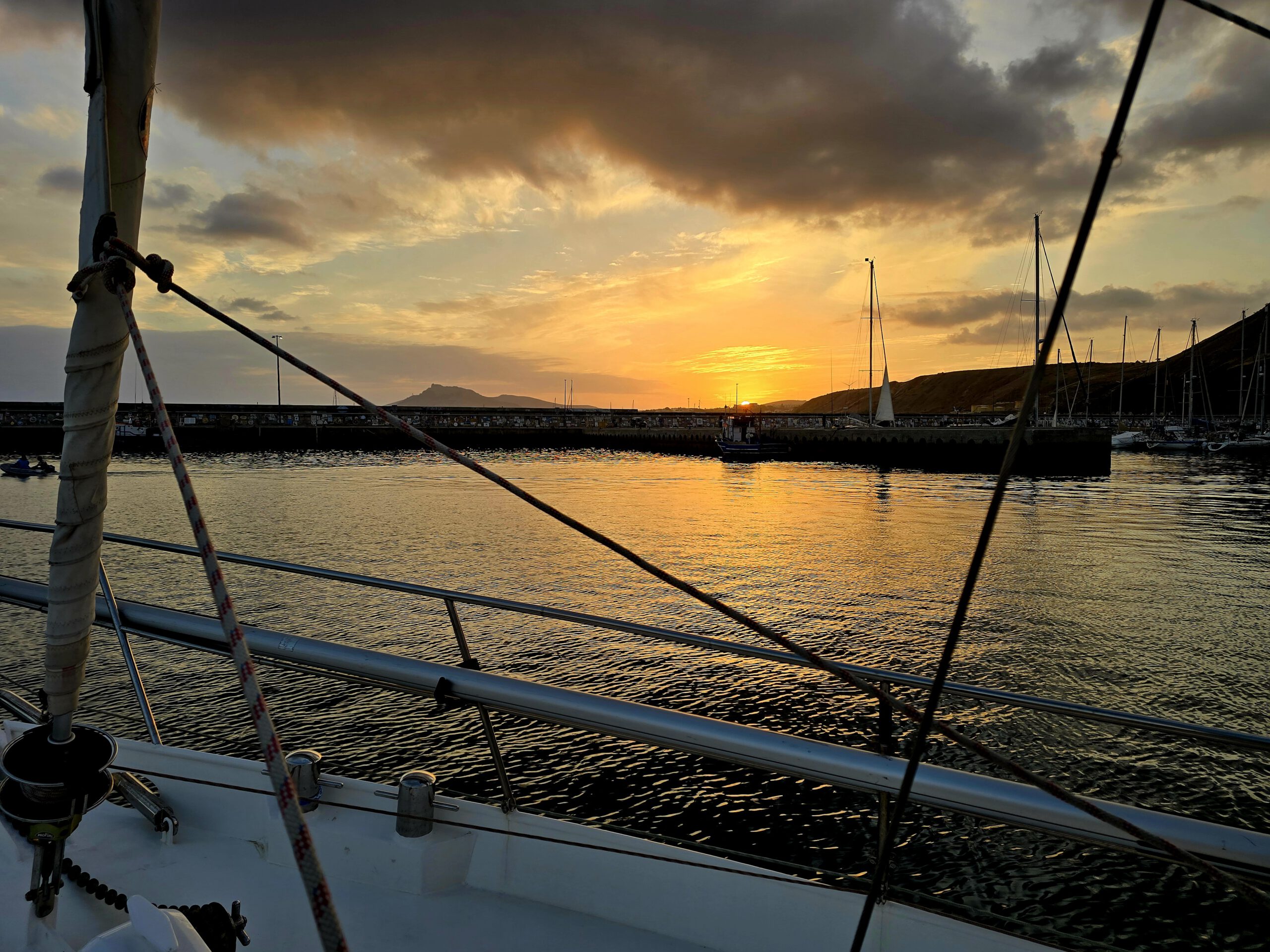
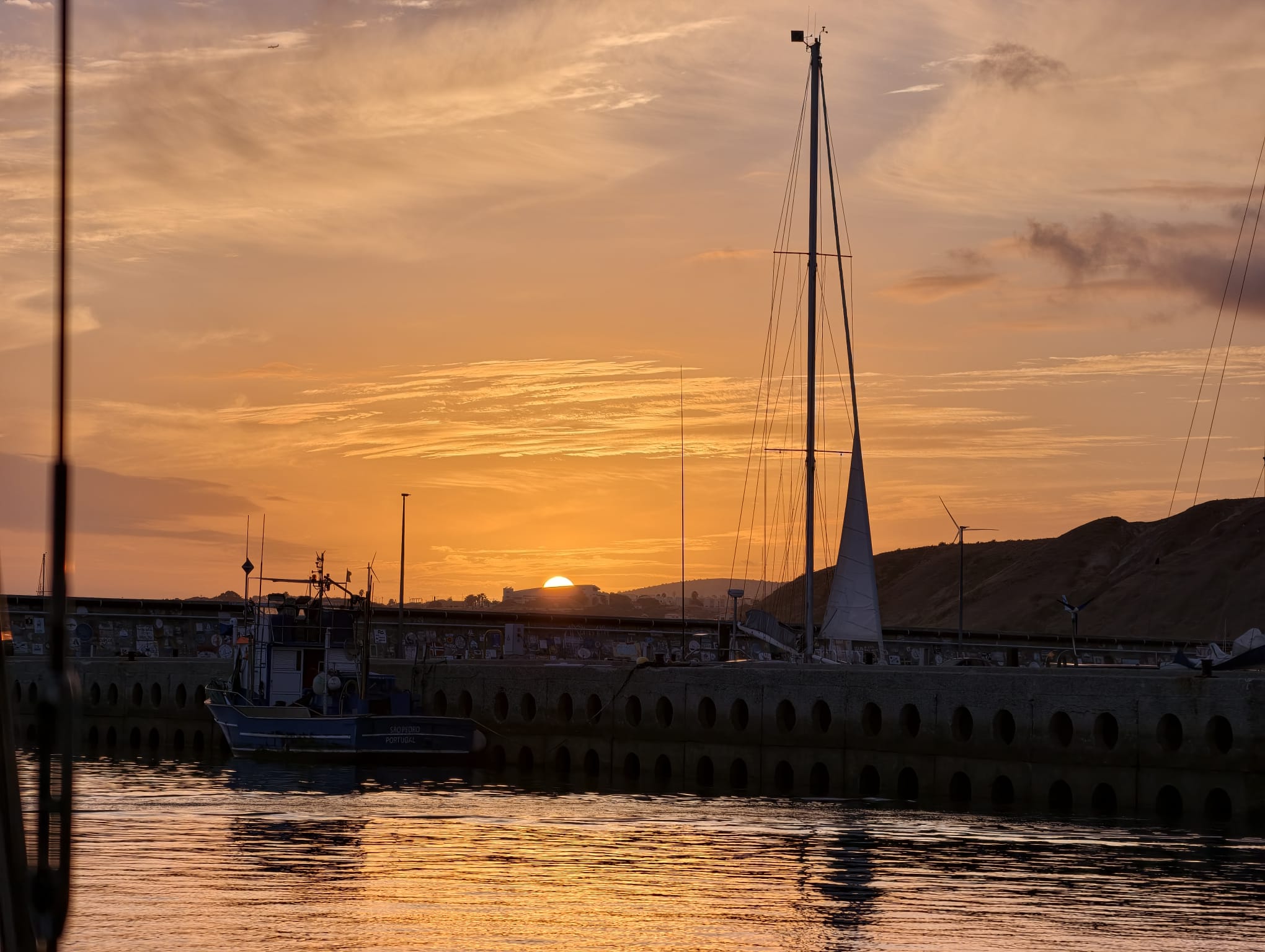
Beautiful sunset today! We love Porto Santo and enjoy each and every day!
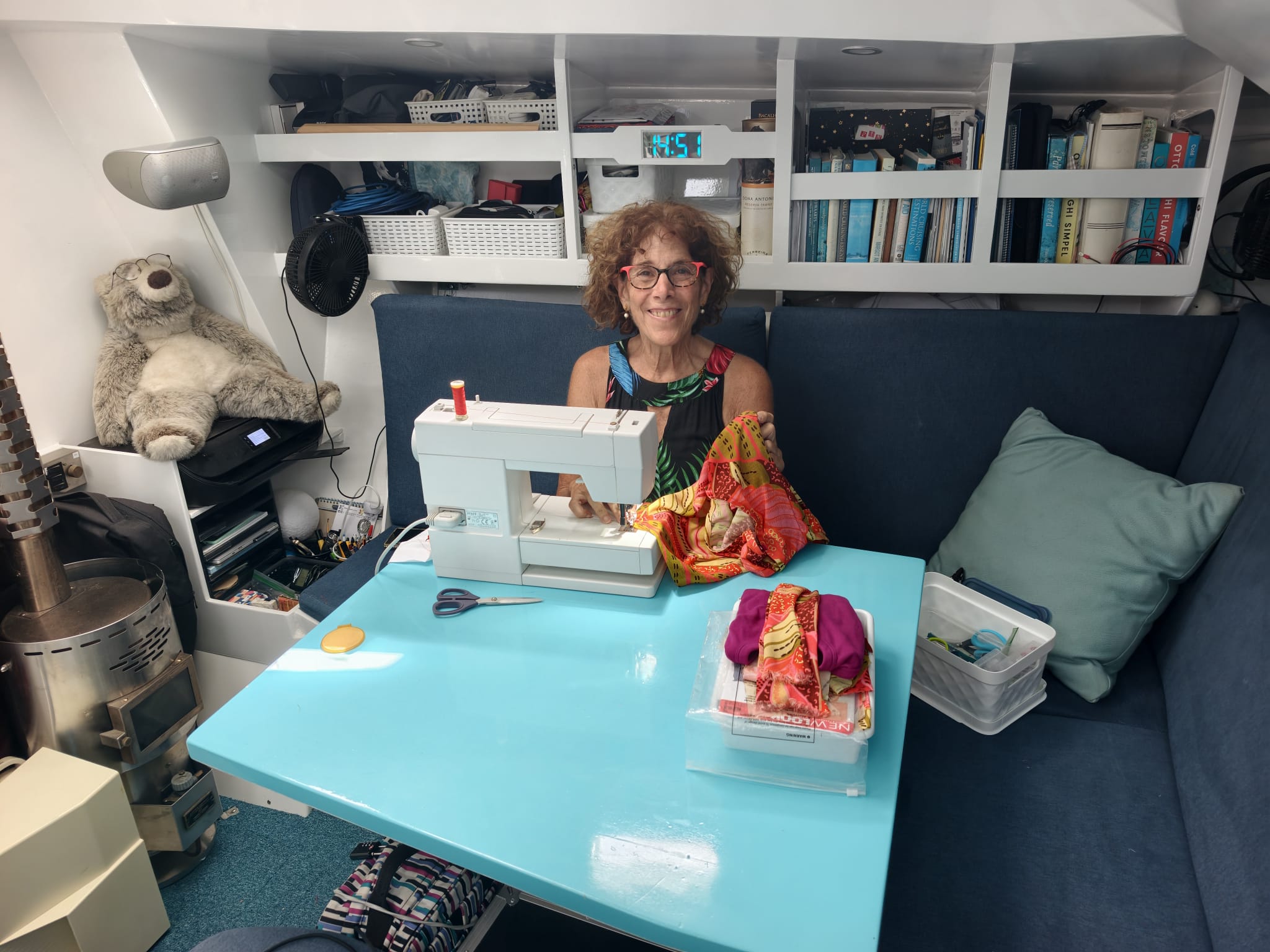
And, in the Dione IV sewing atelier, a new design is being developed. 😀
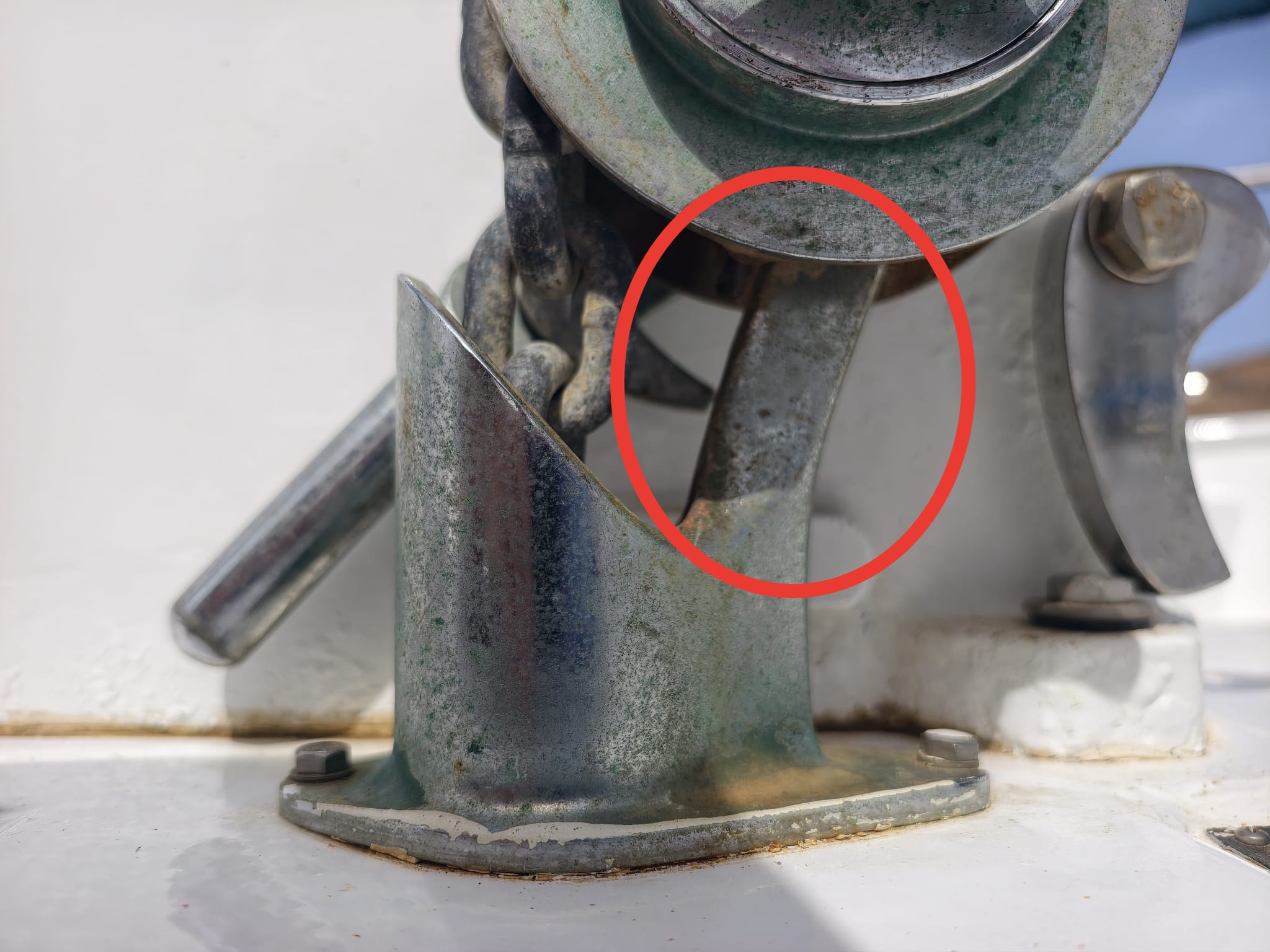
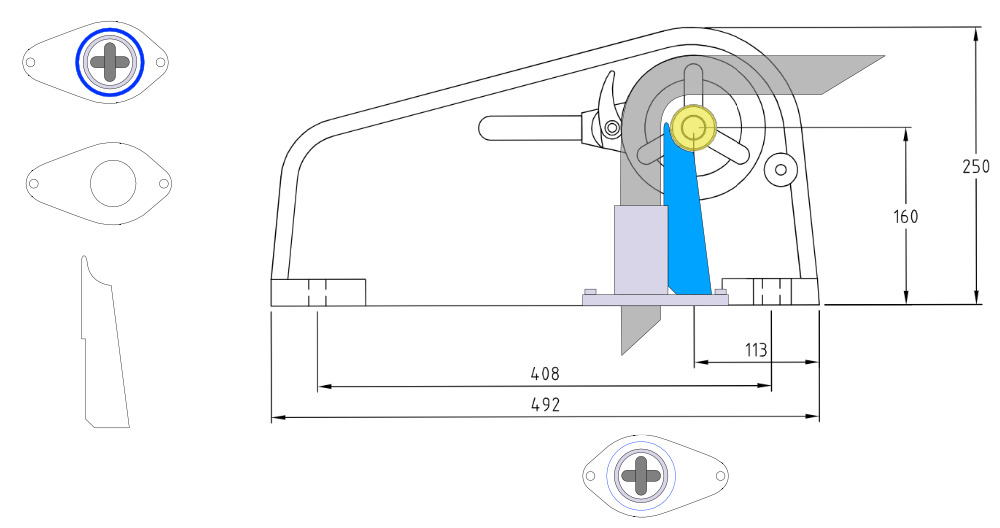
While paint is drying in the lazarette, Wim starts working on another little project: the chain stripper of the chain pipe on our anchor windlass is bent. We think this happened when the chain got stacked in the chain locker. That causes the chain clogging in the pipe and the windlass pushing the chain against the stripper with big force. Wim searches for a replacement part and it is both expensive and unavailable outside Australia. So, clever and creative guy that he is, Wim decides to design his own. This will be stronger and better!
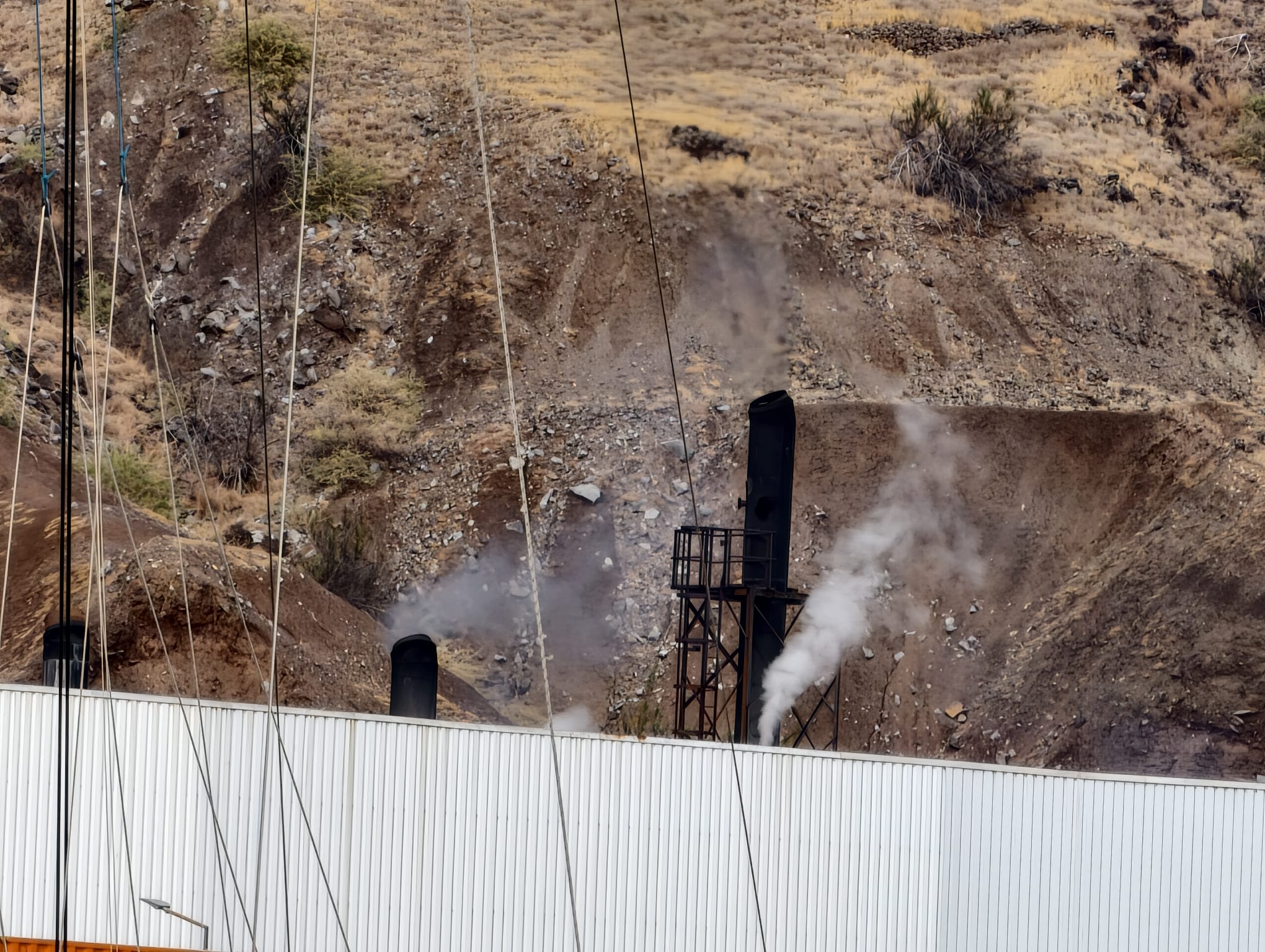
There’s one small disadvantage of this place: the power plant is next to the bay. When the wind is north-east, the exhaust gas blows over the anchorage. It’s a sooty, sulfurous smell that makes us cough. But well, the wind direction changes frequently and we have very fresh ocean air to compensate…
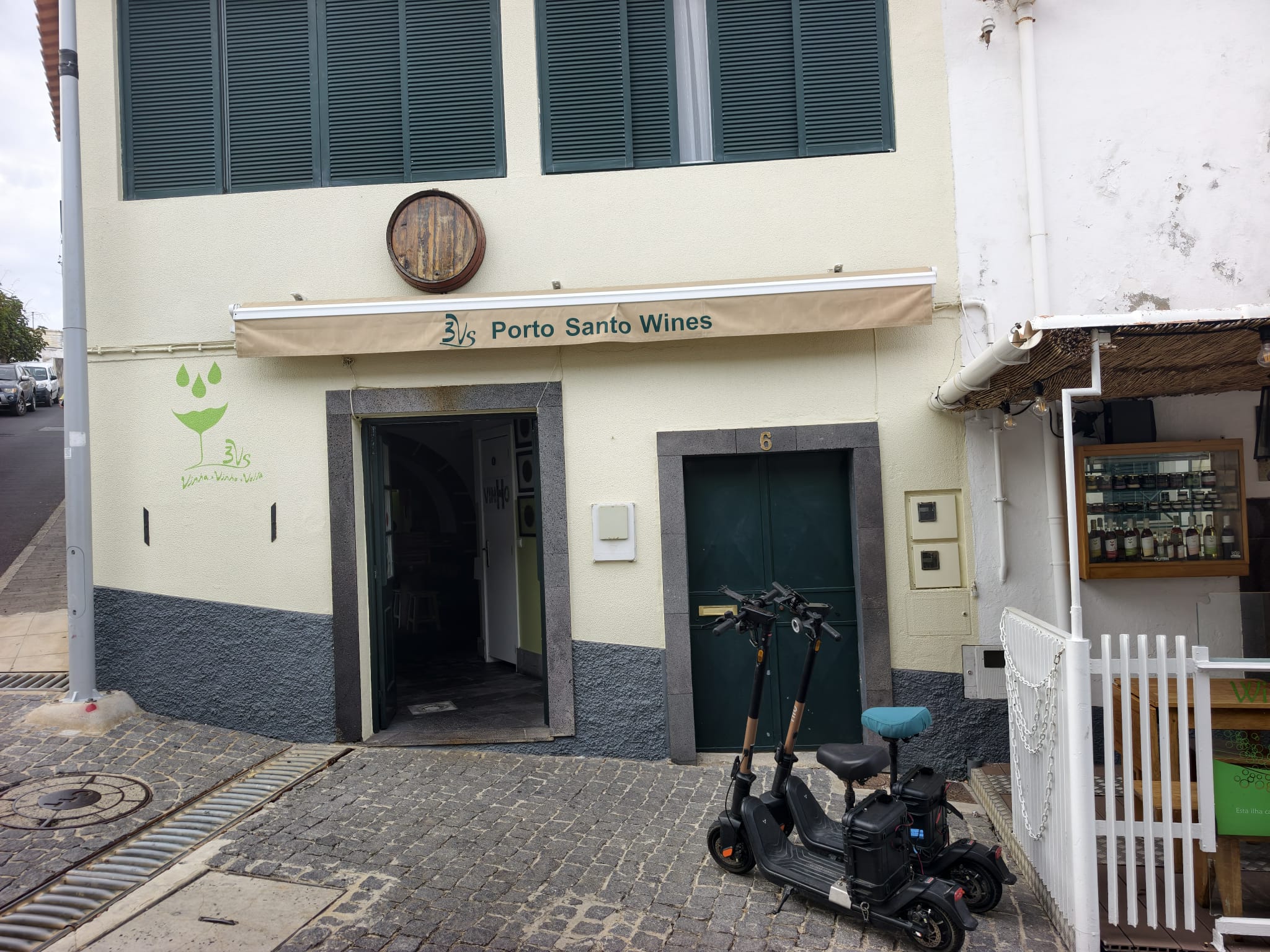
We scooter to the 3V’s wine bar to buy a bottle of their delicious sangria.
After that, we join the cruisers Friday afternoon happy hour and have some nice conversations with the other cruisers. Many people we met earlier have moved on, and there are only a few we know. But that’s the nice thing about a cruising community… everyone is happy to make new acquaintances!
It’s getting crowded in here… Winds from the southwest are expected. That means no shelter from the island. So, the boats anchored outside are squeezing themselves in.
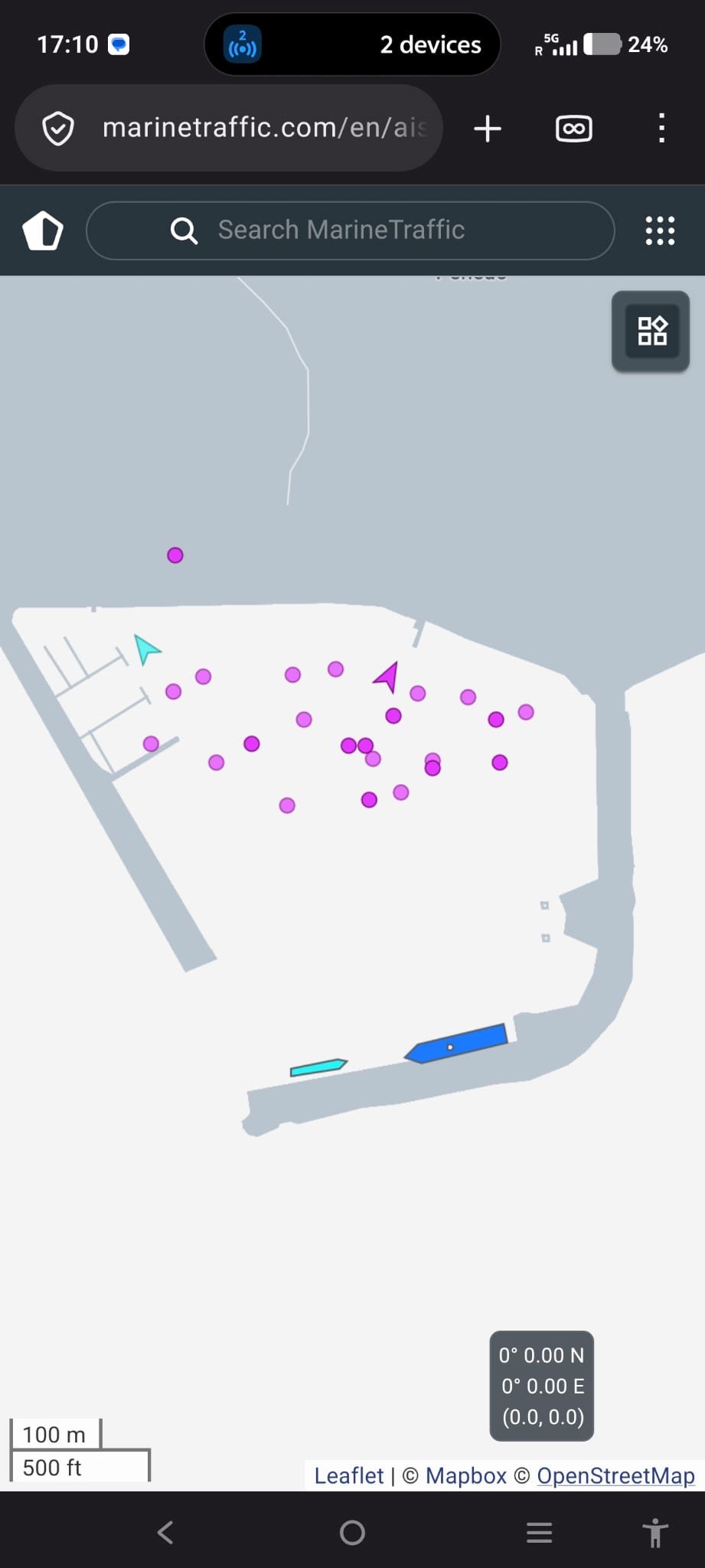
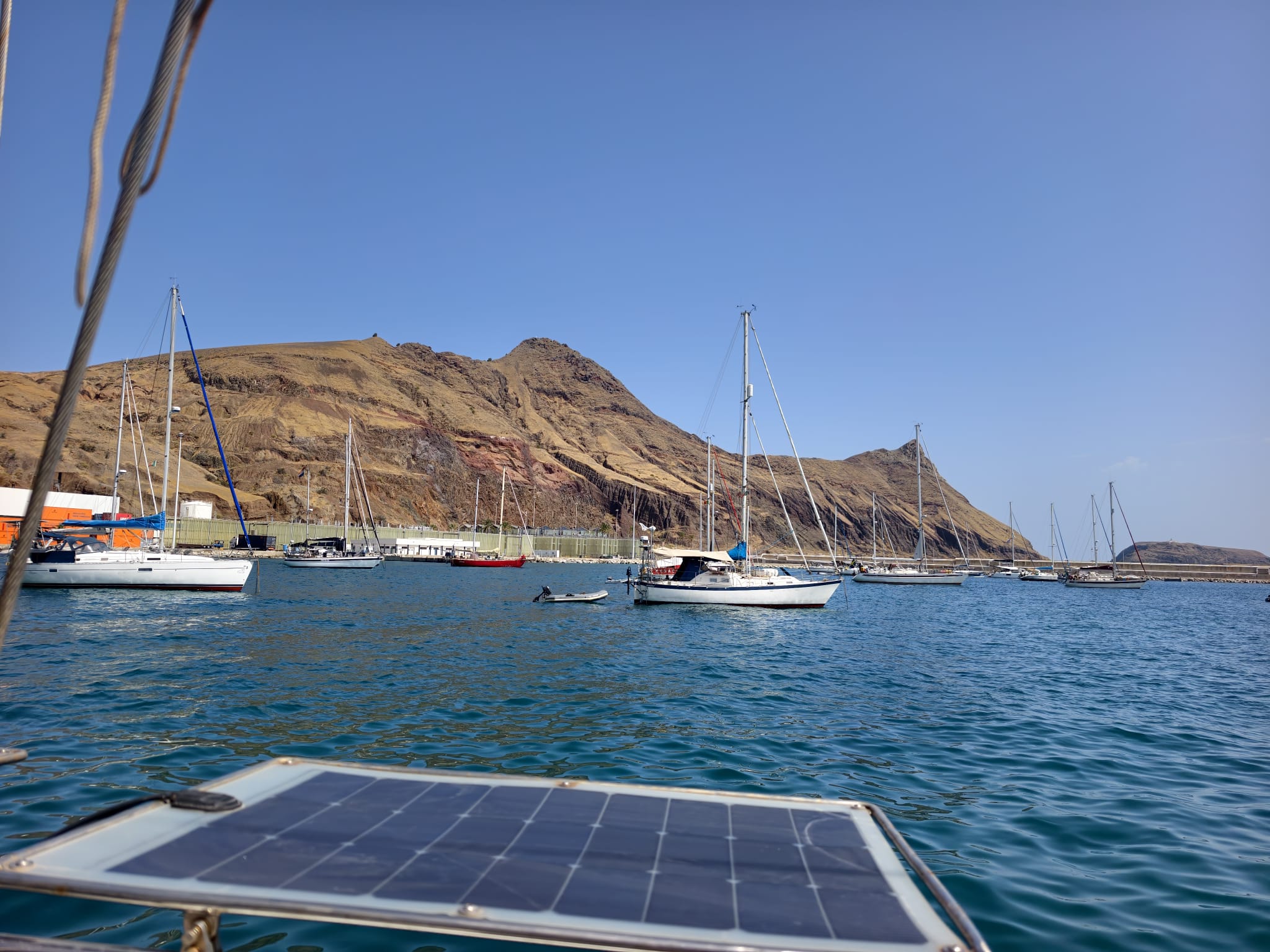
Actually, there’s not enough room between all boats but as long as the wind blows everybody stays in the same direction.
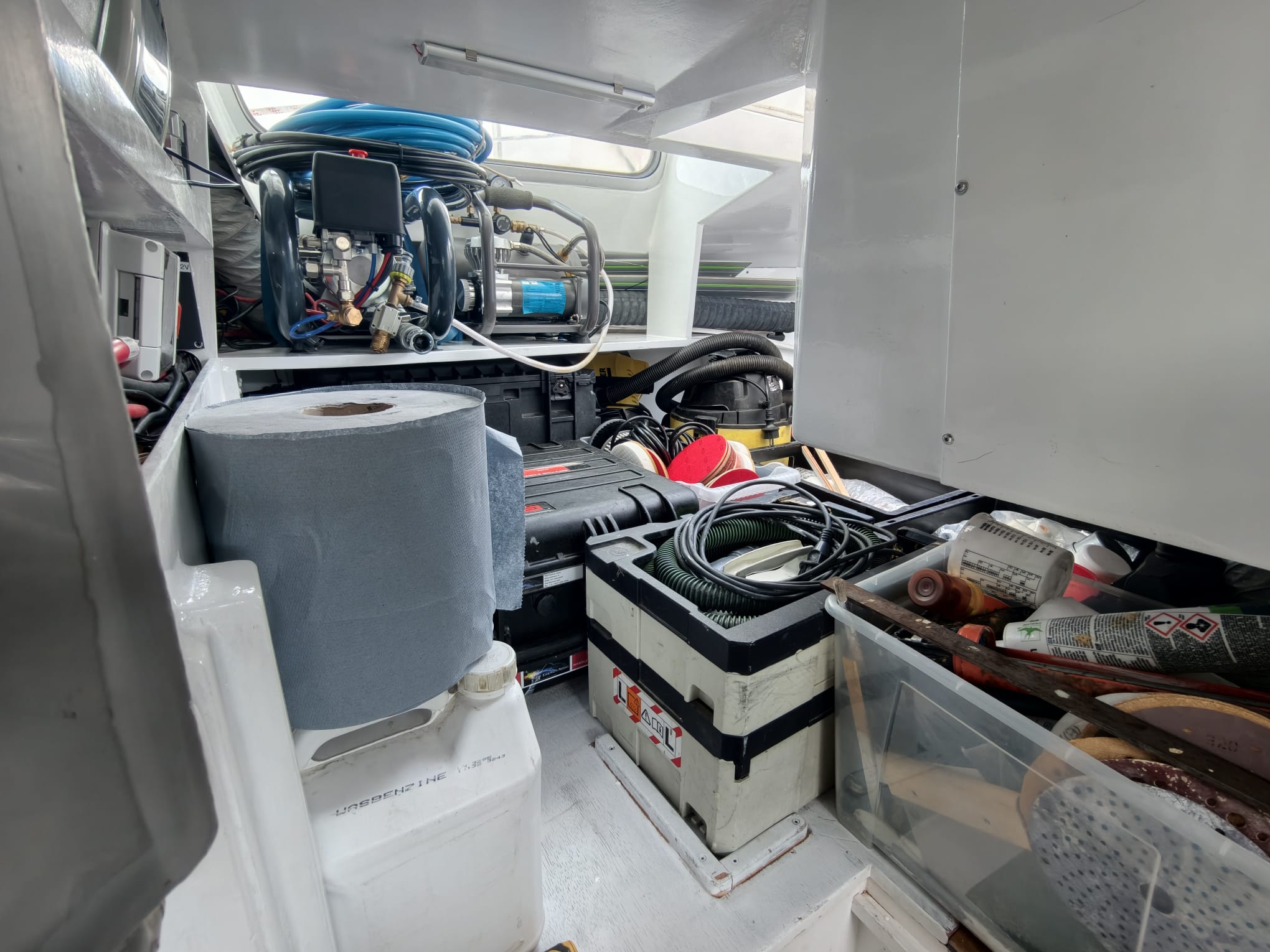
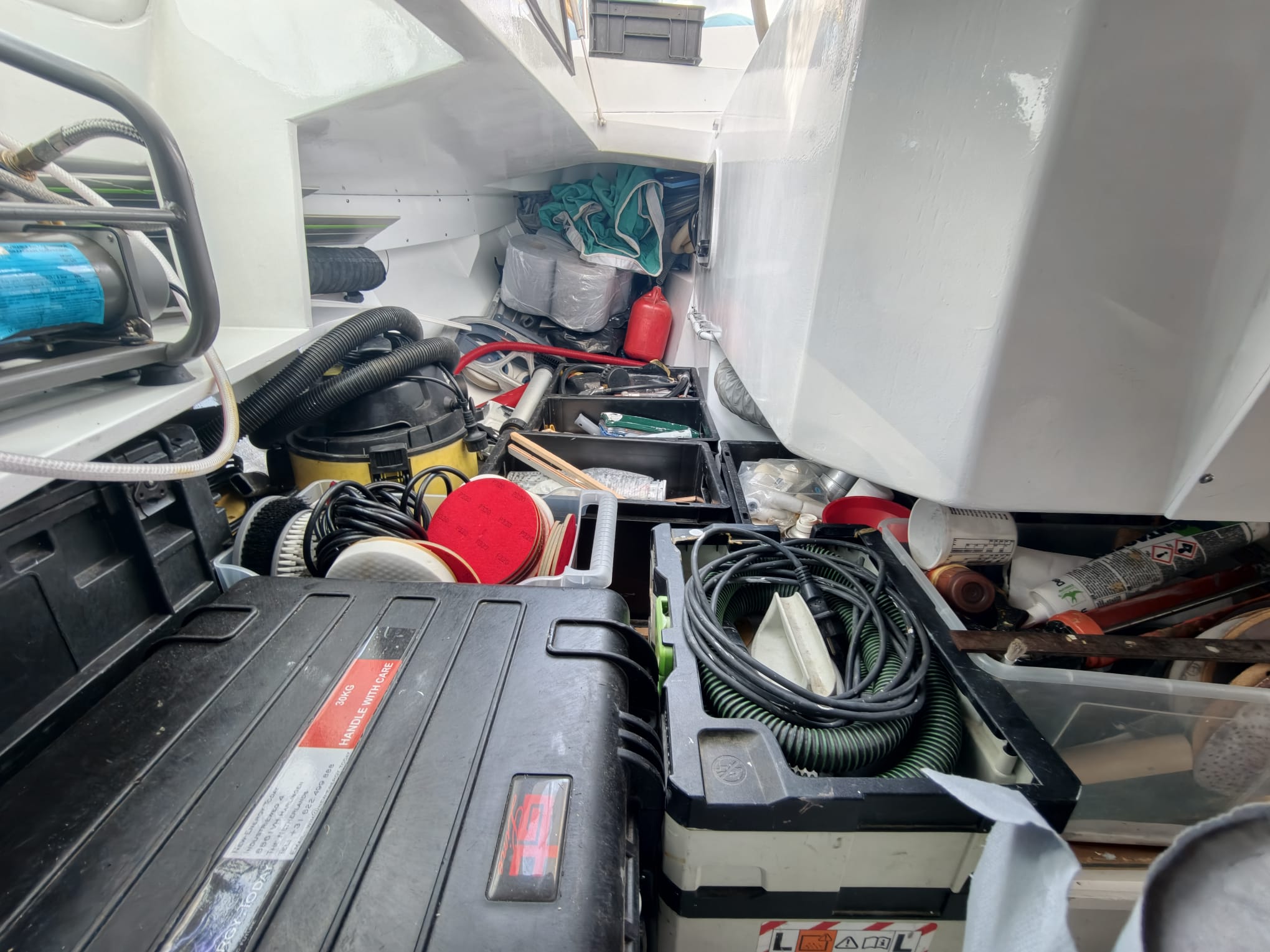
The paintwork in the lazarette is done! Everything is shiny white (except the floor boards… that’ll be done later)
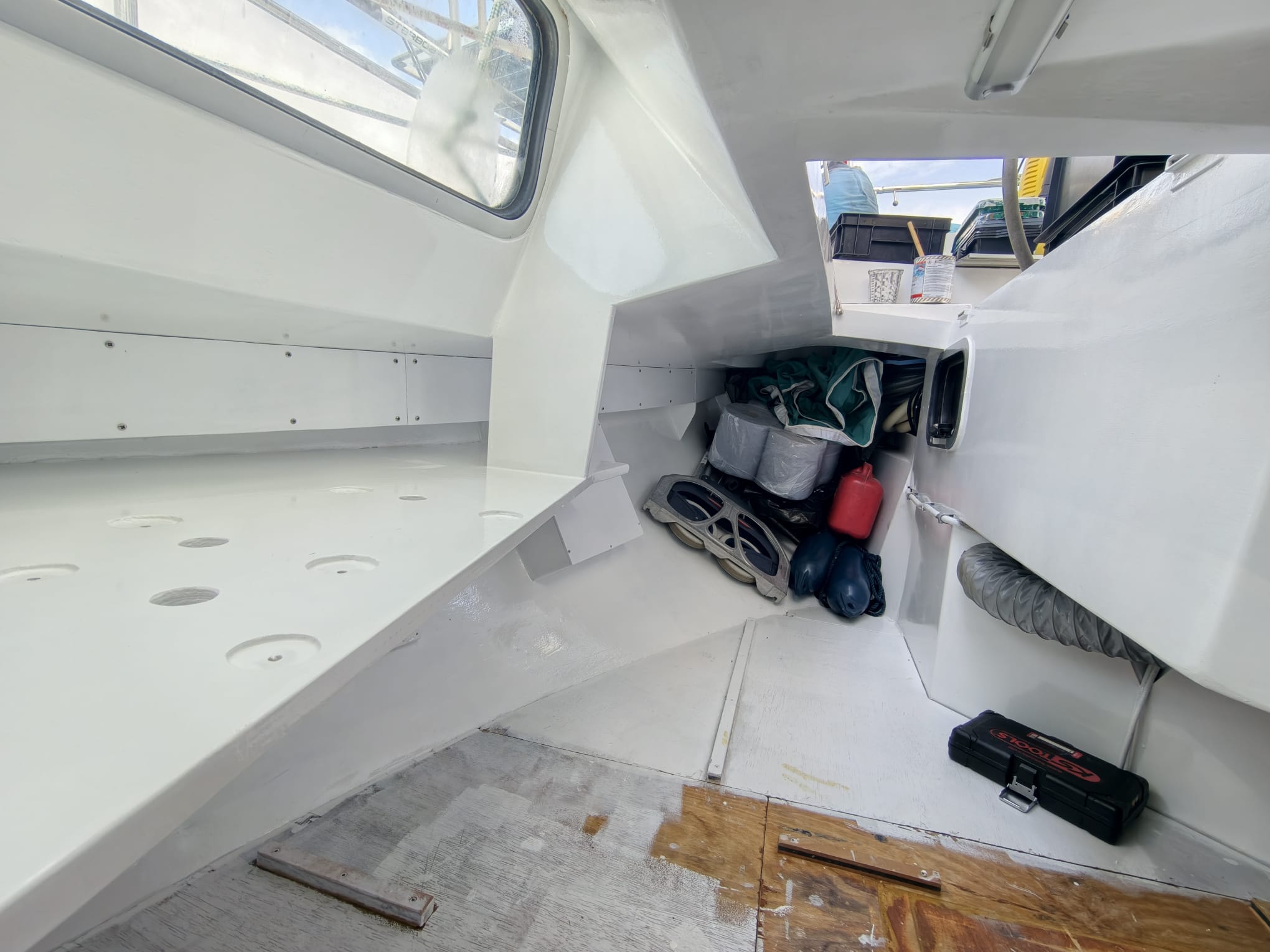
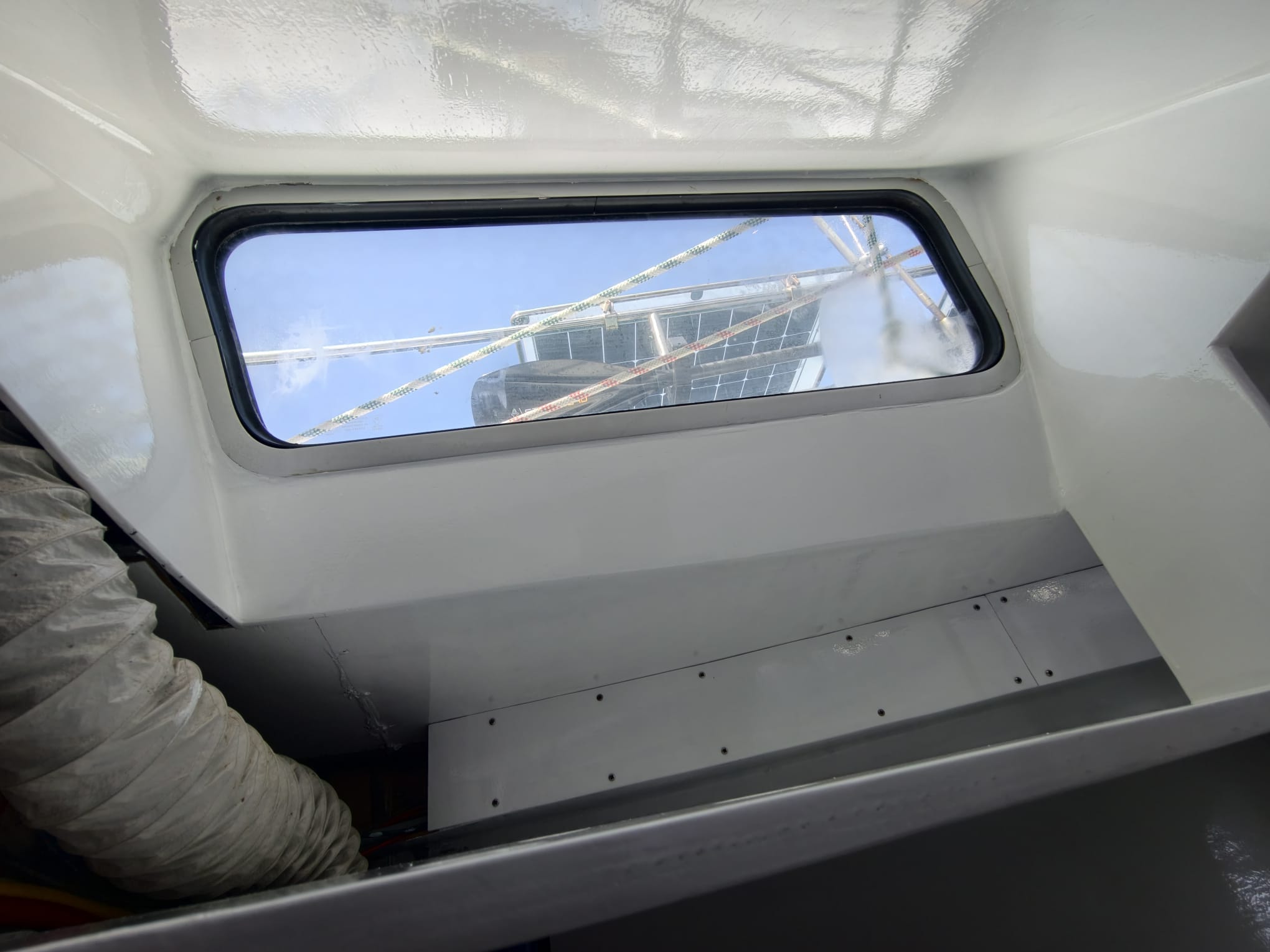
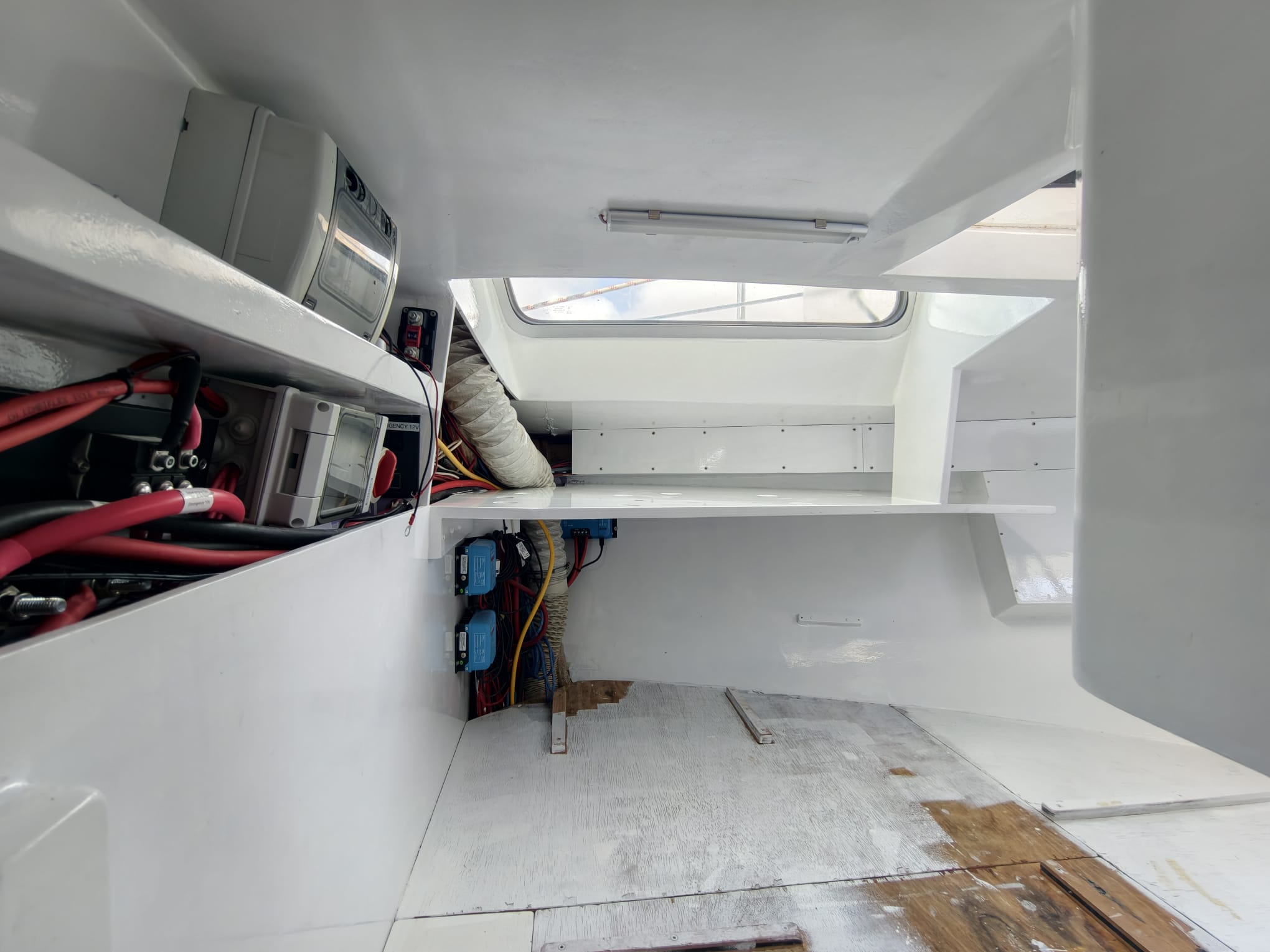
And all the stuff back in.
There have been rumors about the rates for anchoring getting multiplied by 4. The marina office accepted no payments after September 30 because they were waiting for government approval to raise the rates starting October 1st. So, we go to the office today to hear what they have decided. The marinero says: it’s going to be €25 for anchoring inside and €20 for anchoring outside, plus 23% tax. That’s completely outrageous! Up till now, we paid €5 plus tax. We decide to leave and anchor outside the area covered by the marina, by the pier close to town.
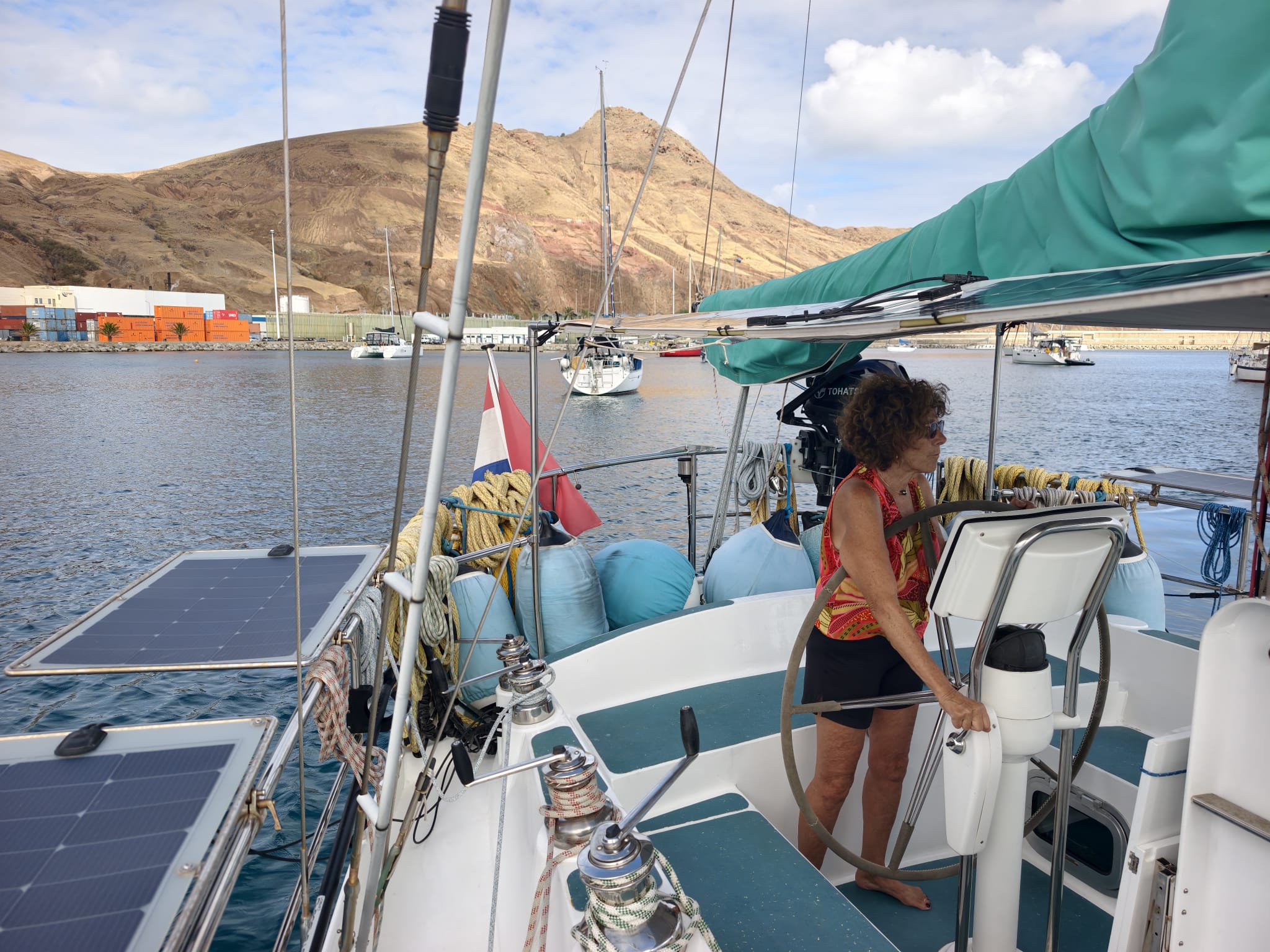
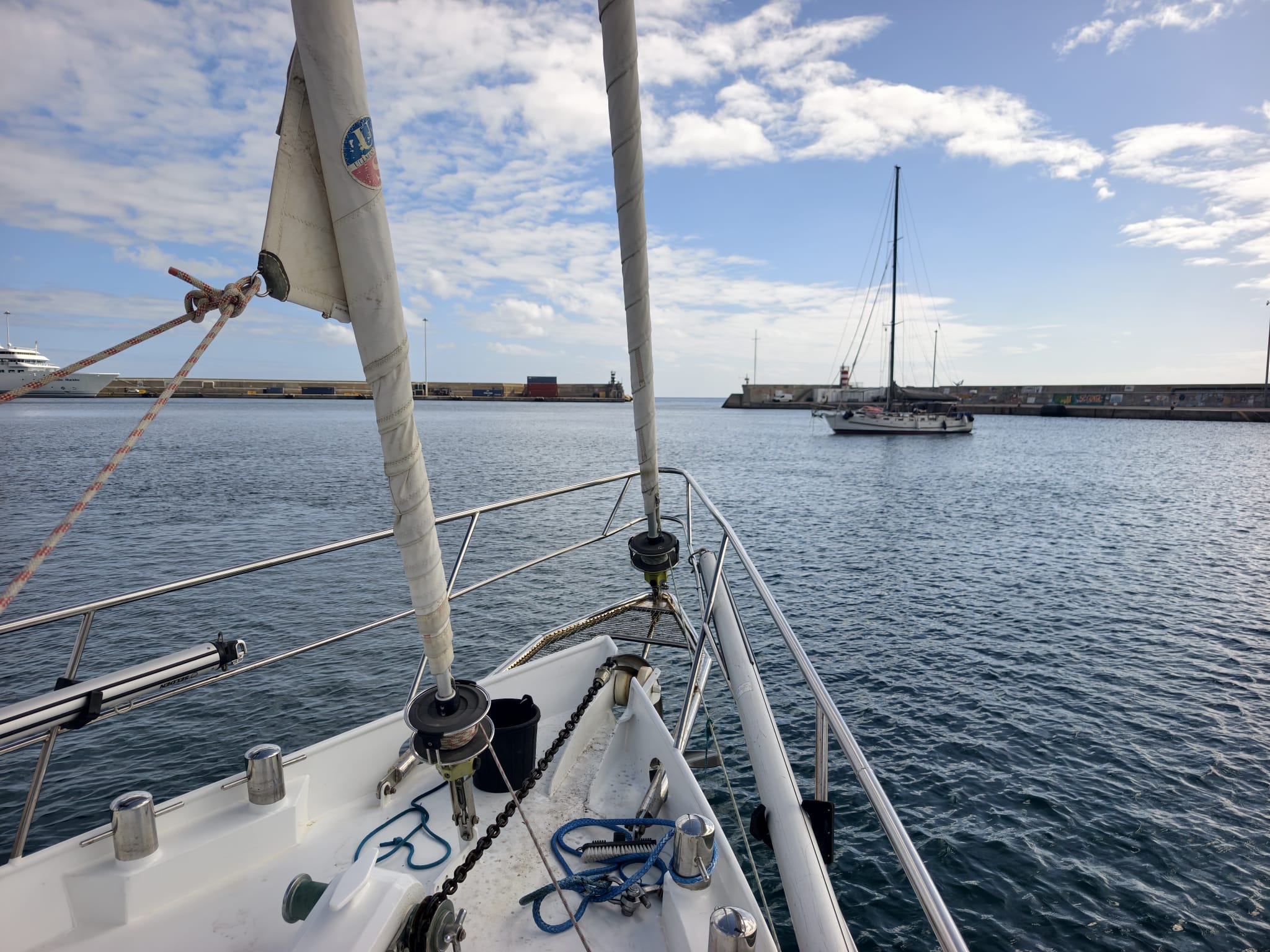
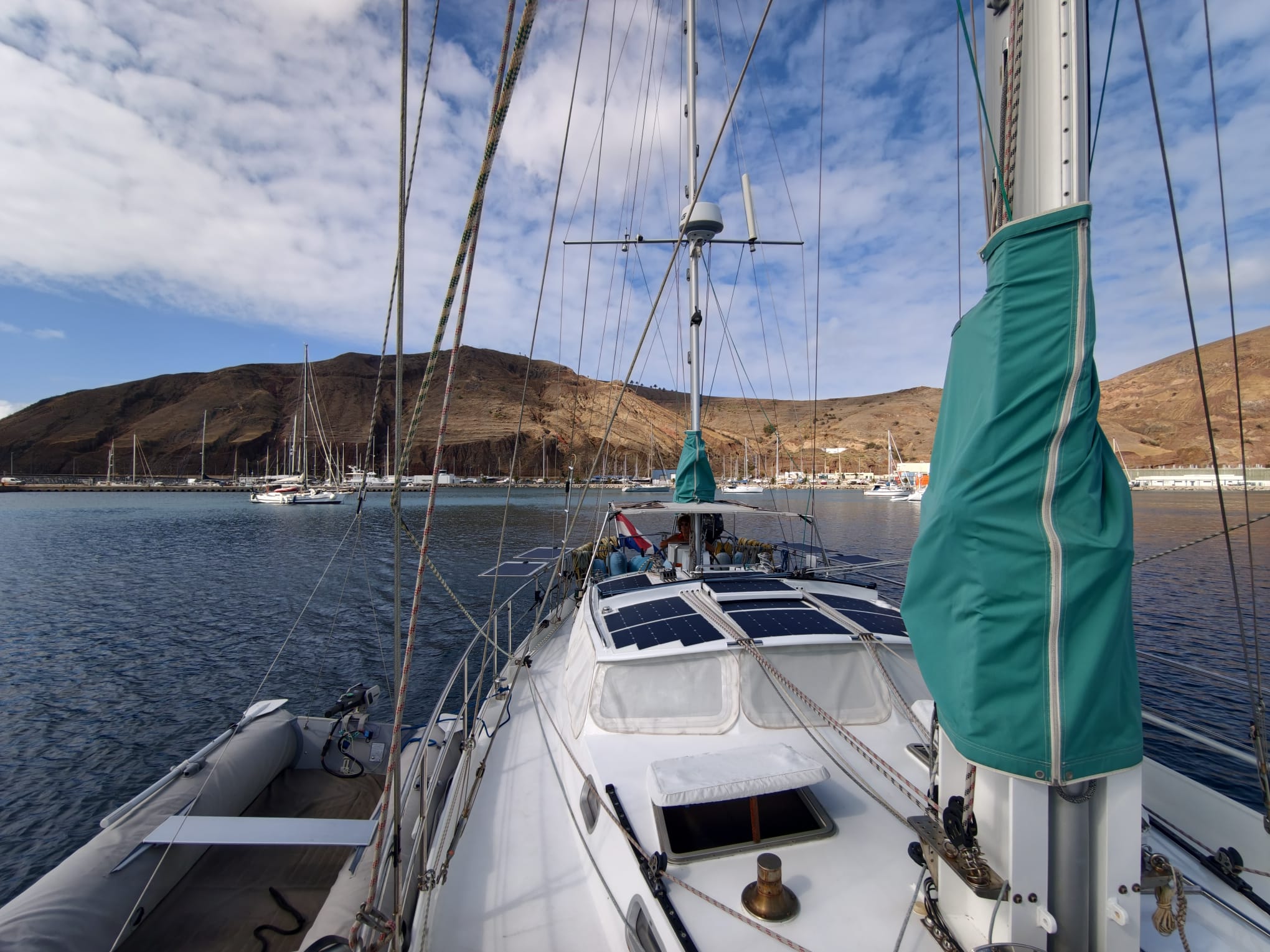
But then during the night the wind increased to about 20 knots from the east. That creates waves alongside the island and Dione IV is bouncing in these waves. Very uncomfortable. In the Porto Santa cruiser’s WhatsApp group we read that the marina hasn’t been allowed to raise their rates that much but only a little. It’s now €7,50 on the outside anchorage and €15 inside. Still pretty high, but we decide to go back and anchor on the outside near the wall, where there’s a nice shelter from the waves.
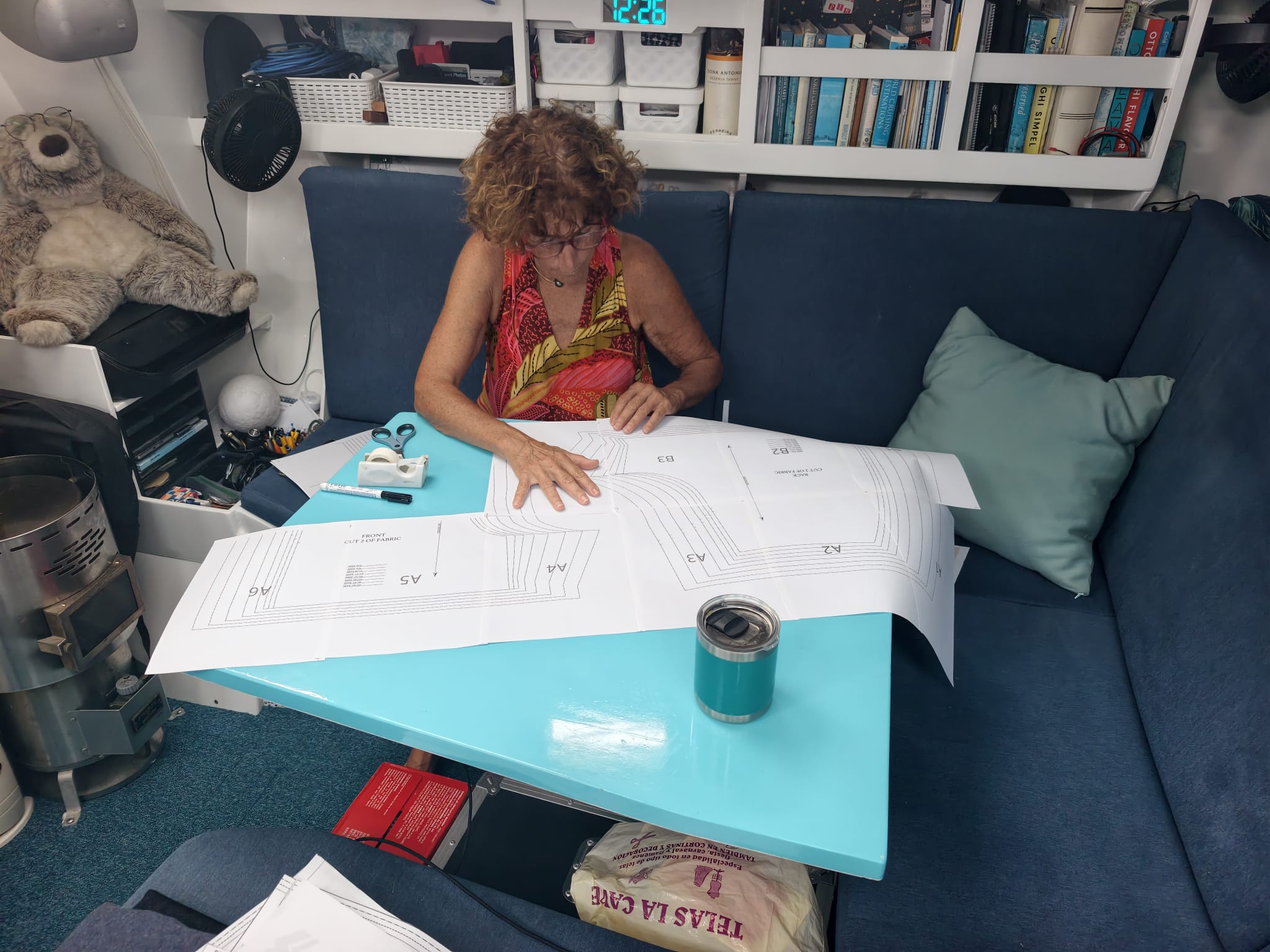
Sher has printed out a pattern and she will start sewing a new design.
Wim has been working on a new design as well… programming a new user interface for the PYPilot autopilot. We don’t like the original user interface as it takes up way too much space on our screen. Also, it contains a lot of non-important buttons and text boxes.
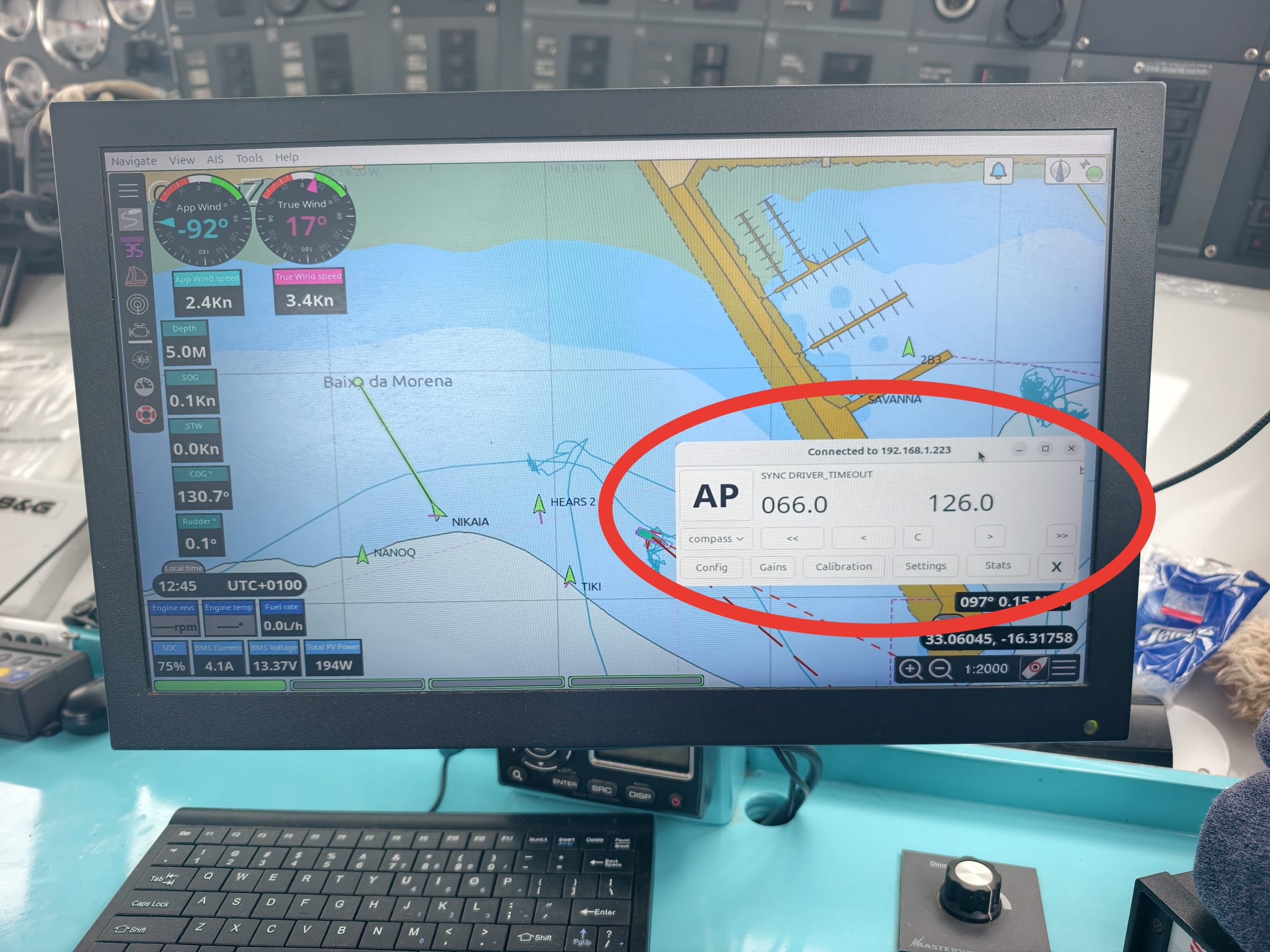
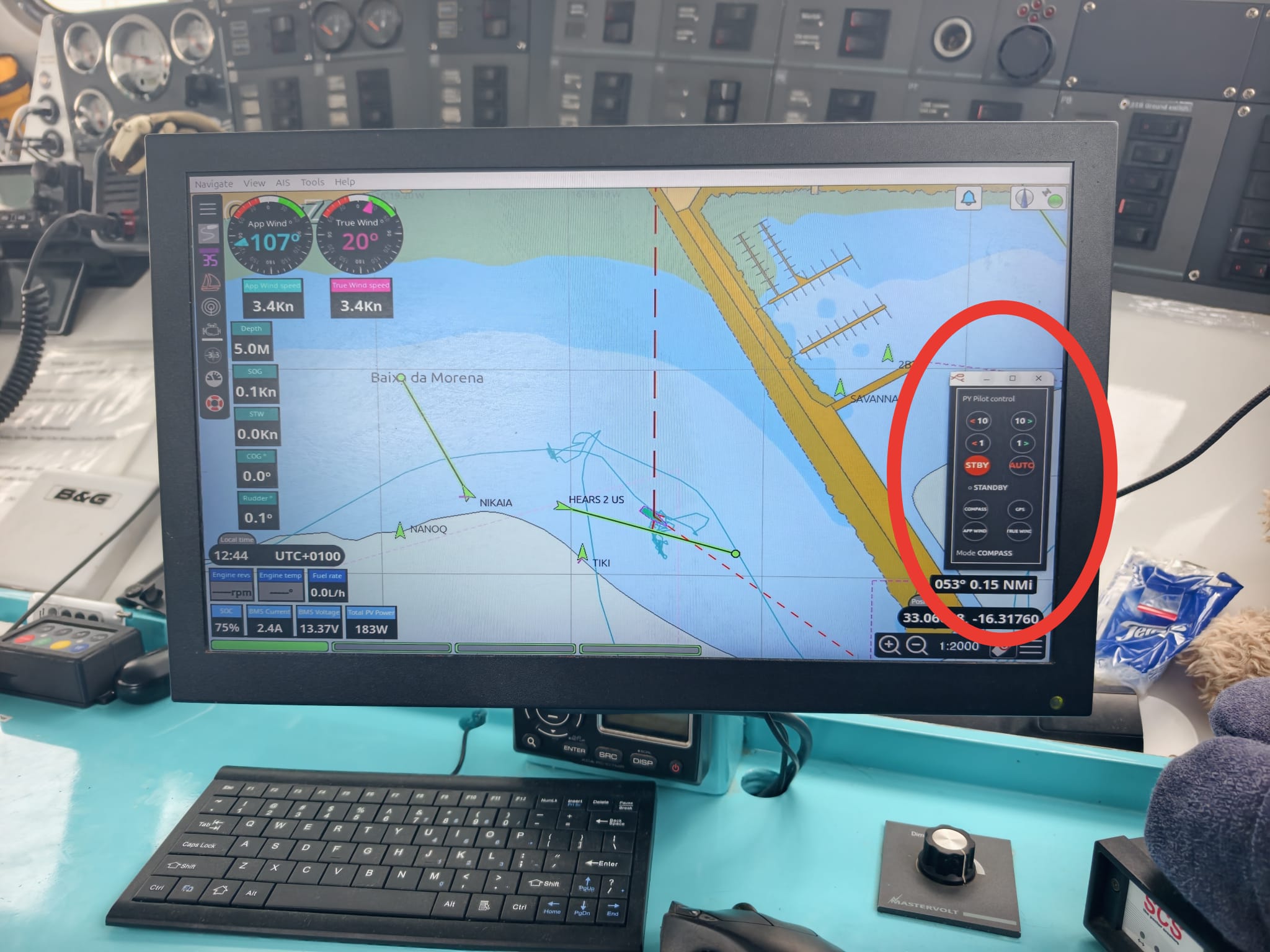
So, using Signal K in Node-Red he designs and programs a new interface that looks like our Simrad panel (which we really like) and with only the necessary controls. It takes a lot less space on the screen (and over the chart).
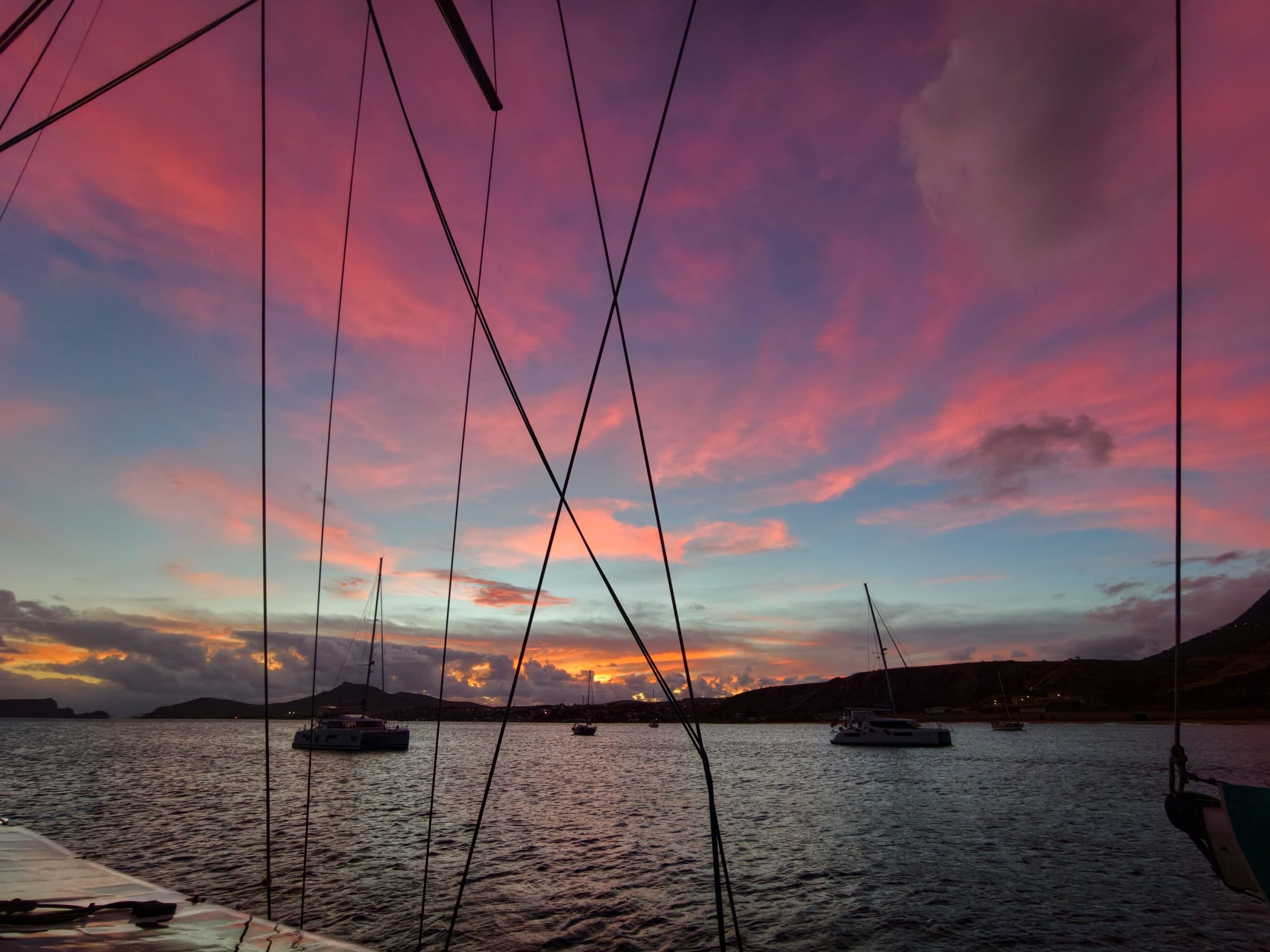
A gorgeous sunset!
Before we leave for Madeira, we need to clean the hull, which has growth from being at anchor for over 2 months. So that requires a lot of diving with the Hookah breather. Wim does the diving with the lead belt while Sher does the work on the surface (up to arm length under water). A big parrot fish is around us all the time, very funny! He’s not afraid at all and sometimes Wim has to be careful not to touch him with the putty knife or the electric scrubber! He’s under the boat every day and followed Sher the entire length of the boat as she was scrubbing.
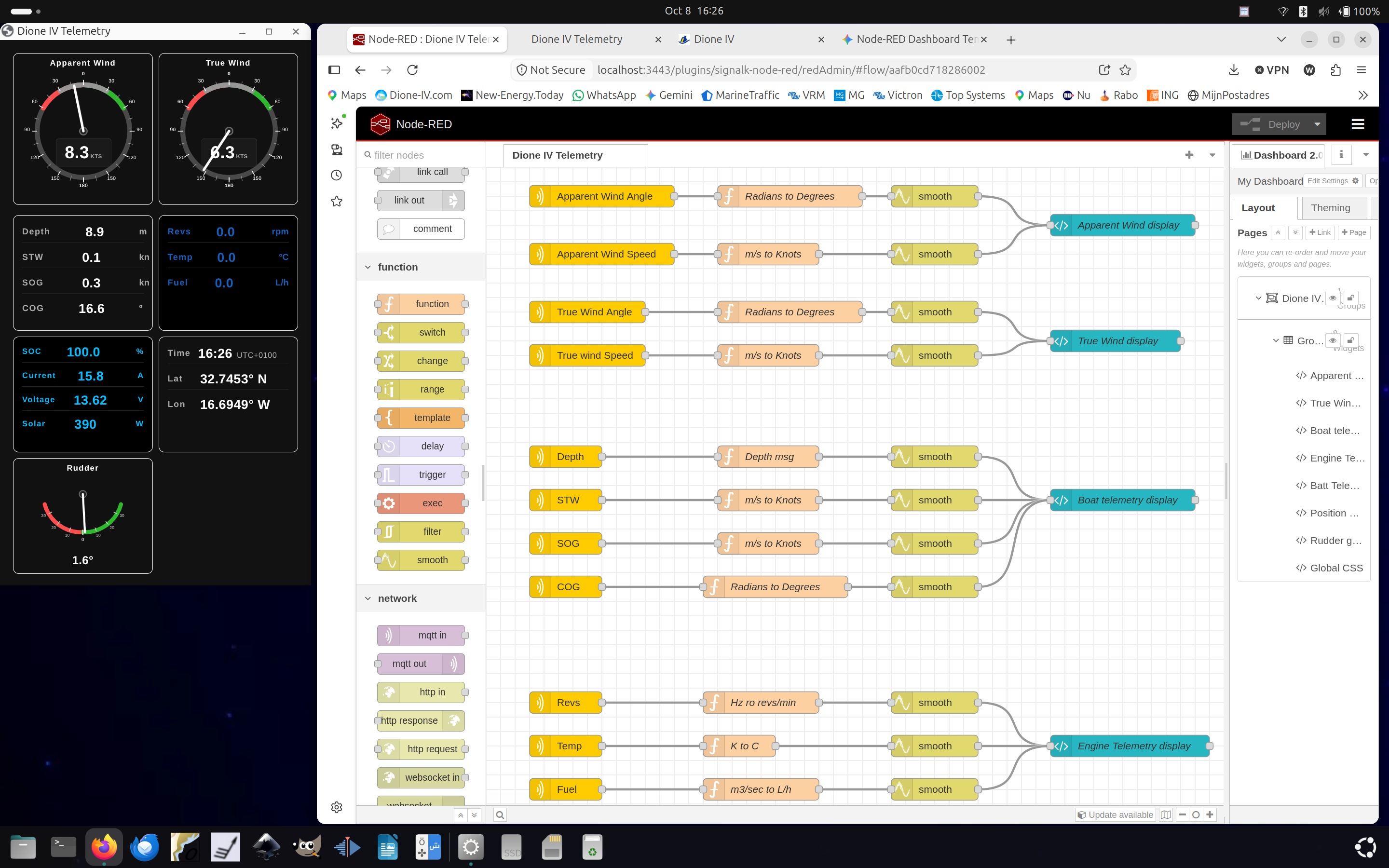
An hour of diving, scraping and scrubbing is pretty exhausting, so Wim does 2 dives per day. He spends the rest of day programming a custom boat telemetry dashboard (inspired by the new possibilities of Signal K and Node-Red).
In the meantime, Sher continues her sewing projects.
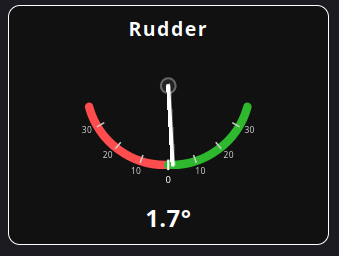
The Signal K standard interface in OpenCPN is nice but it has some disadvantages. It’s hard to fully customize the layout and it has no widget for a rudder gauge. It displays the rudder angle in numbers. Sher misses her rudder gauge, so that inspires Wim to develop a custom one in Node-Red, using the Signal K data. Sher LOVES her new rudder gauge!
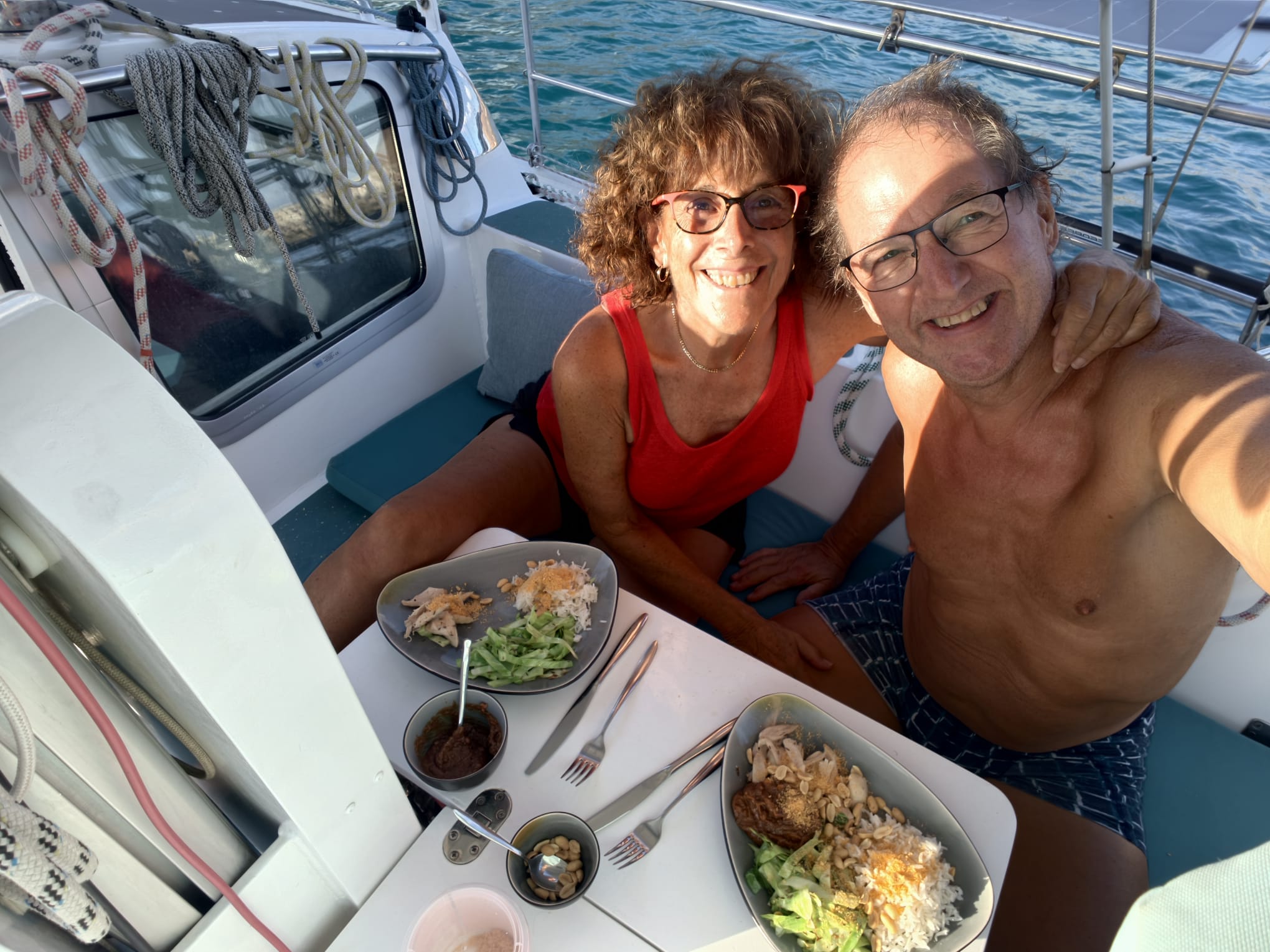
The hull is clean and we’re ready to move on. We enjoy our last dinner at Porto Santo.
We’ve been since August 1 so that’s 2 months and a week. We have enjoyed our time here tremendously but it’s time to move on. To new adventures, new islands, new friends! (but we’ll be back next year, we hope)
The Captain’s Log – the complete story
September 22.
Front side of the lazarette painted in high gloss and all equipment back in place.
Let’s continue painting the rest of the lazarette. Last autumn, the aft side was done so now is the time for the middle part. Wim starts with sanding the existing paint and filling some spots and seems.
Beautiful sunset today!
September 24.
The sewing atelier is working on a new design 😀
Wim is continuing the filling and sanding in the lazarette and when the filler is drying he working on another little project: the stripper of the chain pipe of our anchor windlass is bent. We think this happened when the chain got stacked in the chain locker. That causes the chain clogging in the pipe and the windlass pushing the chain against the stripper with big force.
The problem we have now is that sometimes the chain sticks to the cogwheel and gets stuck against the bent stripper. In other words, the stripper isn’t working any more.
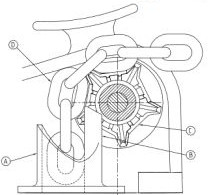
So, we concluded we’ll need a new chain pipe/stripper. On the website of the manufacturer (Muir in Australia) we see that they have changed the design. The stripper is higher, so that it is supported by the cogwheel. Ours is about an inch lower.
And it’s made of stainless steel. Ours is bronze. Stainless steel will be stronger.
But… it’s seems to be hard to get. It probably has to be sent from Australia. That’s going to take a long time. And it’s pretty expensive: about €500.
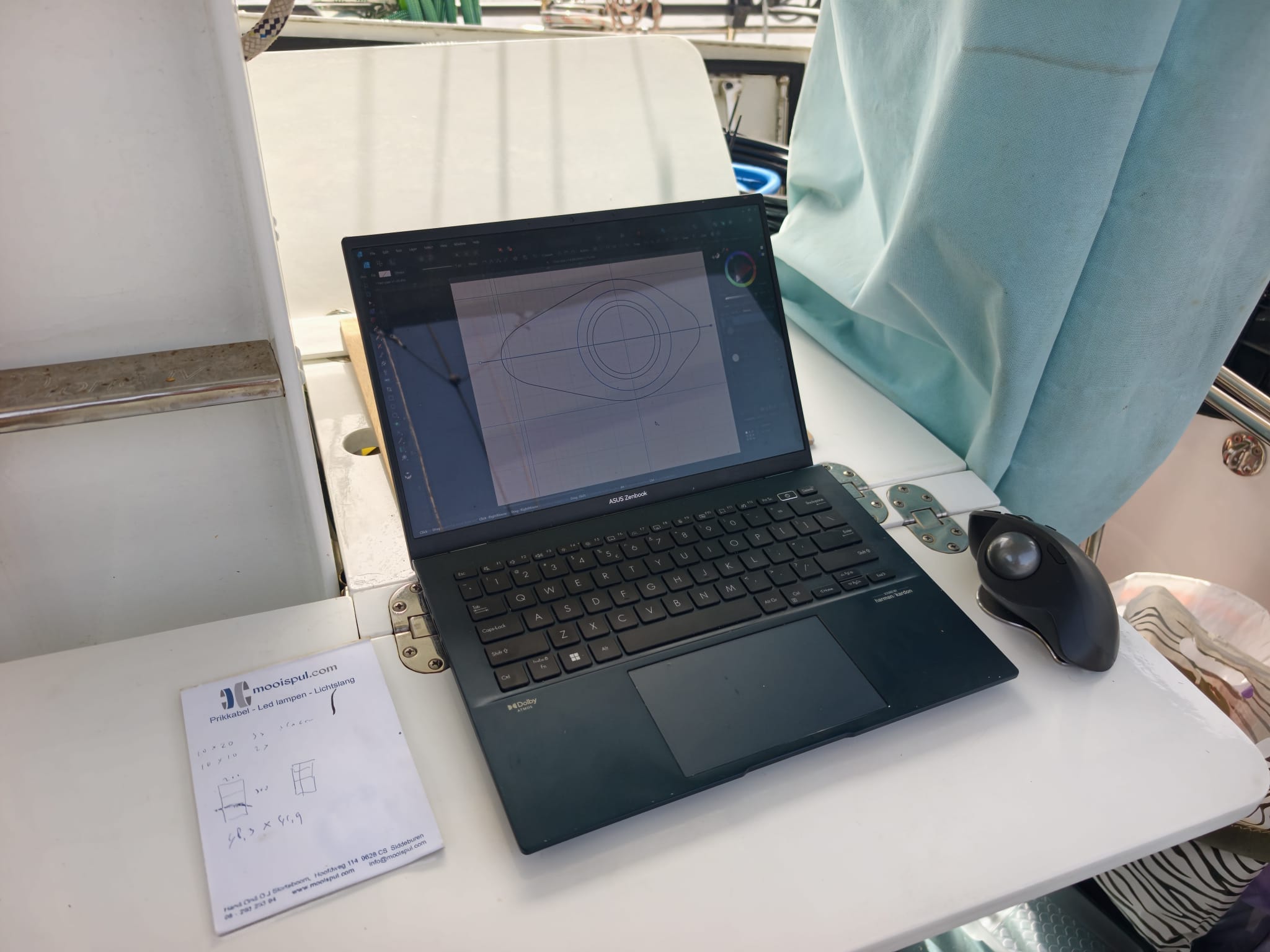
That makes us think. We can make one ourselves. Wim can draw a new and improved design and have the stainless steel parts laser cut in the Netherlands. Sitting at the cockpit table, in a lovely light breeze, he starts putting the sizes in his drawing program.
Drawing: the dark gray is the anchor chain. The light grey part is the new chain pipe. The blue part is the new stripper, supported by the cogwheel (the yellow circle). These parts (out of 10mm thick stainless steel) will be be welded on a sturdy 10mm tick base plate.
Next time we visit the NL we’ll take the parts home and Wim will weld it together.
There’s one small disadvantage on this place: the power plant is next to the bay. When the wind is north-east, the exhaust gas blows over the anchorage. It’s a sooty, sulfurous smell that makes us cough. But well, the wind direction changes frequently and we have very fresh ocean air to compensate…
September 25.
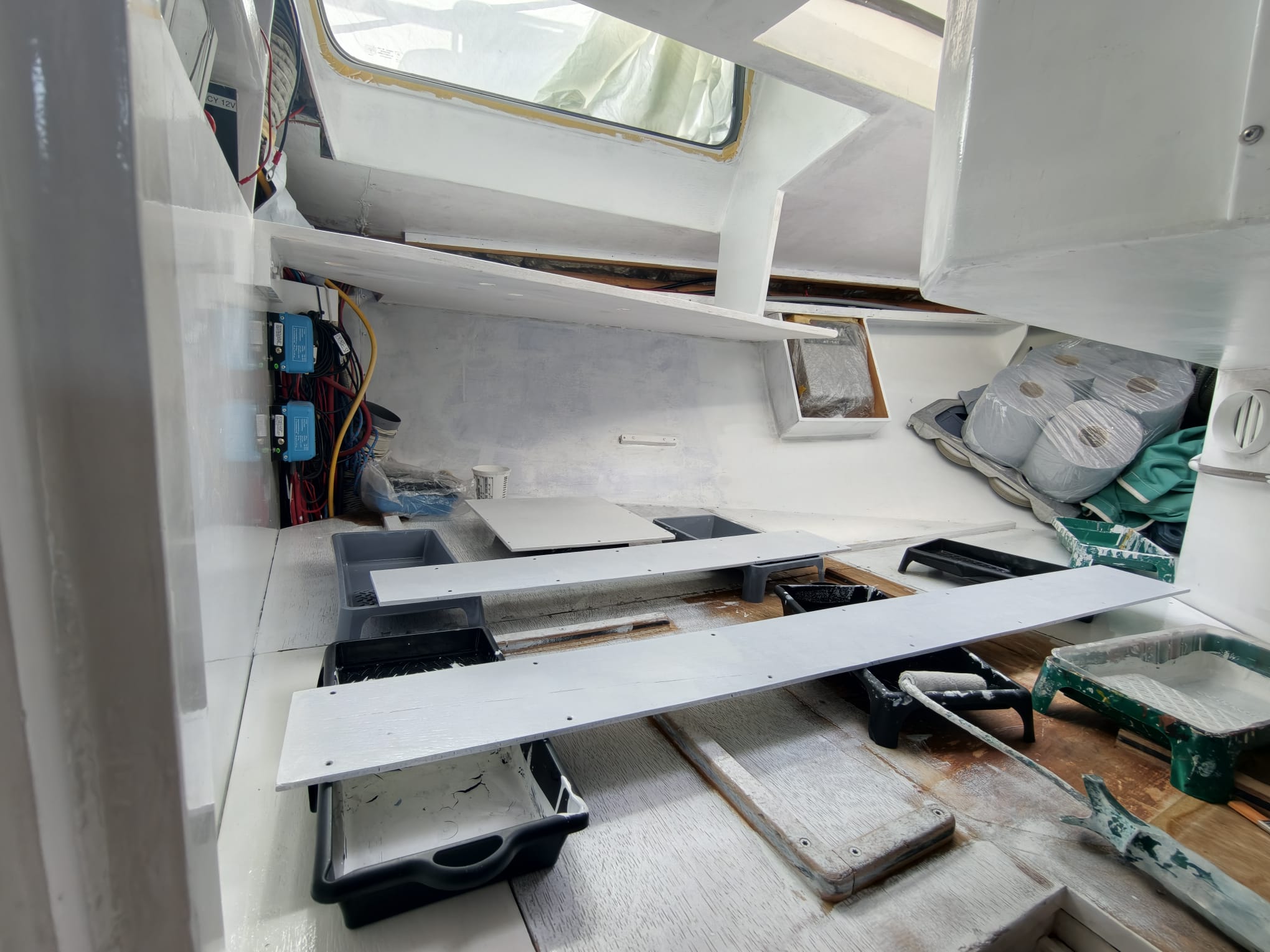
First layer of primer in the lazarette.
By the end of the afternoon we scooter to the 3 V’s to buy a bottle of their delicious sangria.
After that, we join the cruisers Friday afternoon happy hour and have some nice conversations with the other cruisers.
September 26.
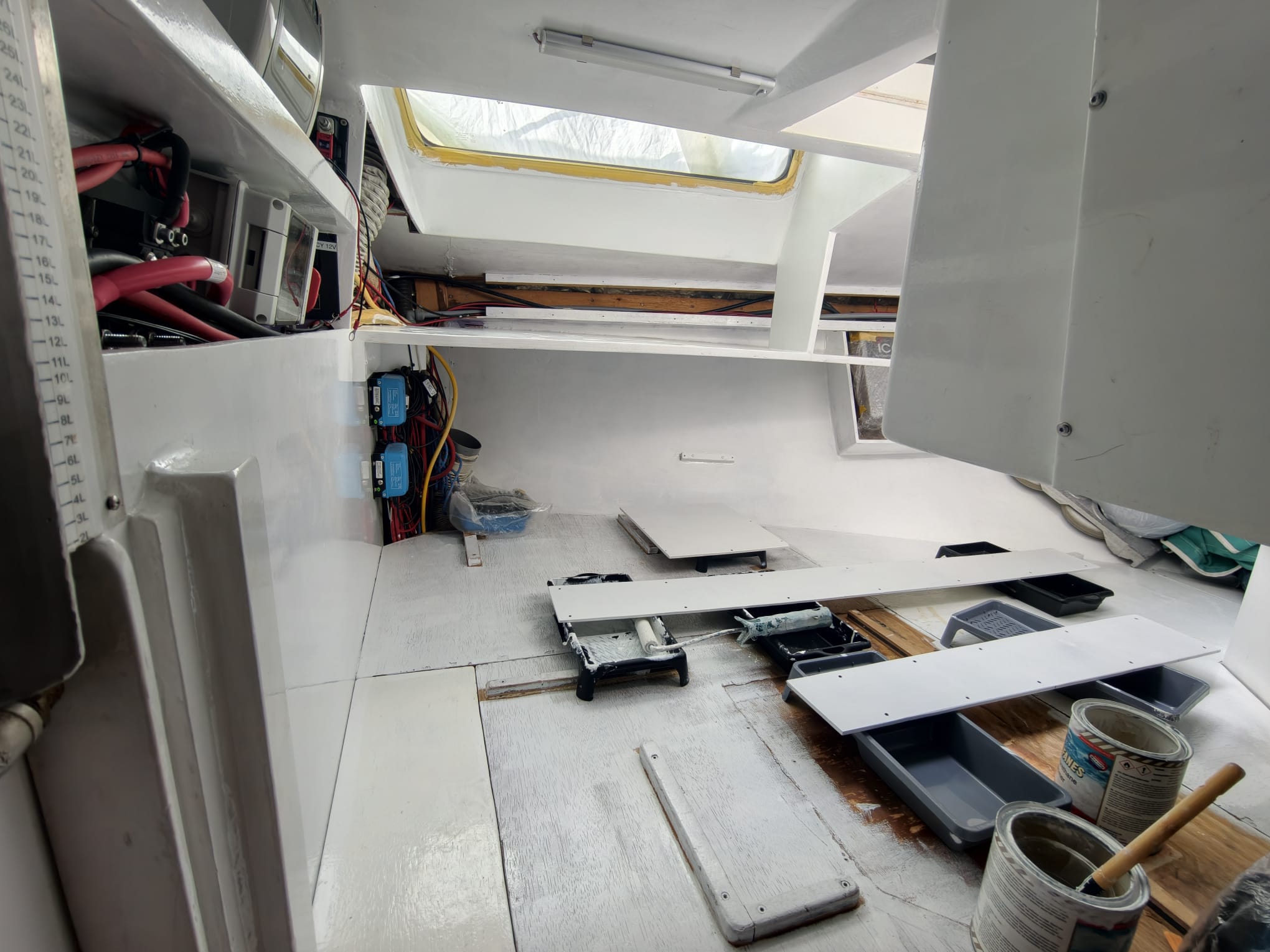
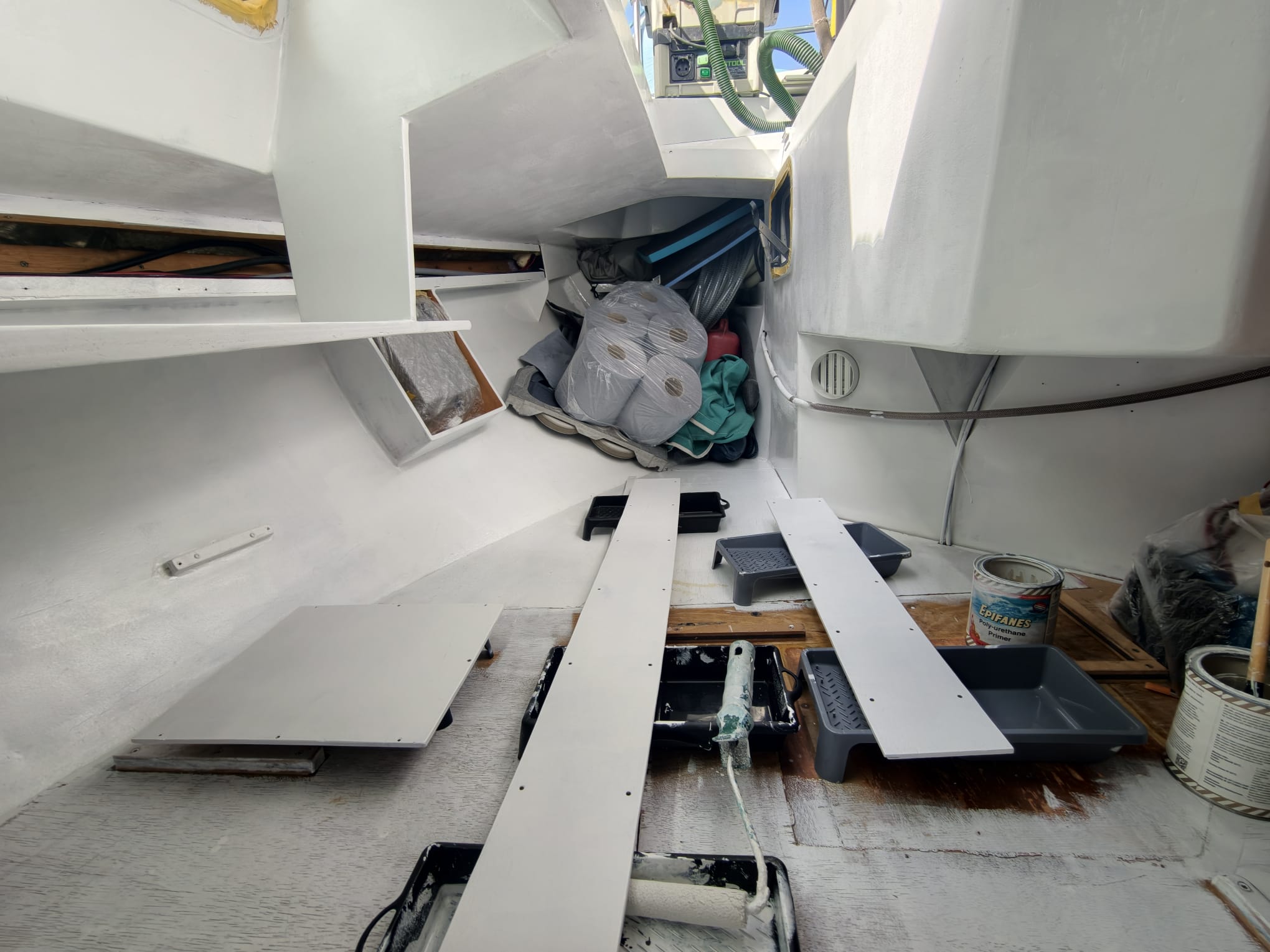
Second layer of primer in the lazarette.
Moonrise!
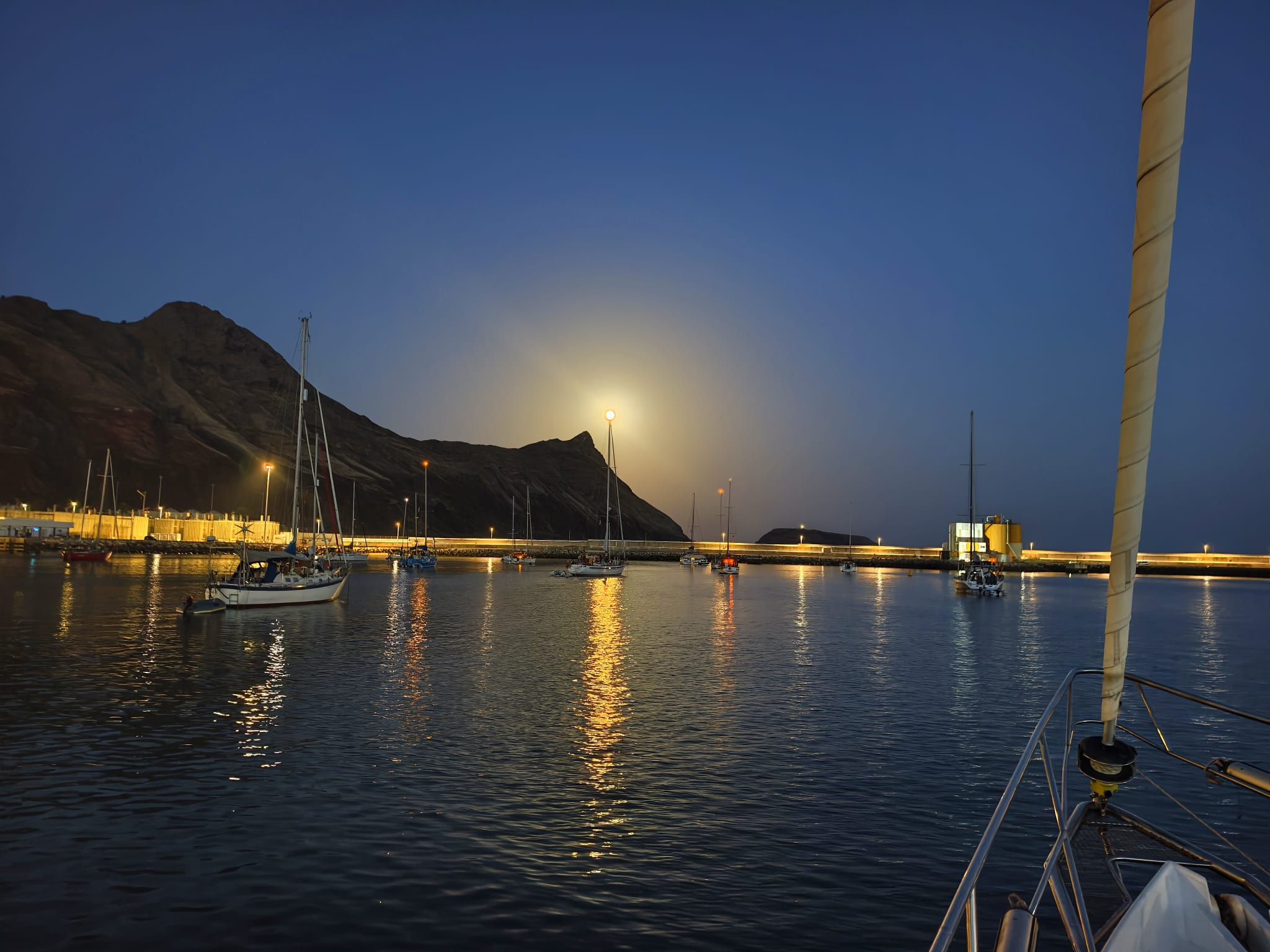
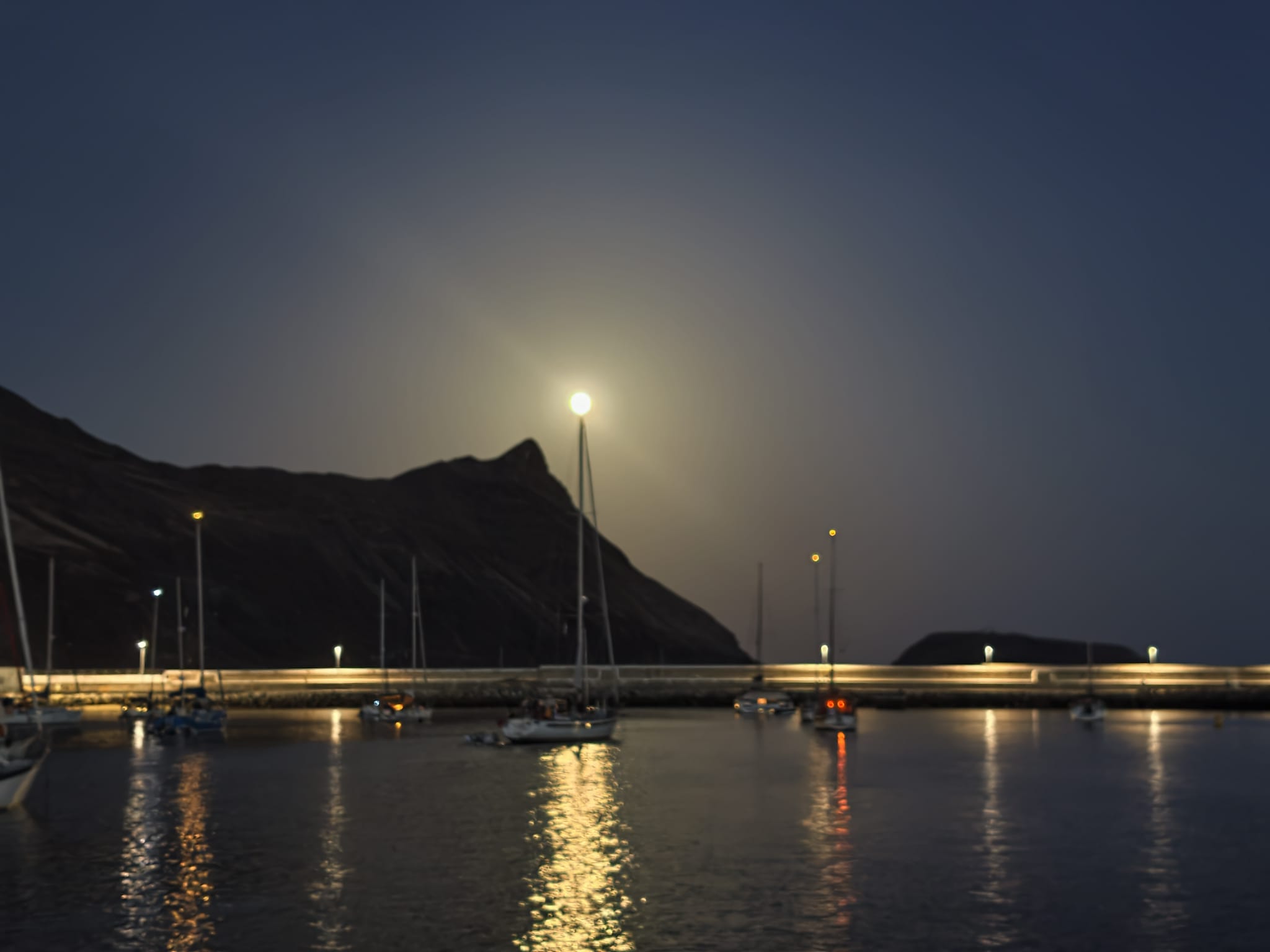
That boat has a very bright anchor light! 😂
September 27.
It’s getting crowded in here… Winds from the southwest are expected. That means no shelter from the island. So, the boats anchored outside are squeezing themselves in.
Actually, there’s not enough room between all boats but as long as the wind blows everybody stays in the same direction.
September 28.
The paintwork in the lazarette is done! Everything is shiny white (except the floor boards, that’ll be done later)
And all the stuff back in.
September 30.
There have been rumors about the rates for anchoring getting multiplied by 4. The marina office accepted no payments after September 30 because they were waiting for government approval to raise the rates starting October 1st. So, we go to the office today to hear what they have decided. The marinero says: it’s going to be €25 for anchoring inside and €20 for anchoring outside, plus 23% tax. That’s completely outrageous! Up till now, we paid €5 plus tax. We decide to leave and anchor outside the area covered by the marina.
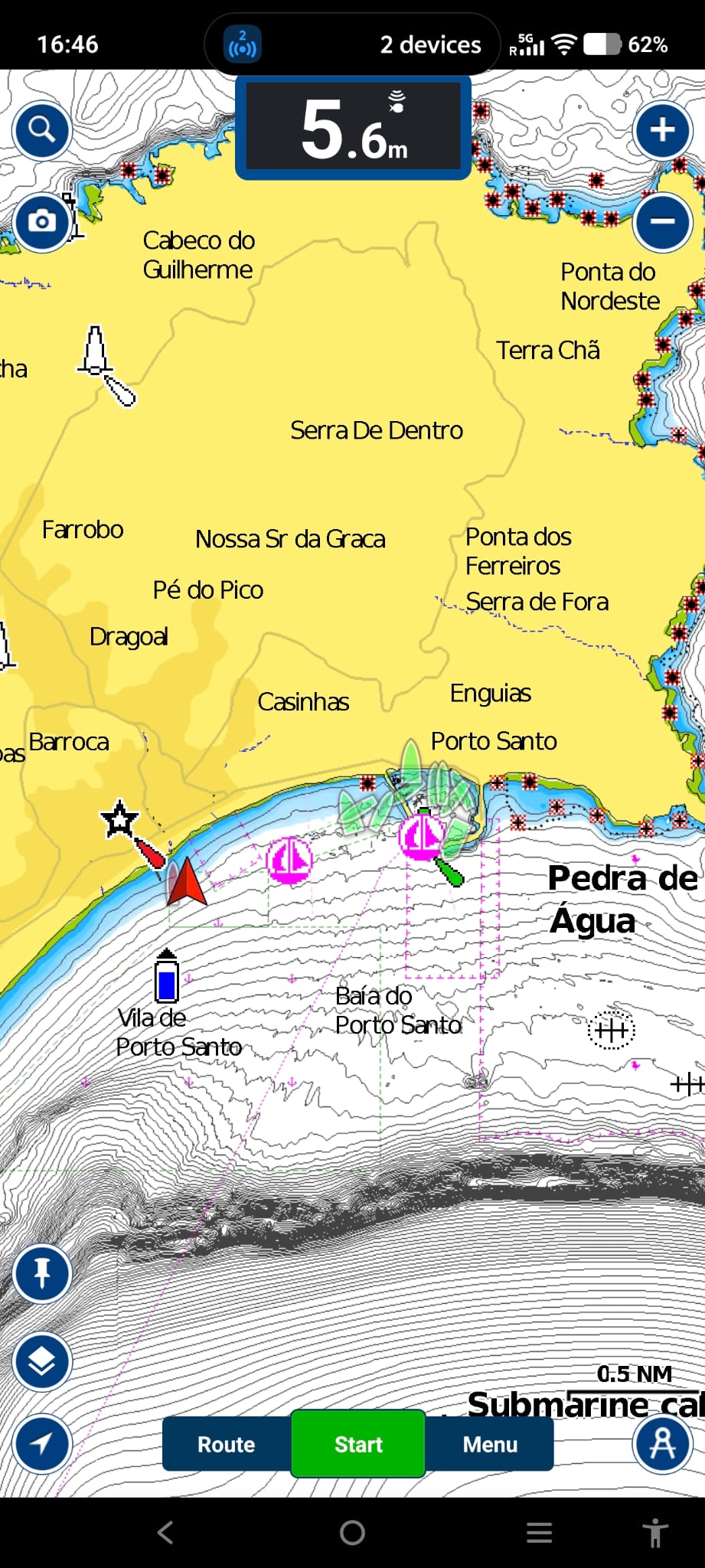
We anchor in front of the town.
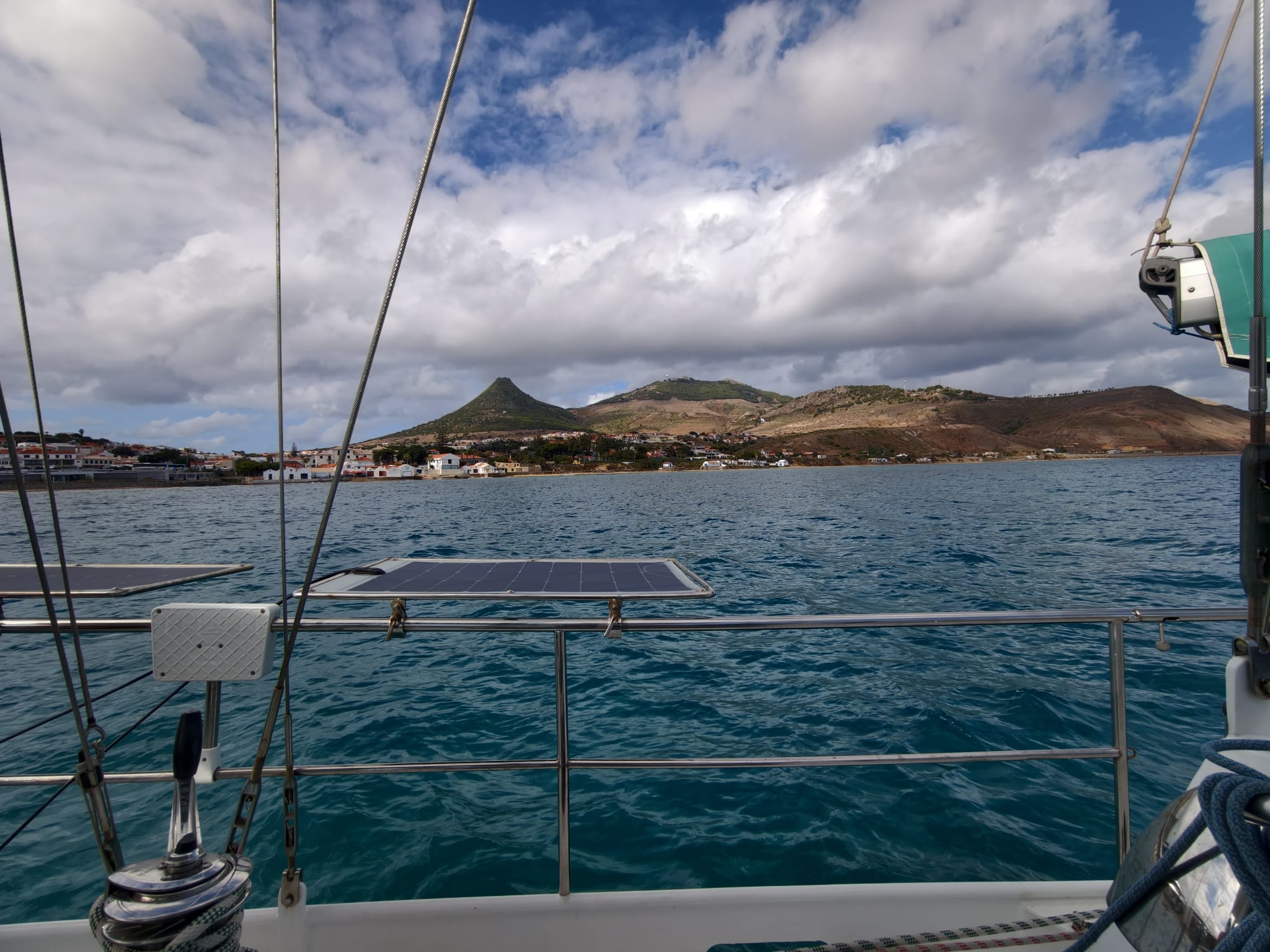
The water is very clean and the view is nice!
October 1.
Last night, the wind increased to about 20 knots from the east. That creates waves alongside the island and Dione IV is bouncing in these waves. Very uncomfortable. In the Porto Santa cruiser’s WhatsApp group we read that the marina hasn’t been allowed to raise their rates that much but only a little. It’s now €7,50 on the outside anchorage and €15 inside. Still pretty high but we decide to go back and anchor on the outside near the wall. There’s a nice shelter from the waves.
Sher has printed out a pattern and she will start sewing a new design.
Wim has been working on programming a new user interface for the PYPilot autopilot. We don’t like the original user interface, it takes way too much space on our screen and it contains a lot of non-important buttons and text boxes.
So, using Signal K in Node-Red he designs and programs a new interface that looks like our Simrad panel (that we really like) and with only the necessary controls. It takes a lot less space on the screen (and over the chart).
October 2.
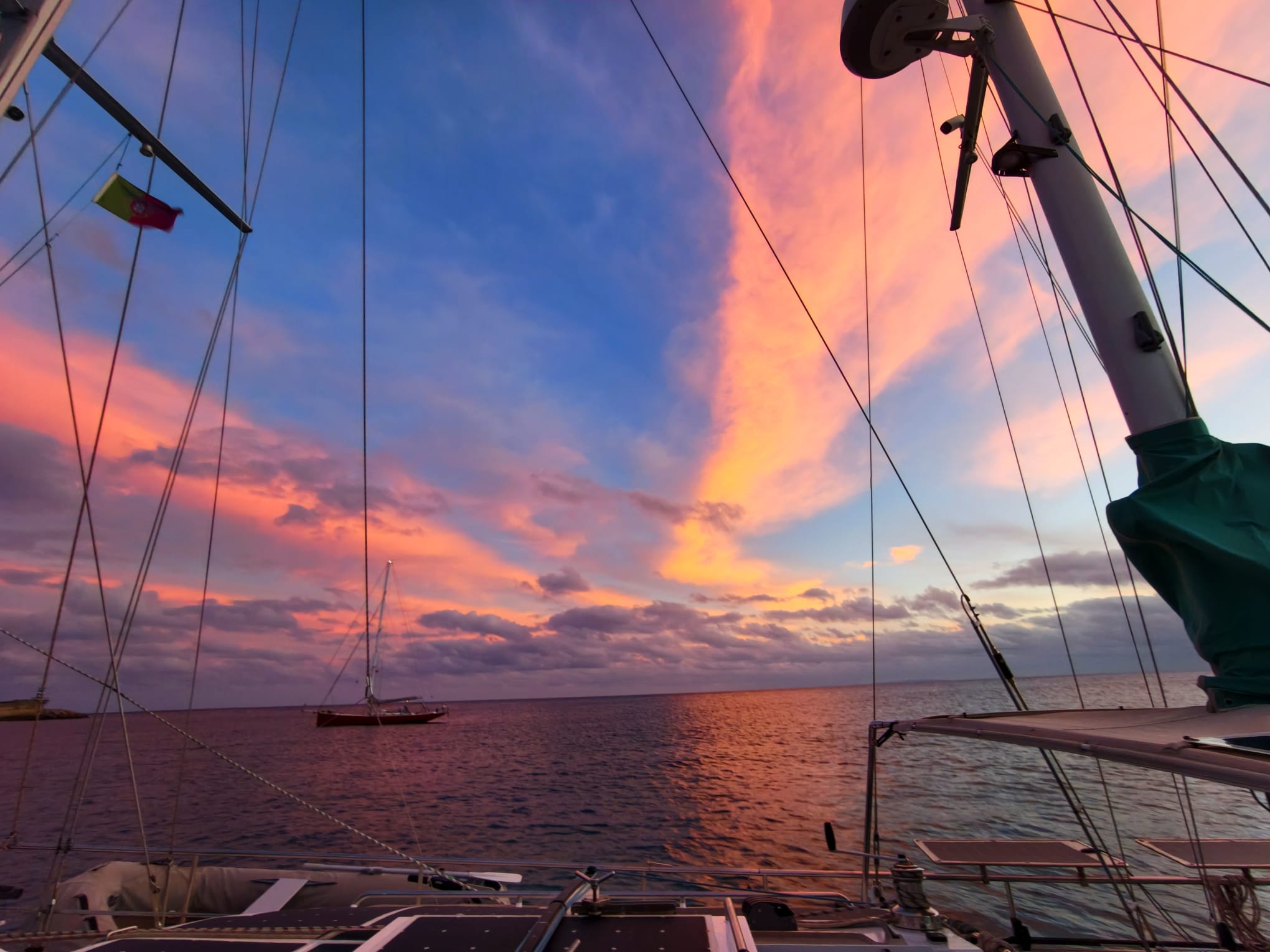
A gorgeous sunset!
October 5.
We spend the days on cleaning the underwater hull. There’s a lot of soft growth everywhere except on the waterline. So that requires a lot of diving with the Hookah breather. Wim does the diving with the lead belt while Sher does the work on the surface (up to arm length under water). As said, the growth is soft and it’s easily removed with a plastic spatula. The main prop and the bow thruster prop require some more scrubbing because they don’t have antifouling paint. A big parrot fish is around us all the time, very funny! He’s not afraid at all and sometimes Wim has to be careful not to touch him with the putty knife or the electric scrubber! He’s under the boat every day.
An hour of diving, scraping and scrubbing is pretty exhausting so Wim does 2 dives per day. He spends the rest of day on programming a custom boat telemetry dashboard (inspired by the new possibilities of Signal K and Node-Red).
In the meantime, Sher continues her sewing projects.
The Signal K standard interface in OpenCPN is nice but it has some disadvantages. It’s hard to fully customize the layout and it has no widget for a rudder gauge. It displays the rudder angle in numbers. Sher misses her rudder gauge so that inspires Wim to develop a custom one in Node-Red, using the Signal K data!
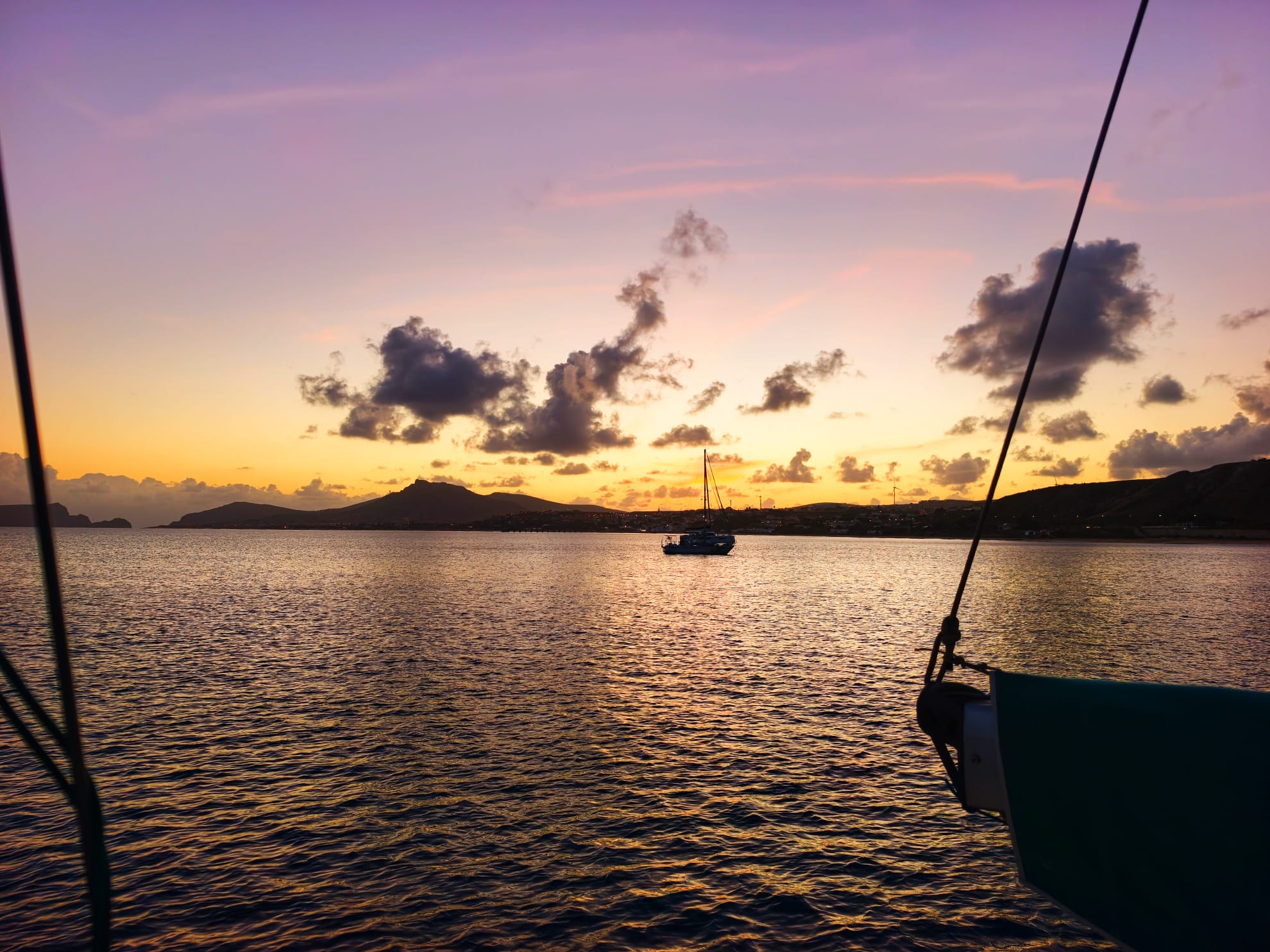
Another beautiful sunset!
October 6.
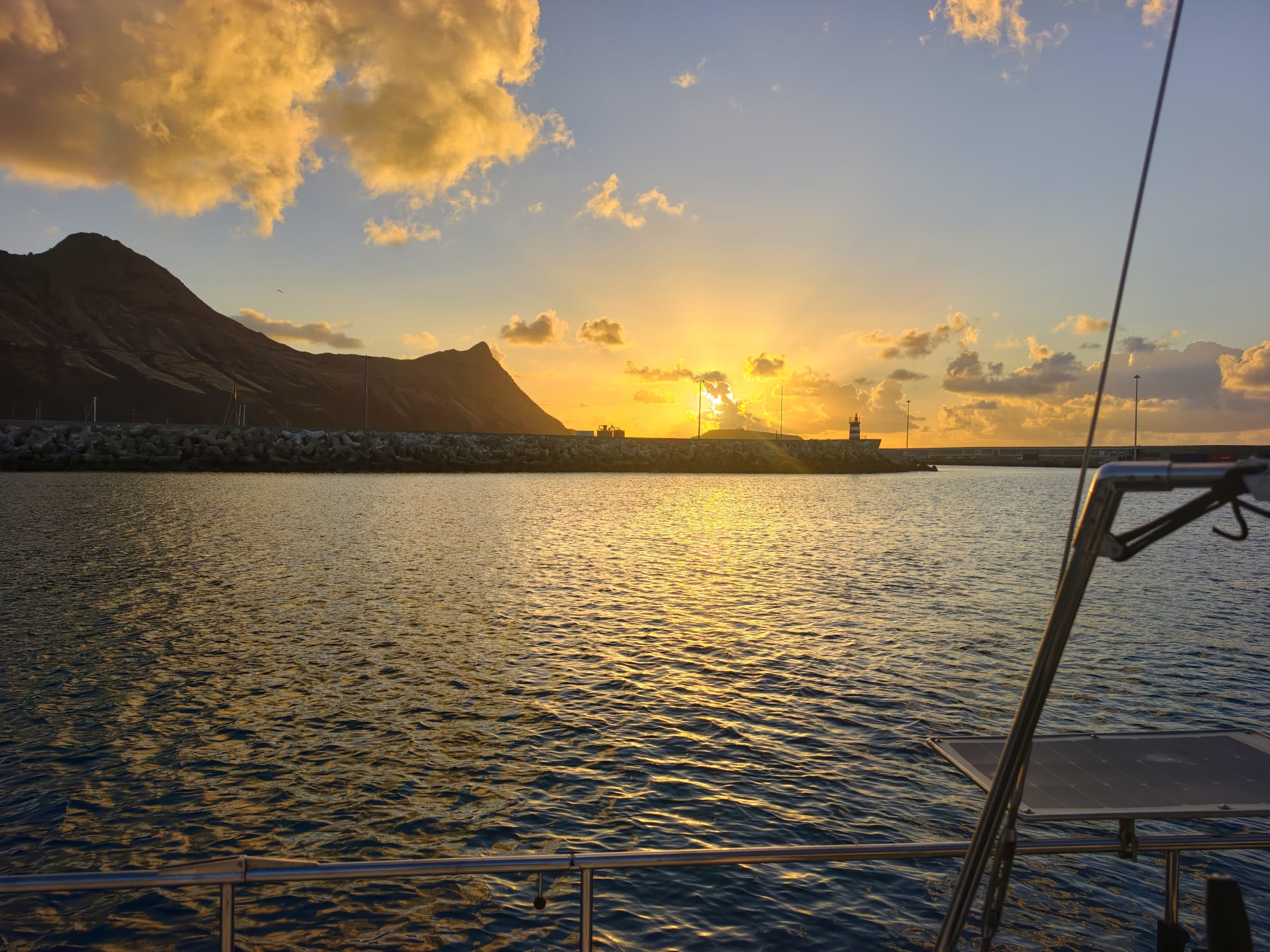
Let’s do a sunrise for a change 😄
Our hull is clean. We would have liked to sand the CopperCoat a bit more (to re-activate the copper, as a prevention for new growth) but the sanding pad on the electric underwater scrubber doesn’t work really well. It takes too much power and the scrubber’s motor overheats all the time.
So, with the hull cleaned we’re ready to sail! Let’s go to Madeira tomorrow!
Our last dinner at Porto Santo.
We’ve been since August 1 so that’s 2 months and a week. We have enjoyed our time here tremendously but it’s time to move on. To new adventures, new islands, new friends!
Leave a Reply