We write the text for our website in English. The multiple language selection feature is an auto-translation by Google. This translation is not perfect; it sometimes uses peculiar words and even expresses things in a very different way than what we actually meant. So, if you’re reading in a language other than English, and you read something strange, switch back to the English version to read what we actually meant to write!
If you’d like a shorter/summarized version of our posts, read only the “Highlights” section below and stop before “The Captain’s Log“, which is much more detailed, more like a logbook / diary and contains information for our reference as well.
Highlights – the overview
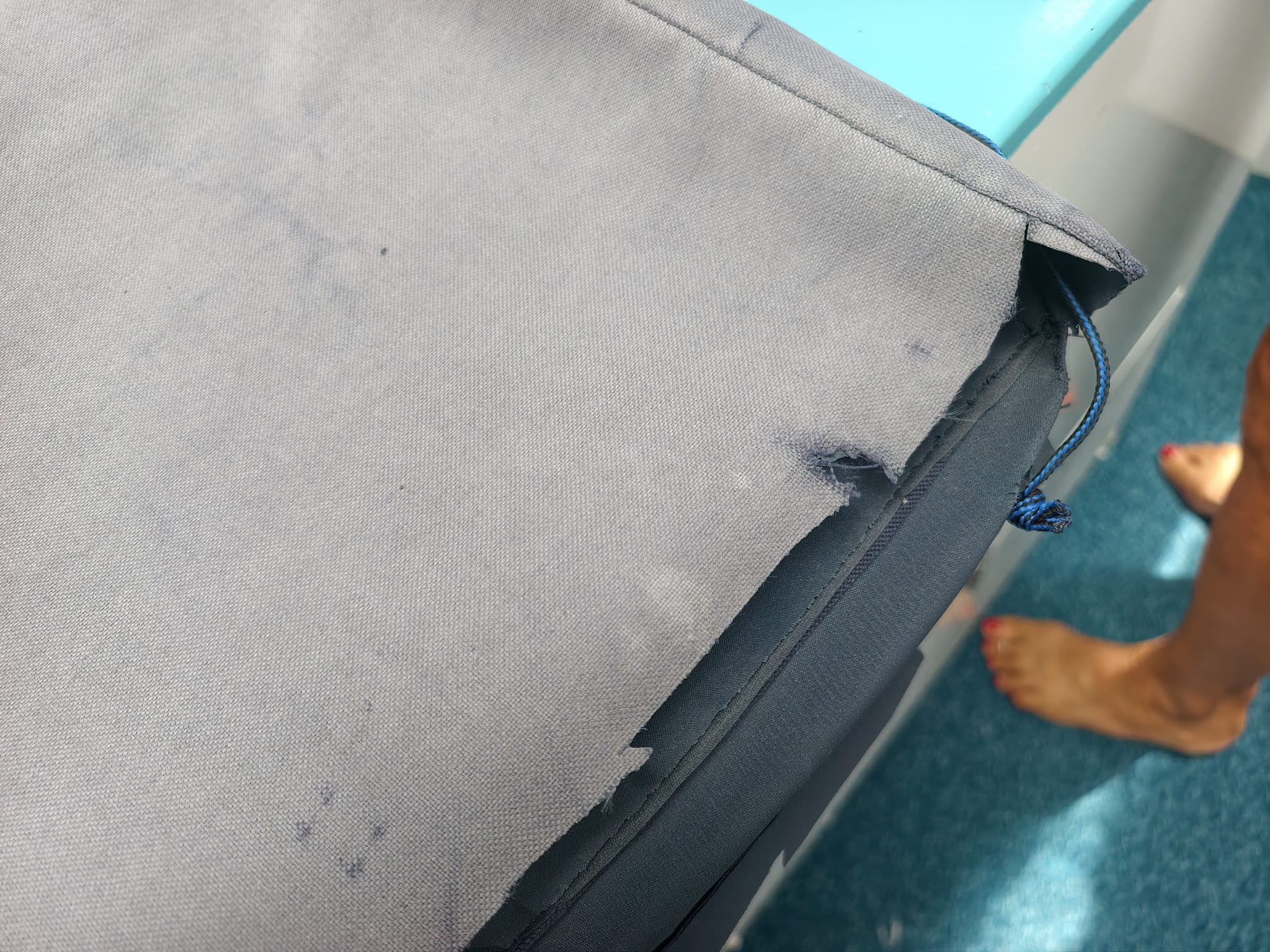
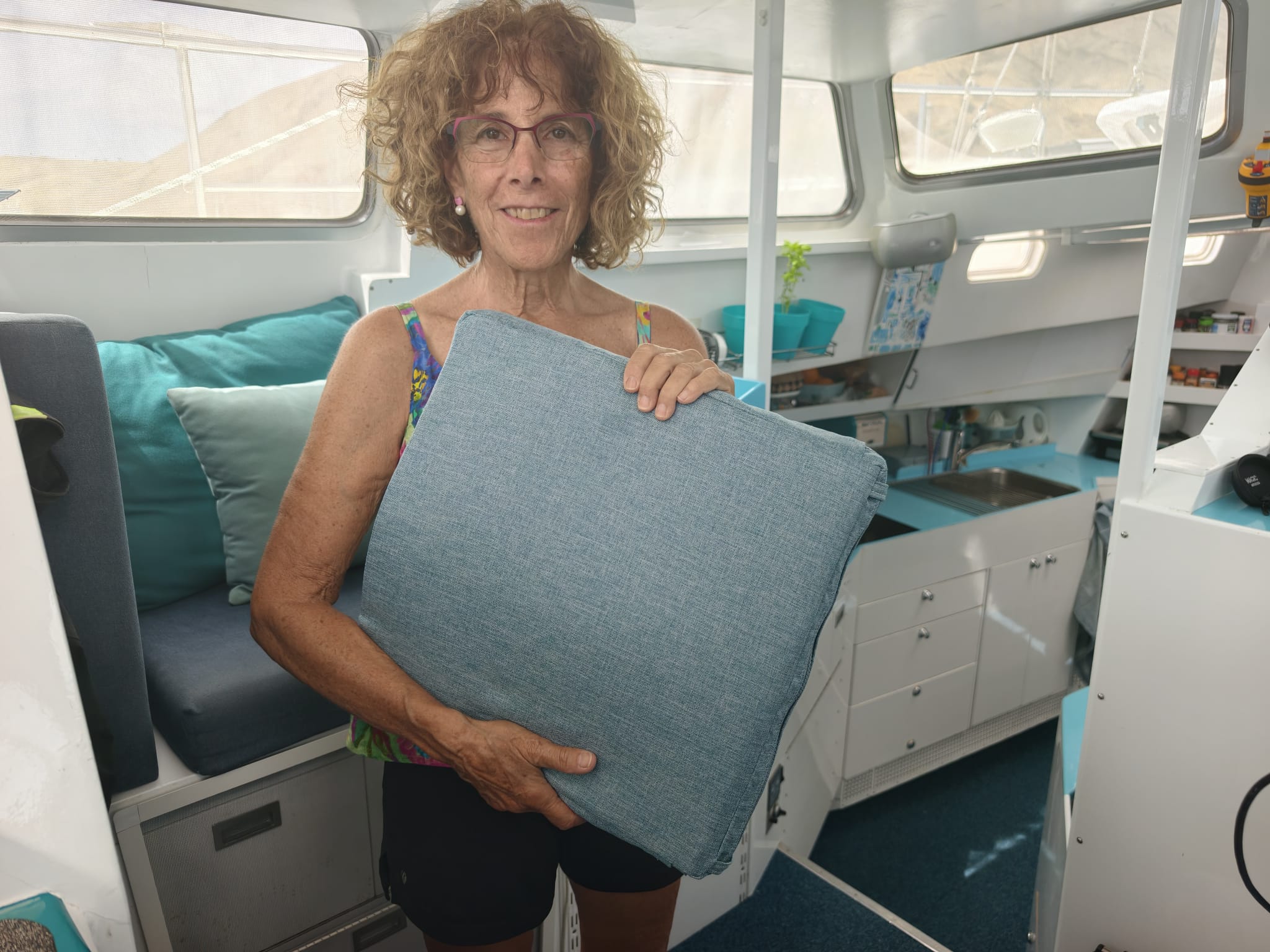
The 2 outdoor cushions (actually 4 cushions 2 attached together), that we use in the cockpit when sailing, were getting worn out and bleached, then one finally ripped. Sher has bought some some nice teal-colored fabric at the open market in Cadiz, so she starts making new covers.
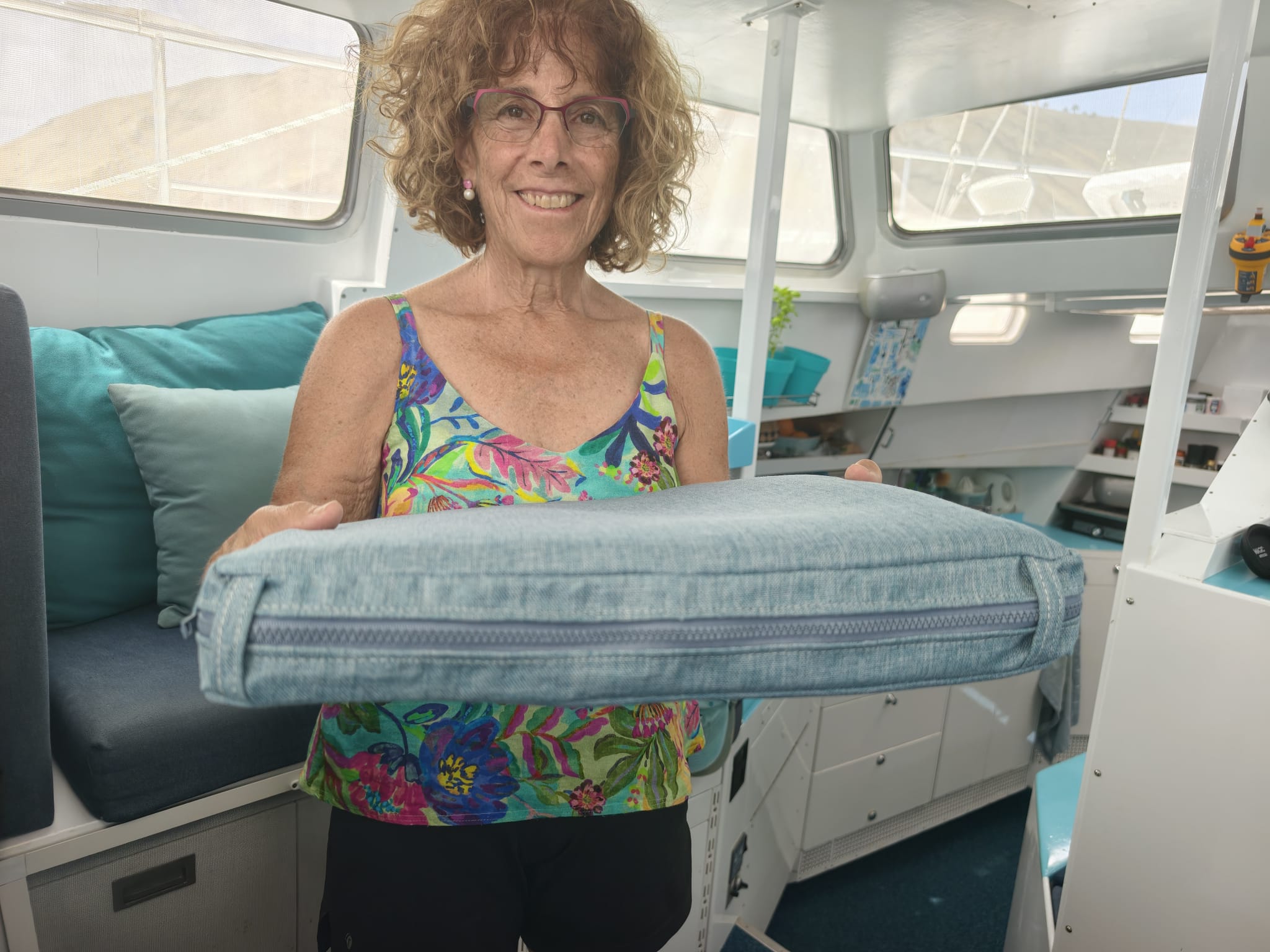
The contents of the cushions, when we cut them open, are a bit of a surprise. It’s many thin sheets of foam. But it’s easy to fit into the new cover!
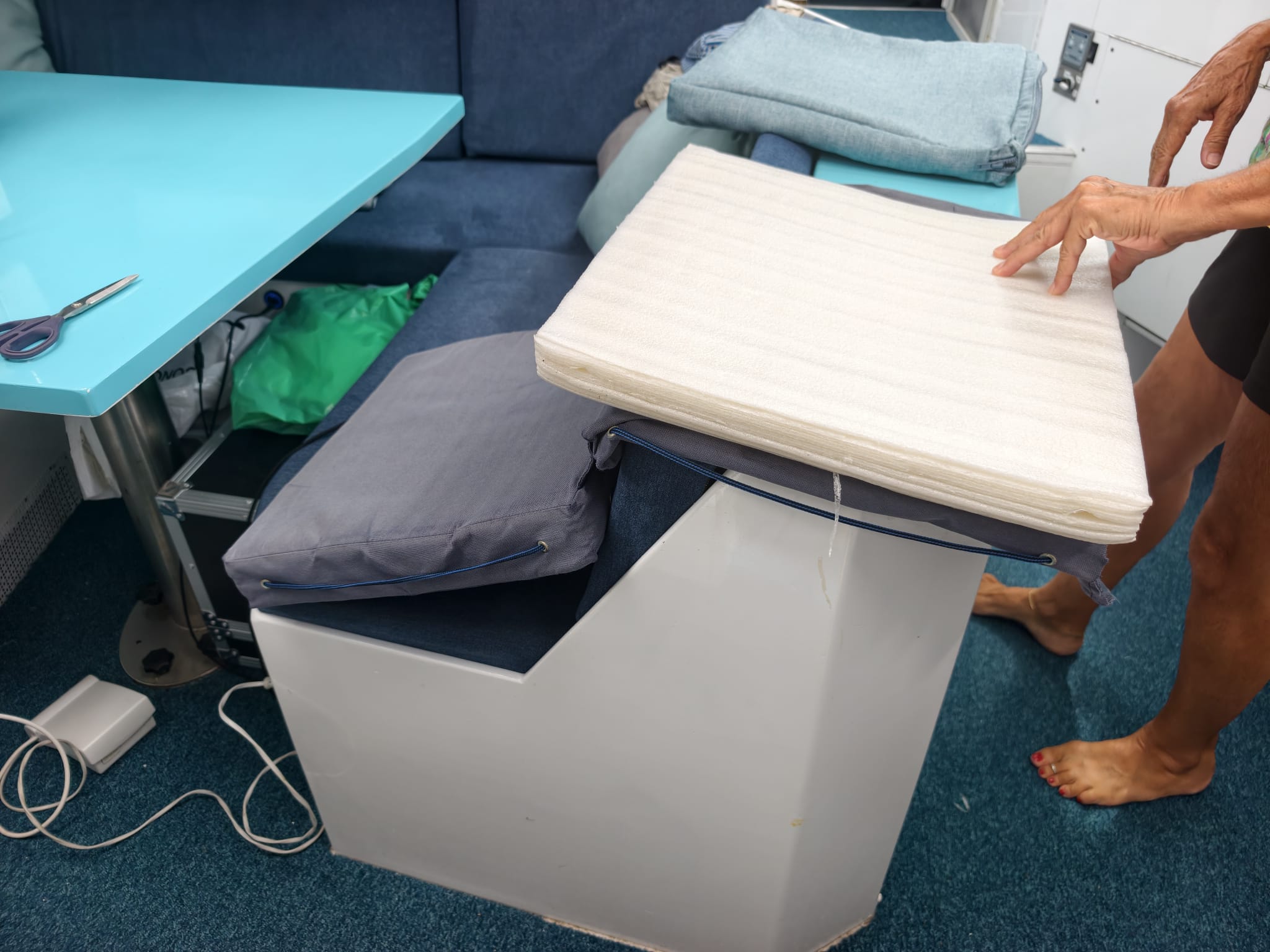
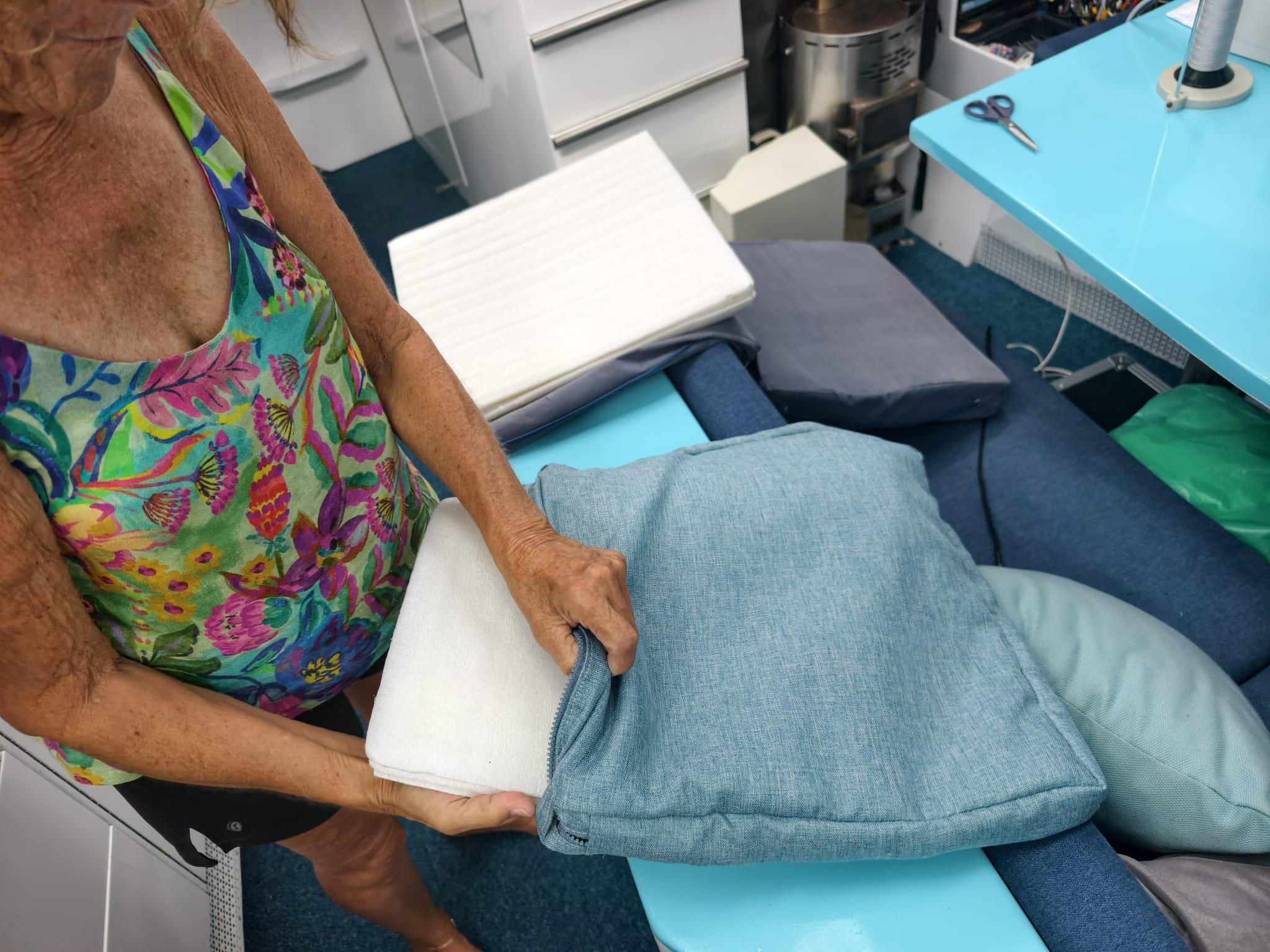
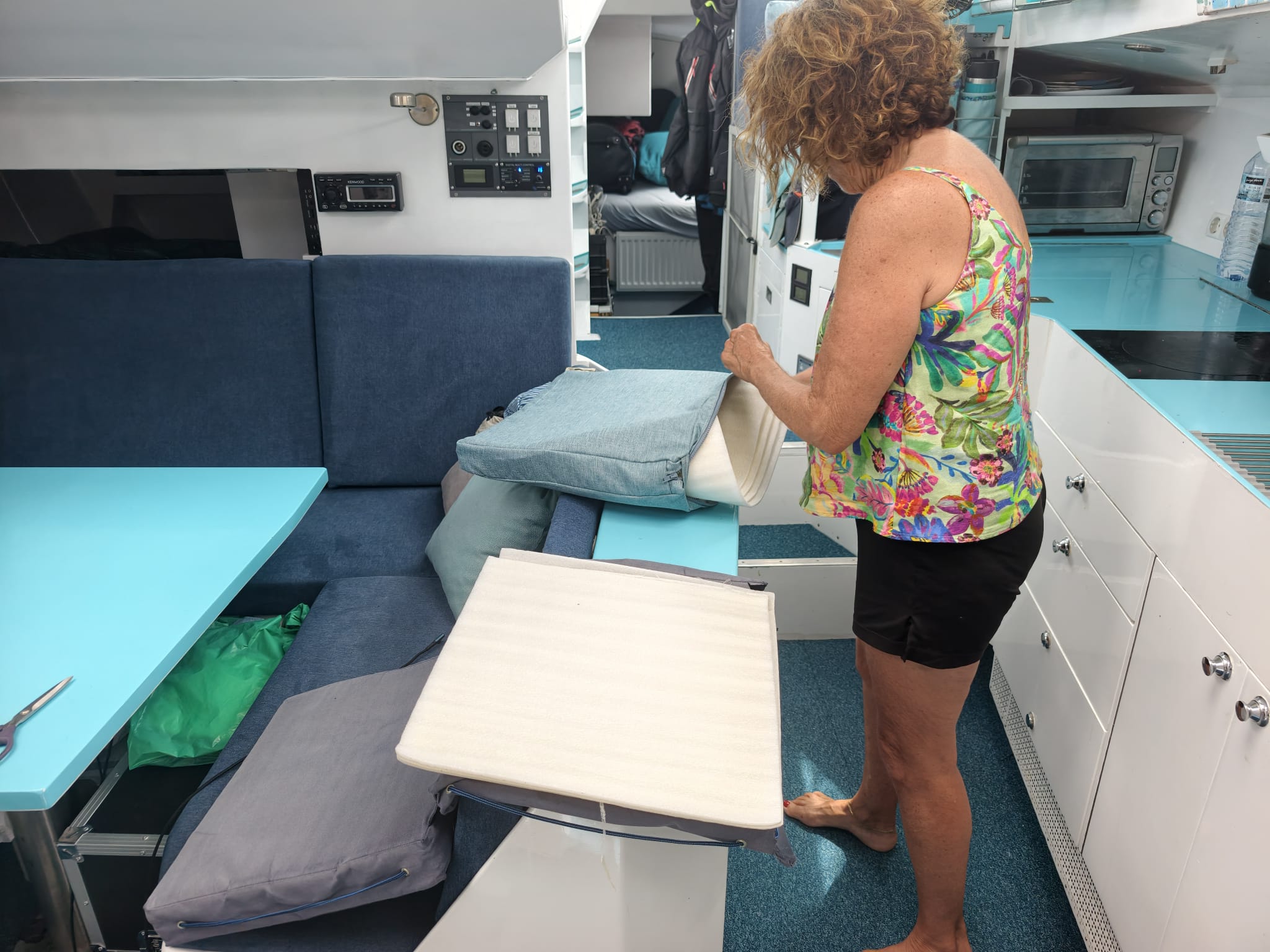
Nice… They have zippers on the bottom and loops to secure them! 🤩
Meanwhile, Wim is diving into another software project: Signal K. Our Victron Cerbo runs a Signal K server and the idea is to make custom instruments in on the display of our OpenCPN navigation software.
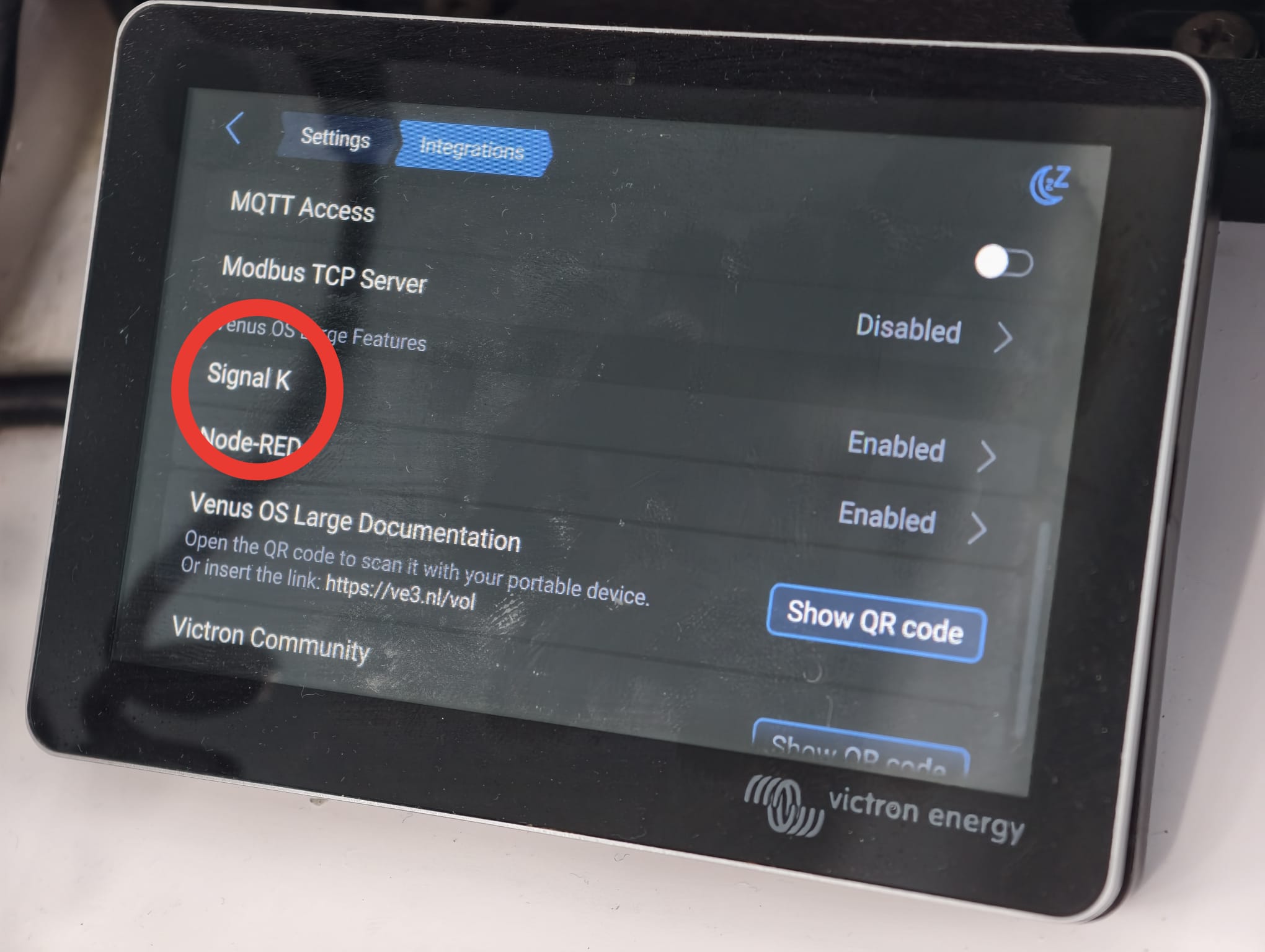
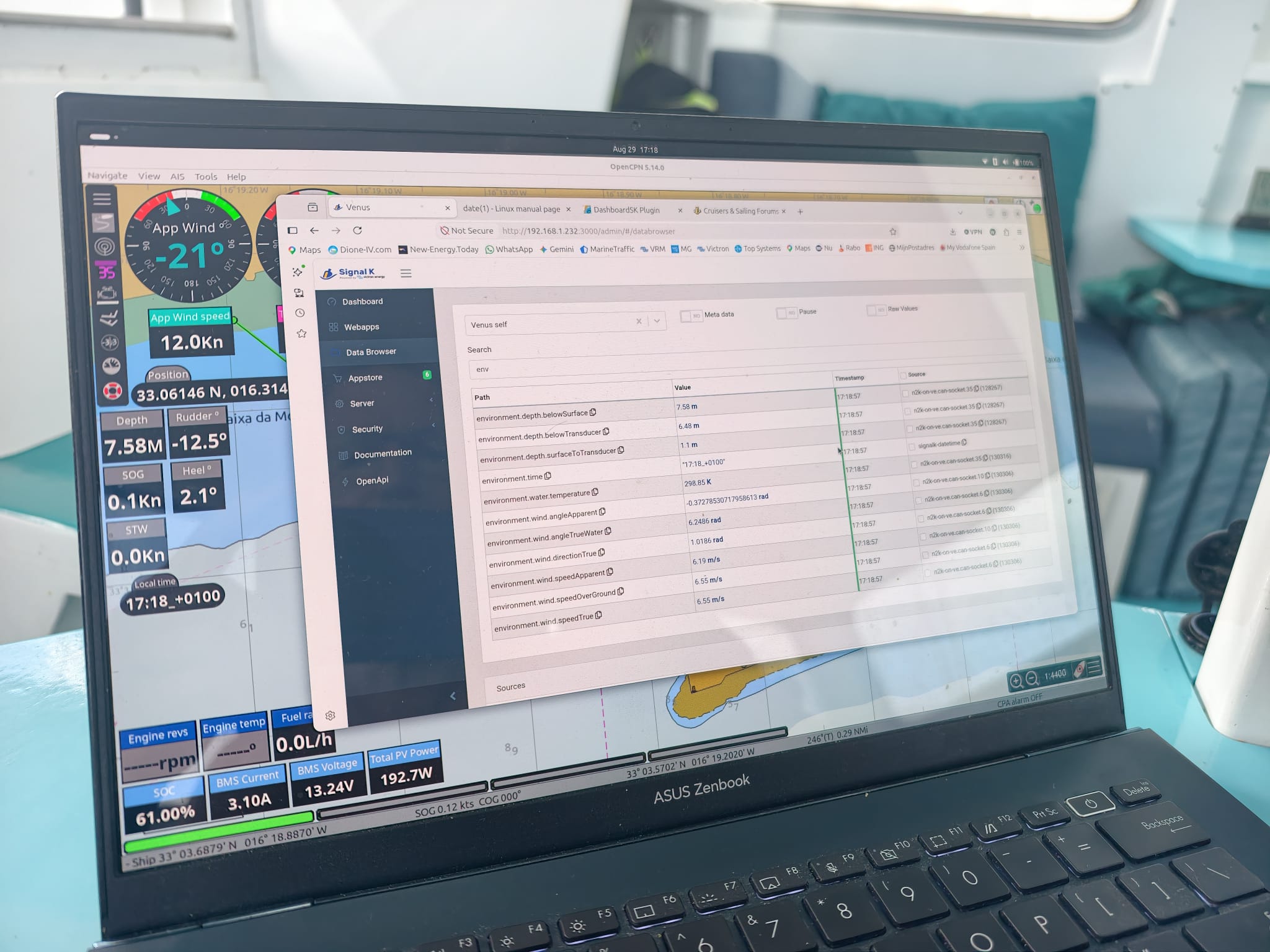
Signal K is boat telemetry. Every digital value on the boat’s systems is represented in Signal K. Hundreds of values from all electrical systems on board!
The name Signal K references to the nautical flag “K” (Kilo) which means: “I wish to communicate with you”.
Today, Sher is sewing the other 3 outdoor cushion covers, while Wim is ‘SignalK-ing’.
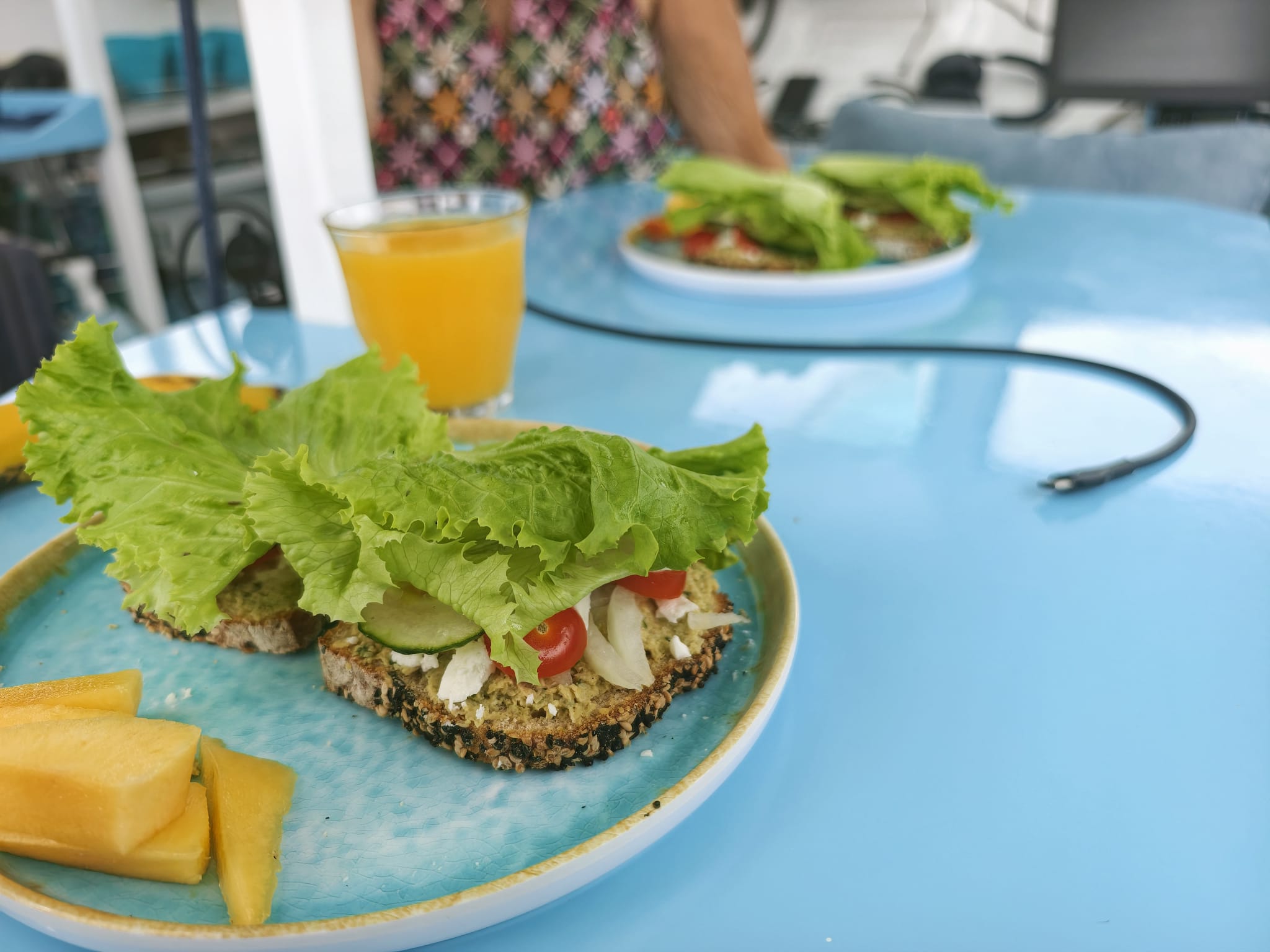
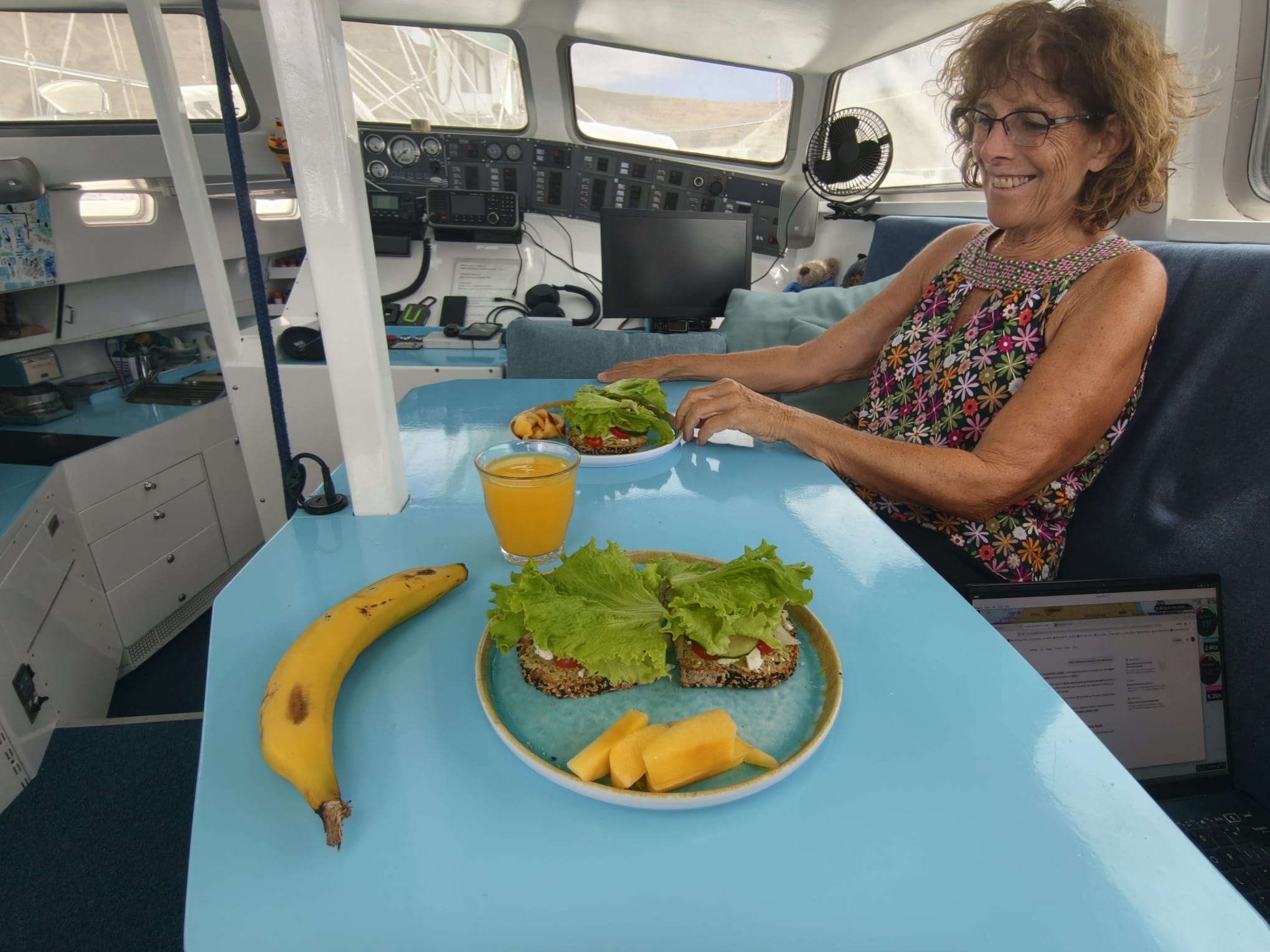
Colorful lunch! Healthy and delicious!
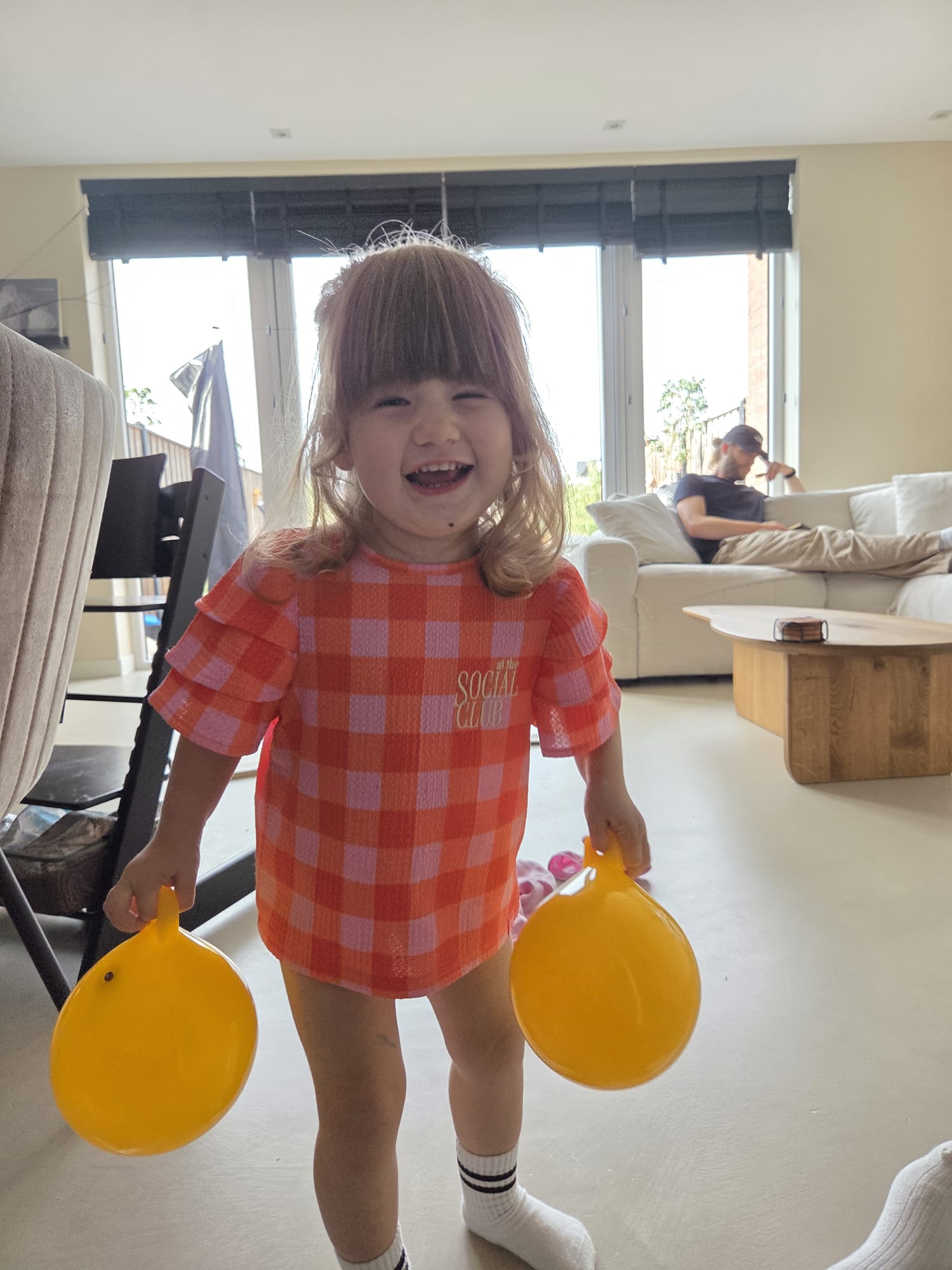
Since we lost our little yellow anchor ball, we’ve ordered a new one and a spare one (so they can keep each other company) in the Netherlands and had it sent to Wim’s daughter. Our granddaughter is having fun playing with them. They are obviously happy and having fun playing with her! 😂
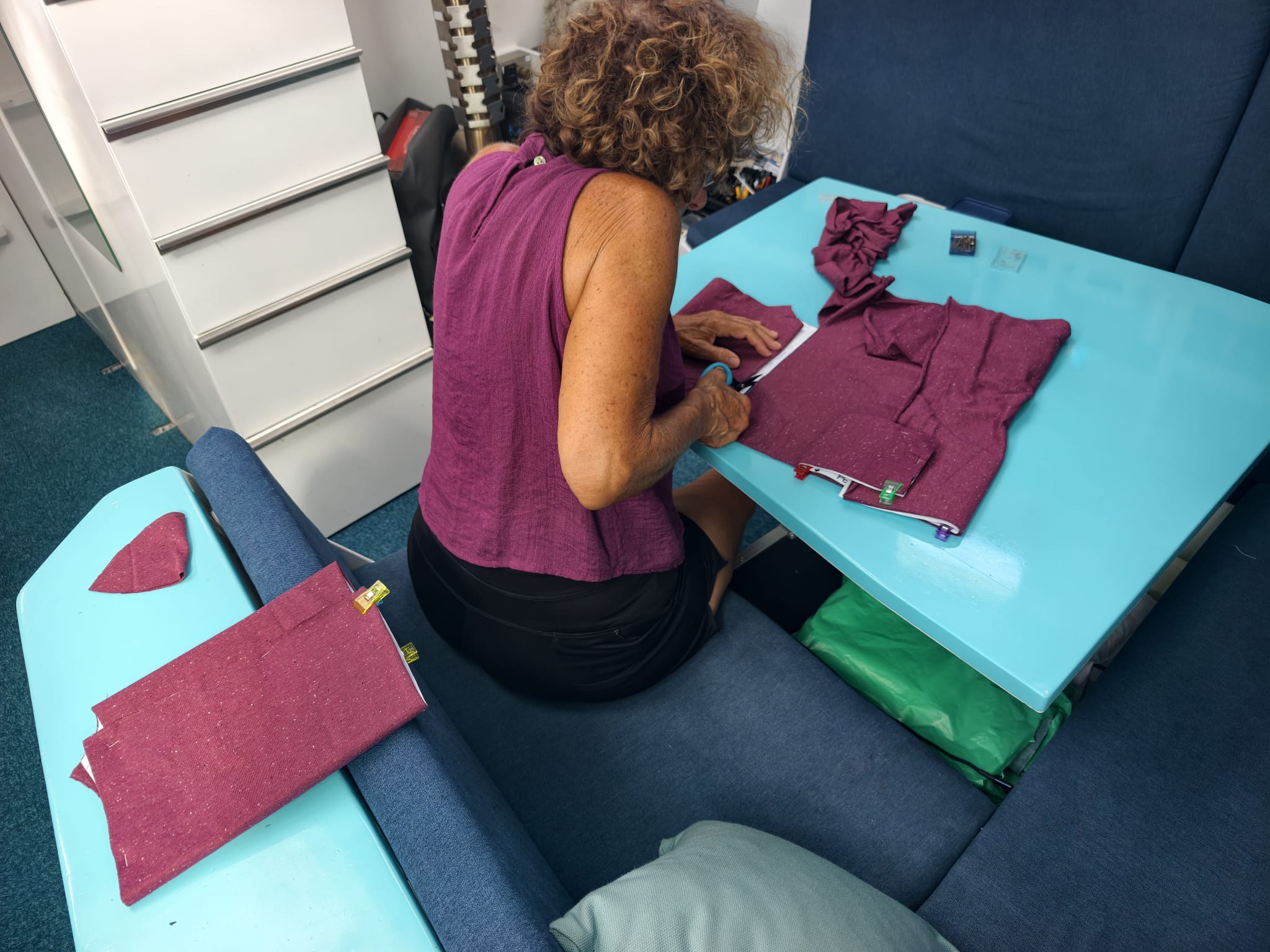
Sher has finished the outdoor cushions and now it’s time for some girl-stuff!
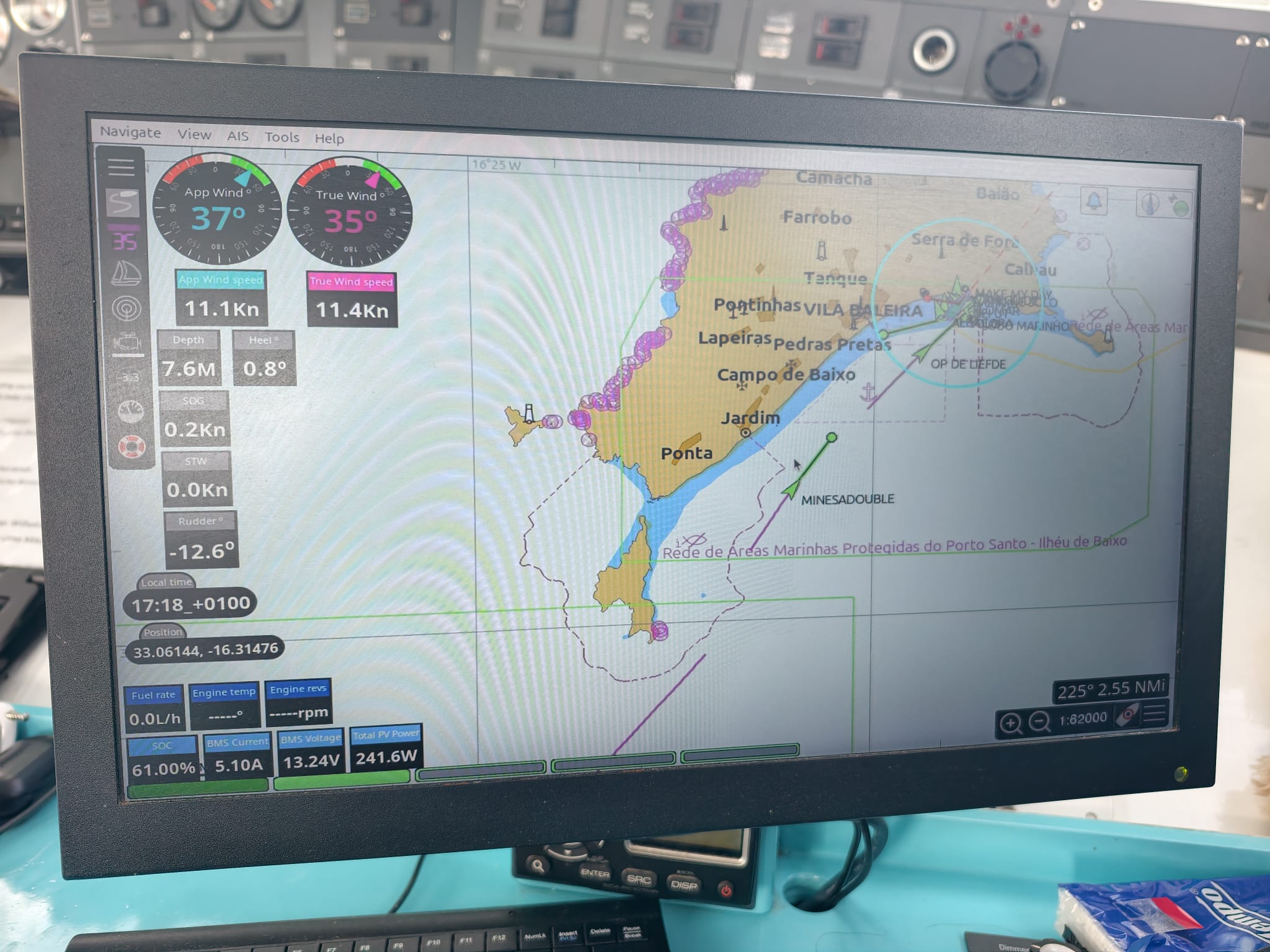
Wim made some good progress with the Signal K instruments. Well, he almost broke the Cerbo with all those experiments… Luckily, factory reset got it going again 🫡
But we have a nice instrument layout now. The challenge is to show precisely what we want to see and monitor when we sail, and to minimize the amount of space it takes on the screen (so, show the chart as much as possible).
This is the board computer’s screen.
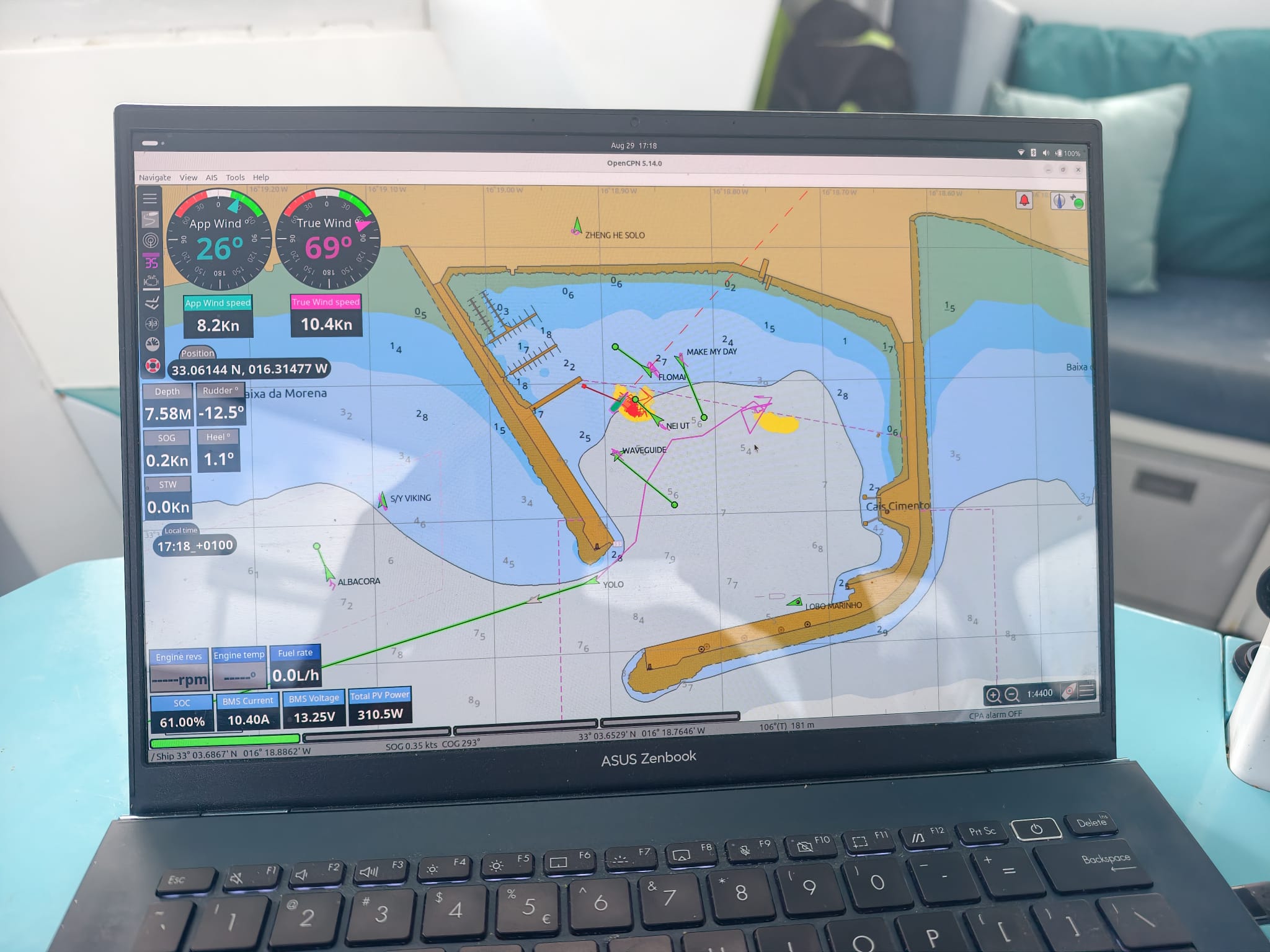
And this is the laptop screen. Together, we’ve been thinking about the layout and the look of the instruments, based on our experience.
Let’s look at some details…
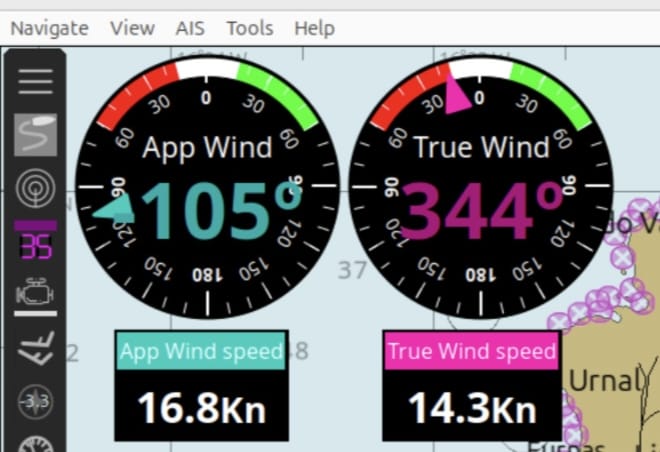
Here’s the wind telemetry. Of course, this is very important information when we’re sailing.
We always had a combined single gauge with True and Apparent wind in it. We found that often a bit confusing, having 2 pointers and 2 numbers, with wind speed. Having separate gauges is much more clear.
For more of the details on what’s on our navigation screen and why, click: Nav Screen
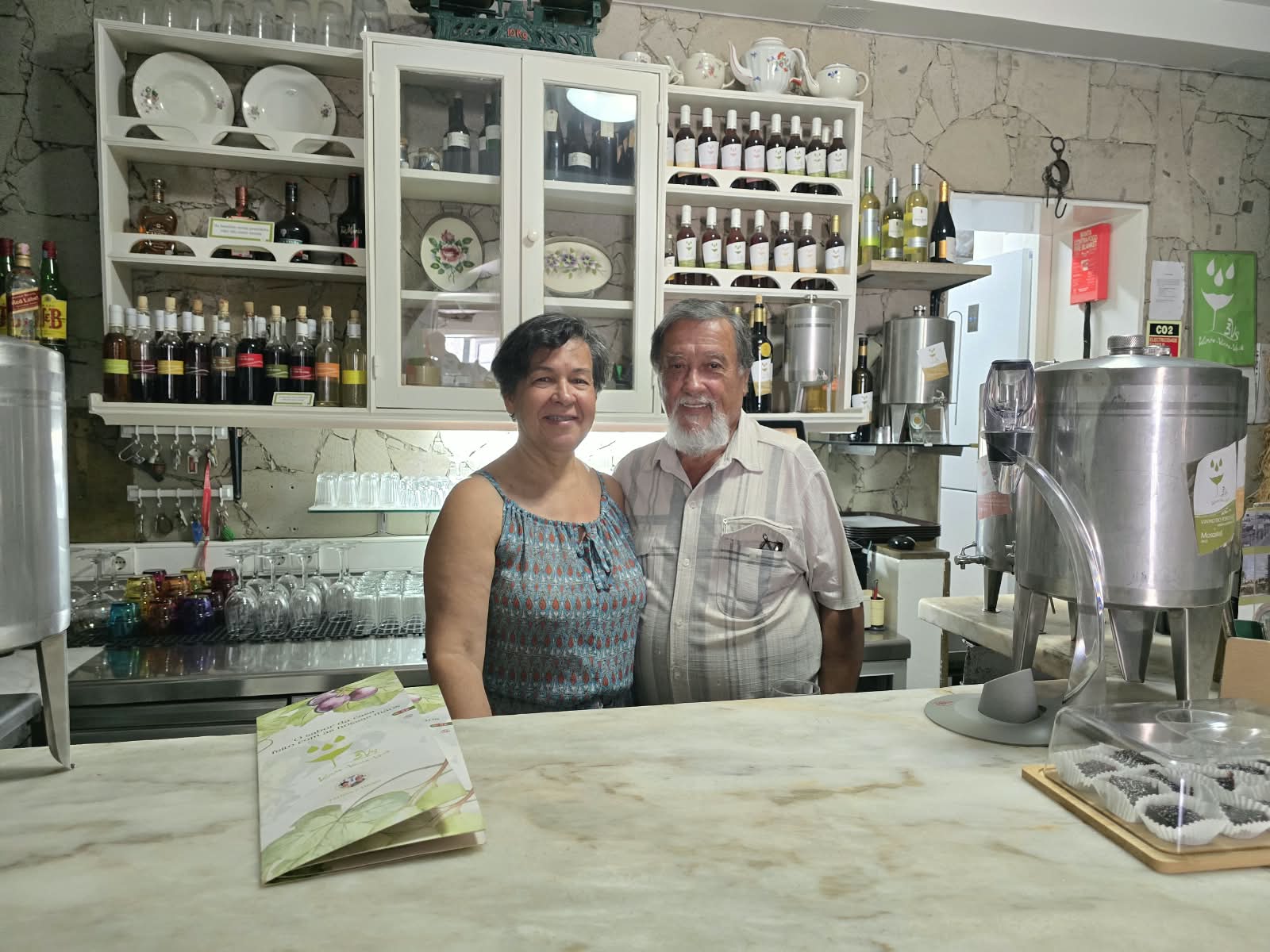
We go for a visit to a local wine maker: The 3V’s. Although we don’t quite understand how grapes can grow on this extremely dry island, their wines taste really nice. They even have Moscatel. Well, not quite as good as the ones we had in Andalusia, but not bad at all. The owners are such a nice couple!
We sit on the veranda outside, with a view overlooking the decorated streets. Obviously, there’s some event coming up, as they are hanging strings of paper flowers everywhere.
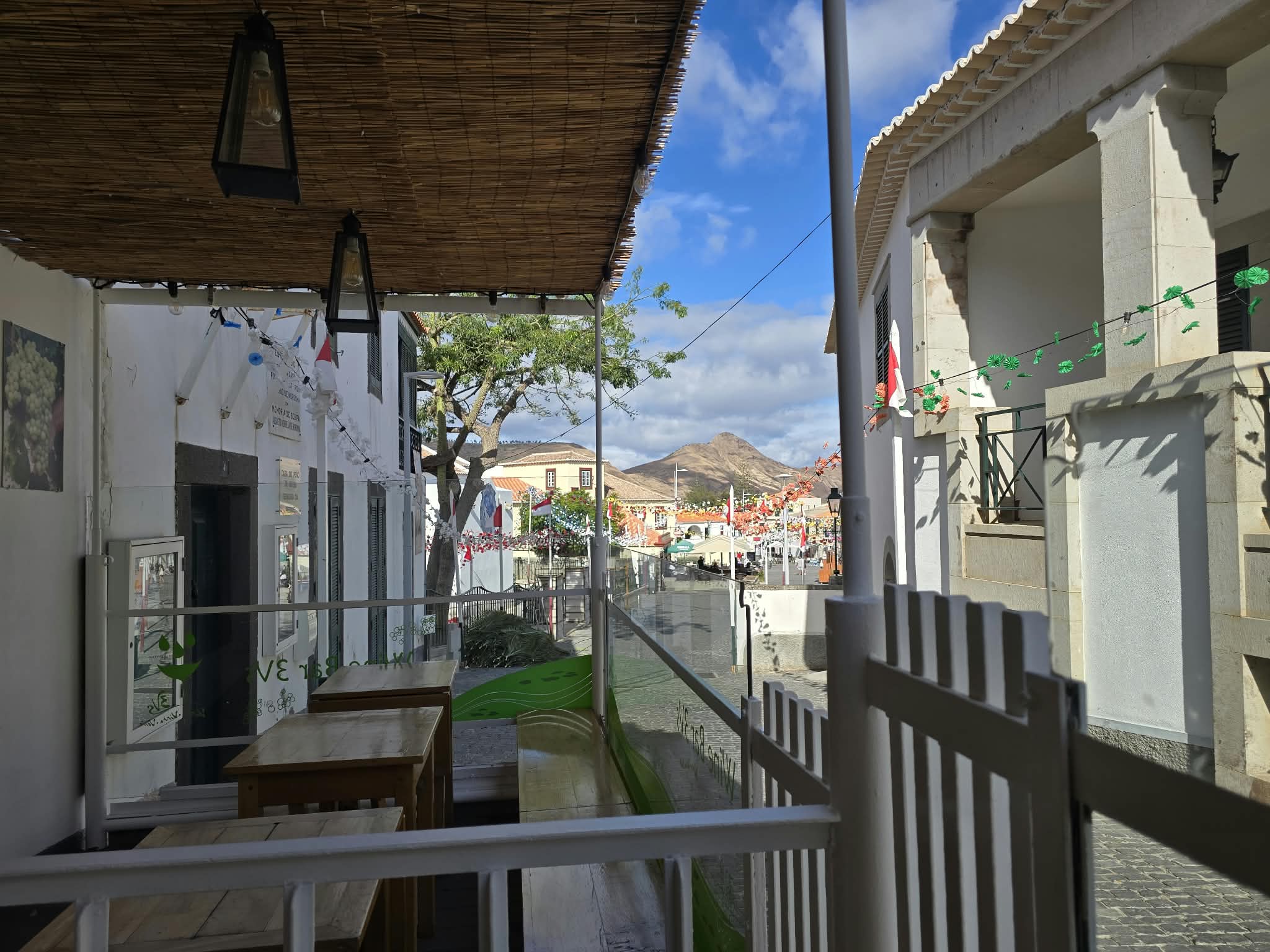
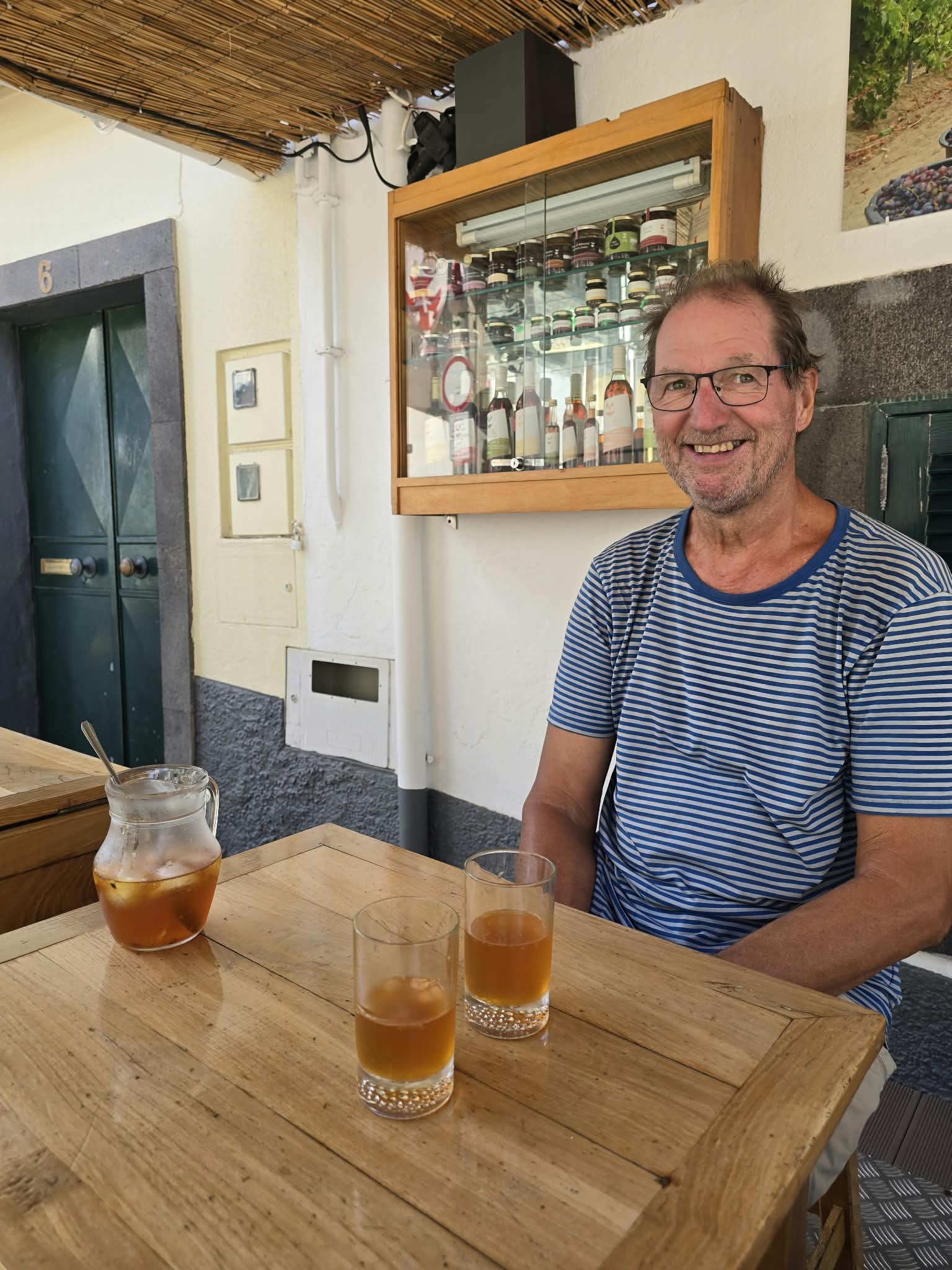
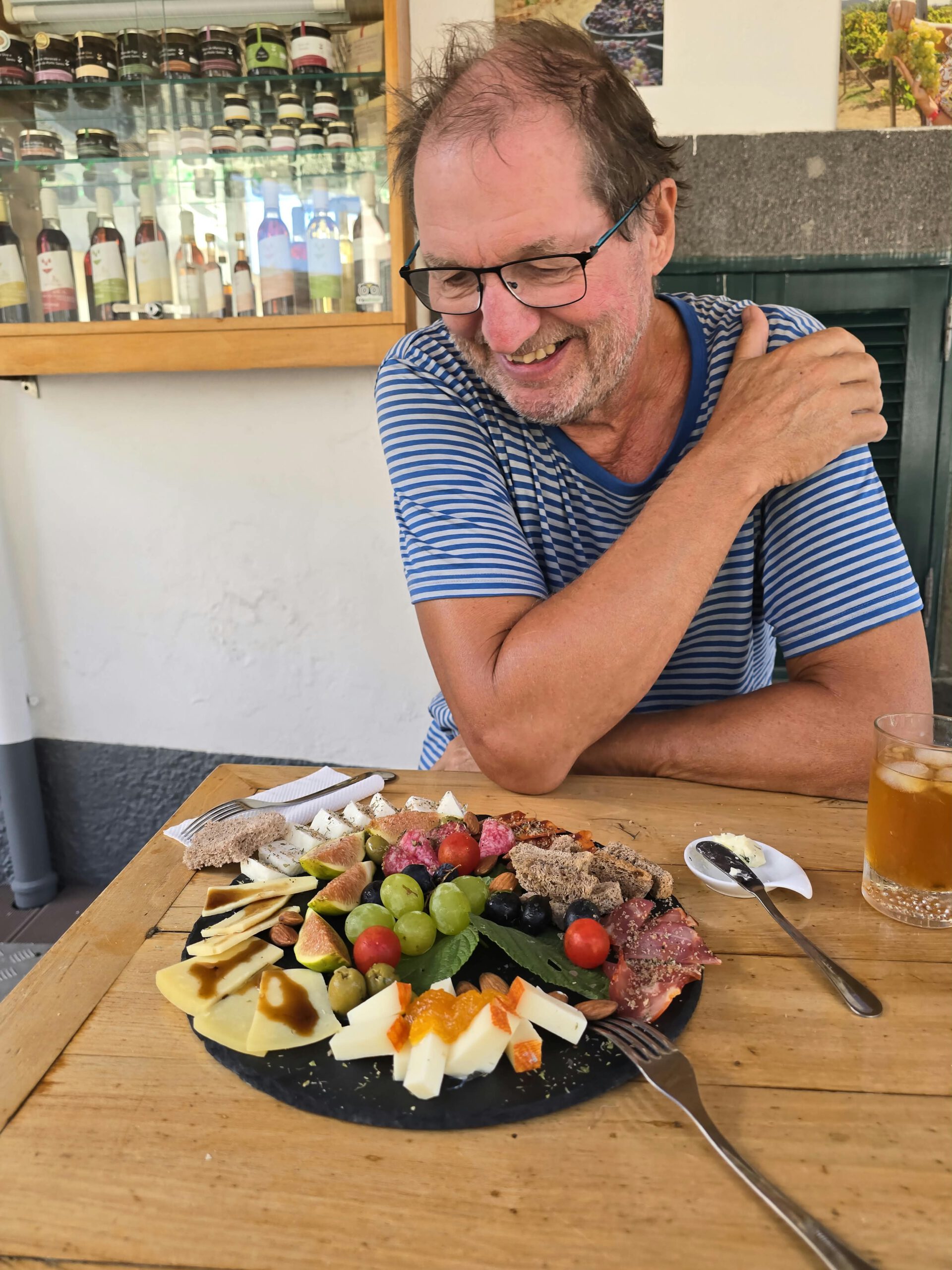
We order their Sangria. Sher has been here in 2021 and she remembered the Sangria was something special. It is! It is homemade by 3V’s and uses their local wine and passion fruit in it. Delicious! We also order a tapas plate and their homemade grapeseed bread with garlic butter. Everything is extremely delicious! 😋😋
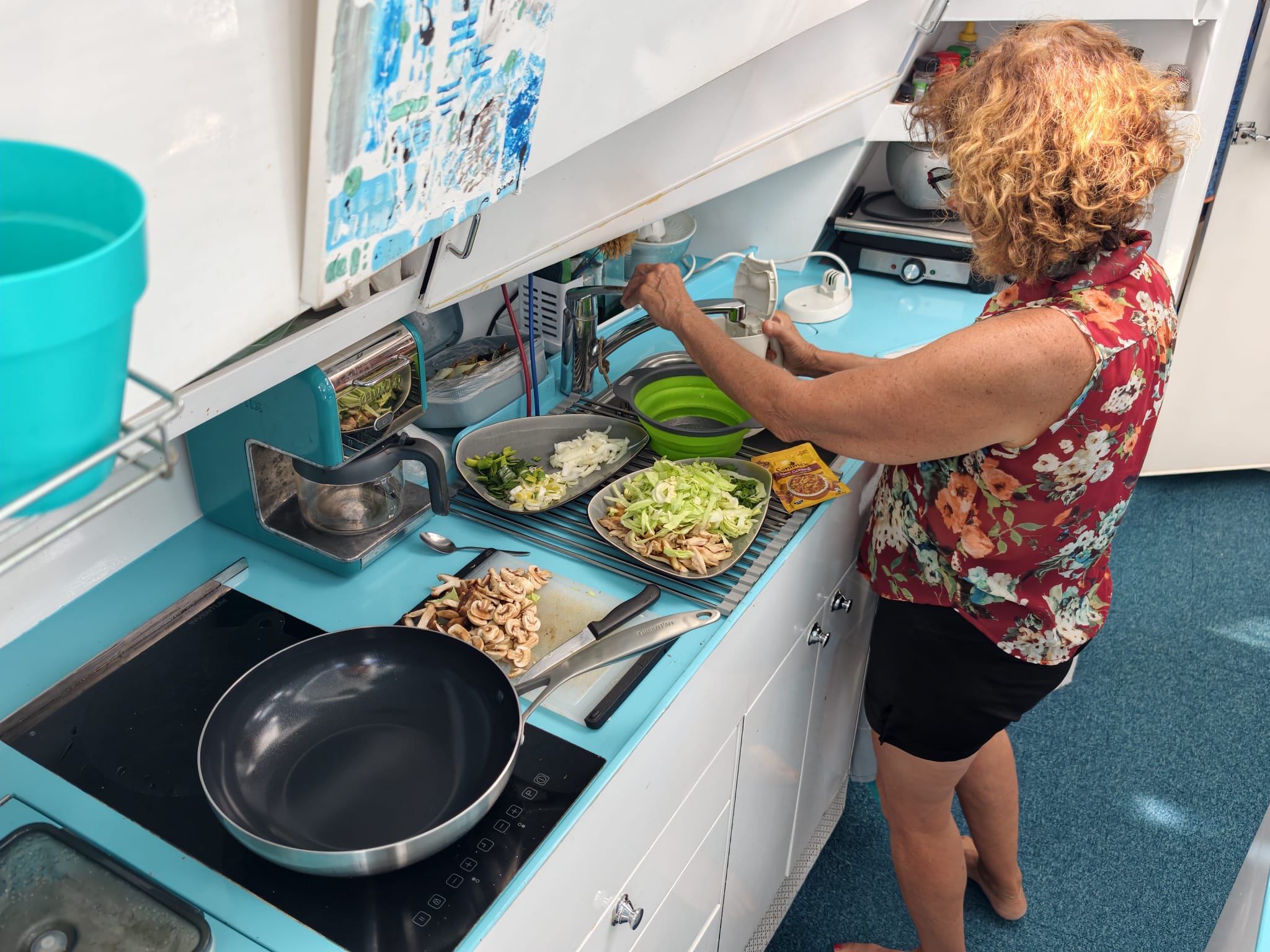
Sher is making Nasi Goreng today. Cabbage, leek, mushrooms, chicken, onion, rice and Nasi spices from the Netherlands.
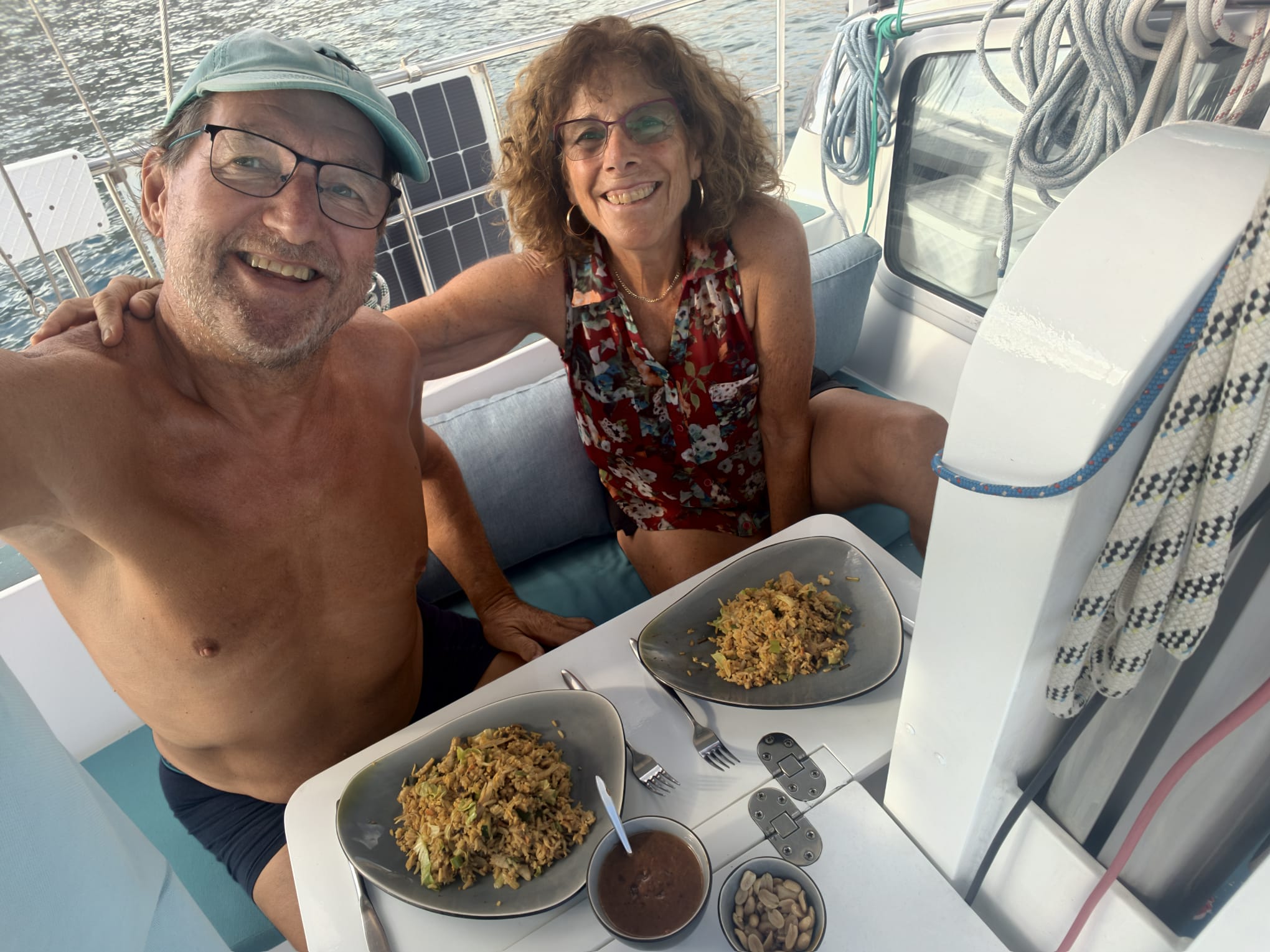
With Wim’s delicious satay sauce.
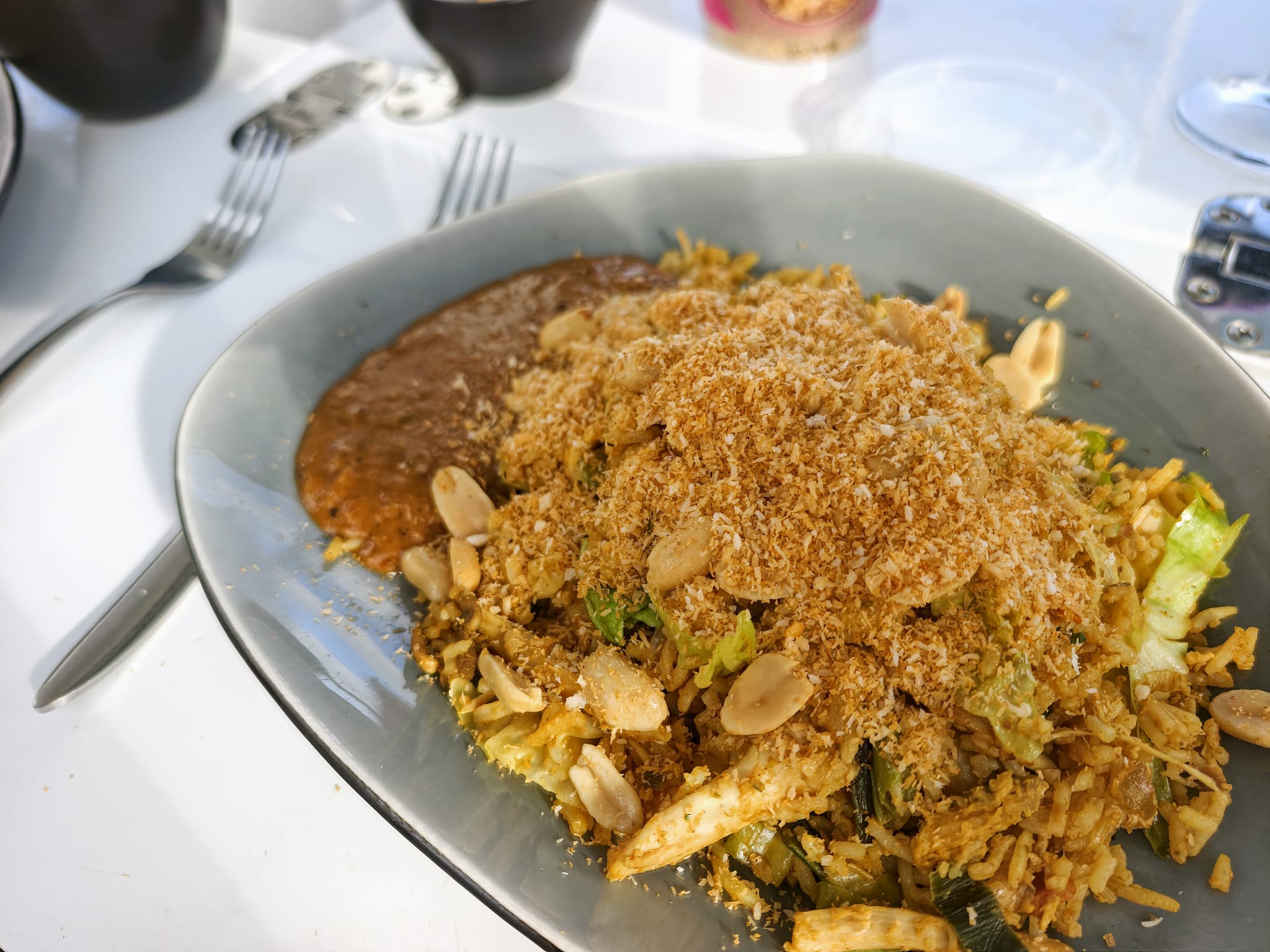
And Seroendeng… a combination of coconut, peanuts, and seasonings. We almost ran out of Seroendeng and Sher made it herself. Very good!
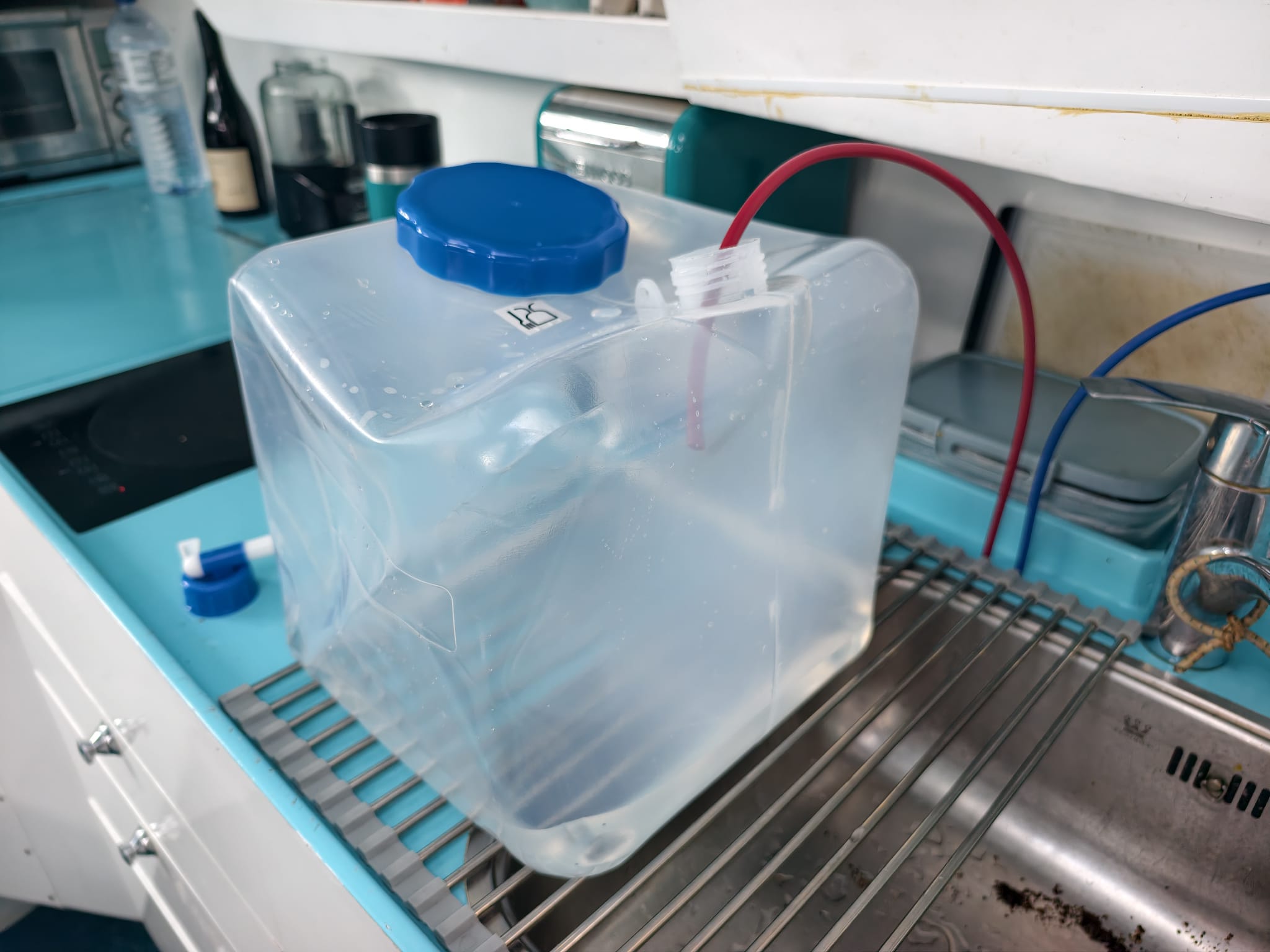
From Amazon we’ve ordered a foldable jerrycan. When we start the watermaker, the first cup of water is very bad. Very salty. That’s caused by salt ions moving through the membrane when it’s not under high pressure. Natural osmosis.
So, we dispose the first cup. After that, the TDS is around 400. After about 2 liters (then, the entire system is flushed) the TDS lowers to about 200 and it stays 200 during the next hours. So, we capture these first liters in the jerrycan.
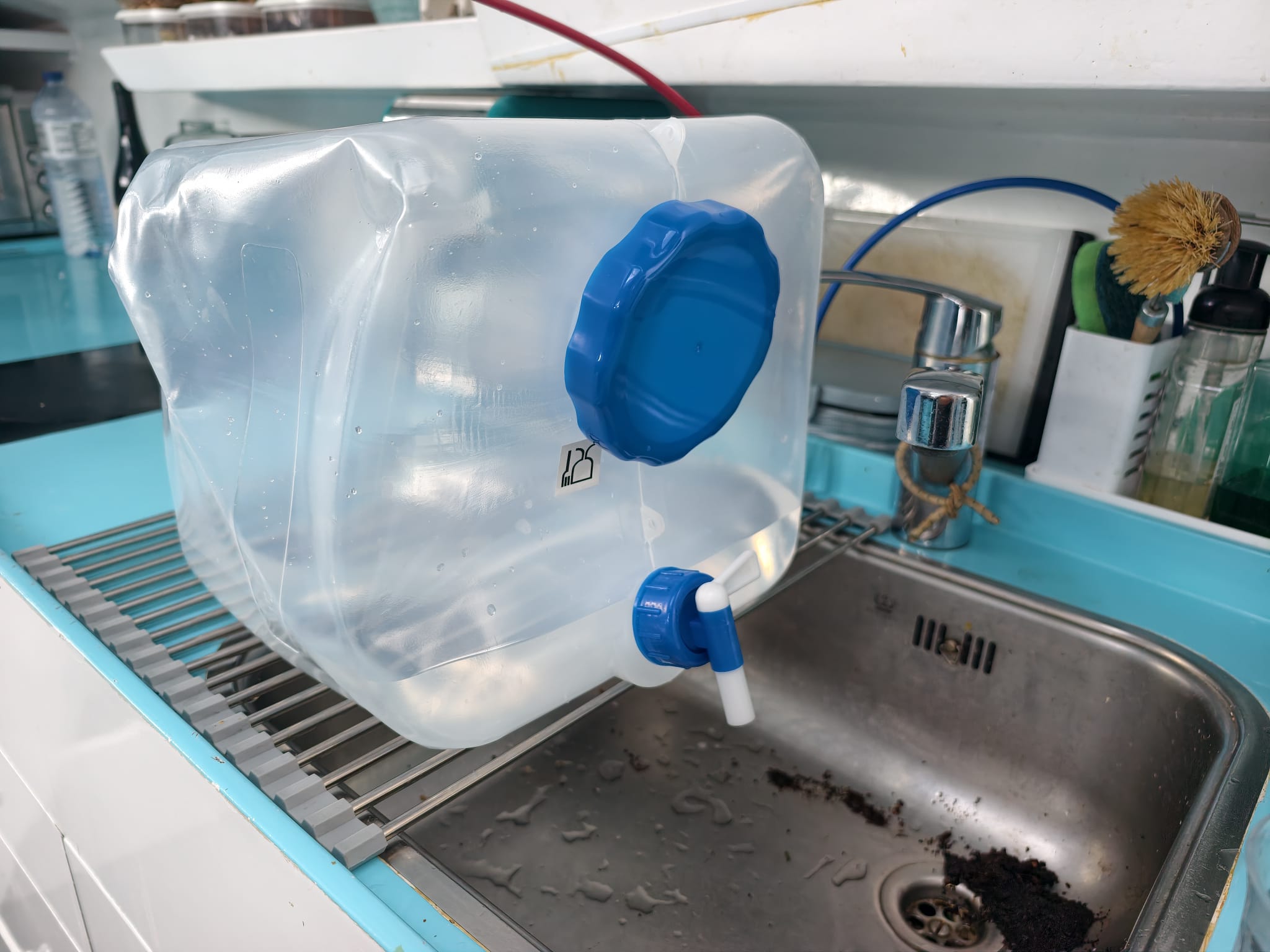
This water can be used from cleaning and washing and such.
After the first liters we switch the watermaker to the tank and let it run until the tank level is about 80%. On average (depending on whether we had a shower) that takes some hours.
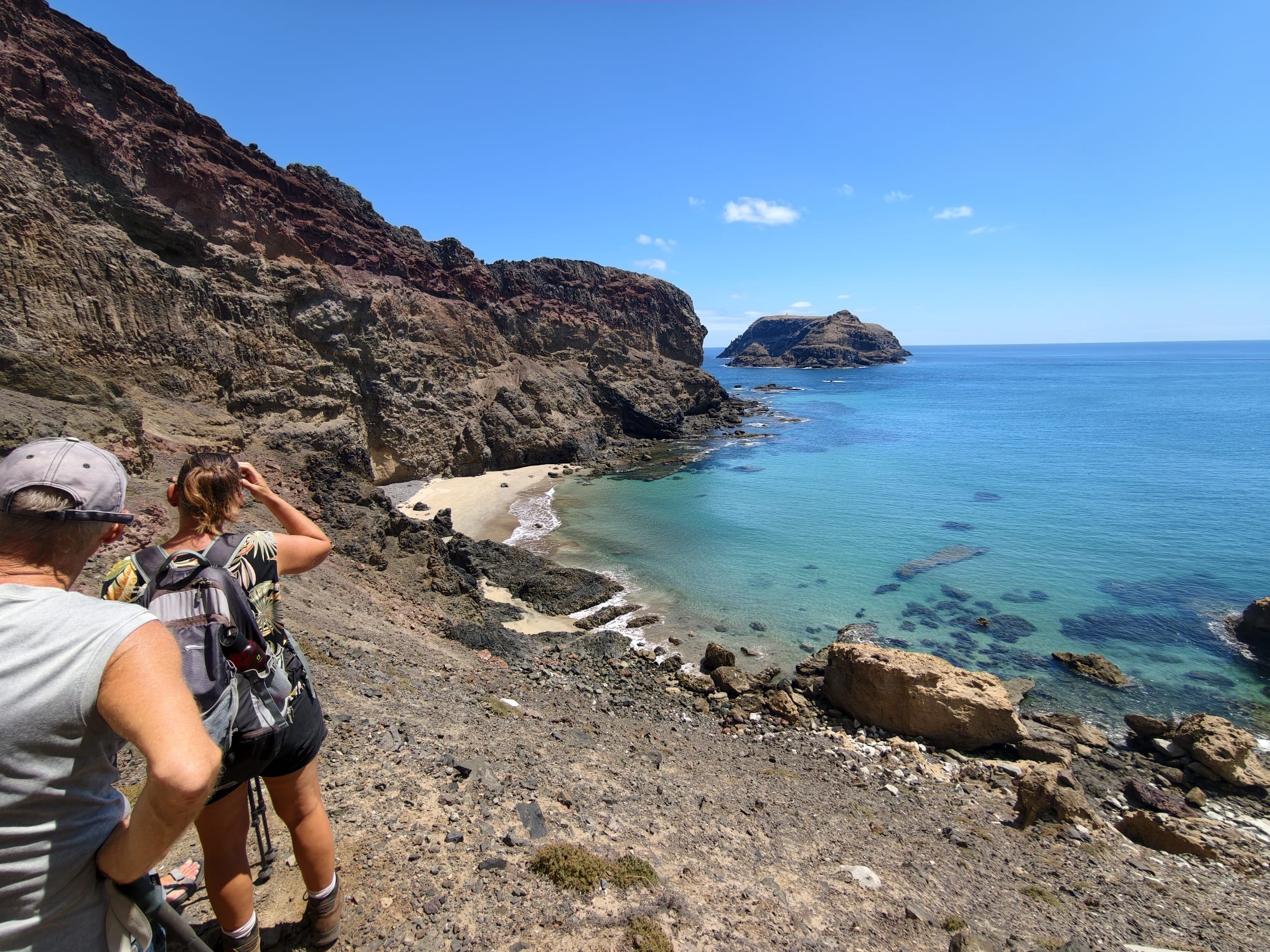
In the afternoon, we going for a hike with the group of sailors. We walk along a coastal footpath to the north side of the island. The views are gorgeous!
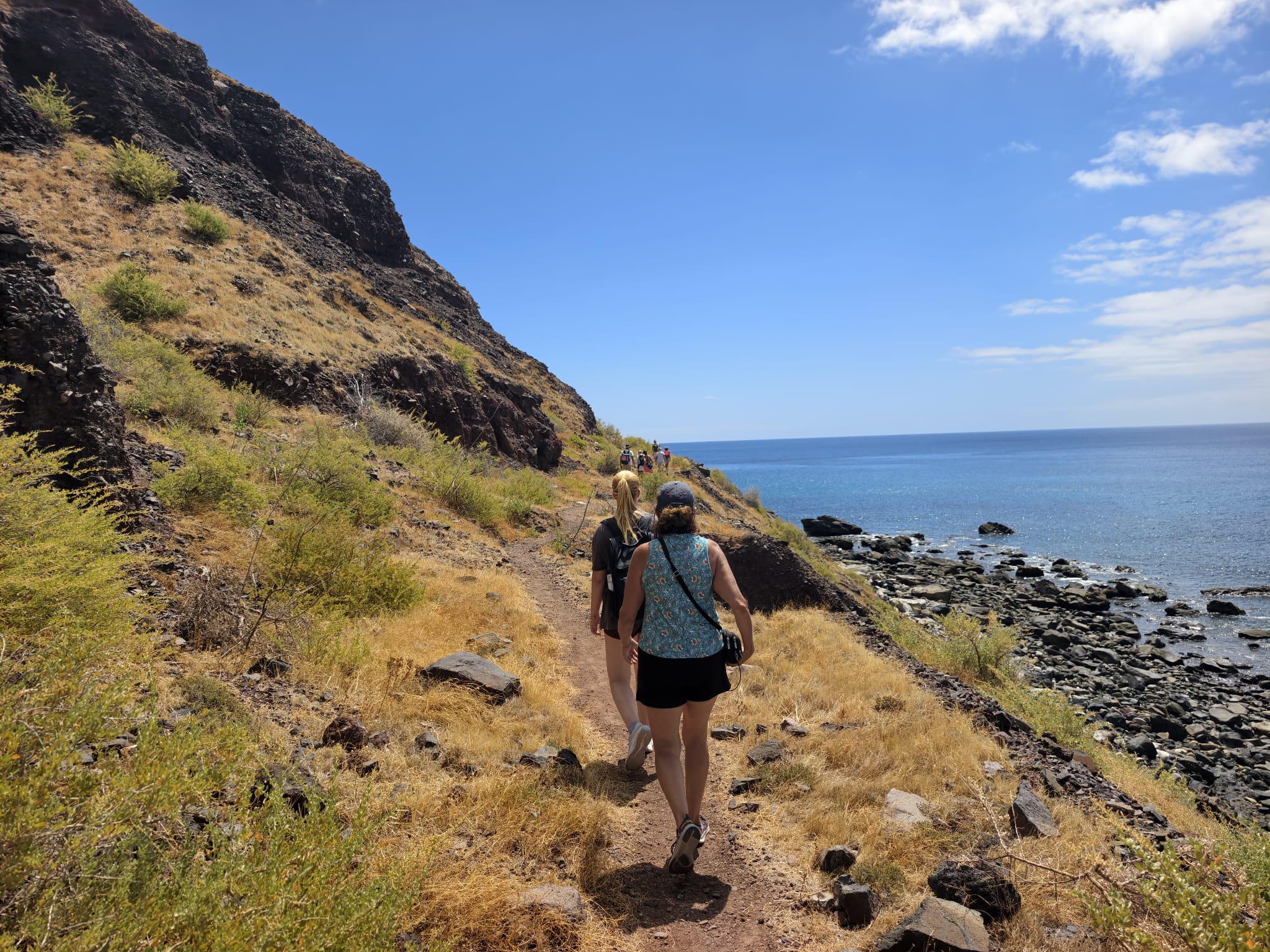
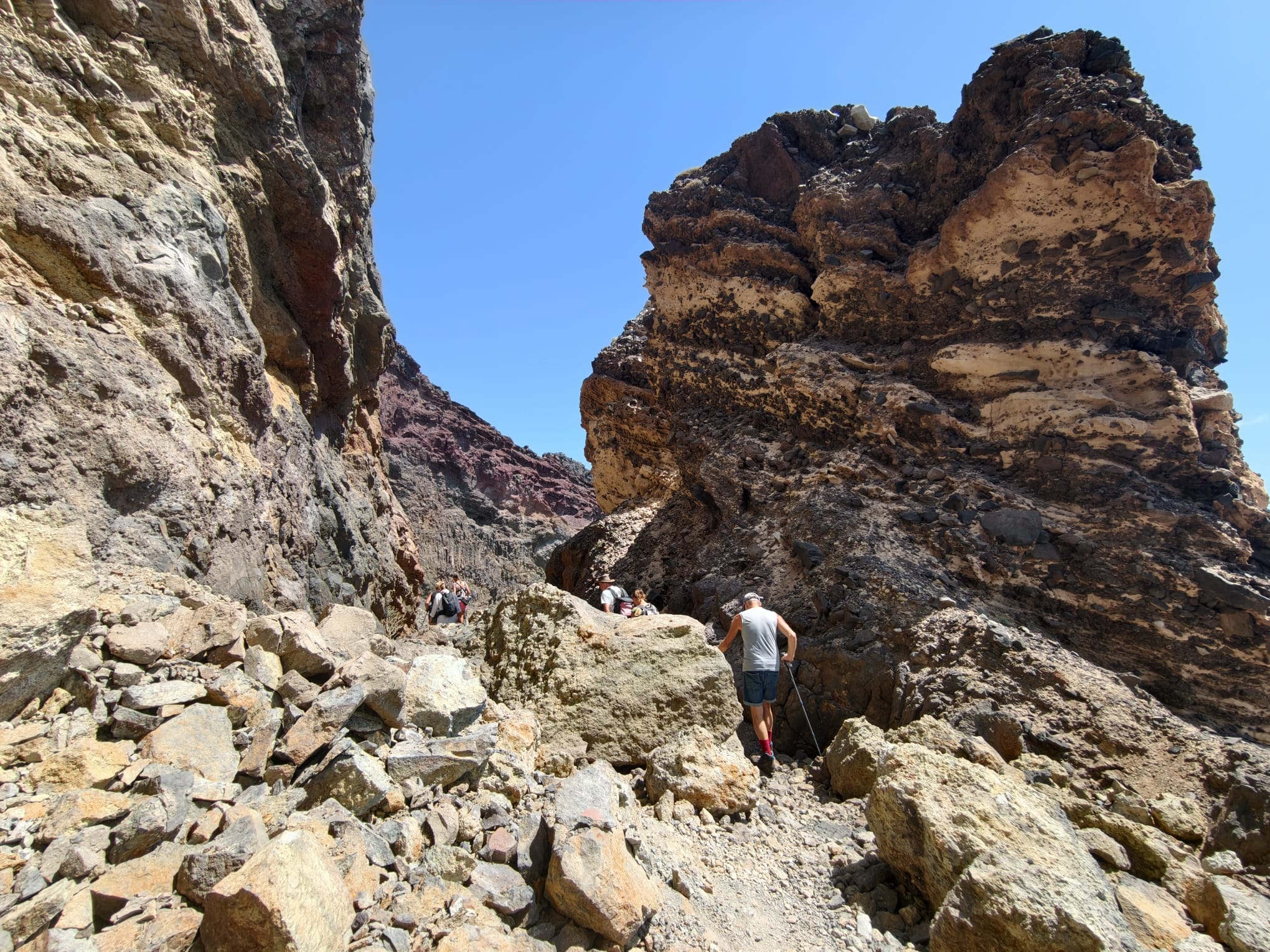
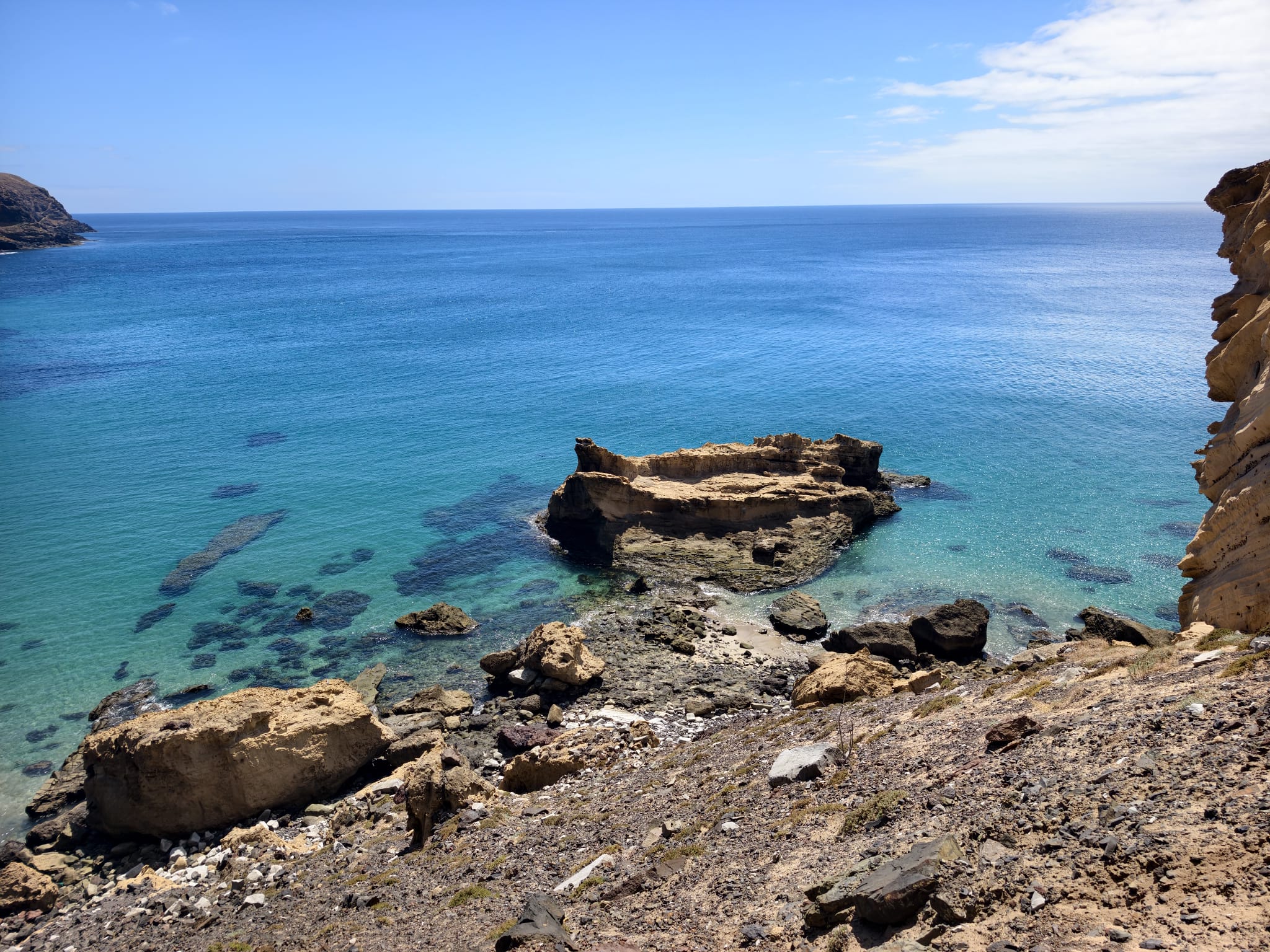
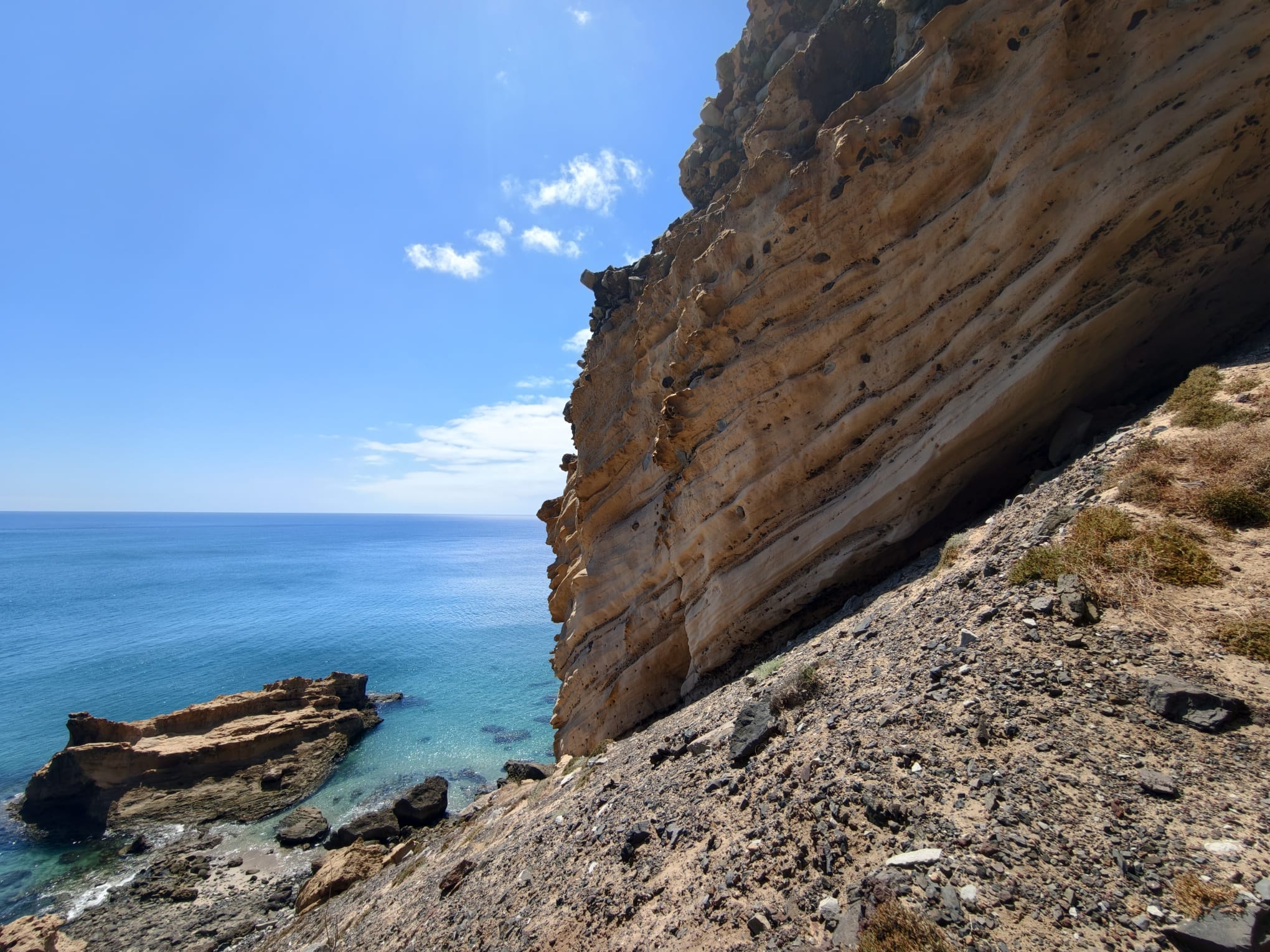
After 45 minutes we get to a tunnel.
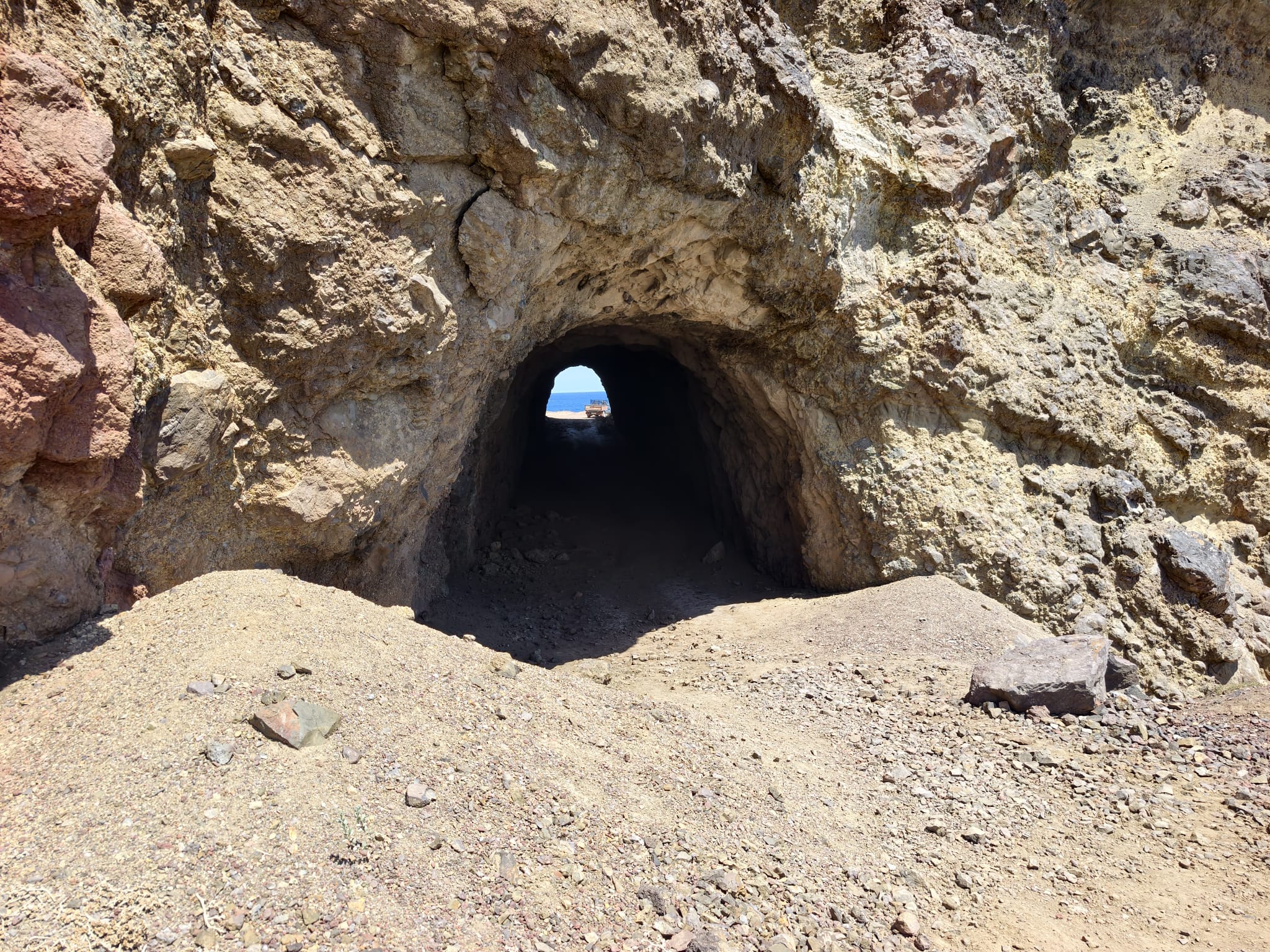
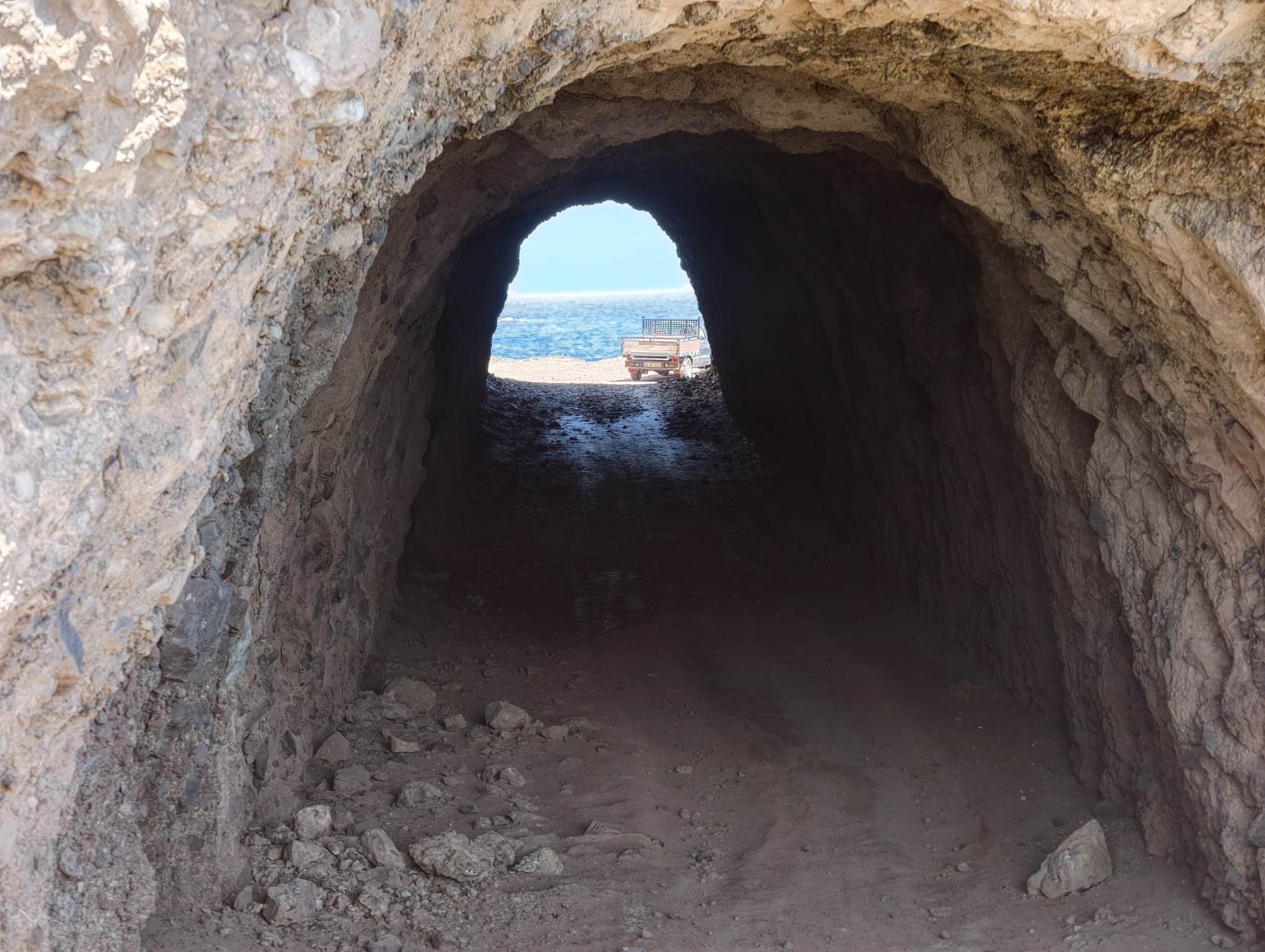
After the tunnel, landscape changes from rock to sandy.
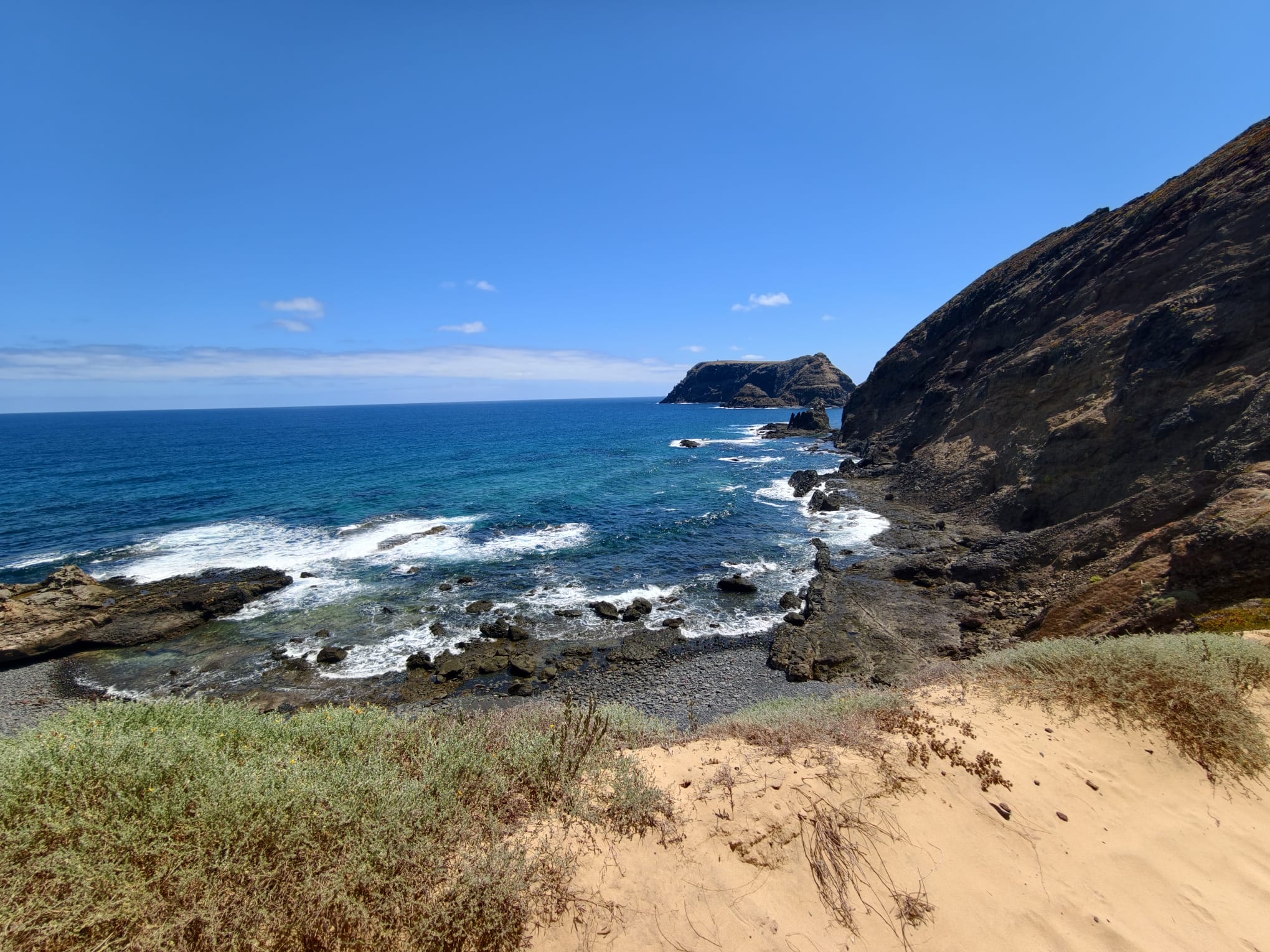
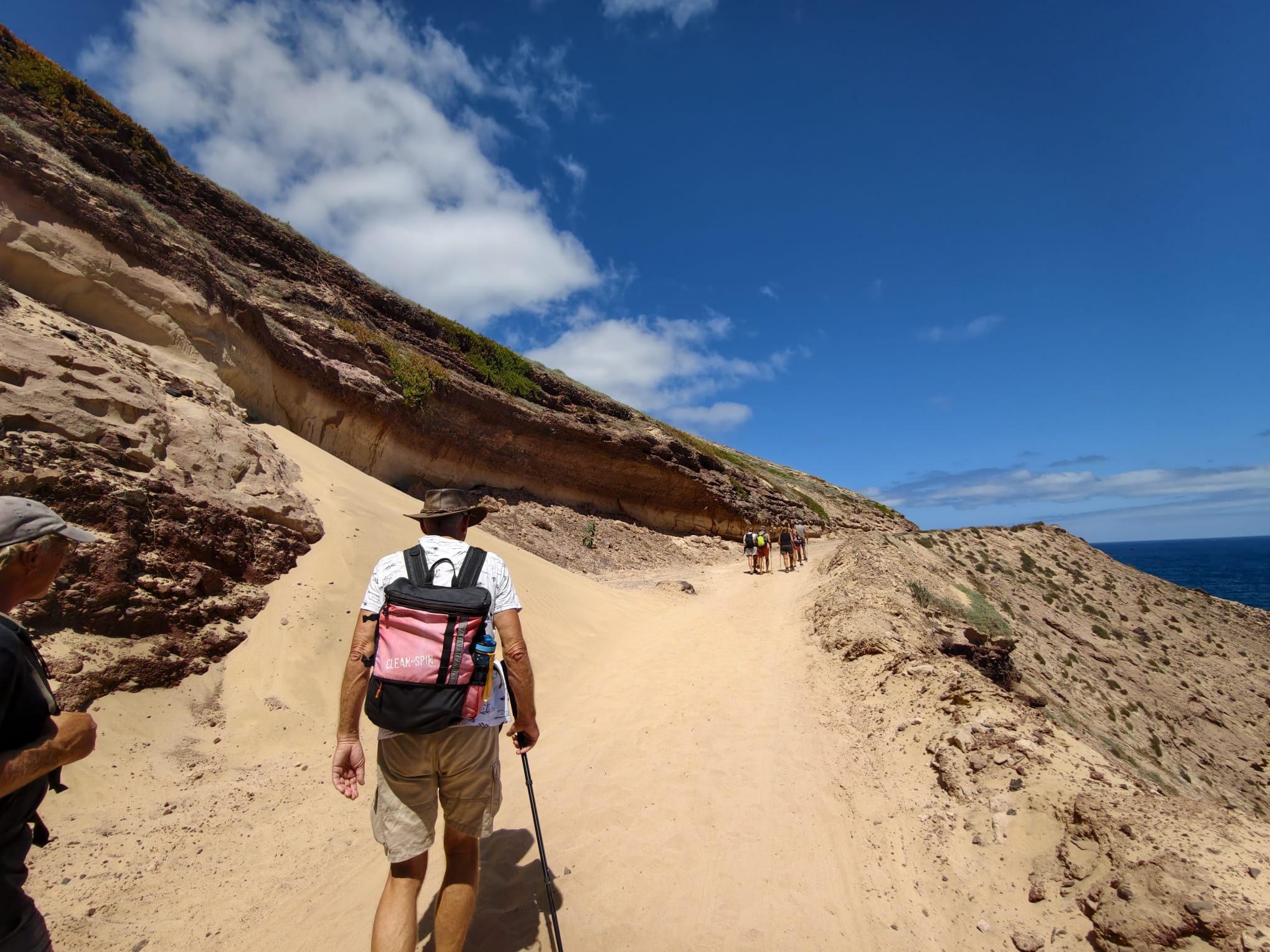
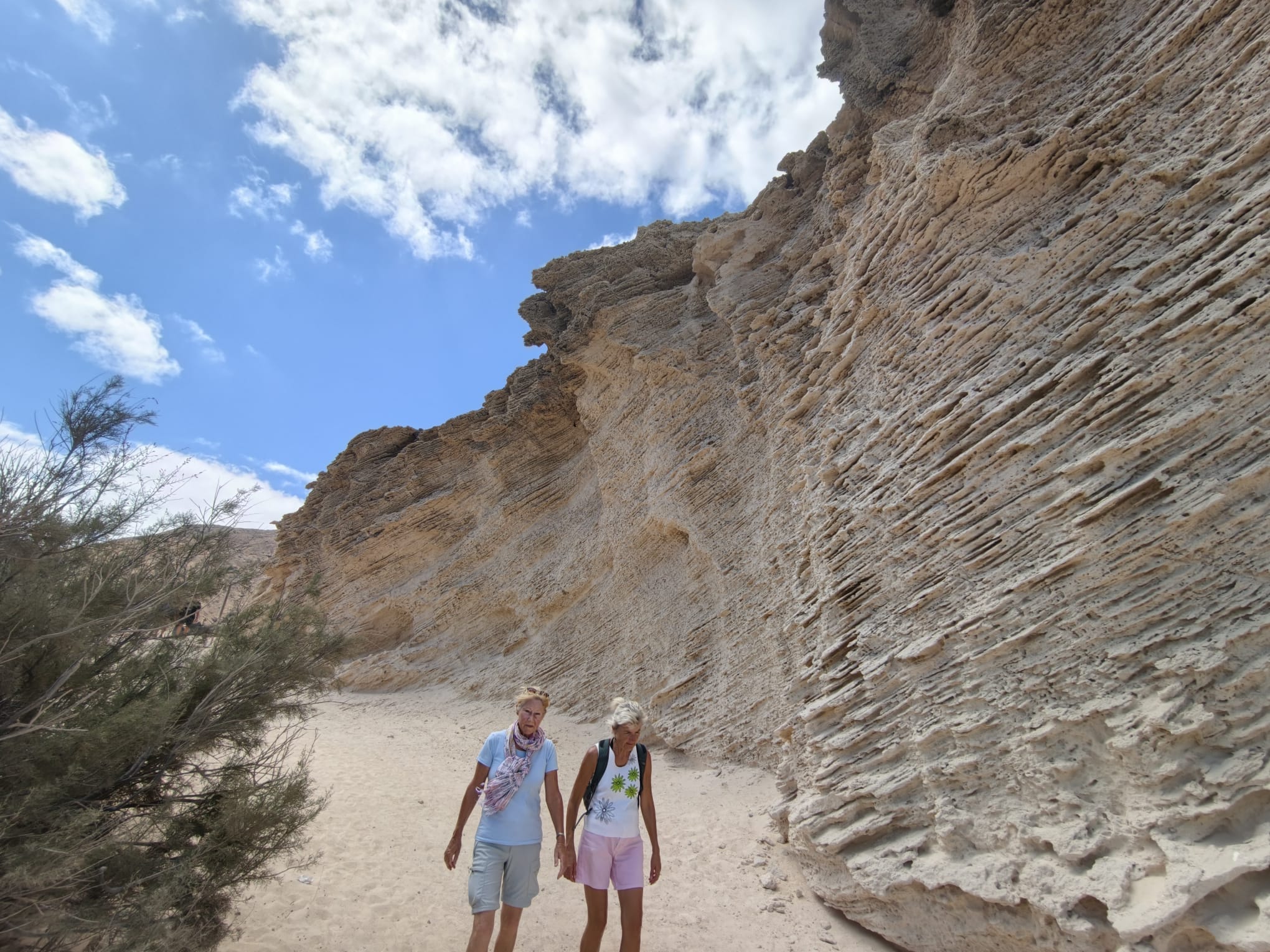
Then we get to a natural pool. We’ve brought our swimming gear and water shoes.
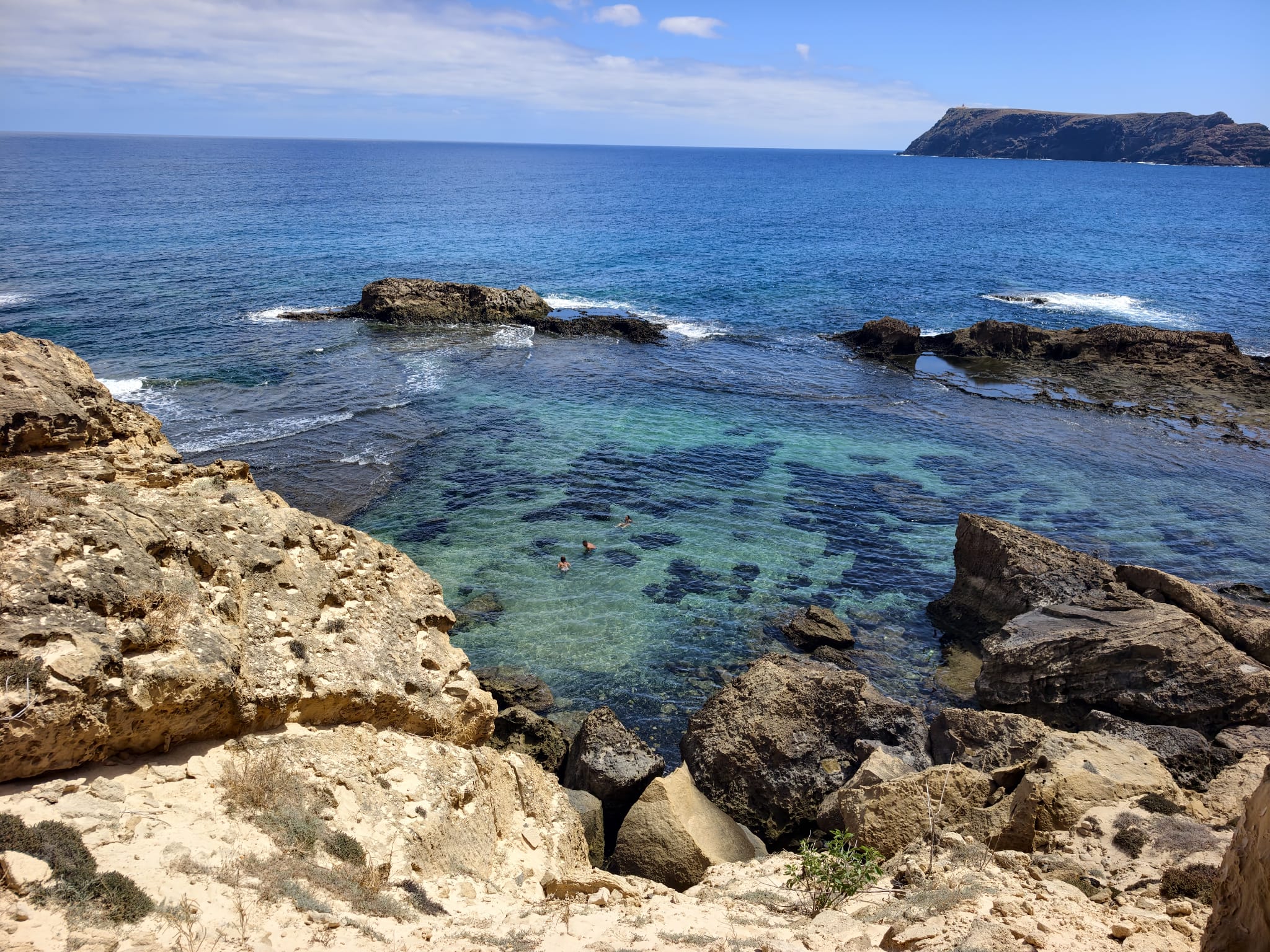
Everybody takes a dip in the “pool”. The water temperature is around 25º. Great!
We’ve brought our “underwater camera” (Wim’s old phone in the waterproof case).
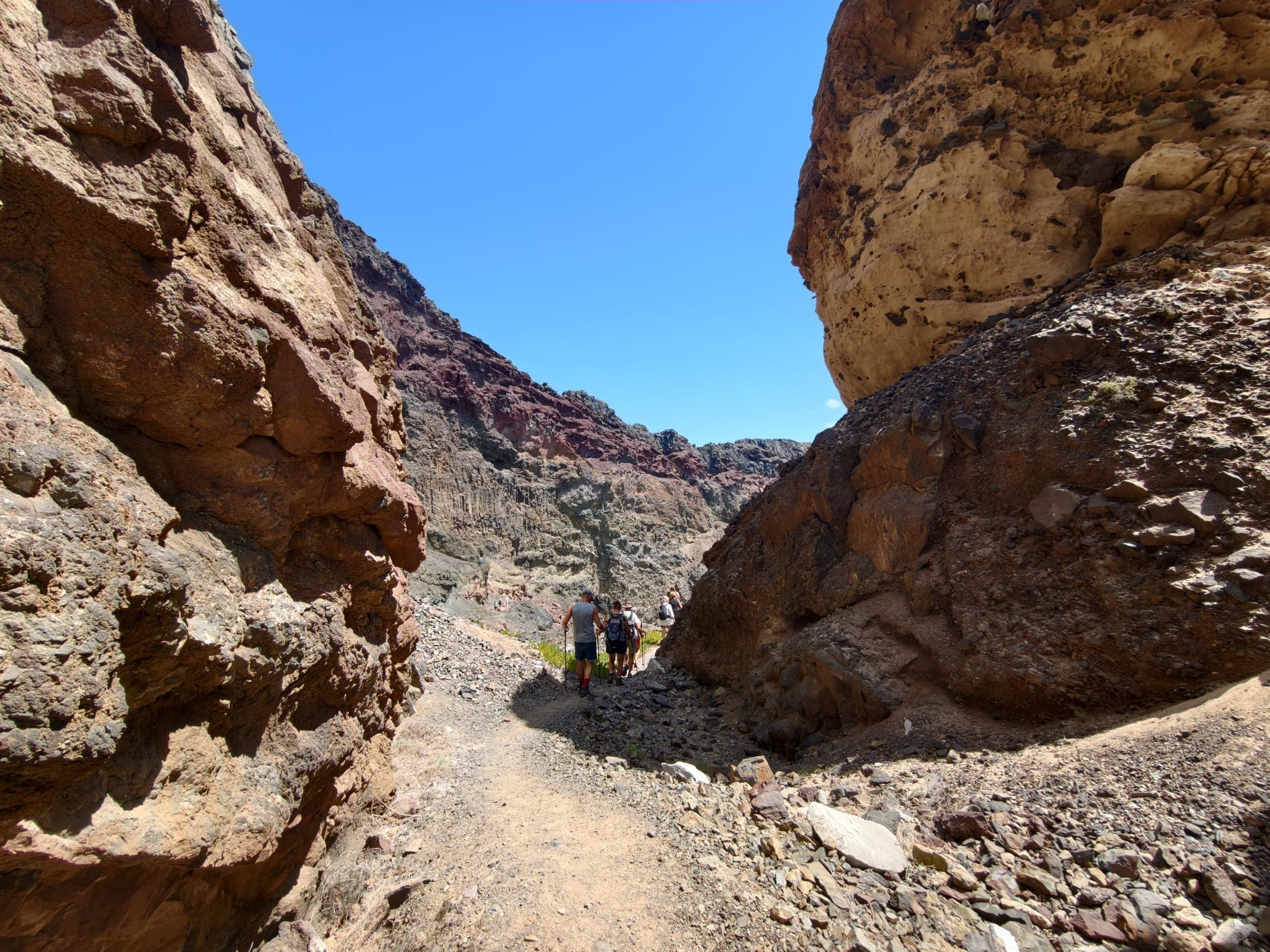
After that, we walk up to an amazing canyon of sandstone!
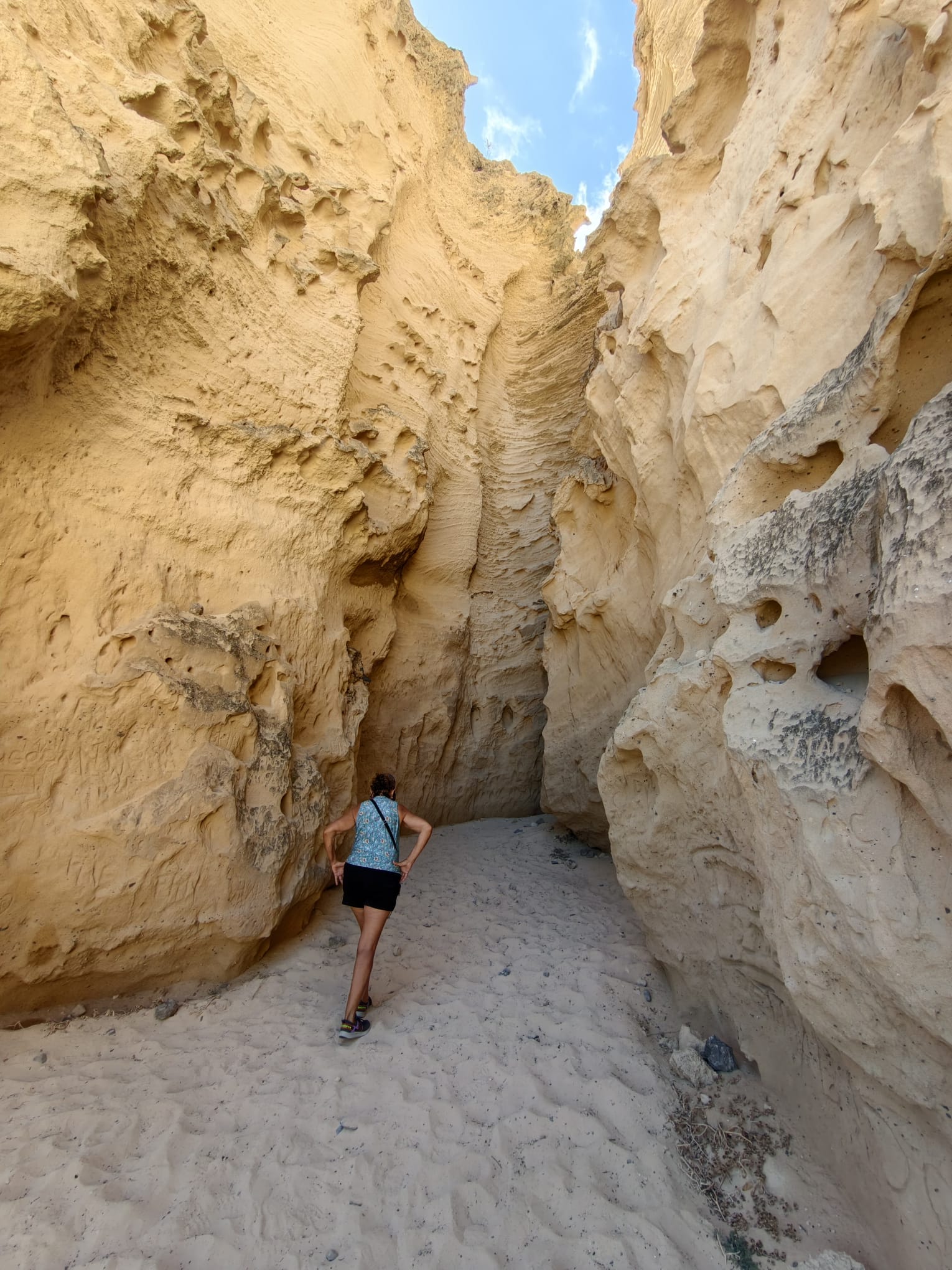
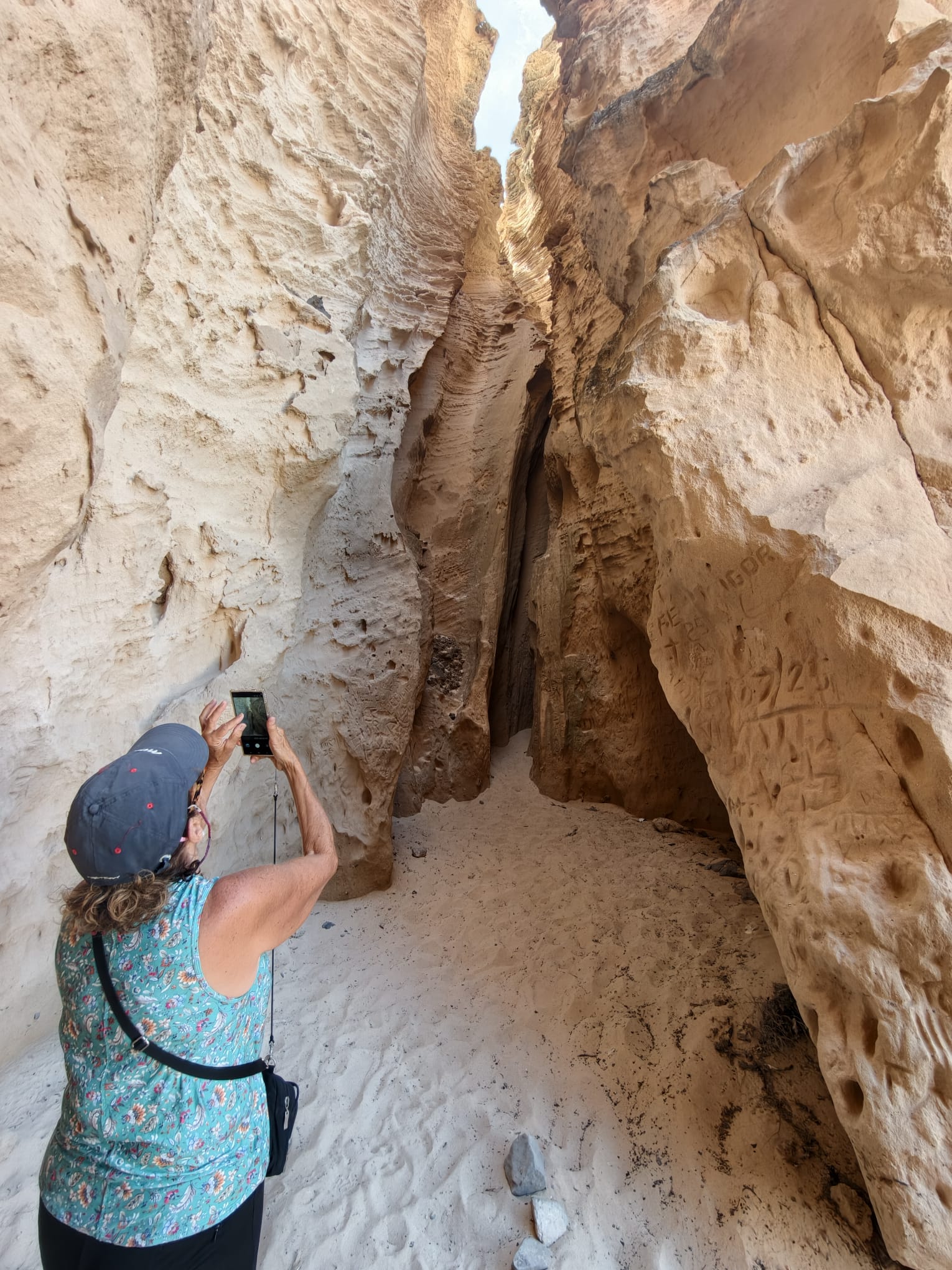
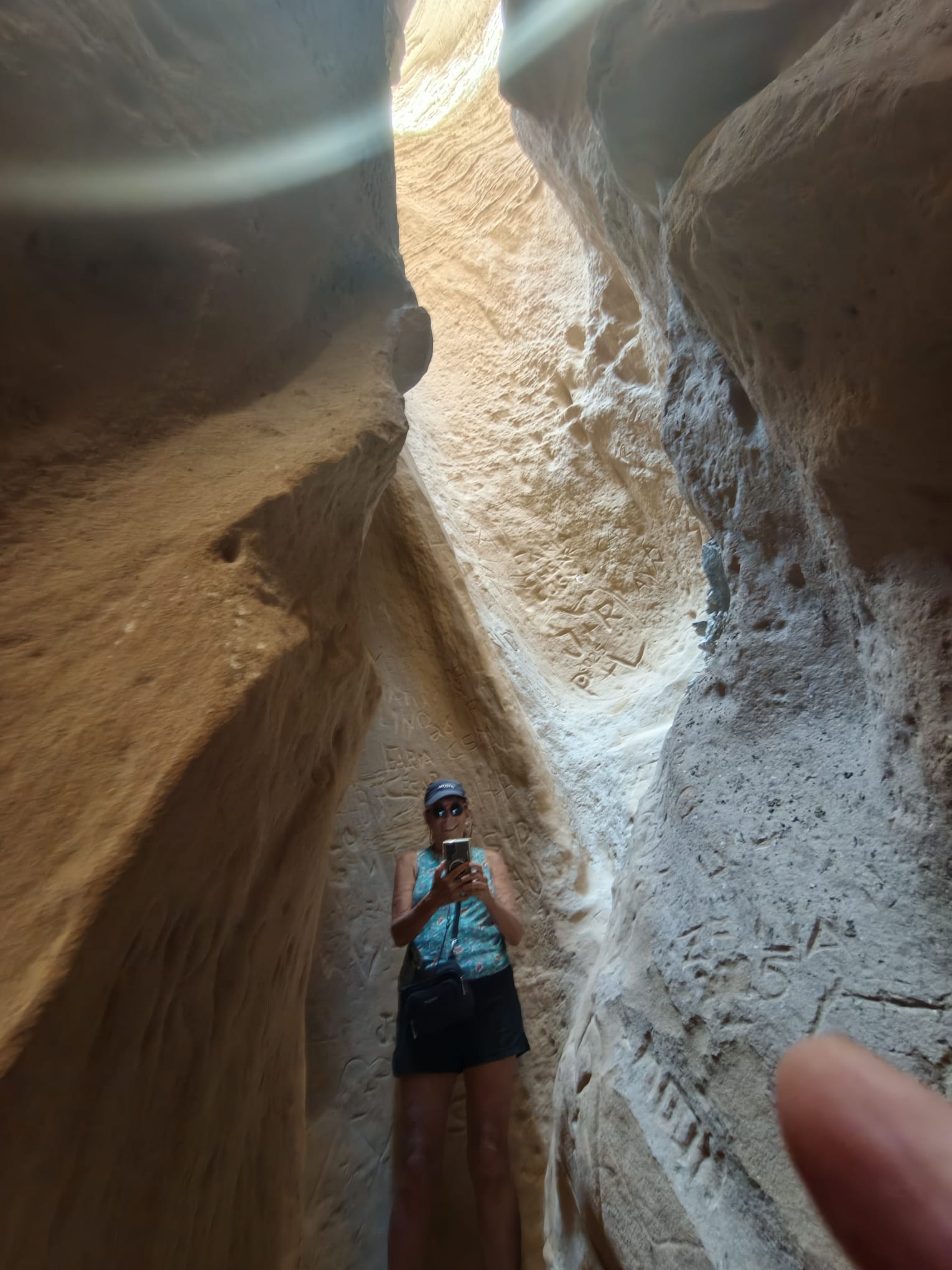
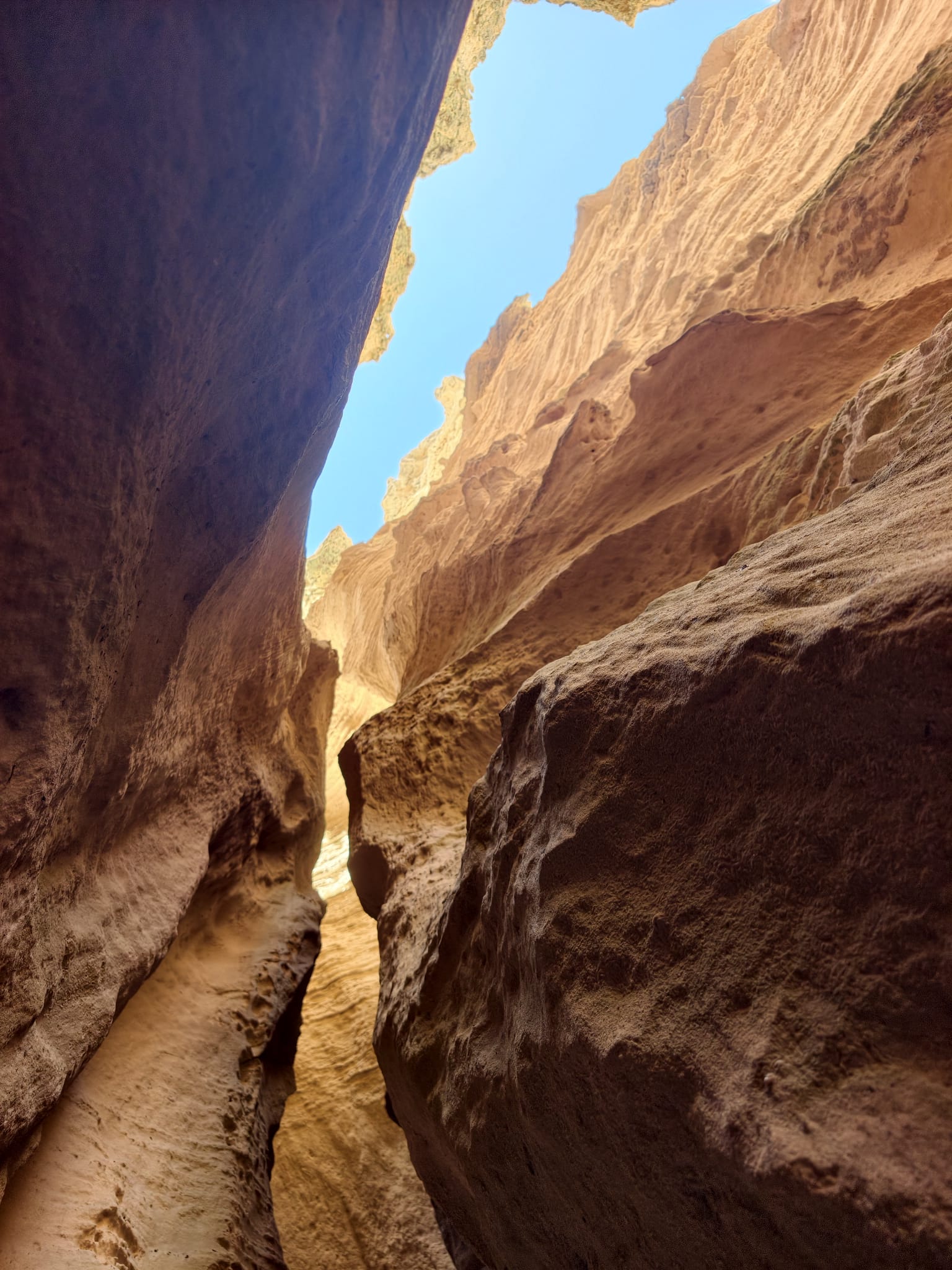
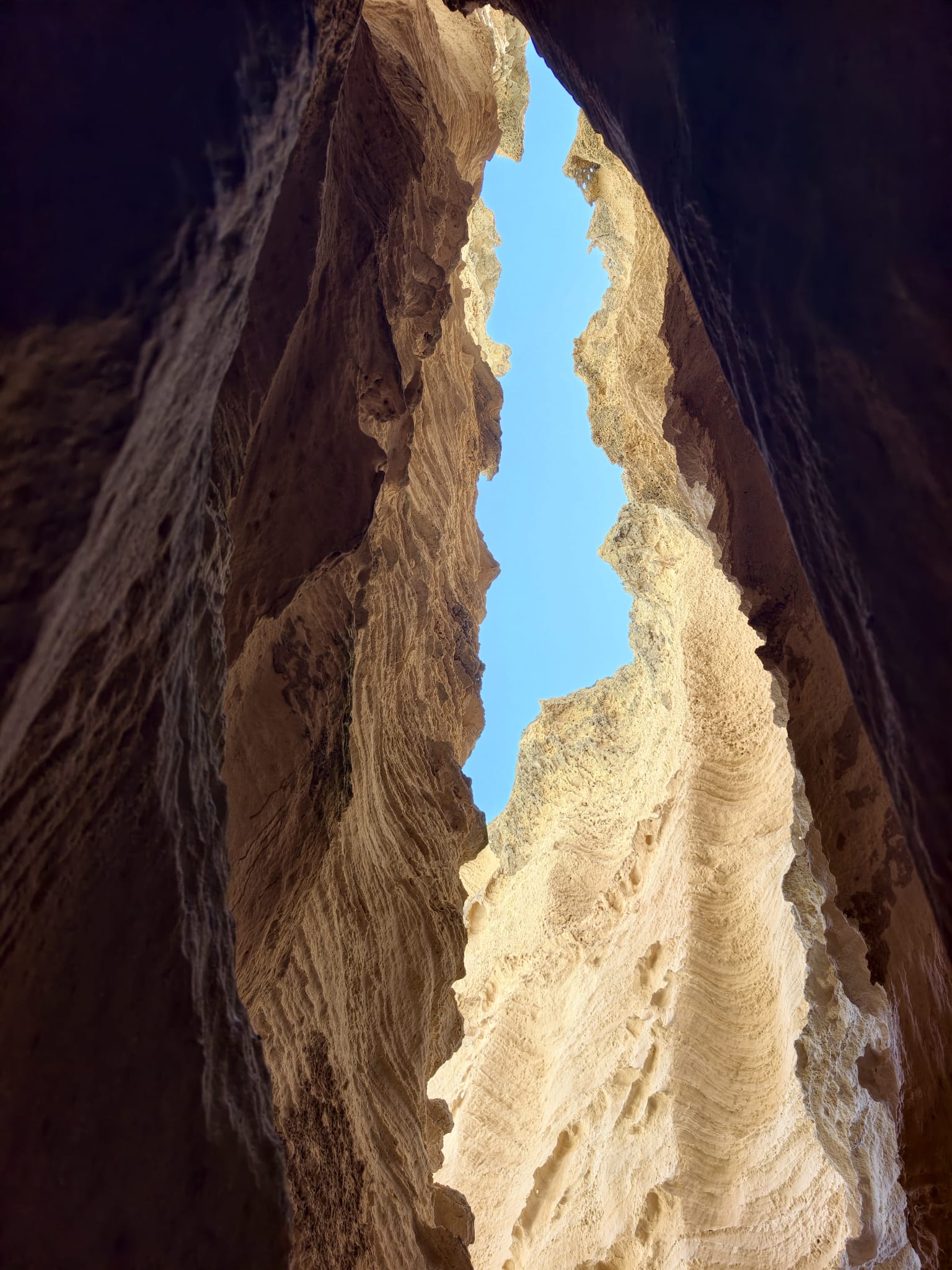
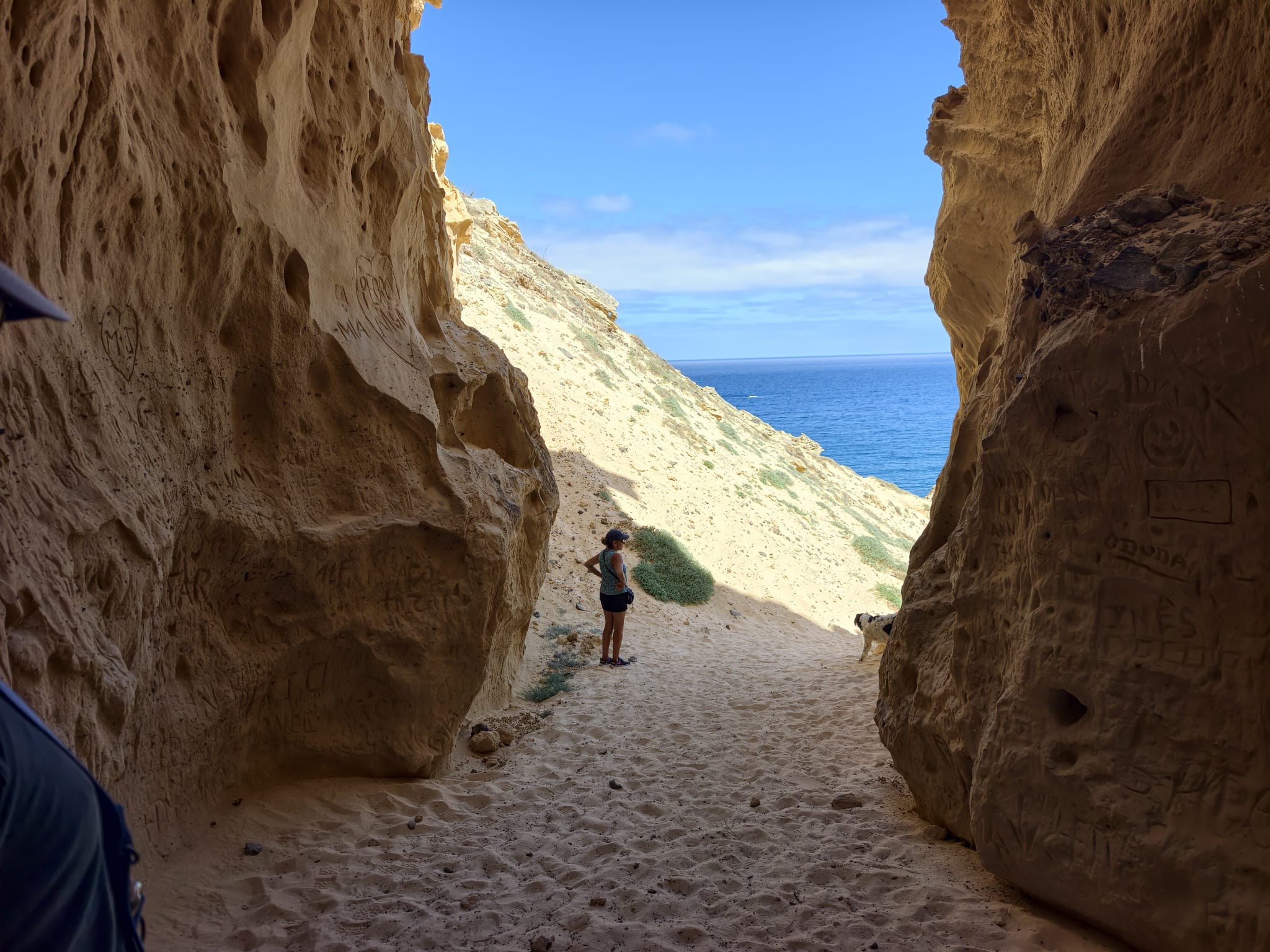
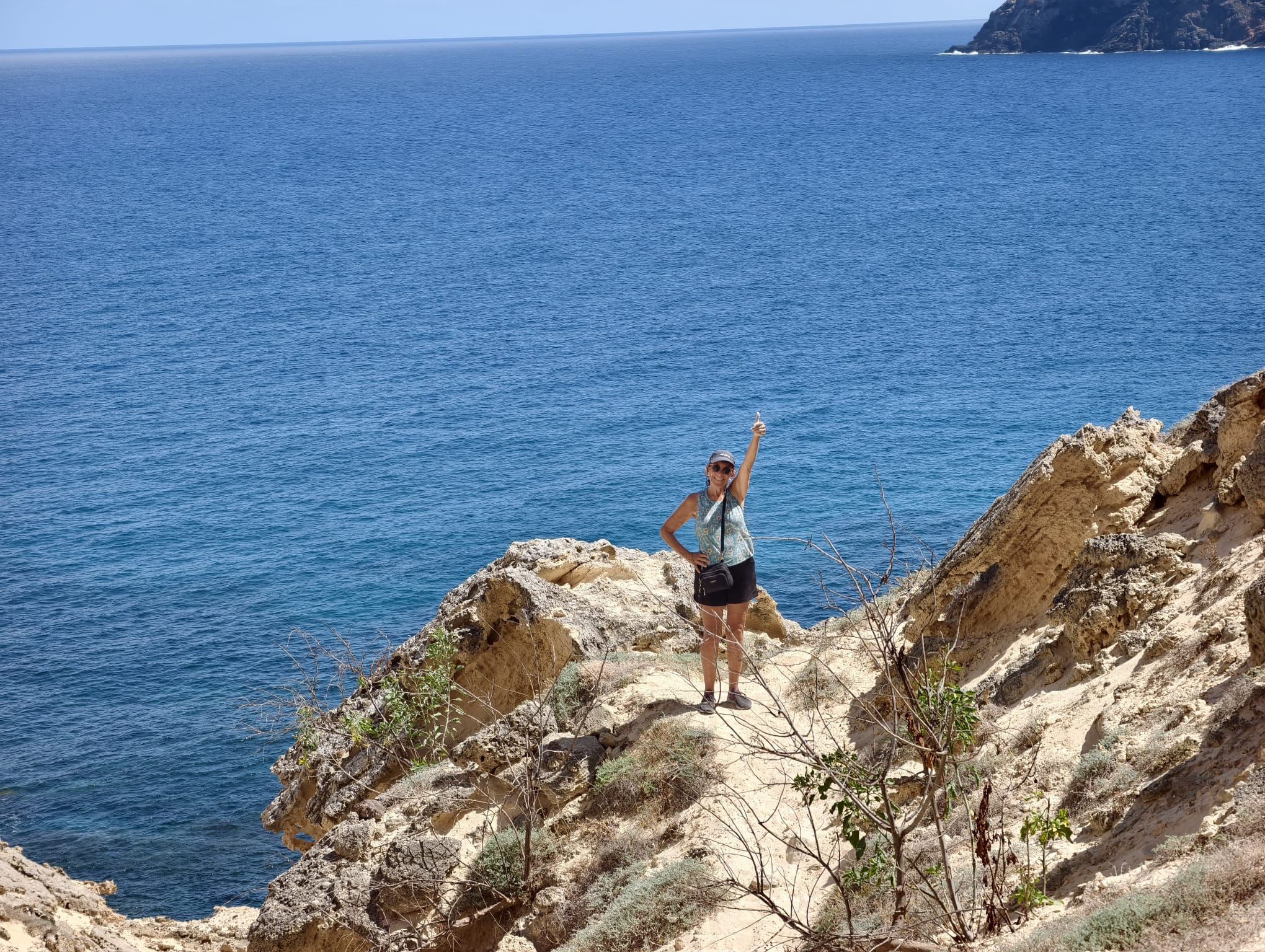
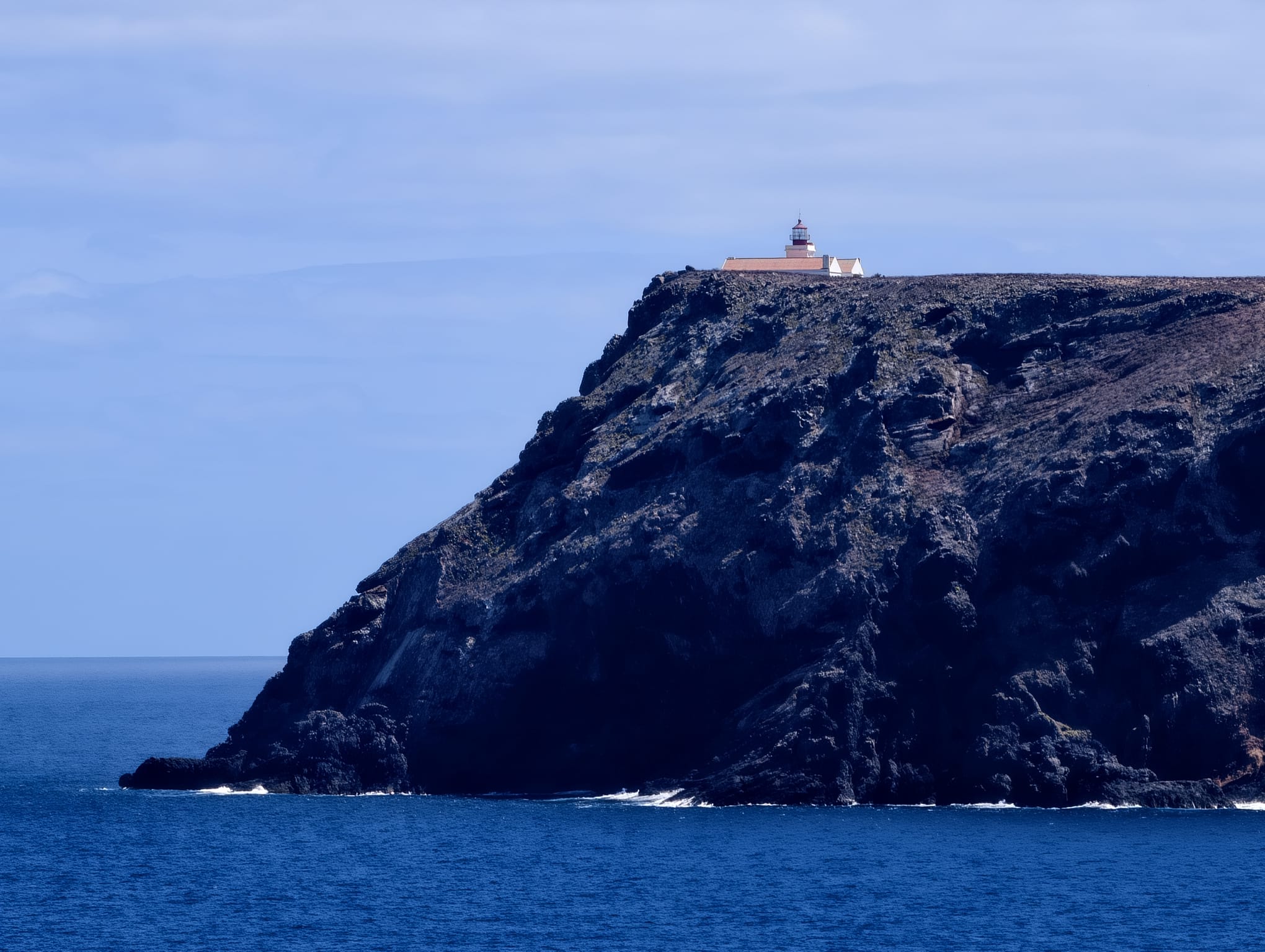
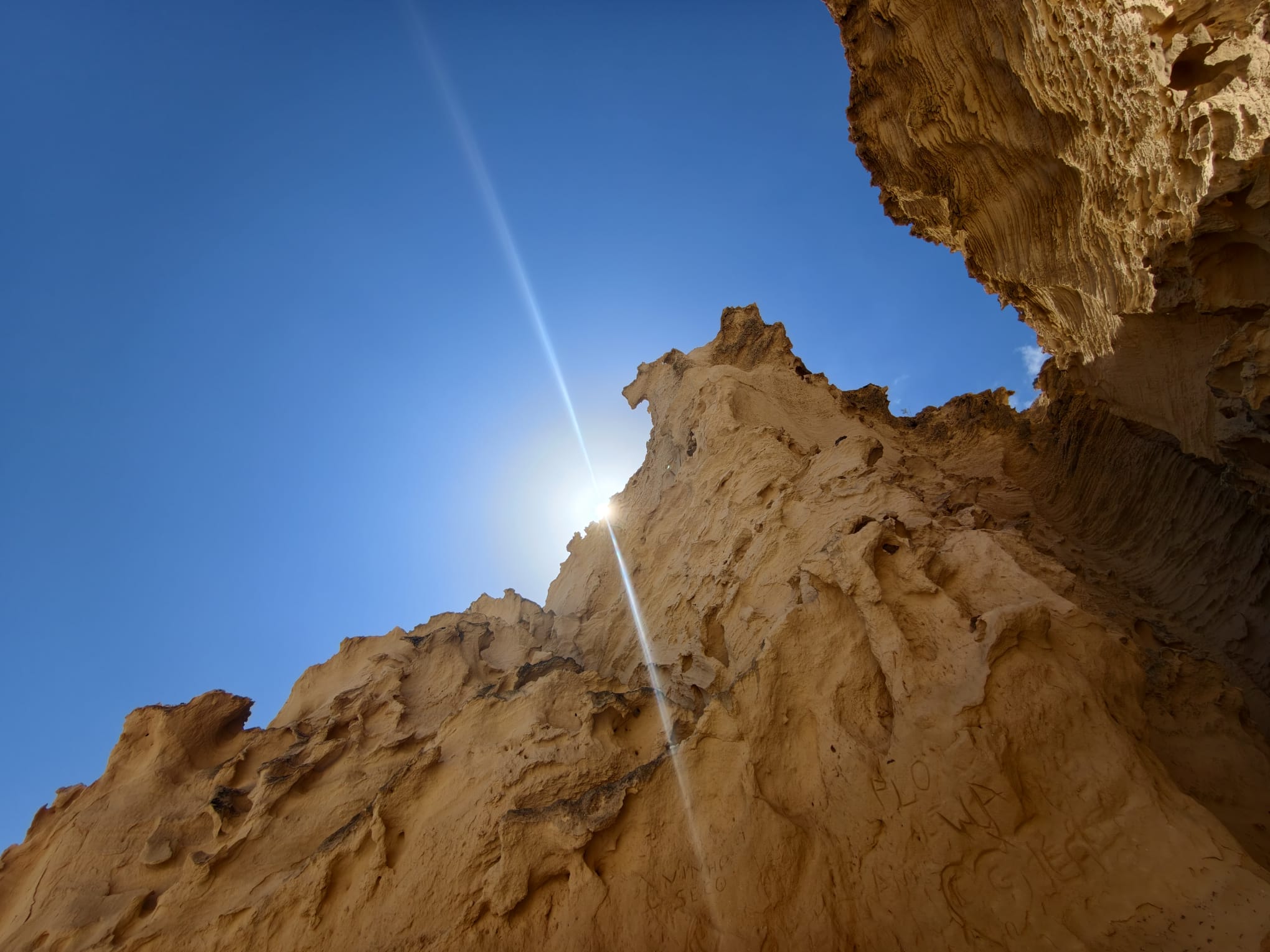
Then, we walk the same track back to the marina.
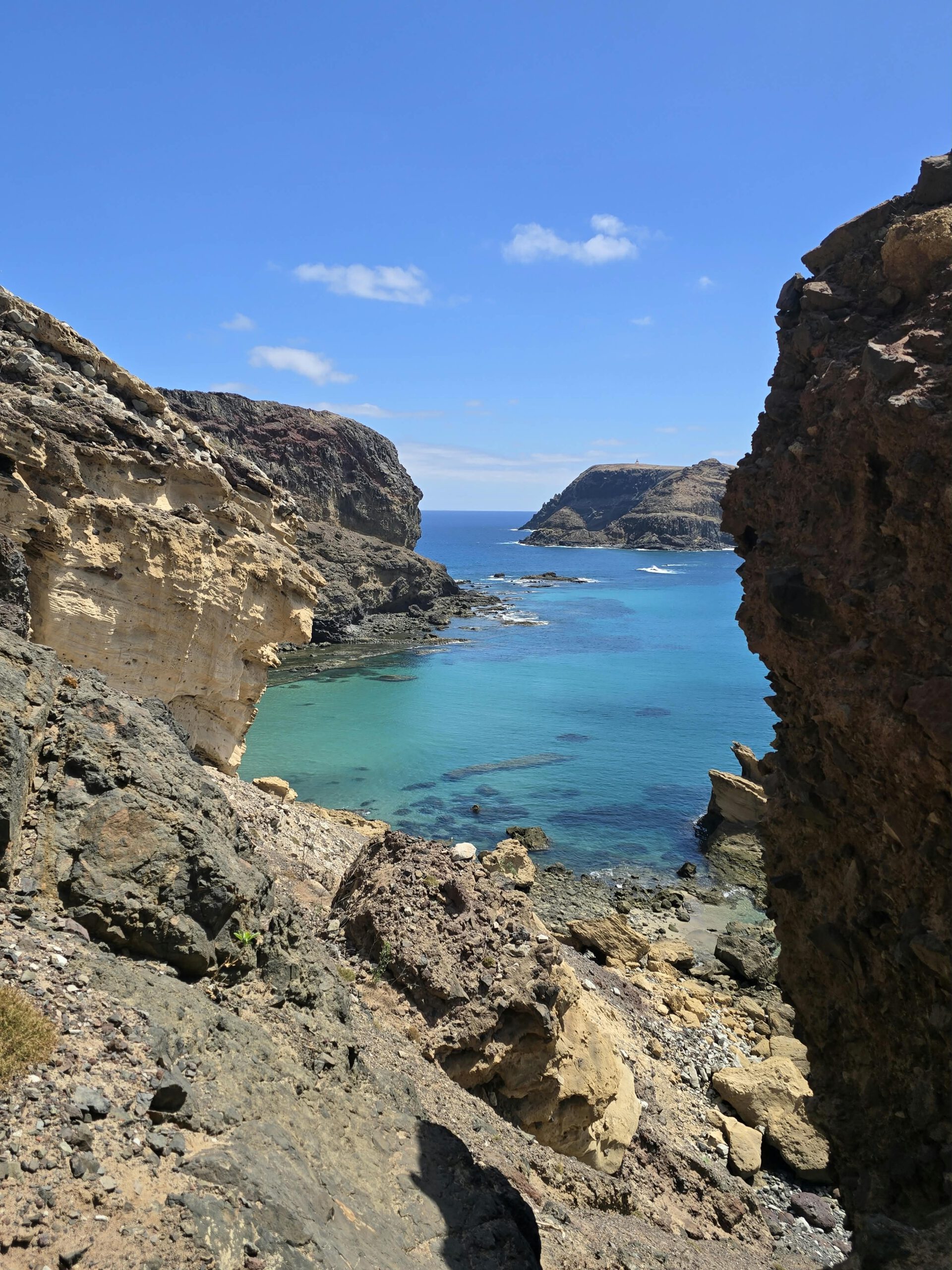
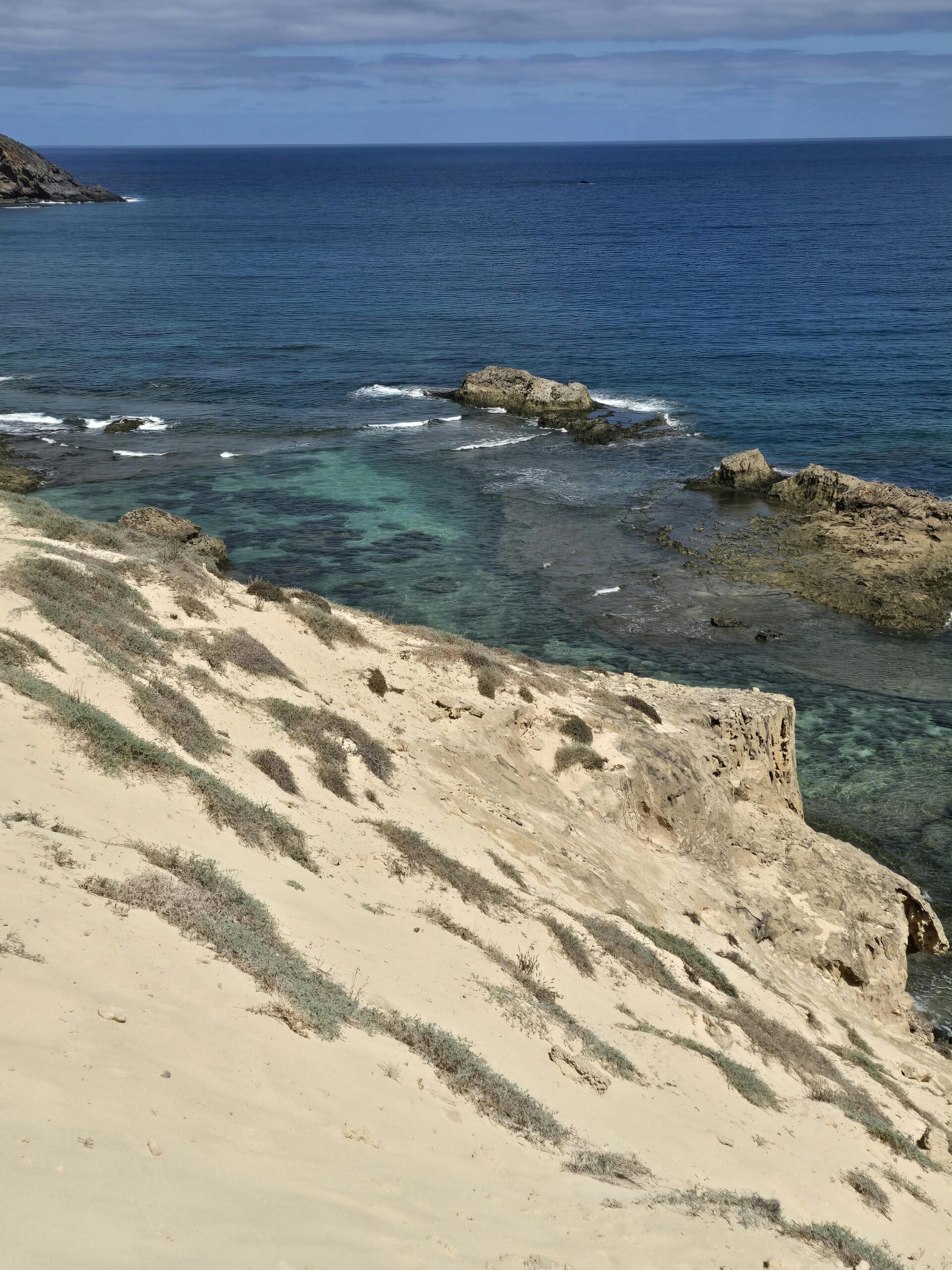
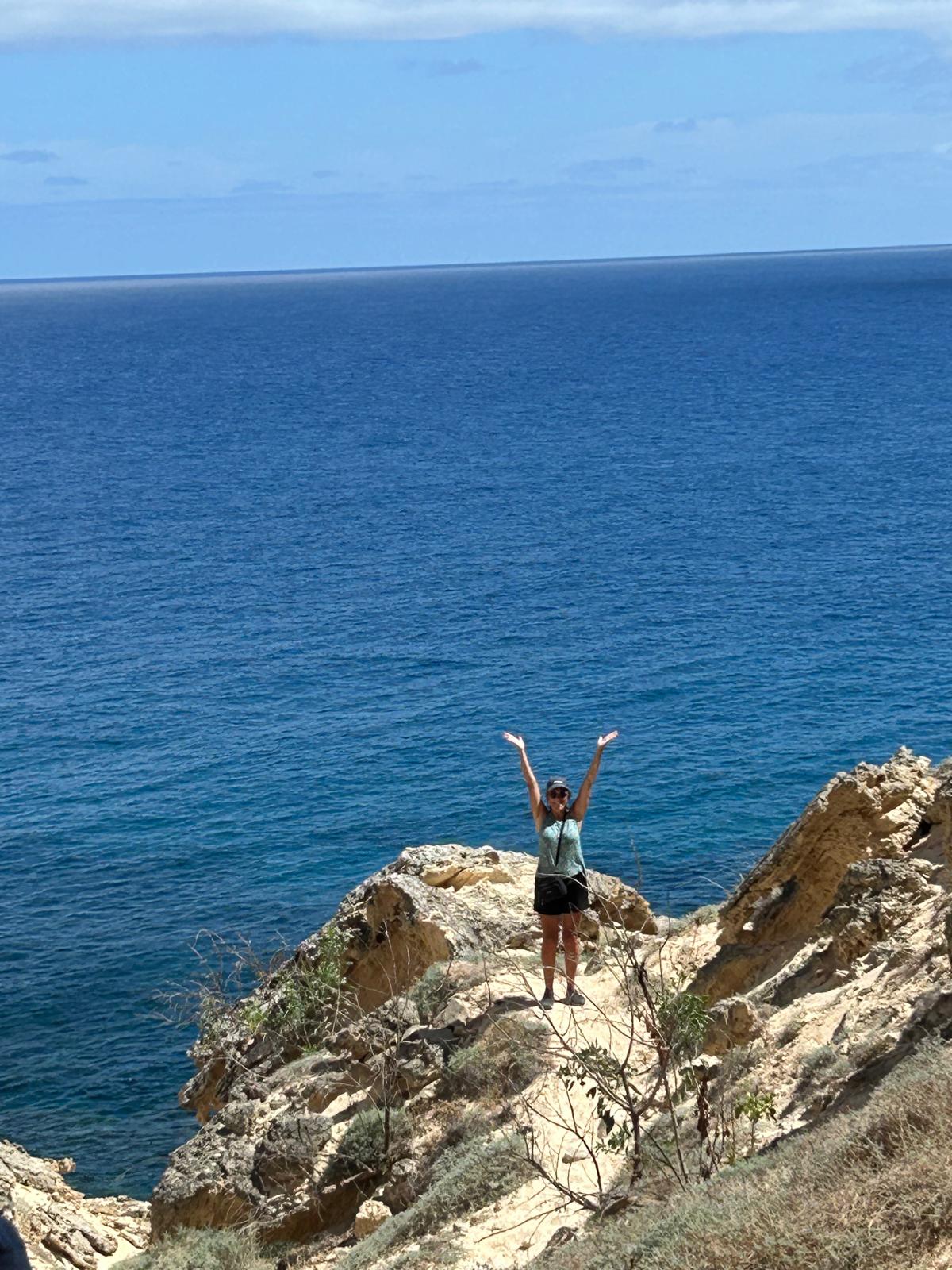
We are invited for the Cruiser’s Friday afternoon happy hour but we’re covered in sand, salt and sweat 😅. So we decide to have a nice shower on board and after that: let’s call it a day… We enjoy a cold beer on Dione IV and a delicious Nasi dinner!
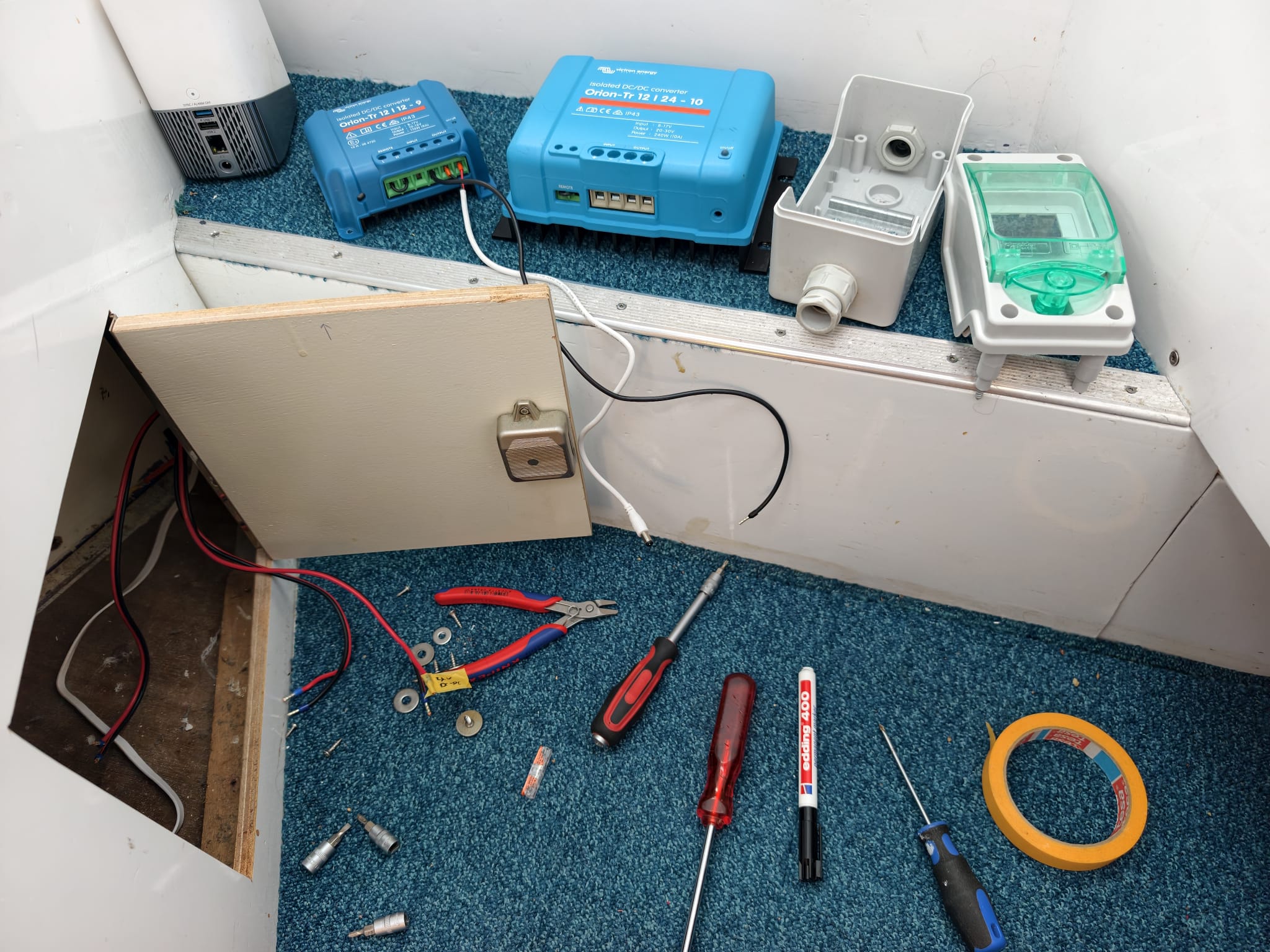
Wim continues working on a 230v improvement project… We’ve ordered a nice electrical cabinet + circuit breakers on Amazon, and we’ve decided that it can have a place in the little cabinet under the lower salon couch. For details on the project, click: 230v upgrade
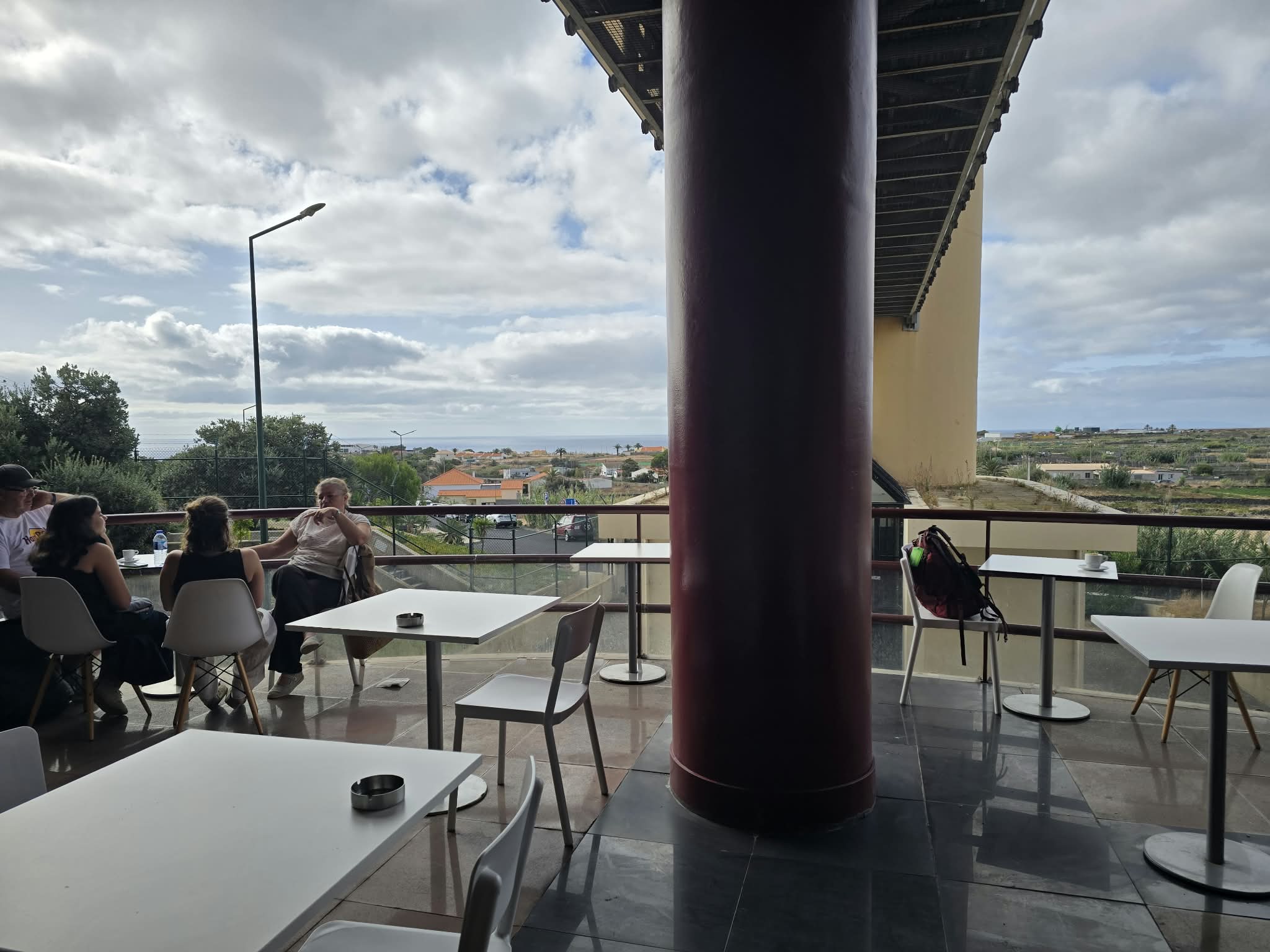
Today, Sher flies to the US to visit MomCat.
The airport has an outdoor waiting lounge 😄
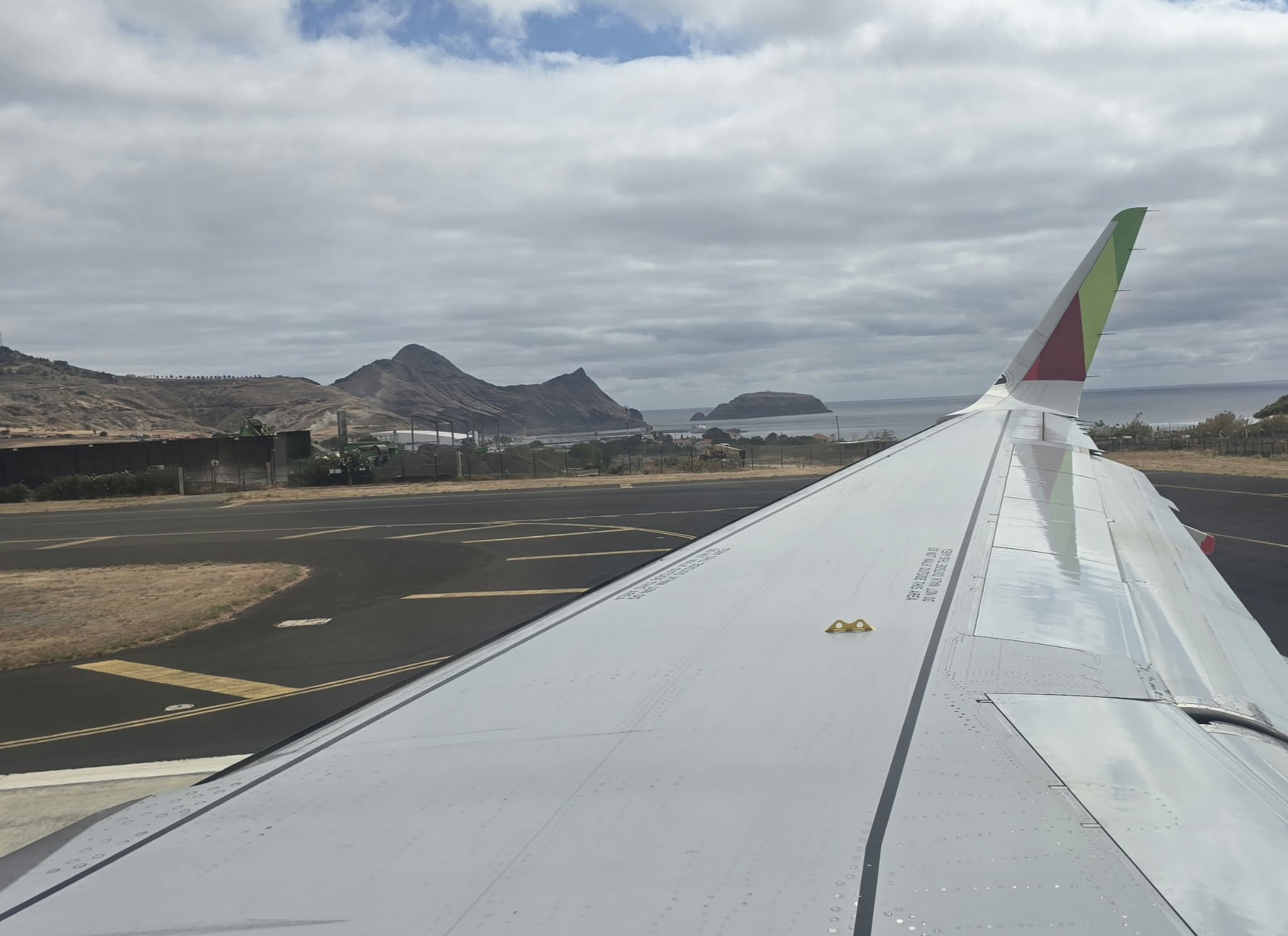
Lift off…
Back on Dione IV, Wim continues on the 230v upgrade project.
While Sher has arrived at MomCat’s place in Arizona US, Wim installs and mounts a display to read the quality of the water from the watermaker, instead of using the manual one. He also continues installing some new cables for the induction cooker, the oven, the washing machine and the dryer. All these power connections are behind the washing machine and Wim bends over the washing machine to see what the best route for the 4 new cables would be. There he sees the valve for the through-hull which is the drain for the washing machine, the shower, and the bilge pumps. The exit is just above the waterline (well, actually on the waterline since Dione IV became a bit more heavy from all the stuff we took on board before we left the NL 😅).
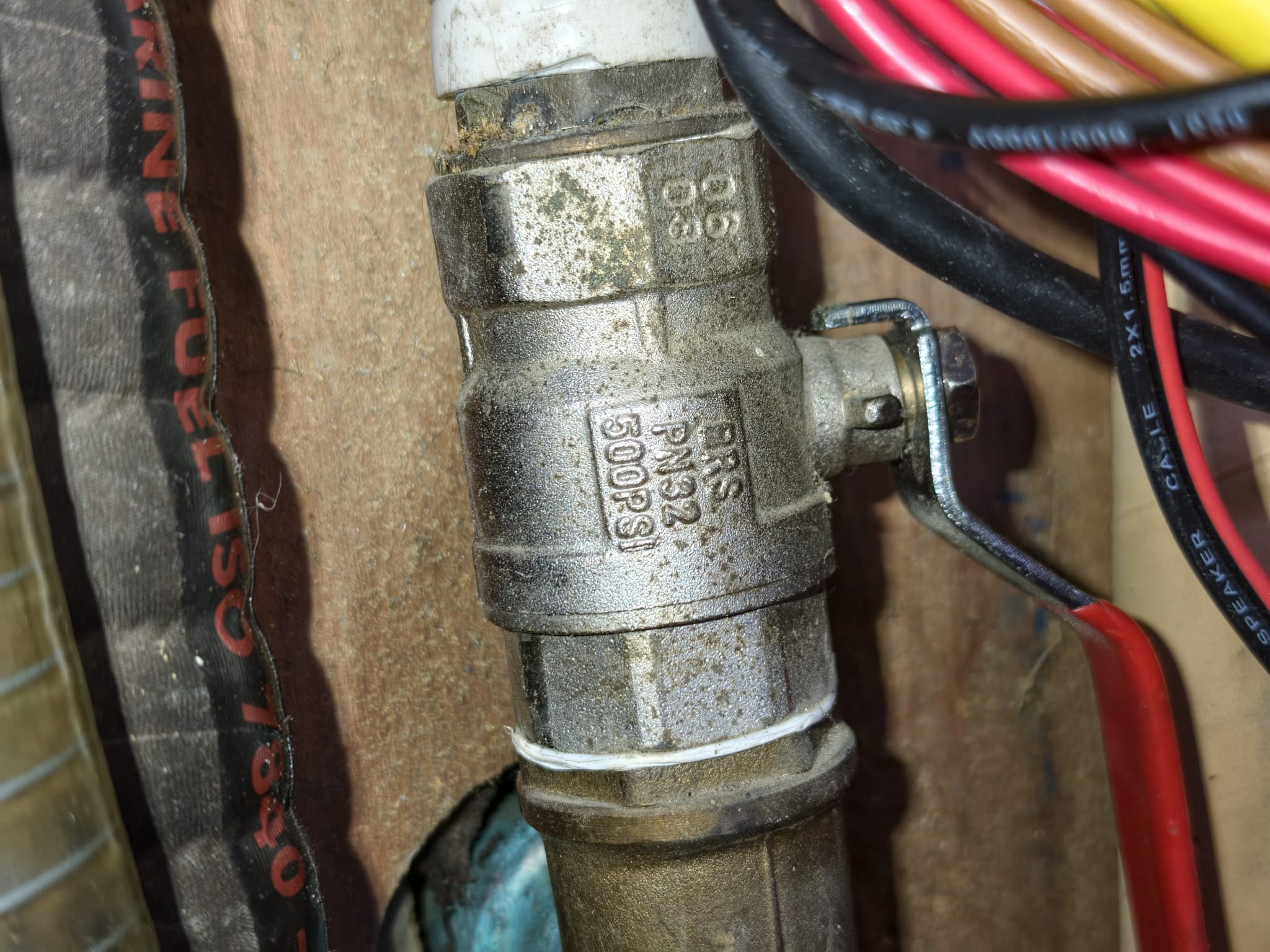
Anyway, it’s always good to close and open the valve to keep it operational so Wim thinks, since I’m here, let’s do that. Hm! It’s not moving at all! It’s completely stuck! Shitty. Why didn’t we think of replacing this valve when we replaced all the other underwater through-hull valves at the yard in Portimão?? We completely forgot about this one, we were totally focused on the underwater valves. Stupid!
Then, Wim notices something else: green. That’s corrosion. That doesn’t look good at all! Let’s have a closer look. Remove the washing machine. That results in a huge mess… good thing Sher is at MomCat’s!
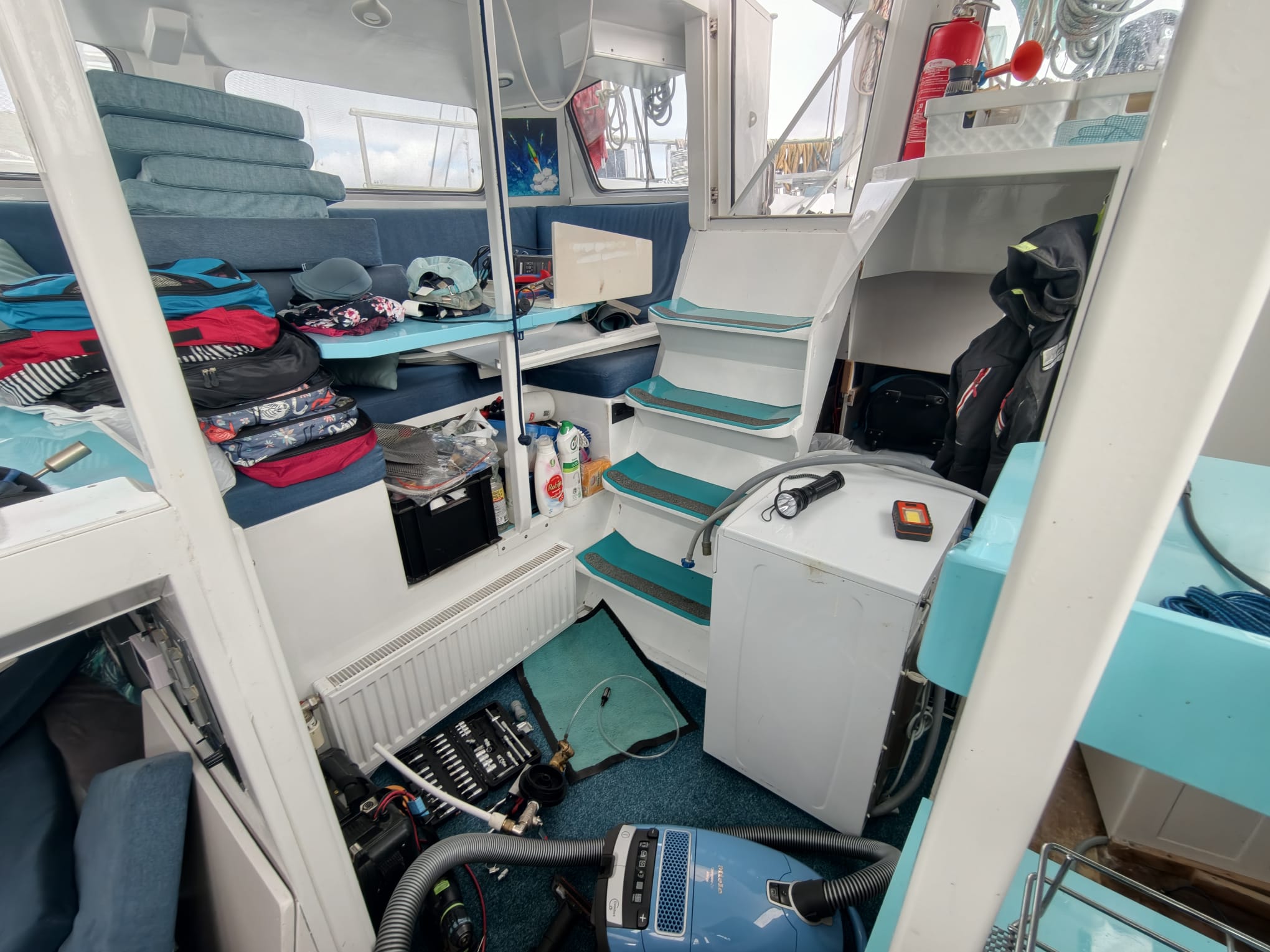
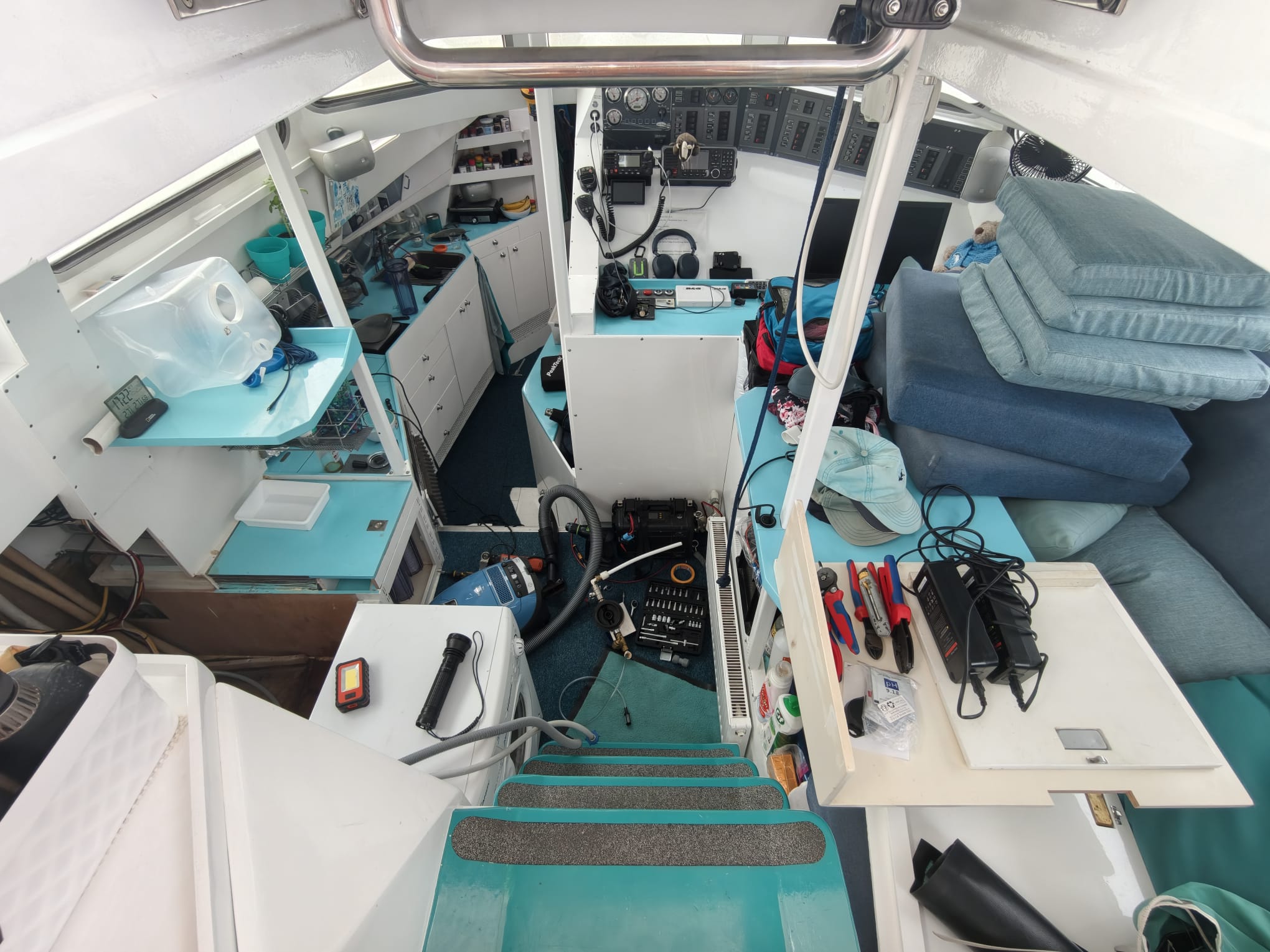
The 1 inch trough-hull fitting is stainless steel, that perfect. The valve is professional grade bronze, also fine. But the elbow is brass. Not good. We will have to replace this by the super quality Groco stuff. Groco is US made and hard to get in Europe. Our last batch of through-hull valves took months via the UK. But wait! Sher is in the US. Maybe she can find a chandler that has it at stock and she can bring it back to Porto Santo.
That night, Wim doesn’t sleep well at all. What if the corrosion is so bad that it will start leaking, or worse, break entirely off? We will not sink immediately but since this through-hull is at the waterline, water will come in slowly, making Dione IV more heavy, sink a little deeper, more water will come in and cause a chain reaction. Horror scenarios…😮 He decides to cut away some wood and have a better look in the morning.
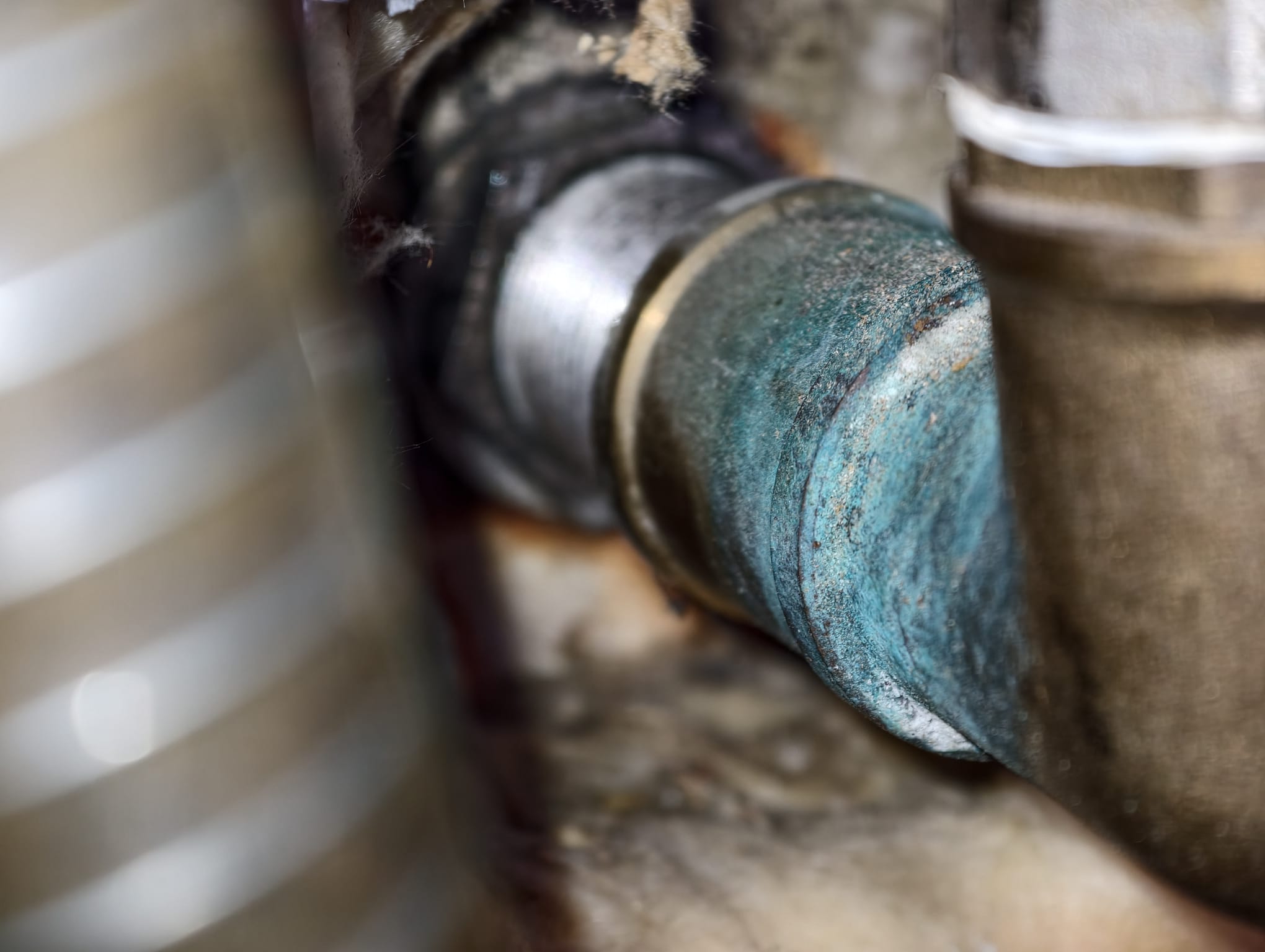
After making a square opening in the timber we can have a clear view at the corrosion. It’s on one joint, between the brass pipe coupling and the brass elbow. Not between the pipe coupling and the stainless steel through-hull fitting. It’s not leaking and there seems to be no severe loss of material. It has probably been “sweating” a tiny bit and that caused the corrosion. Wim used Teflon tape in the joints and that’s not completely watertight after 20 years.
The conclusion is that there’s no danger, but this has to be replaced ASAP. The valve should be operational in case of emergency, everything should be bronze and glued with Loctite 638 instead of Teflon tape.
Meanwhile, Sher has found a marine store that has the Groco valve and Groco elbow in stock, and she’s ordered it and has it sent to her friend in San Francisco!
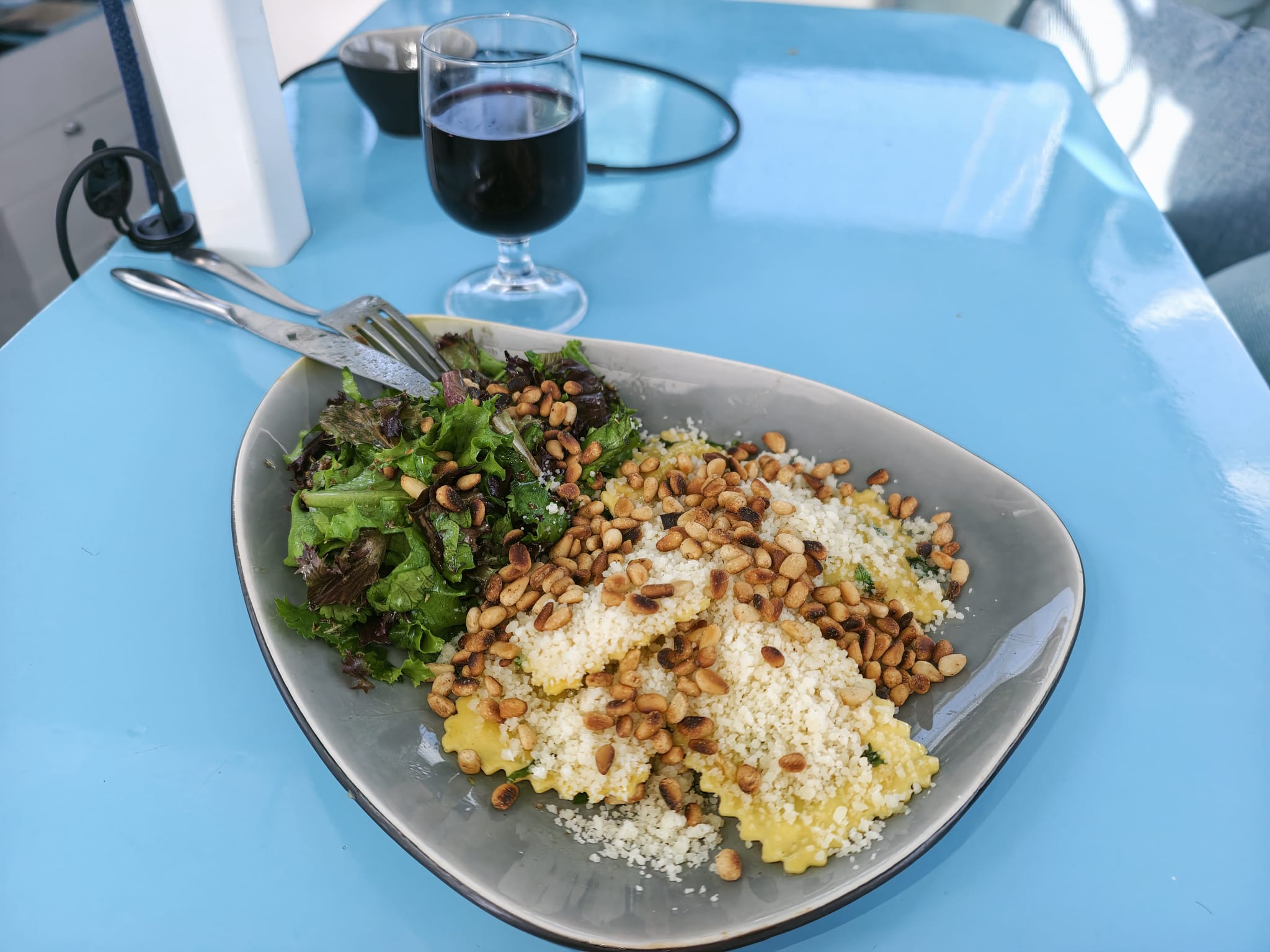
After a day of hard work (and some stress), Wim enjoys a delicious dinner of Ravioli filled with spinach and Ricotta, cooked with a lot of fresh garlic and fresh basil, topped with Parmesan and roasted pine tree nuts and a salad with a great home made dressing. With a lovely Douro wine 😋
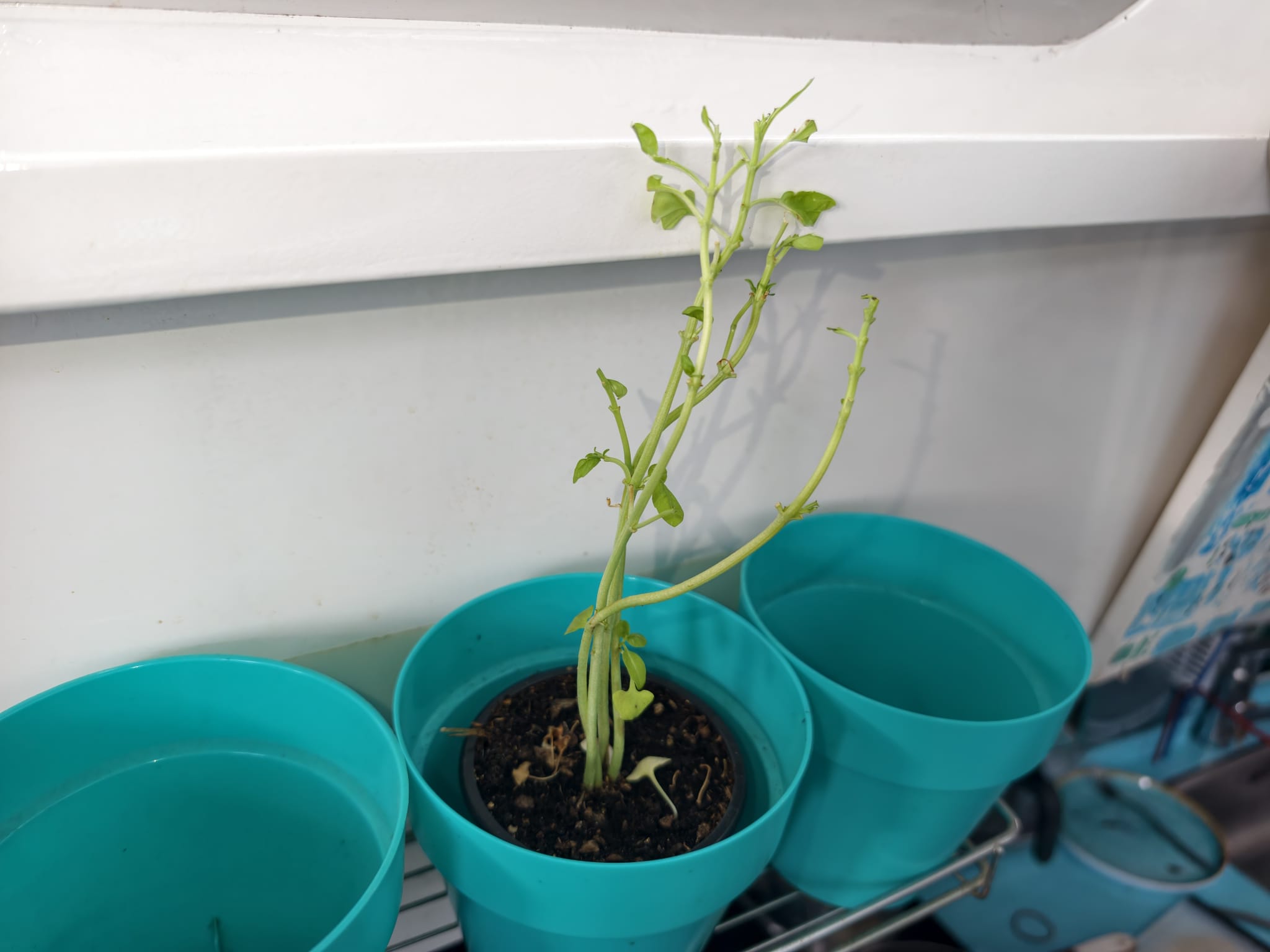
It was a day of hard work for the basil plant, too 😂
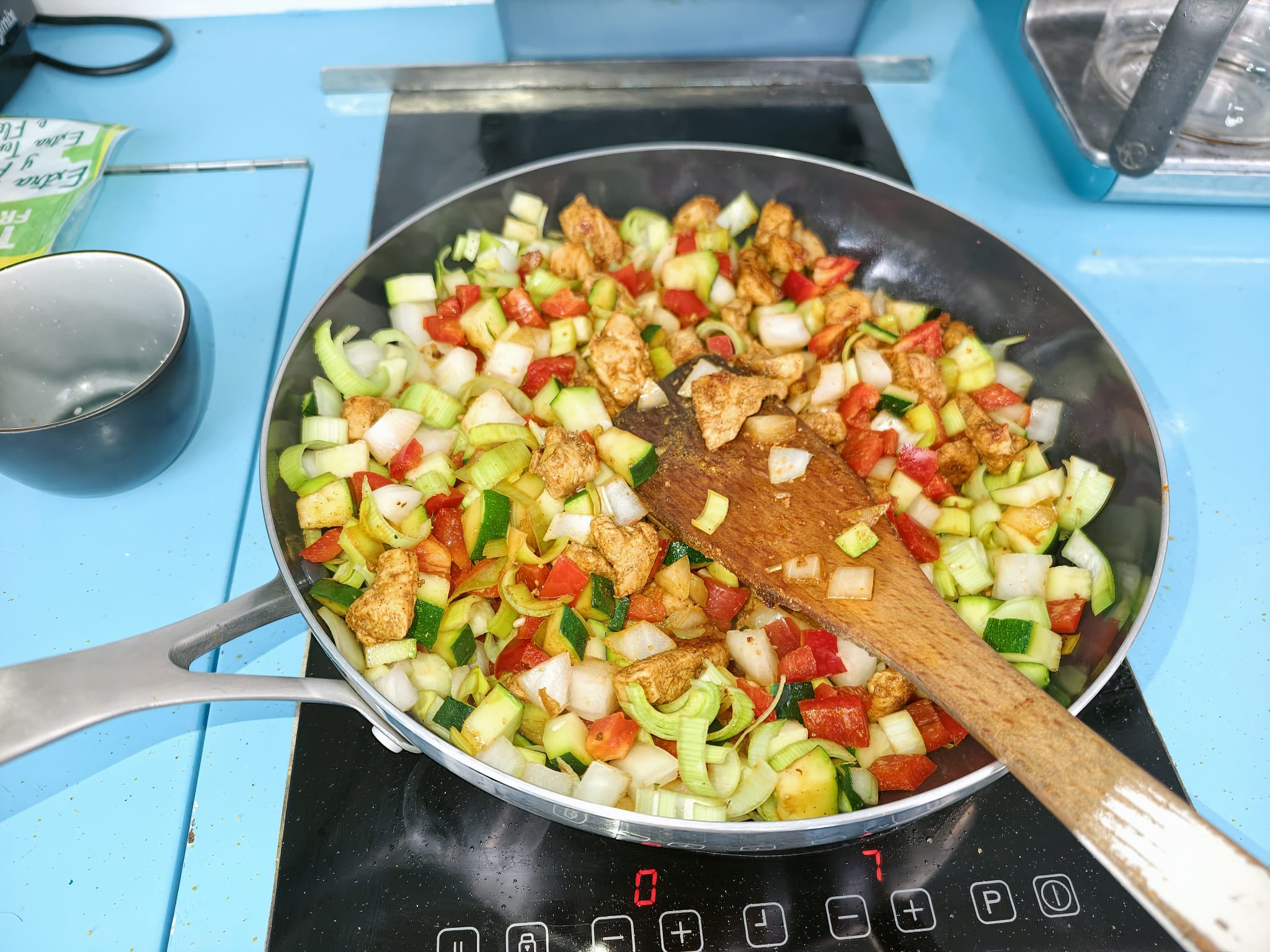
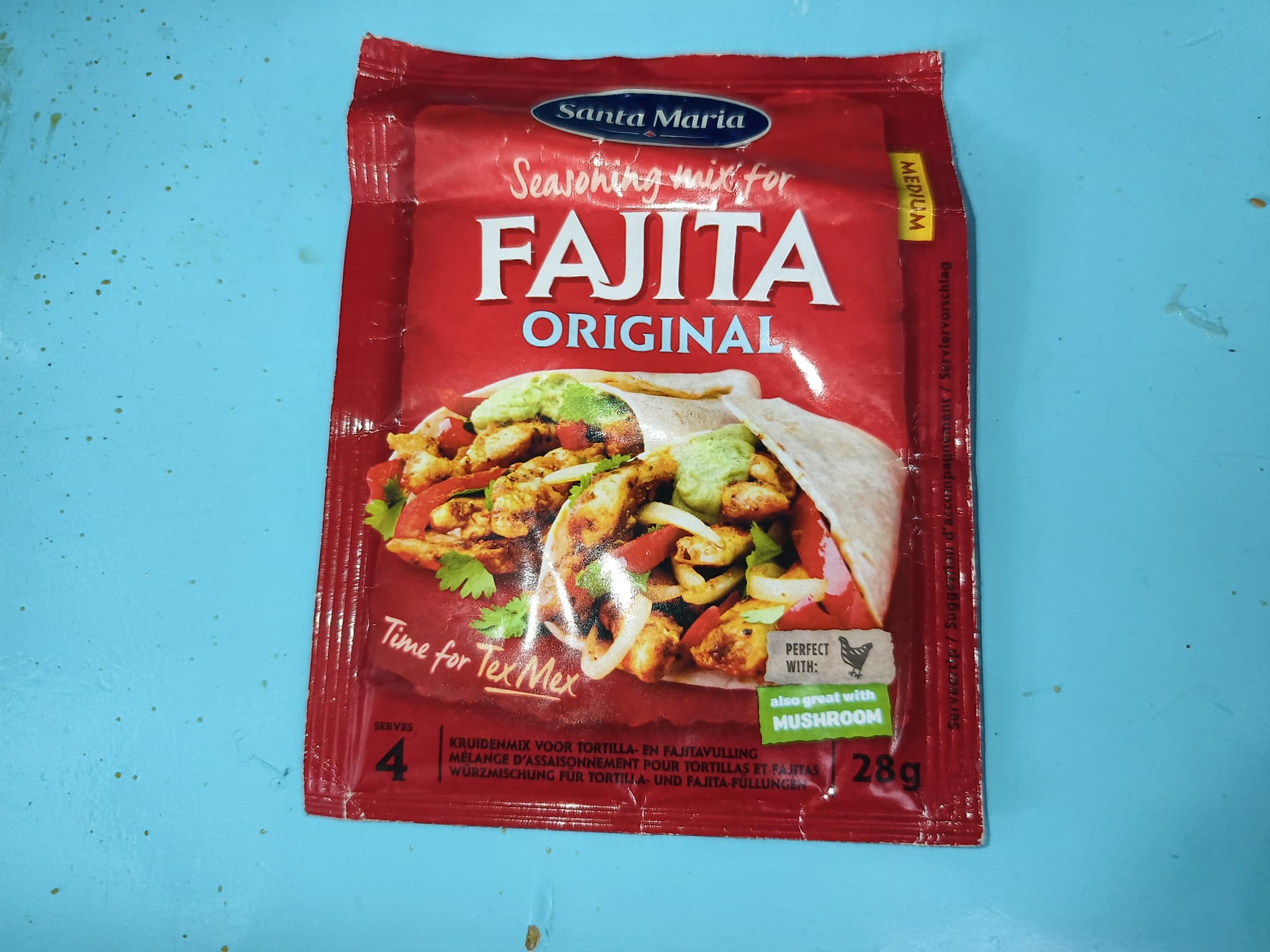
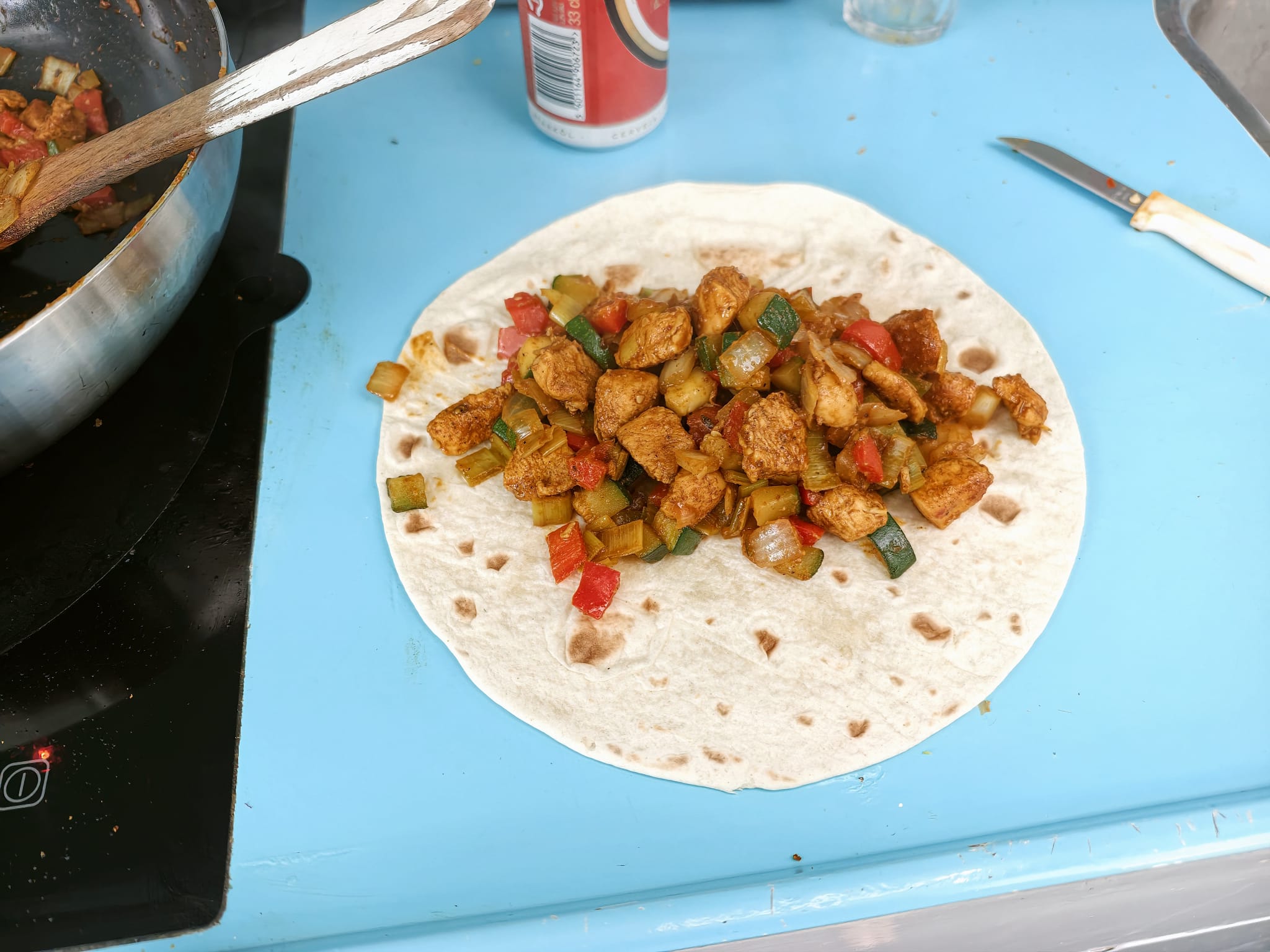
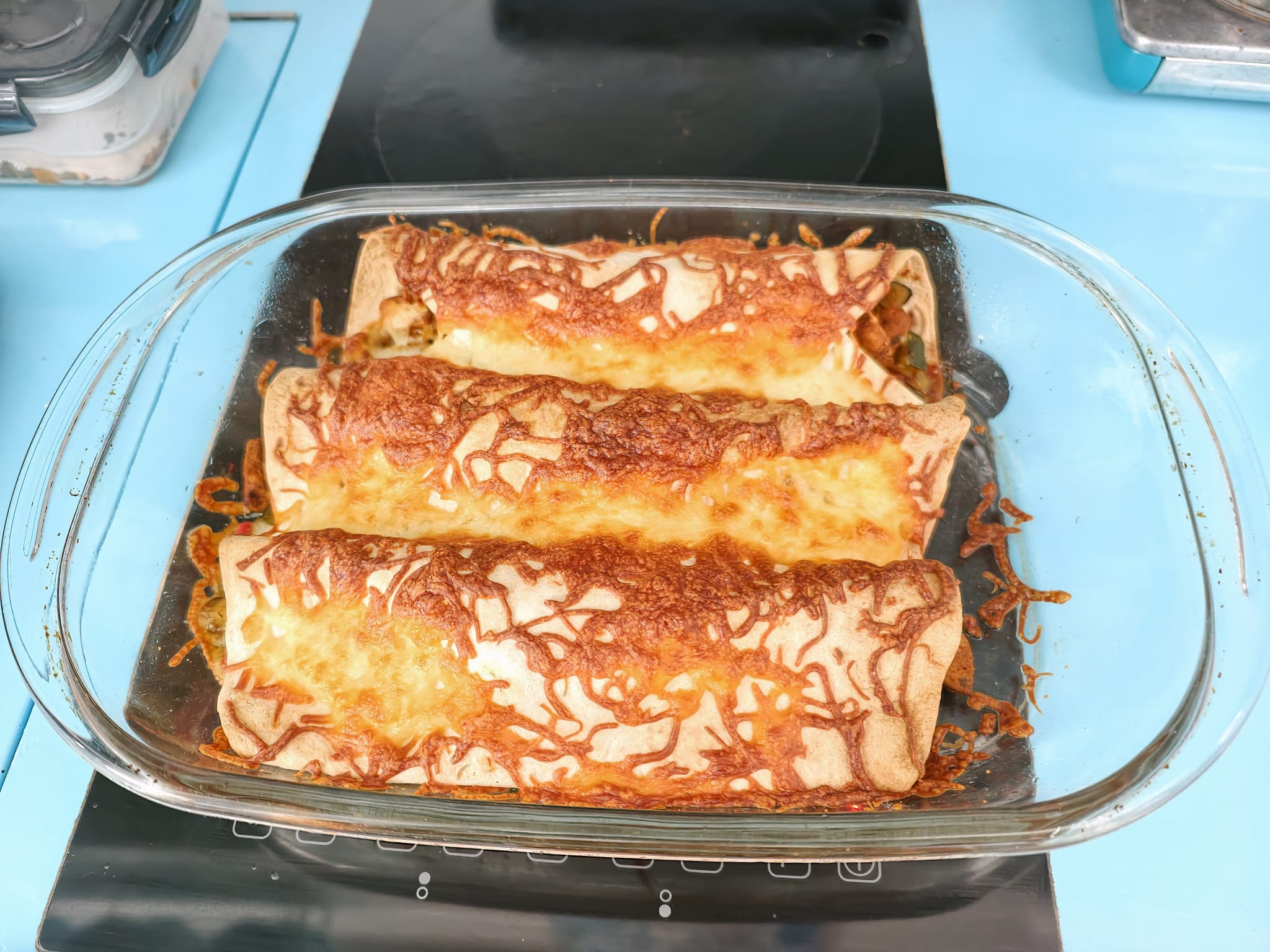
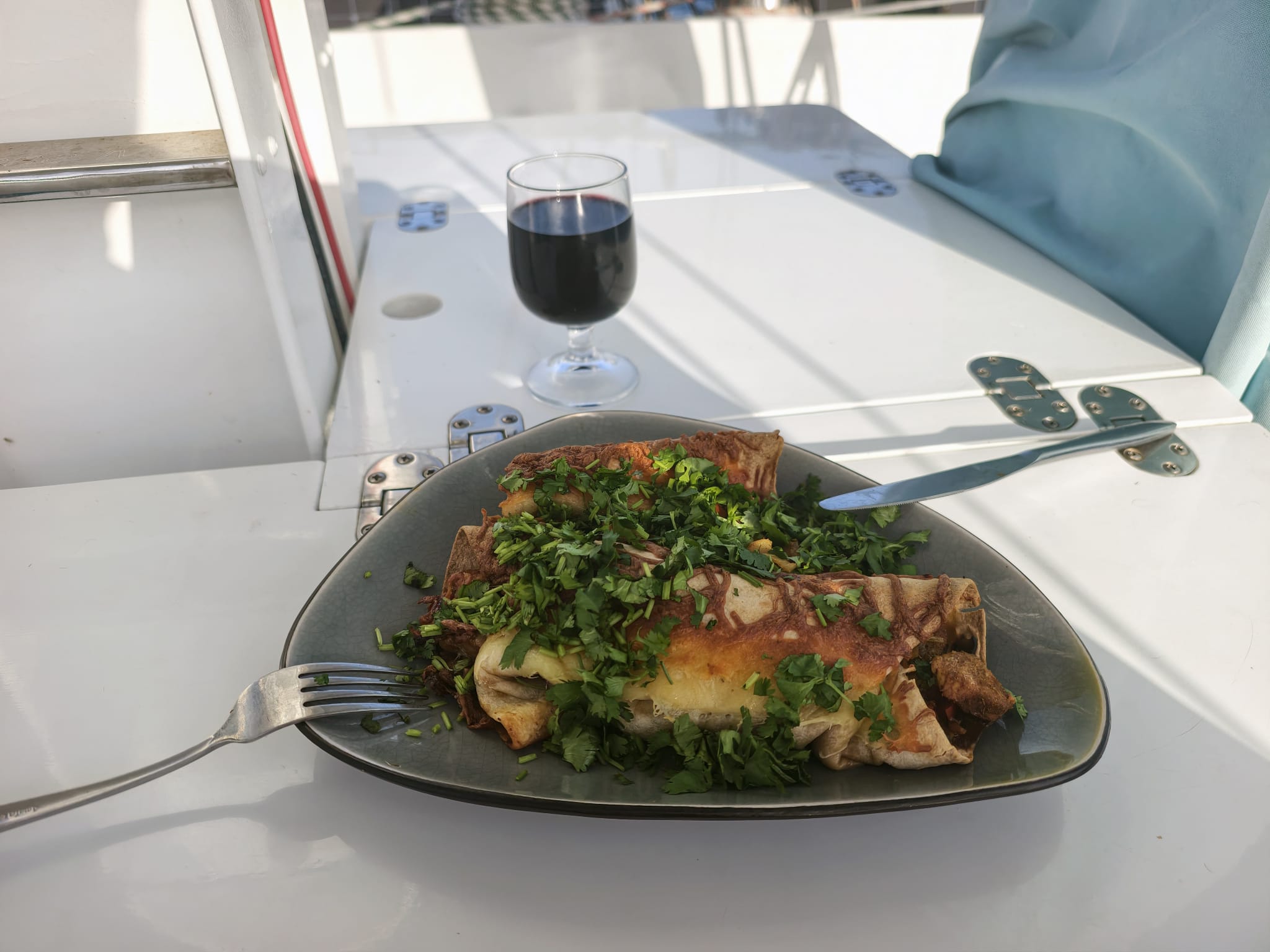
Sher doesn’t like most Mexican dishes, but Wim loves it. So, when she’s visiting her mom he prepares at least one Mexican dish for himself! Well, the Fajita seasoning mix is 3 years over expiration date, but with a bunch of fresh spices it’s delicious! It’s a recipe for 4 persons so it serves Wim 4 days 😀
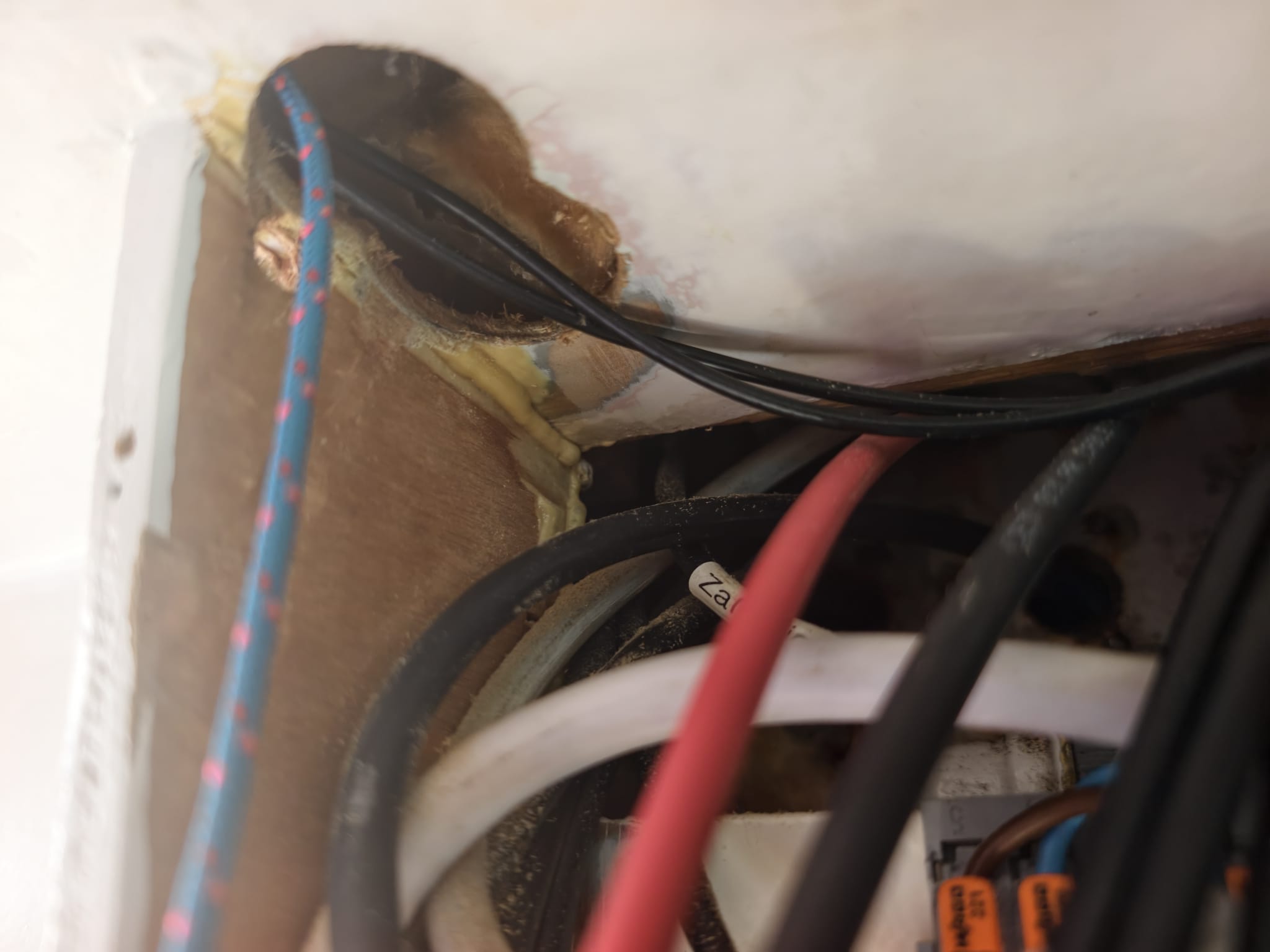
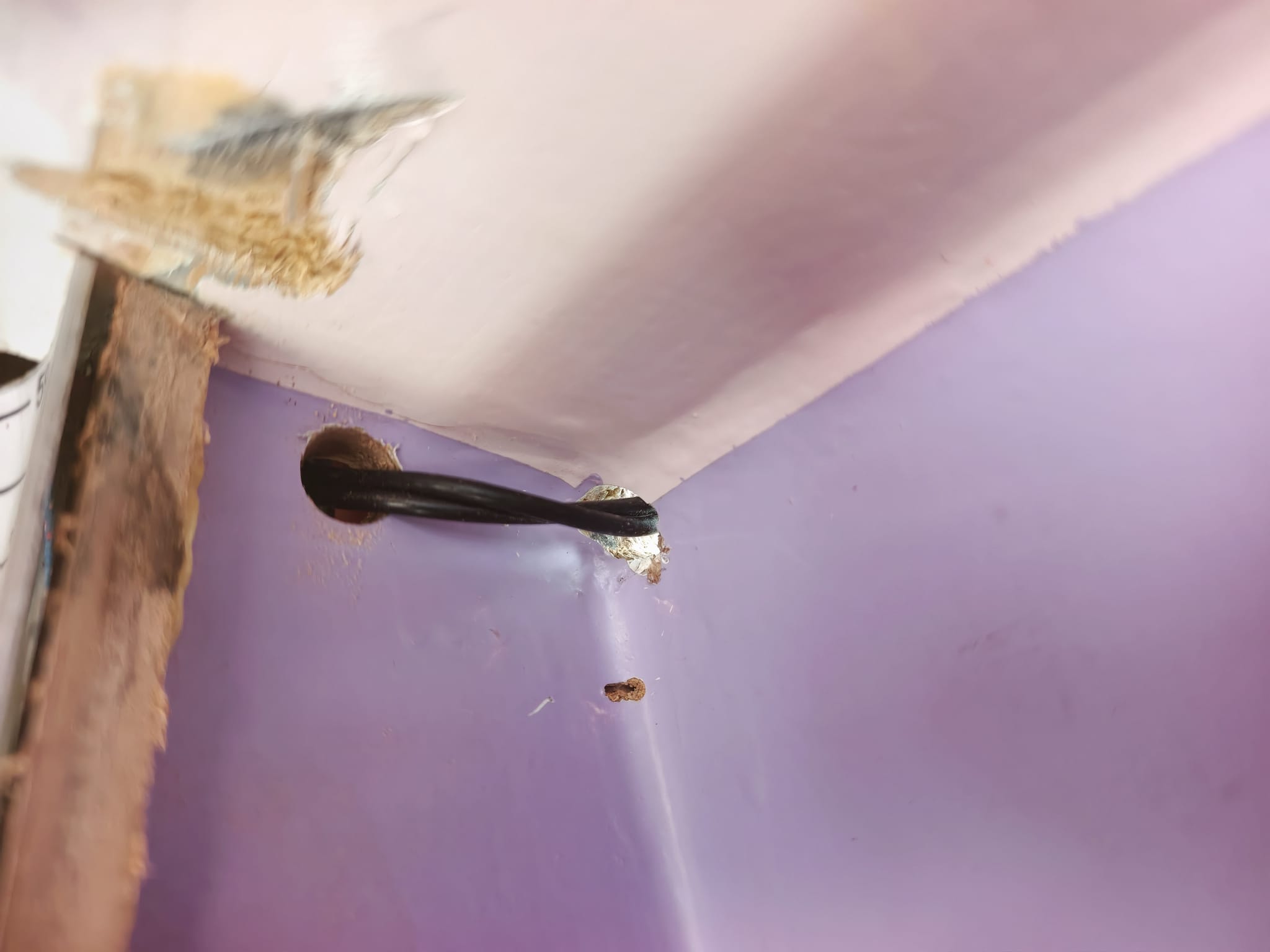
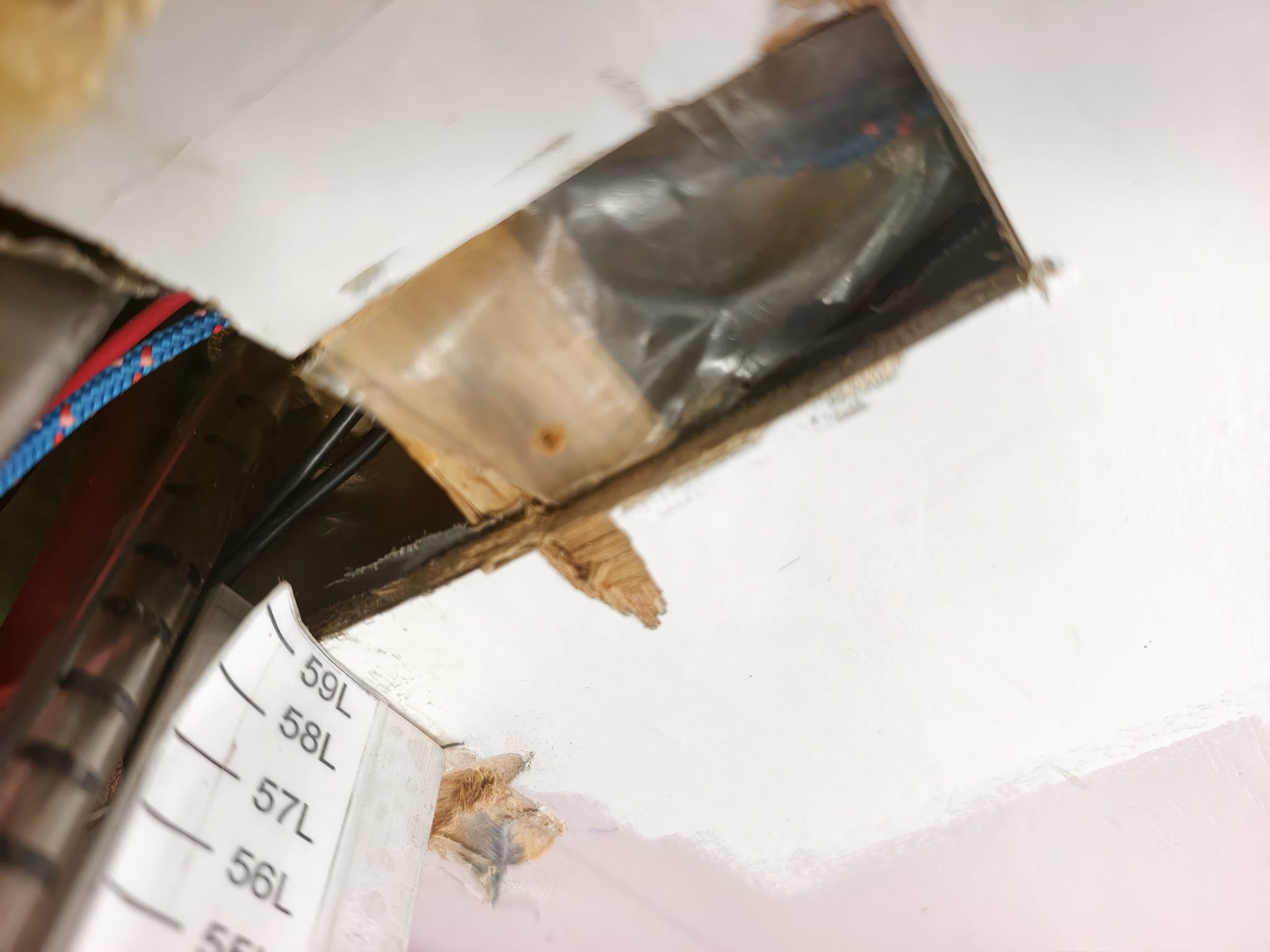
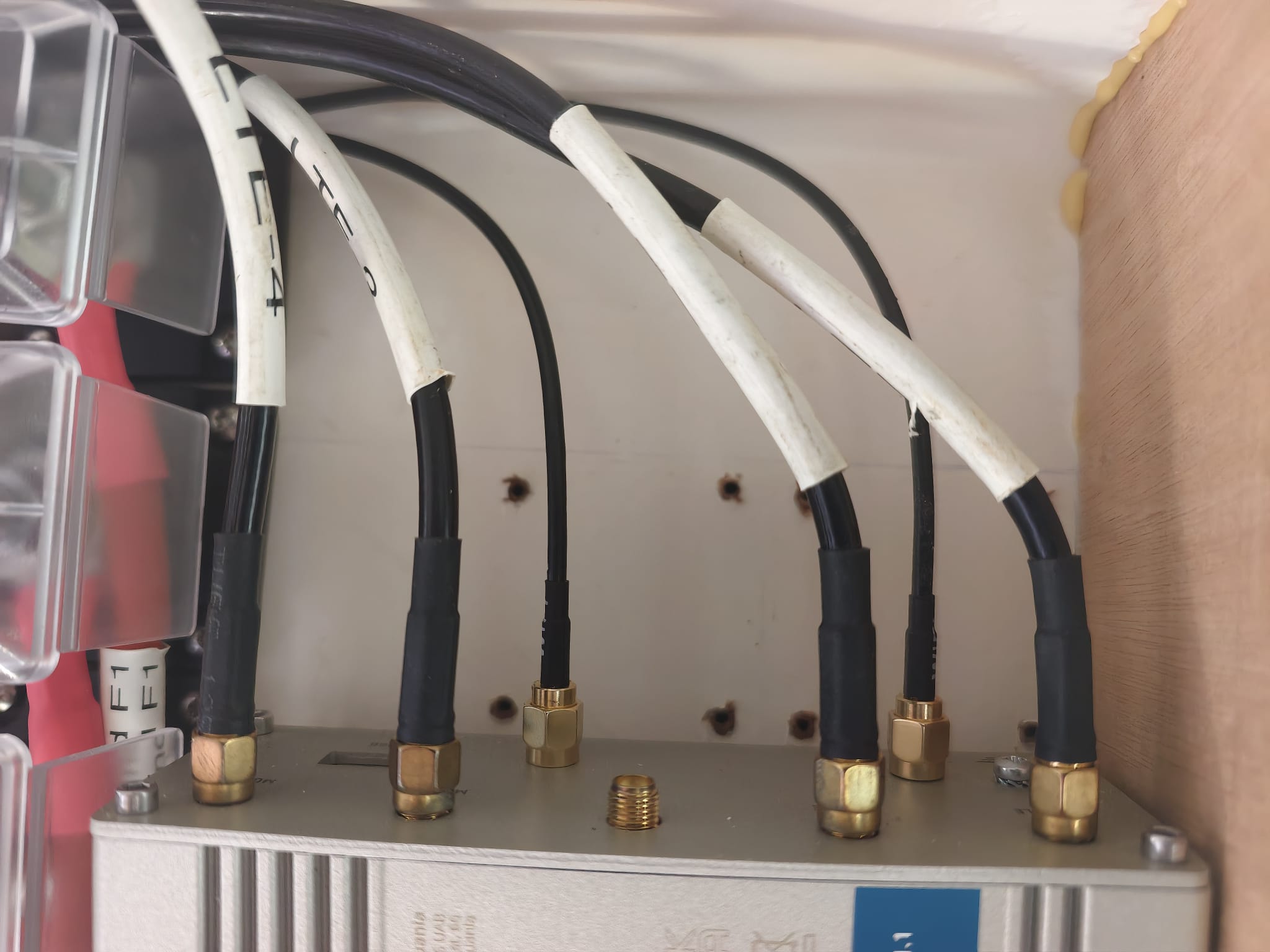
Wim keeps working on kinds of small jobs on board. The lazarette needs a paint job but before that there are some construction things to do. One of them is leading the cables for the WiFi antennas for the router over the ceiling. They were hanging loose. It needs cutting some holes in the ceiling and re-gluing the wooden pieces back in.
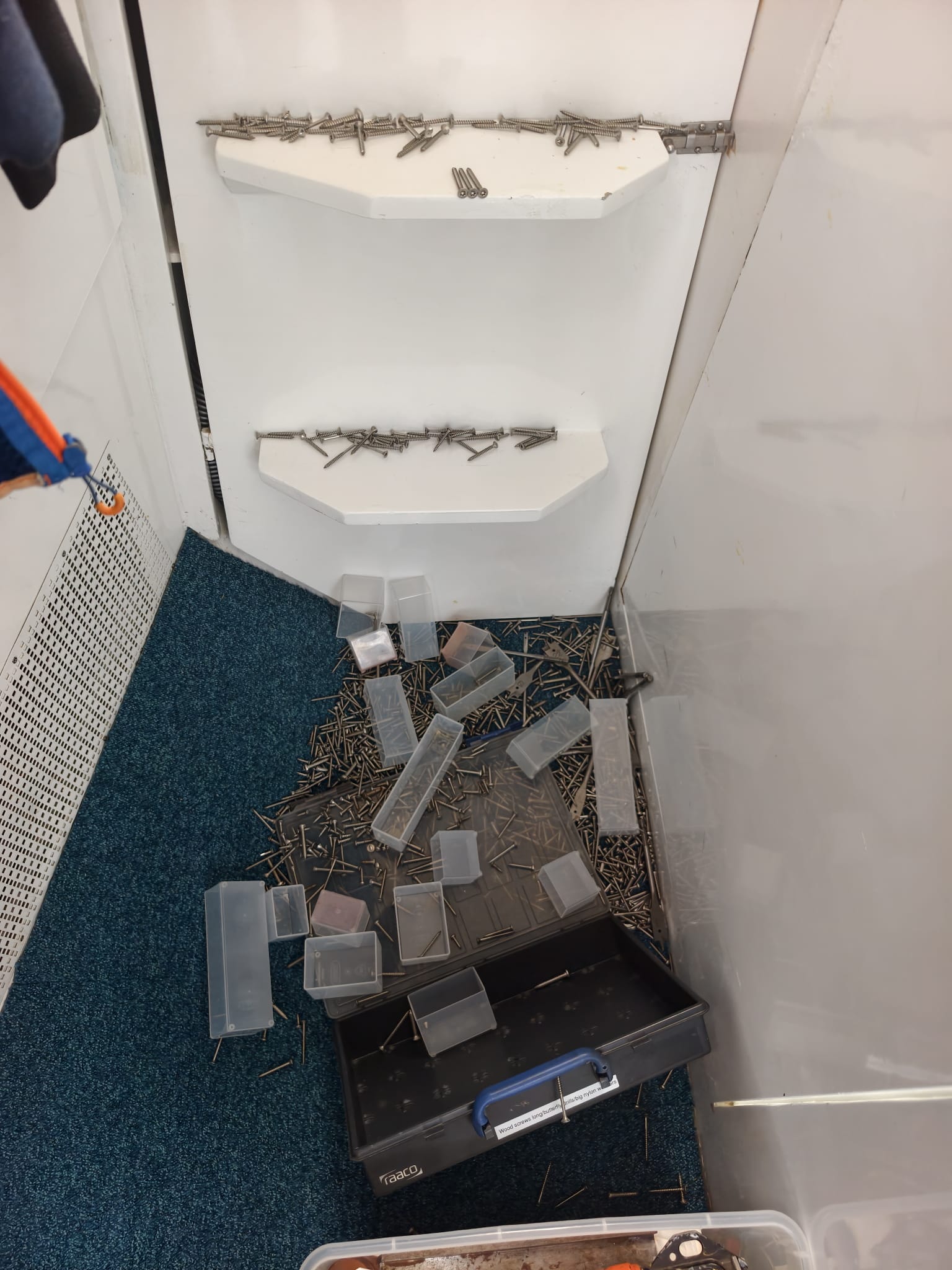
Sometimes little accidents happen… a box of thousands of assorted screws slips down and it takes hours to sort everything out again… 😩😩😩
In the evening there’s a little guitar concert. 2 German guys. They are really good!
Wim goes to the supermarket for some provisioning. He decides to take Louise and take the external battery pack because her battery is almost empty. There are no possibilities to charge the scooters at the marina office so we depend on the external batteries to charge them.
On the way back, the scooter suddenly reduced speed to 6km/h and shows error 42. Wim looks in the app what that means. The BMS is in some trouble and the motor is switched to safe mode: 6km. Hm. Wim slowly drives back to the marina and just before he reaches the marina the scooter switches off completely. While the external battery is still charging. He has to walk the last 500m and takes Louise in the dinghy back to Dione IV to investigate what the problem is.
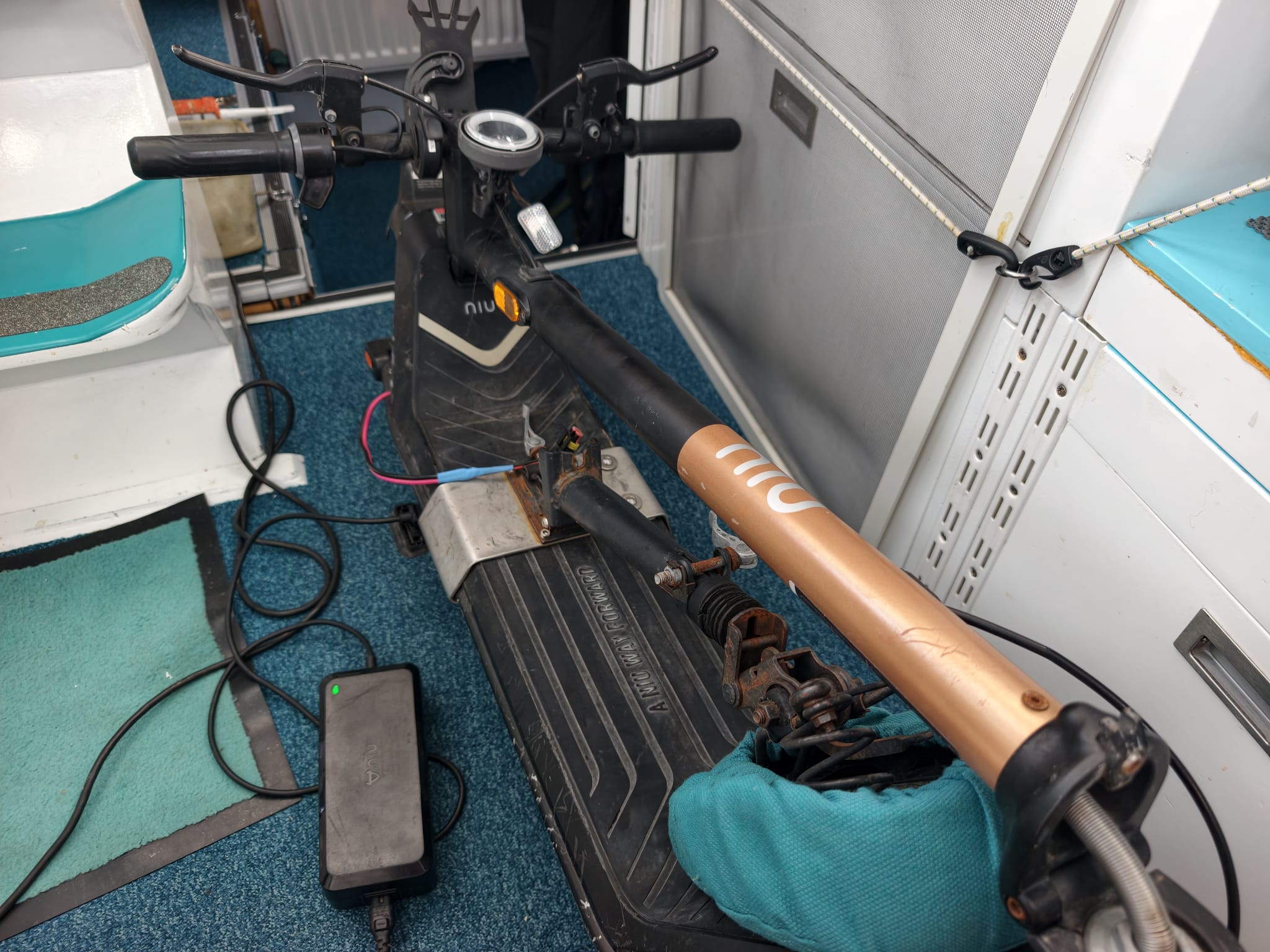
Let’s first charge with the original charger. That charges the internal battery to 100%, where the external batteries only charge to about 80%. That solves the problem… it seems we need to charge to 100% sometimes to keep the batteries in balance. Louise is happy again!
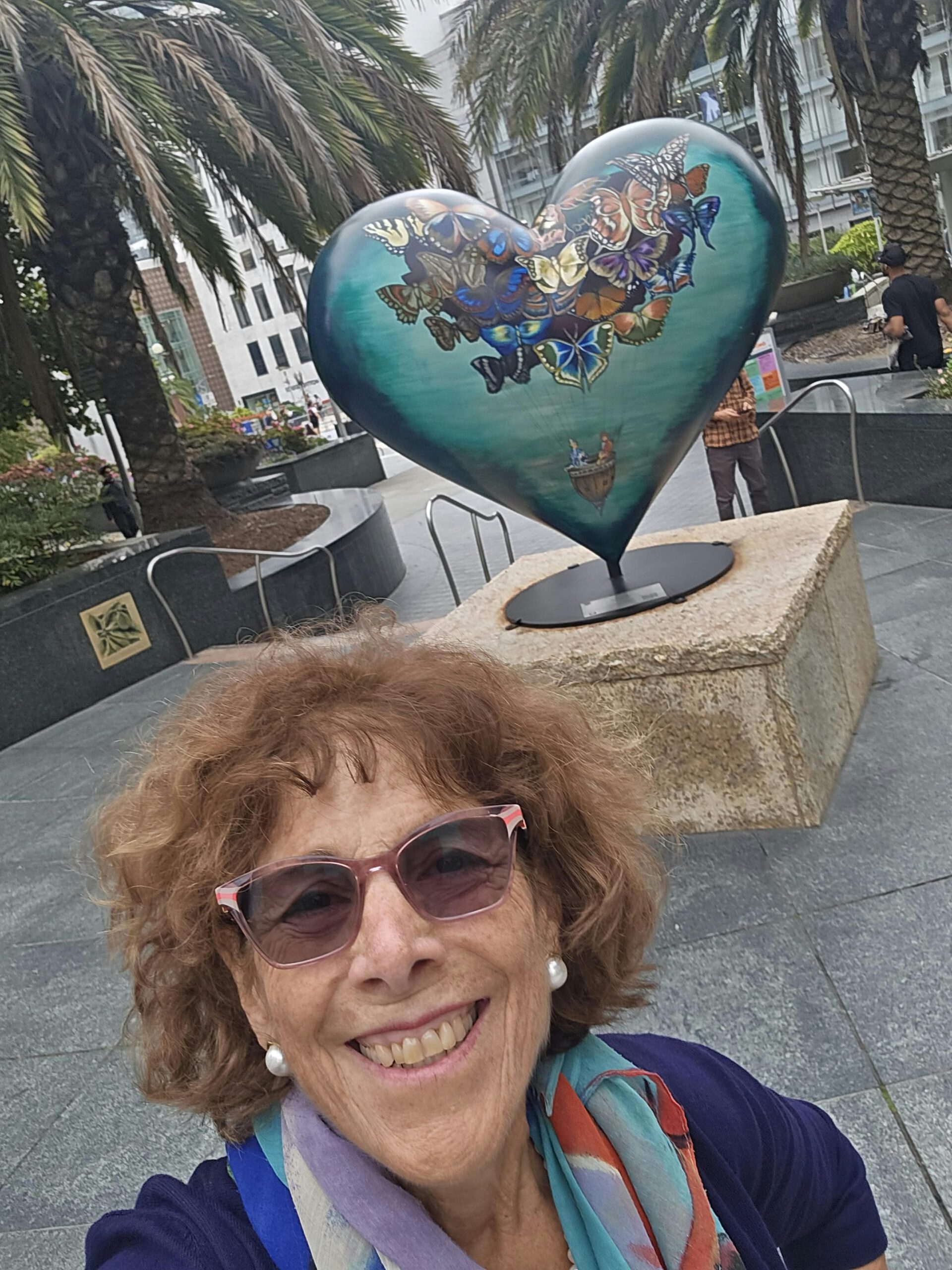
Meanwhile, Sher is in San Francisco enjoying some of her favorite spots.

Oops, that was a bad night’s sleep… The wind was about 20 knots but the gusts are very strong. Up to over 30 knots and, as usual, shifting 120º sometimes. Every strong gust wakes Wim up, Dione IV heeling and turning behind her anchor in the direction of the wind. Although Wim knows we have a solid hold he’s worried. What if the anchor drags or something breaks? The wall is close. He won’t enough time to respond before hitting the wall… He thinks: Bloody! I worry too much! Nothing’s going to happen. He decides to close the hatches, not to hear the wind. Silence. That helps. He’s able to sleep a few hours. In the morning, the wind decreases and the next days will be calm.
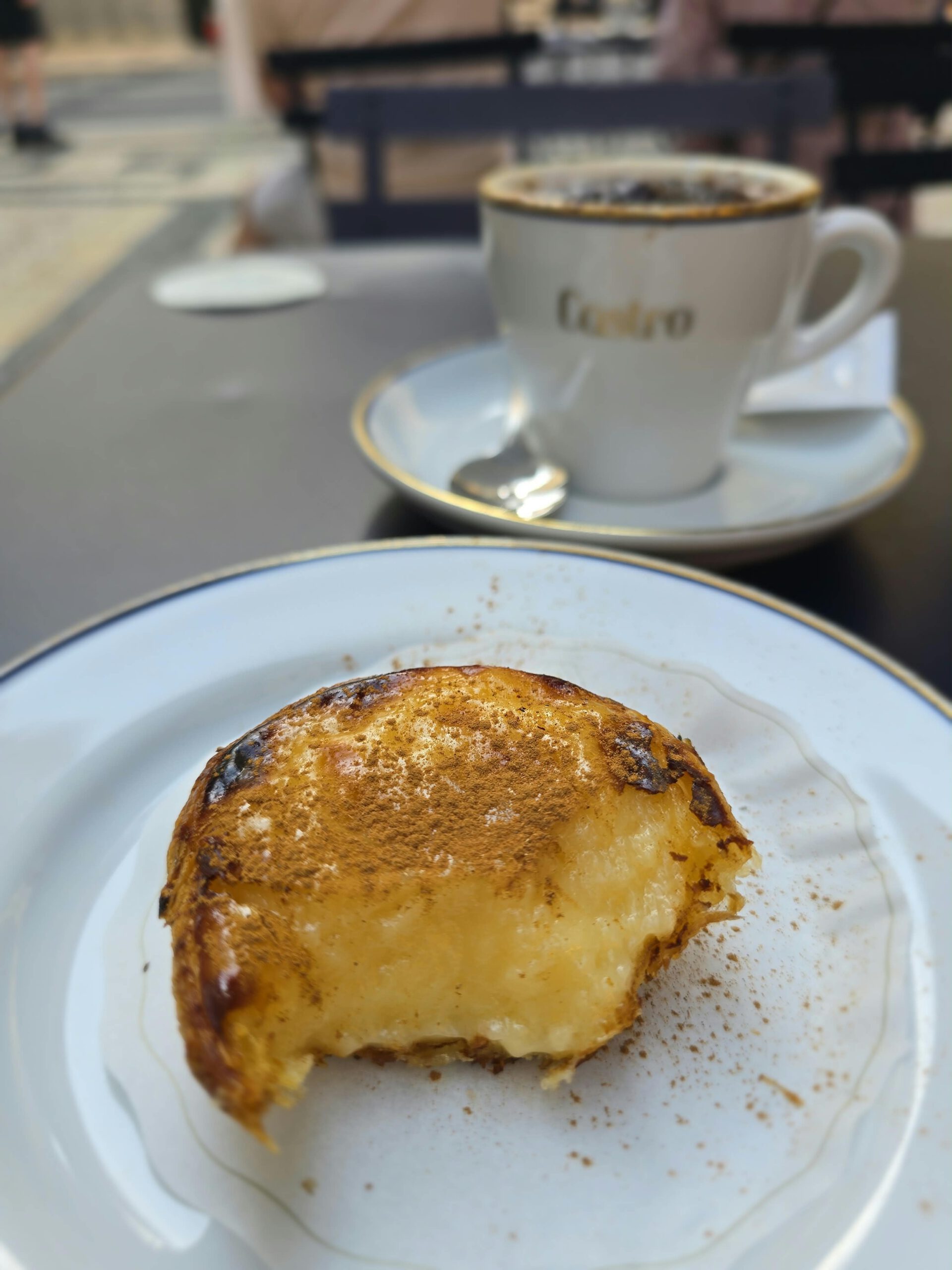
Now Sher is in Lisbon, on her way back. Pastel de Nata at Castro, the best!
Tomorrow she’ll be home!
Wim paints a second layer of primer in the lazerette, and at noon Sher lands in Porto Santo. We have lunch together in town and she picks up her Portuguese renewed residence card which, had been forwarded to the post office. Yipee!!!
The Captain’s Log – the complete story
August 26.
In the early morning we have a real rain shower! That rinses a lot of dust from the masts and the rigging that we got in Cadiz. We can see the remains of the dust on the decks, especially around the masts and the stays. Well, after an hour the sun is shining again ☀️
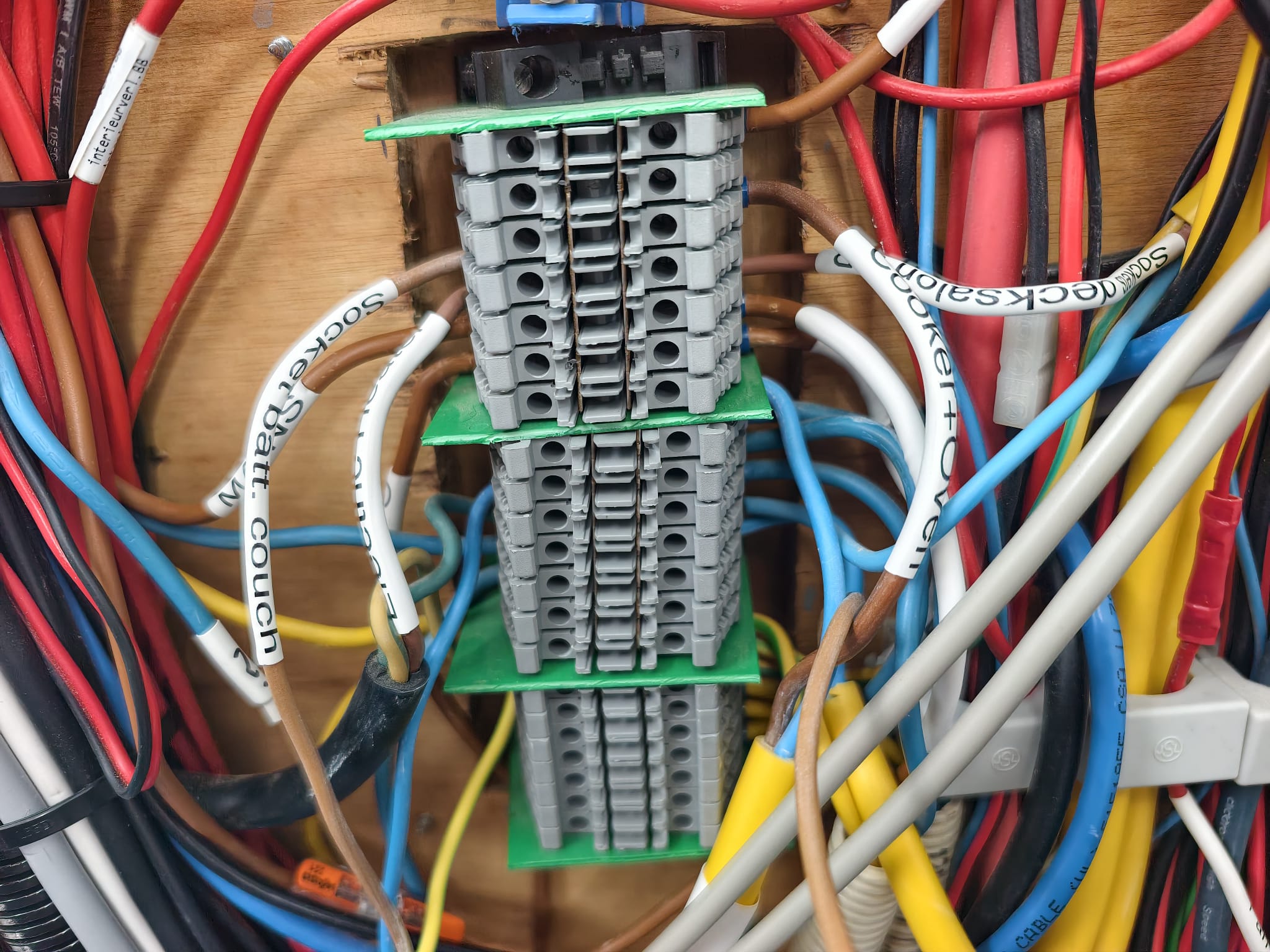
Okay, a floor-up on our lessons from yesterday (see last post – Porto Santo – II): mark the 230v wires. By disconnecting them one by one and testing which socket of device isn’t working we determine which is which.
The problem is, since Wim started installing the systems on Dione IV 20 years ago, so much wiring has been added and that just stacks up. Also, a shift in perspective, skills and knowledge over the years contribute to the desire of improving things. Although everything is working fine, safe and reliable, there are some places that are an eyesore to Wim and his hands are itching to rebuild those and make it look nice and make it look clear and well-structured. But that’s a big job…🫡
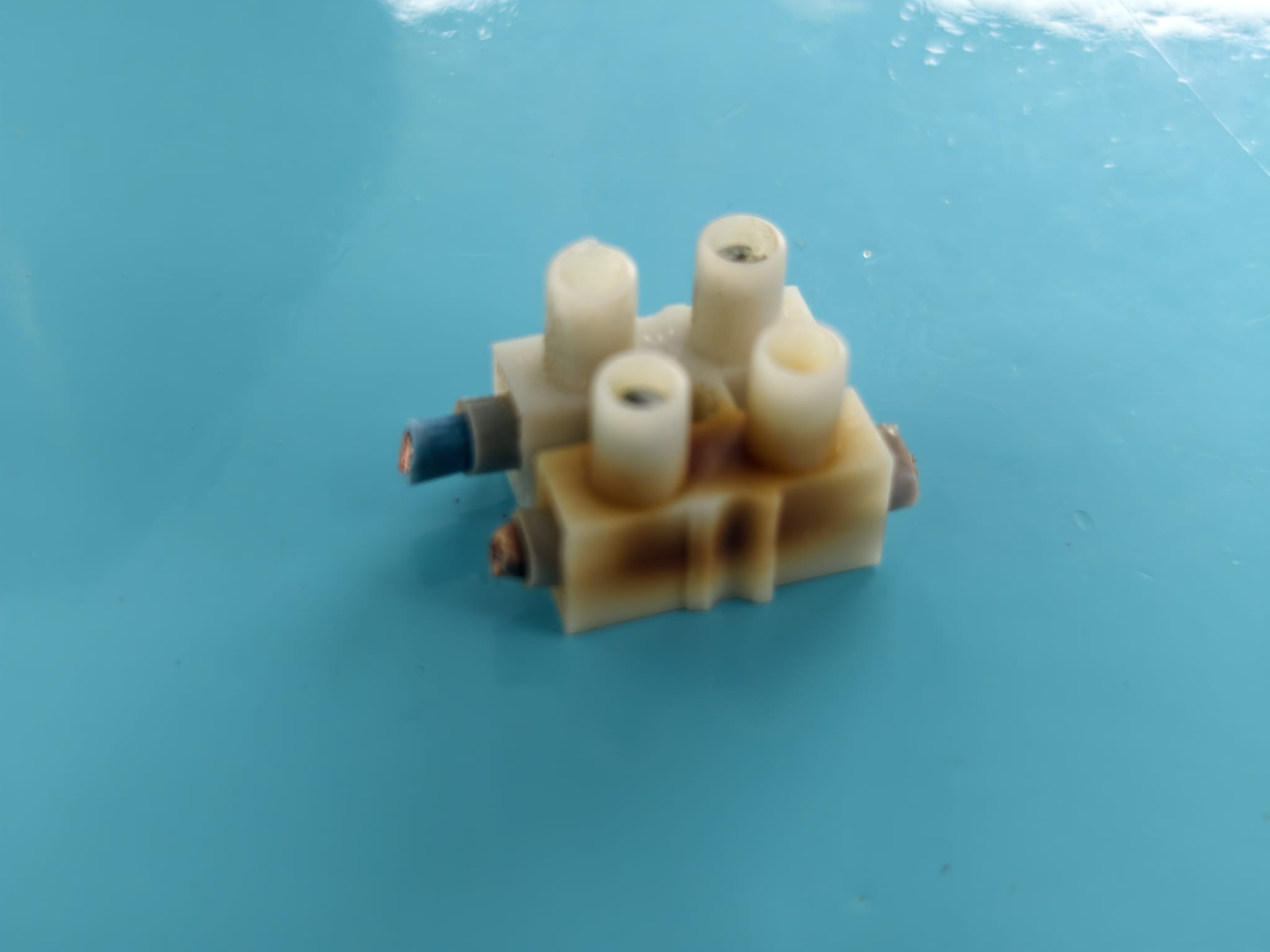
This is one of those things: in 2007, when Wim installed the main boiler, the use of a screw terminal block was completely normal. There was no alternative even (except soldering the wires, which is a pain in the ass). On the picture, there’s the connection of the boiler’s power supply. It has overheated and melted.
Cut it out and replace it with a super reliable Wago connector!
August 27.
The 2 outdoor cushions that we use in the cockpit were getting worn out and bleached. Sher has bought some some nice teal colored fabric in Cadiz so she starts making new covers.
The contents of the cushions are a bit of a surprise. It’s many thin sheets of foam. But it’s easy to fit into the new cover!
Nice! 🤩
Meanwhile, Wim is diving into another software project: Signal K. Our Victron Cerbo runs a Signal K server and the idea is to make custom instruments in our OpenCPN navigation software.
Signal K is boat telemetry. Every digital value on the boat’s systems is represented in Signal K. Hundreds of values from all electrical systems on board!
The name Signal K references to the nautical flag “K” (Kilo) which means: “I wish to communicate with you”.
August 28.
Today, Sher is sewing the other 3 outdoor cushion covers while Wim is ‘SignalK-ing’.
Colorful lunch! Healthy and delicious!
Since we’ve lost our anchor ball, we’ve ordered a new one and a spare one in the Netherlands and had it sent to Wim’s daughter. Our granddaughter is having fun with them 😂
August 29.
Sher has finished the outdoor cushions and now it’s time for some girl-stuff!
Wim made a nice progress with the Signal K instruments. Well, he almost bricked the Cerbo with all those experiments… Luckily, factory reset got it going again 🫡
But we have a nice instrument layout now. The challenge is to show precisely what we want to see and monitor when we sail and to minimize the space it takes on the screen (so, show the chart as much as possible).
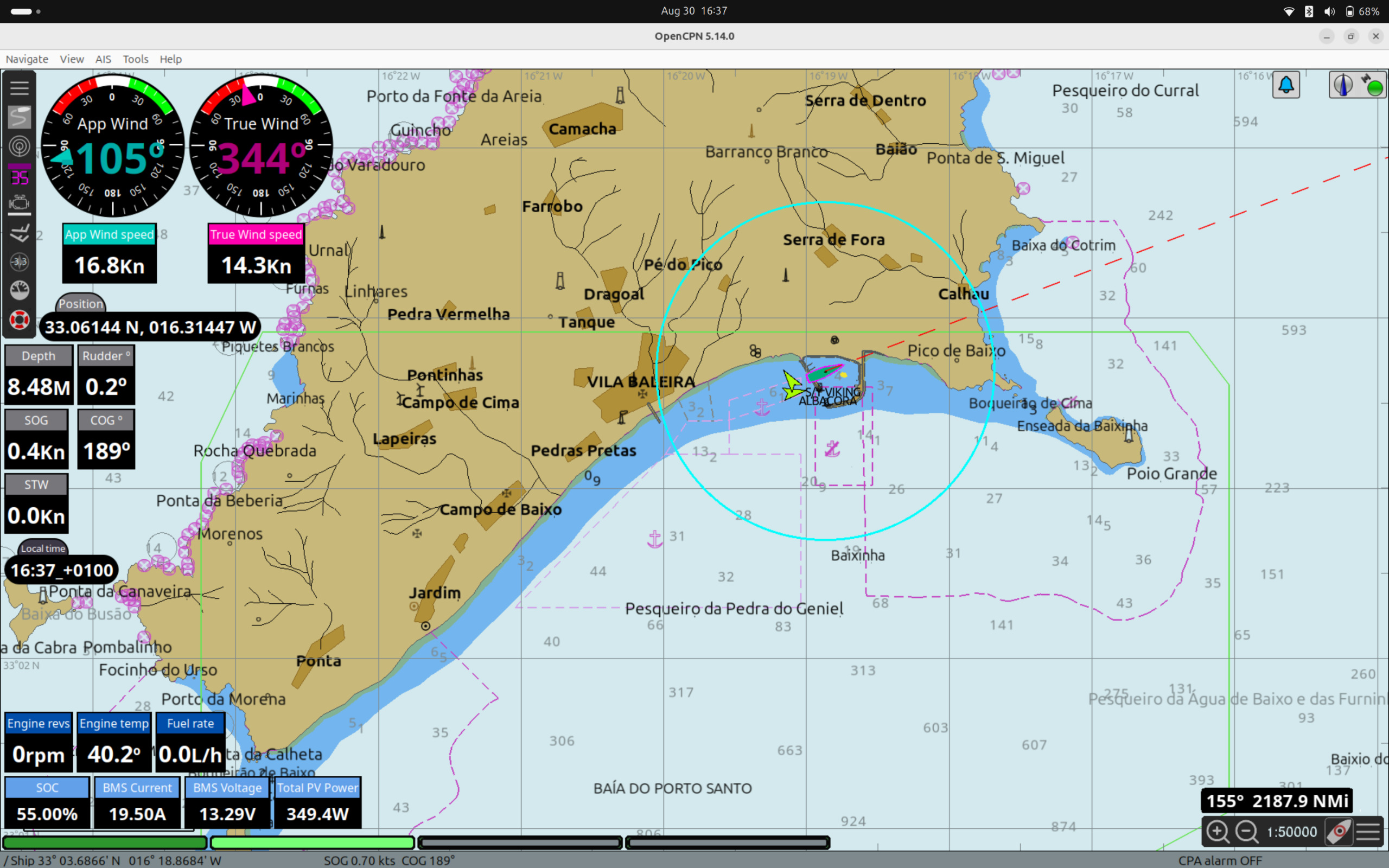
This is the board computer’s screen.
And this is the laptop screen. Together, we’ve been thinking about the layout and the look of the instruments, based on our experience.
Here’s the wind telemetry. Of course, this is important information when sailing.
We always had a combined gauge with True and Apparent wind in it. We found that often a bit confusing, 2 pointers, 2 numbers with wind speed. Having separate gauges is much more clear.
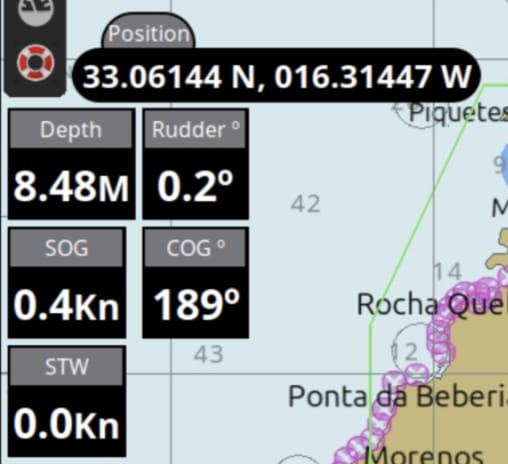
Another important thing is the ship’s telemetry of course. There’s a huge amount of ship’s data available and we’ve made a selection of data we find useful and important.
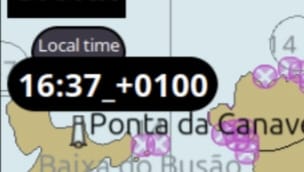
A funny issue is the clock! What time to display?? The UTC? The local time?
Local time makes the most sense. But, when we sail we move through timezones. Question is always: in which zone are we? And how do we adjust the clock? On the ocean, when we have no internet connection, the computer’s clock isn’t adjusted automatically…
This clock determines the timezone from the GPS data so it automatically adjusts when we move! Like here in Porto Santo, UTC (Greenwich Mean Time) + 1 hour.
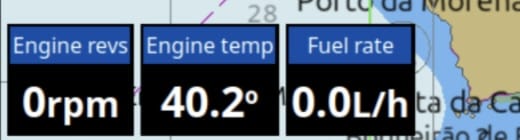
Engine telemetry. Only the most important data. we can see the other values on the physical engine dashboard in the decksalon.
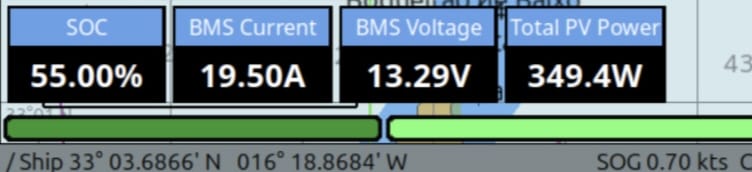
Electrical telemetry. Again, only the most important values. On the Cerbo screen we can see all other details.
So, like this we have nice and useful overview of the telemetry which takes minimum space on the screen so we have maximum nautical chart space:
August 31.
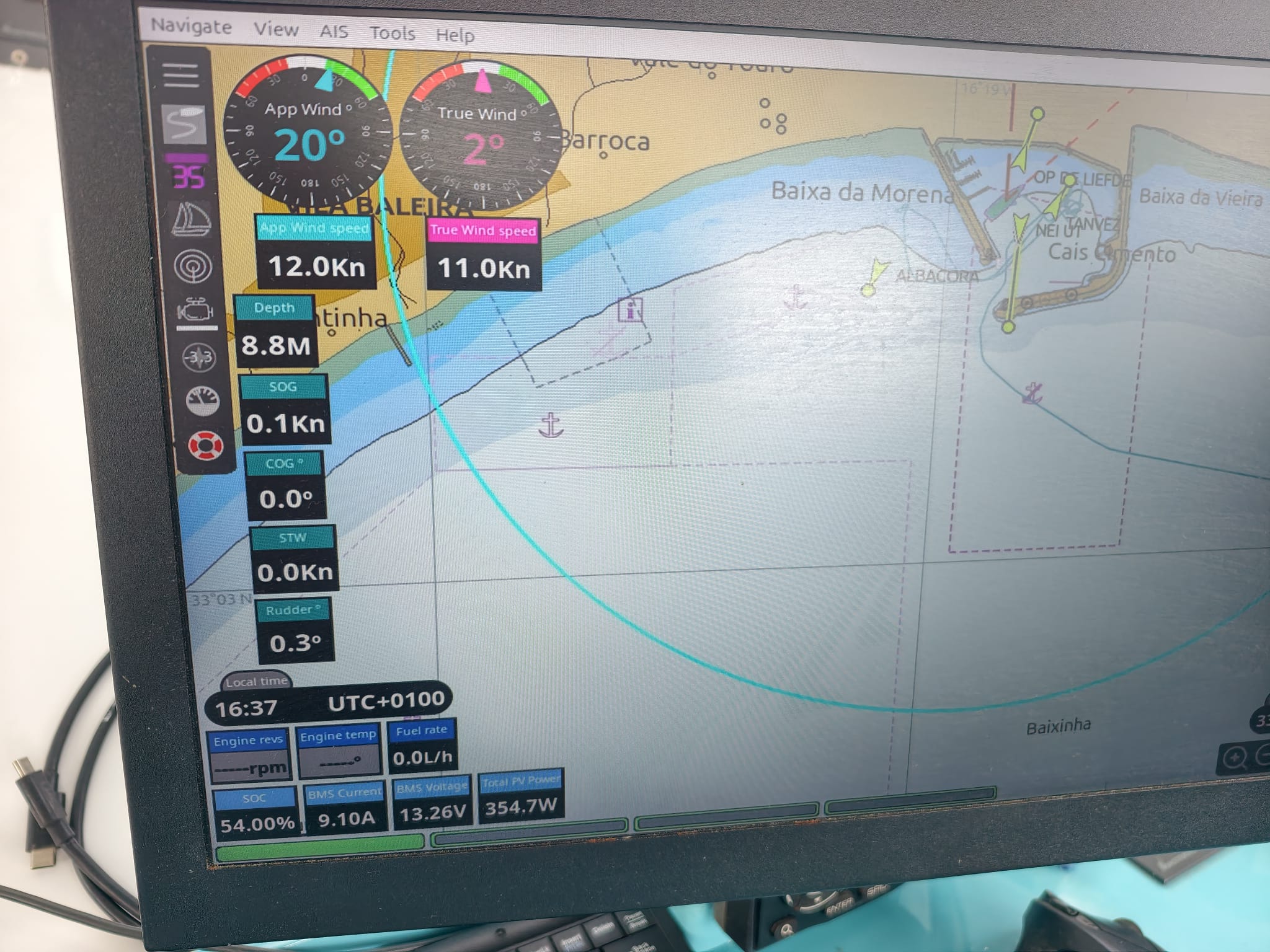
After another day of studying Signal K, Wim finds a solution for a problem that has existed on Dione IV since he bought the instruments (in 2017 or so): the True wind calculation is done by the Simrad AC12 autopilot computer. This calculation needs to know what the apparent wind is, what the direction of boat is (heading) and what the boat speed is. For some reason, the B&G instruments weren’t able to make this calculation. Only the autopilot computer could do that. But the problem was, the autopilot computer could take STW (speed through water) only. It had no possibilities to take SOG (speed over ground, the speed according the GPS). So, when we had current or drift the True wind calculation wasn’t very accurate.
Another problem was: when the paddle wheel of the speed sensor got blocked by seaweed, shrimps or barnacles, the True wind calculation had the same result as the Apparent wind.
And the third problem was: when we got the PYPilot autopilot computer and we used that we switched the Simrad computer off. So, there was no True wind data.
Wim has been discussing this issue with B&G and Simrad many times but they couldn’t offer a solution. “Buy a new autopilot computer”, “Buy a new plotter” were there answers, in the end…
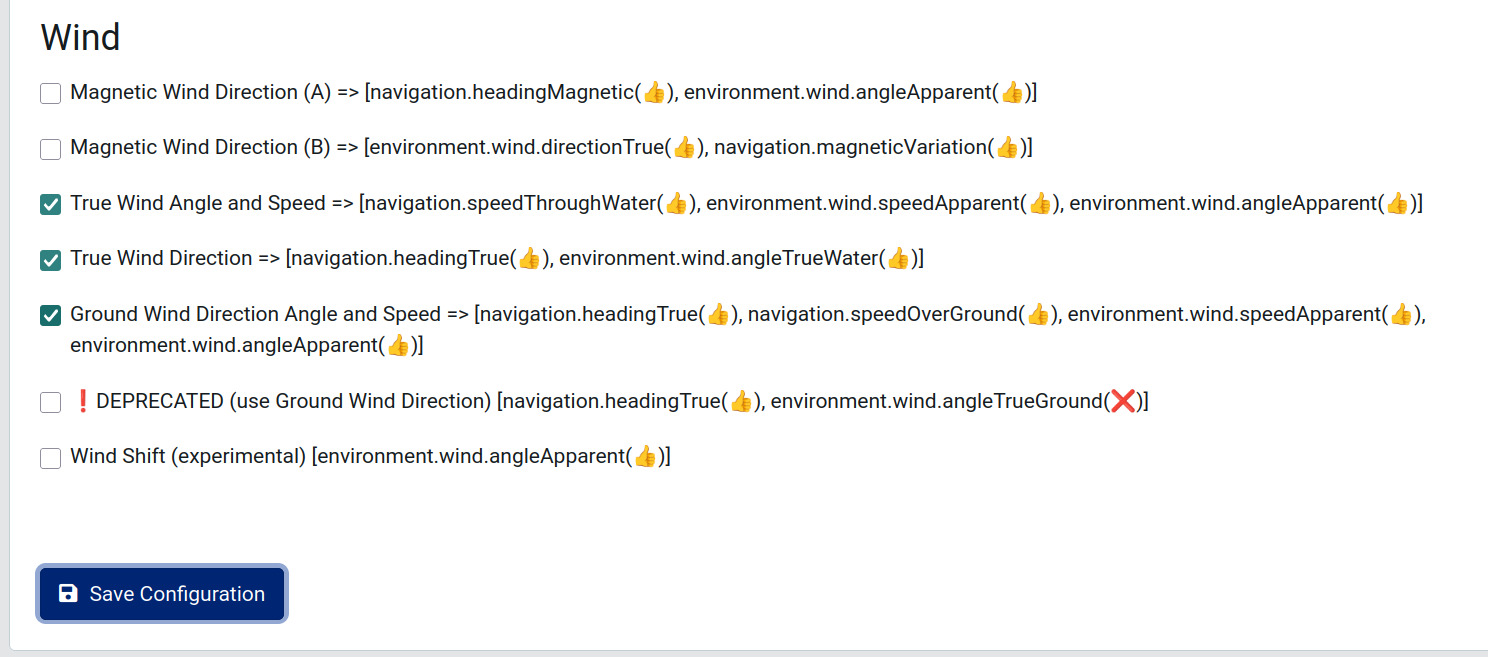
Now, in Signal K, there’s an app called “Derived data”. This can make the True wind calculation based on the right data: heading, speed over ground and apparent wind. Resulting in wind over ground!
Call those ground wind parameters in OpenCPN’s dashboard and there we are!
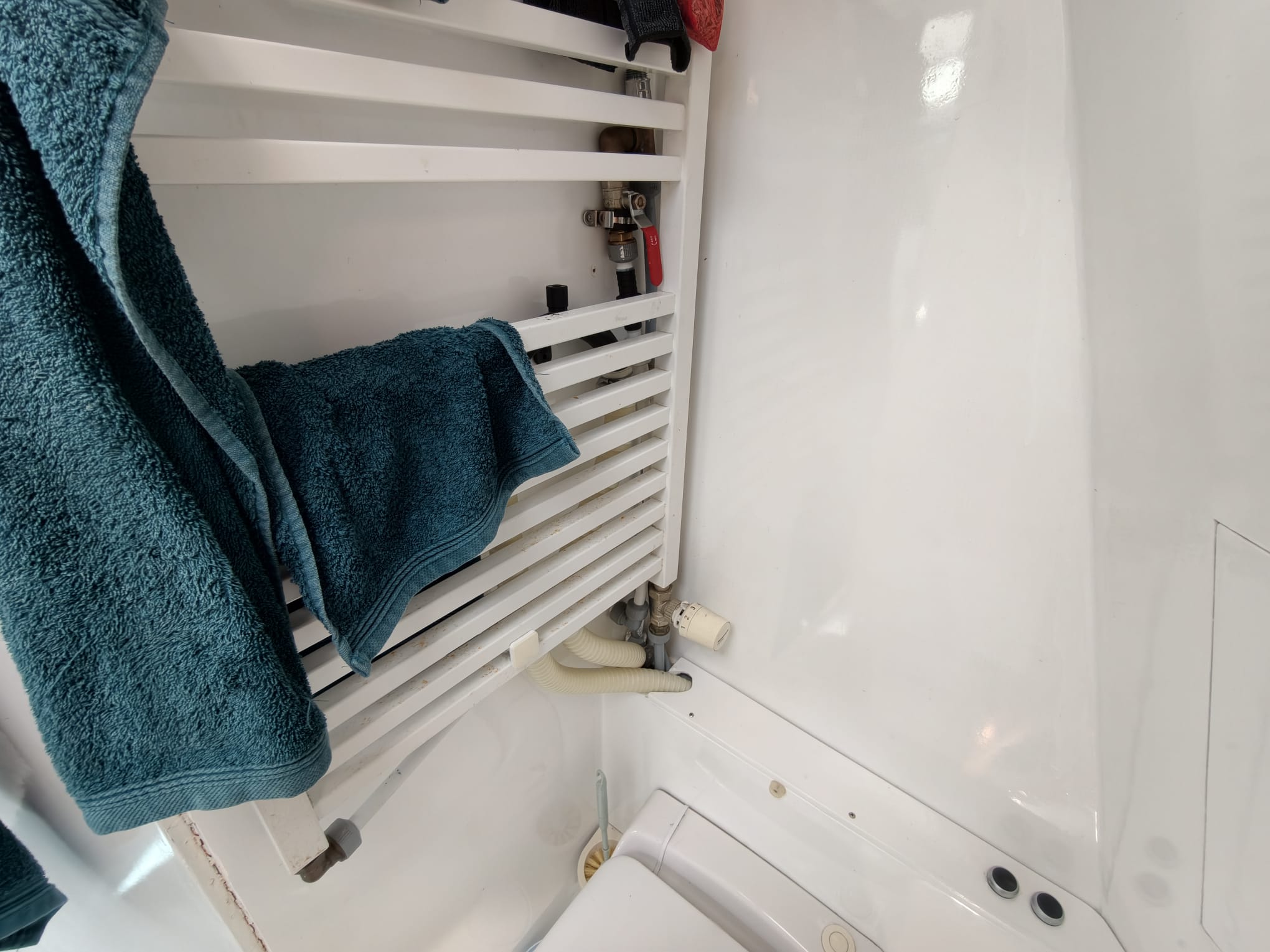
A small job that was on our list for a long time already is fitting a one-way valve in the seawater supply of the toilet.
Since there’s a breather in the pipe (to let air in, to prevent it from siphoning), the engine, the watermaker suck air into the system. And during our passage to Porto Santo we even noticed that after days and days of sailing, the boat speed sucks air into that system. No drama, the seawater pump just pushes the air out when we flush the toilet but for the watermaker it’s a problem. That doesn’t work with even a tiny little bit air in it. So, we had to close the valve with the red handle every time we use the watermaker.
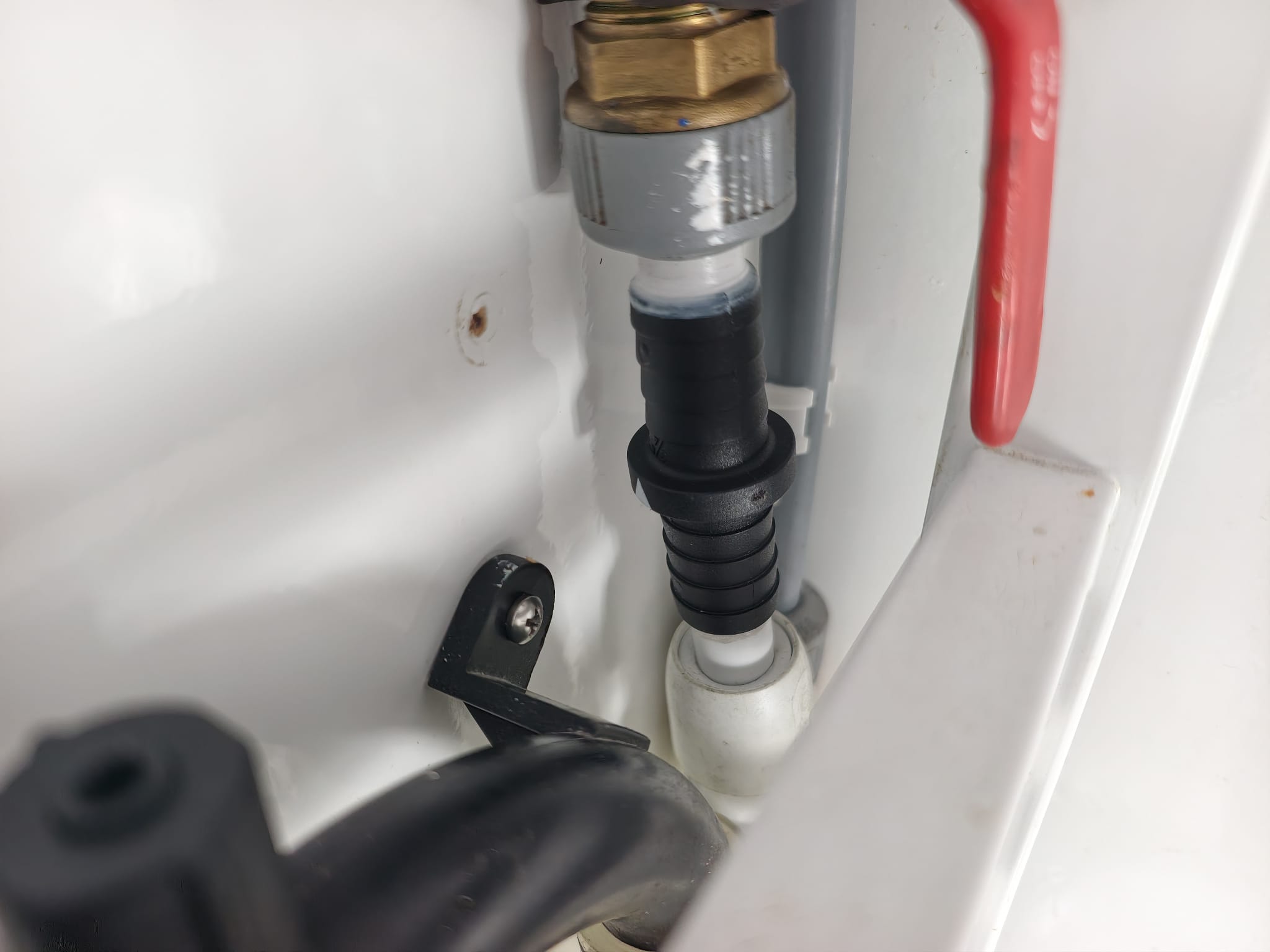
Now there’s the one-way valve (the back device). Problem solved!
September 1.
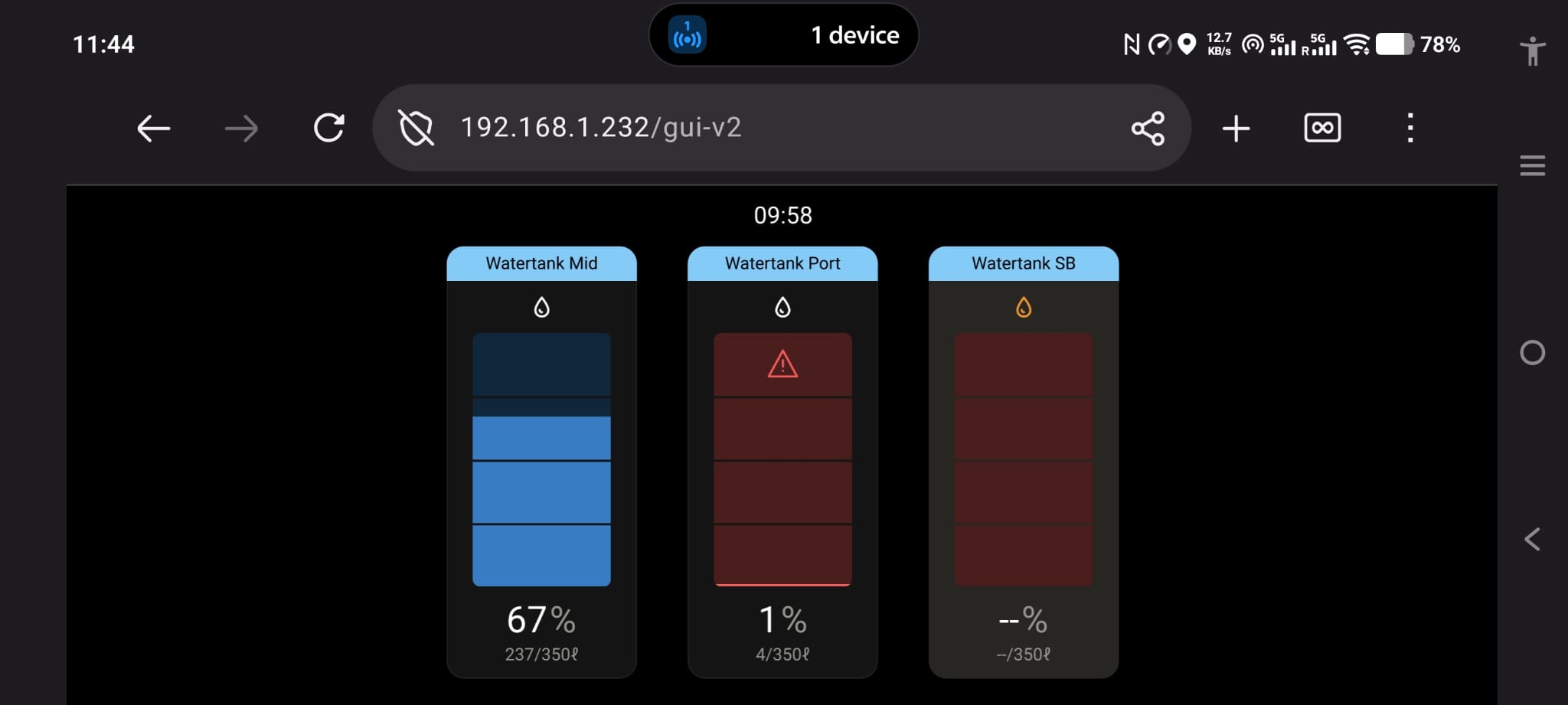
We run the watermaker every 3 days. That keeps the system clean. But we haven’t used the water yet because we were finishing the water from Cadiz first. But today, almost 6 weeks after we left Puerto America, the tanks are empty and we start using the Mid tank with water from the watermaker.
In the afternoon we visit a local wine maker. Although we don’t quite understand how grapes can grow on this extremely dry island, their wines taste really nice. They even have Moscatel. Well, not as good the ones we had in Andalusia but not bad at all. The owners are such a nice couple!
We sit on the veranda outside, with a view on the decorated streets. Obviously, there’s some event coming up: they hanging string of paper flowers everywhere.
We order their Sangria. Sher has been here in 2021 and she remembered the Sangria was something special. It is! It has the local wine and passion fruit in it. Delicious!
And we order a tapas plate.
Everything is extremely delicious! 😋😋
September 3.
Sher is making Nasi Goreng today.
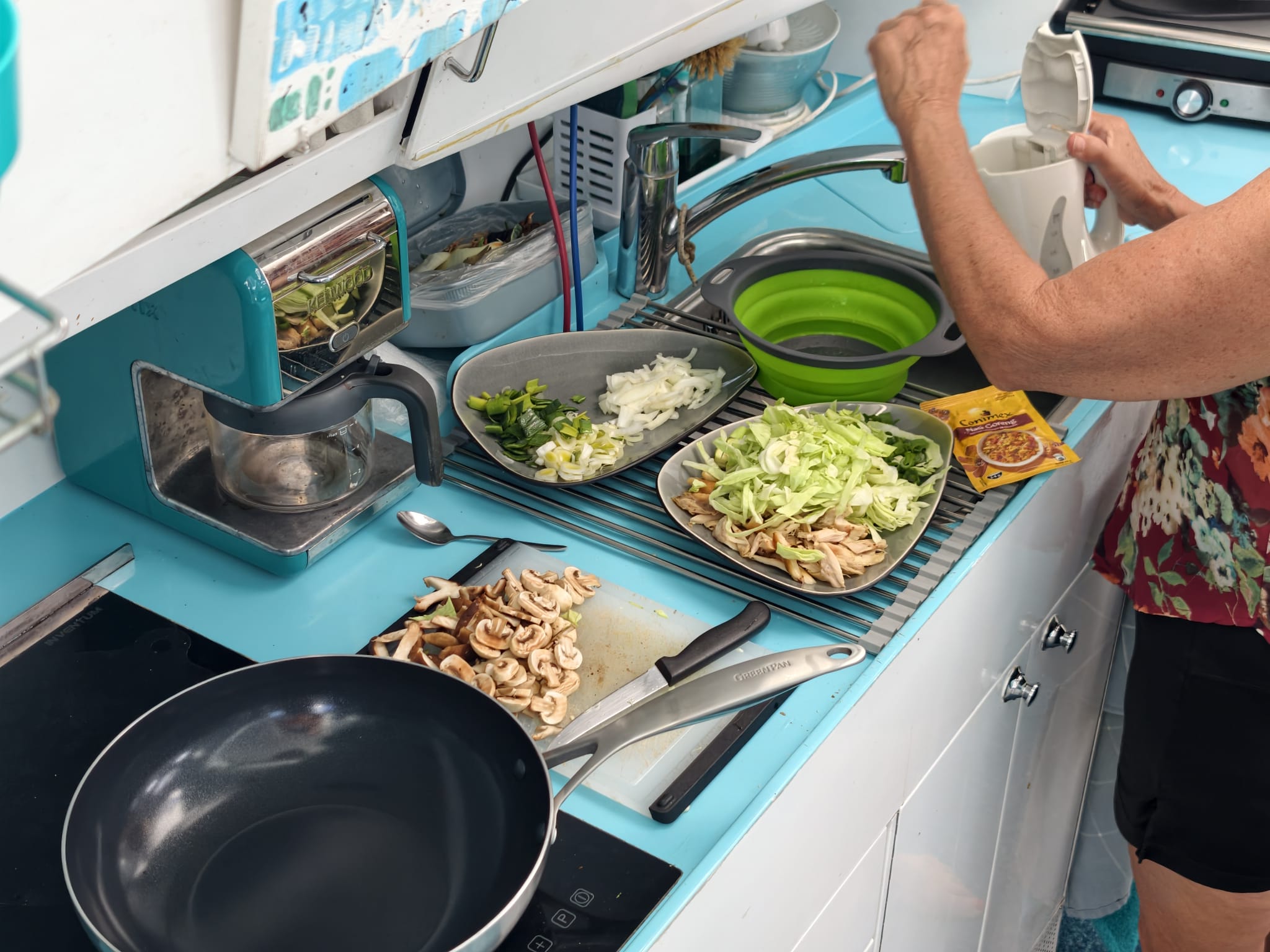
Cabbage, leek, mushrooms, chicken, onion, rice and Nasi spices from the Netherlands.
With Wim’s sate sauce.
And Seroendeng.
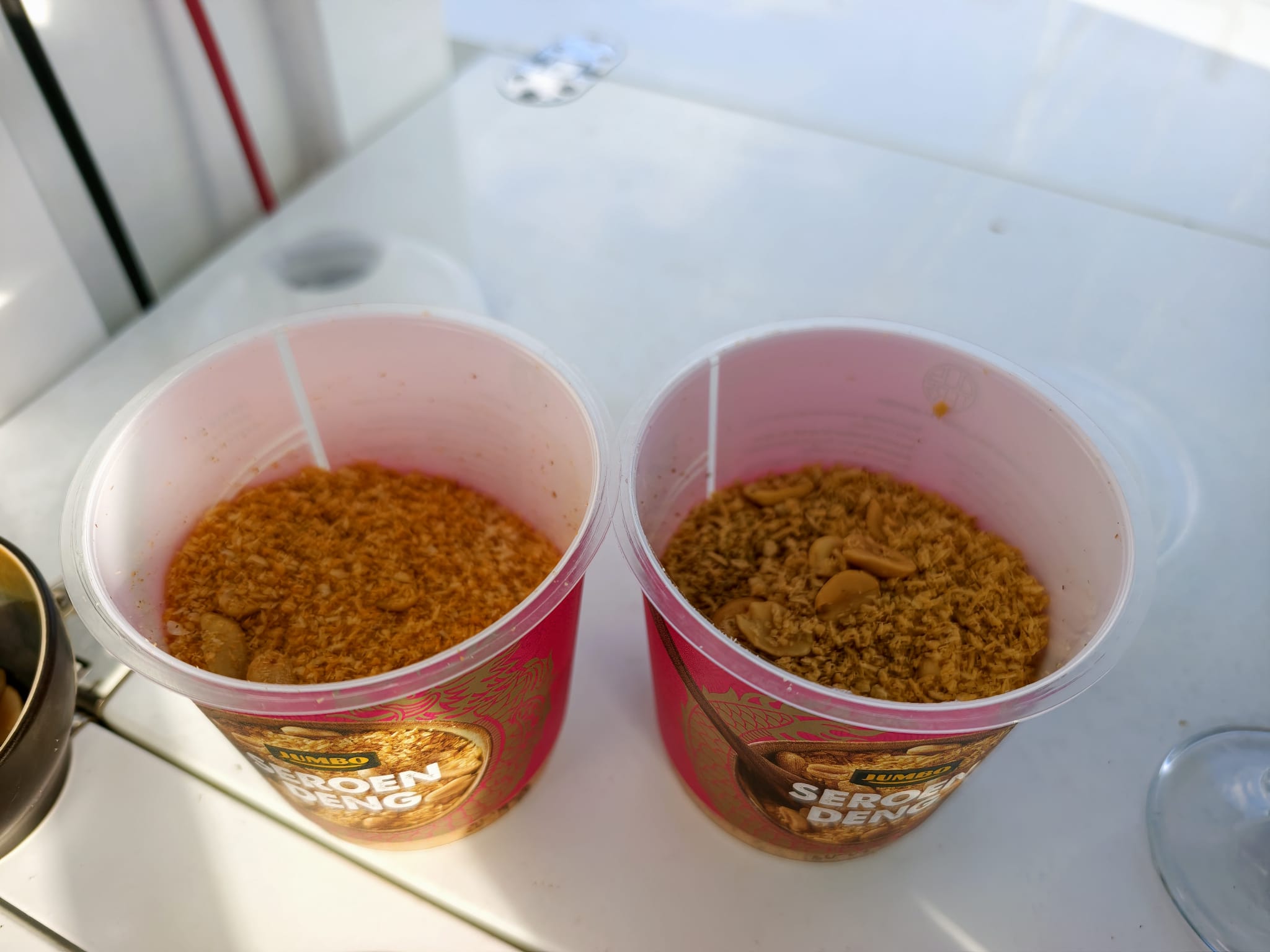
We almost ran out of Seroendeng and Sher made it herself. Very good!
September 4.
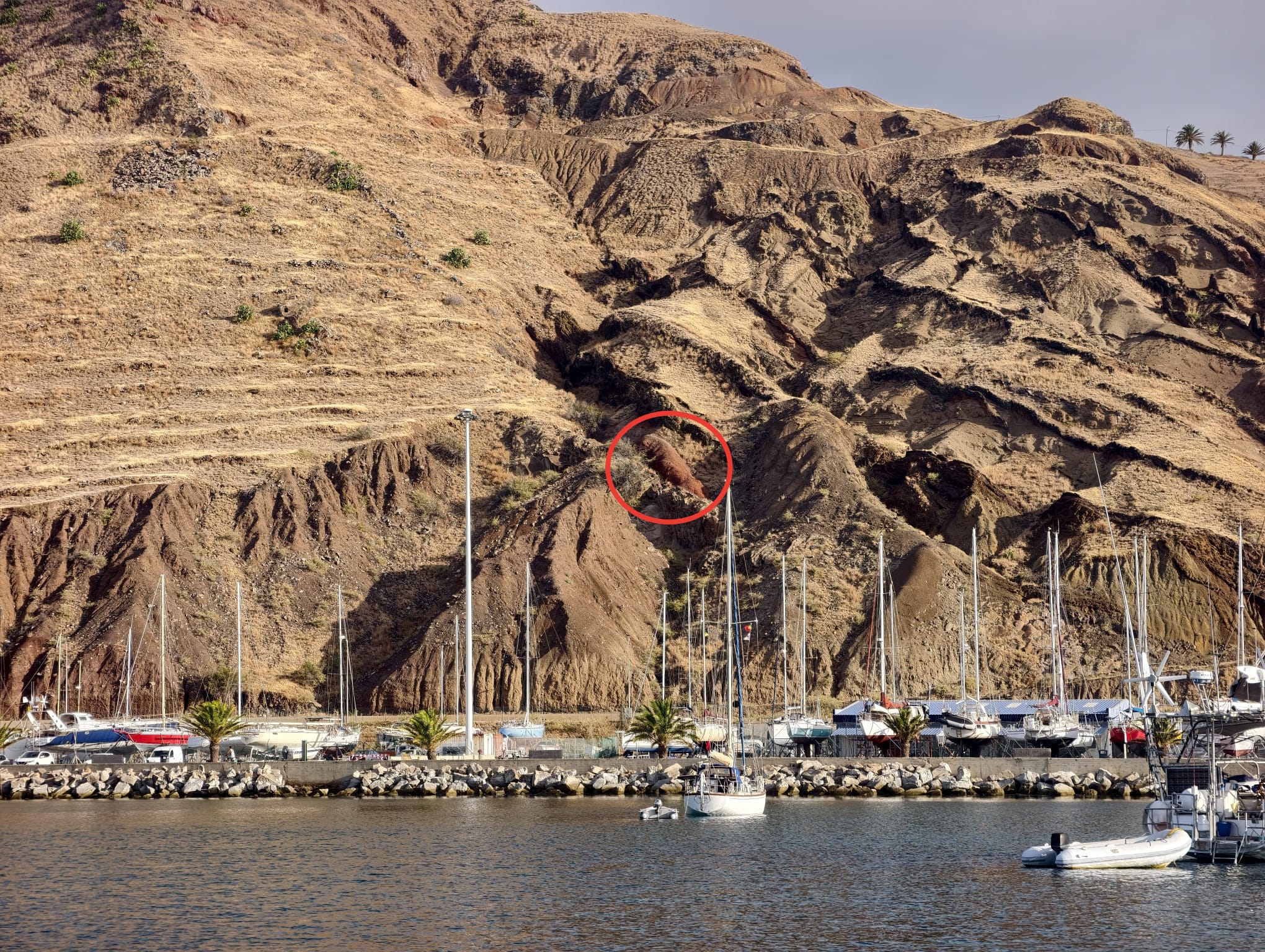
While we’re have breakfast in the cockpit, we see something strange on the mountain…
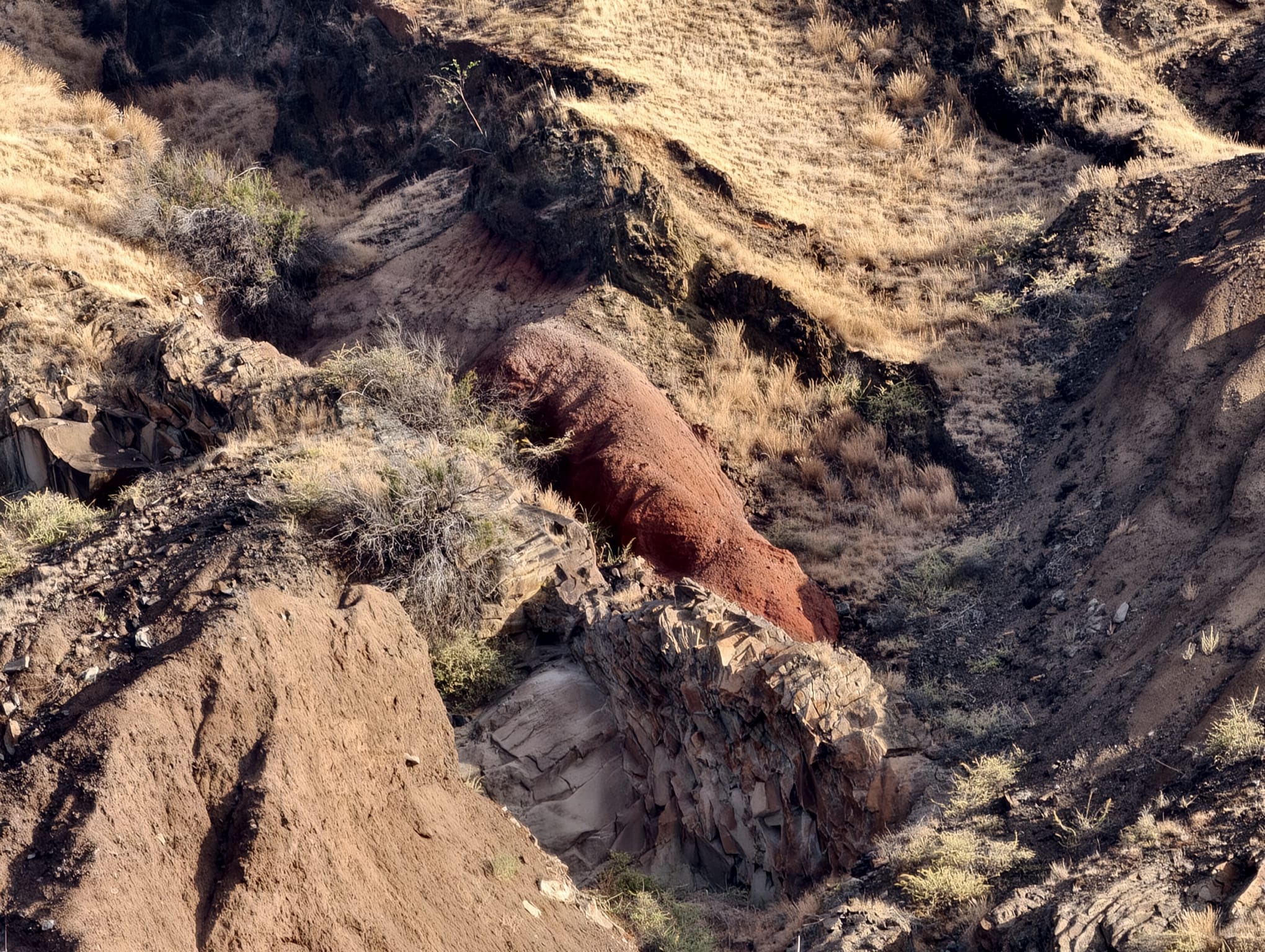
It looks like a manatee! How did he get there?? 😂 😂
From Amazon we’ve ordered a foldable jerrycan. When we start the watermaker, the first cup of water is very bad. Very salty. That’s caused by salt ions moving through the membrane when it’s not under high pressure. Natural osmosis.
So, we dispose the first cup. After that, the TDS is around 400. After about 2 liters (then, the entire system is flushed) the TDS lowers to about 200 and it stays 200 during the next hours. So, we capture these first liters in the jerrycan.
This water can be used from cleaning and washing and such.
After the first liters we switch the watermaker to the tank and let it run until the tank level is about 80%. On average (depending on whether we had a shower) that takes some hours.
In the afternoon, we going for a hike with the group of sailors. We walk along a coastal footpath to the north side of the island. The views are gorgeous!
After 45 minutes we get to a tunnel.
After the tunnel, landscape changes from rock to sandy.
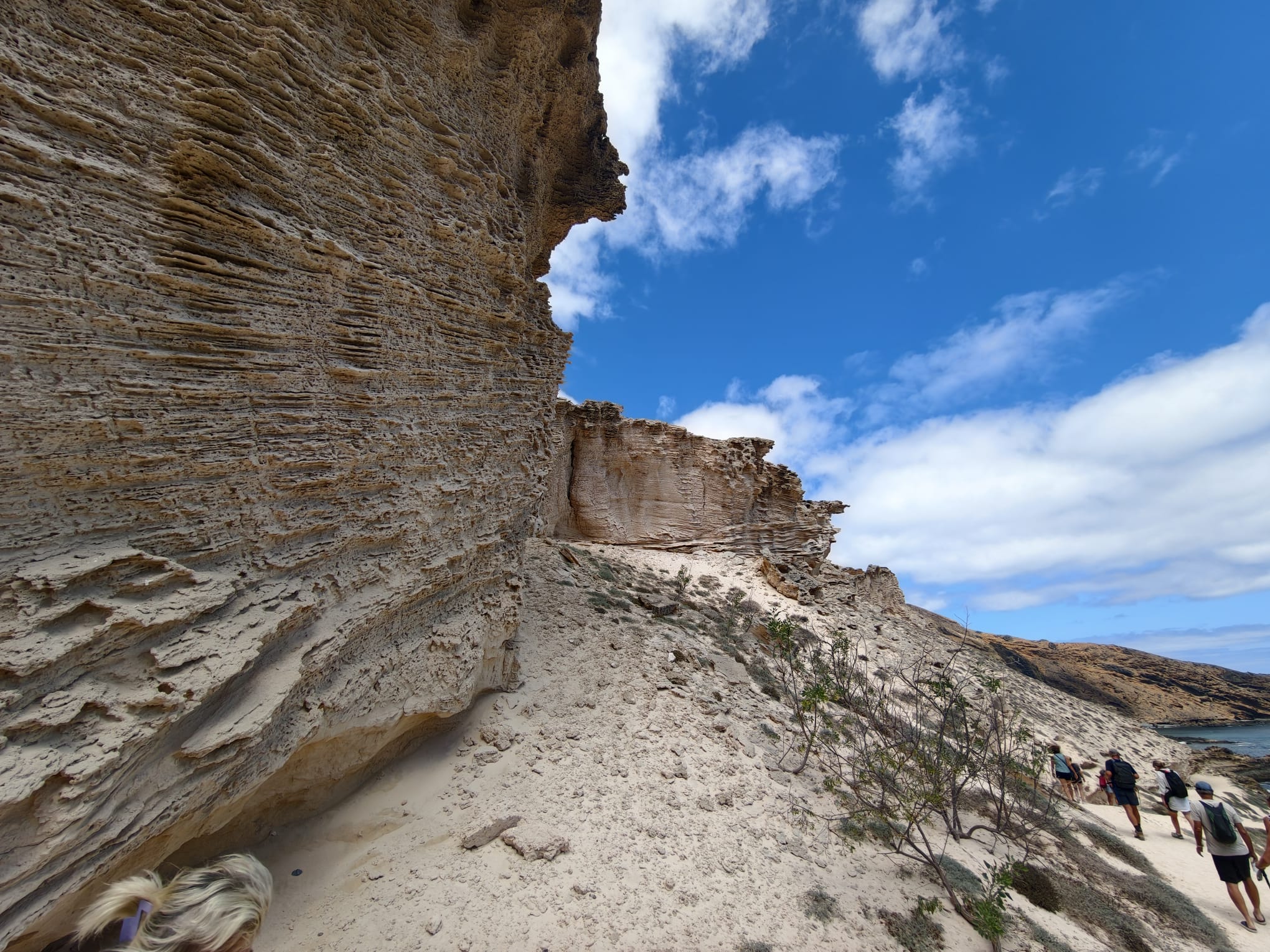
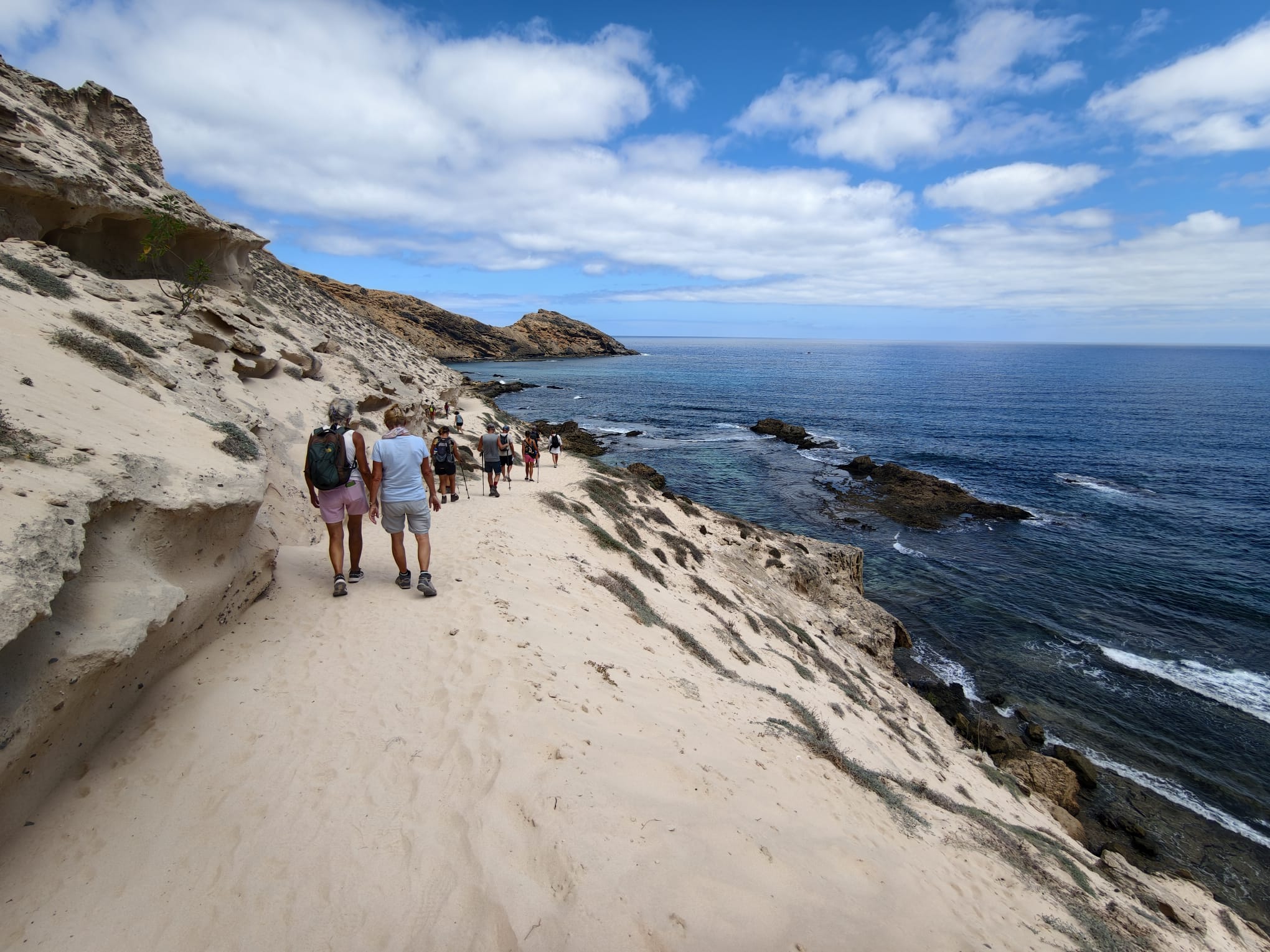
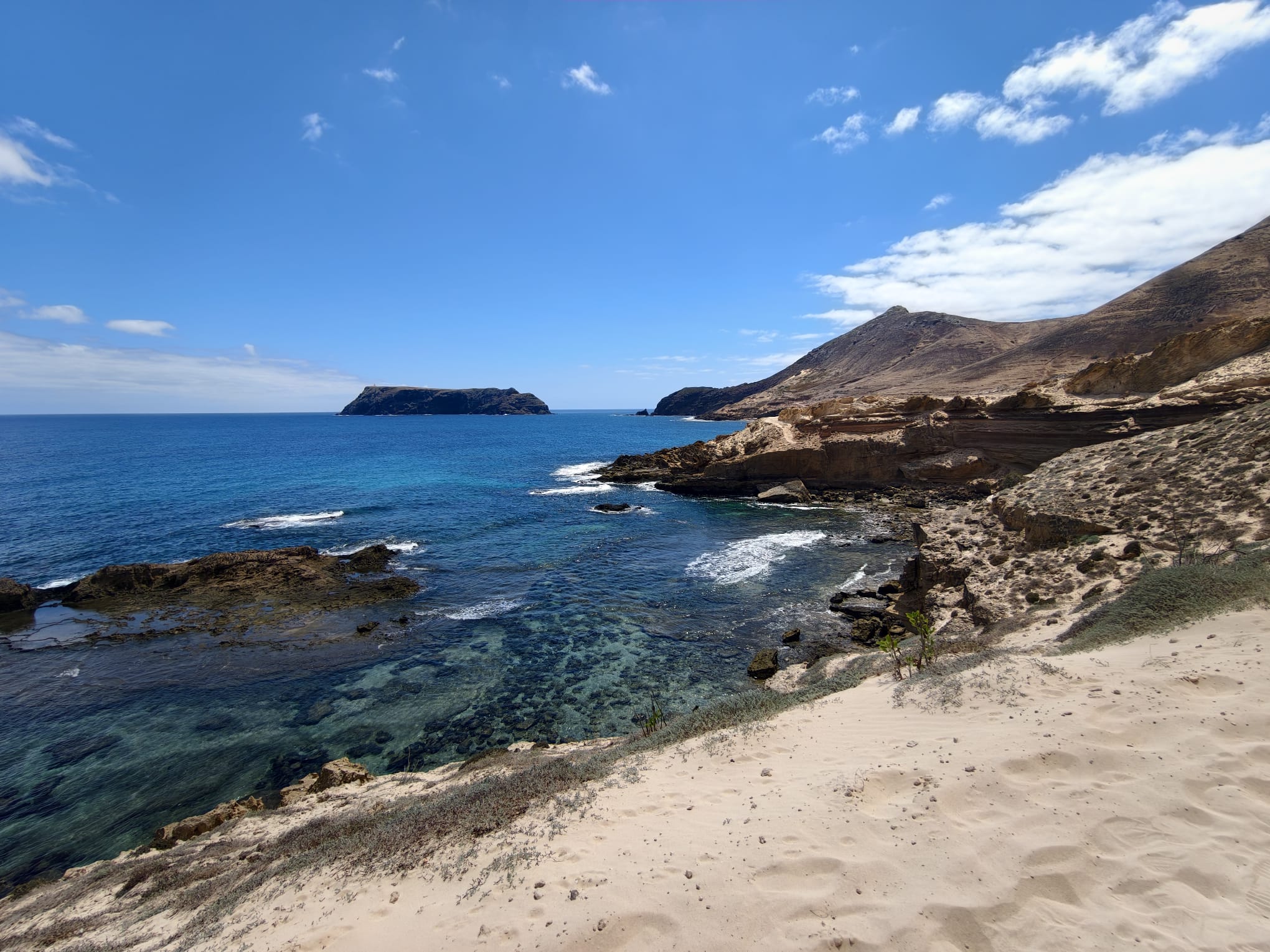
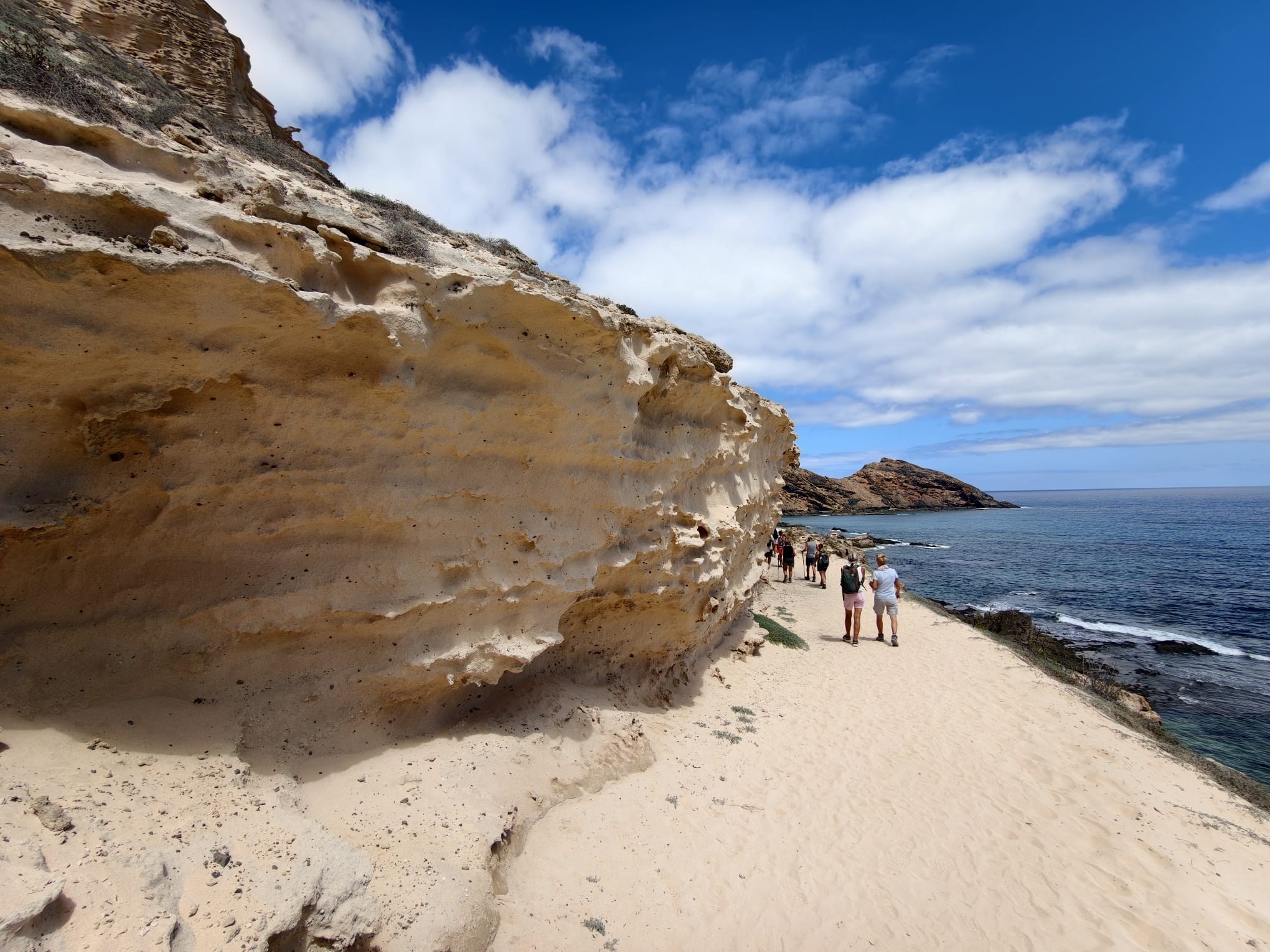
Then we get to a natural pool. We’ve brought our swimming gear and water shoes.
Everybody takes a dip in the “pool”. The water temperature is around 25º. Great!
We’ve brought our “underwater camera” (Wim’s old phone in the waterproof case).
After that, we visit an amazing canyon of sandstone!
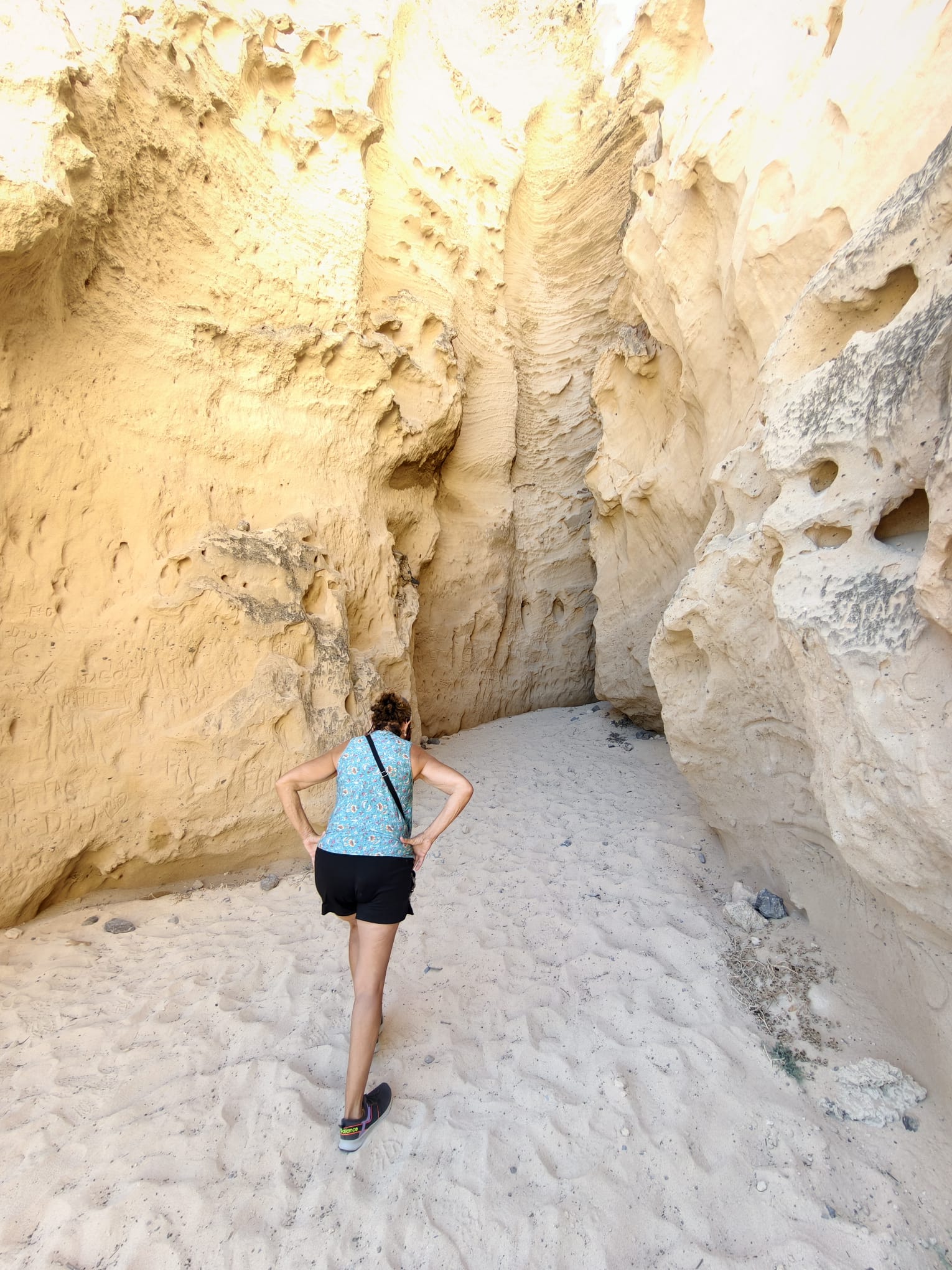
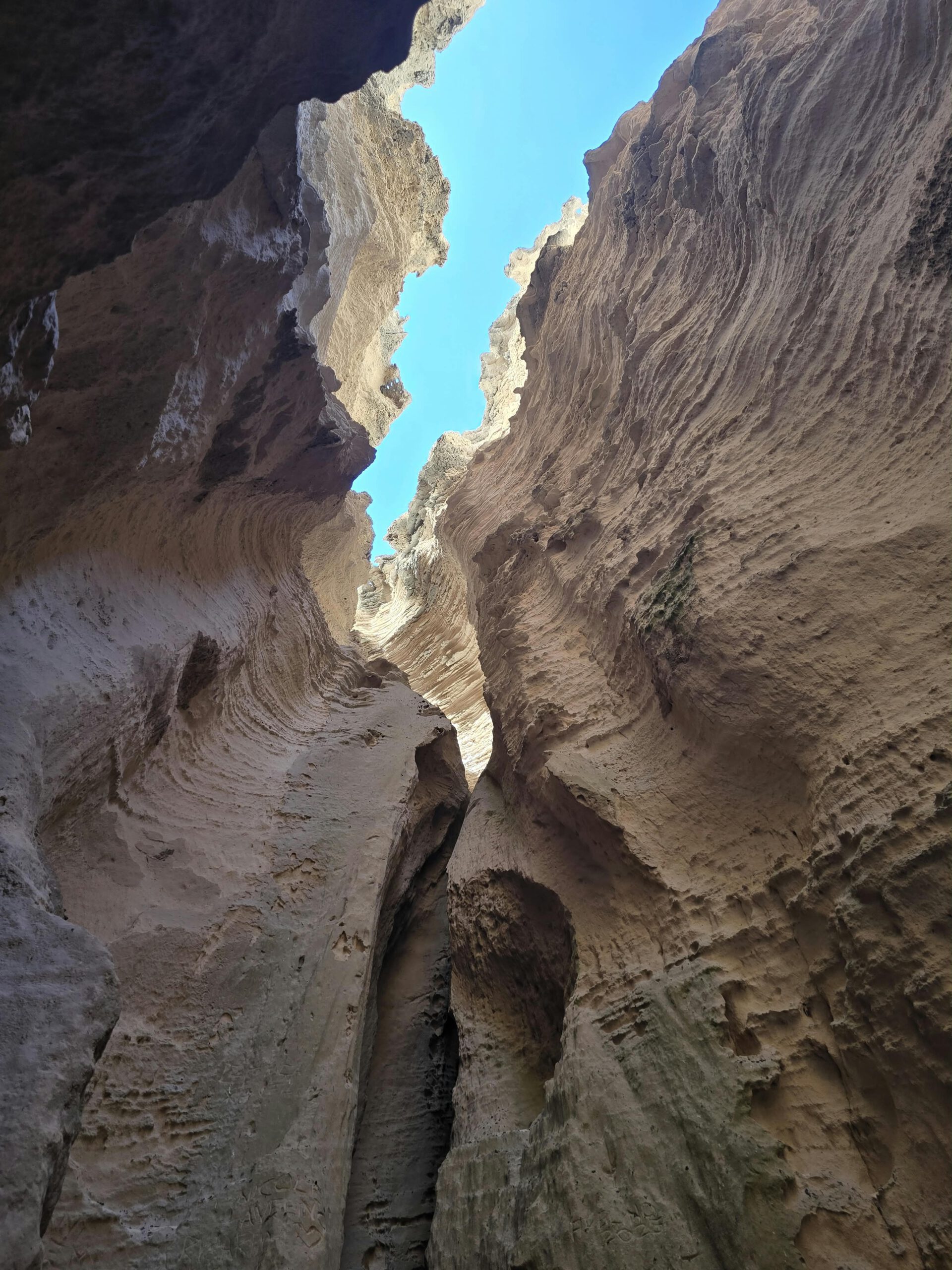
Then, we walk the same track back to the marina.
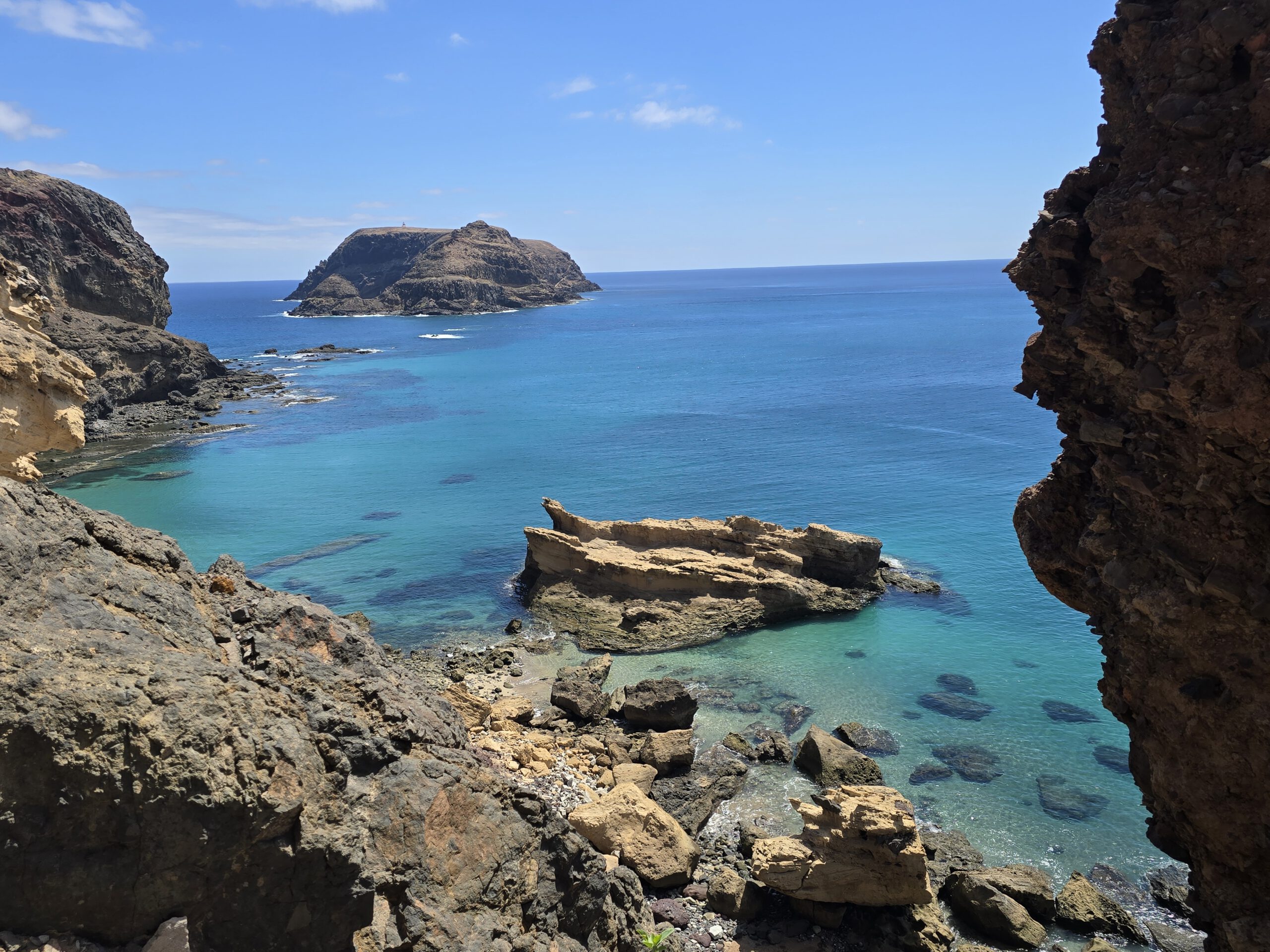
We are invited for the Cruiser’s Friday afternoon happy hour but we’re covered in sand, salt and sweat 😅. So we decide to have a nice shower on board and after that: let’s call it a day… We enjoy a cold beer on Dione IV and a delicious Nasi dinner!
September 5.
The 230v improvement project continued… We’ve ordered a nice electrical cabinet + circuit breakers on Amazon and we’ve decided that it can have a place in the little cabinet under the salon couch. But first, some things have to move to make room for the new AC distribution. 2 DC-DC converters (one supplies 24v to the USB-C Power Supply chargers and the other one stabilizes 12v for the camera home base) and the main RCD for the 230v system.
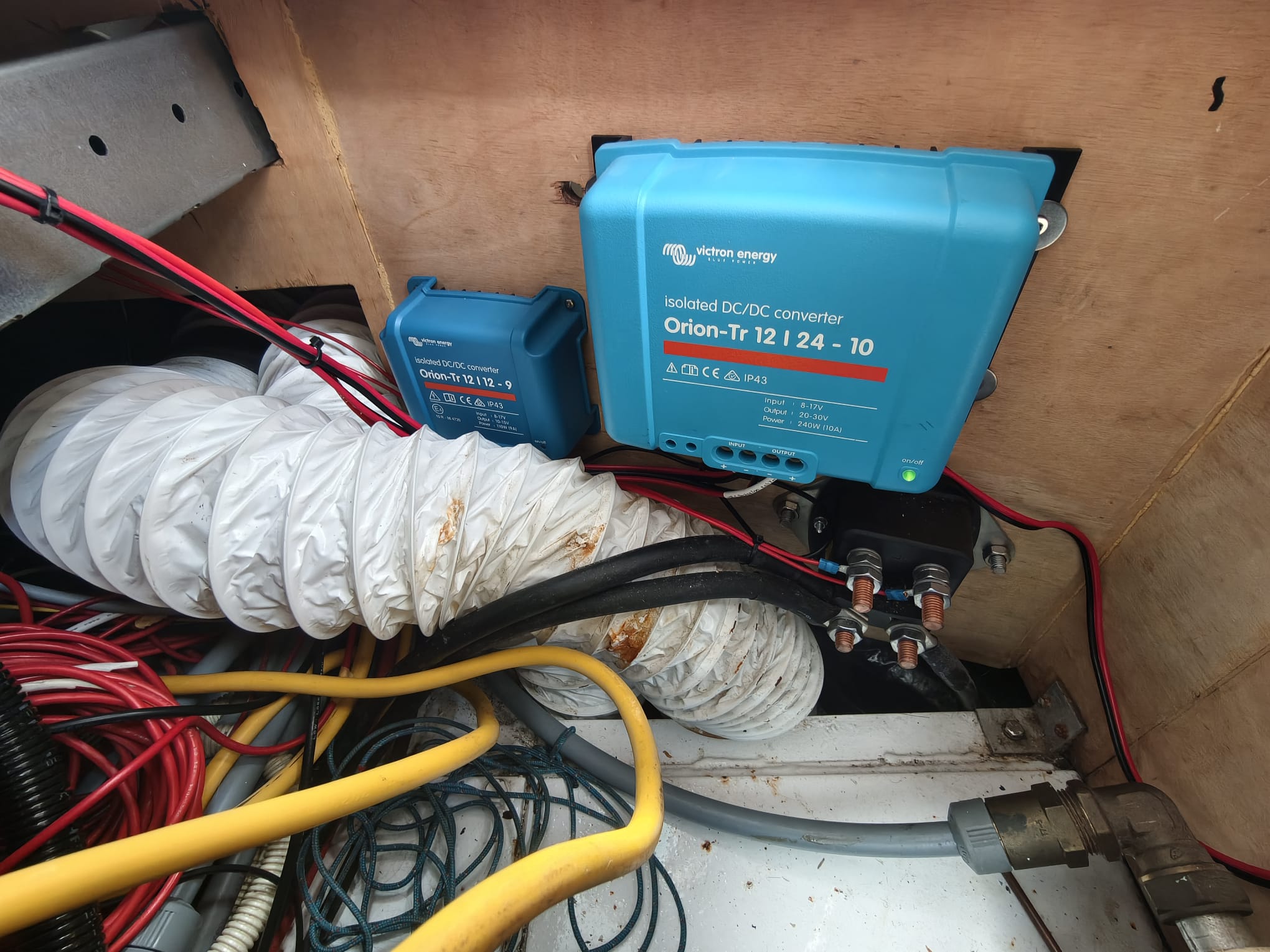
Both DC-DC’s get a new place on the inside of the couch.
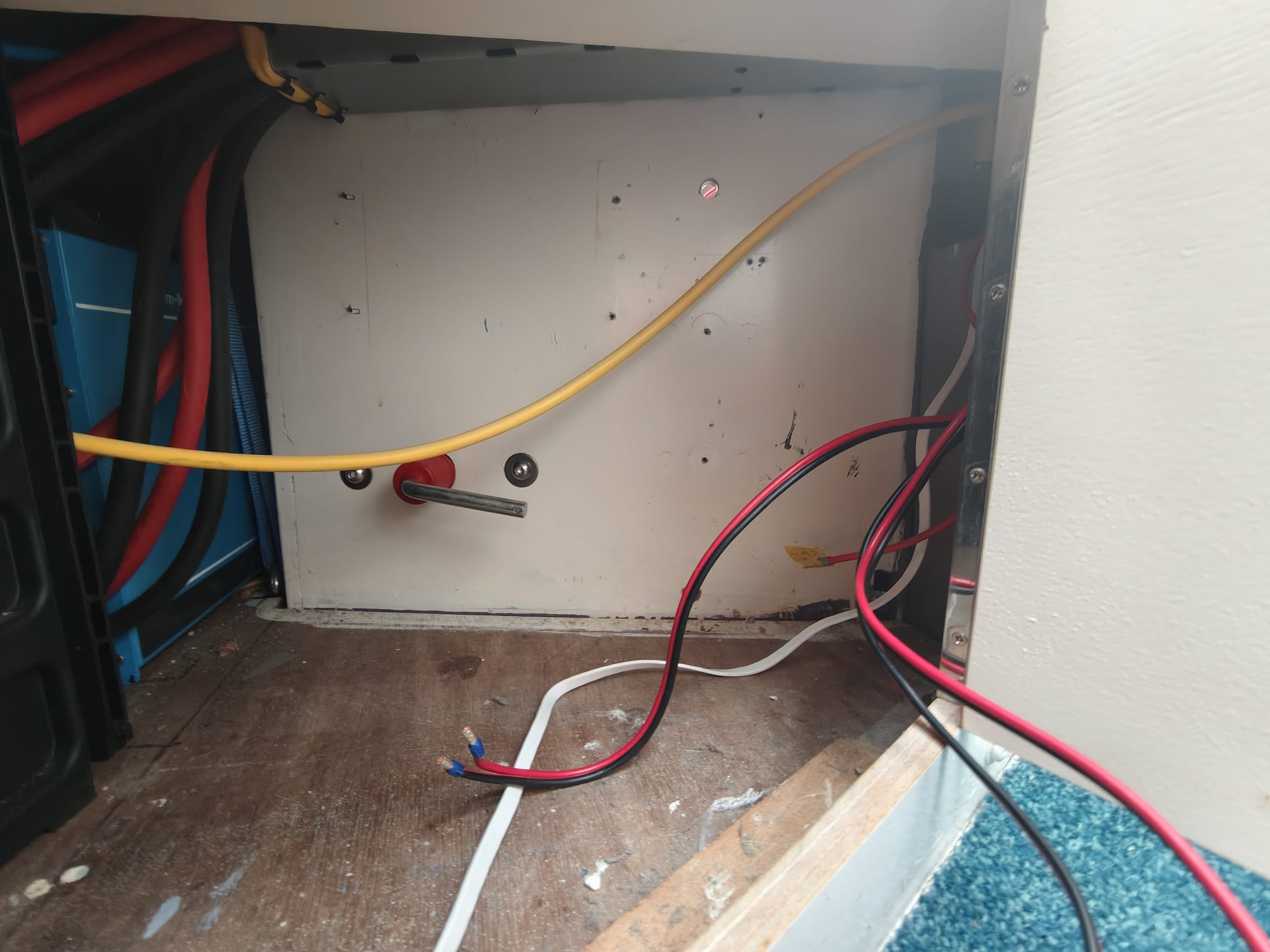
Now, there’s room for the new 230v box.
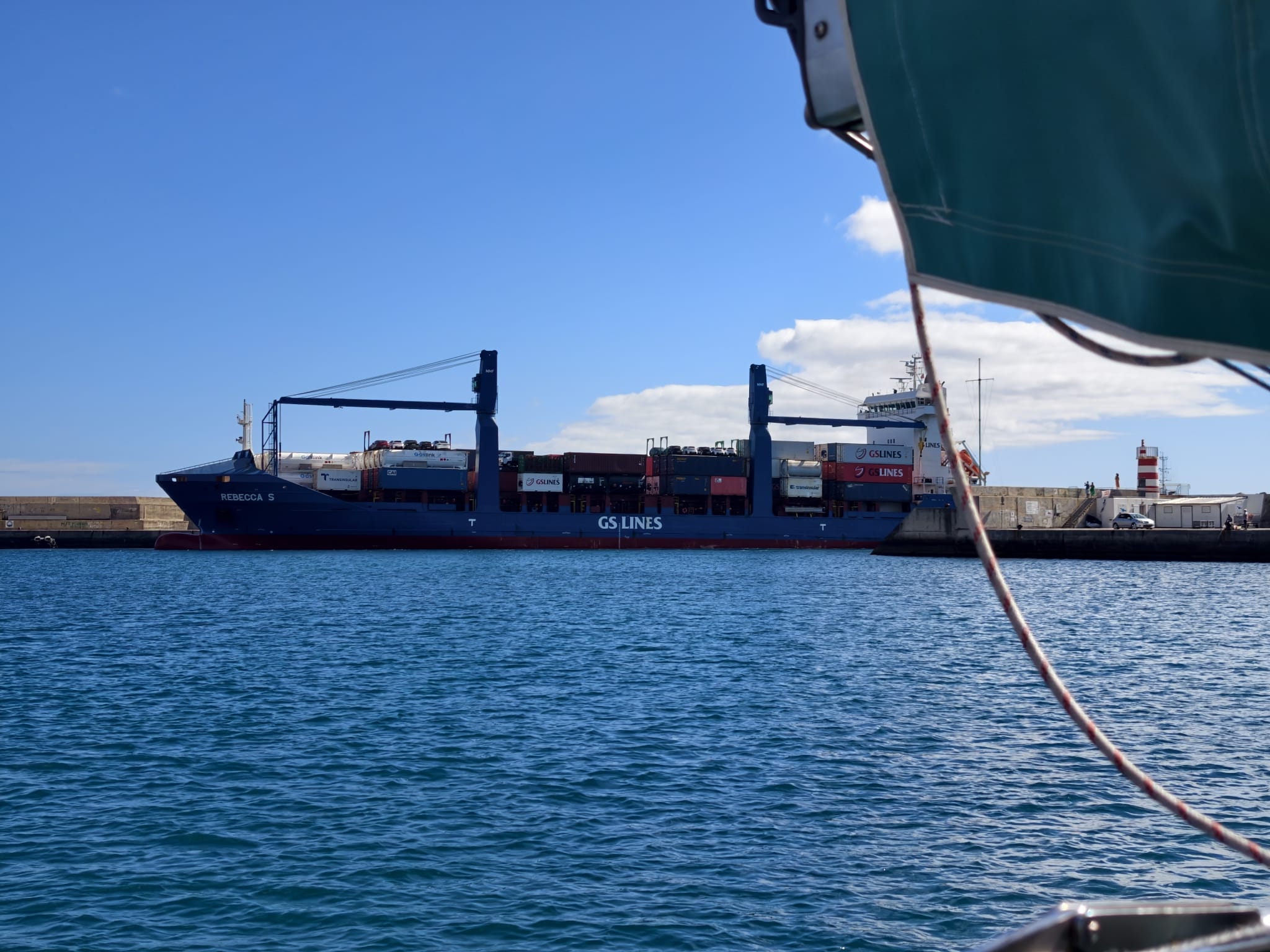
The container ship Rebbeca S comes in once a week. She travels between Lisbon, Madeira and Porto Santo. Exchanging containers with our Amazon stuff! 😄
September 6.
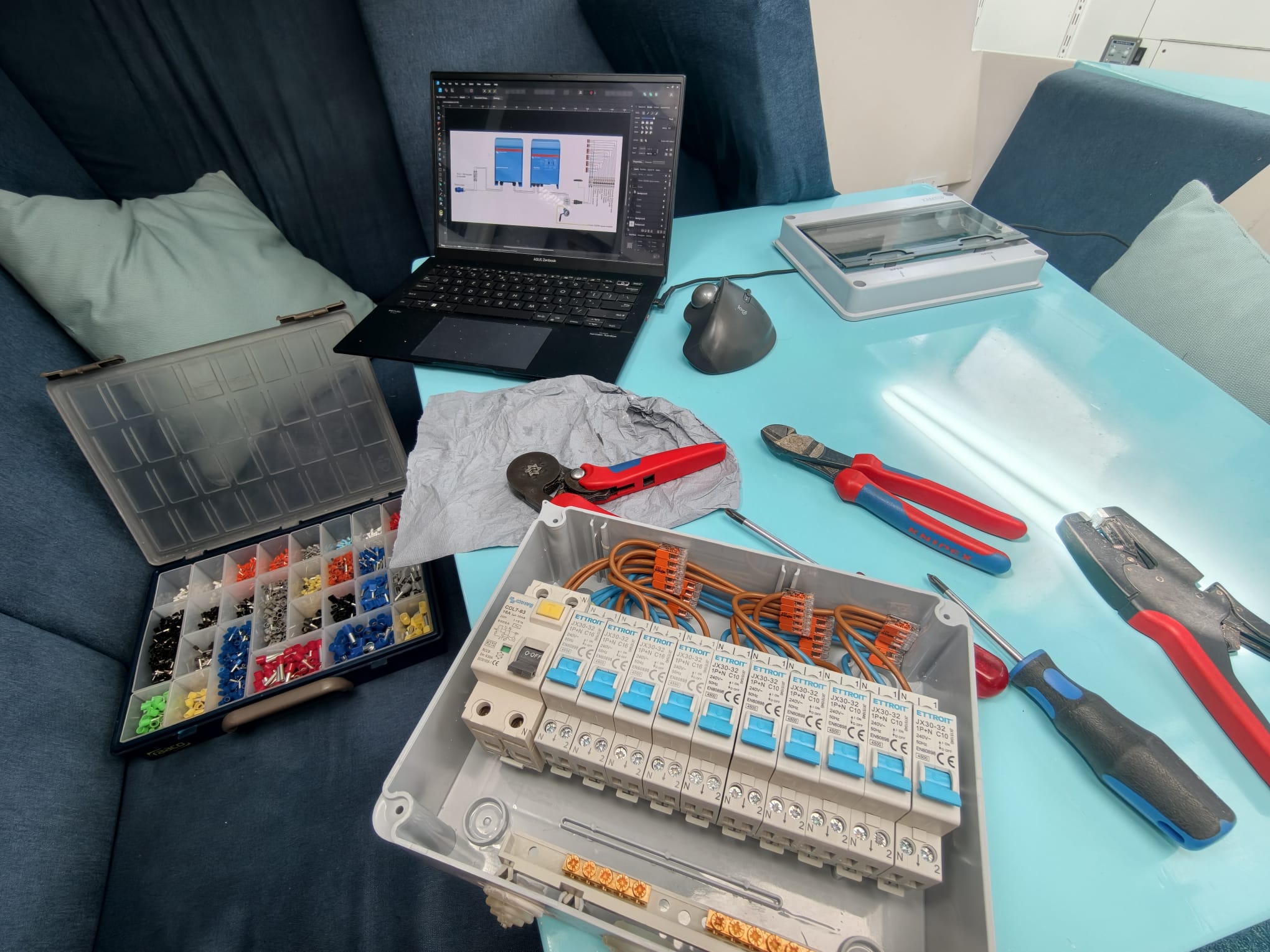
Preparing the new 230v distribution box….
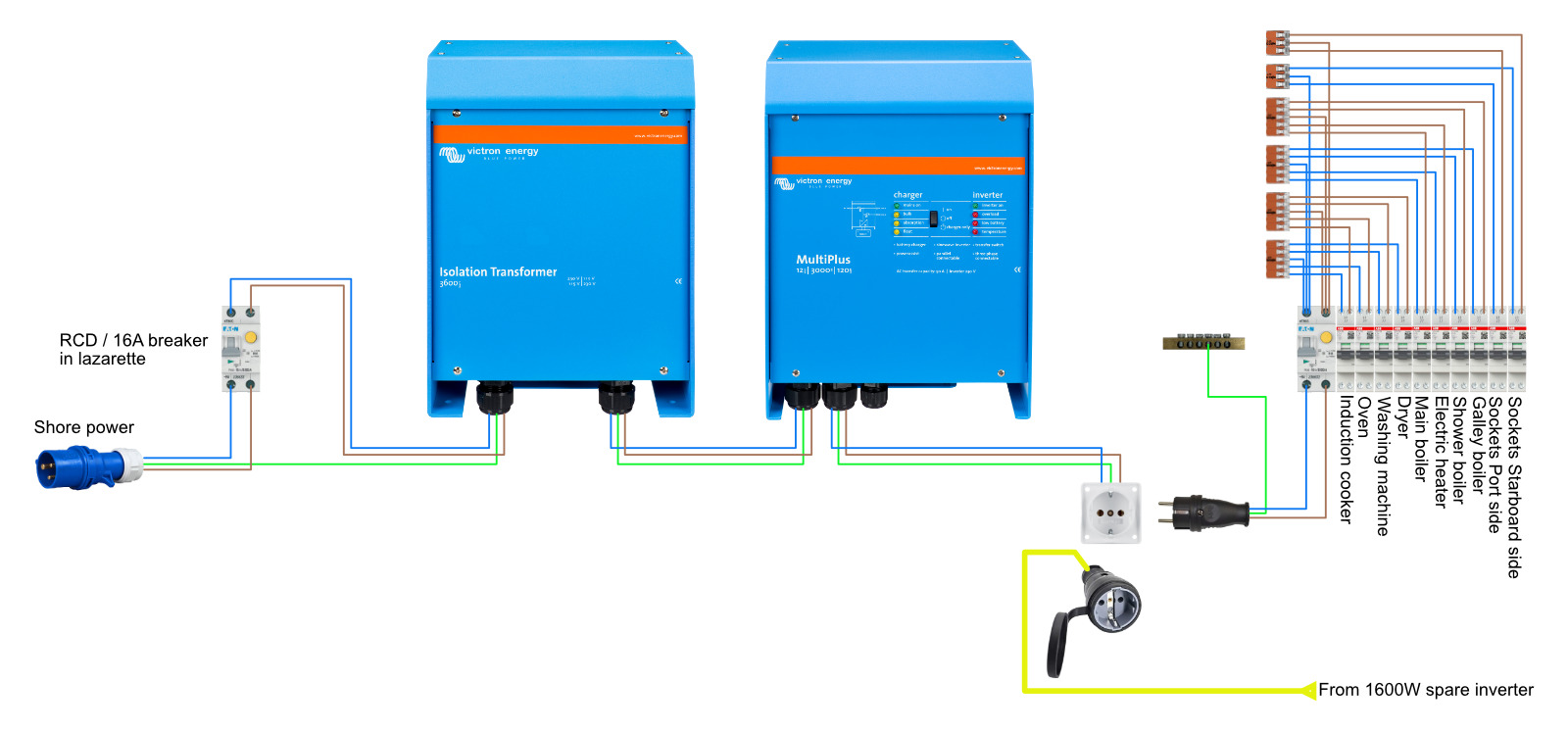
….according to the electrical diagram Wim has made first.
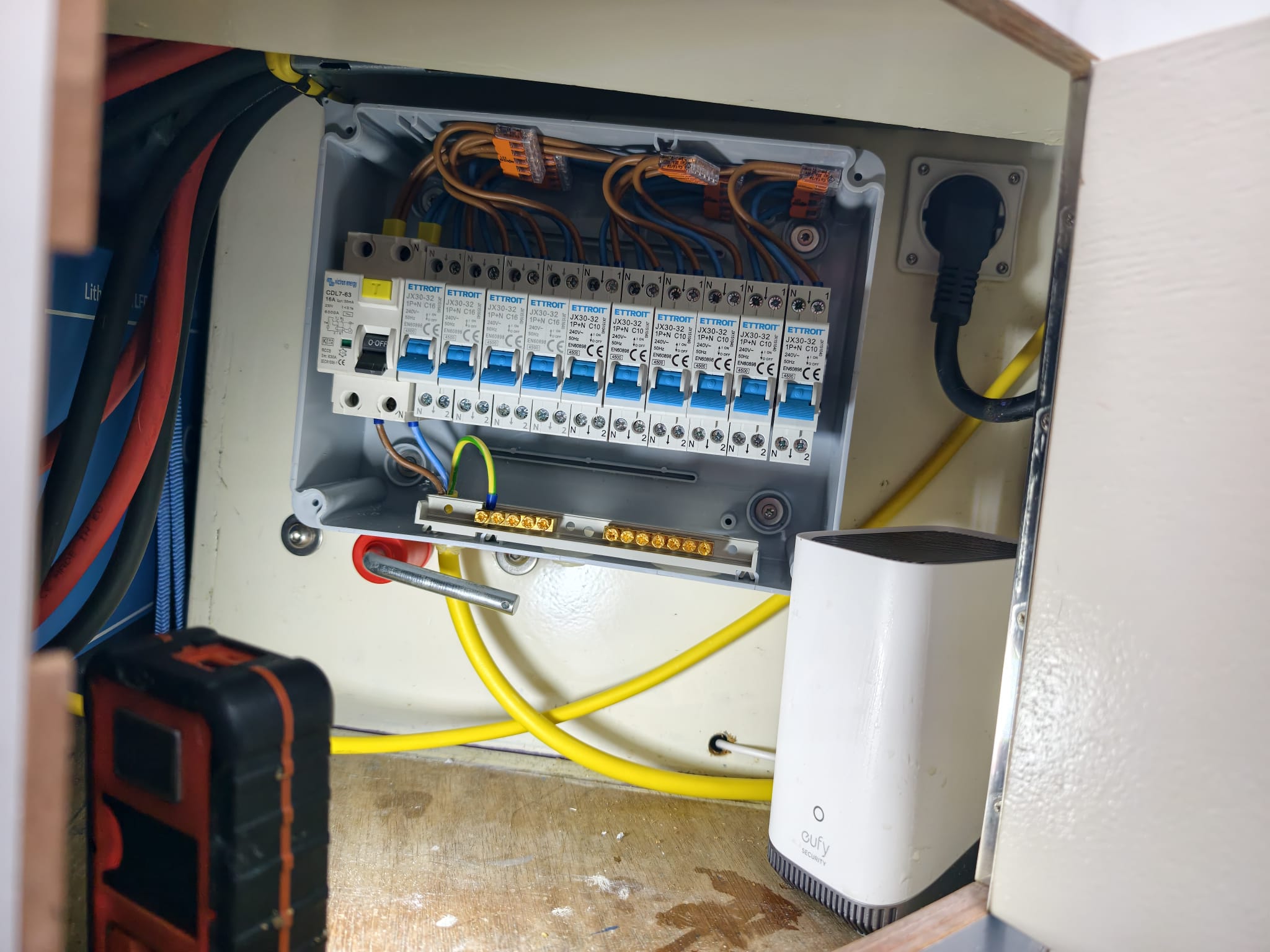
Install it in the little cabinet.
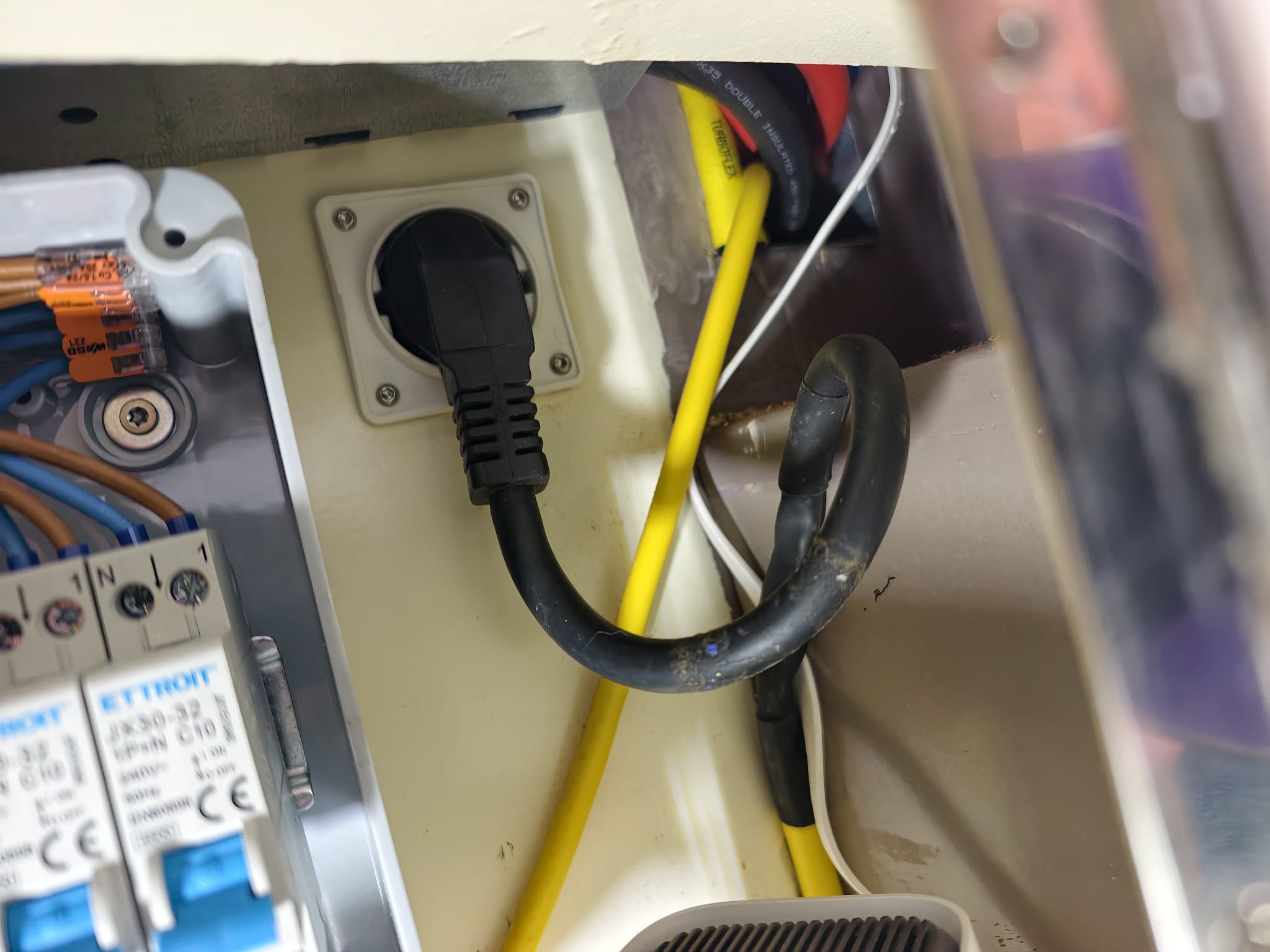
It’s being powered from the inverter via a 16A Shuko plug (16A is our maximum current on 230V). That may seem funny but it has a purpose…
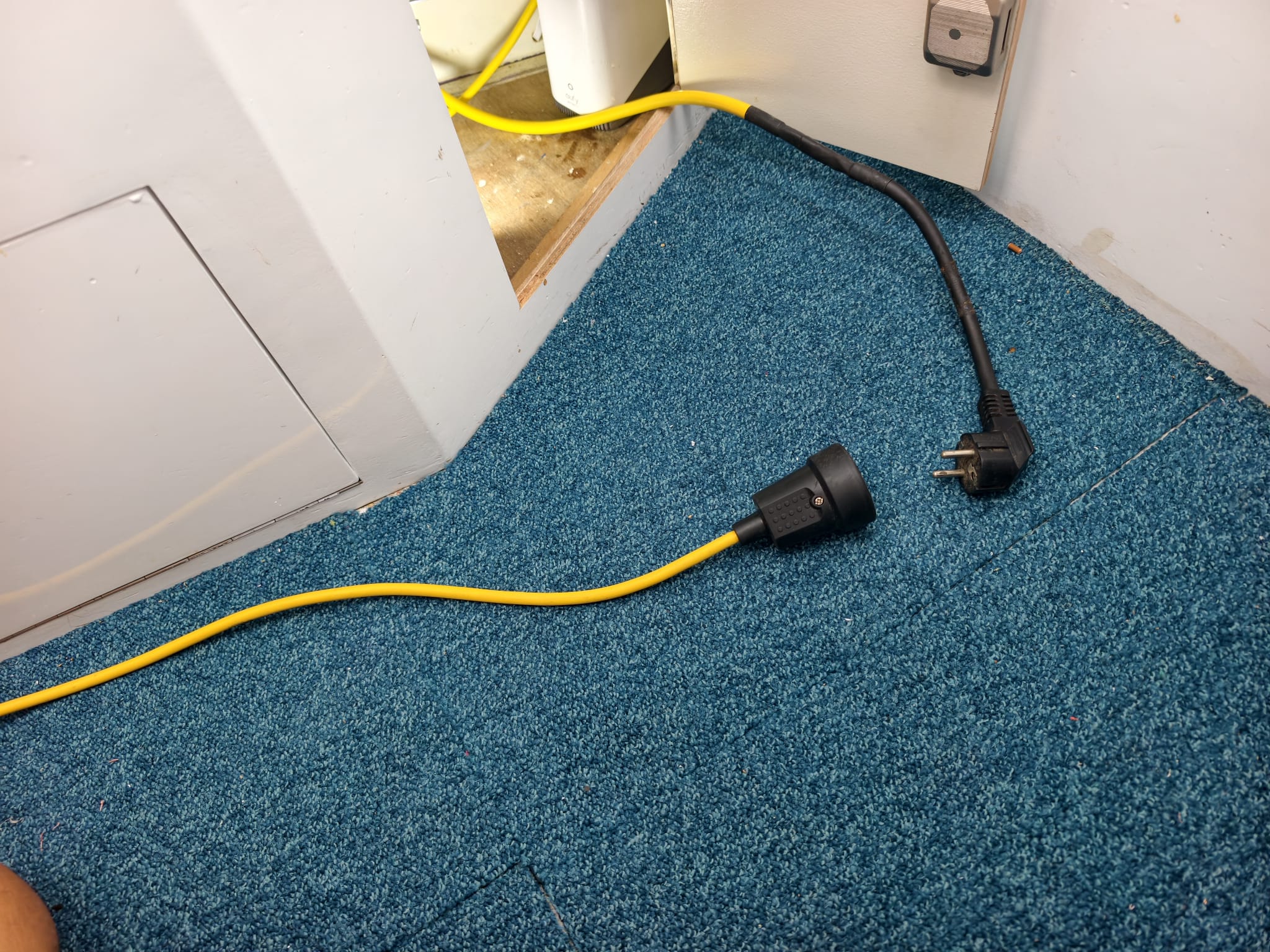
We can disconnect the boat’s entire 230v system from the main inverter (3kW) and connect it…
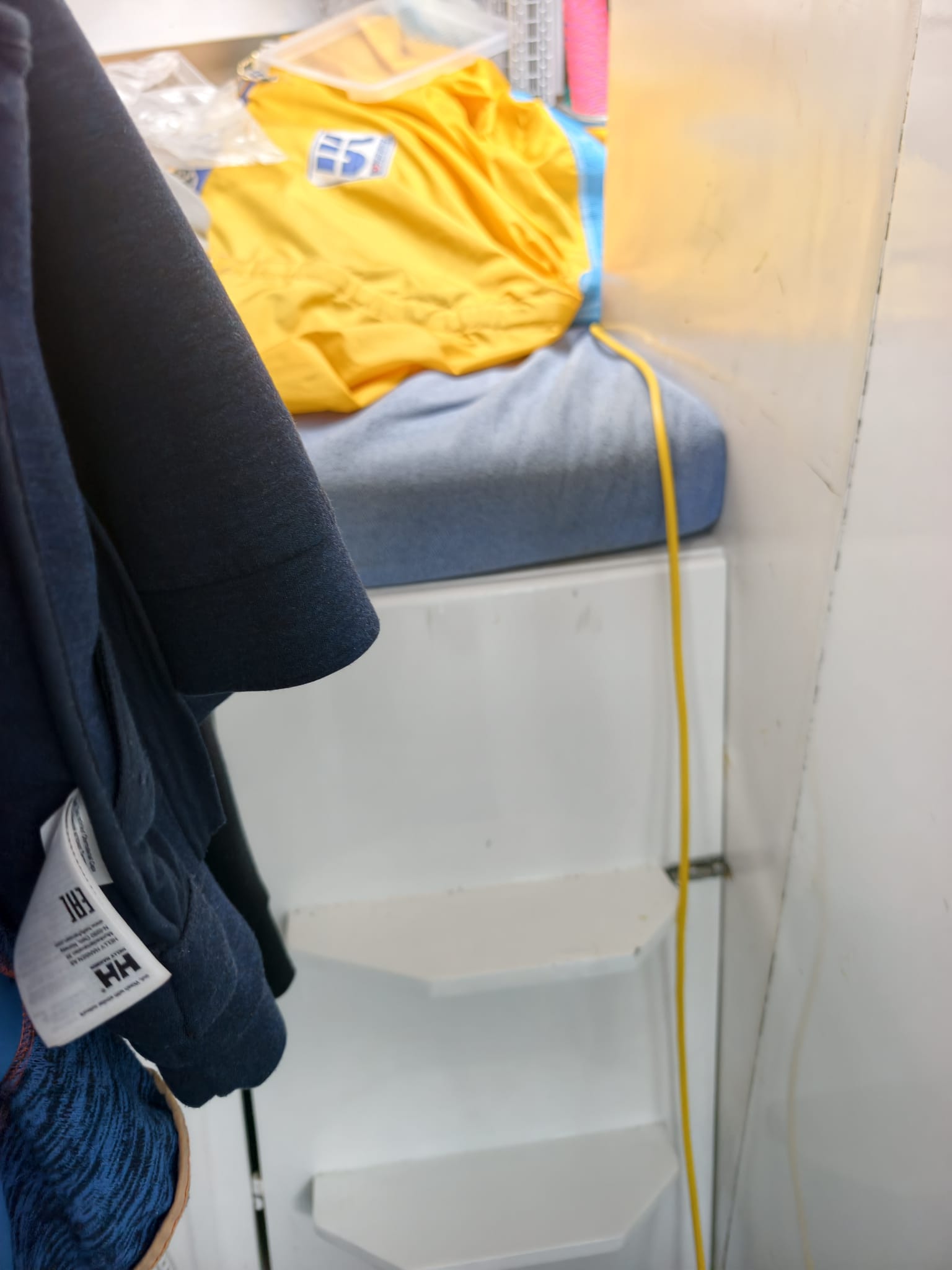
… via this yellow cable…
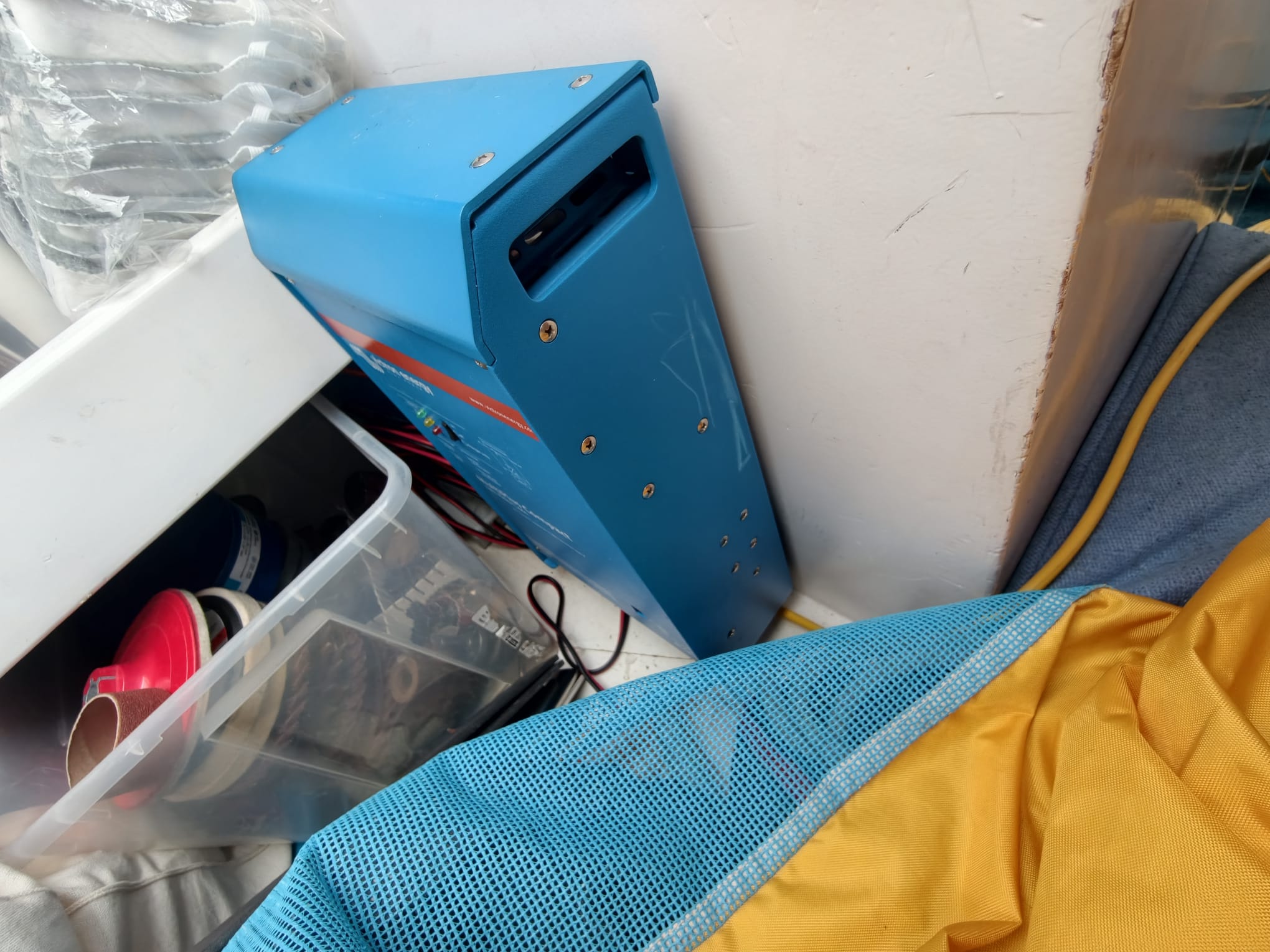
…to our spare inverter (1600W) which is powered by the bow thruster battery (MG Energy 24v 280Ah 7.2kWh).
In case of trouble…
And… in case of work in progress… When Wim is working on the 230v system he has to switch off the inverter for safety. But Sher is sewing on her Pfaff sewing machine. So, we switch on the bow thruster system and the small inverter and have it supply power to Sher’s sewing machine while Wim is working.
September 7.
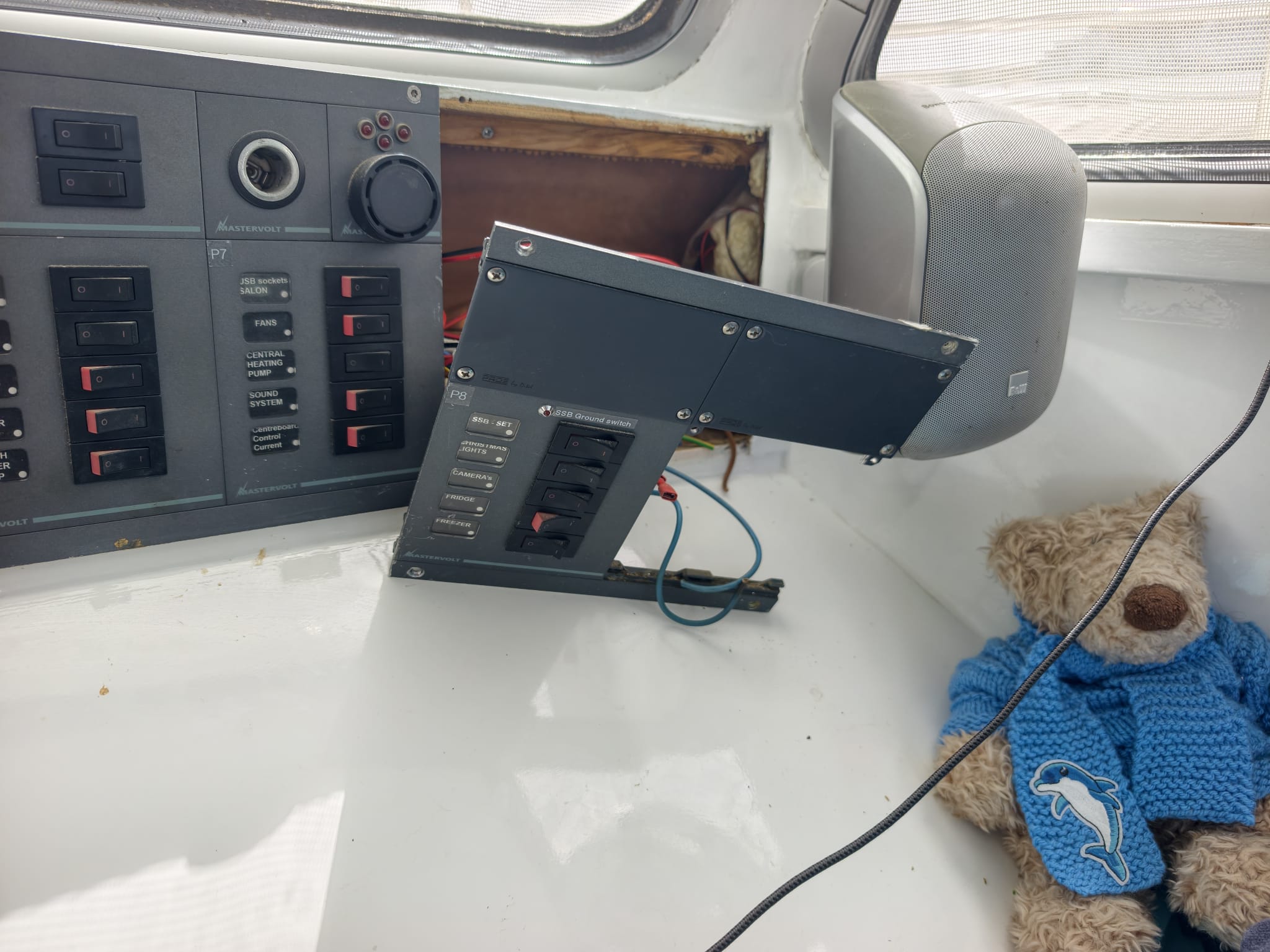
While Sher is busy preparing her trip to visit MomCat in the US and picking up her new residence card (pick up in person) in Pedrogao Grande, Portugal, Wim keeps working on the 230v systems. First, remove the old wiring to and from the panel withe switches in the decksalon.
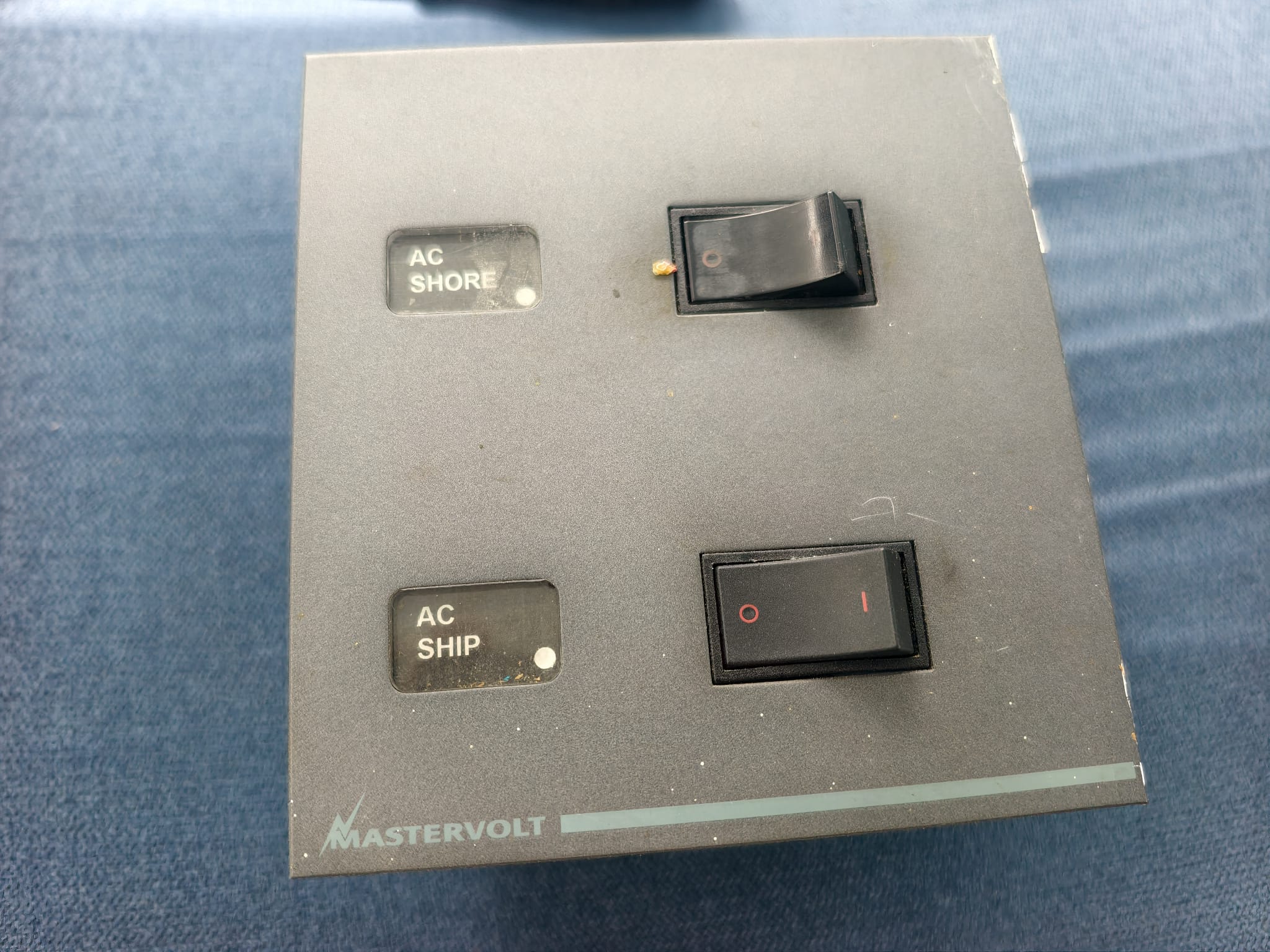
This panel with 15A circuit breakers / fuses has served for 20 years. The issue was, since the old Mastervolt panels were located in the starboard corner of the electrical panels, all 230v wiring goes through here. But since the Victron system was installed there’s no need to feed wires to and from this corner. So, Wim has decided to rigorously remove all that. From now on, all 230v switching will be done by the new 230v box.
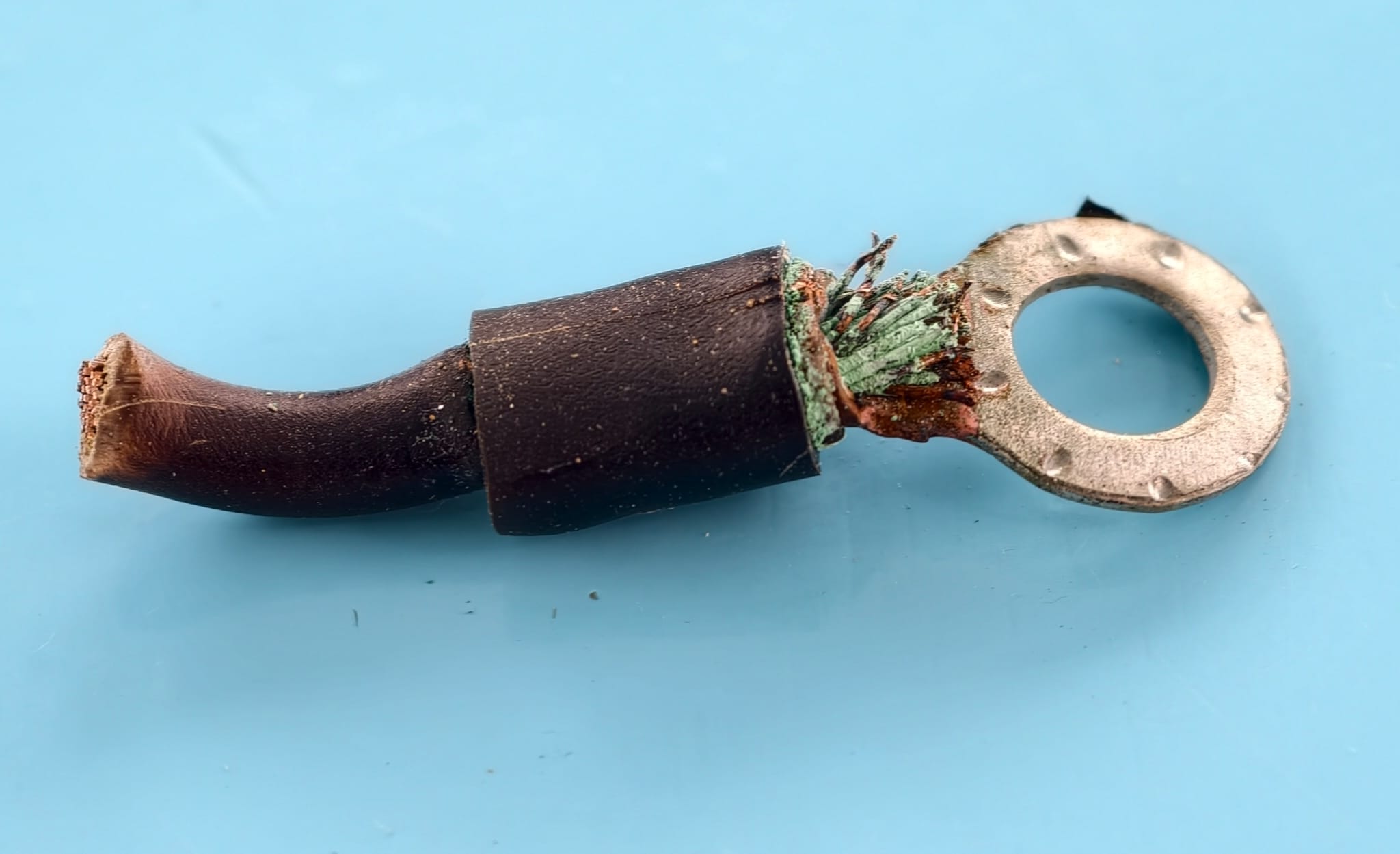
While dismantling the old wires, some things show up… This connector (in the shore power lead) has been seriously overheated…
So, it’s good to revise systems every now and then. To discover things like this.
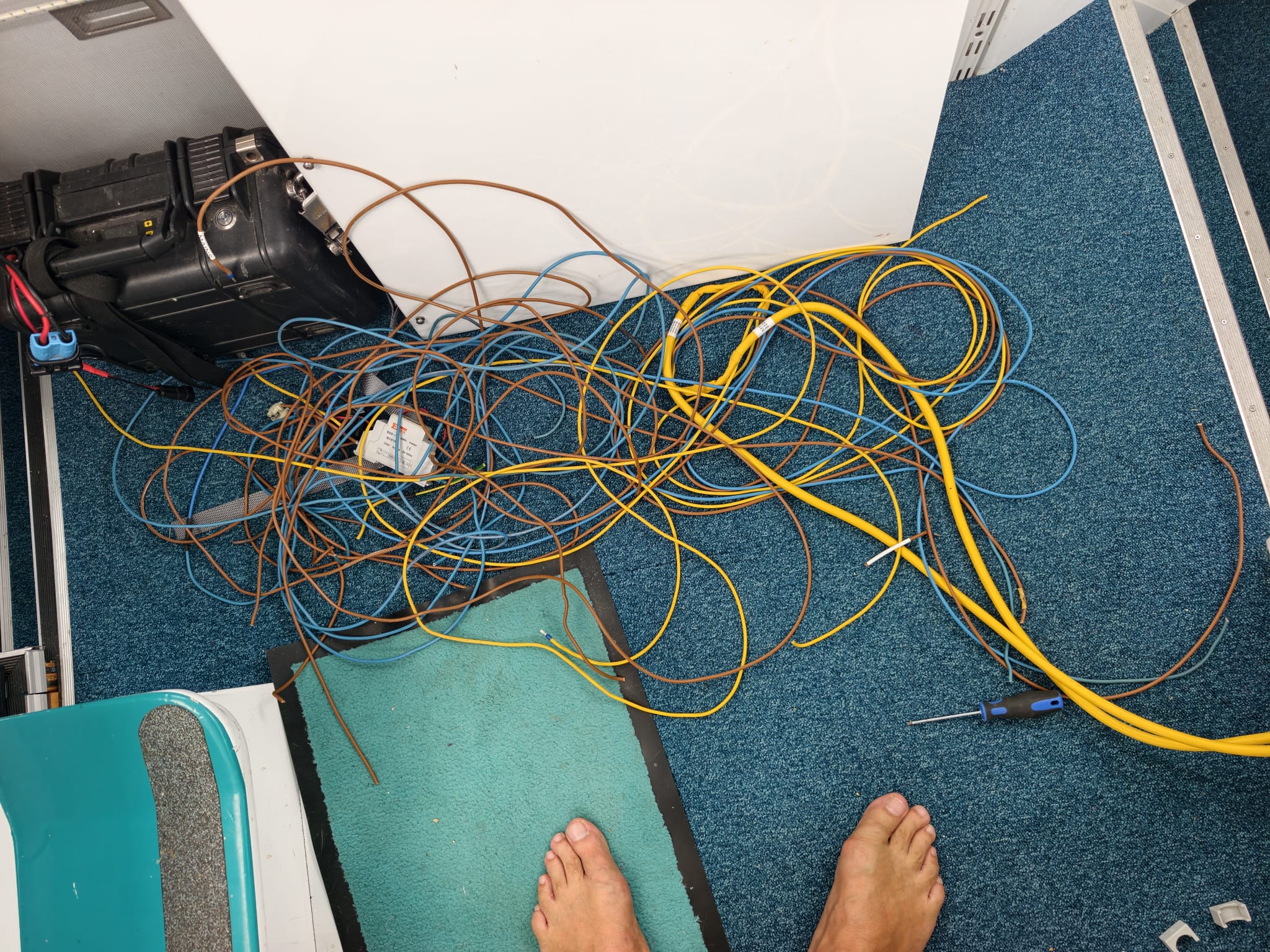
A good amount of excess wires is removed 😅
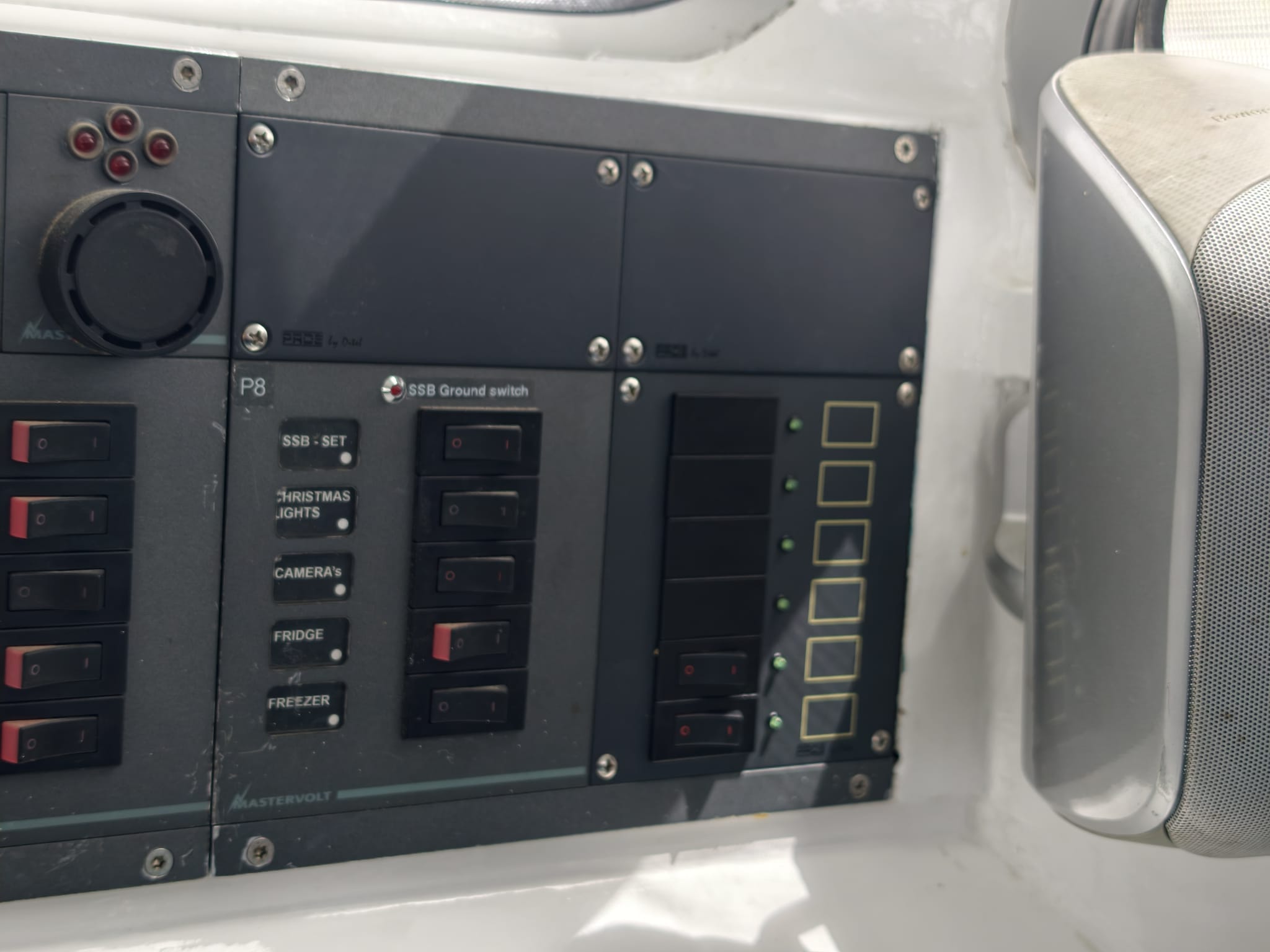
And we replace the old panel with a new one. And create some room for future additions.
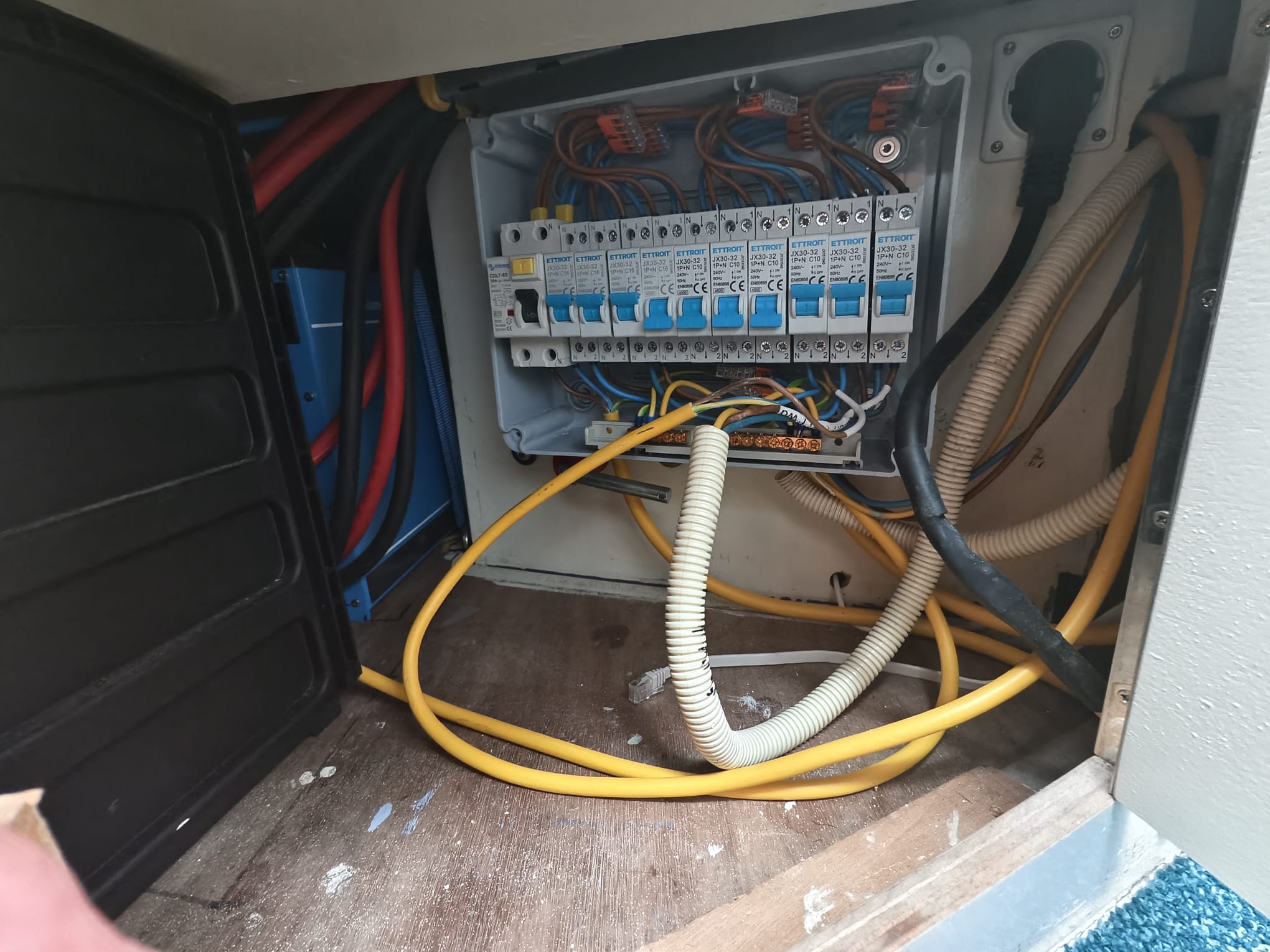
It’s impossible to change everything in one day so Wim connects some cables temporarily to have power on the system by the end of the afternoon…
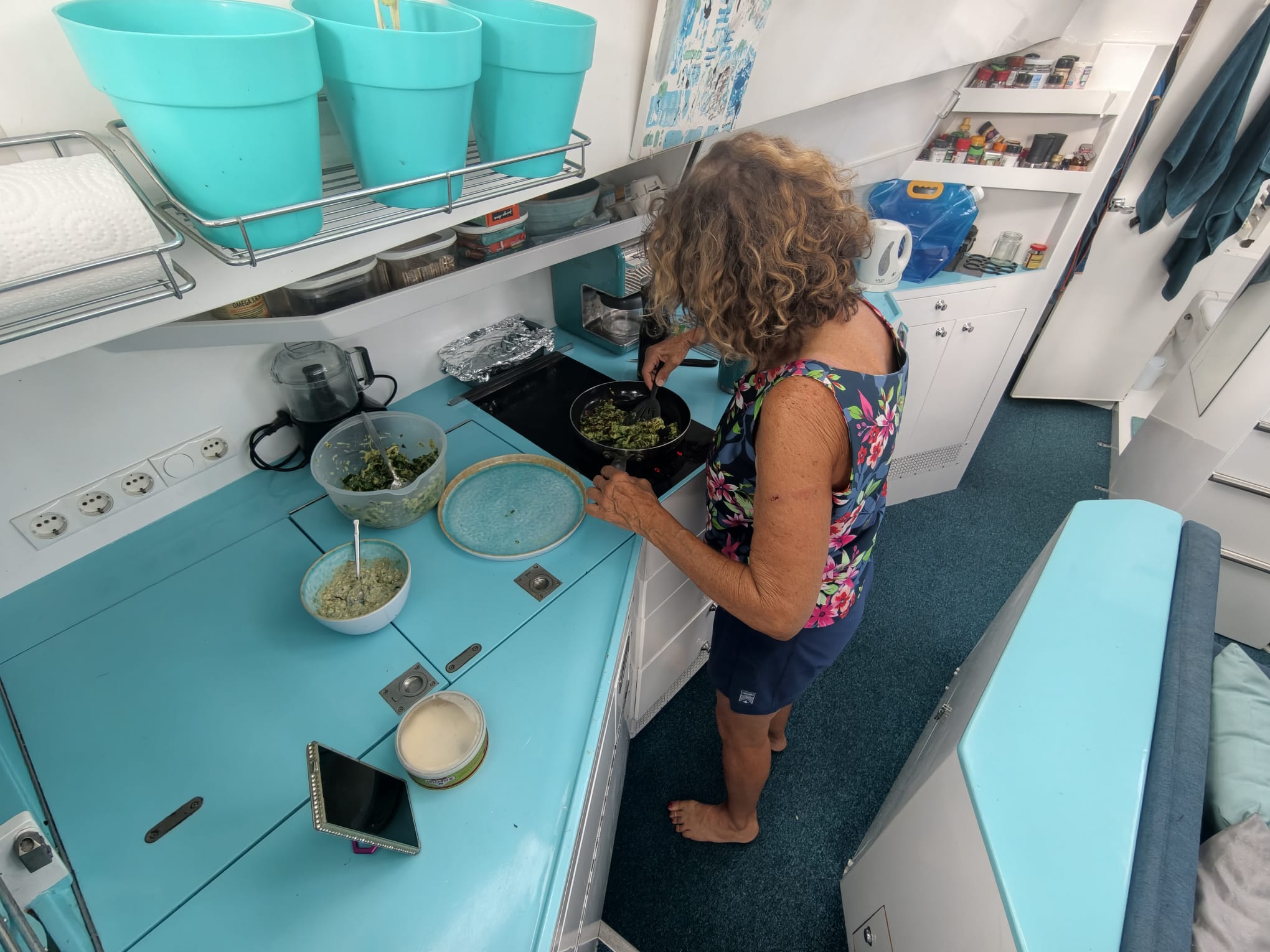
…so we can have a hot shower in the evening and Sher can cook 😃
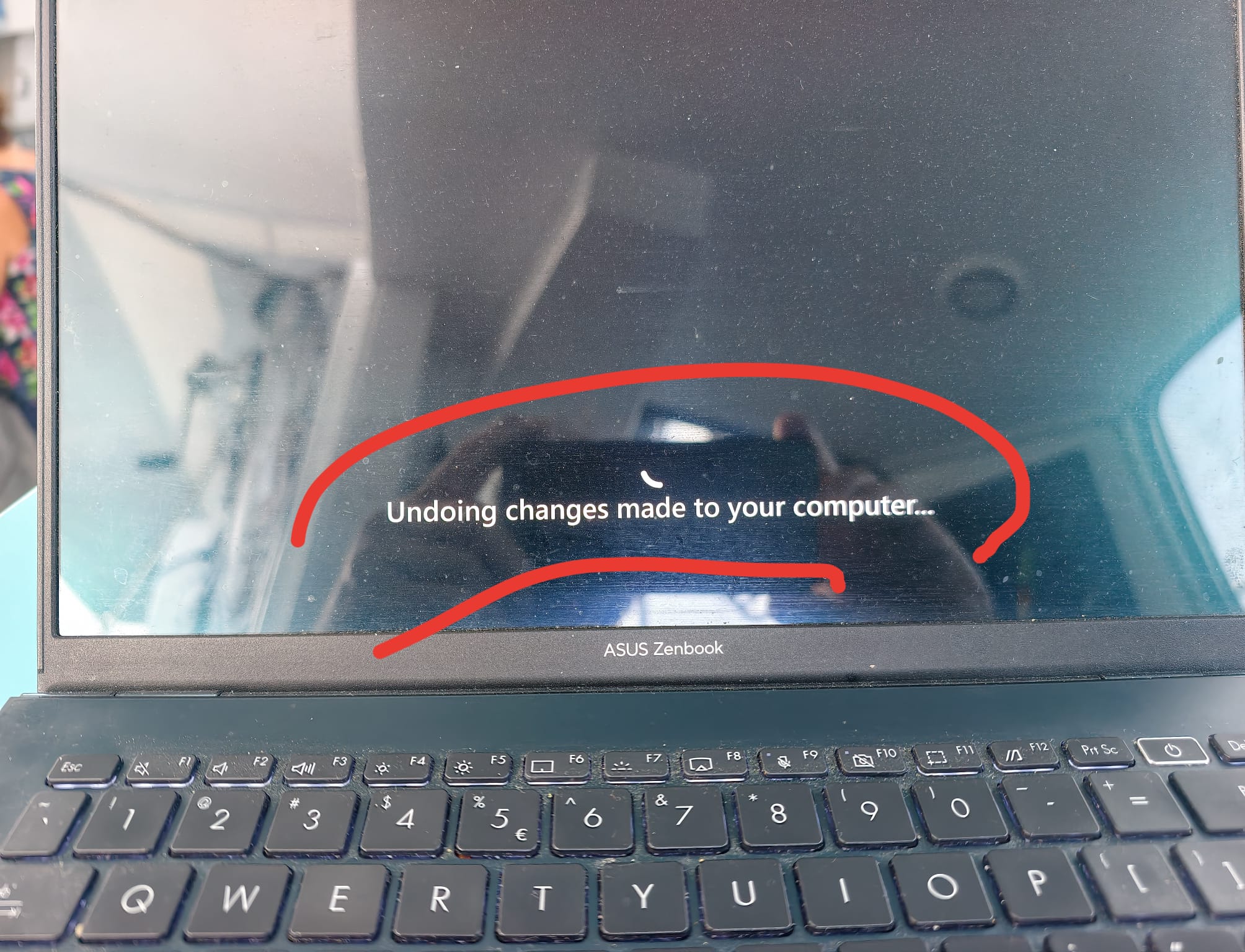
This is why Windows is totally unsuitable for navigation. It spends an hour on updating with numerous reboots and after that: roll back to the previous situation 😤. Imagine you’re maneuvering into a port between the rocks… No, we’re very happy with rock stable and reliable Ubuntu running OpenCPN!
September 8.
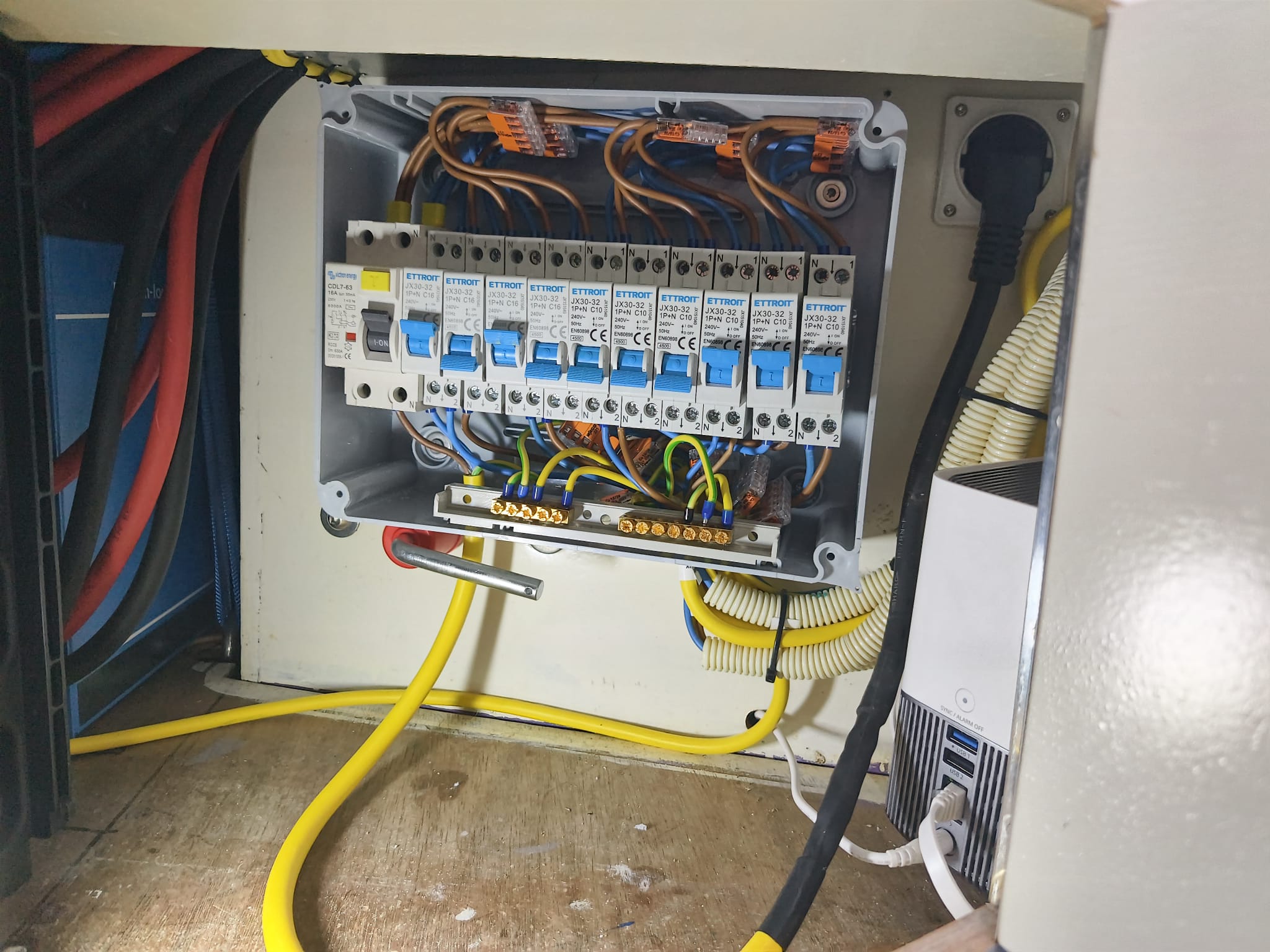
Wim finishes the existing 230v wiring to the new breakers box.
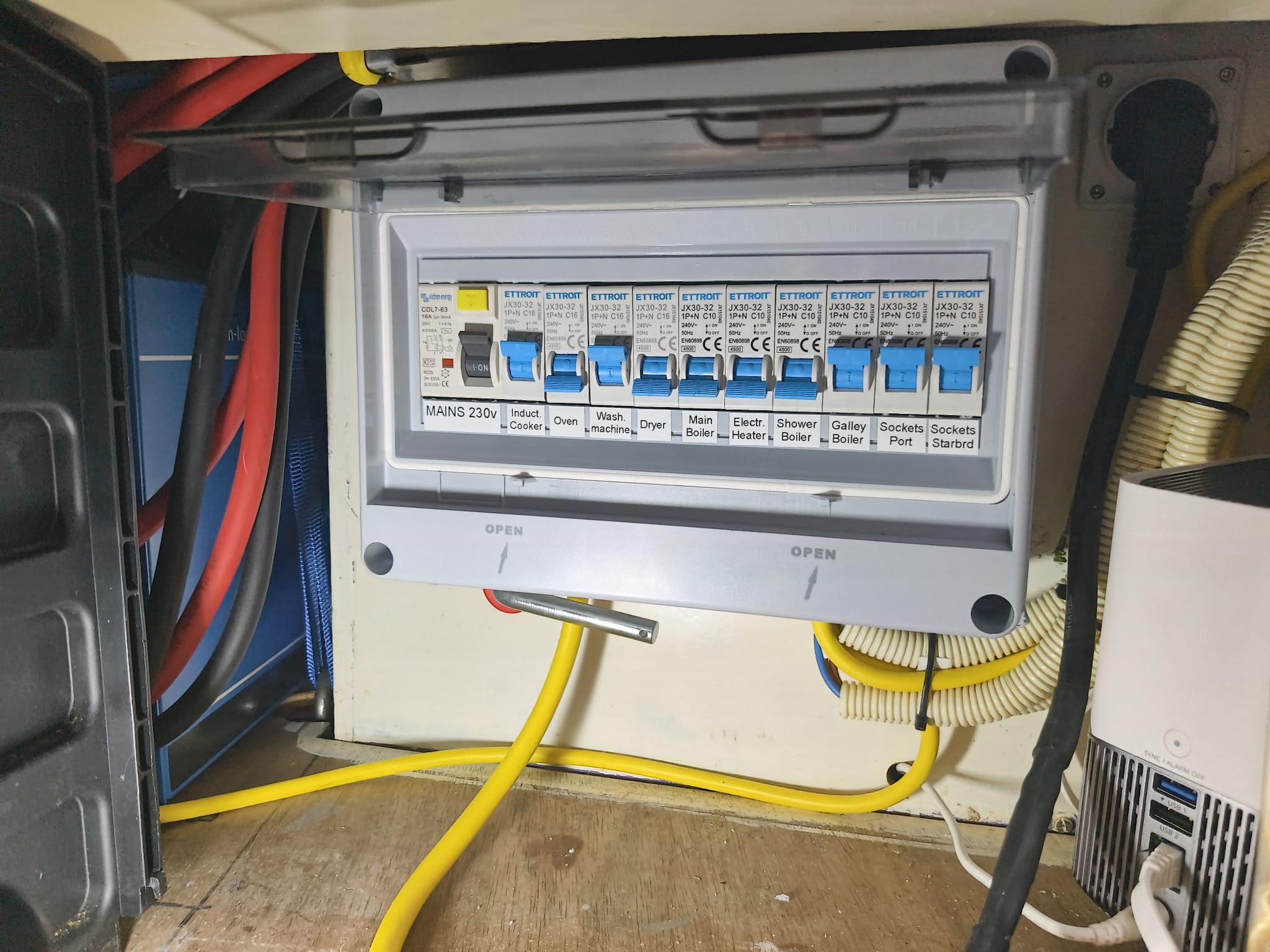
Looks neat. The next step is adding wires (sub groups) for the washing machine, the dryer, the shower boiler, the electric heater and re-wiring some of the wall outlets. Plus re-wiring the shore power.
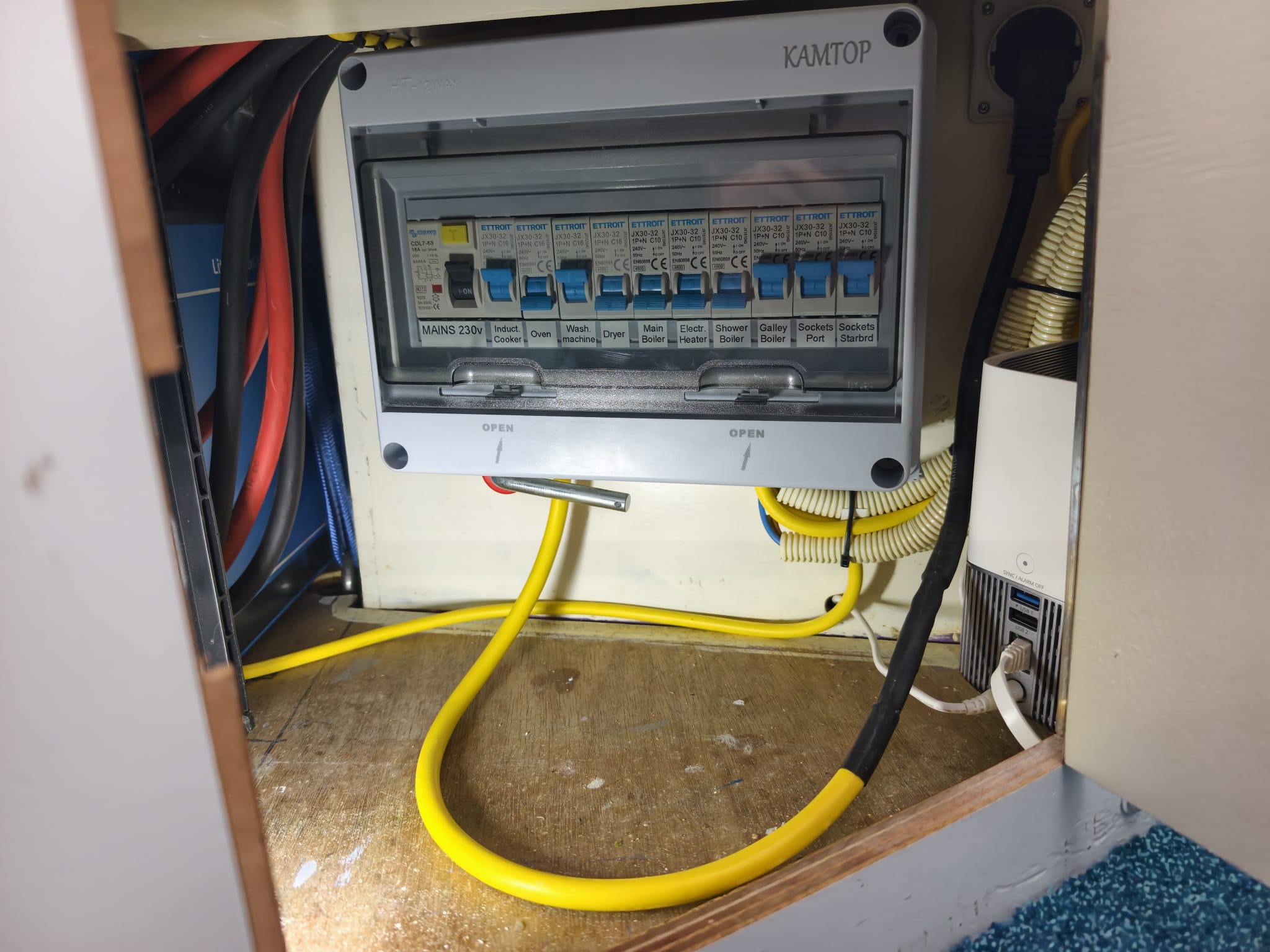
Lid closed for now!
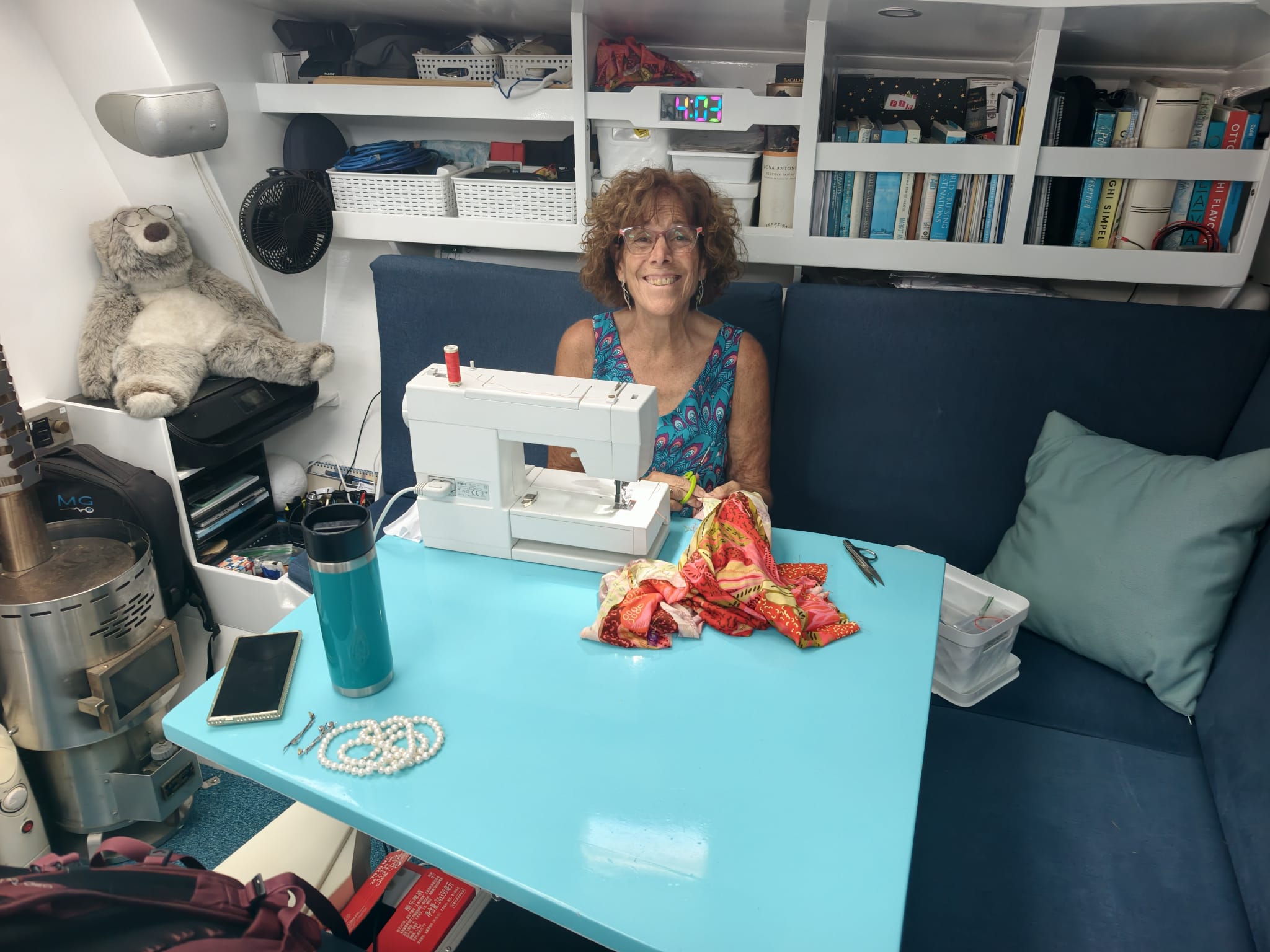
So the sewing atelier has power for the sewing machine 😀
September 9.
Today, Sher flies to the US to visit MomCat.
The airport has an outdoor waiting lounge 😄
Lift off…
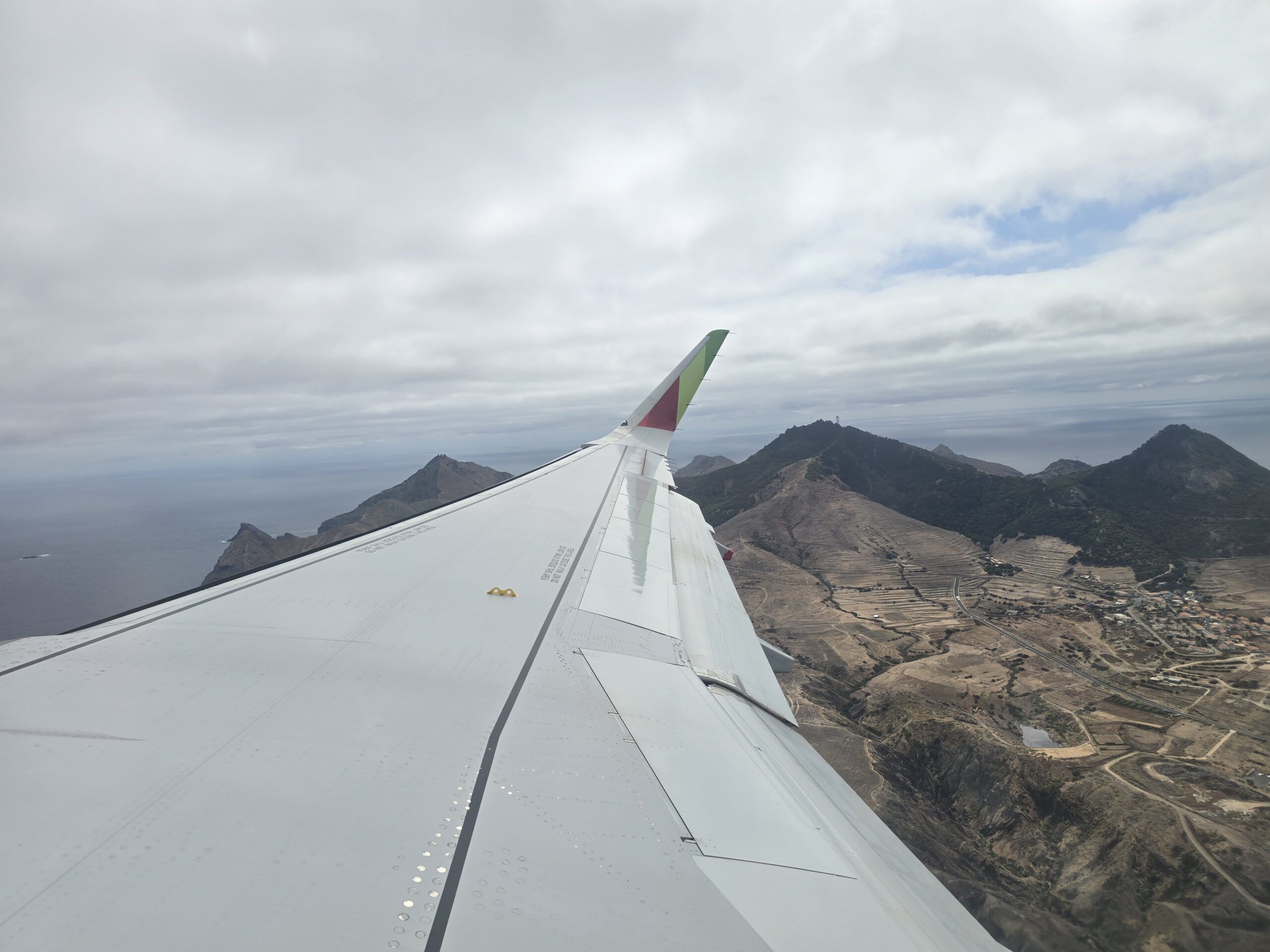
Circle over our bay.
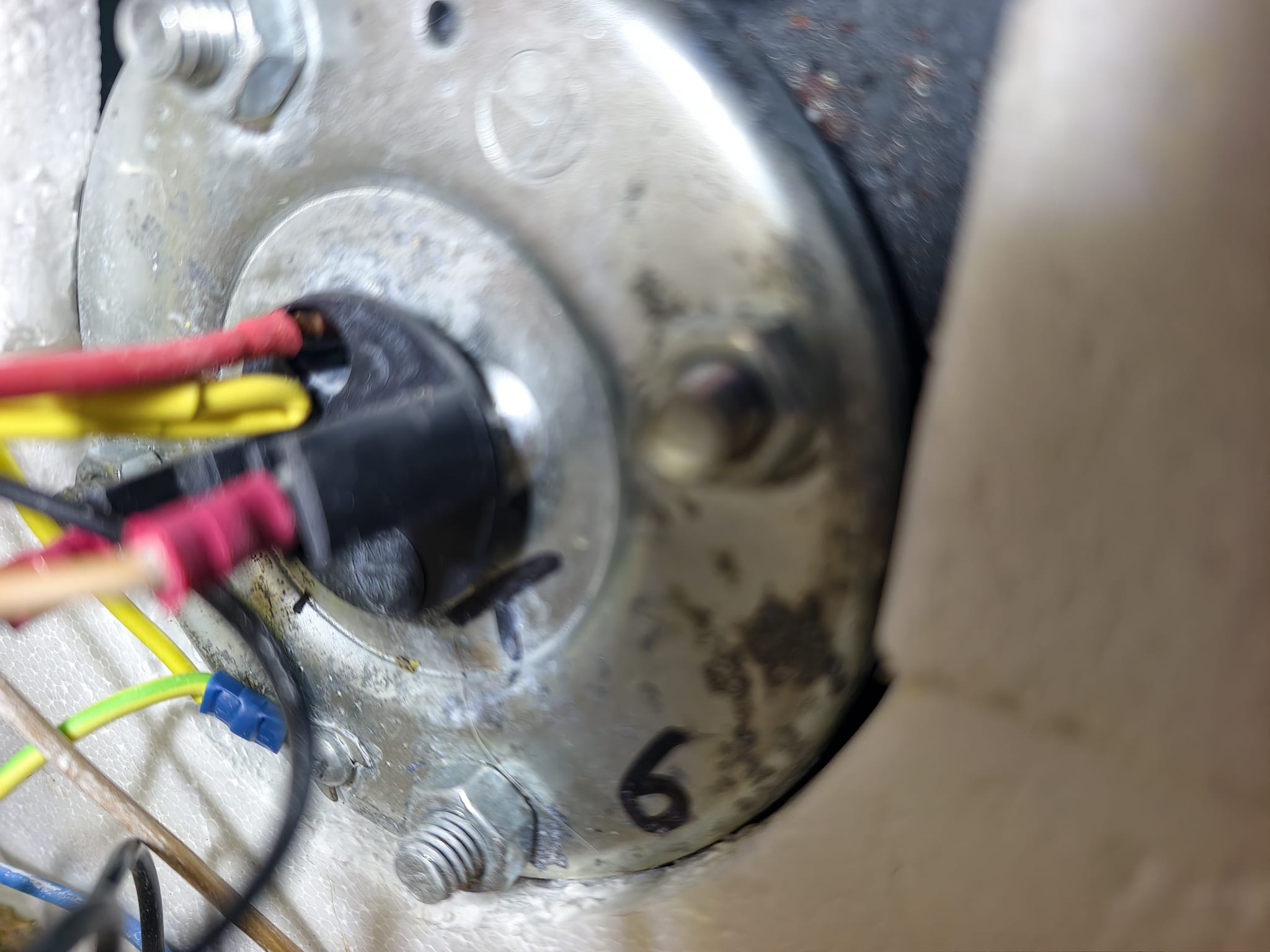
At Dione IV, Wim continues working on the 230v system. He replaces the wire for the shower boiler. The existing cable was too thin (1mm2) and connected to the same group as the sockets on starboard. Now, the boiler has its own 3x15mm2 power supply and 10A circuit breaker in the new 230v cabinet. Much better!
After that, Wim wants to have a shower. So he switches on the boiler. But it heats a only a little while and then switches off. Hm. Perhaps it was still warm from yesterday? No… It’s a cold shower…
Let’s investigate… There is 230v power, the relay is working, the thermostat is working but the power to the heating element is interrupted. Following the wire, it disappears in the tube where the sensor for the thermostat is fitted. Pull out that wire and a little yellow thing pops out. Measure again. The yellow thing is the interruption. Let’s override that with a wire. The boiler works.
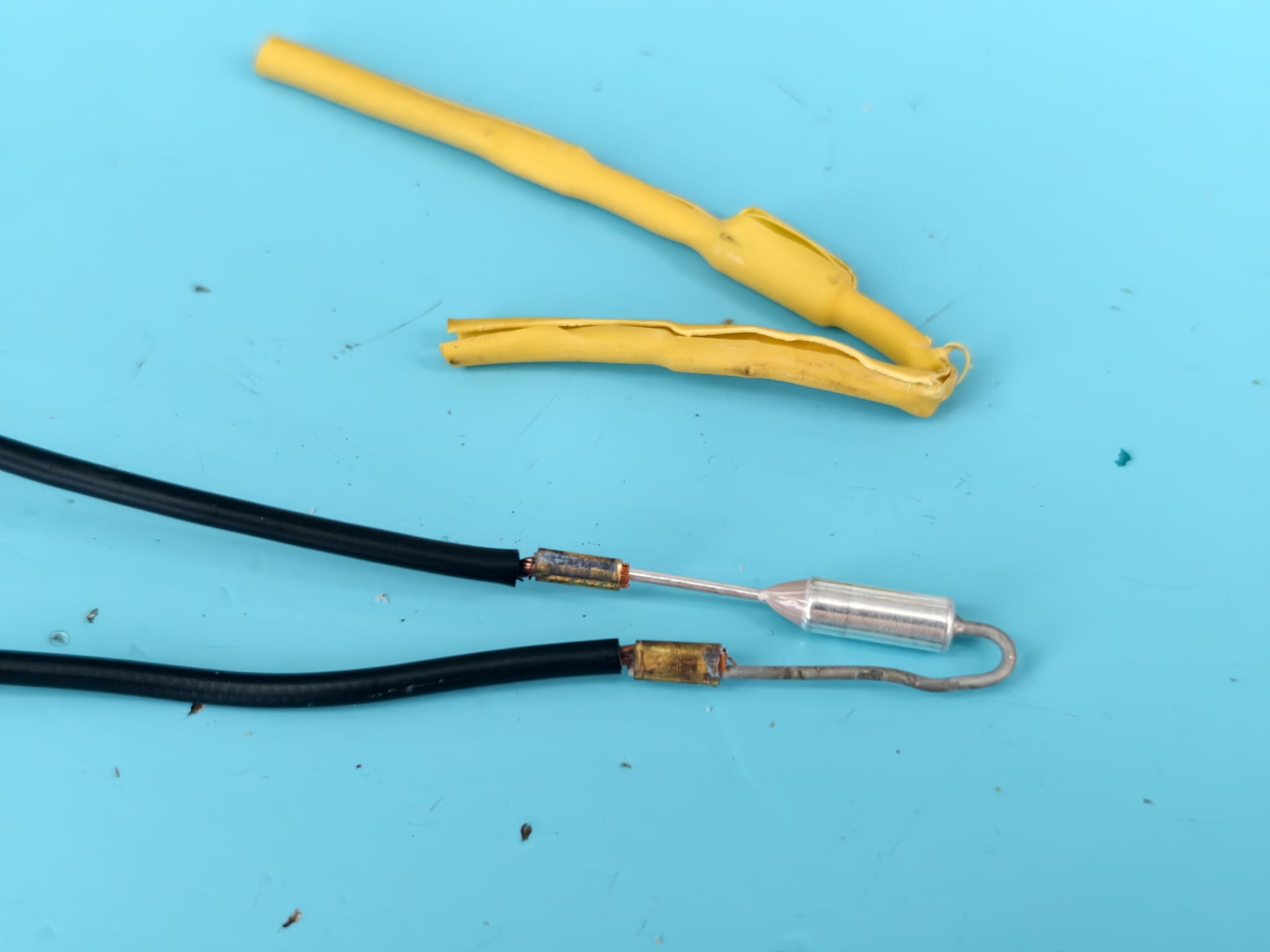
After some research on the internet it appears this is an overheat protection. When the thermostat fails, this device cuts off the power and prevents the boiler from overheating. It’s like a fuse, it blows at a temperature of 98ºC and has to be replaced after that. It’s a mystery why is blew, the boiler wasn’t overheated. Perhaps a mechanical failure. Perhaps moving the wires when Wim was connecting the new power cable gave it its last push?
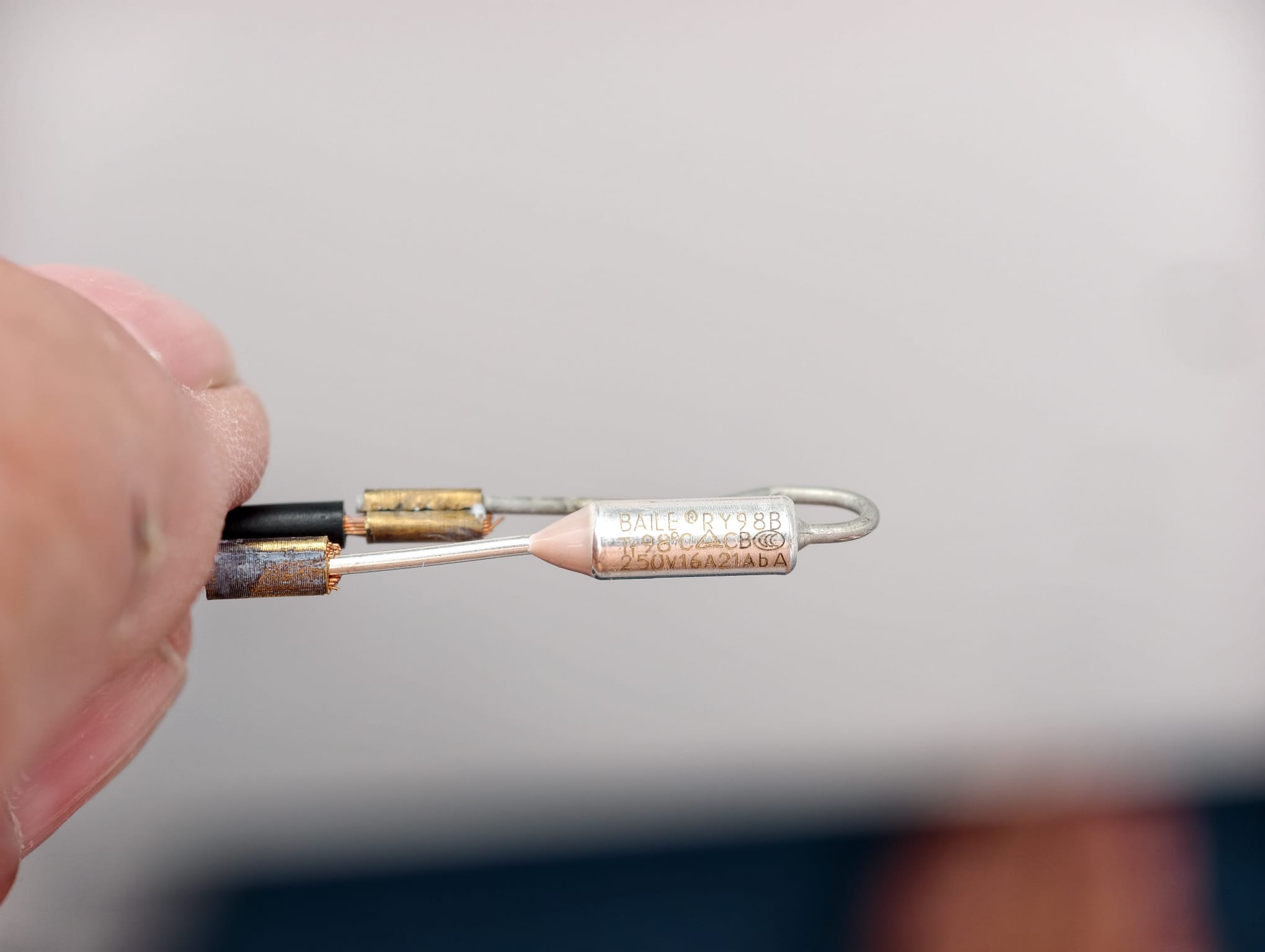
Wim needs to use his phone’s microscope to read what written on it 😅. It’s available on Amazon! Ordered.
September 10.
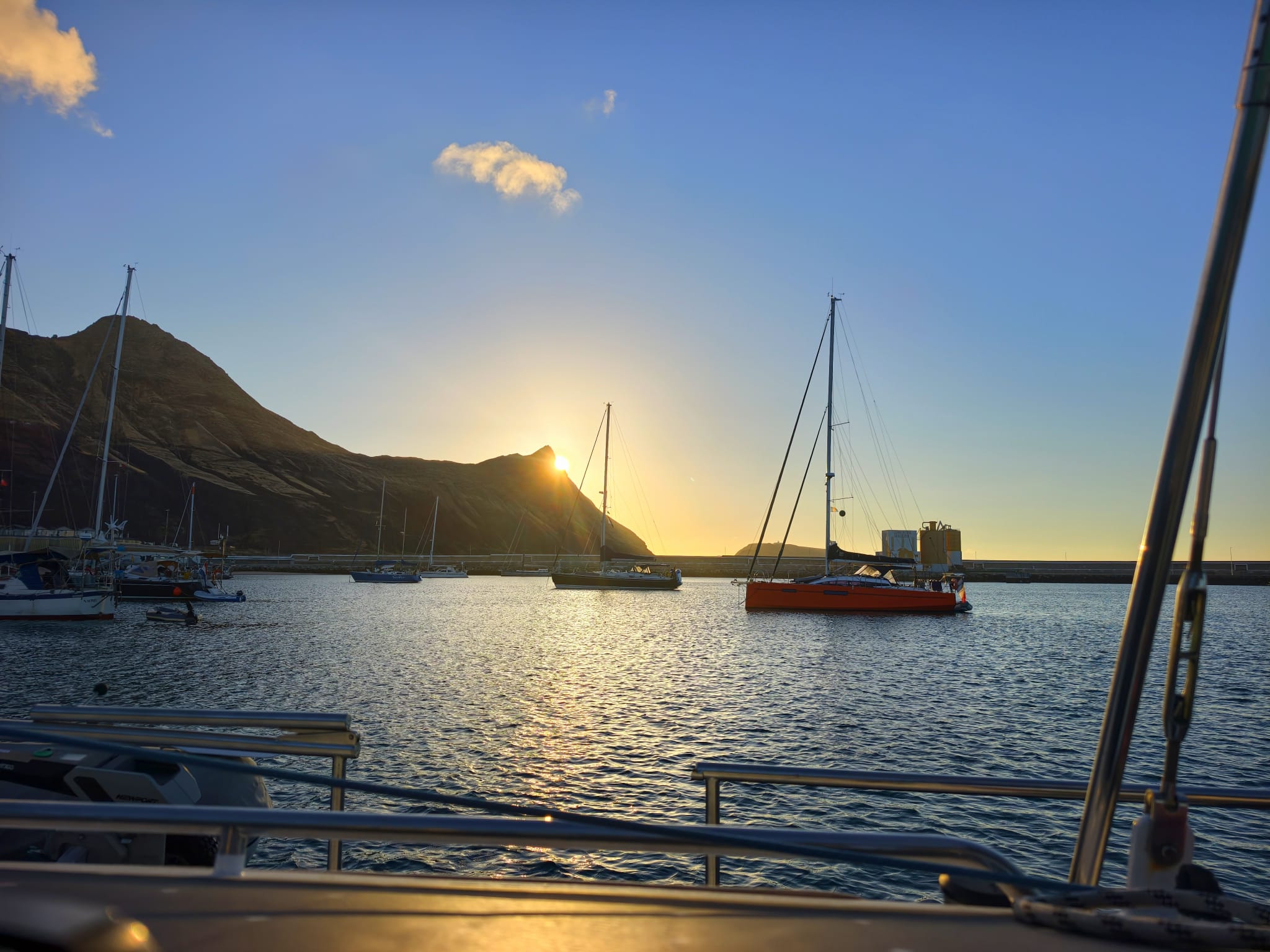
The day starts with a beautiful sunrise. At 0820h, the sun rises over the mountains.
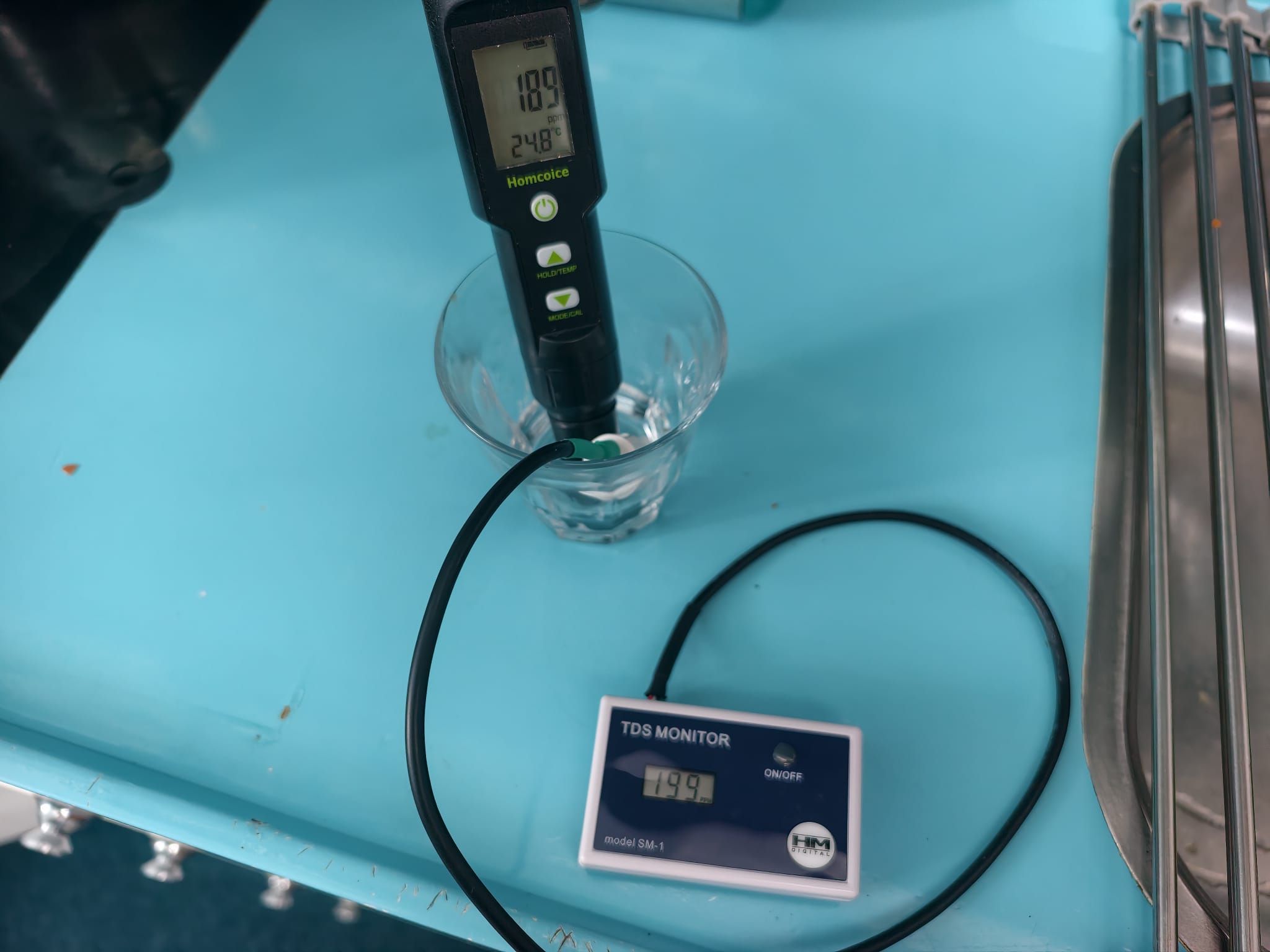
We’ve ordered an inline TDS meter (Total Dissolved Substances) for our watermaker. Up till now we were testing the water with the manual device. We have to put some water from the test hose into a glass and measure the TDS. If it’s not good, wait 10 minutes, fill another cup, measure again, and so on. Until the TDS reaches a value of about 200 and then we can switch the output of the watermaker to the tanks. Tedious. A constant monitoring device will be much handier. That’s the idea behind this the device that arrived today. Let’s test it: 199 against 189 seems pretty good.
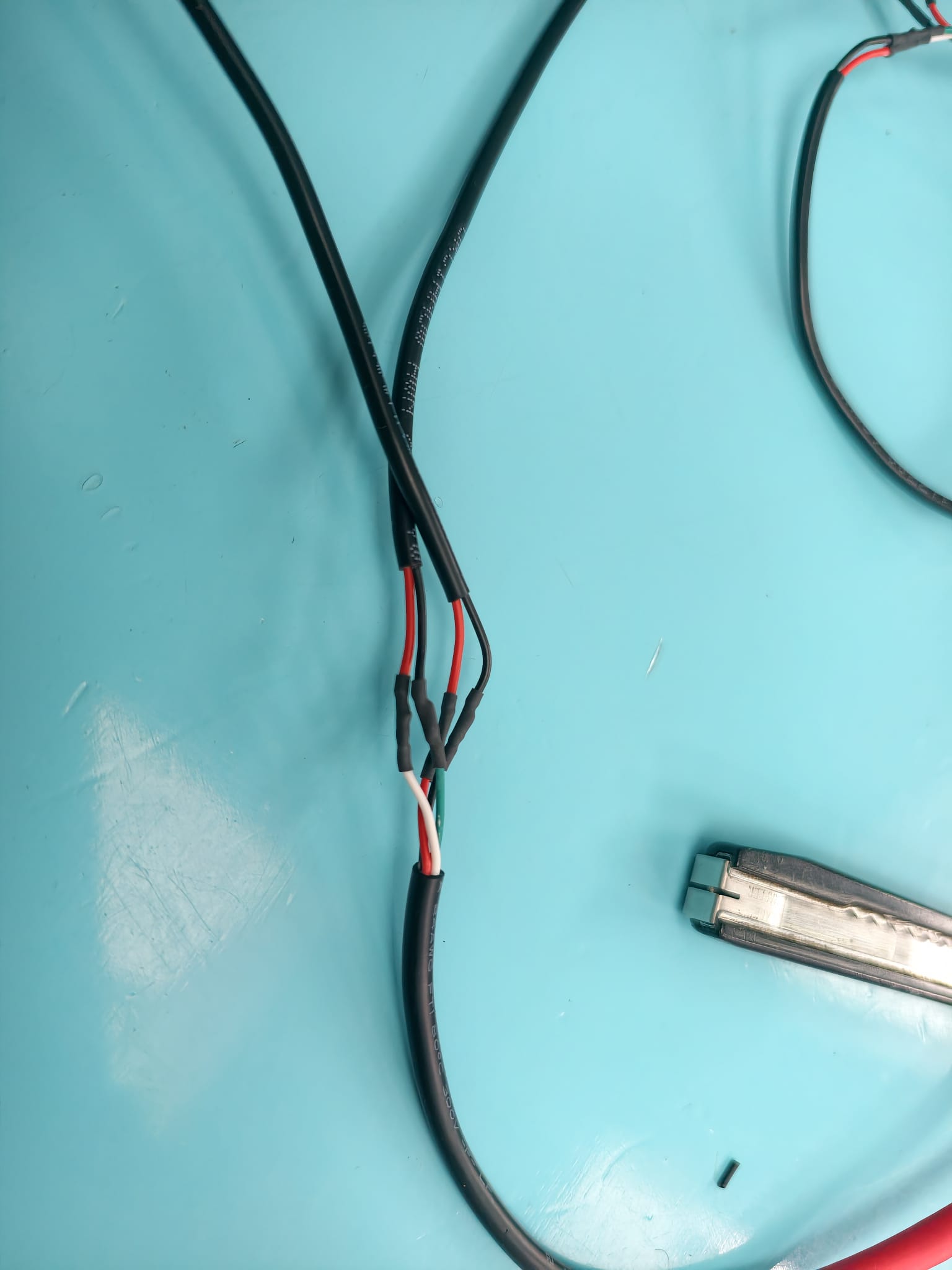
We want to install the display in the salon near the watermaker’s energy meter. The sensor has to be installed in the tube coming from the watermaker, which is in the water cabinet. That’s about 3m and the cable from the sensor to the display is only half a meter. So, let’s extend that.
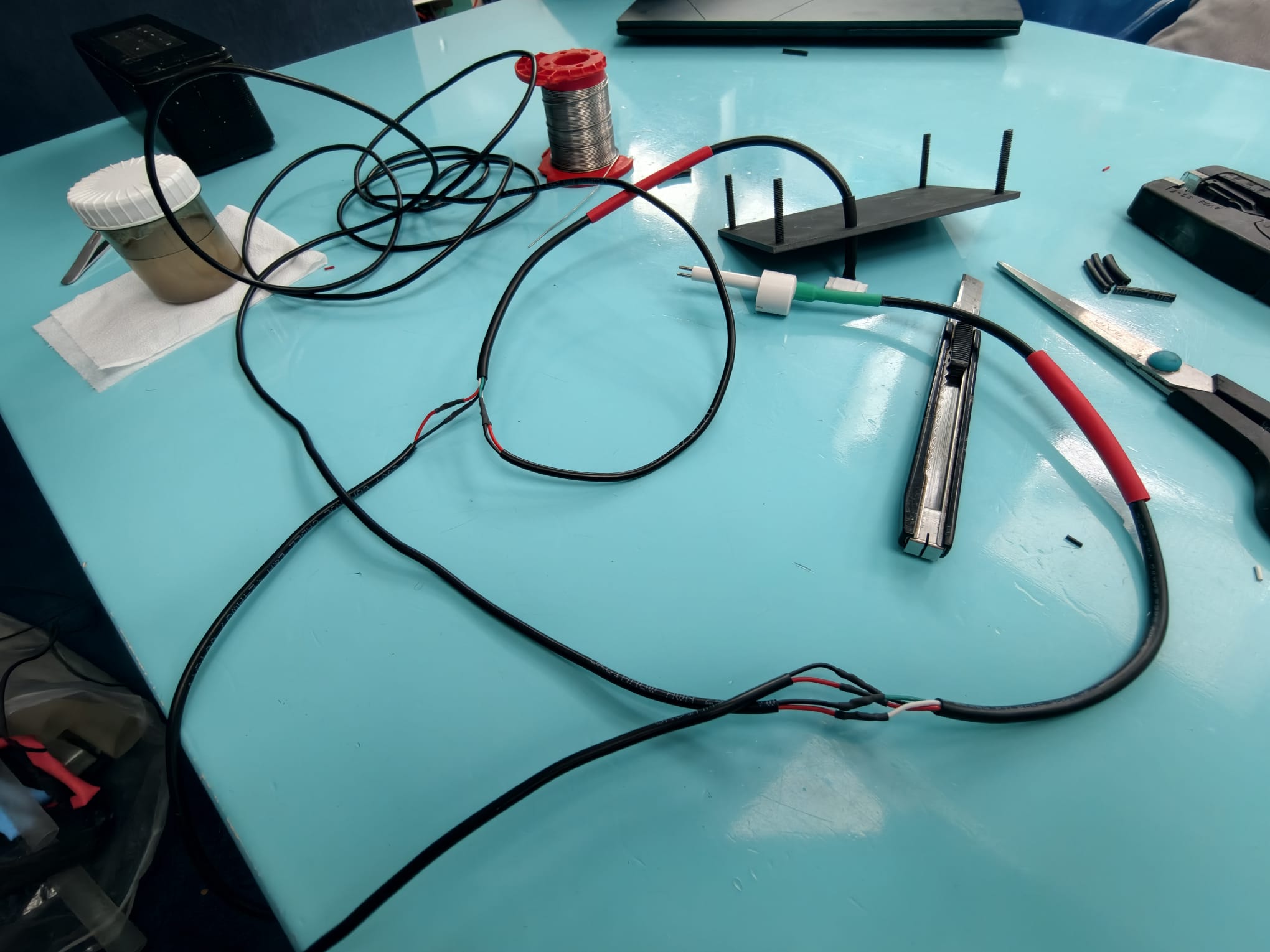
Solder 2 wires of 2 cores of 3m in between the sensor and the display.
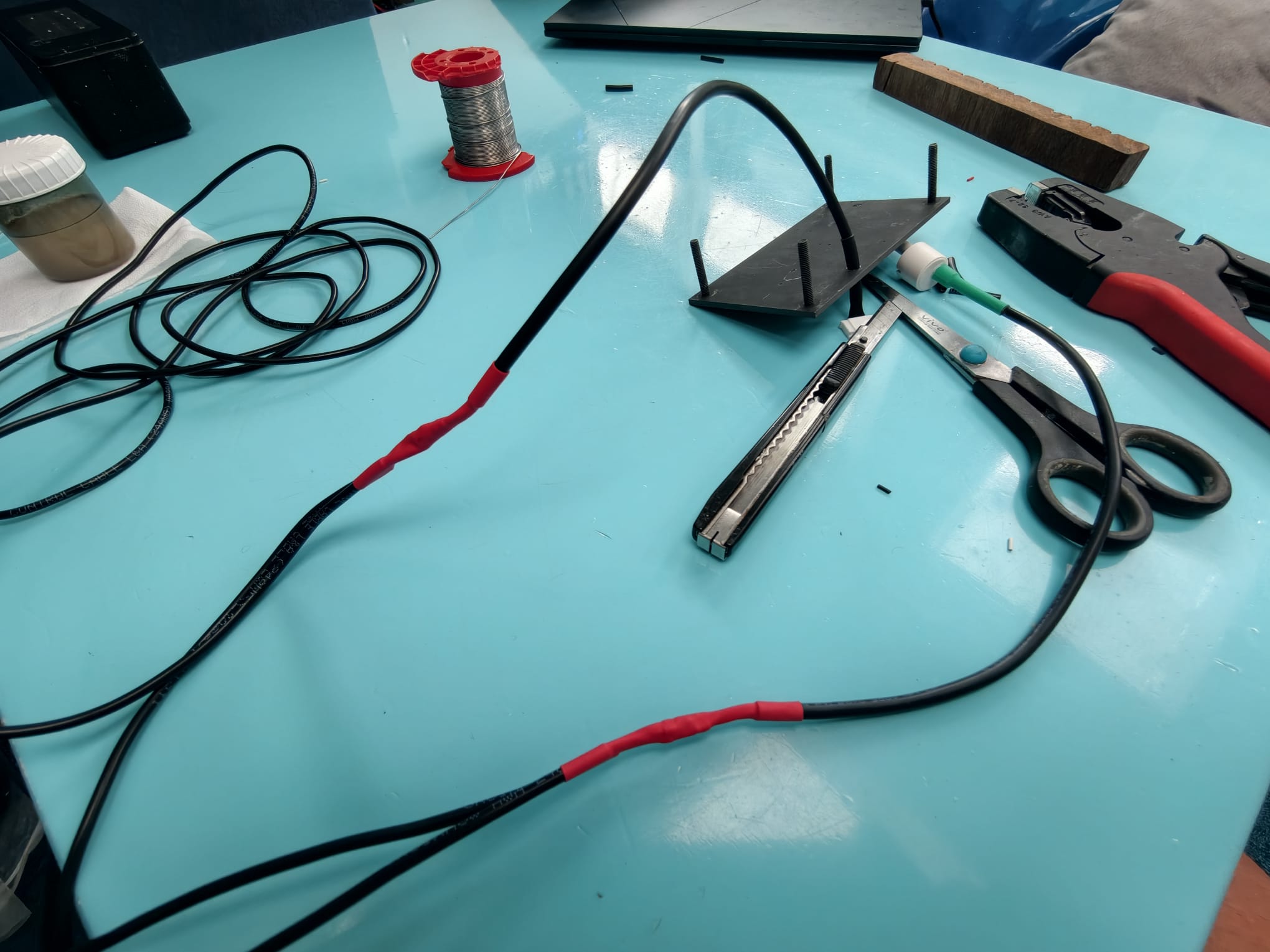
Heat shrink tube finishes it.
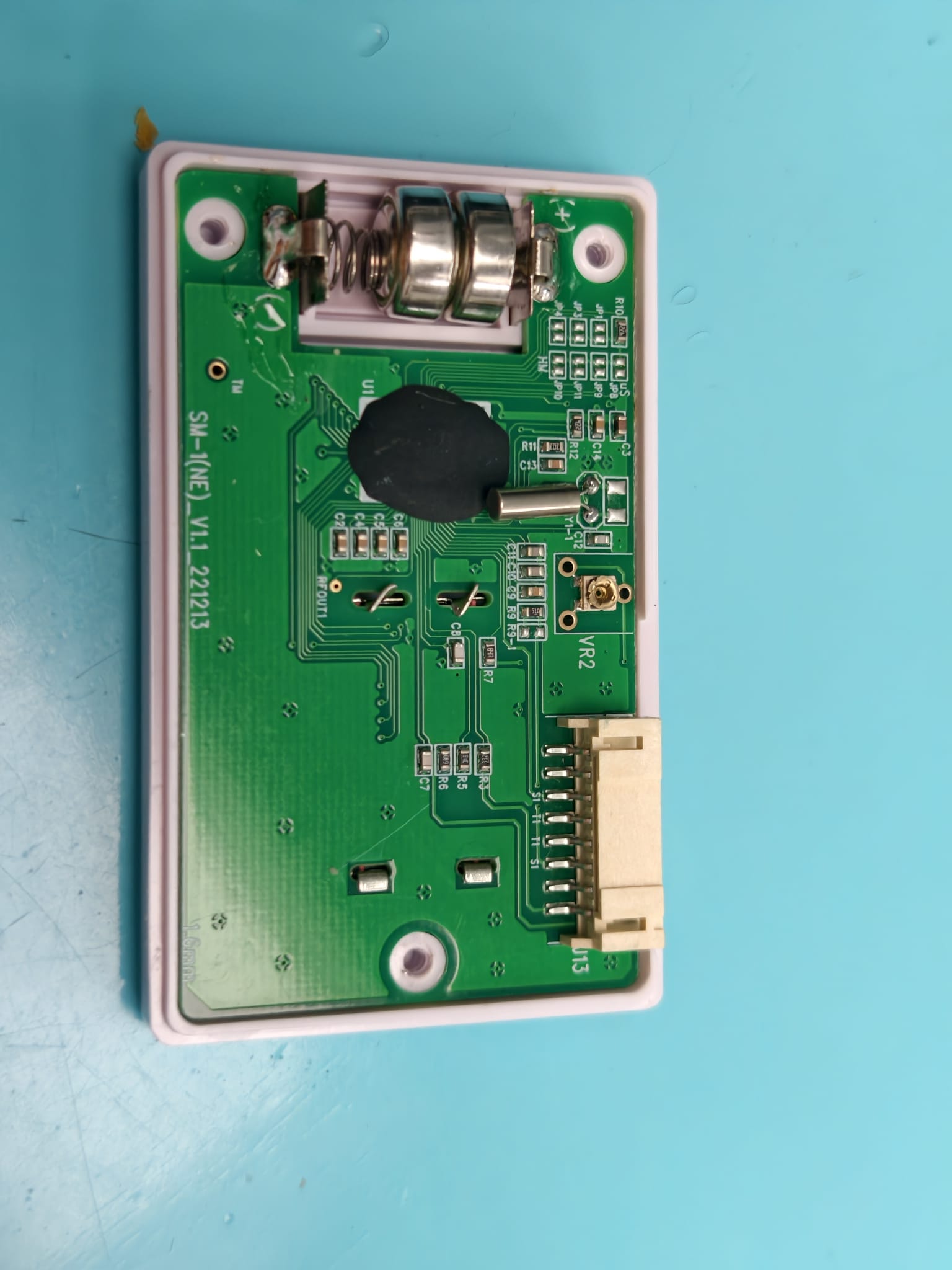
The TDS measurement is a resistance value. So, the extension of the cable will have added some resistance and the meter has to be calibrated. So, let’s open the display case and there we see a calibration potentiometer.
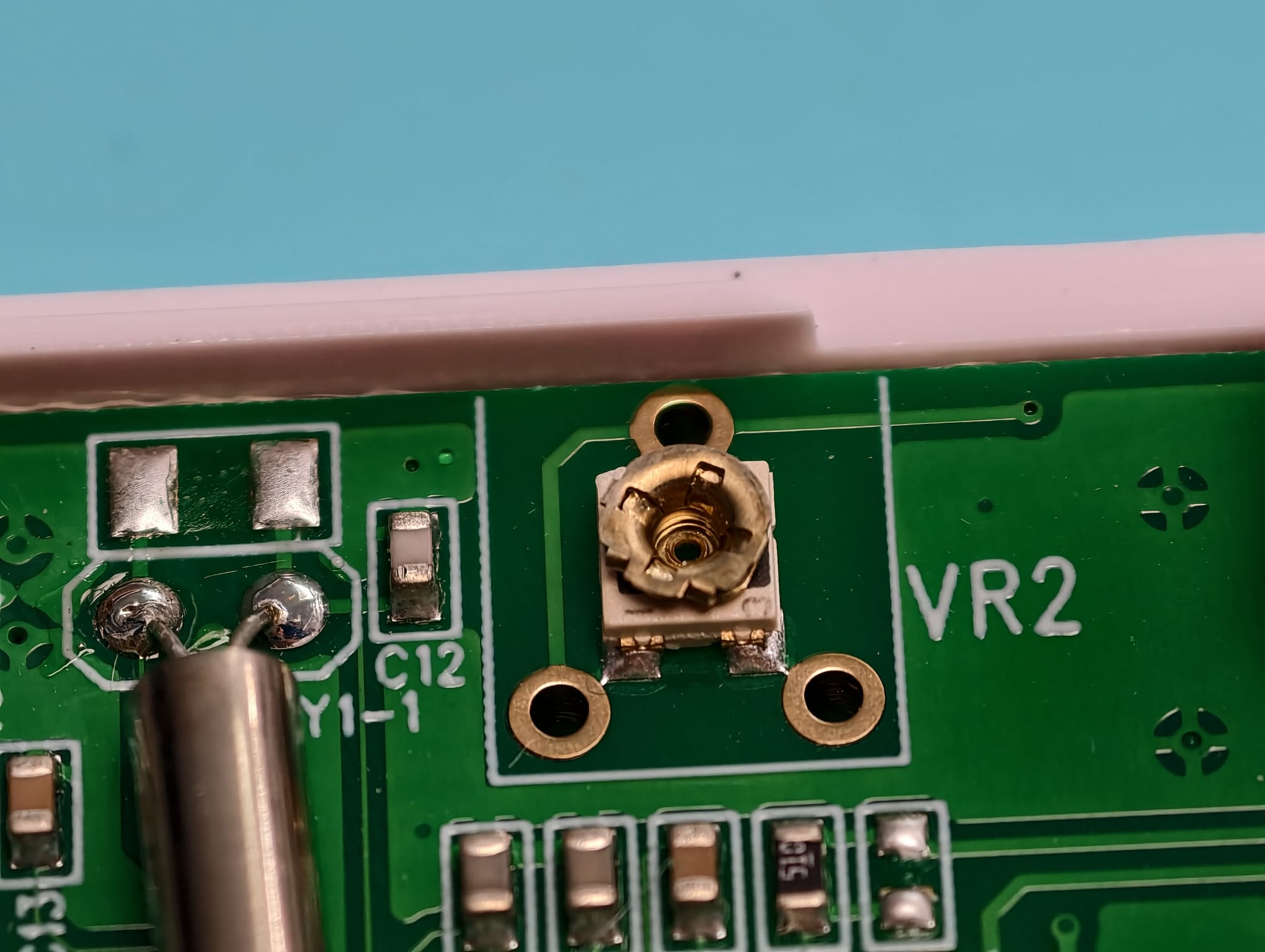
It’s really tiny!
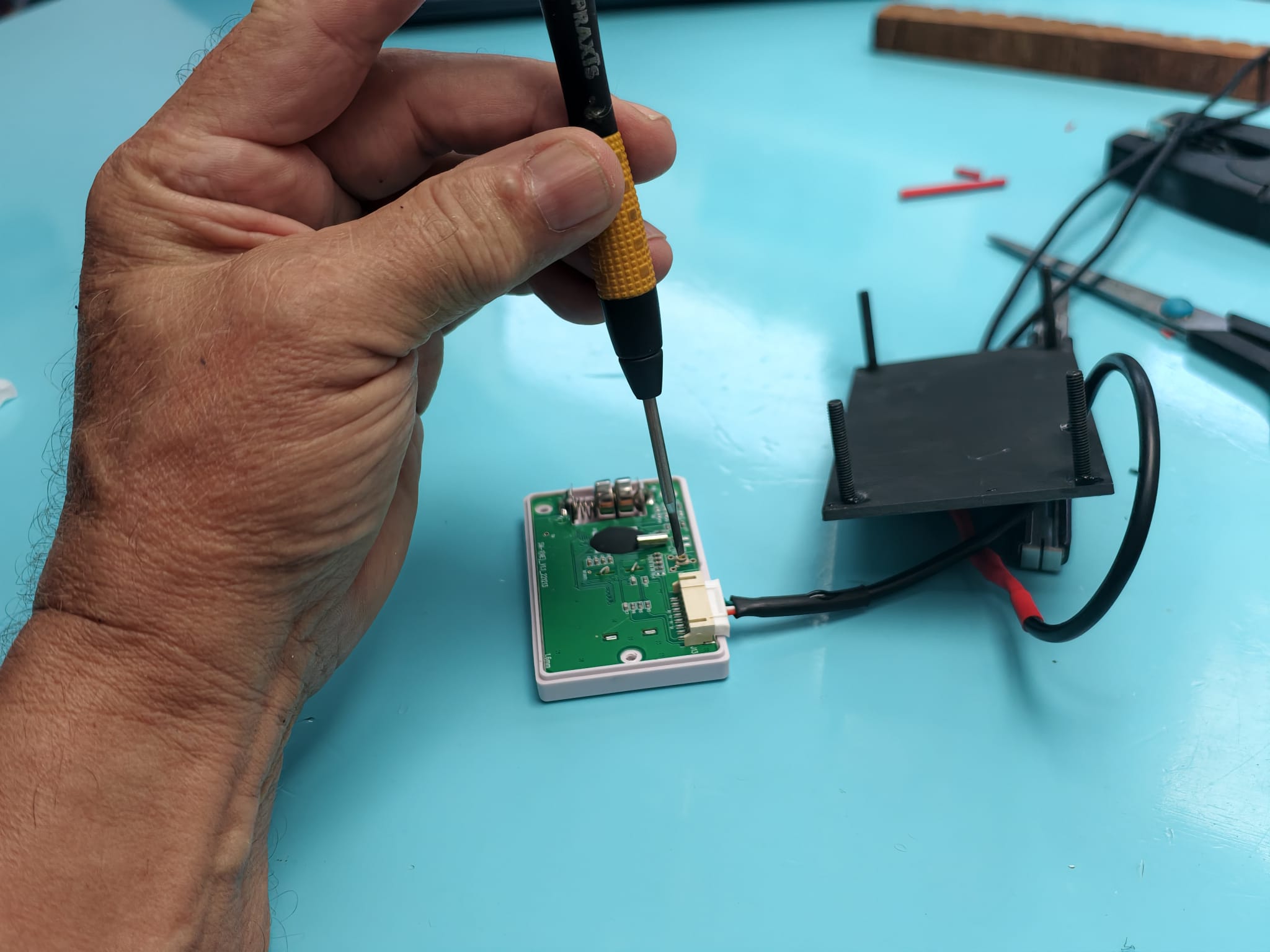
With a very tiny screwdriver it can be adjusted.
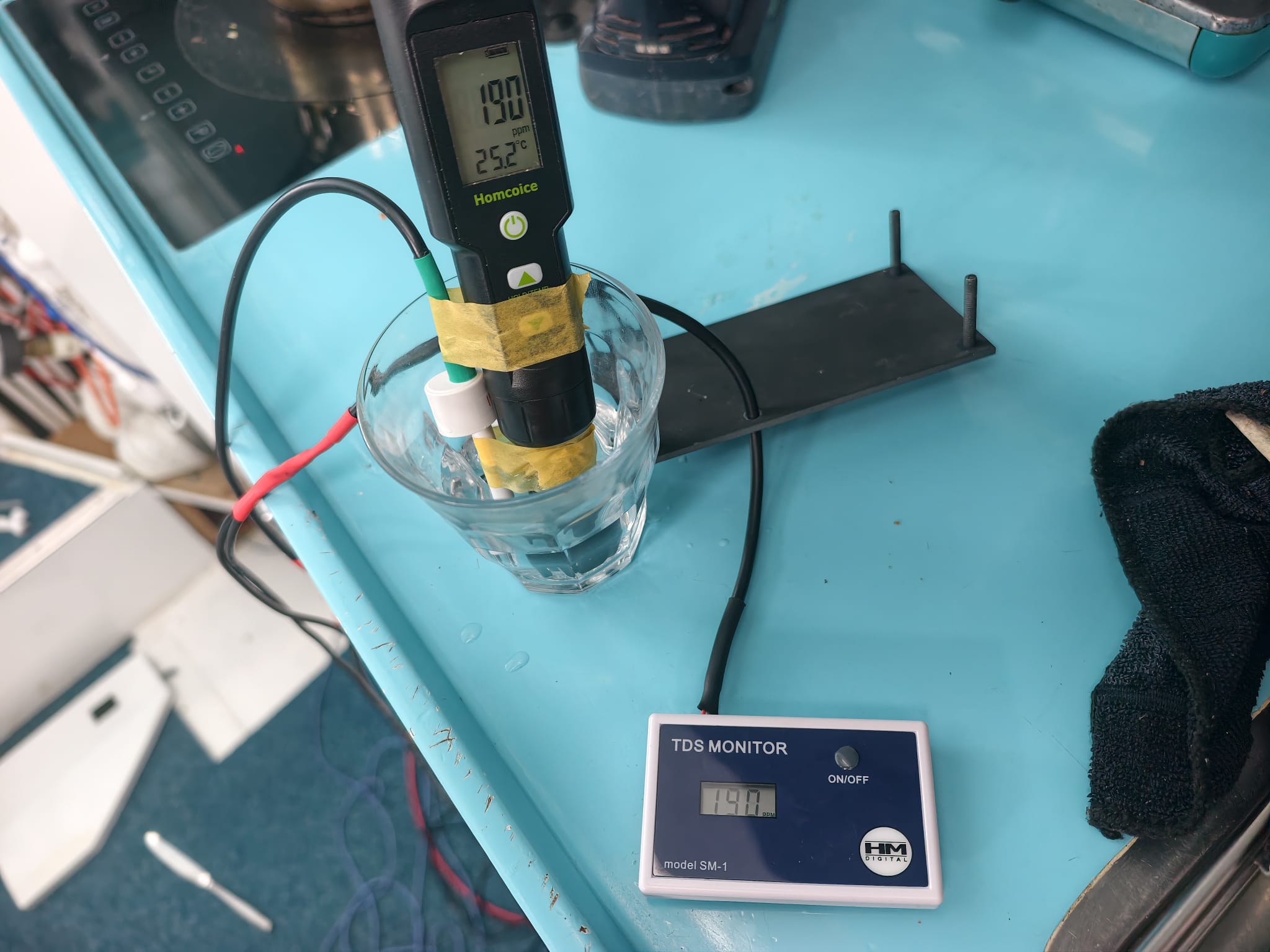
Compare it to the manual device and re-adjust the value. 190-190 is pretty close! 😅
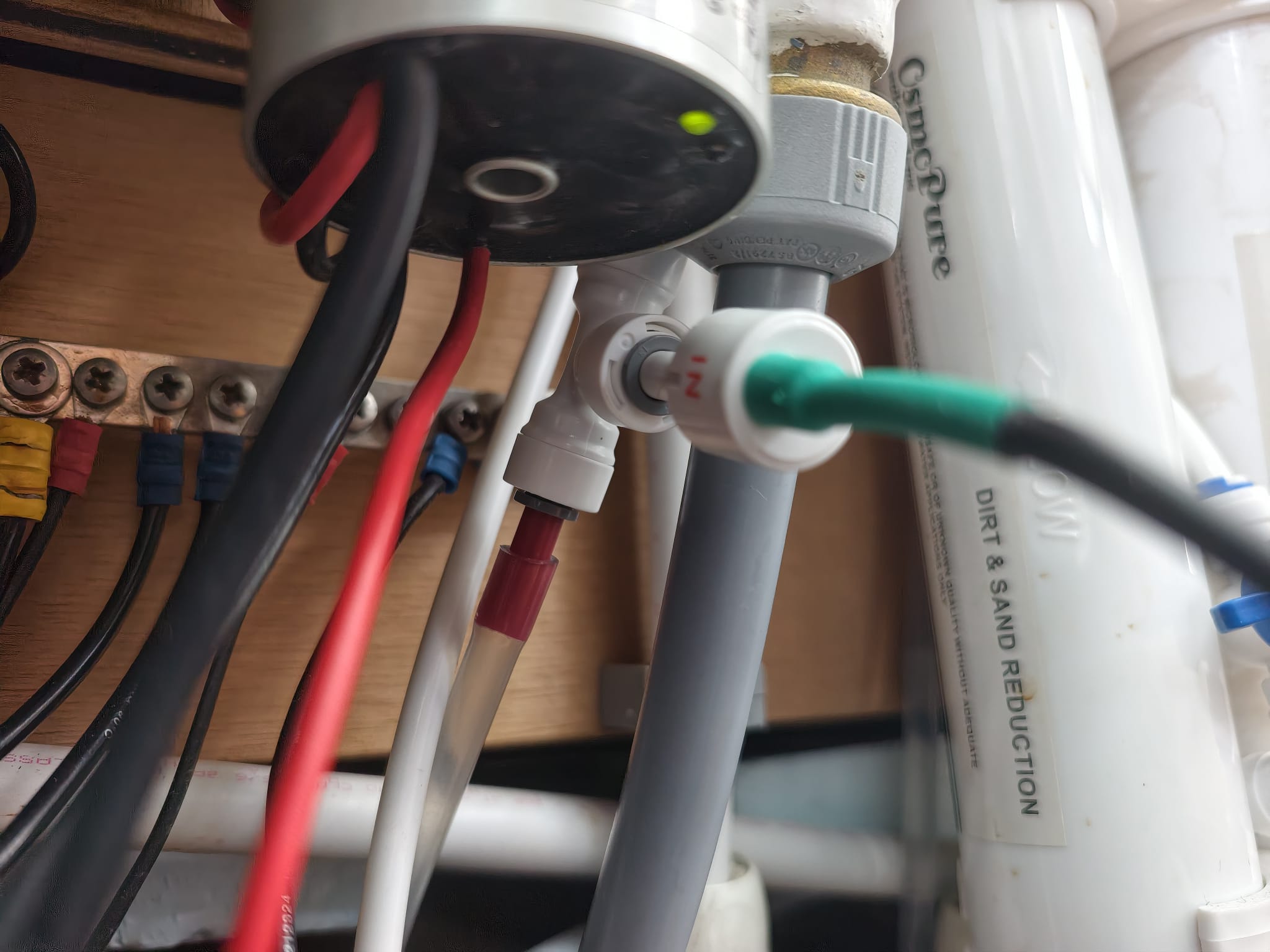
Then mount the t-piece with the sensor in the output hose of the watermaker.
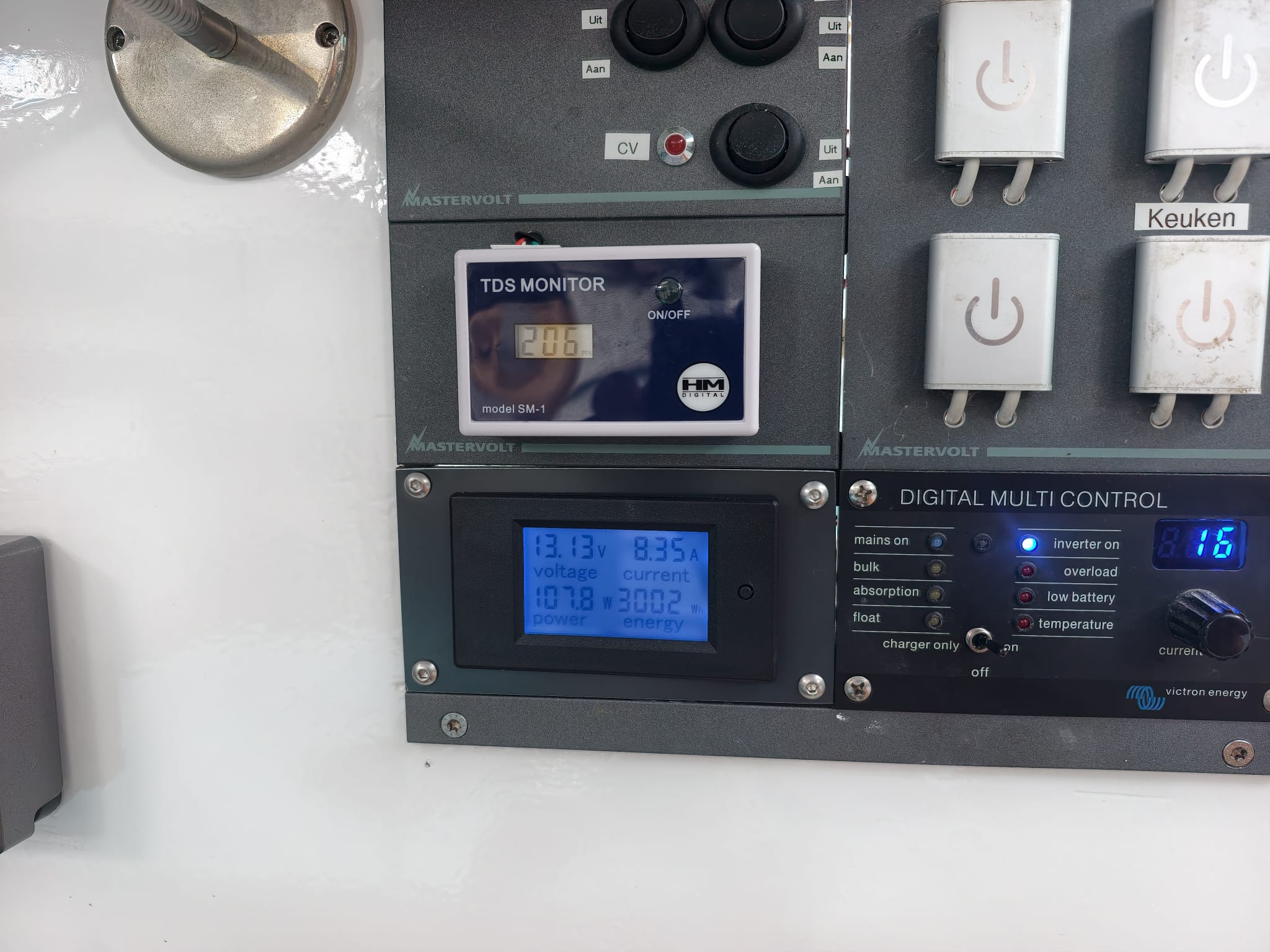
Mounted above the watermaker’s energy meter.
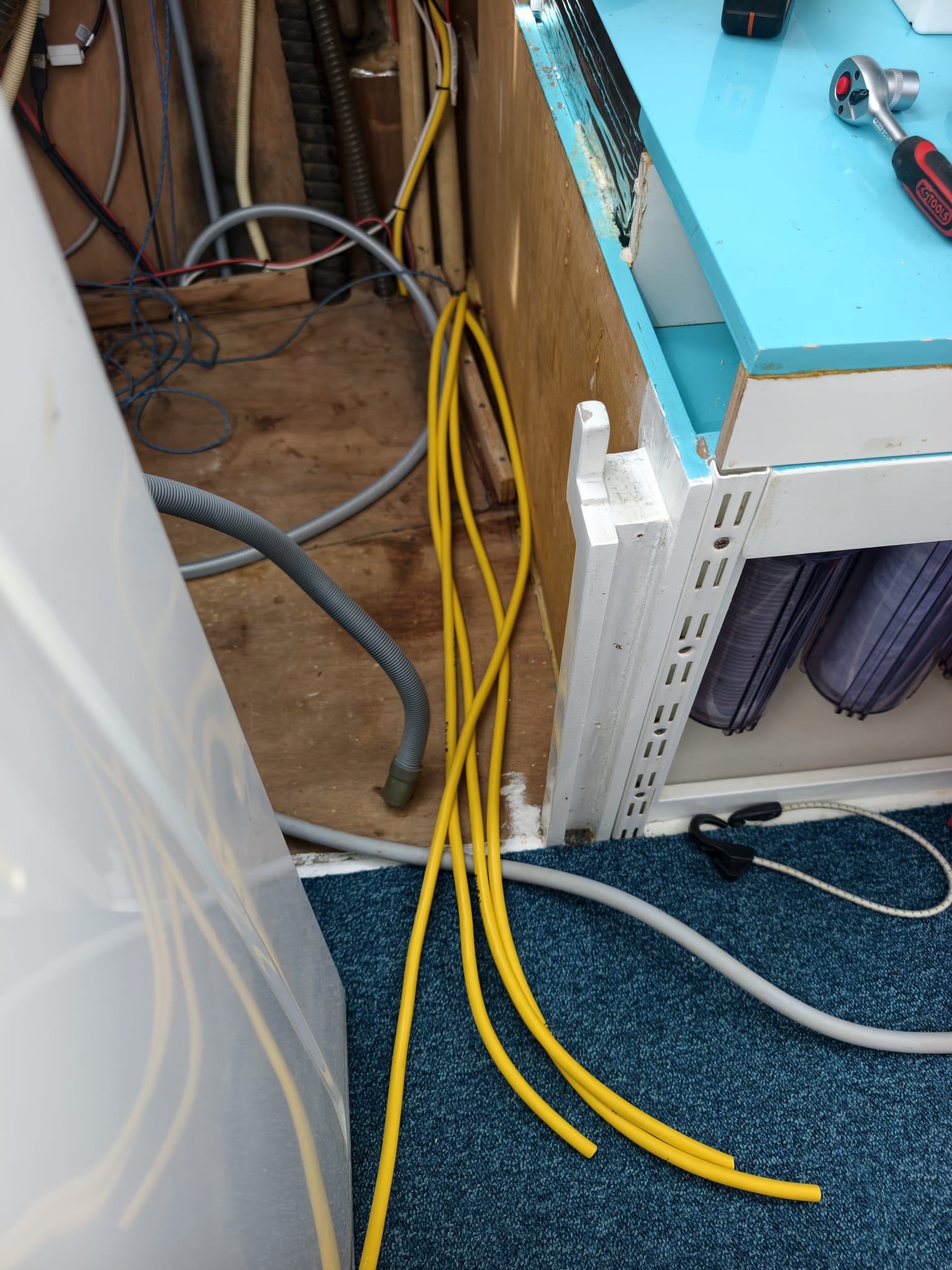
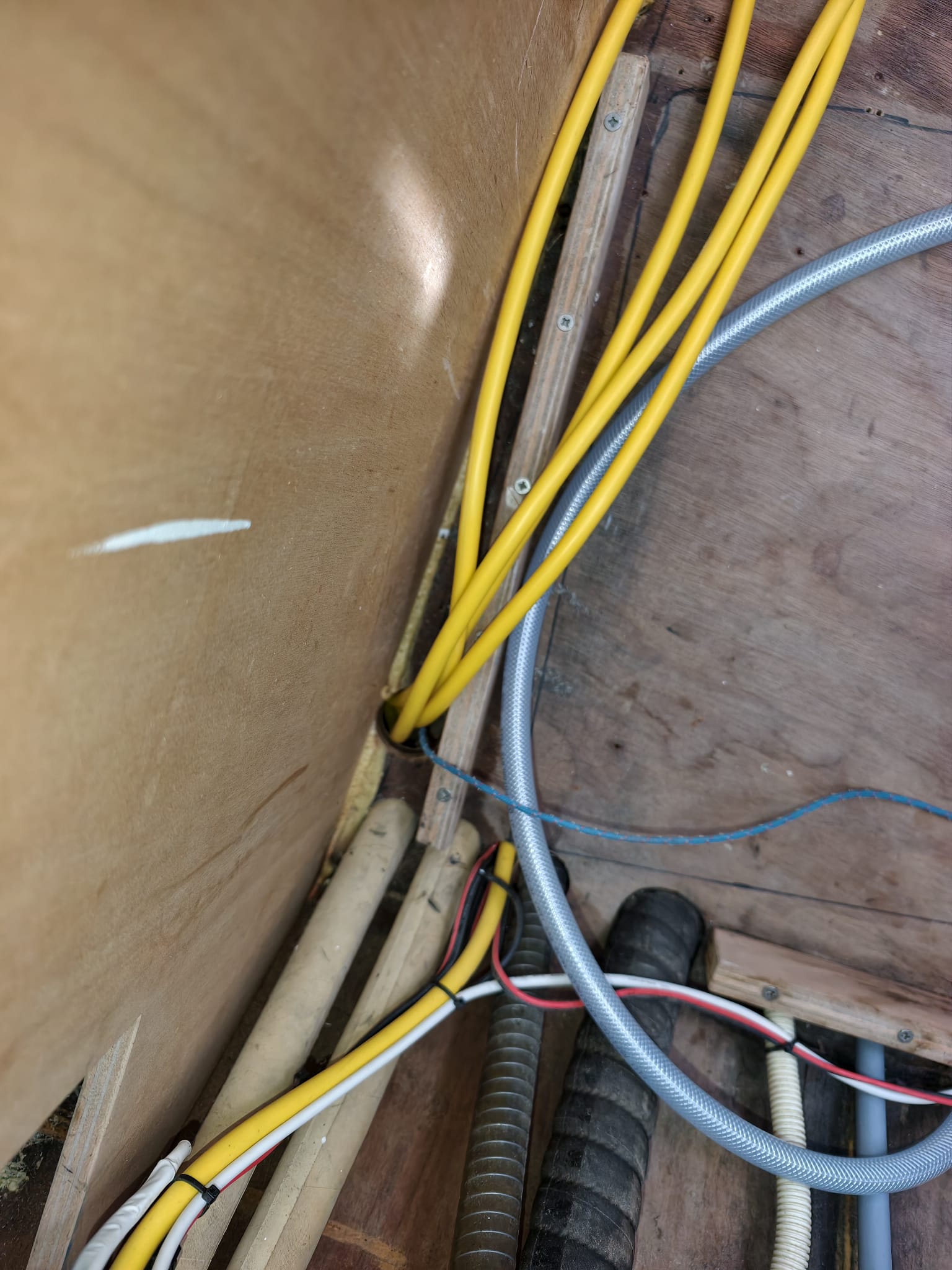
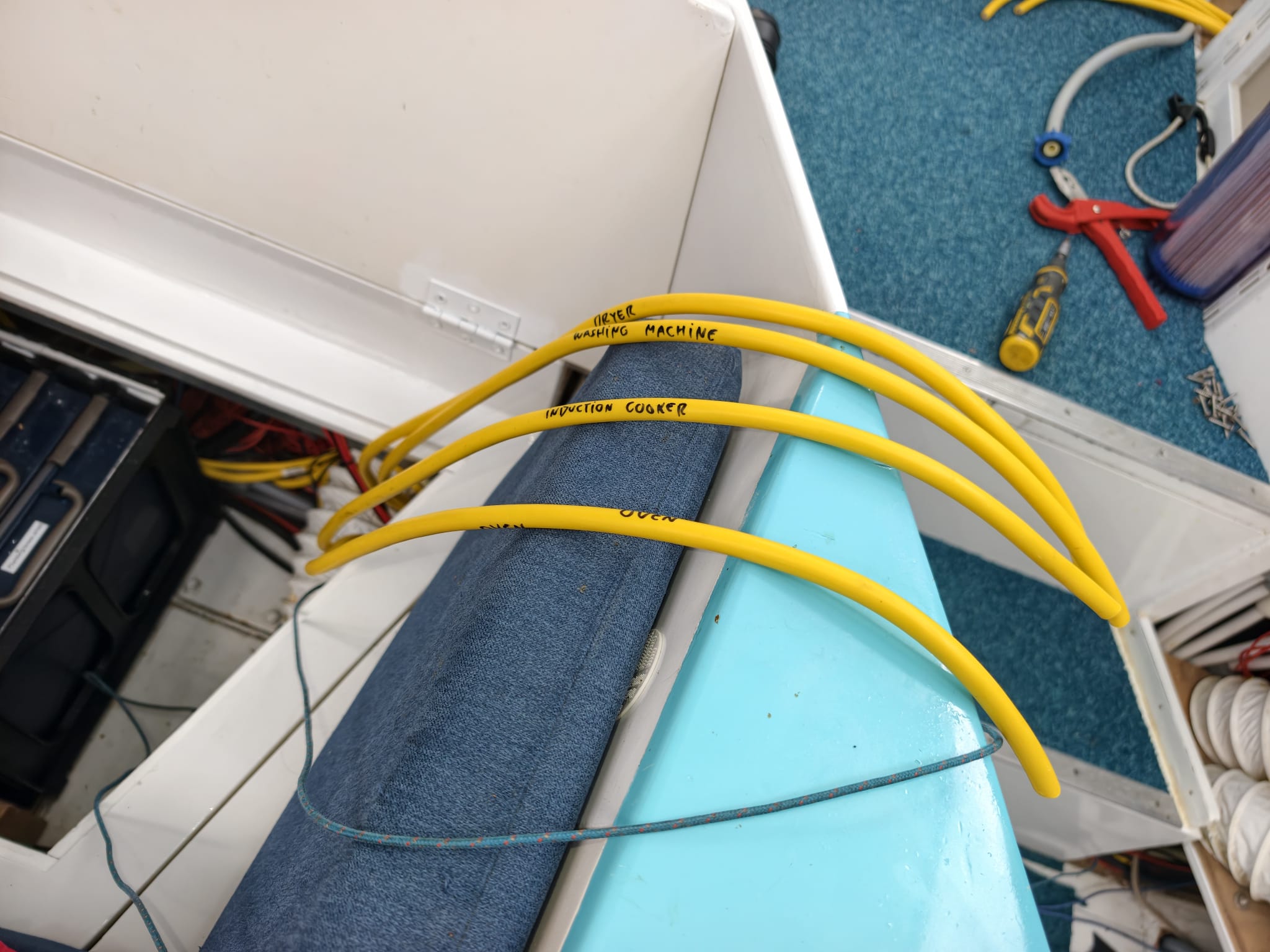
While Sher has arrived at MomCat’s place in Arizona US, Wim continues installing some new cables for the induction cooker, the oven, the washing machine and the dryer. All these power connections are behind the washing machine and Wim bends over the washing machine to see what the best route for the 4 new cables would be. There he sees the valve for the trough-hull which is the drain for the washing machine, the shower and the bilge pumps. The exit is just above the waterline (well, actually on the waterline since Dione IV became a bit more heavy from all the stuff we took on board before we left the NL 😅).
Anyway, it’s always good to close and open the valve to keep it operational so Wim thinks, now I’m here, let’s do that. Hm! It not moving at all! It’s completely stuck! Shitty. Why didn’t we think of replacing this valve when we replaced all underwater through-hull valves at the yard in Portimão?? We completely forgot about this one, we were totally focused on the underwater valves. Stupid!
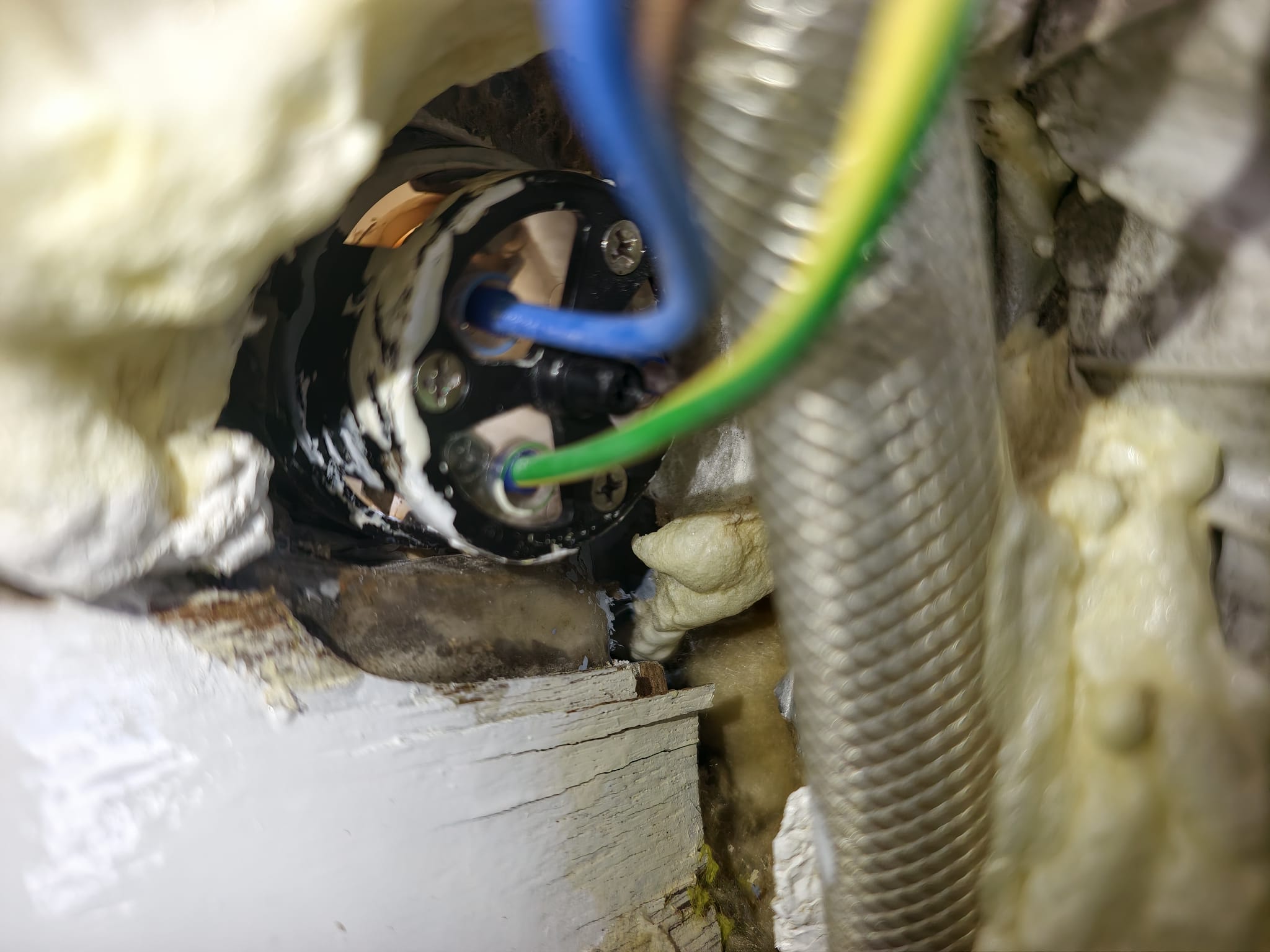
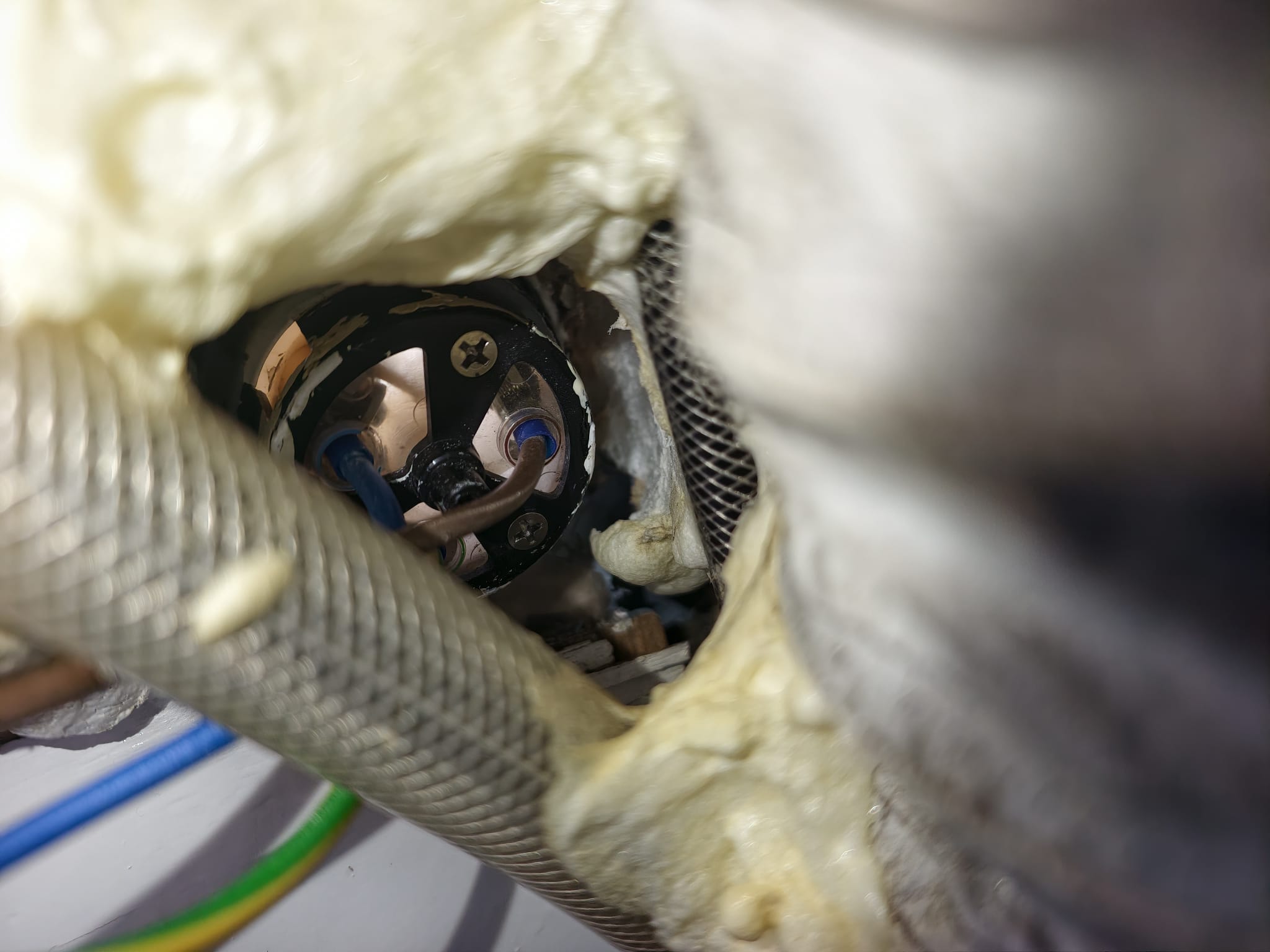
Then, Wim notices something else: green. That’s corrosion. That doesn’t look good at all!
Let’s have a closer look. Remove the washing machine. That results in a huge mess…
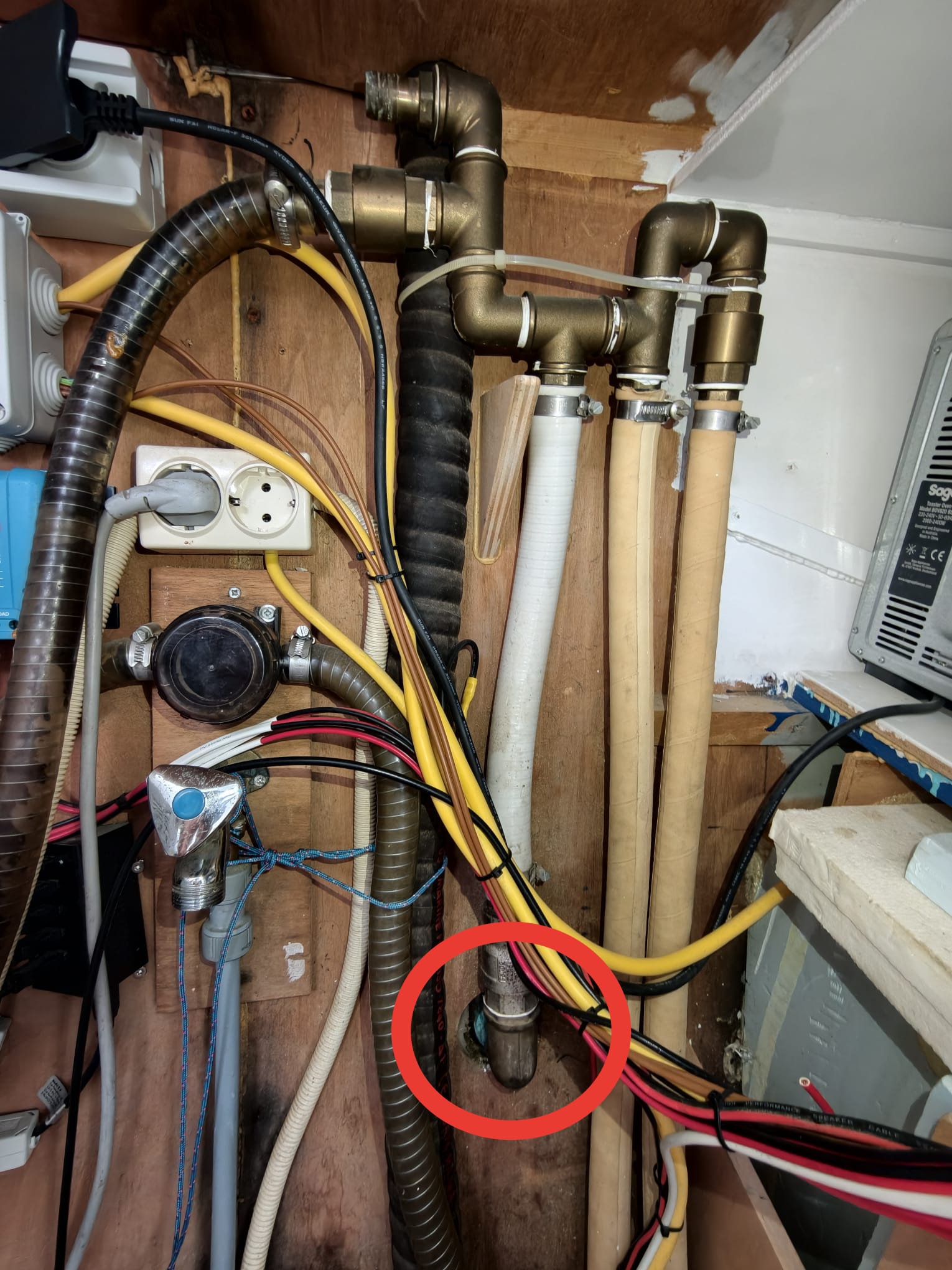
But Wim can have a closer look at the corrosion.
Back in 2007 he installed this without having the knowledge of today… The 1 inch trough-hull fitting is stainless steel, that perfect. The valve is professional grade bronze, also fine. But the elbow is brass. Not good. We will have to replace this by the super quality Groco stuff..
Groco is US made and hard to get in Europe. Our last batch of through-hull valves took months via the UK. But wait! Sher is in the US. Maybe she can find a chandler that has it at stock and she can bring it back to Porto Santo.
September 11.
That night, Wim sleeps bad. What if the corrosion is so bad that it will start leaking or worse, break entirely off? We will not sink immediately but since this through-hull is at the waterline, water will come in slowly, making Dione IV more heavy, sink a little deeper, more water will come in and cause a chain reaction. Horror scenarios…😮 He decides to cut away some wood and have a better look in the morning.
After making a square opening in the timber we can have a clear view at the corrosion. It’s on one joint, between the brass pipe coupling and the brass elbow. Not between the pipe coupling and the stainless steel through-hull fitting. It’s not leaking and there seems to be no severe loss of material. It has probably been “sweating” a tiny bit and that caused the corrosion. Wim used Teflon tape in the joints and that’s not completely watertight after 20 years.
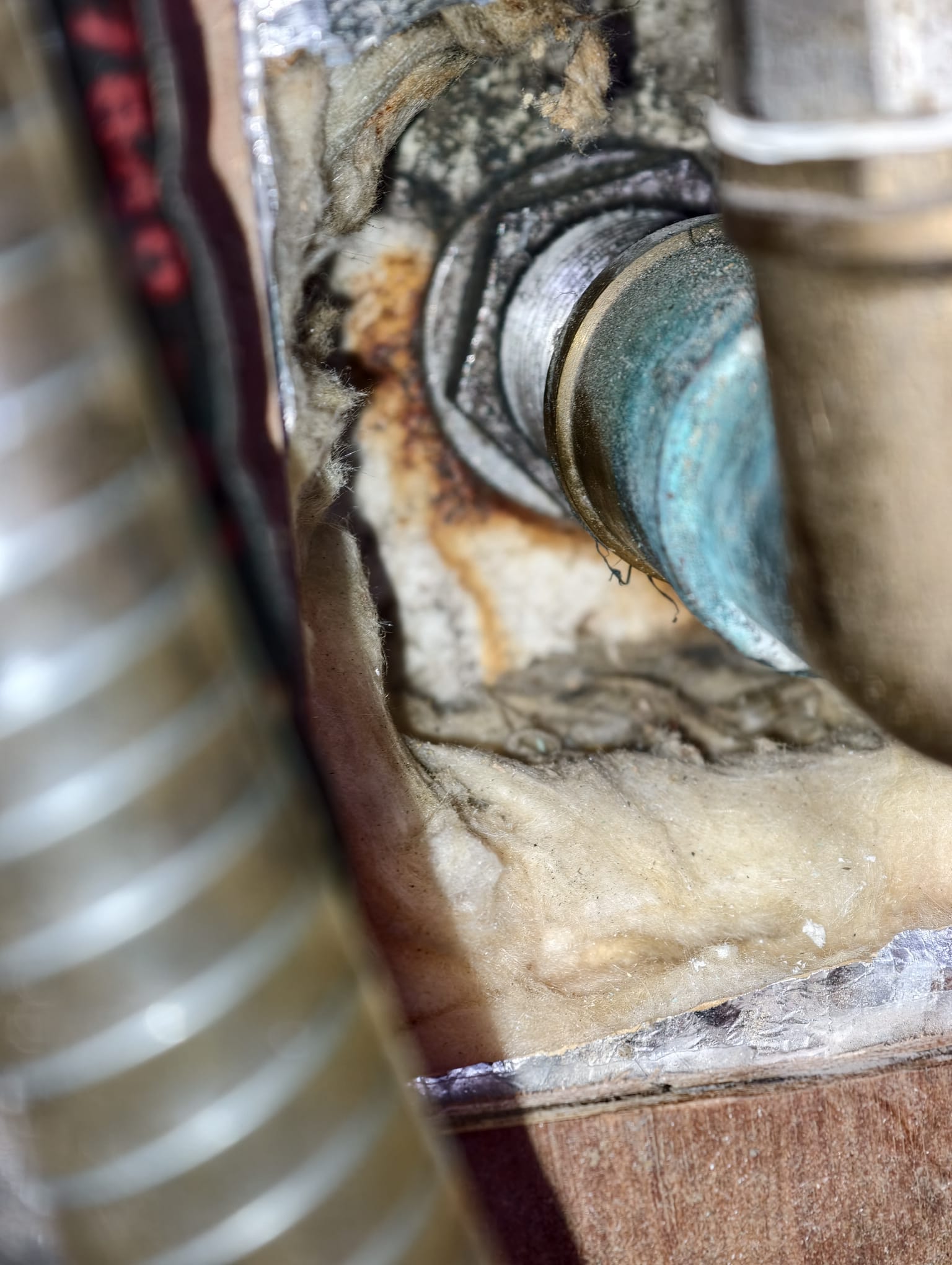
The stainless steel fitting looks fine although there is some surface rust on the hull. But that can be cleaned and painted.
Conclusion is, there’s no danger but this has to be replaced ASAP. The valve should be operational in case of emergency, everything should be bronze and glued with Loctite 638 instead of Teflon tape.
Meanwhile, Sher has found a marine store that has the Groco valve and Groco elbow at stock and she’s ordered it and has it sent to her friend in San Francisco!
Pulling the new cables.
After a day of hard work (and some stress), a delicious dinner of Ravioli filled with spinach and Ricotta, cooked with a lot of fresh garlic and fresh basil, topped with Parmesan and roasted pine tree nuts and a salad with a great home made dressing. With a lovely Douro wine 😋
It was a day of hard work for the basil plant, too 😂
September 12.
Every day since we’ve been here, the ferry comes in at 1030h. Today, she’s much later, at 1230h. And she makes an unusual wide turn to get her stern onto the dock and a tugboat is assisting. While this ferry (Lobo Marinho = sea lion) has been designed to be self sufficient in mooring (without the help of tugs) in any weather circumstance with her dual 10.000hp 16 cylinder Caterpillar engines and her 500kw electric bow thruster (680hp).
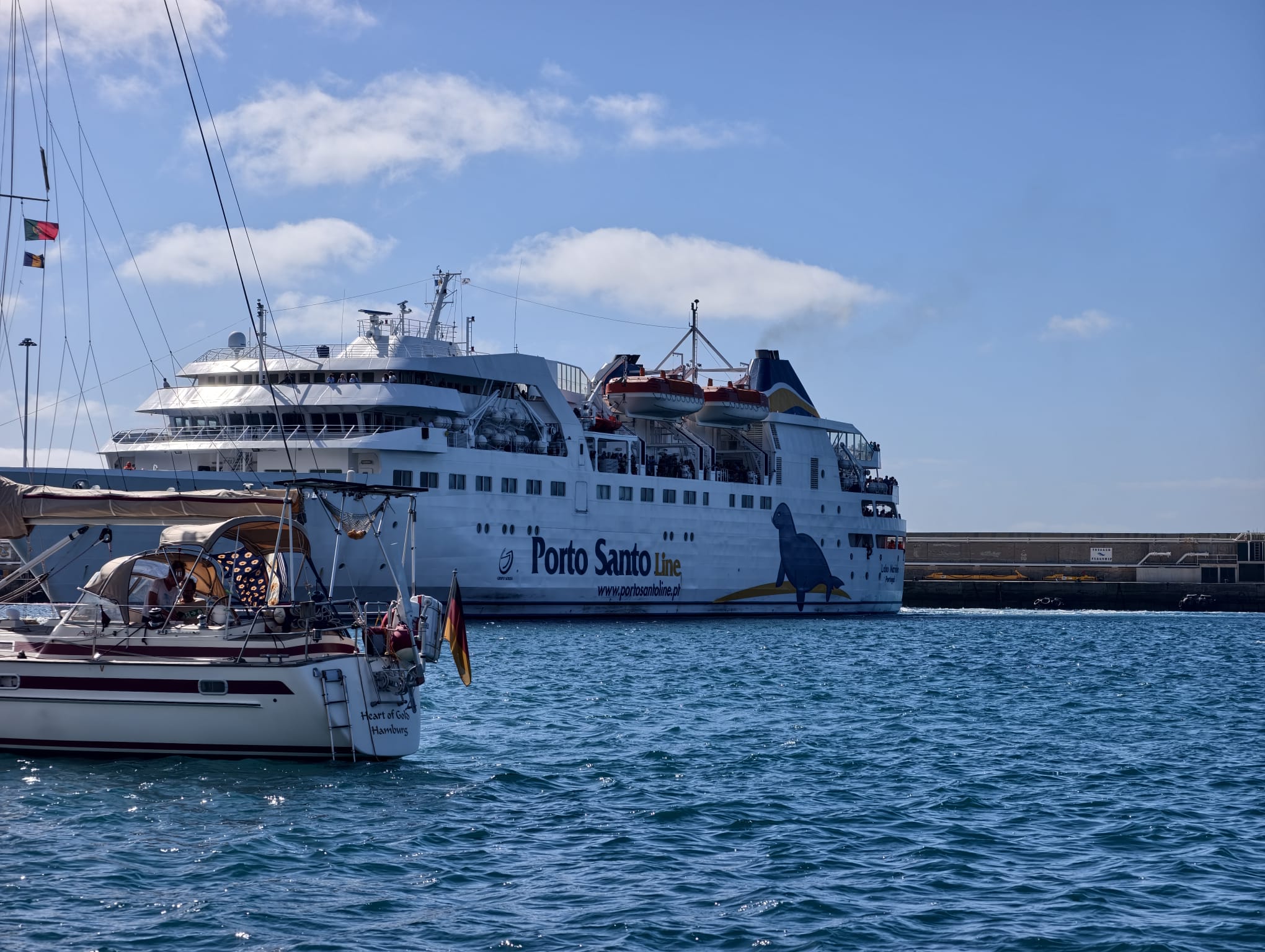
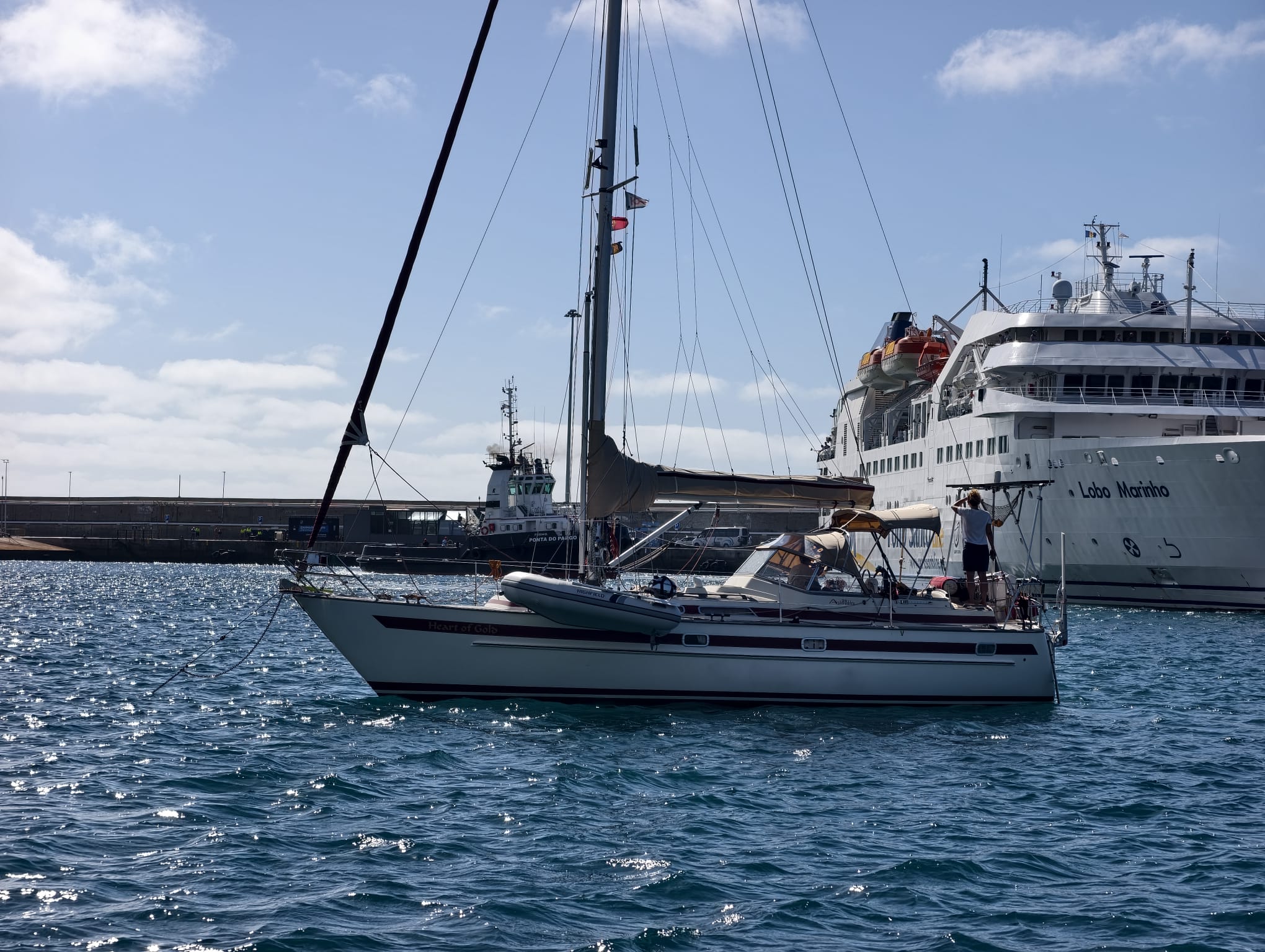
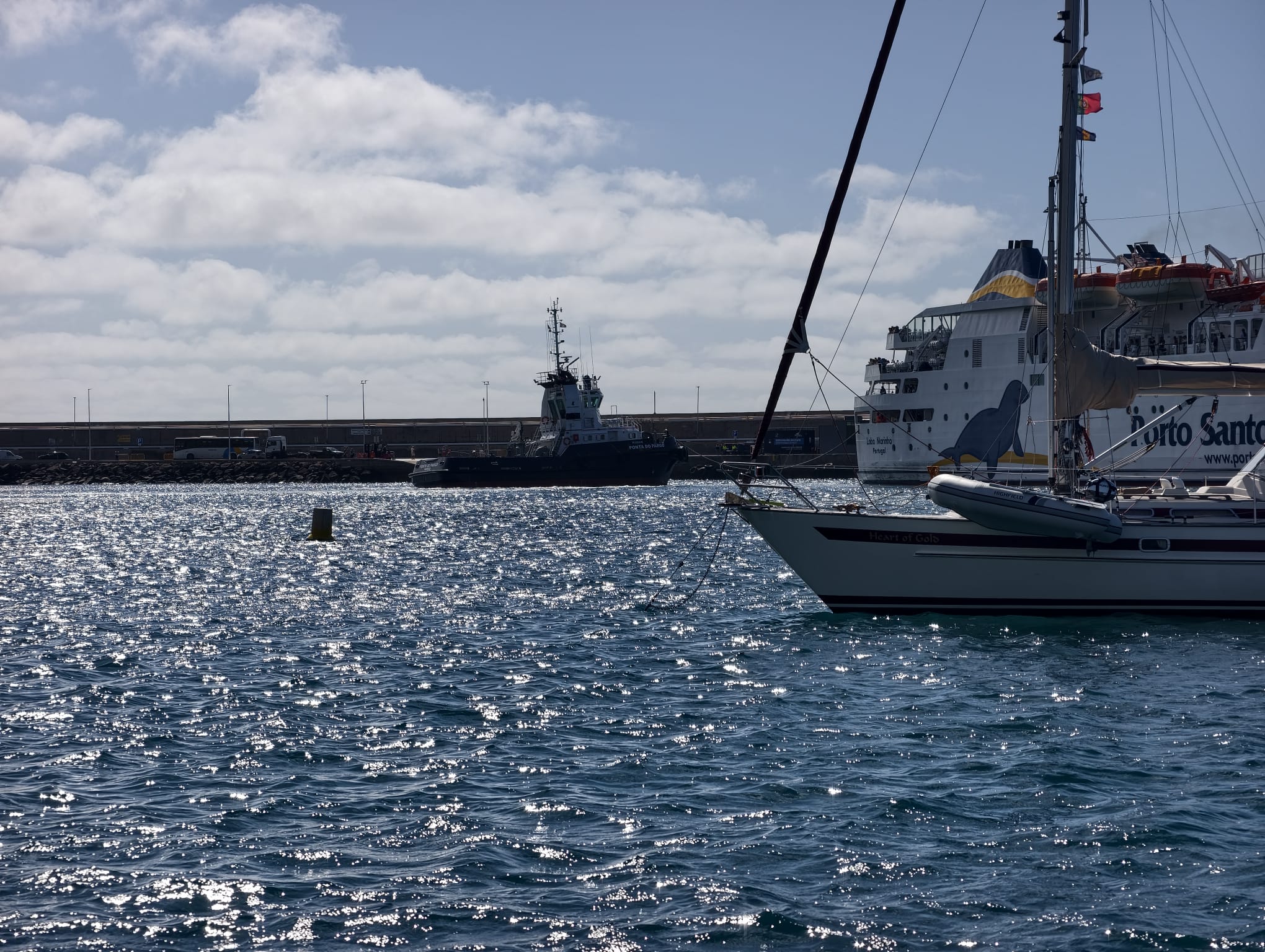
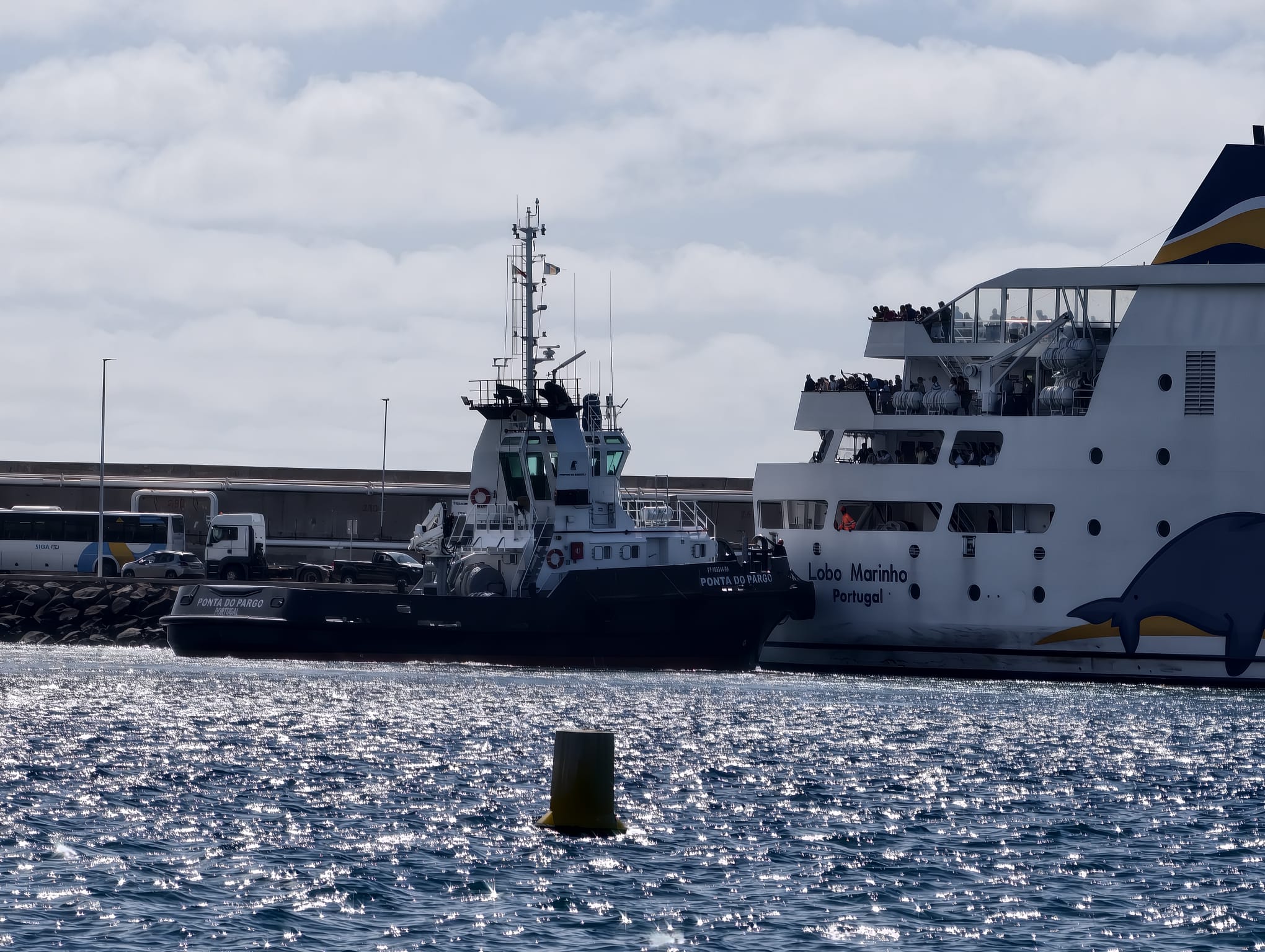
The tugboat is really throttling-up to get the ferry into place.
Today, Wim is revising the shore power connections. Routing the cable in a much shorter trajectory. He has to open the bottom of the bed and the floor in the lazarette for that. The boat is one big mess 😅
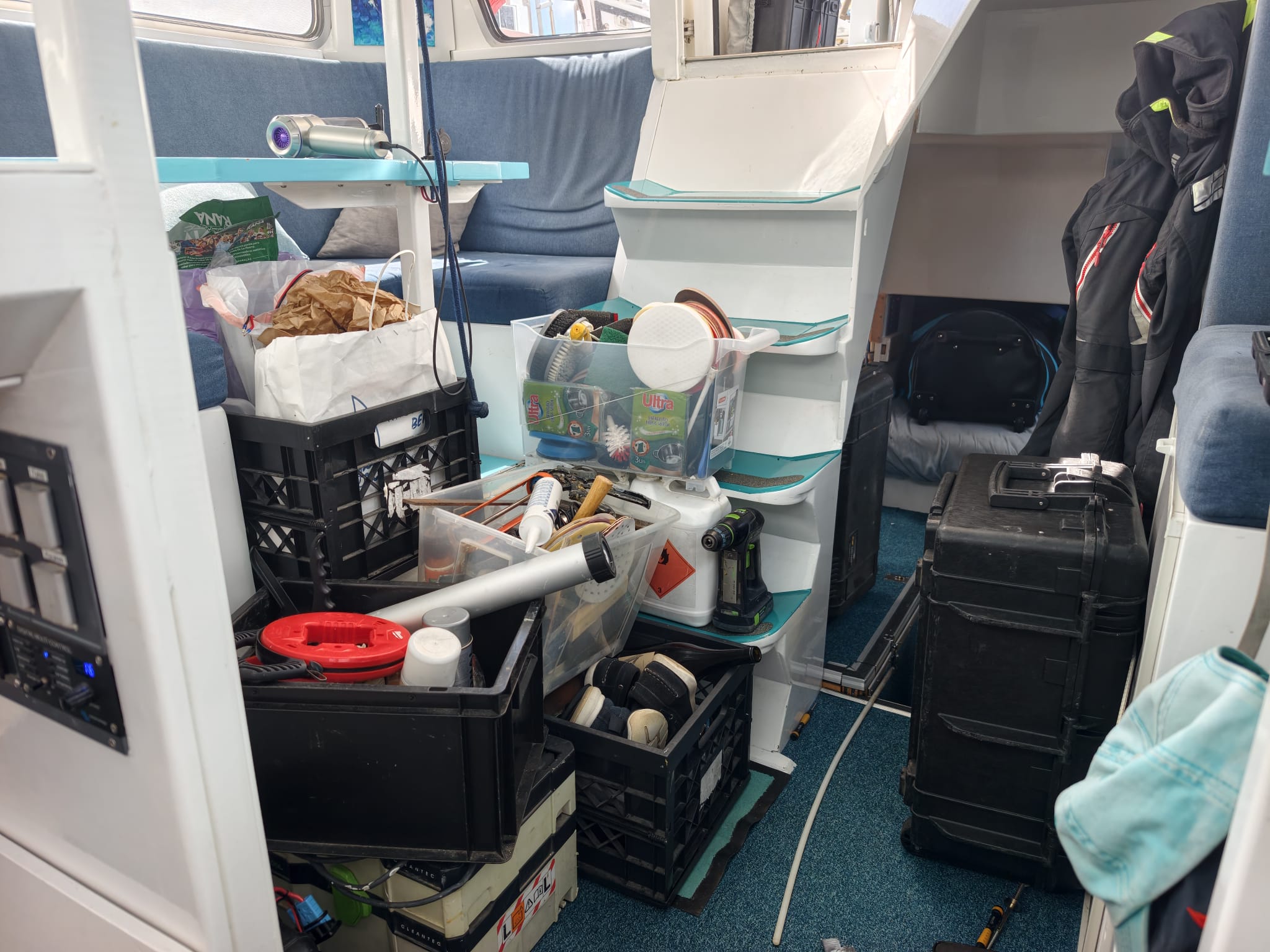
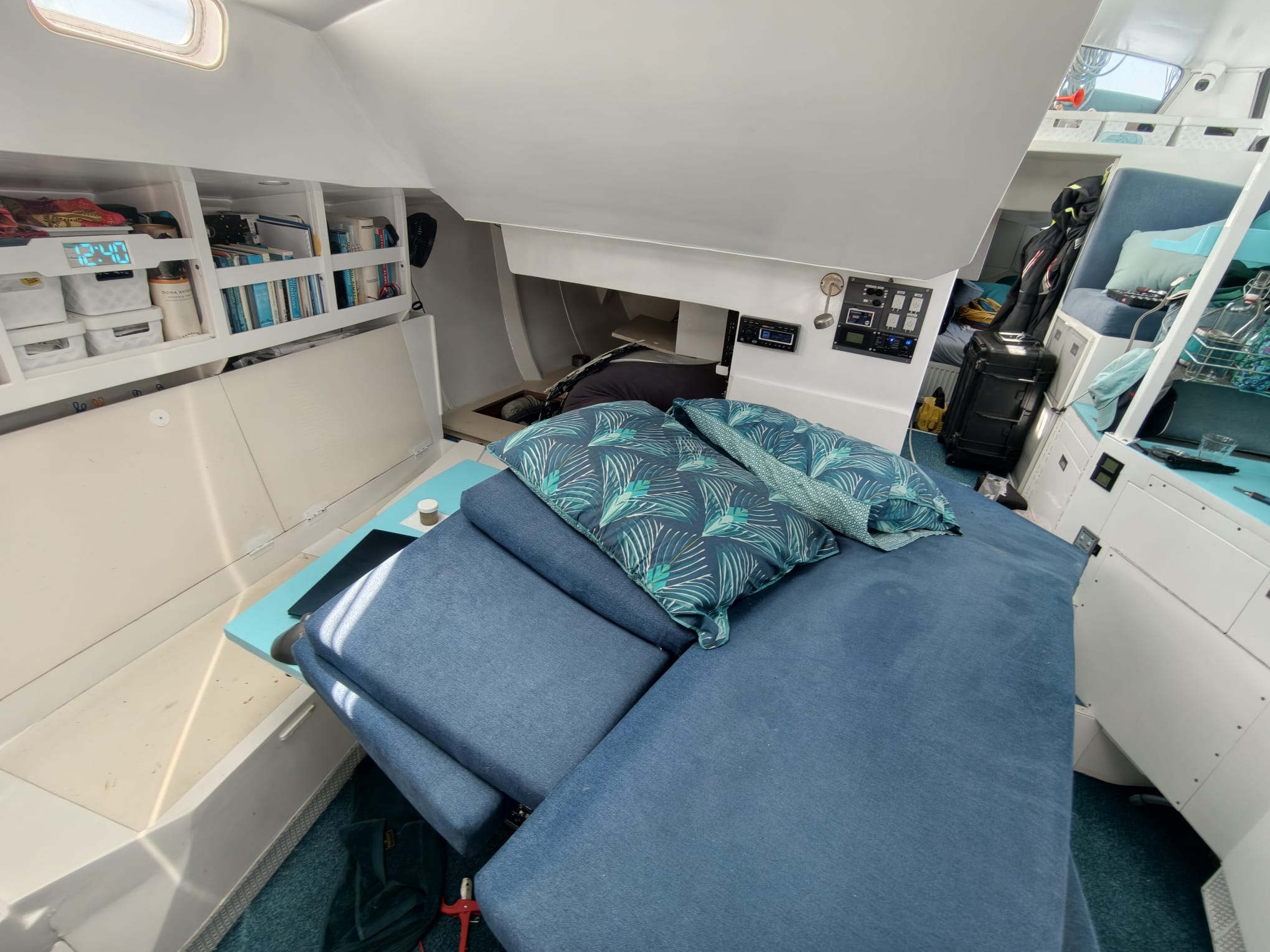
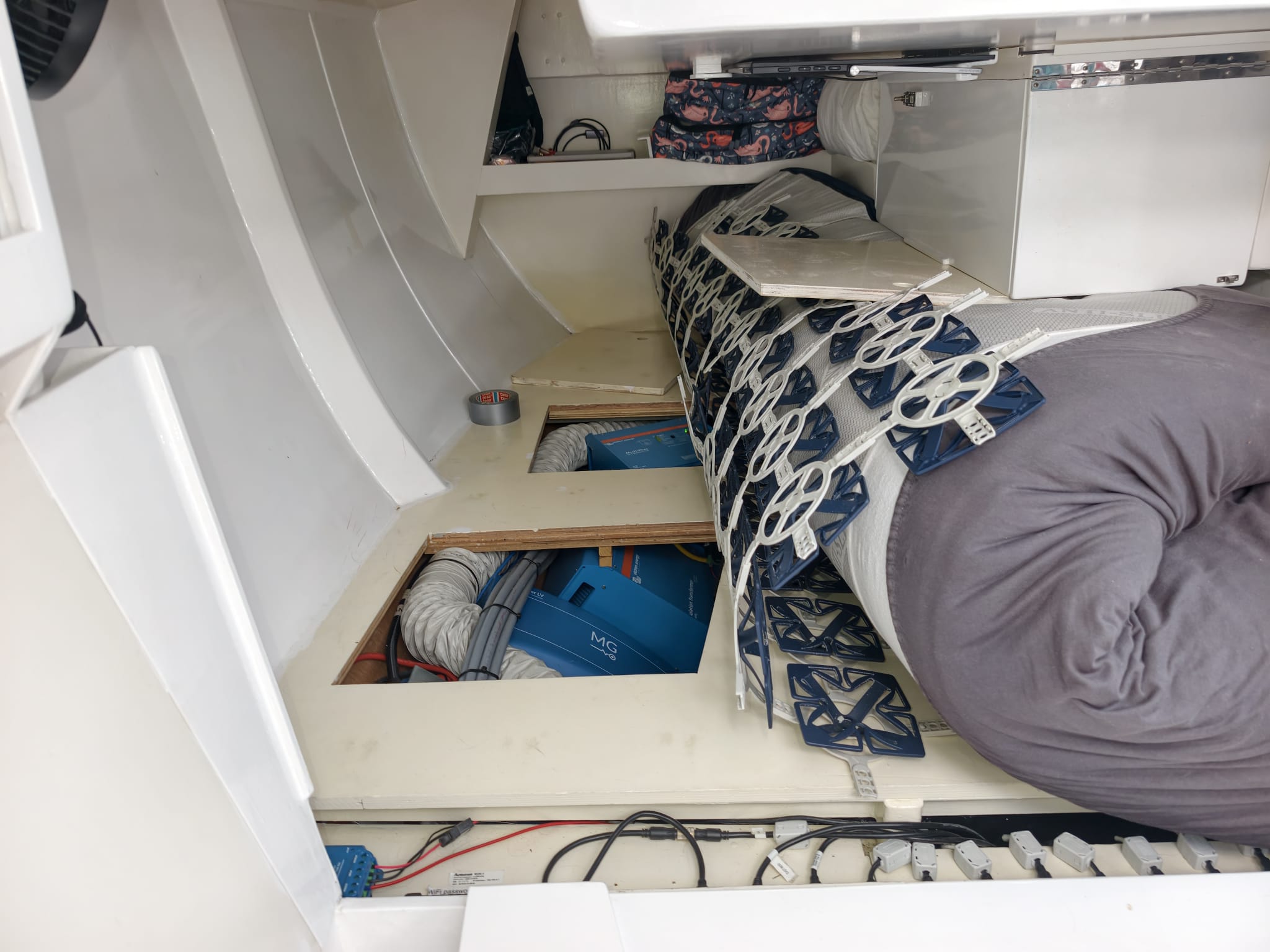
But in the end, nice new cables for the shore power.
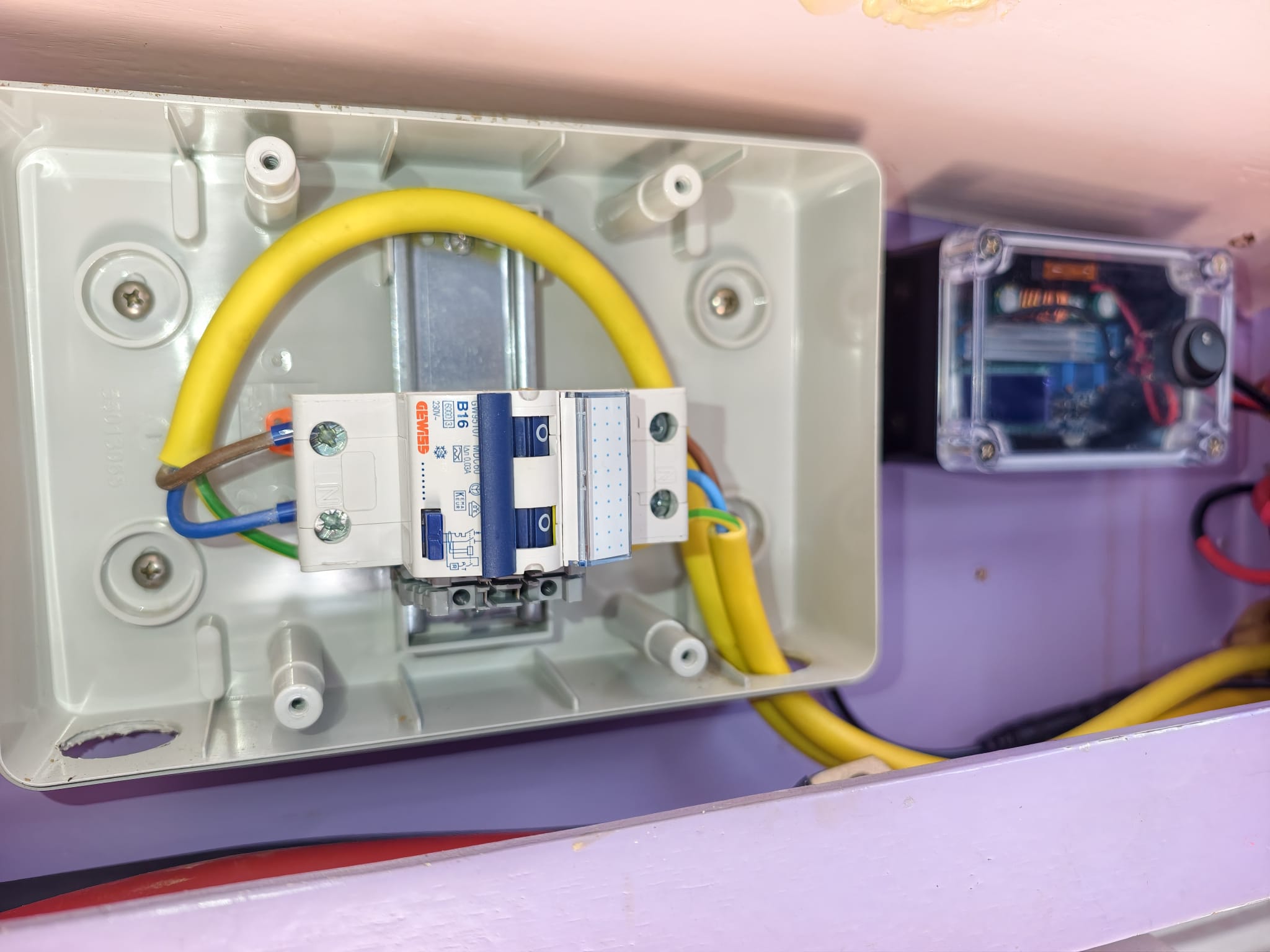
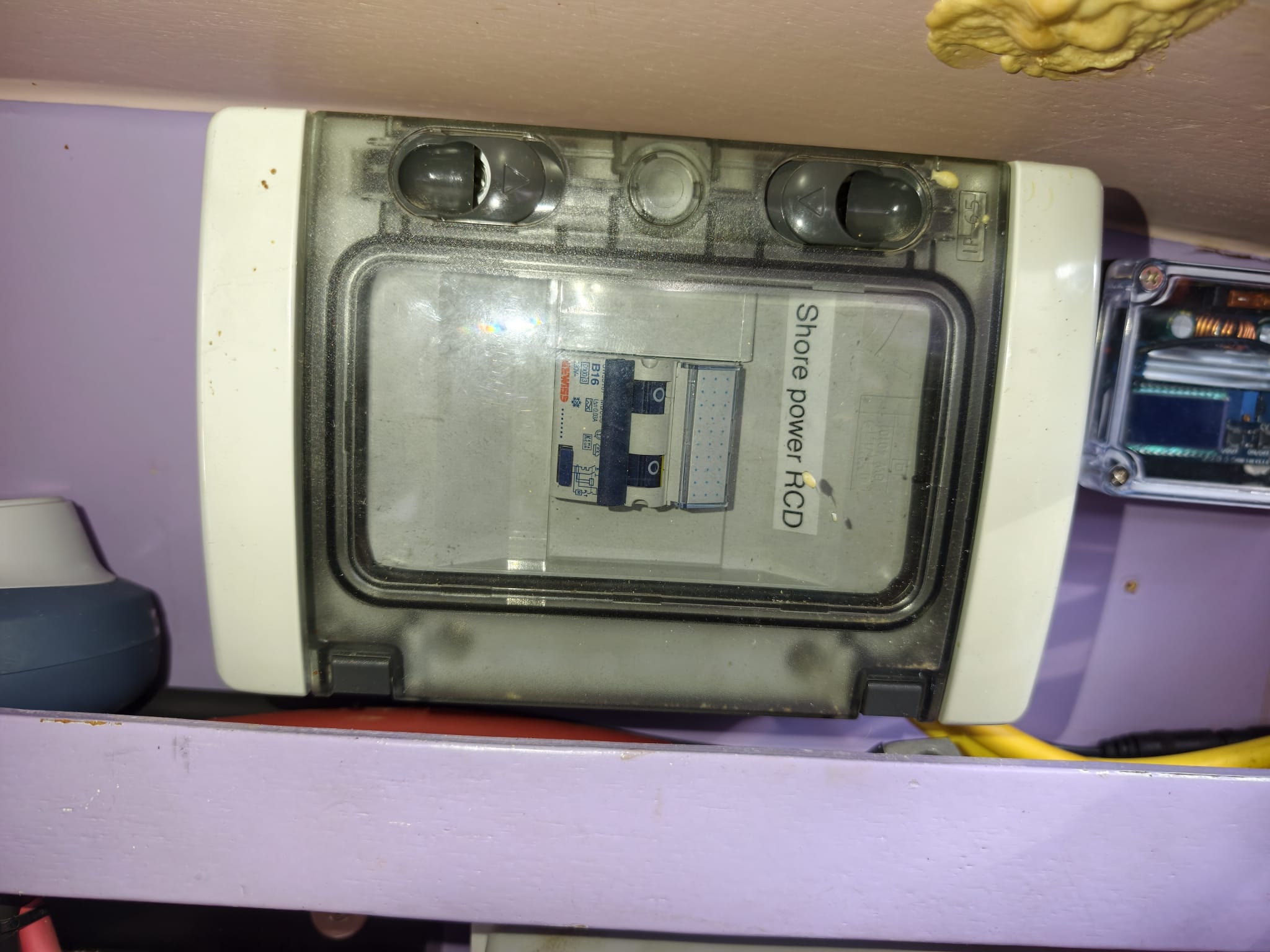
Wim discovers some bad connections which have been overheated and replaces the cable to the shore power inlet.
In the evening, when the Lobo Marinha departs, Wim sees the reason for the tugboat assistance: she’s running on one engine! The starboard side engine is out of order! You can see the smoke coming from her port side engine only. So, she doing only 12 knots instead of 21 knots at her crossing to Madeira, resulting in a longer passage and later arrival.
September 13.
Sher doesn’t like Mexican dishes but Wim loves it. So, when she’s visiting her mom there’s at least one Mexican dish! Well, the Fajita seasoning mix is 3 years over date but with a bunch of fresh spices it’s delicious! It’s a recipe for 4 persons so it serves Wim 4 days 😀
September 15.
Wim keeps working on kinds of small jobs on board. The lazarette needs a paint job but before that there are some construction things to do. One of them is leading the cables for the WiFi antennas for the router over the ceiling. They were hanging loose. It needs cutting some holes in the ceiling and re-gluing the wooden pieces back in.
Sometimes little accidents happen… a box of thousands assorted screws slips down 😩. It takes hours to sort everything out again…
In the evening there’s a little guitar concert. 2 German guys. They are really good!
September 16.
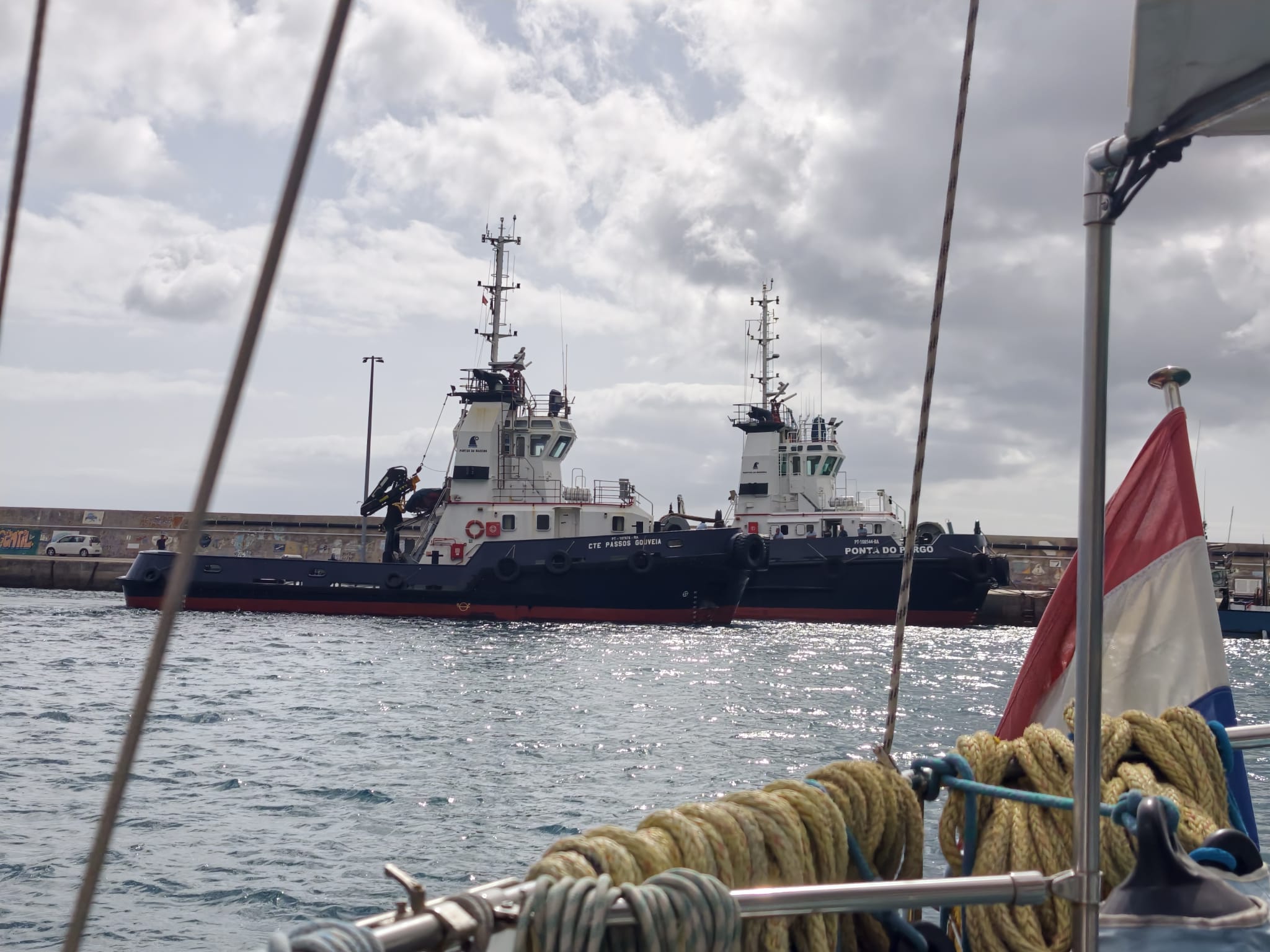
a little bit of action in the port. 2 tugboats arrive.
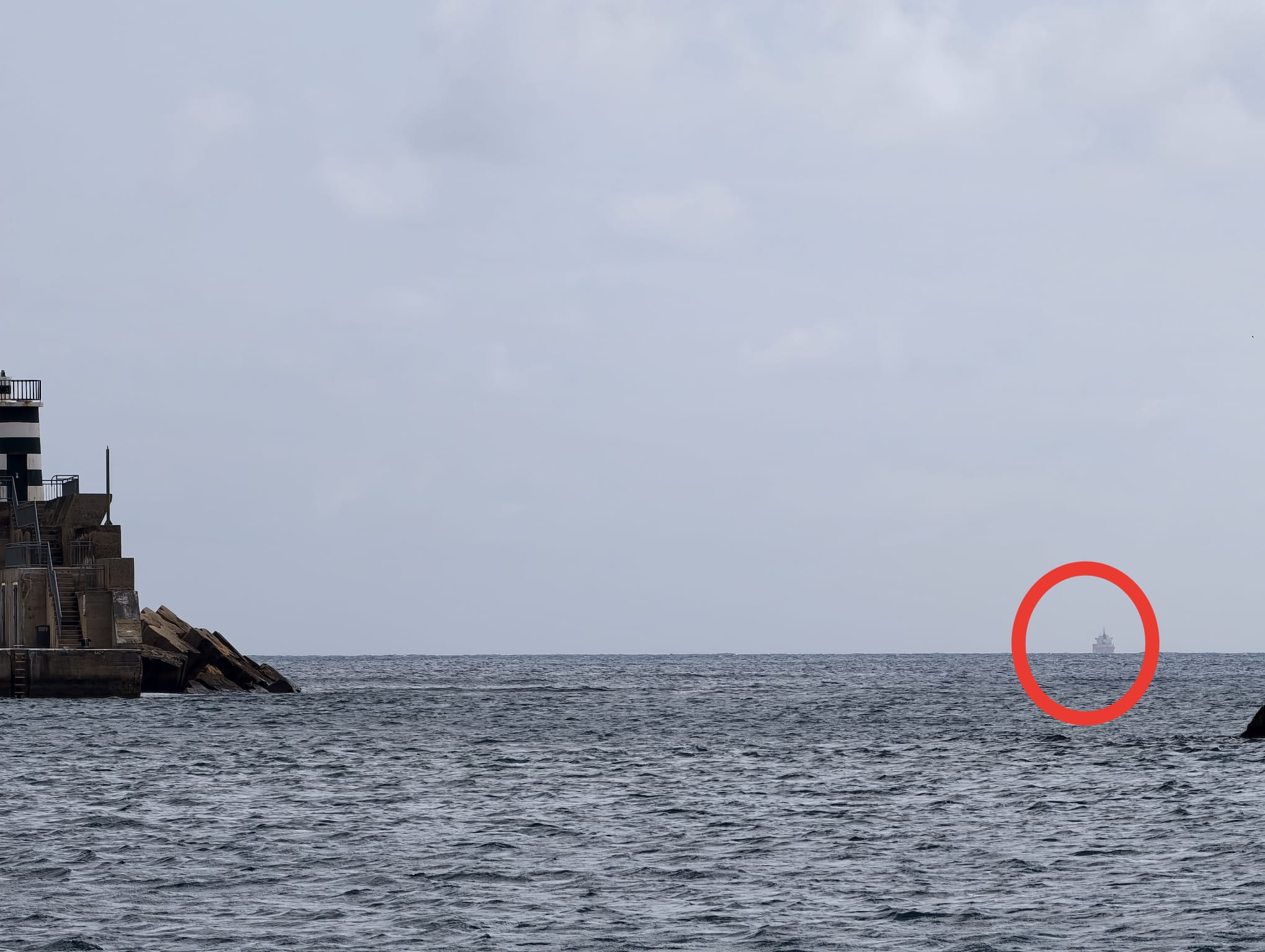
That means something is coming in.
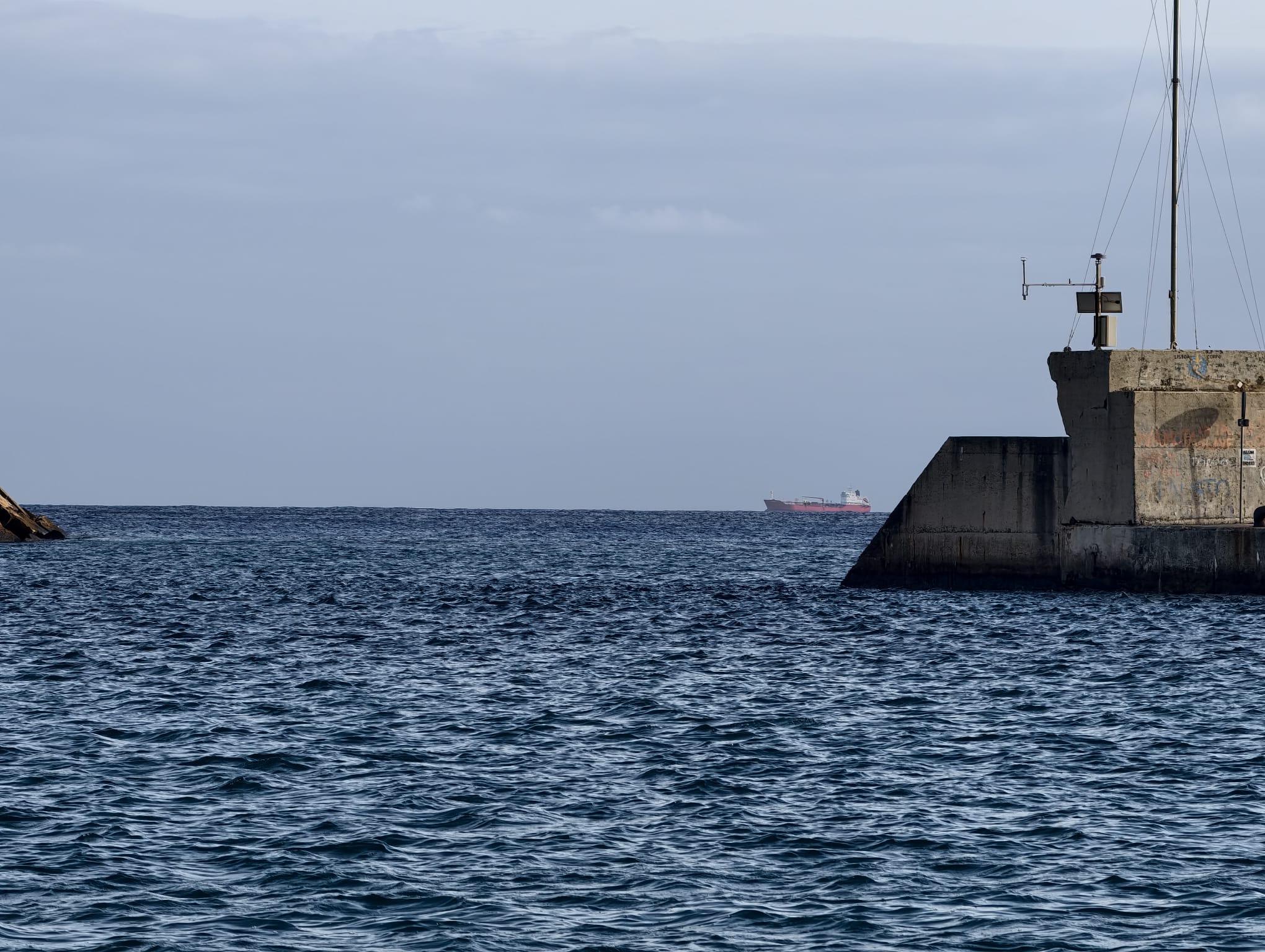
It’s the fuel tanker. It brings heavy fuel oil for the power plant.
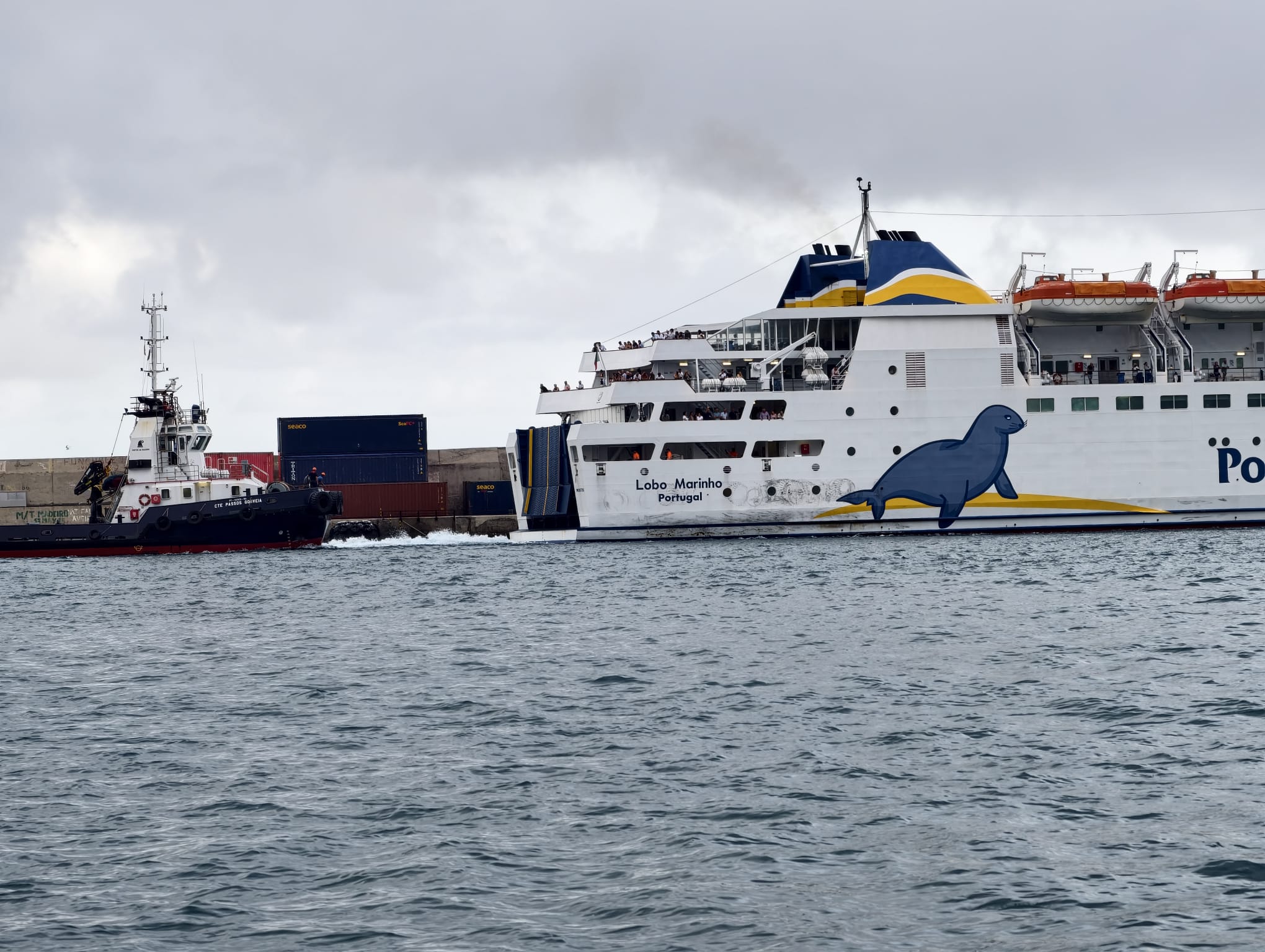
The Lobo Marinho is missing her port engine and needs tug assistance to get of the dock.
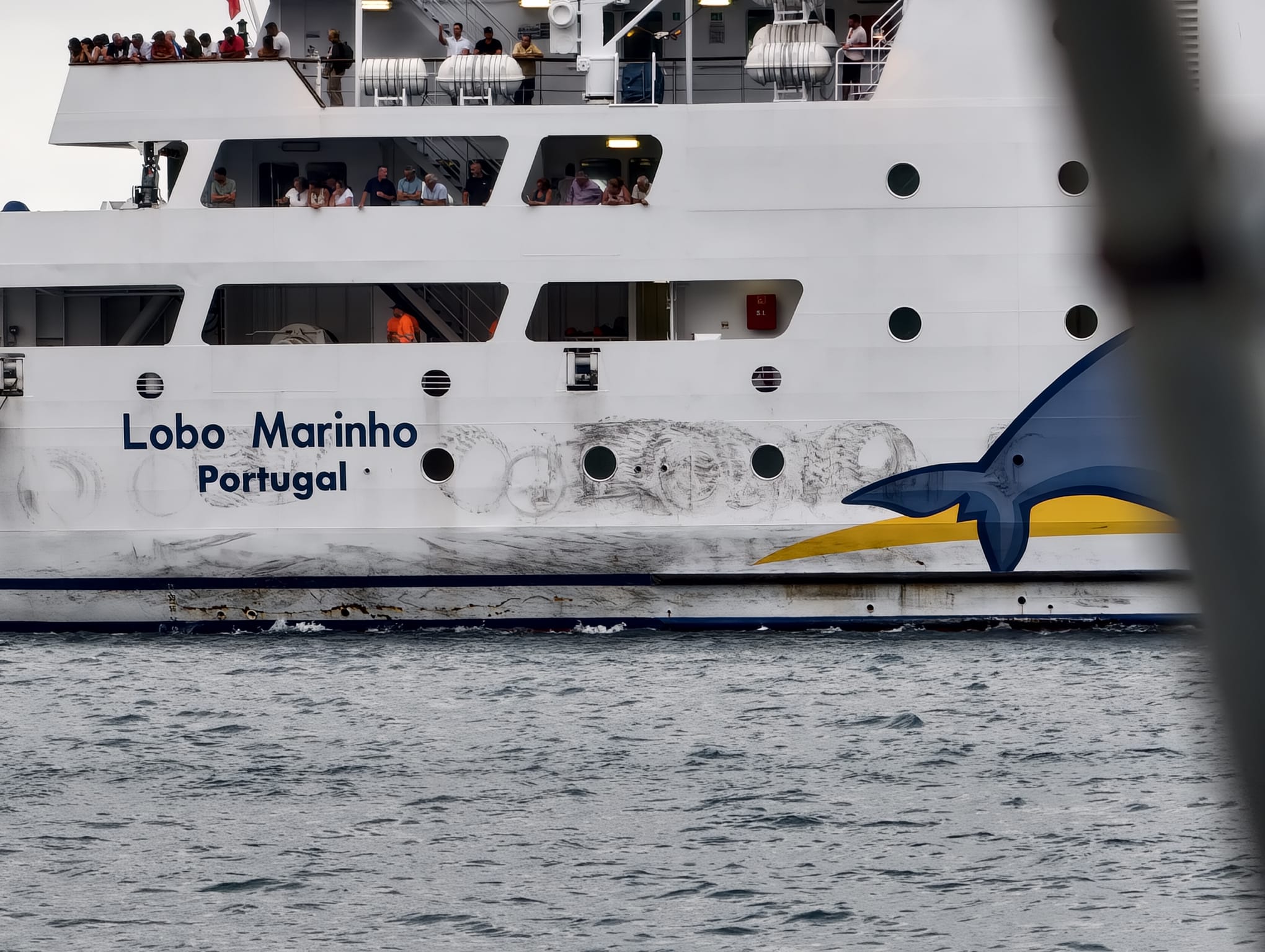
The tugs leave some traces…
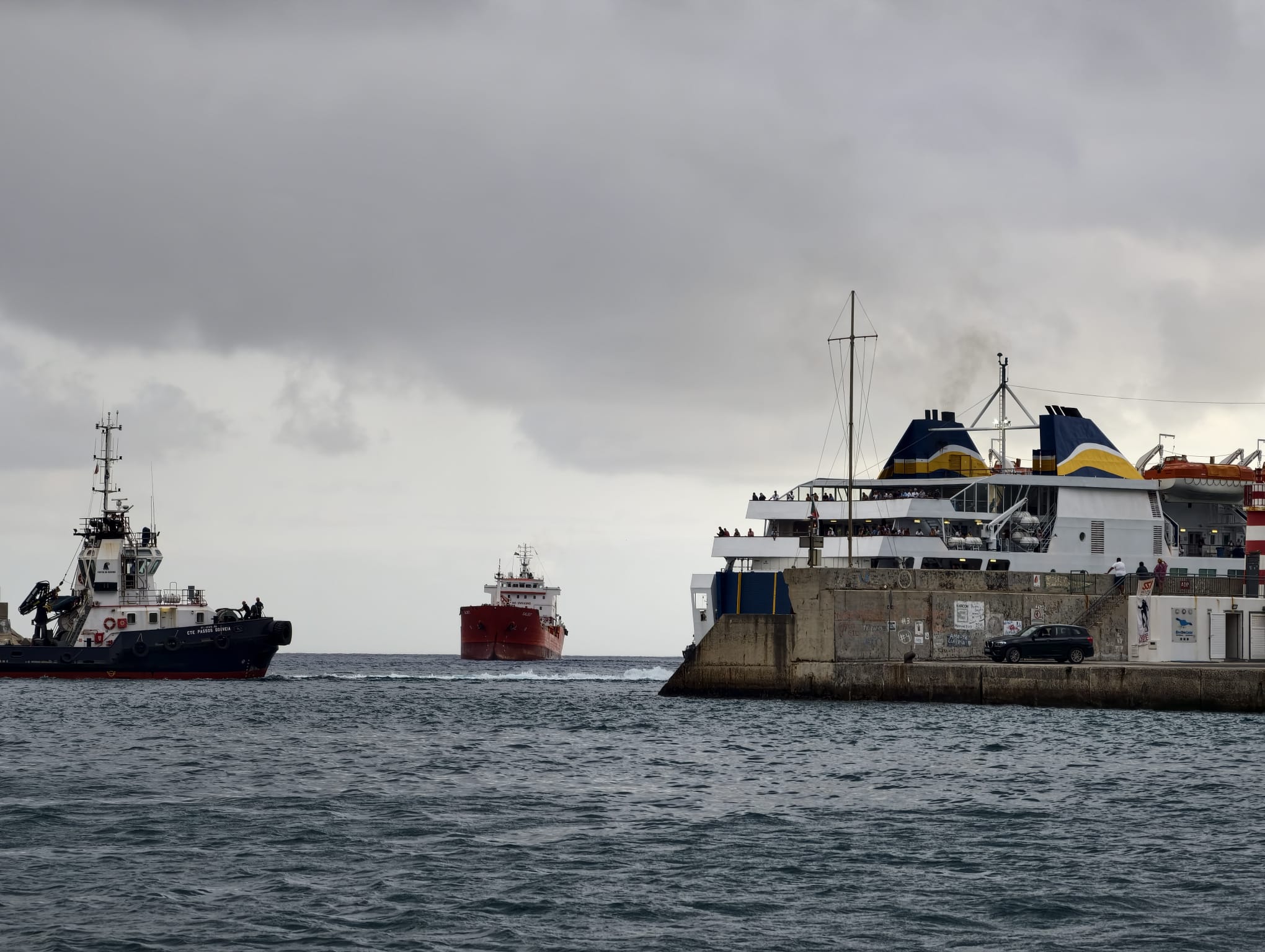
As soon as the ferry is out the tanker may come in. They blow their horns, greeting each other. The 2 tugs pull the tanker in reverse to the quay.
Wim goes to the supermarket for some provisioning. He decides to take Louise and take the external battery pack because her battery is almost empty. There are no possibilities to charge the scooters at the marina office so we depend on the external batteries to charge them.
Louise is at 20% SOC and it’s strange that doesn’t increase while Wim is the supermarket. The battery case charges with 200W and that should increase the internal battery to at least 50% in the hour the ride and the visit to supermarket takes. Strange.
On the way back, the scooter suddenly reduced speed to 6km/h and shows error 42. Wim looks in the app what that means. The BMS is in some trouble and the motor is switched to safe mode: 6km. Hm. Wim slowly drives back to the marina and just before he reaches the marina the scooter switches off completely. While the external battery is still charging. He has to walk the last 500m and takes Louise in the dinghy back to Dione IV to investigate what the problem is.
Let’s first charge with the original charger. That charges the internal battery to 100%, the external batteries only charge to about 80%.
After half an hour, the scooter beeps and switches on! No error 42 message. The SOC is 65% so the battery wasn’t empty, it would take hours for the charger to reach that level. After 3 hours, the battery is 100% but the charger is still charging. Only after another hour the charger switches off.
That rings a bell! 💡In that hour, it was probably balancing the cells. These batteries have a passive balancing system and that only works when the battery reaches 100%. But since Cadiz, we haven’t charged to 100%. Only to 80%, with the external battery. Obviously that has resulted in an imbalance and the BMS went into safe mode. But because Wim kept driving the imbalance worsened and the BMS shut down.
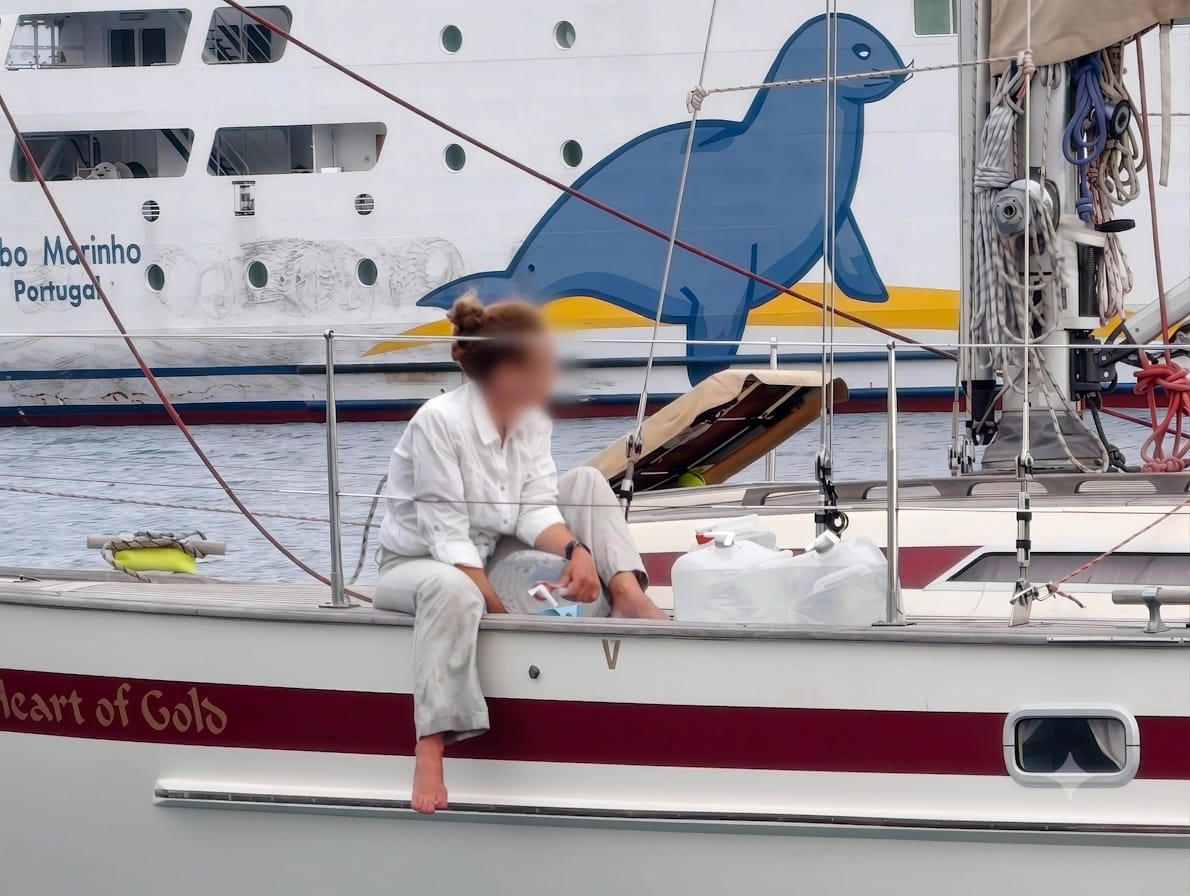
We’re so happy with our watermaker! Wim runs it every 2 days now, while being alone on board. About 2 hours to keep the middle tank at 90%.
Our neighbors obviously don’t have a watermaker. The loaded their dinghy full of canisters with water and they’re pouring it into their tank.
September 17.
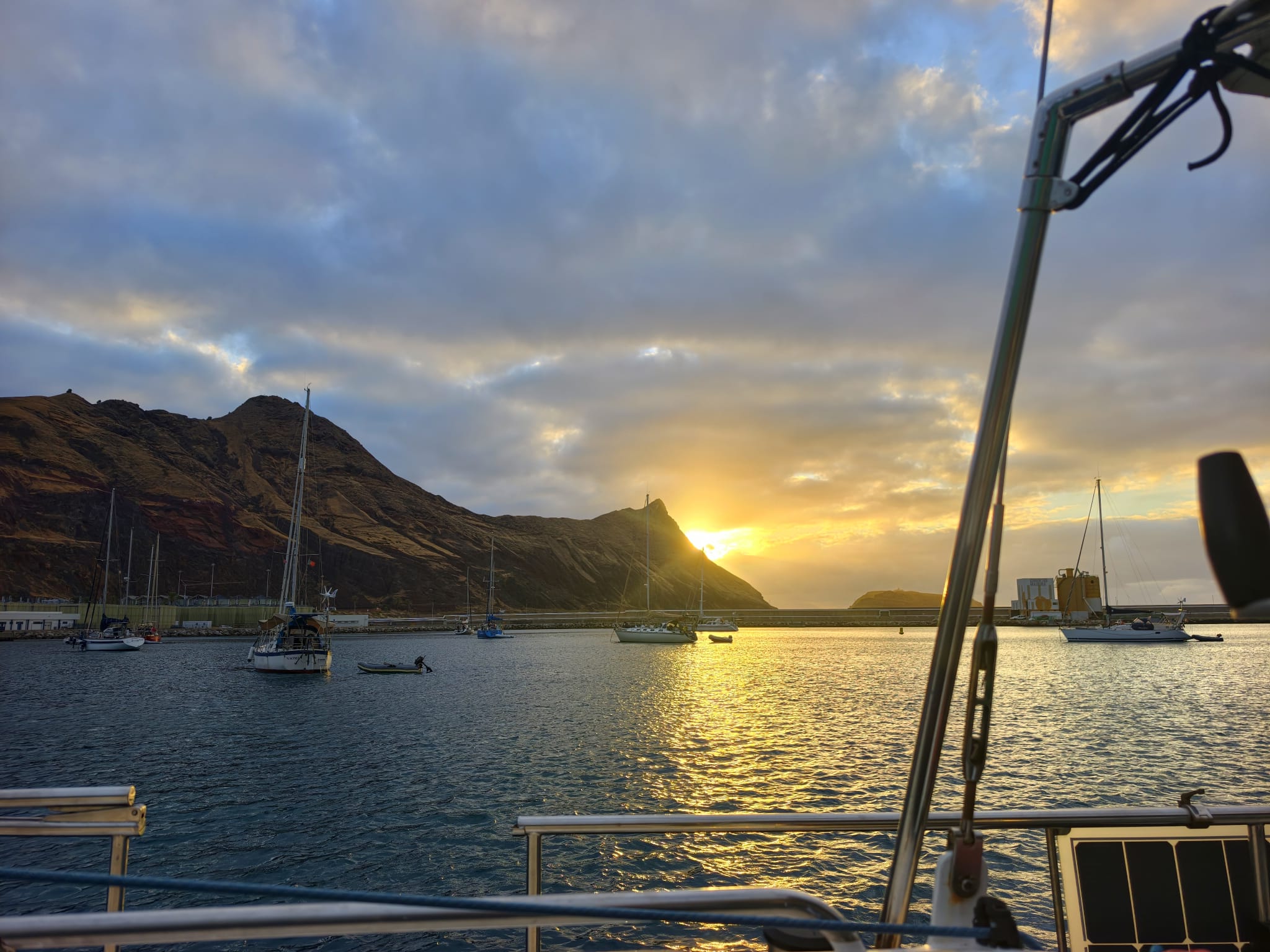
Sunrise!
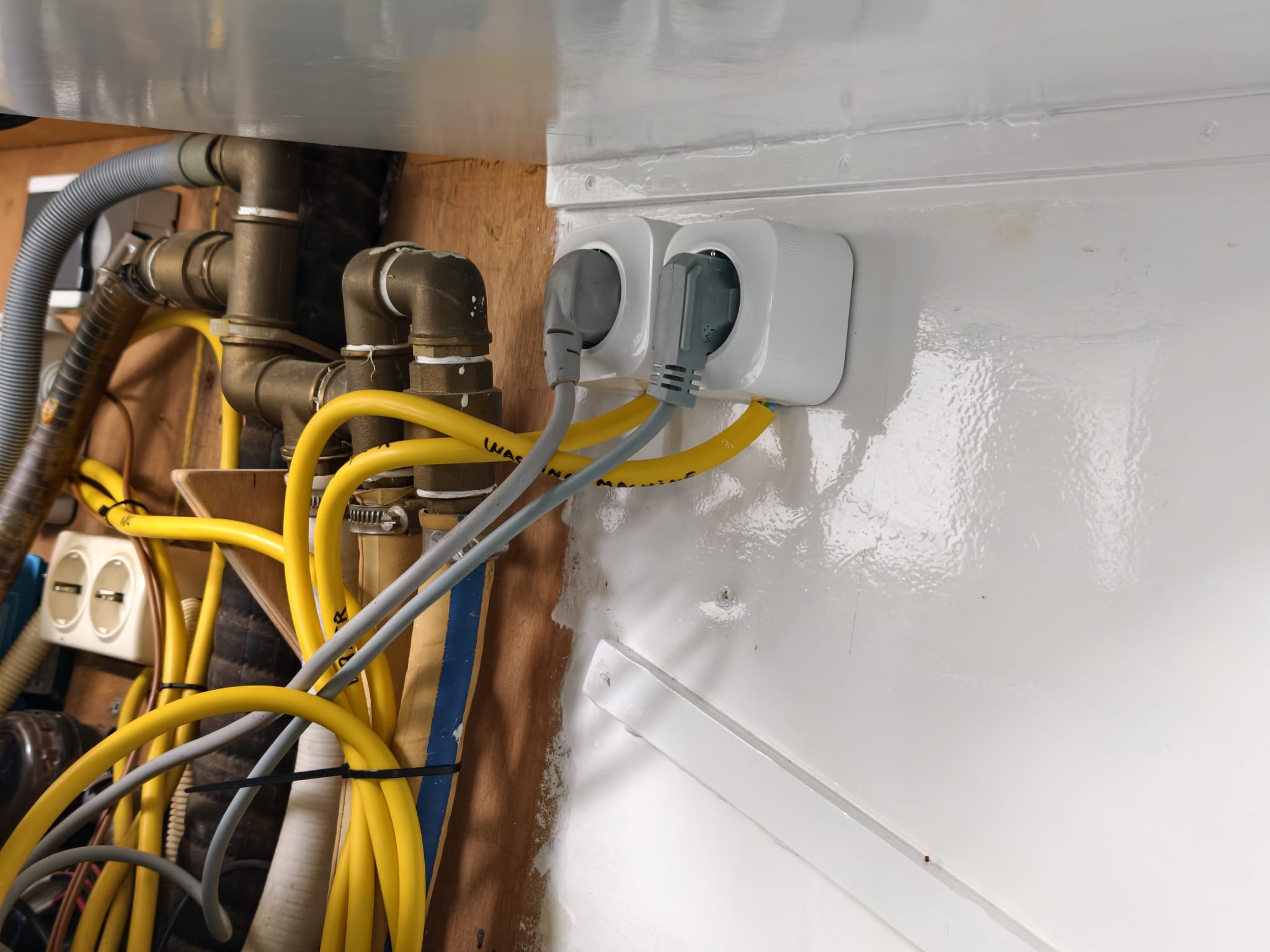
2 wall outlets have arrived from Amazon. So Wim can finish the 230v wiring for the washing machine and the dryer.
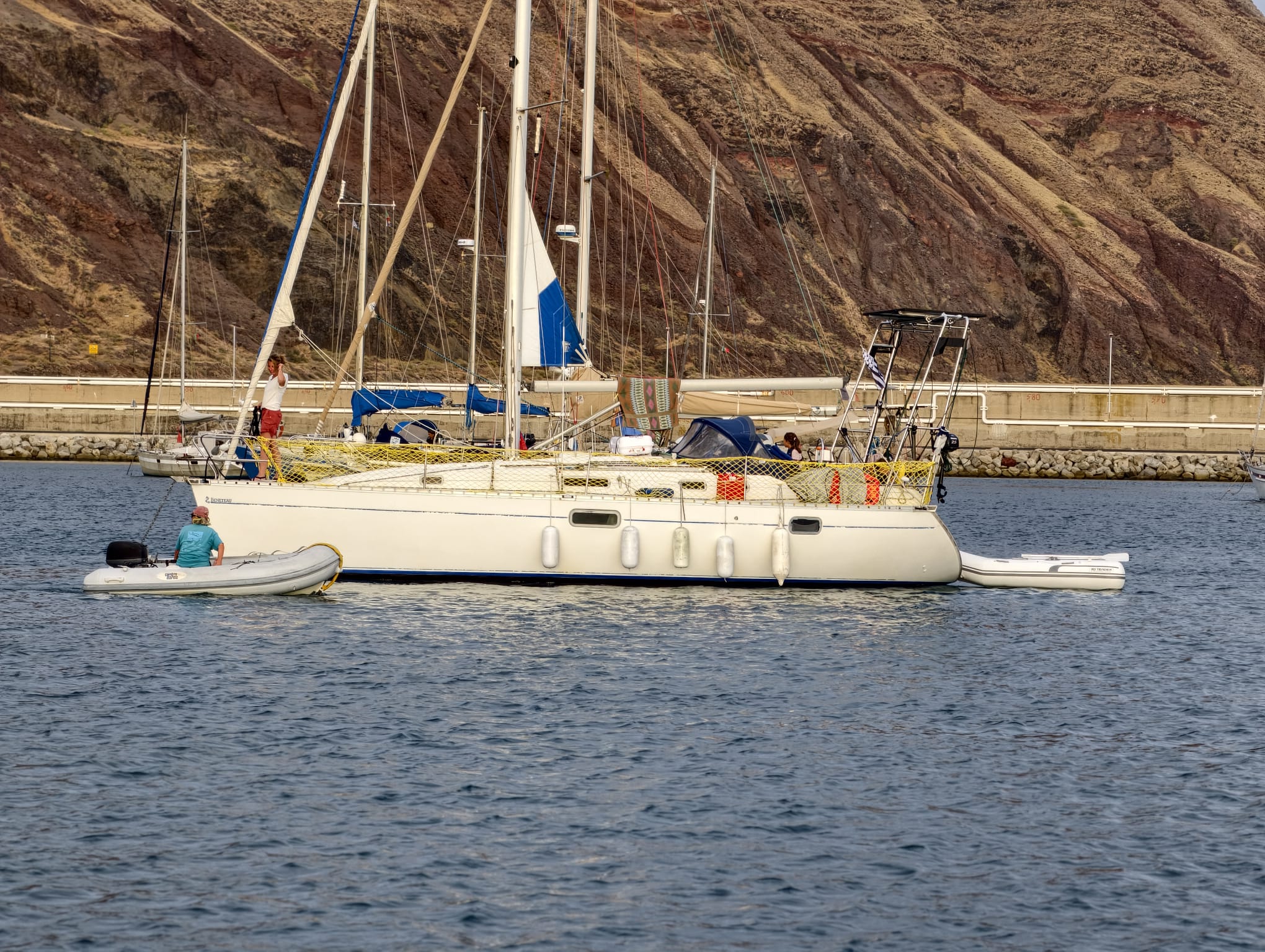
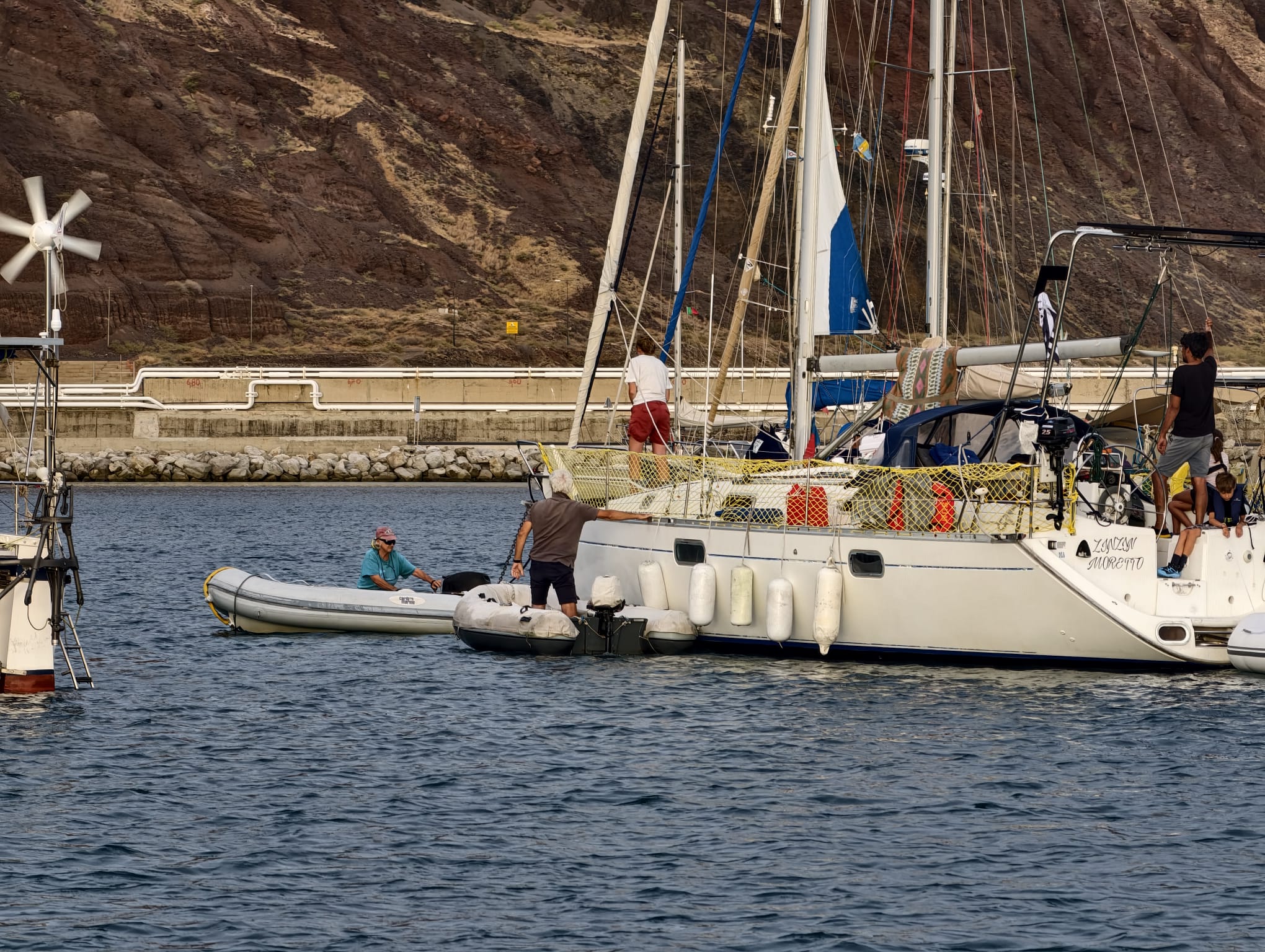
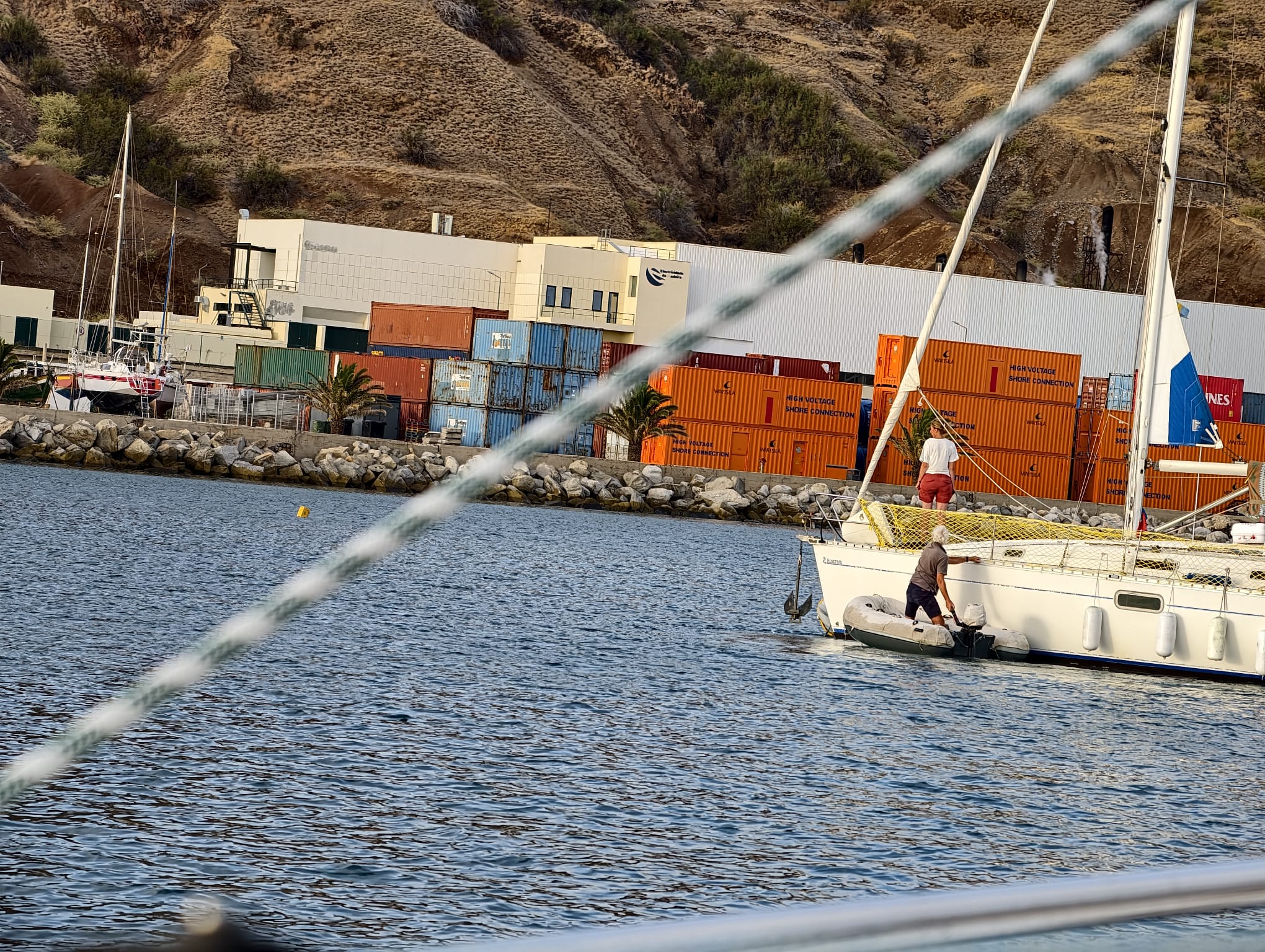
It’s always the French boats that anchor too close to other boats.
The wind comes from behind the mountains and is very gusty (up to 30 knots) and it makes the boats swirl around their anchors. Sometimes boats are pointing in opposite directions! That mean the distance between boats should be at least twice the length of the anchor chain.
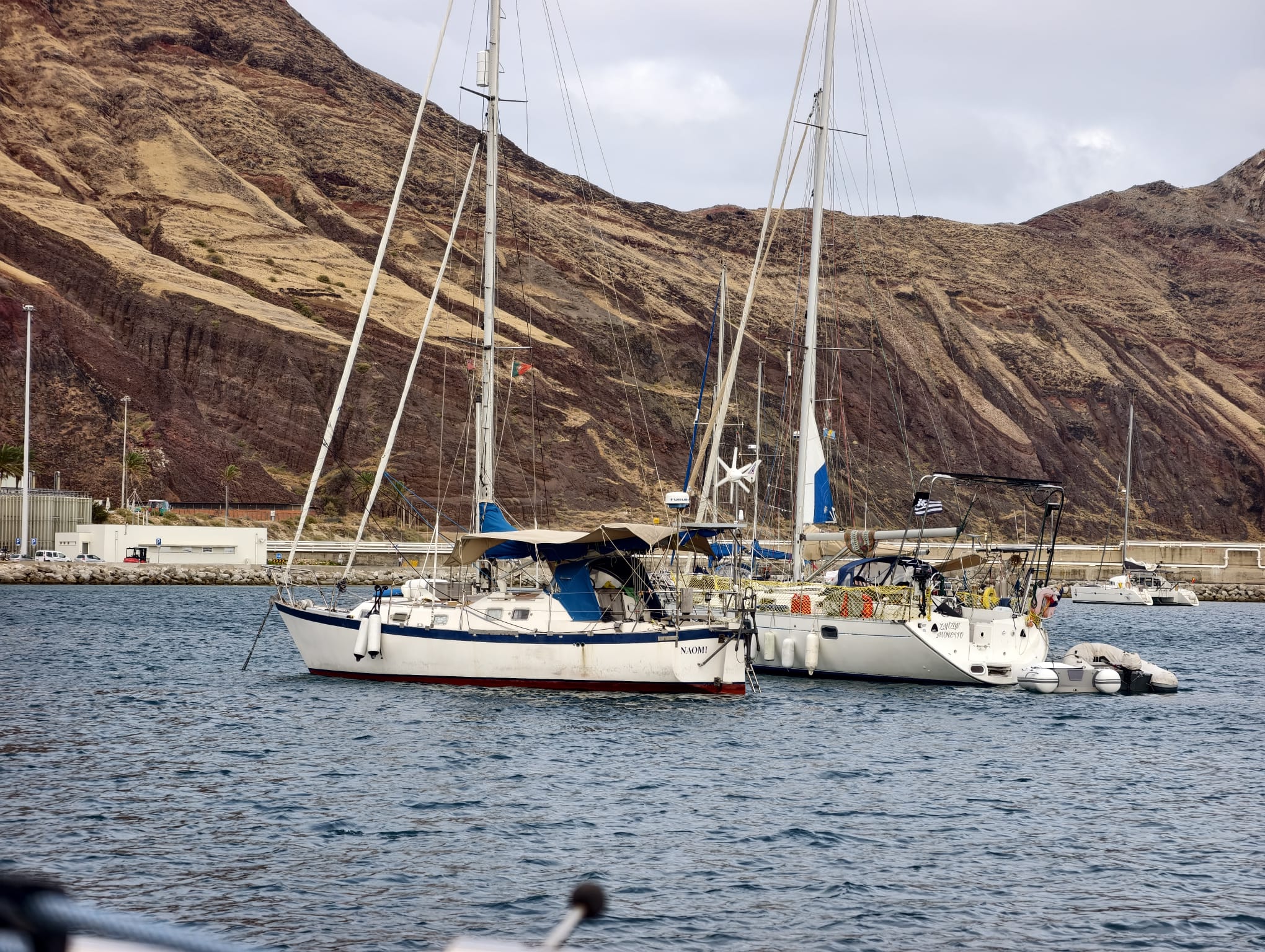
But these French that have just arrive are way too close to others. Here, they hit their neighboring boat. They push off and put fenders out! Instead of moving and re-anchor in a better place!
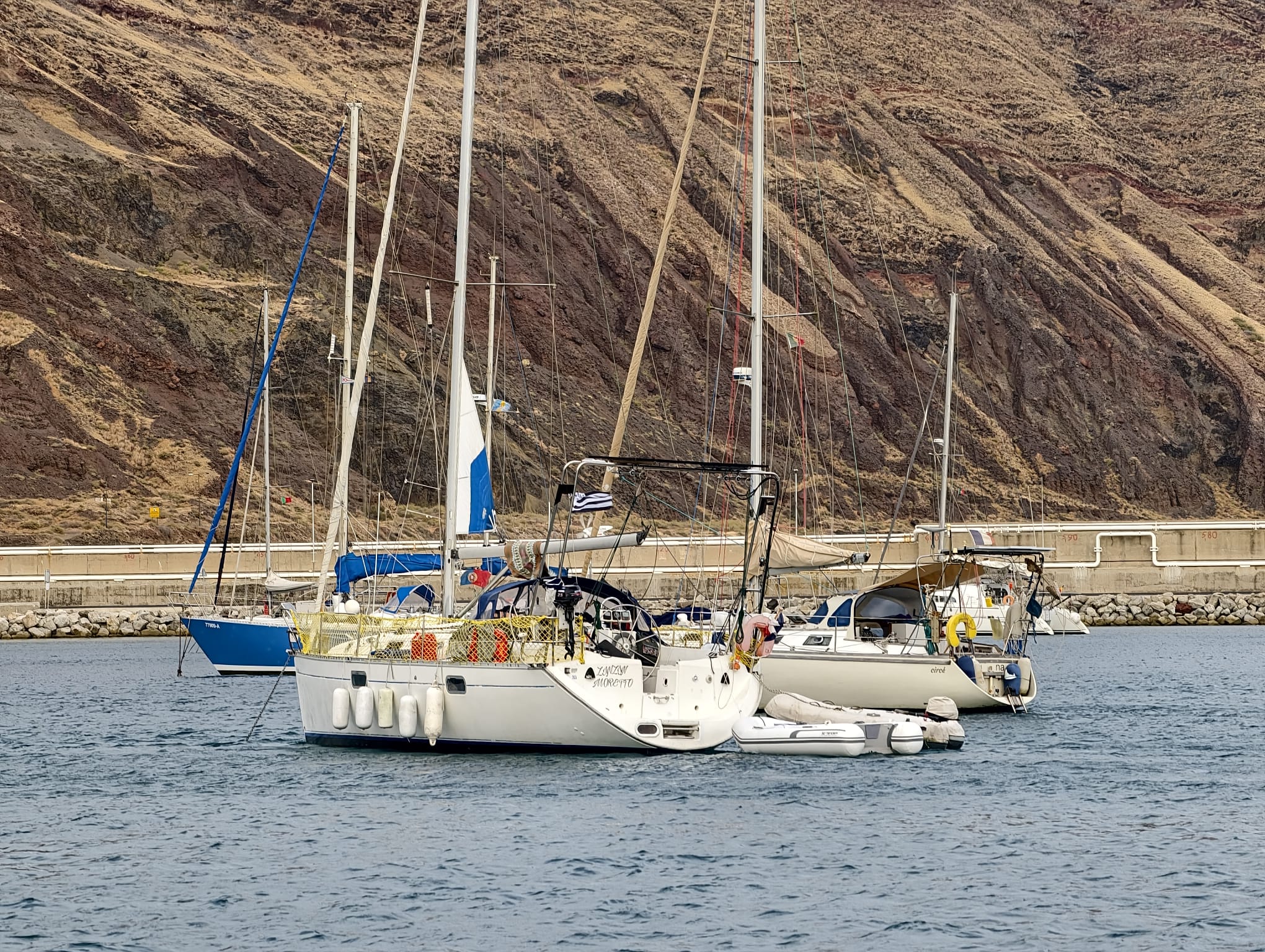
Then, they hit the neighbor on the other side!
2 men from other boats get into their dinghy and tell them to anchor elsewhere. They guide the French to a spot with more room.
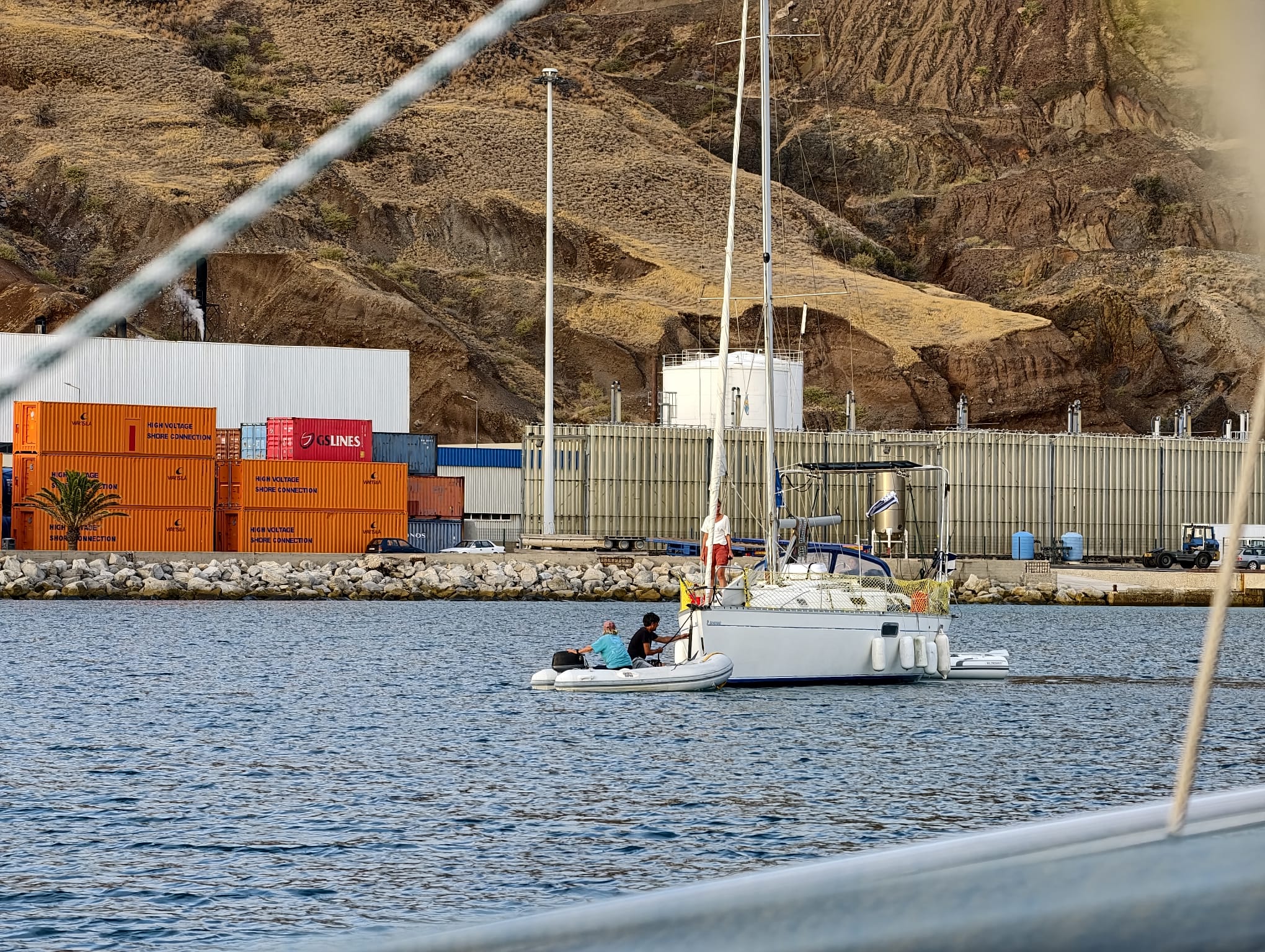
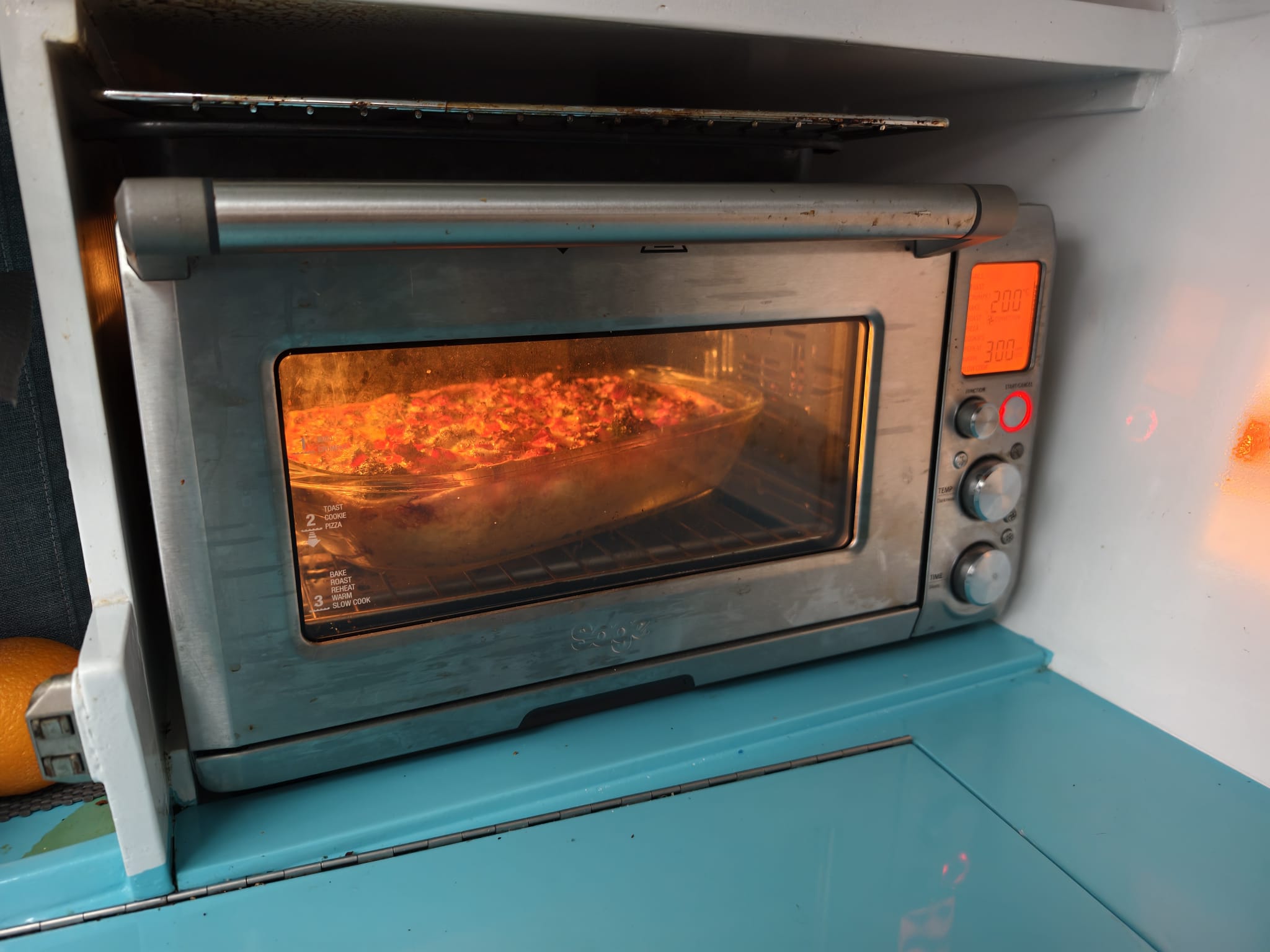
Meanwhile on Dione IV…
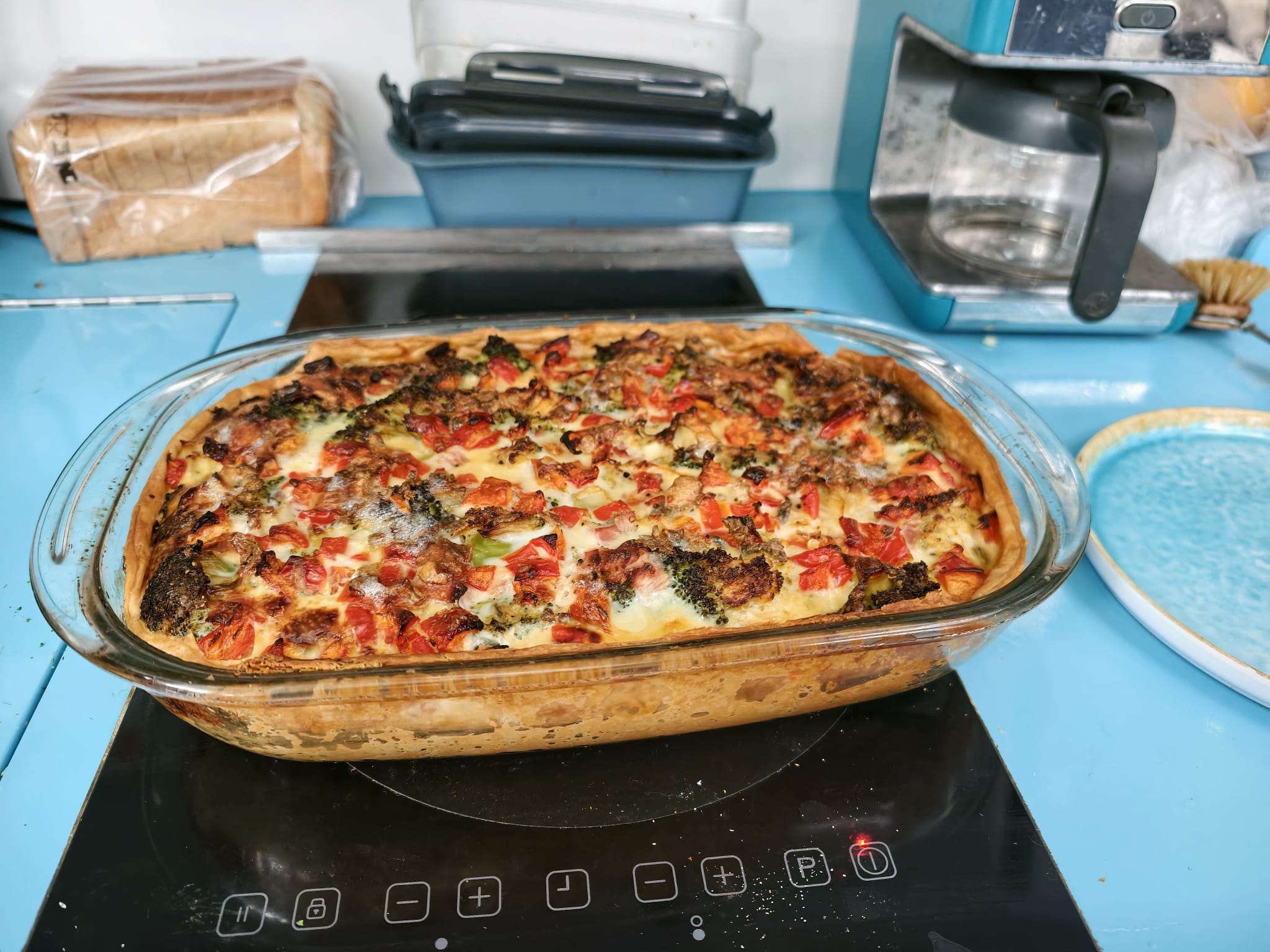
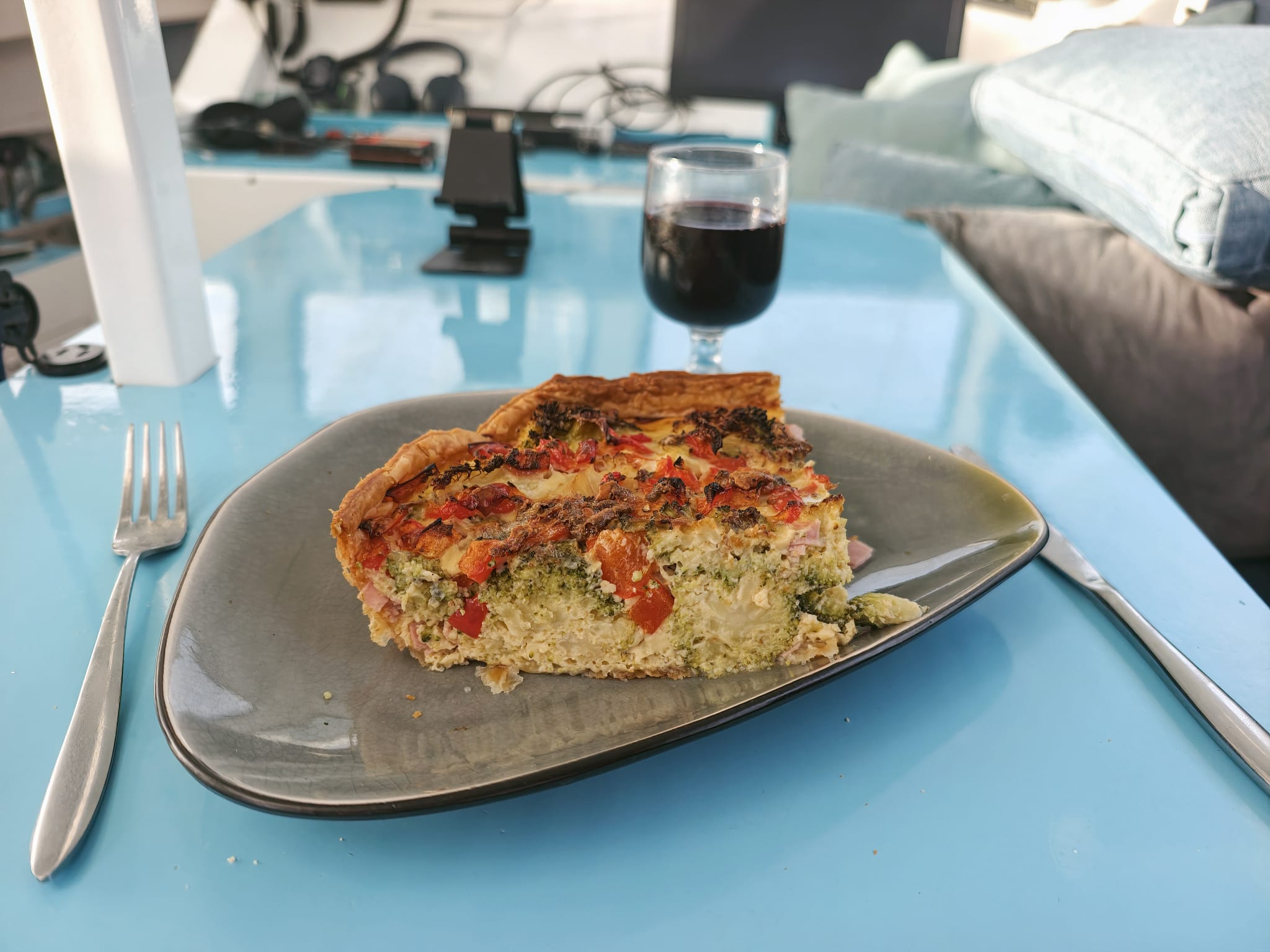
Broccoli ham pie. Also, one of the recipes that Wim makes when Sher is away. Sher doesn’t like ham and red pepper.
September 18.
A restless night. The wind is NE 20 knots at the ocean but here, behind the mountains, the wind changes from zero to 30 knots and changes direction 90º all the time. That means we get these heavy gusts on the beam sometimes. Putting huge force on the anchor, the chain and the bridle. Sometimes we heel over in such a gust and the bridle touches the waterstay. That makes a noise that wakes Wim up all the time, worrying a little bit: we are relatively close to the wall with our stern. Well, it’s about 80m but if something would happen with the anchor there’s very little time to act. But we have the best anchor in the world, the world’s best chain hook and a very strong bridle. So we’re steady like a rock.
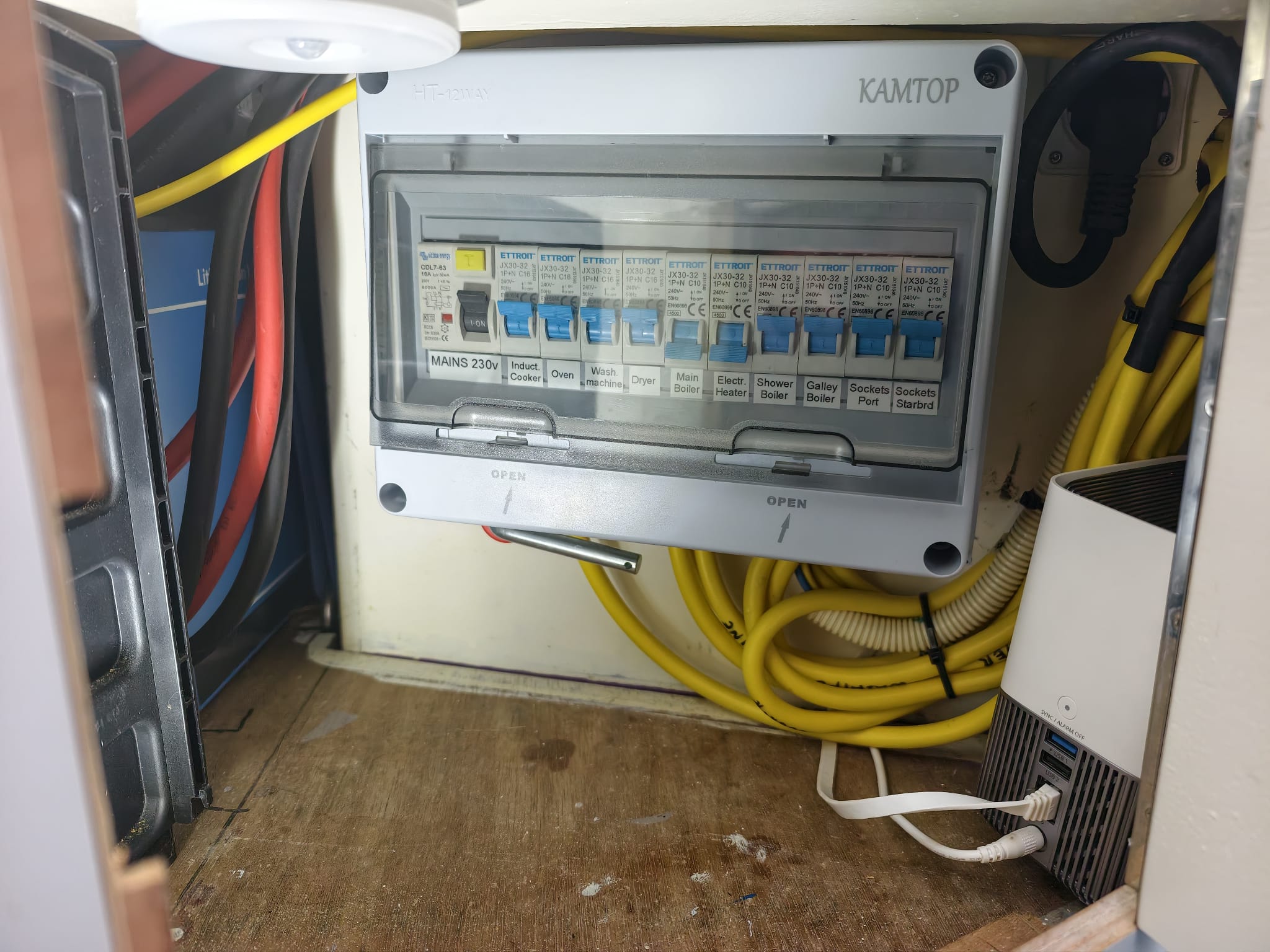
Today, Wim finishes the new 230v system. Case closed! 👍🏻
Meanwhile, Sher is in San Francisco.
September 20.
Oops, that was a bad night’s sleep… The wind was about 20 knots but the gusts are very strong. Up to over 30 knots and, as usual, shifting 120º sometimes. Every strong gust wakes Wim up, Dione IV heeling and turning behind her anchor in the direction of the wind. Although Wim knows we have a solid hold he’s worried. What if the anchor drags or something breaks? The wall is close. He won’t enough time to respond before hitting the wall… He thinks: Bloody! I worry too much! Nothing’s going to happen. He decides to close the hatches, not to hear the wind. Silence. That helps. He’s able to sleep a few hours. In the morning, the wind decreases and the next days will be calm.
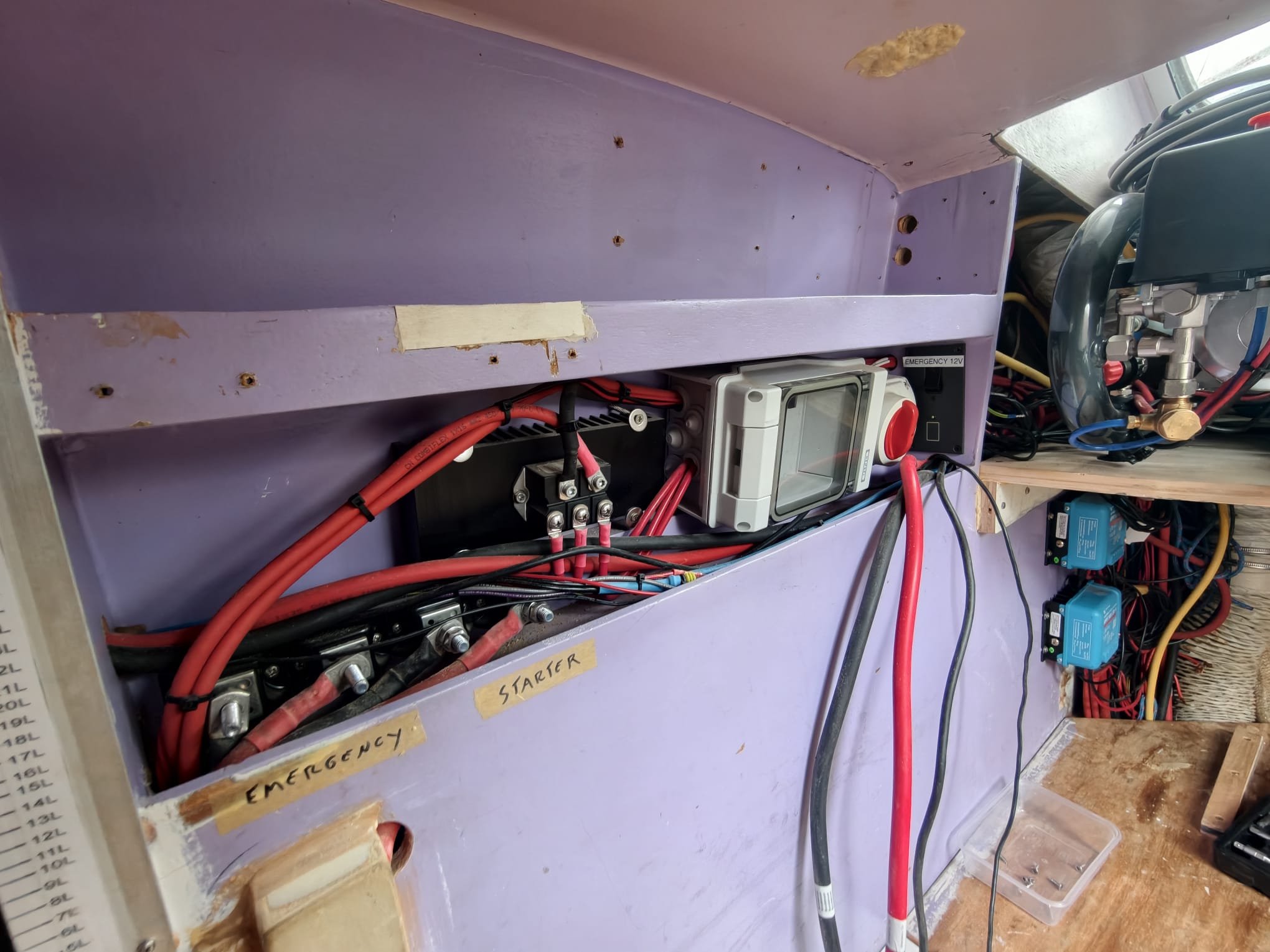
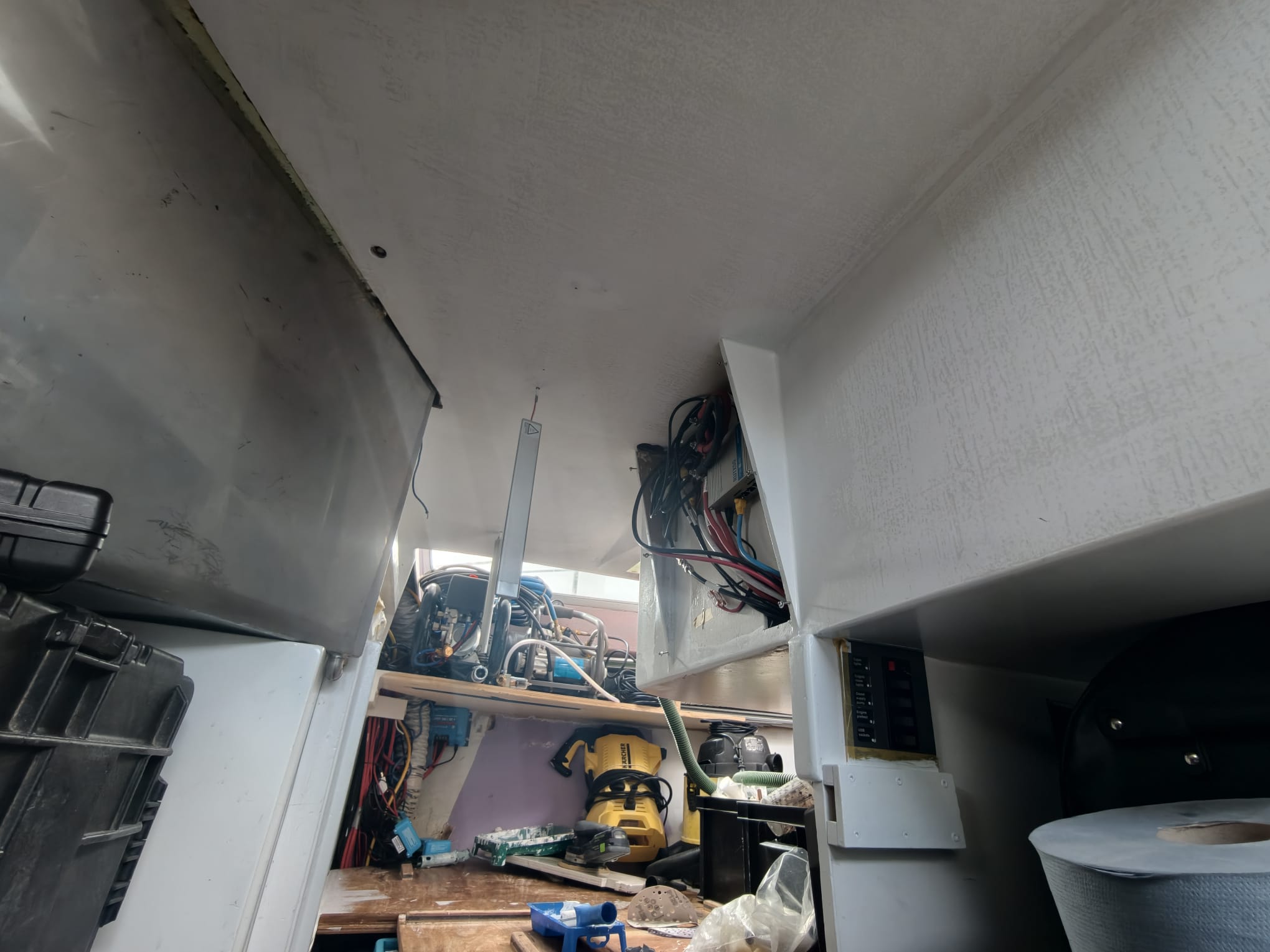
Continuing the paint job in the lazarette. Wim has decided to do it in steps. It’s just too much stuff to move out and store it elsewhere in the boat. So, let’s start with the front side. There’s a lot of equipment mounted there: the shore power box and the scrubber charger on the top shelf are easy to remove. But on the bottom shelf, the wind generator emergency stop switch, the wind generator relay box and the cables to the emergency batteries are very hard to remove, it would take days to remove those cables. So, Wim decides to paint around it. Remove only the wind generator rectifier and unscrew the 2 boxes from the wall.
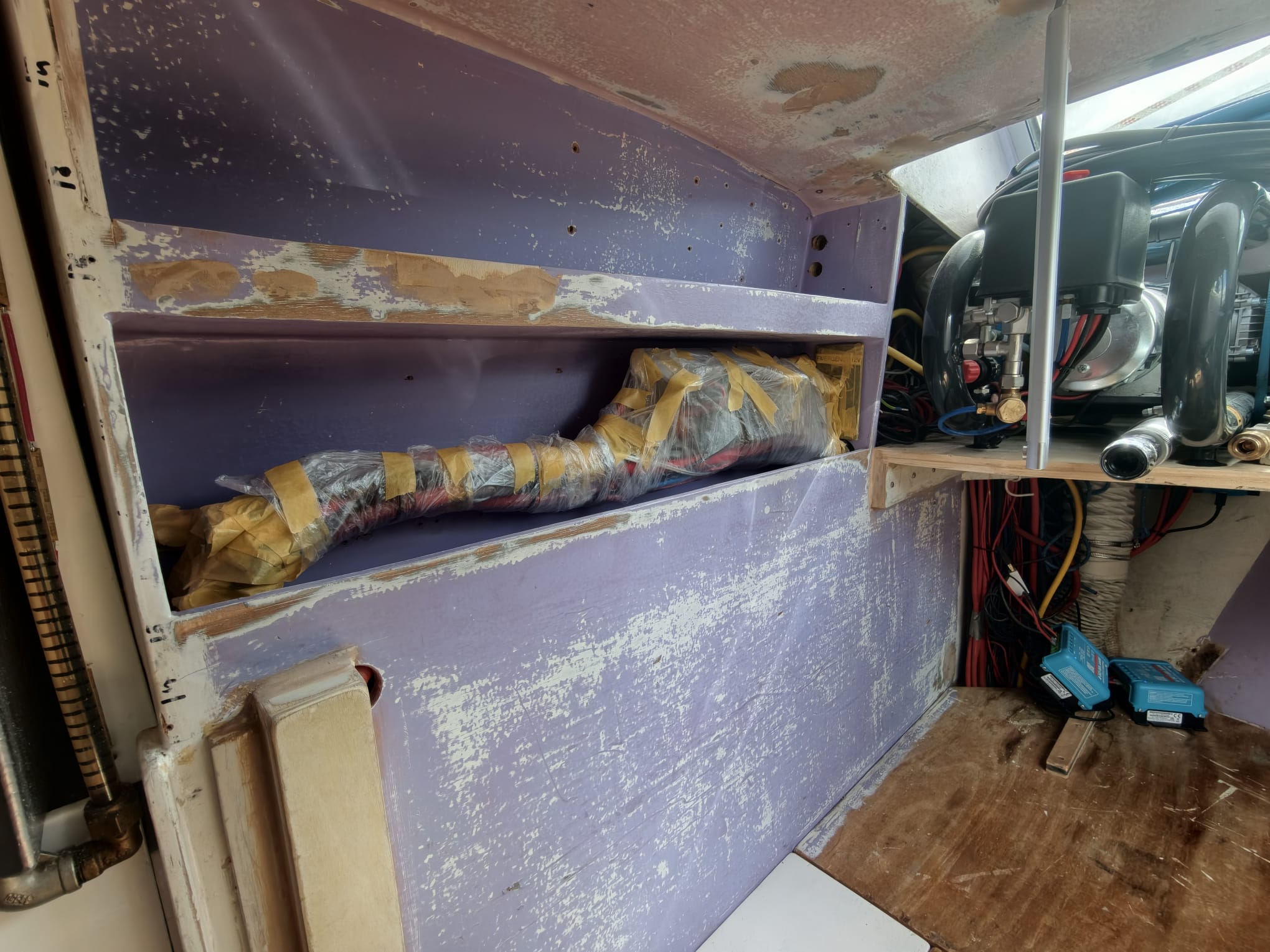
Protect all cables and the 2 boxes with tape and plastic and paint around it as good as possible.
Then sand everything, the wall, the shelves and the ceiling. Put some filler in unused holes and unequal spots, sand again.
Optimist sailing contest this weekend. Today, there was a nice gentle breeze for these little sailors but yesterday there was really too much wind for them. Many little accidents happened. They are accompanied by a number of leaders in fast RIB’s so the children were rescued quickly but the Optimist boat isn’t suitable for that much of wind. The sail can’t be reefed. Wim saw a little girl being blow upside down over her bow in a strong gust! In a strong breeze, the little boat is so fast that it pushes it’s bow deep down in the water. The rudder has not enough power to change the course and the boat tumbles over it’s bow.
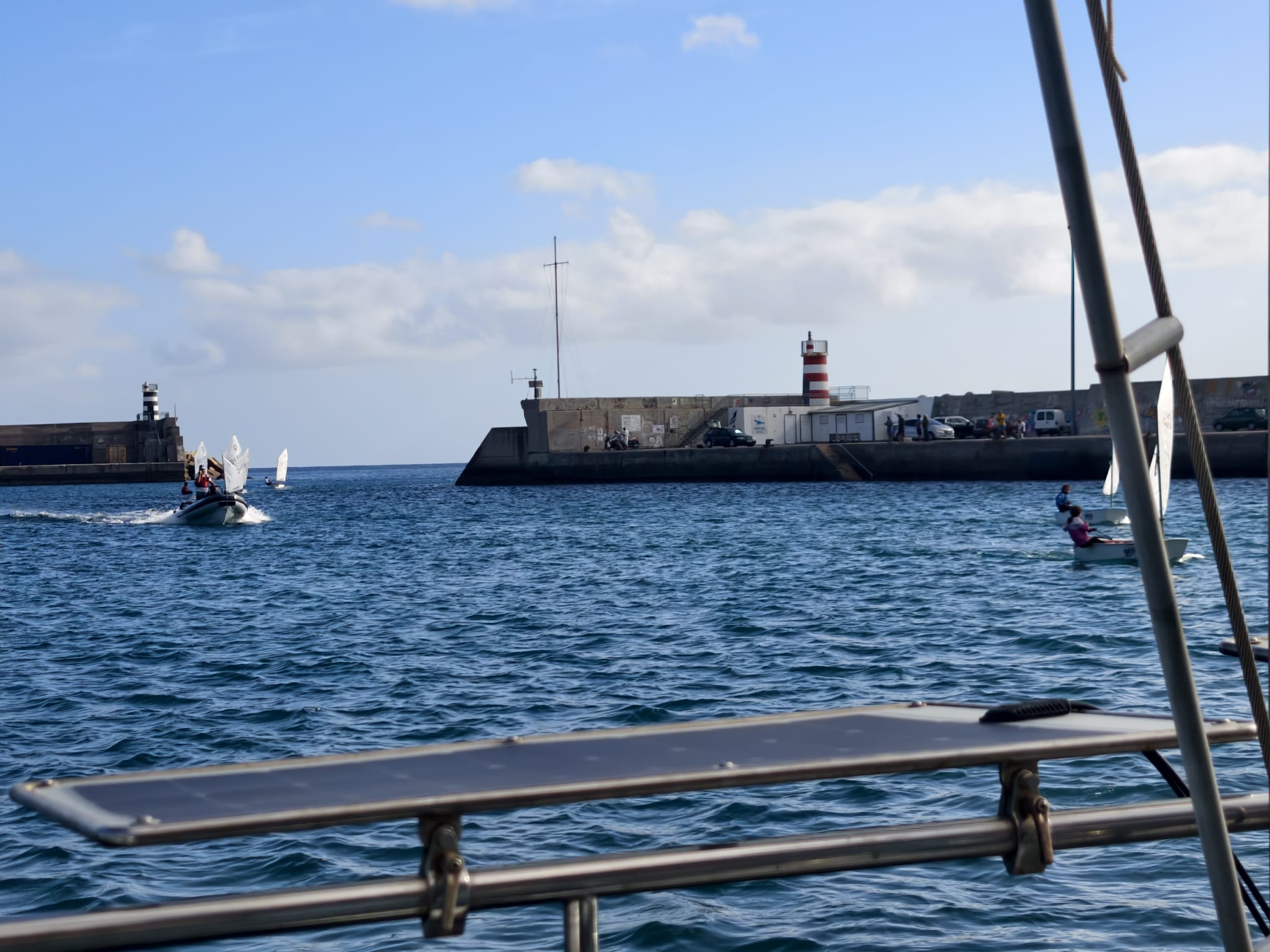
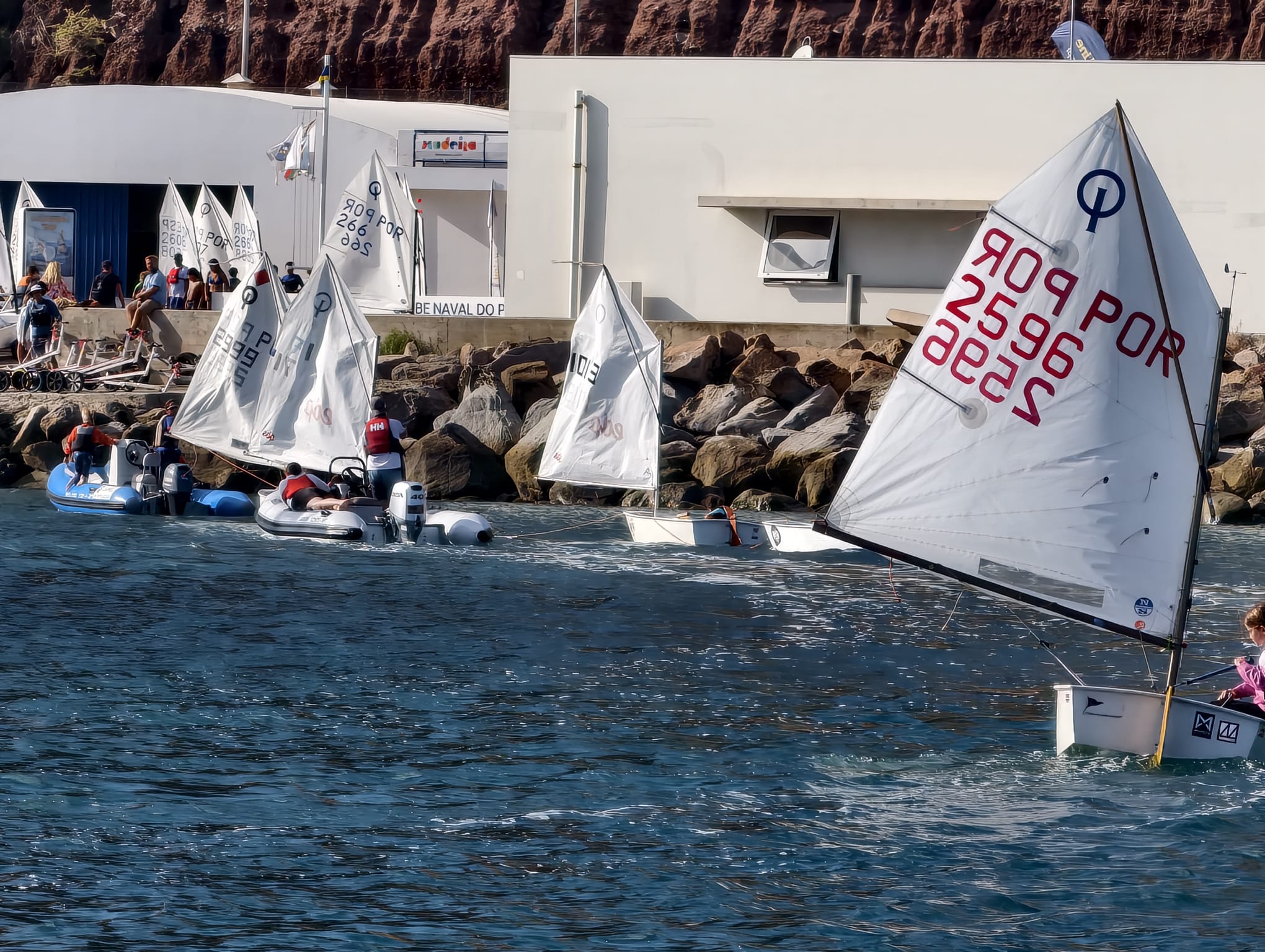
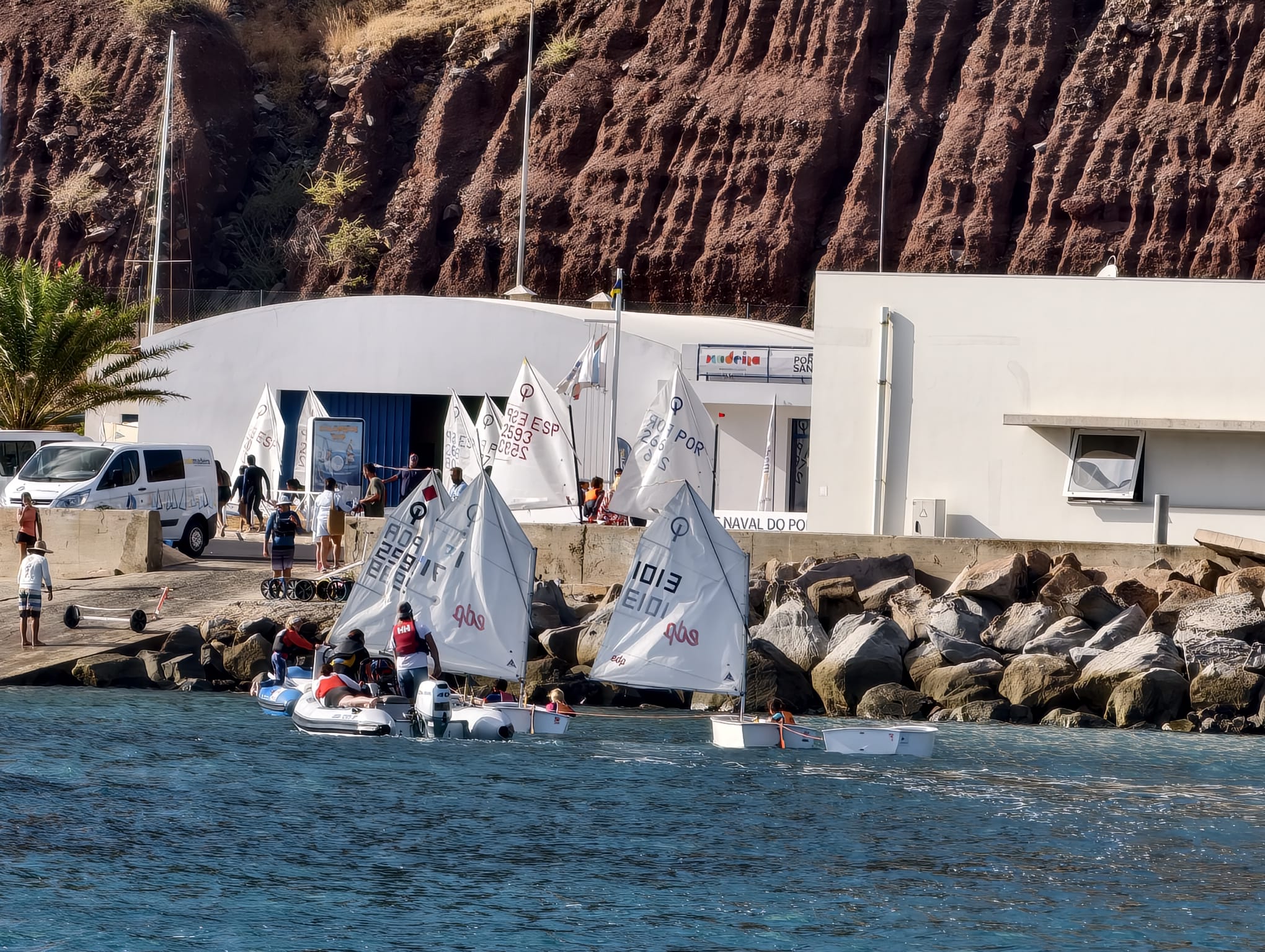
in the afternoon, the wind is gone and the game is over 😄
They are towed back to the marina.
Sher is in Lisbon. Pastel de Nata at Castro, the best!
Tomorrow she’ll be home!
September 21.
A layer of primer in the lazarette.
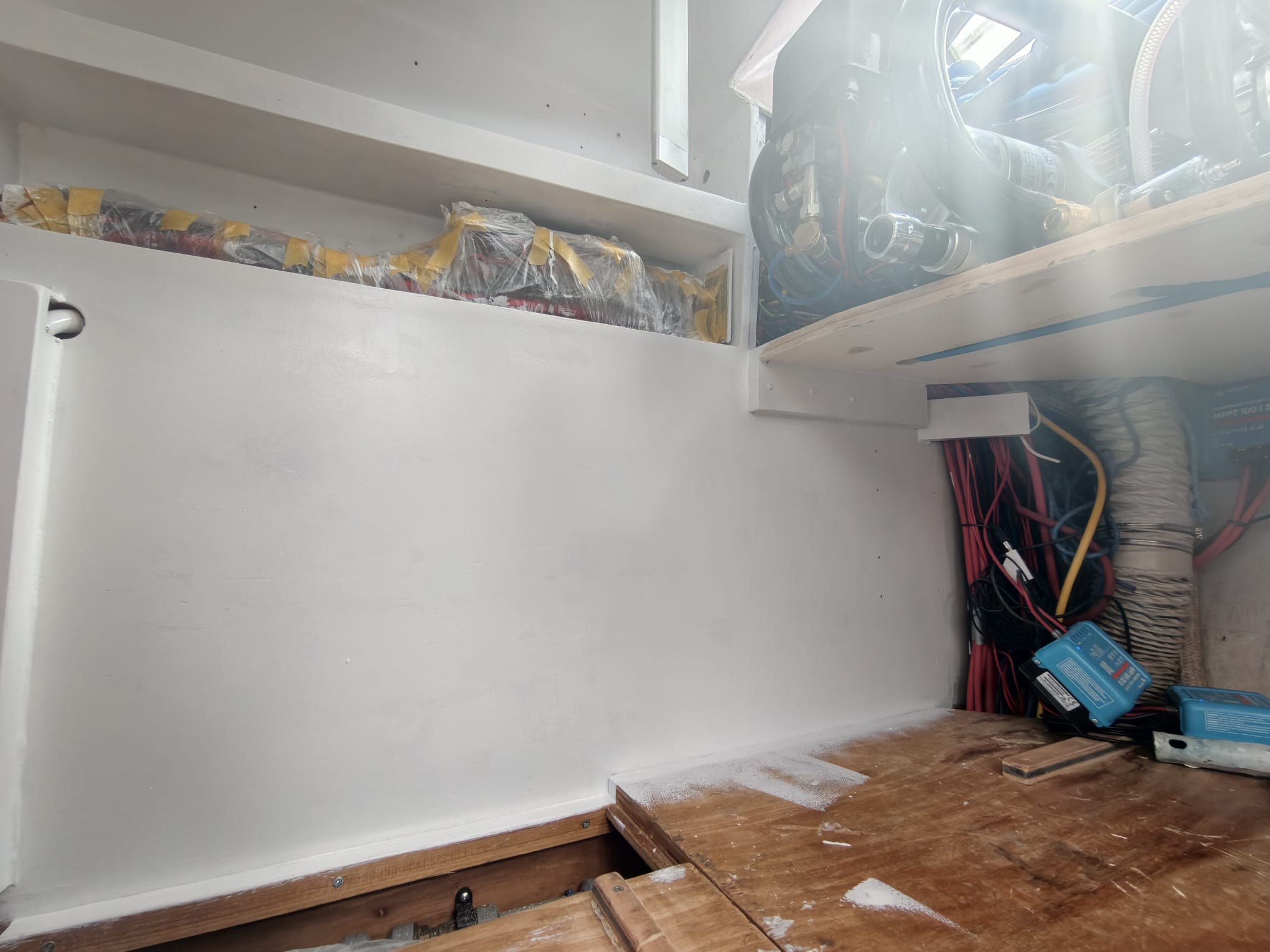
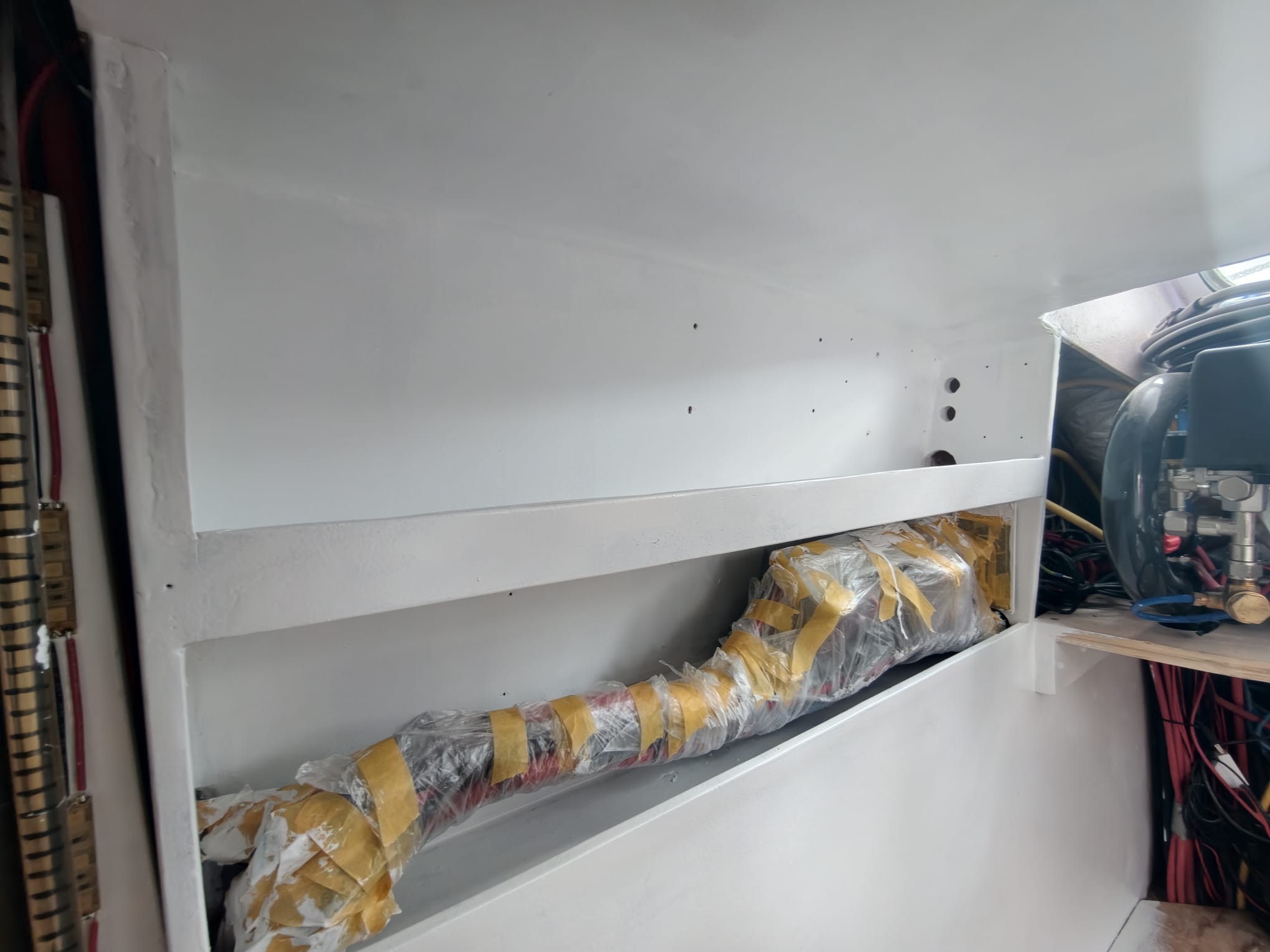
At noon, Sher lands at Porto Santo. We have lunch together in town and she picks up her Portuguese residence card which had been forwarded to the post office. Yippee!
Leave a Reply