We write the text for our website in English. The multiple language selection feature is an auto-translation by Google. This translation is not perfect; it sometimes uses peculiar words and even expresses things in a very different way than what we actually meant. So, if you’re reading in a language other than English, and you read something strange, switch back to the English version to read what we actually meant to write!
If you’d like a shorter/summarized version of our posts, read only the “Highlights” section below and stop before “The Captain’s Log“, which is much more detailed, more like a logbook / diary and contains information for our reference as well.
Highlights – the overview
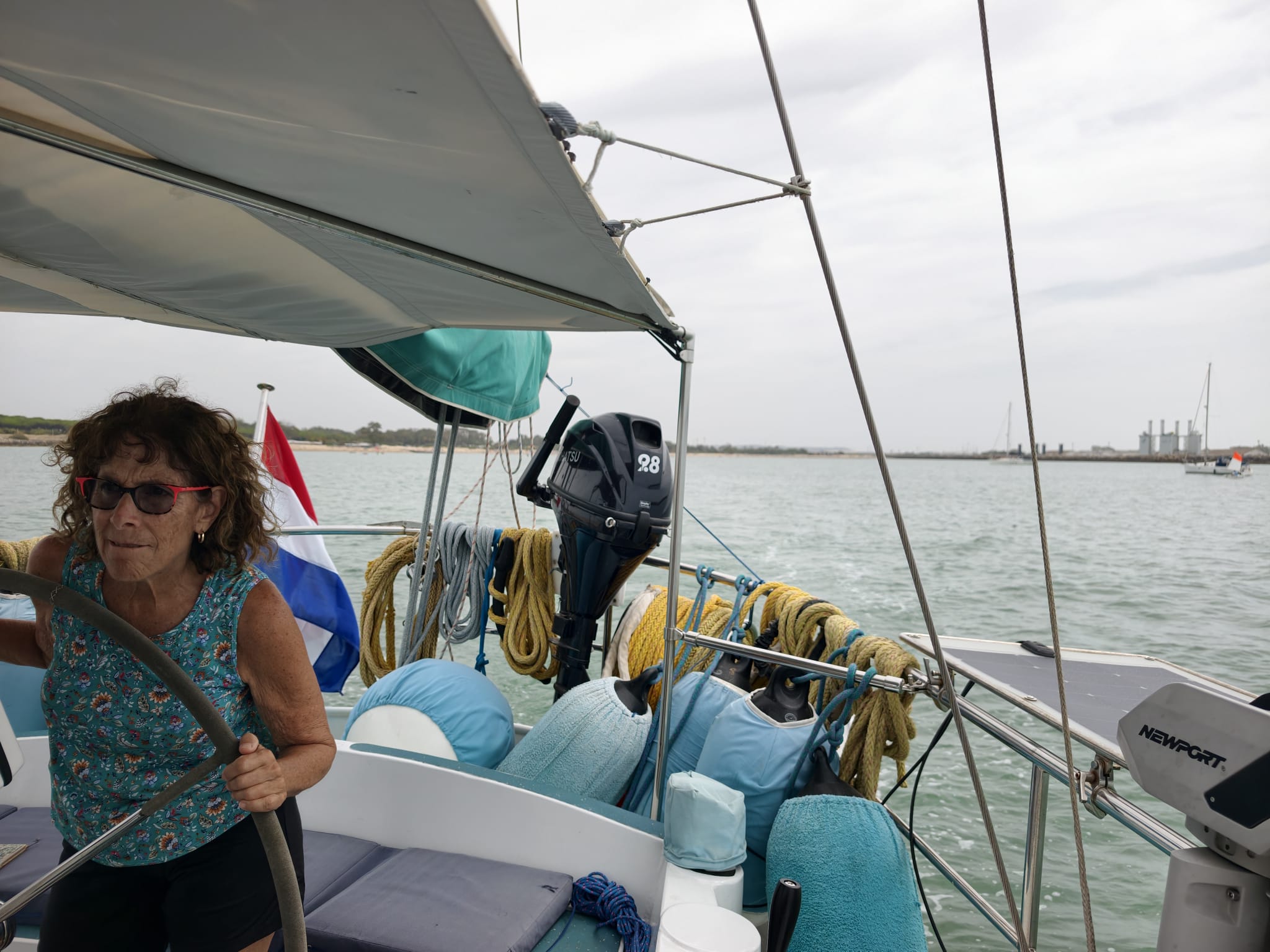
We decide to move to the bay near Cadiz. There’s swell from the west that enters this bay and we didn’t sleep well the last two nights. So, after some provisioning in the little supermarket in Puerto Sherry we lift anchor. There’s hardly any wind but it’s only 4 miles motoring and under the bridge.
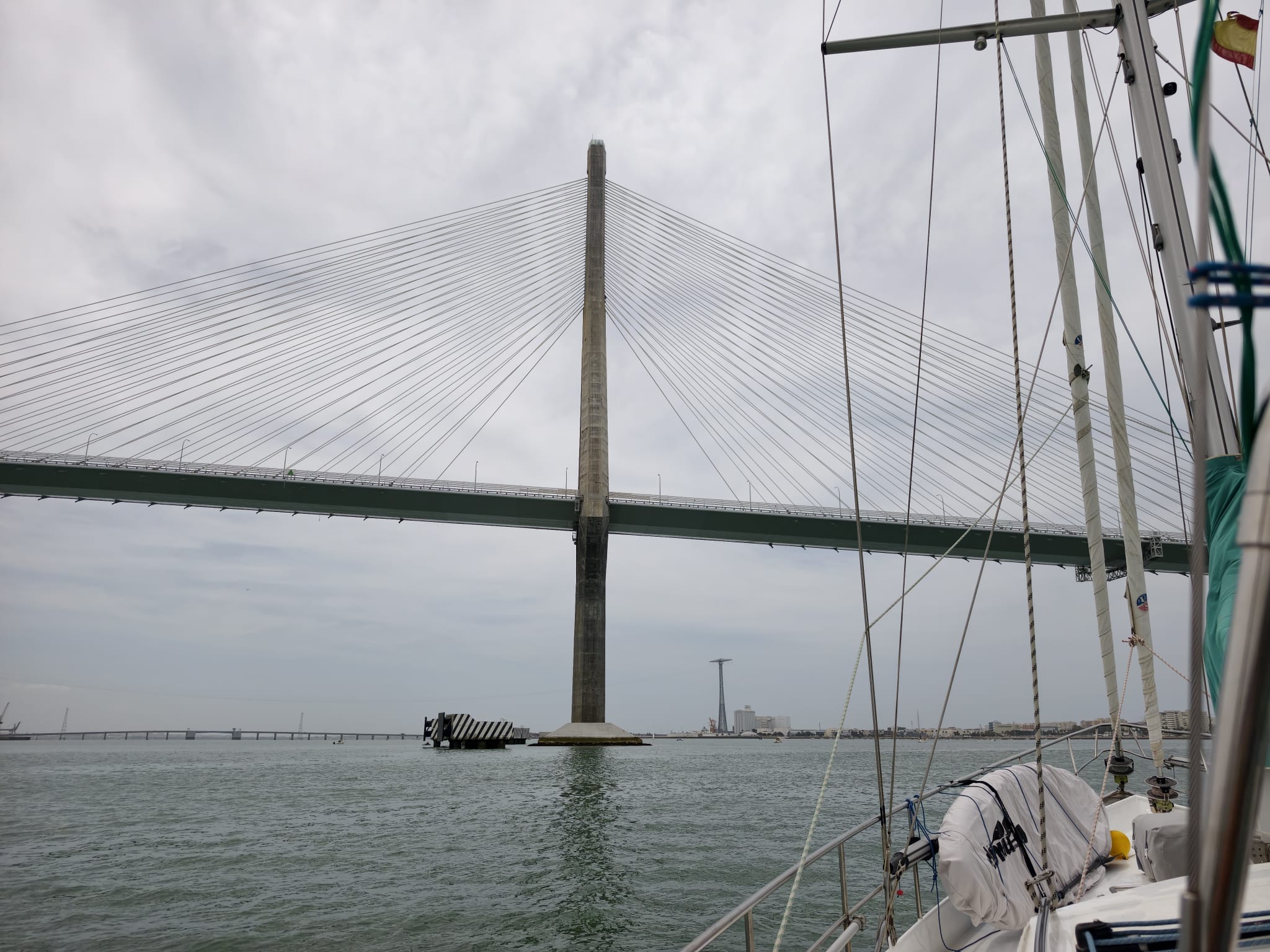
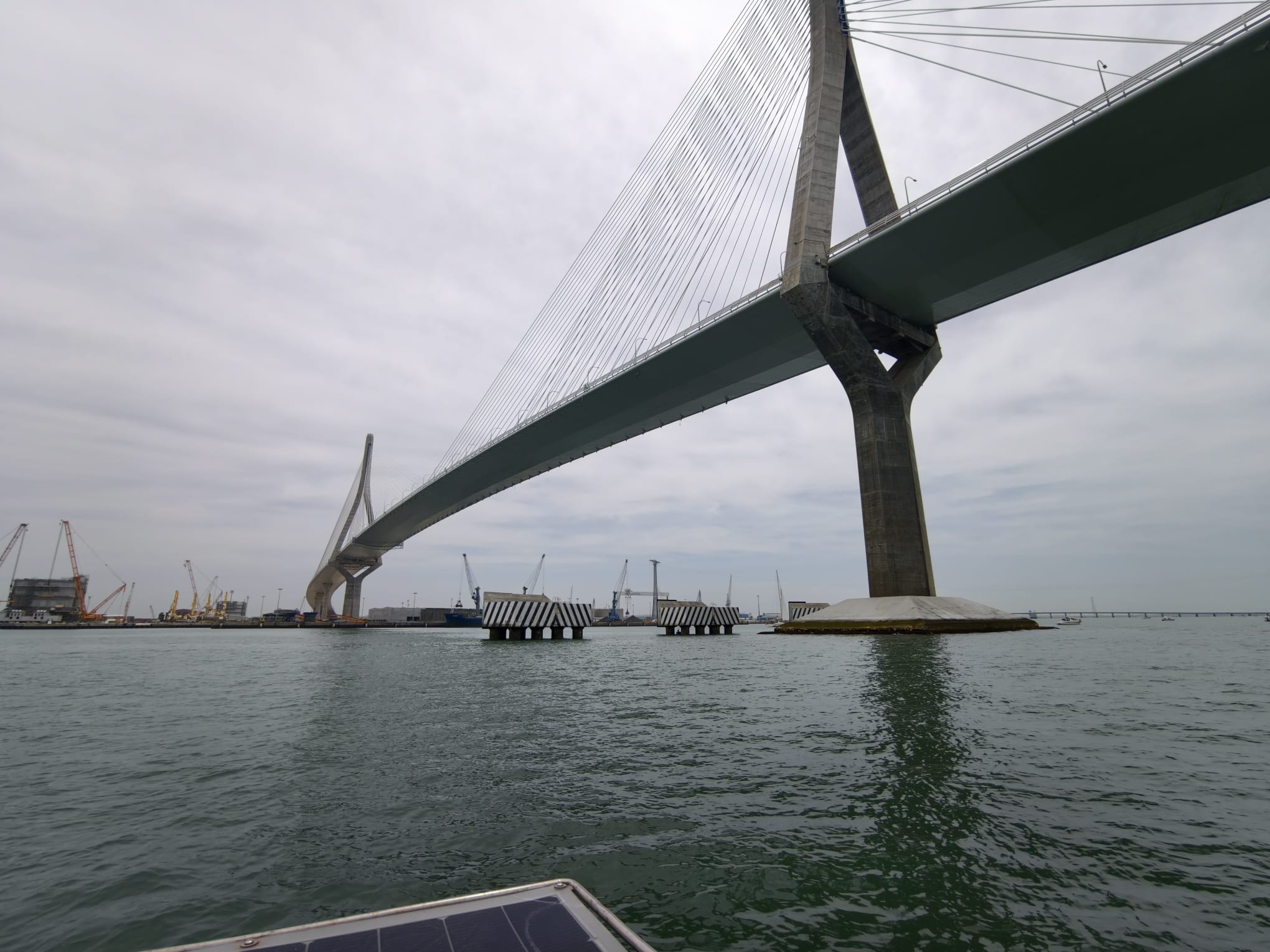
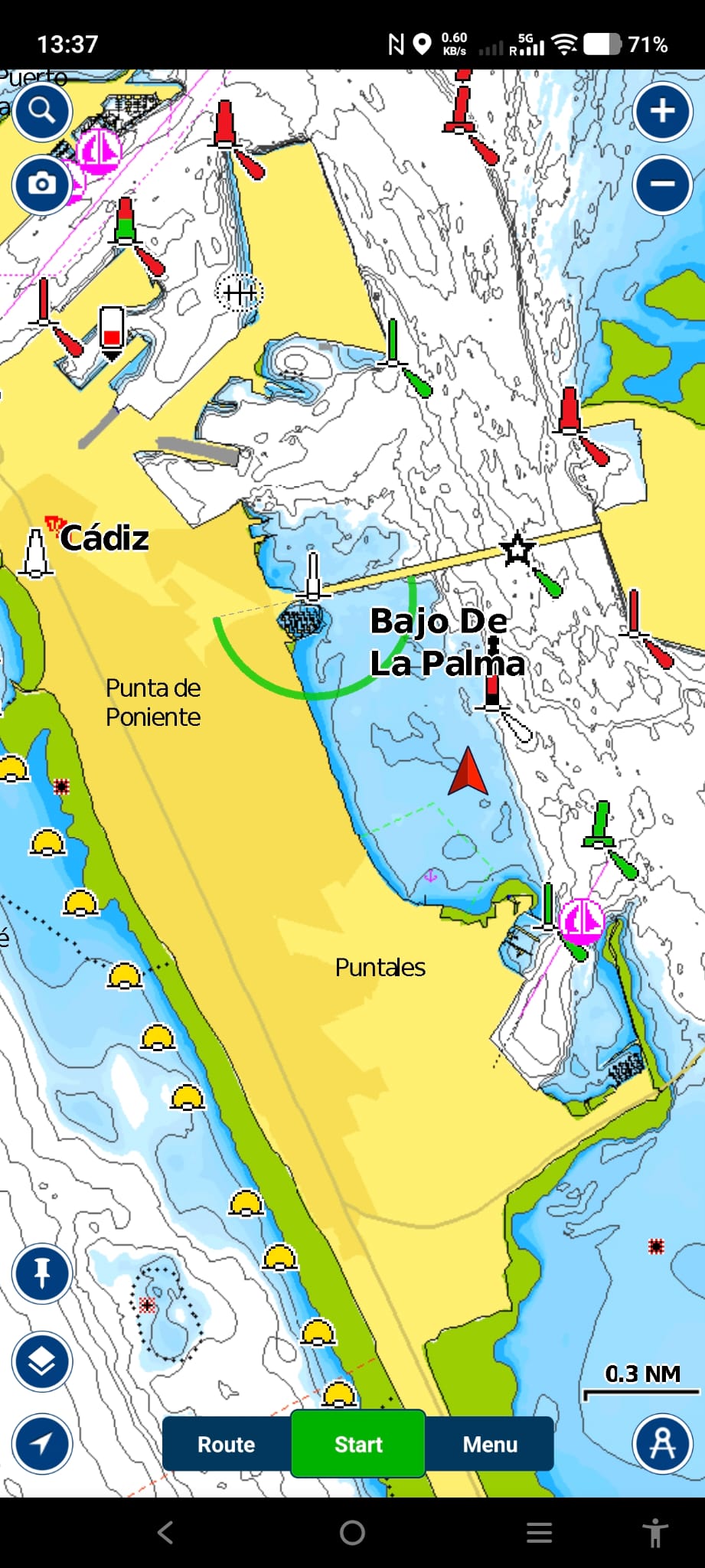
We anchor in the shallow bay east of Cadiz, behind the bridge. After we drop the anchor we test the holding with the engine in reverse. Hm. It keeps dragging. We hoist it and try another spot. Again, it’s slowly dragging. It’s very soft, slimy mud with a lot of garbage in it. 3th try. Again we drag, on engine. In the wind, it holds us in place. Hm. Let’s give it some time to slowly dig in, that helps sometimes. Let’s have lunch first. And a siesta.
After siesta, we consider the options: there are no other anchorages here and the seabed will probably the same everywhere here. The only option is to go into a marina but we don’t like that idea. The wind has increased some and the current runs in the same direction. We are pulling firmly at the chain. The anchor seems to hold now. We decide to stay and keep a close watch on our position.
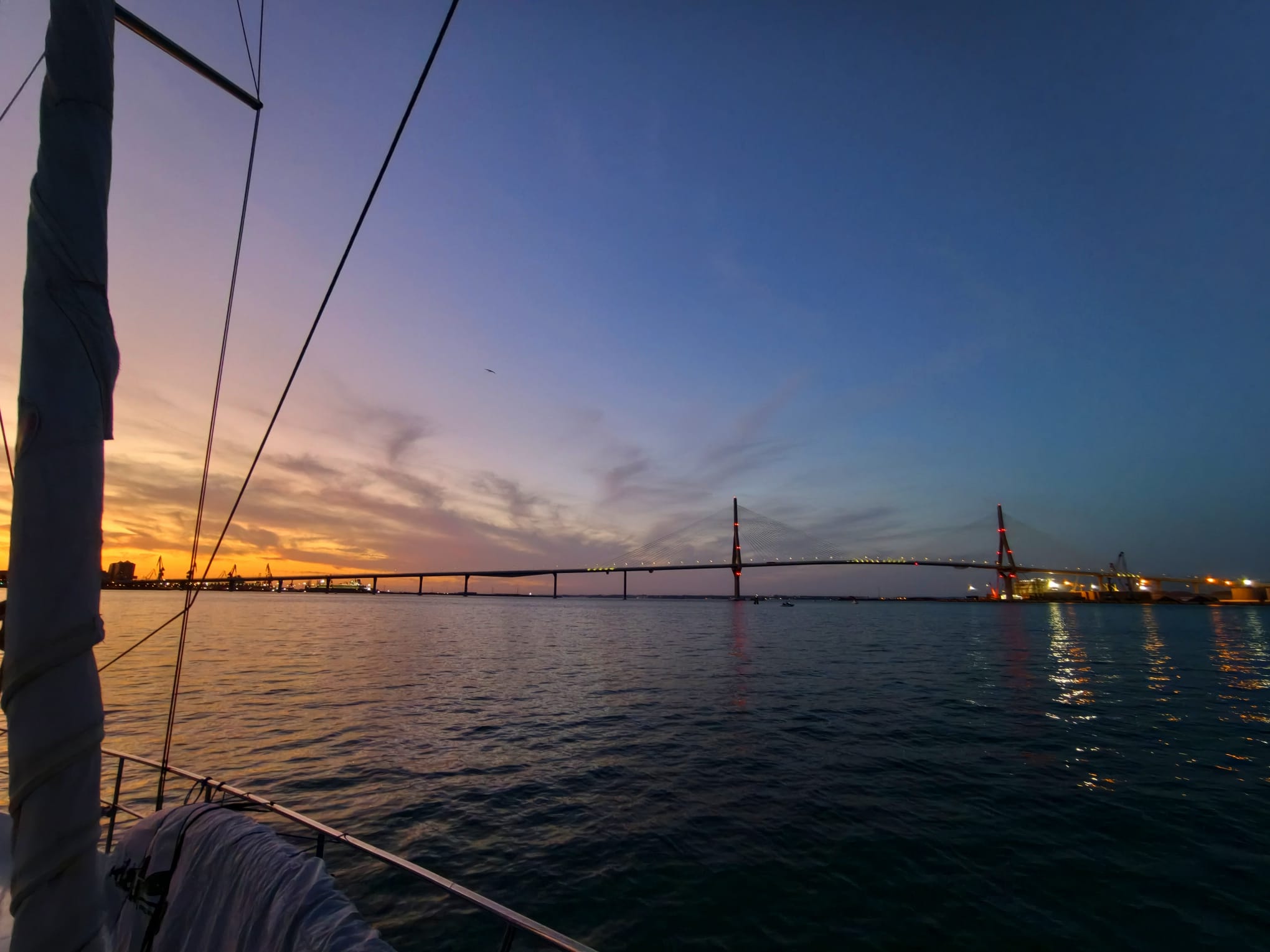
A beautiful sunset with a view at the impressive bridge. We have a peaceful night without rocking like crazy, like the last 2 nights.
The weather is lovely, clear skies and 25-30ºC every day.
Today we have a breeze from the south-east. Our wind speed sensor isn’t working well (it says around 6 knots) but we estimate 25 knots, gusts up to 30. In strong gusts we drag a bit. We keep a close watch on our position and 3-4 times we drag around 10m. Well, we have plenty of room here and as long as we don’t start drifting we should be okay.
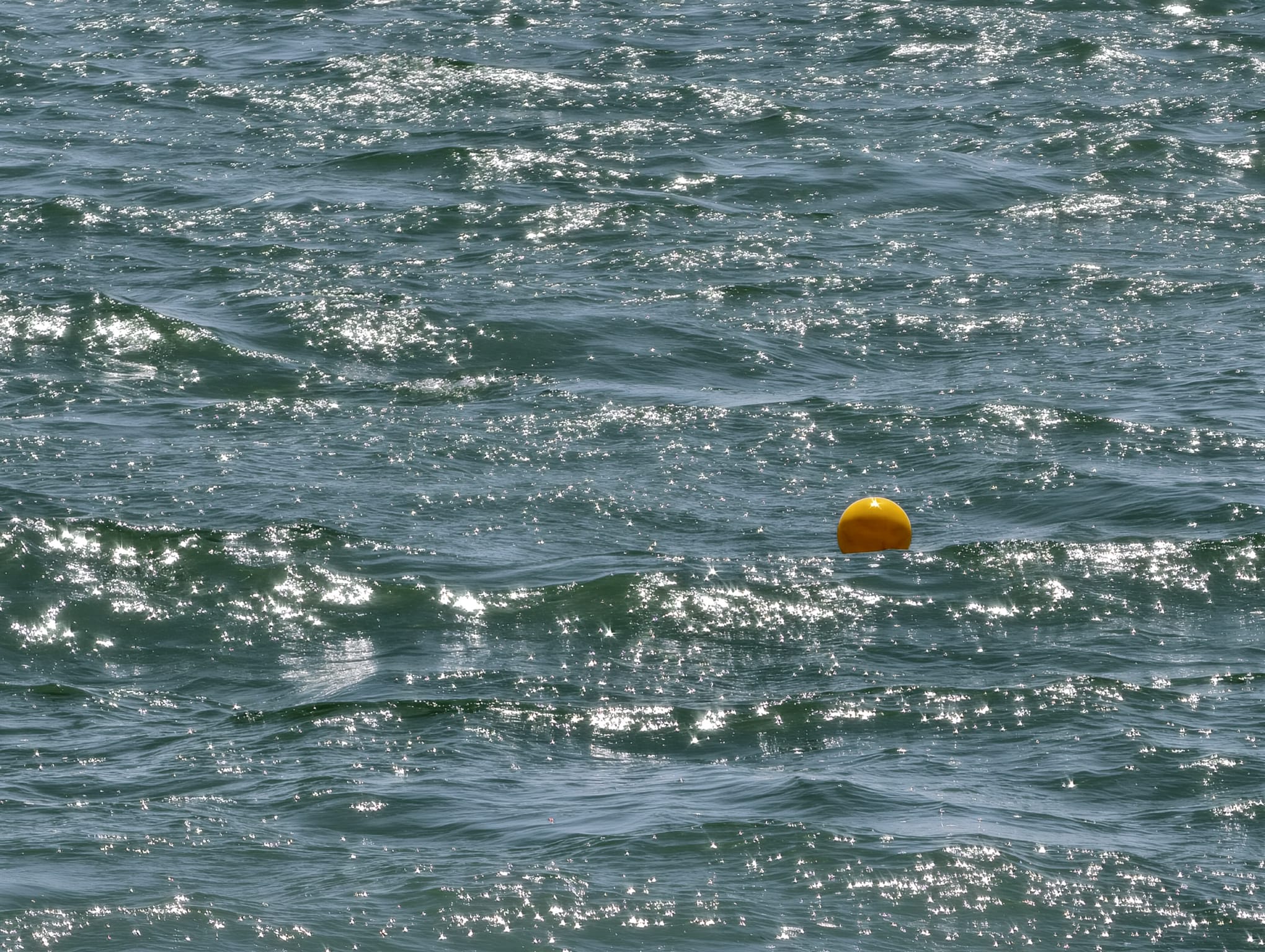
The little yellow retriever line ball has a hard job 😅. It’s quite far away from us (around 40m) and it drowns at high tide 😅
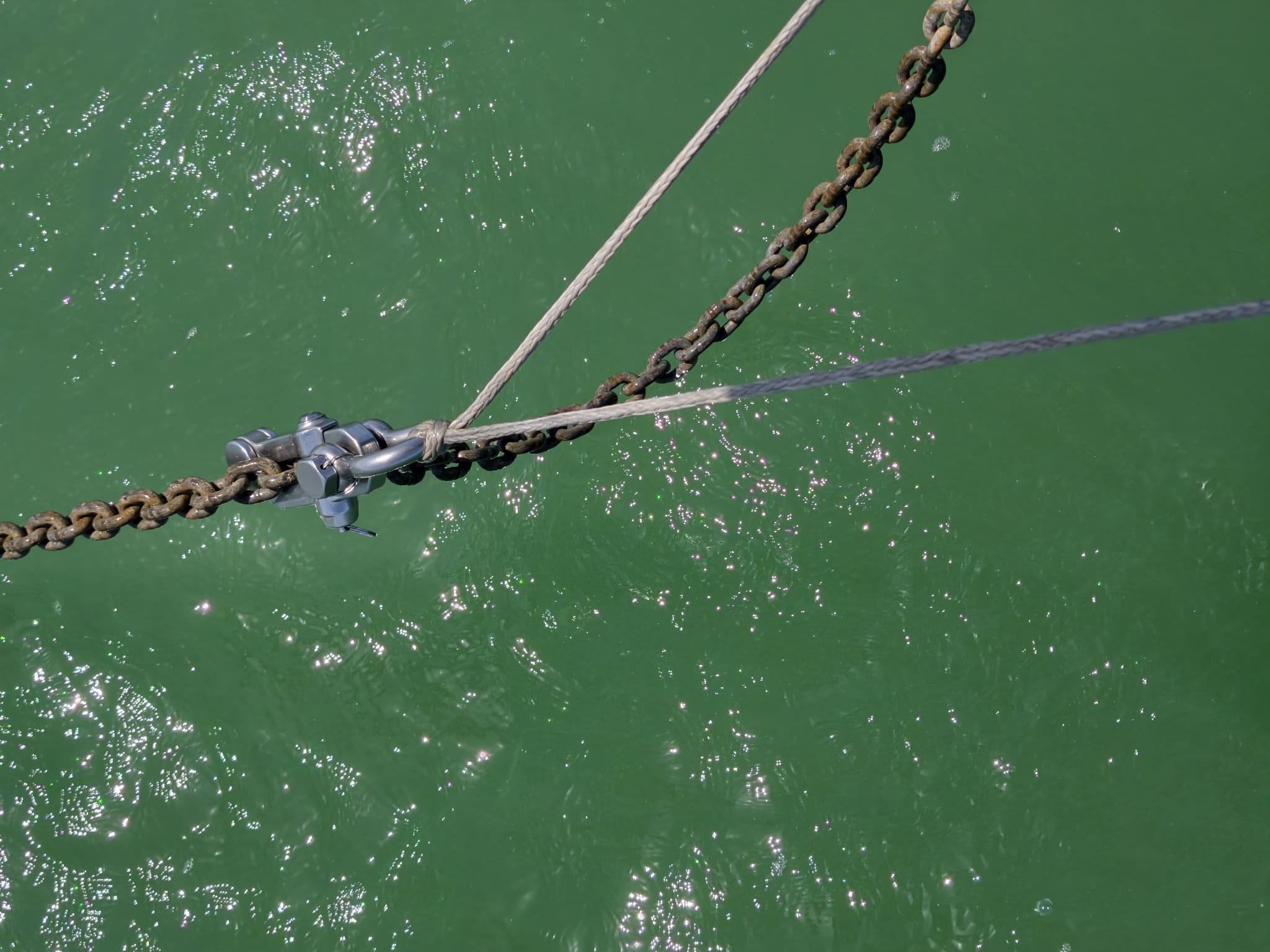
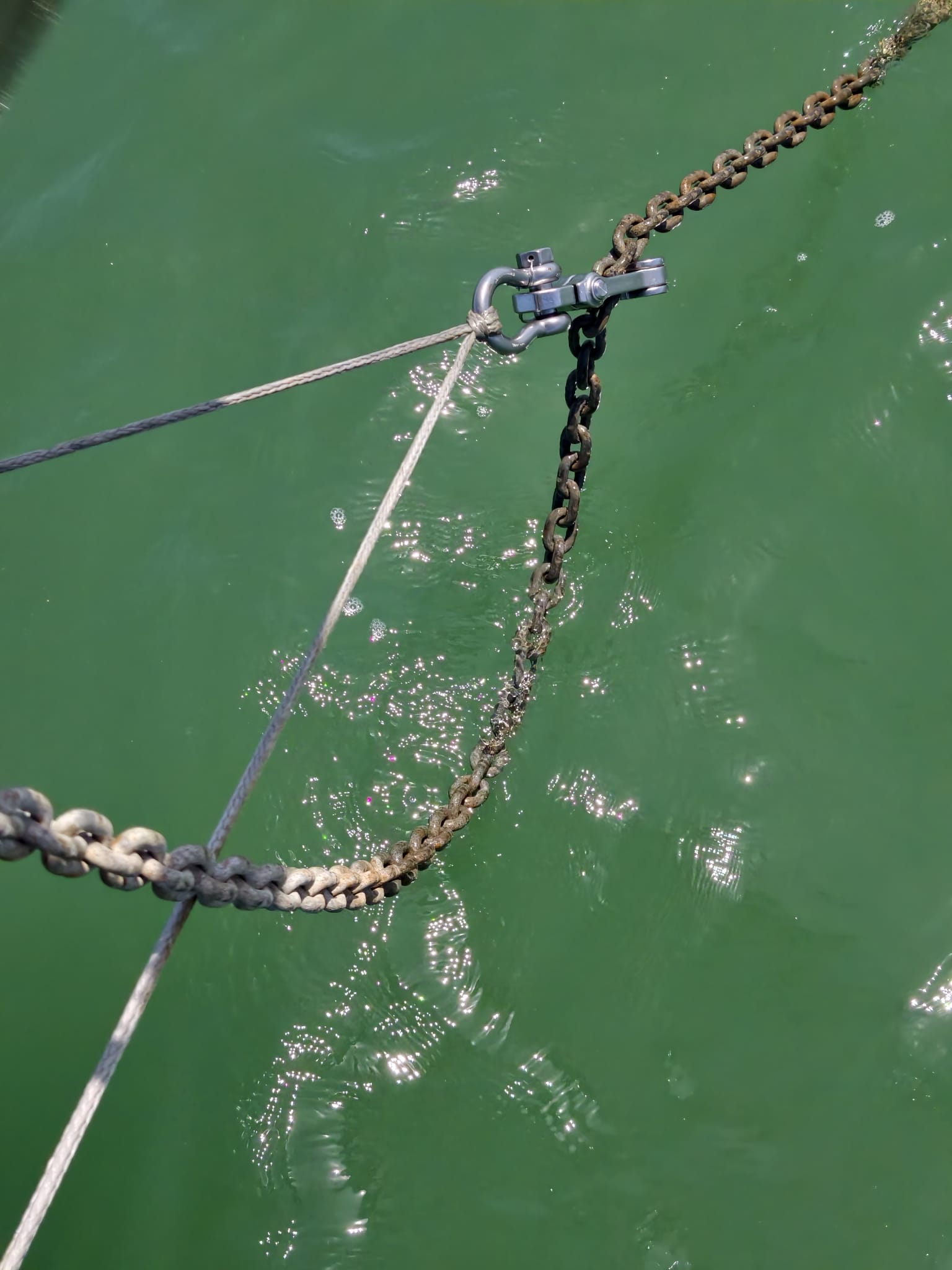
We are very happy with our new sturdy chain hook! Dione IV pulls strongly but it holds so nicely. And we’re also very happy with the new bridle setup: these 2m Dyneema lines are great: almost no sounds from the chain. Even not when wind and current are opposite and we drift over our anchor.
There’s a big street market on the boulevard and Sher wants to visit that and do some provisioning. We dinghy to a tiny stony beach near the small port and Sher jumps off the dinghy while Wim backs off. While Sher climbs the rocks to the boulevard a man with a walkie-talkie and a gun comes shouting at us: Prohibited! Go away! What an inhospitable rude asshole! A “Hijo de puta” we call that in Spanish (son of a whore). We dinghy along the boulevard wall and and at the other end there is a rocky place where Sher can jump off and climb up to the road. Nearby is another little port and while Wim sails by, 2 men on a jetty (carrying guns) wave at him: go away! Hm. These “Hijos de puta” obviously have some criminal activity to hide… There’s a lot of drug trafficking here. We read about cargo ships shipping cocaine from South America to counties like Sierra Leone. In Sierra Leone the drugs are loaded in smaller cargo ships and they sail to the Spanish south coast (between Huelva and Gibraltar). There, the drug parcels are picked up by small boats and brought ashore here.
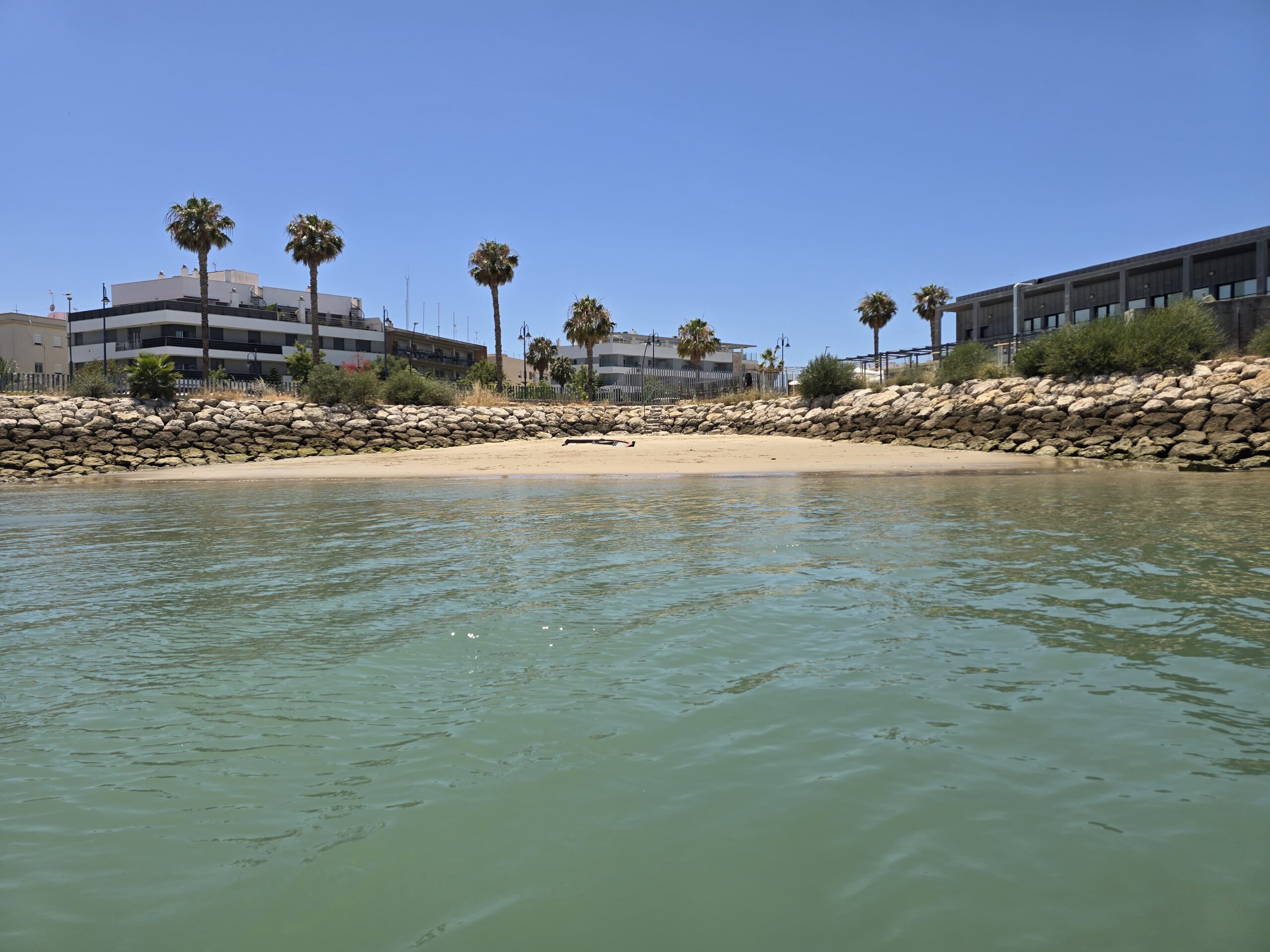
Anyway, we later discover a nice small beach without “Hijos de puta” to pick Sher up in the afternoon 😀
Meanwhile, back to the solar panel project… there’s a lot of communication going on with Mito Solar about the positions of the solar panel connections. These connections have to match the holes in the roof but there seem to be a number of variables… So, while Mito is measuring their positions…
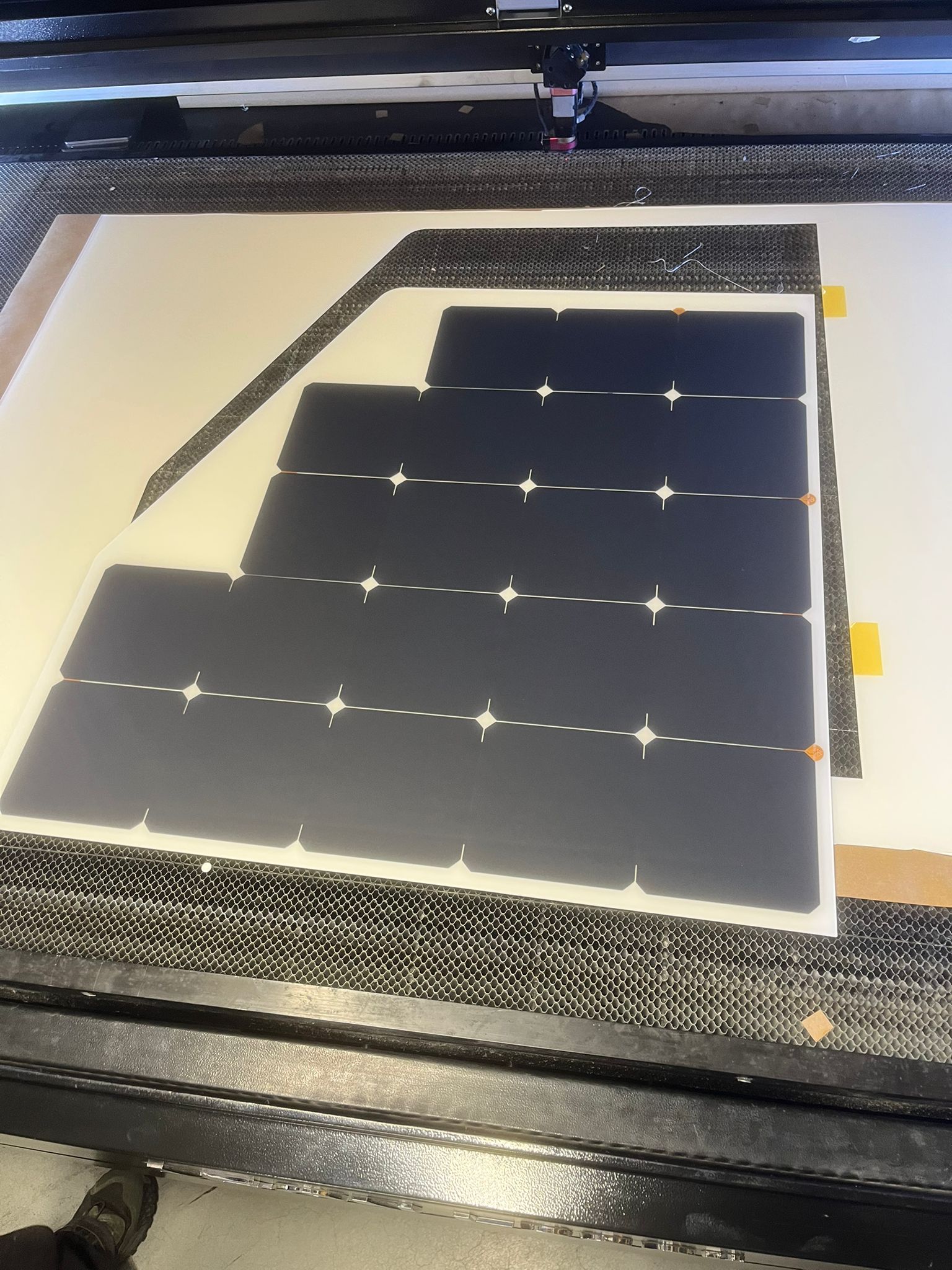
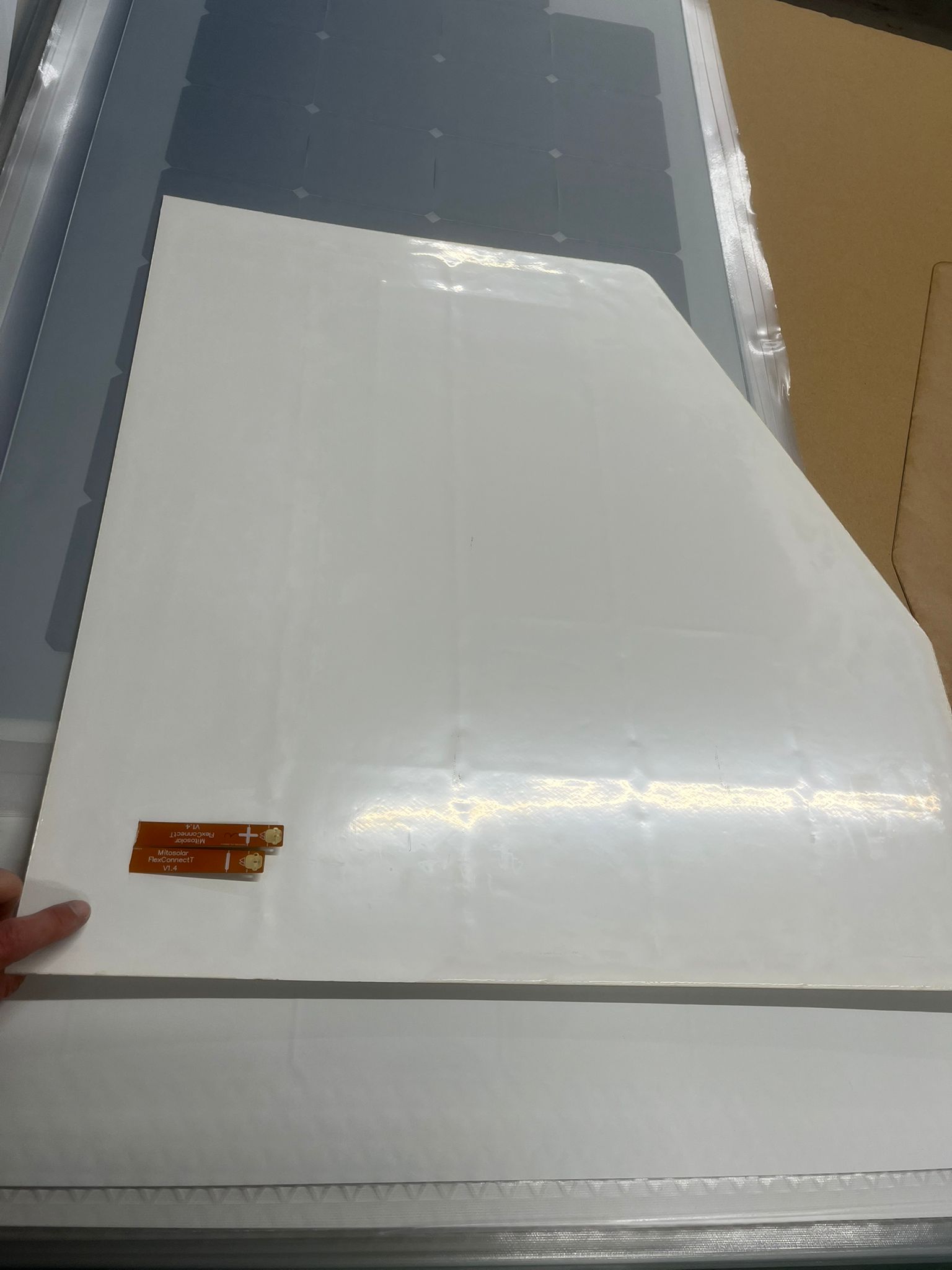
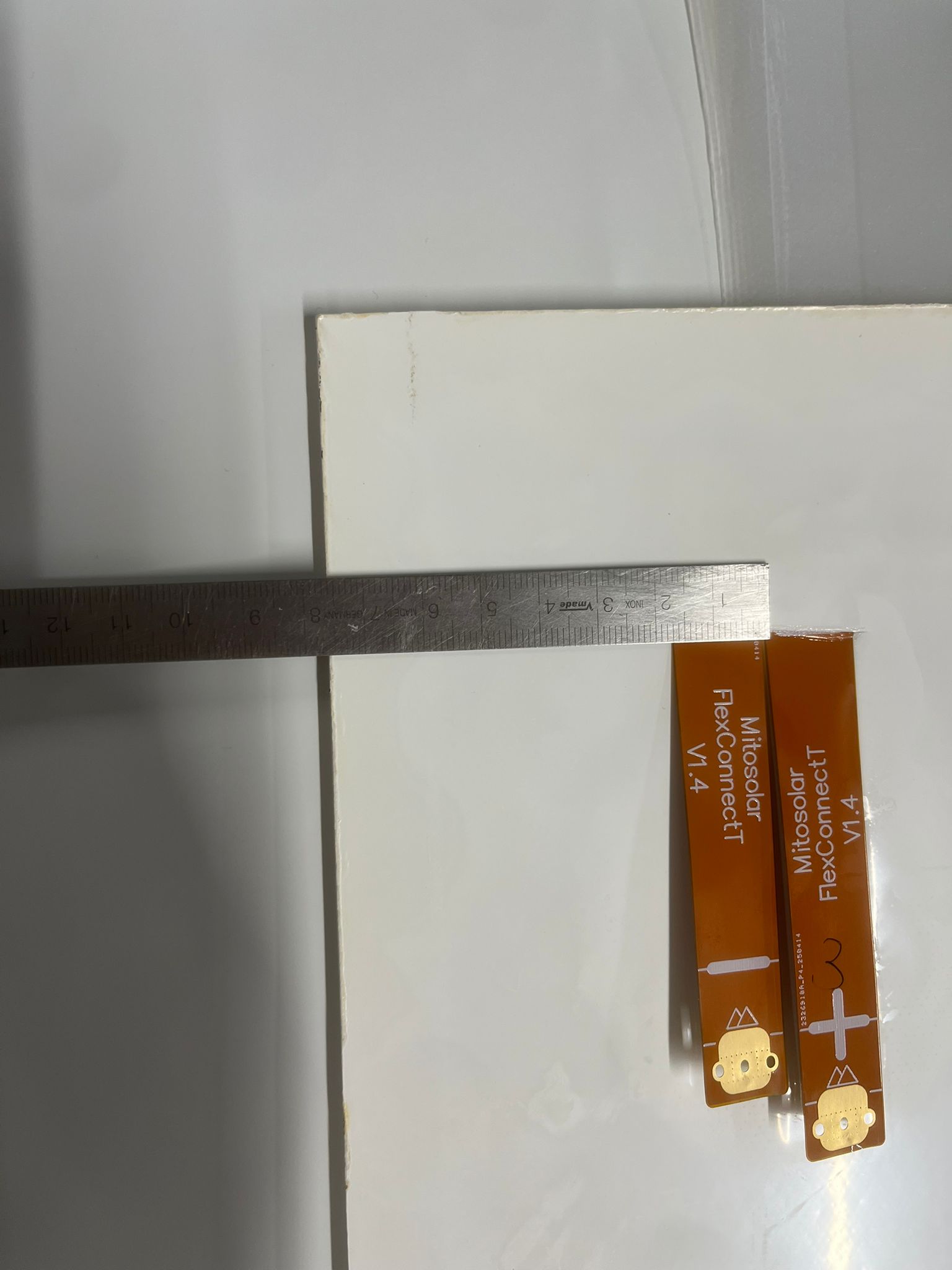
… Wim cross-checks the positions at the old panels.
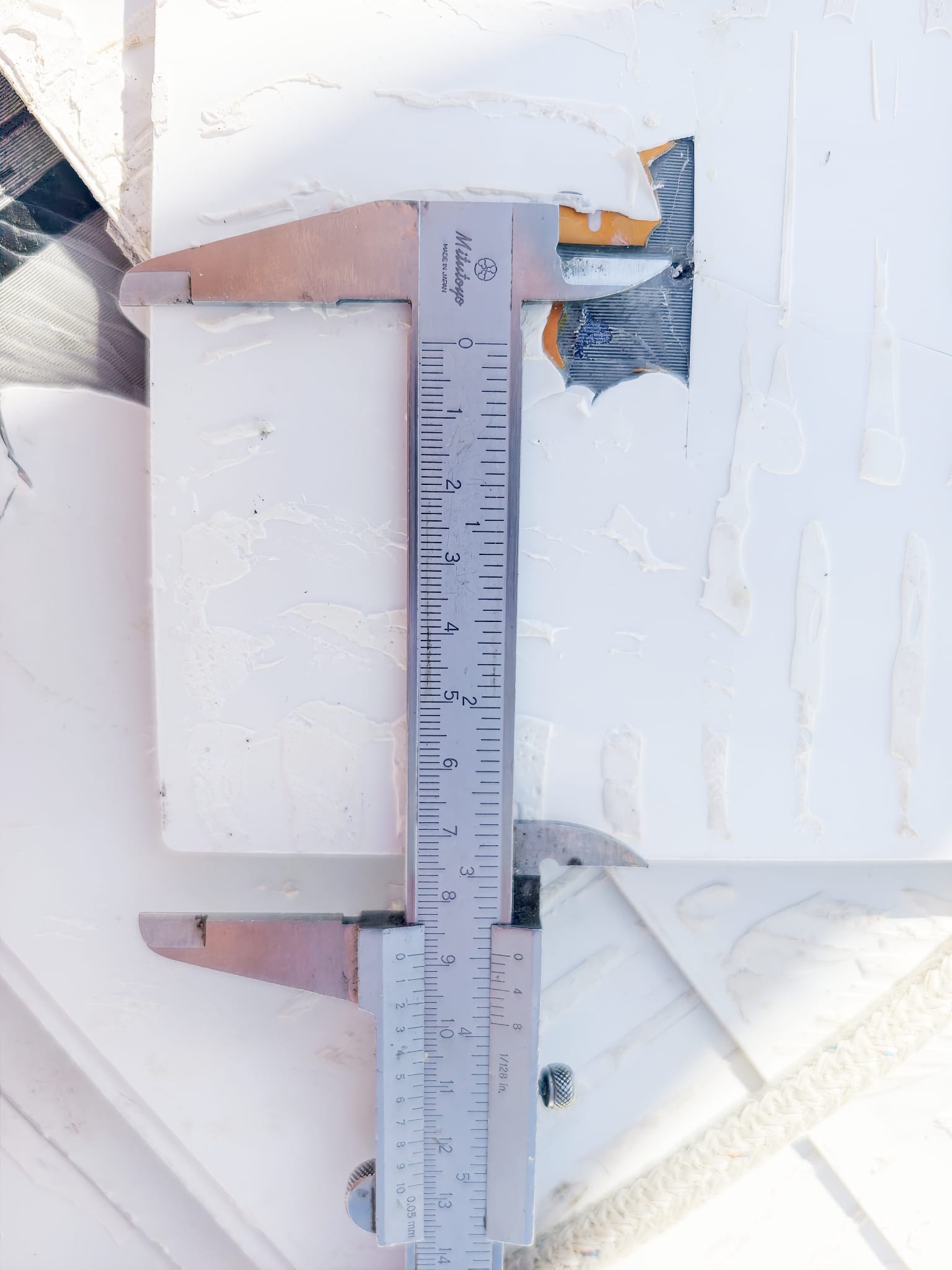
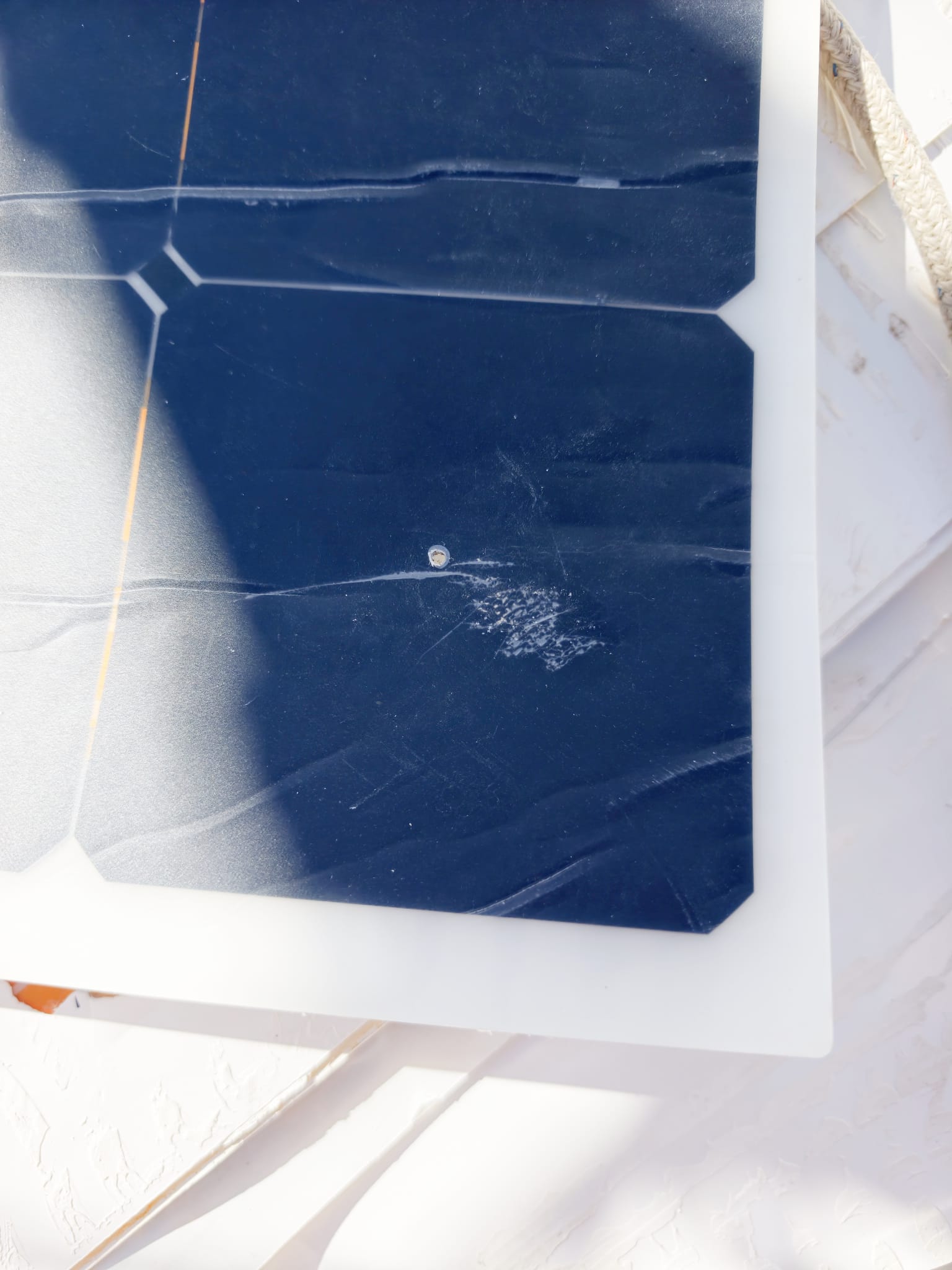
The conclusion is, we will probably have some differences but they shouldn’t be major. We’ll see…🫡
Tomorrow, we will go to the marina in Cadiz. Although the weather has been really lovely for the past weeks, for the next 3 days strong winds (up to 40 knots) are forecasted and we already know that the holding isn’t good here. So today we clean the dinghy covers, clean the dinghy itself , dry everything and store it on deck.
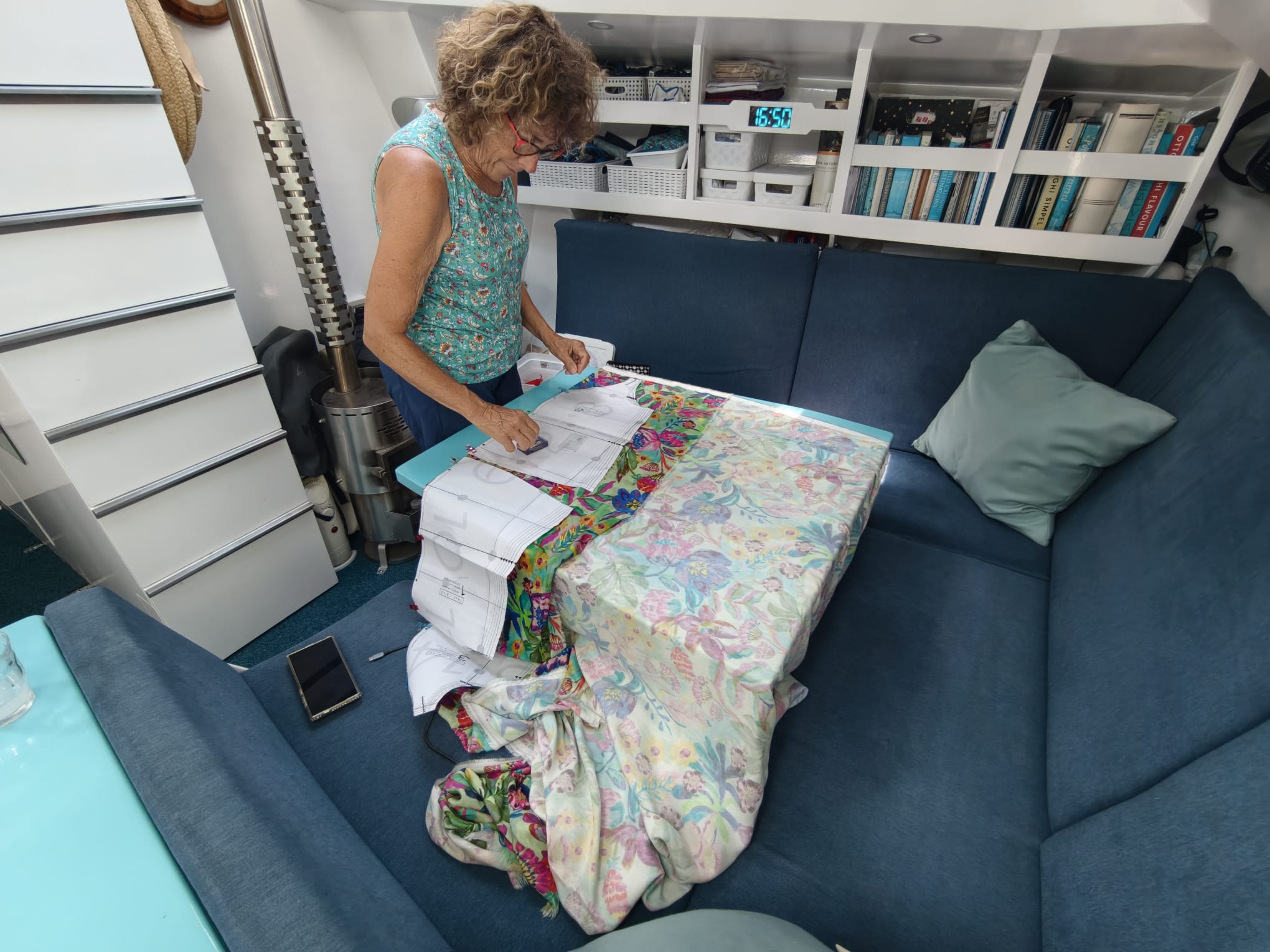
While Wim is doing most of that, Sher enjoys here newly-bought (and very inexpensive) fabric from the street market, making a pattern for two tops. 😃
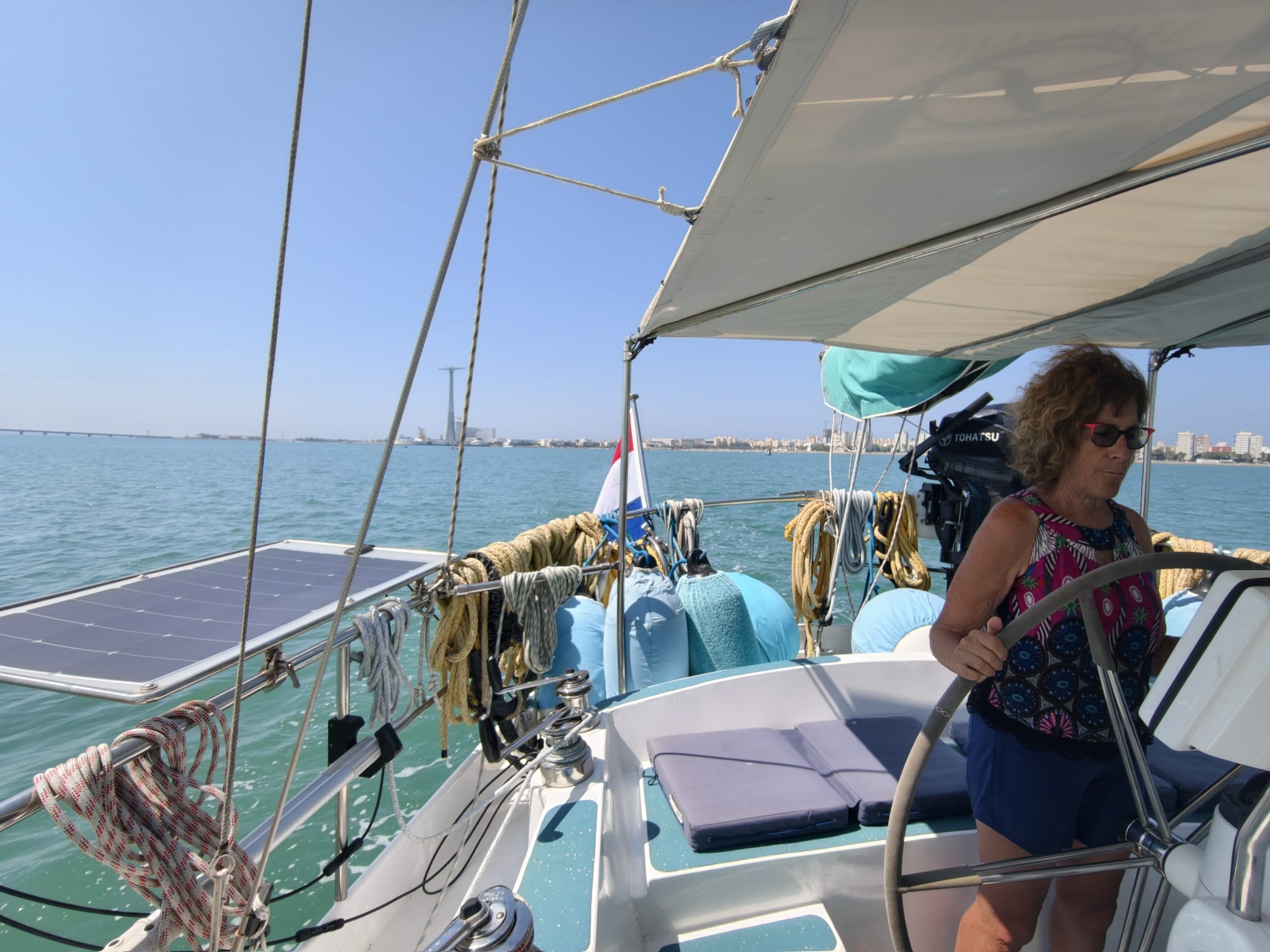
At the end of the morning we hoist our anchor. The entire 40m of chain is full of mud and it takes quite a while clean that, using the fresh water hose. Puerto America is just around the corner after the bridge so half an hour later we are moored.
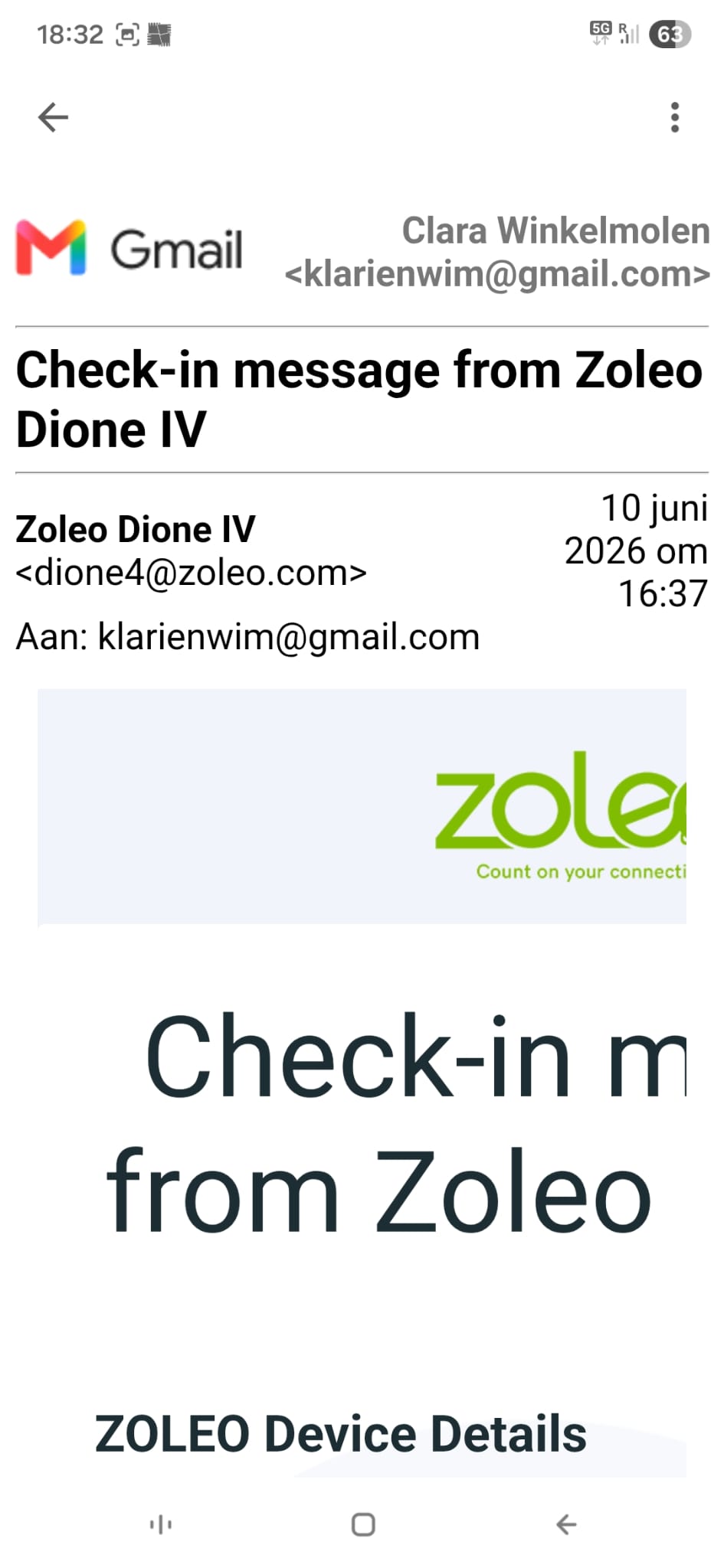
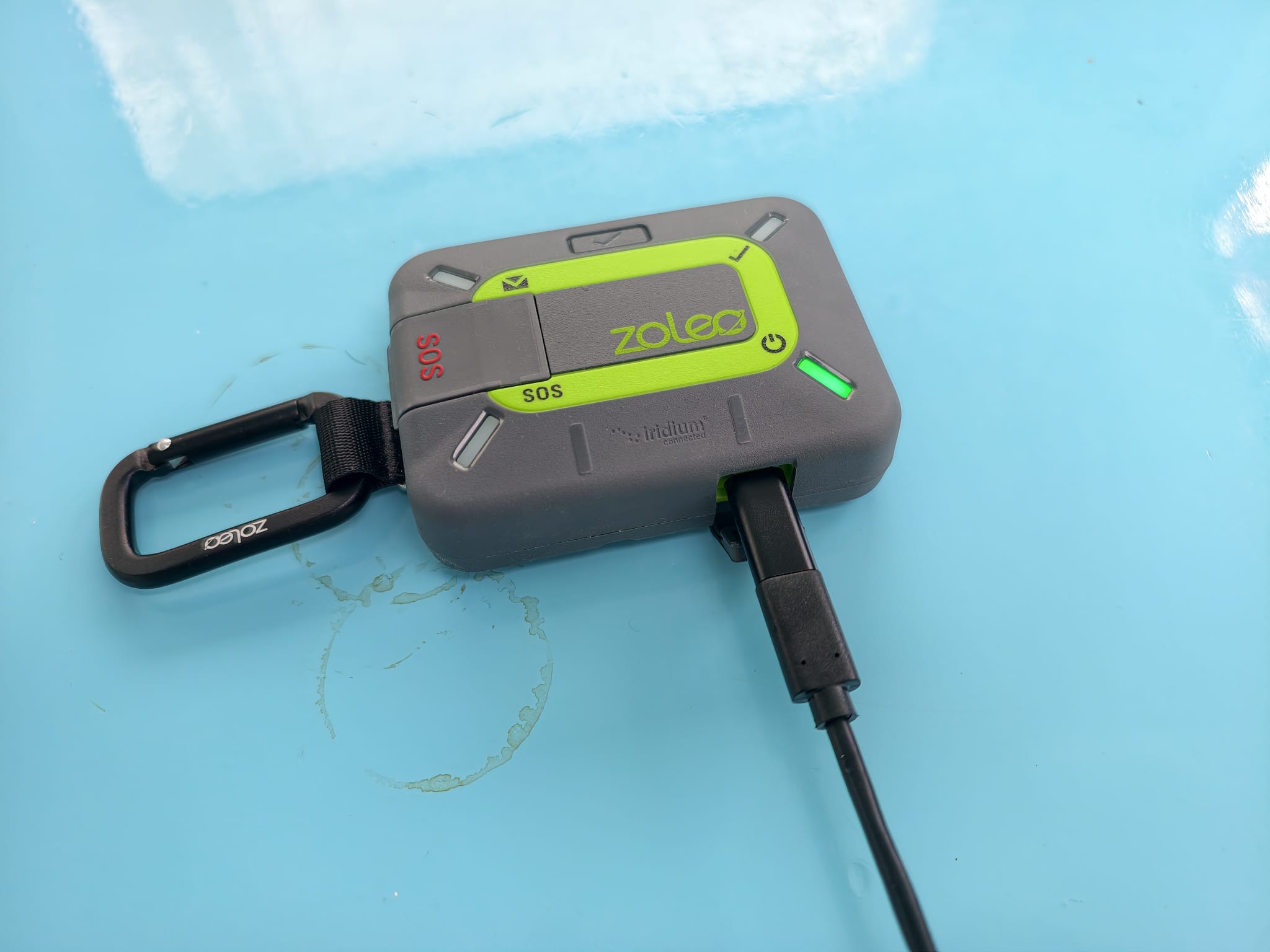
We have been researching a backup communication device in case we can’t make an SSB connection (short wave radio for long range communication) at the ocean (when we’re out of reach from mobile networks). After comparing a lot of possibilities (reliability, costs) we have decided to go for a “Zoleo” device. It’s a low cost, text only, satellite transponder. It uses the Iridium satellite network, one of the oldest and most reliable networks (mostly used by professional shipping).
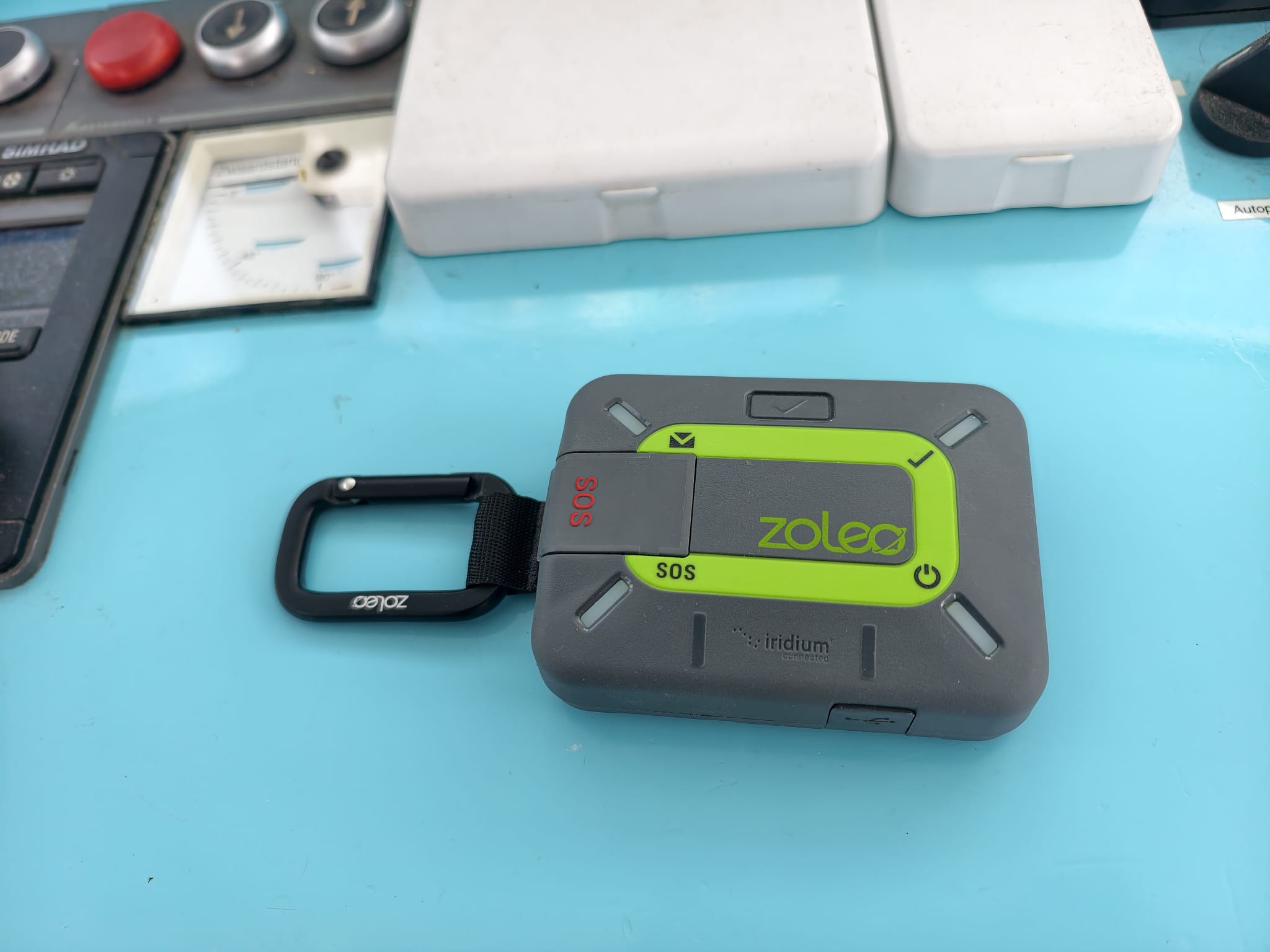
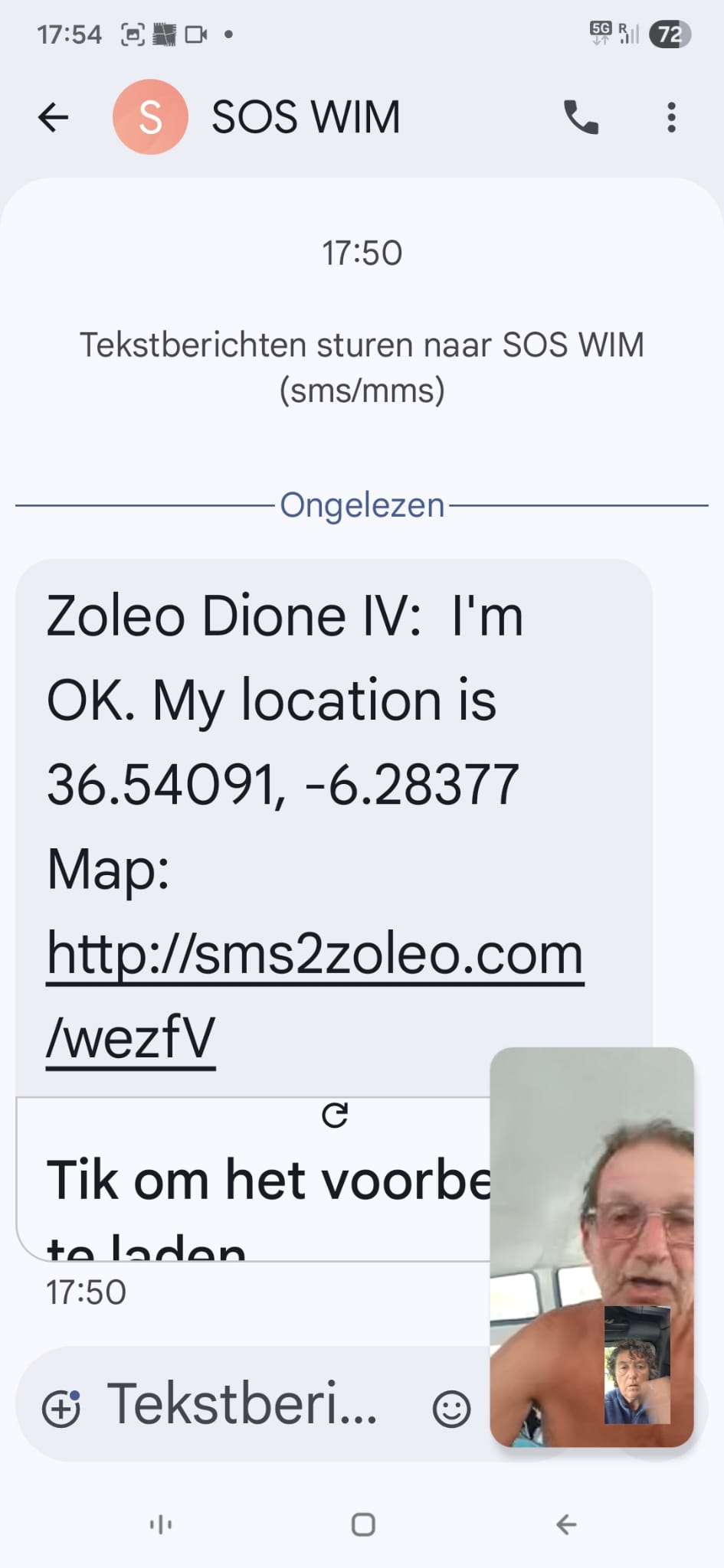
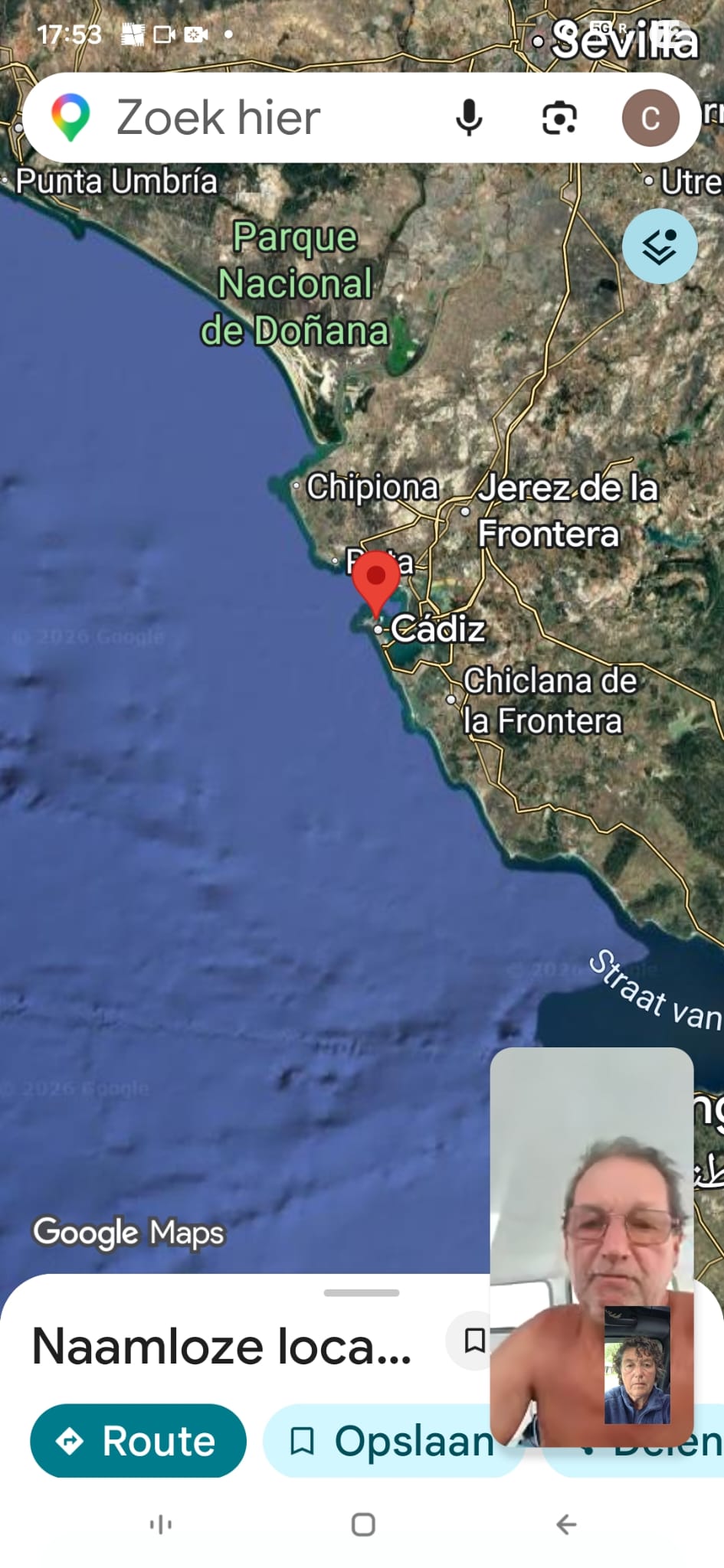
We activate it, program it and send some test messages to Wim’s sister. She, and Sher’s friend Michele, will be our “Shore-captains” when we’re on an ocean crossing. It works perfectly!
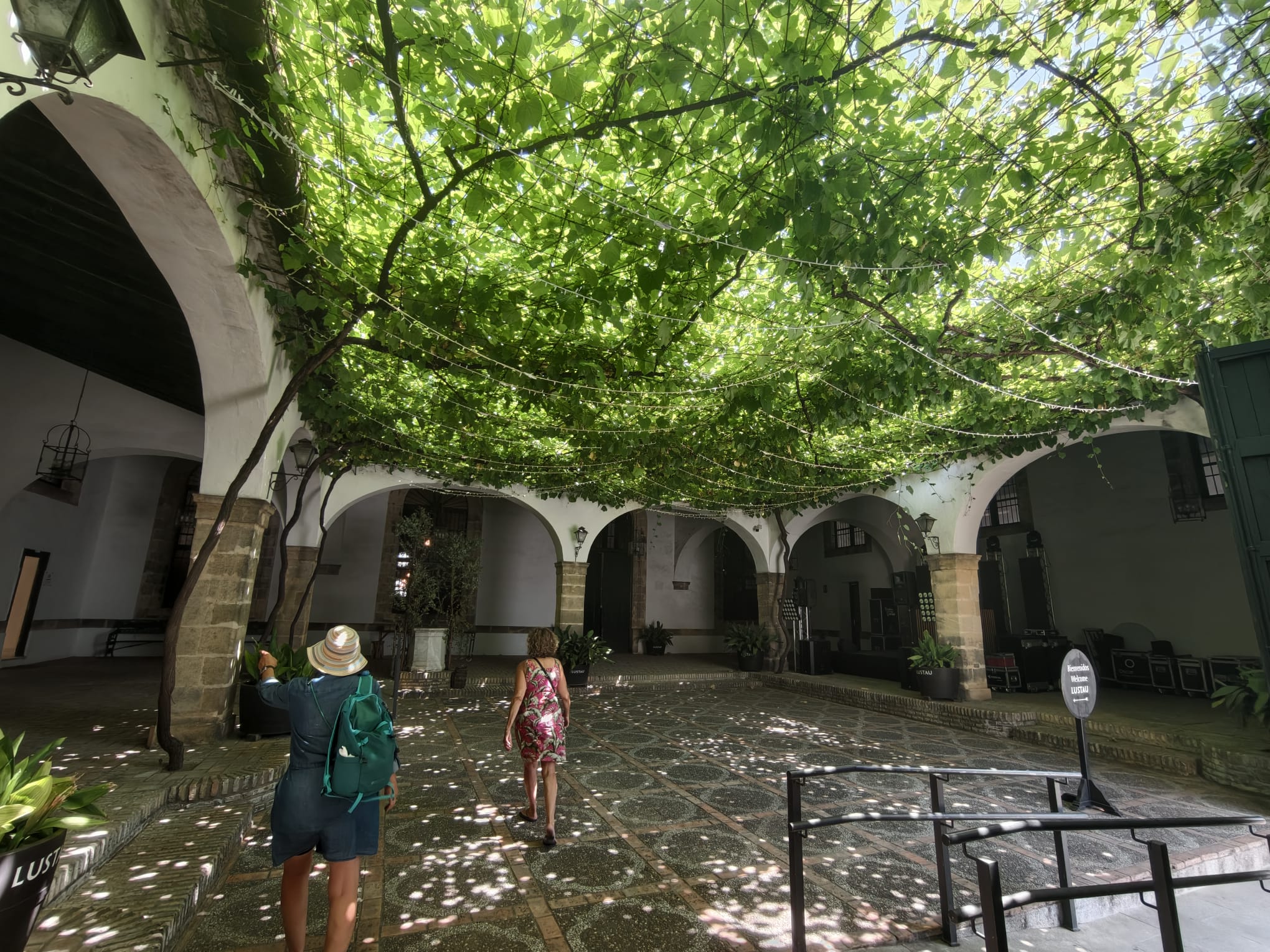
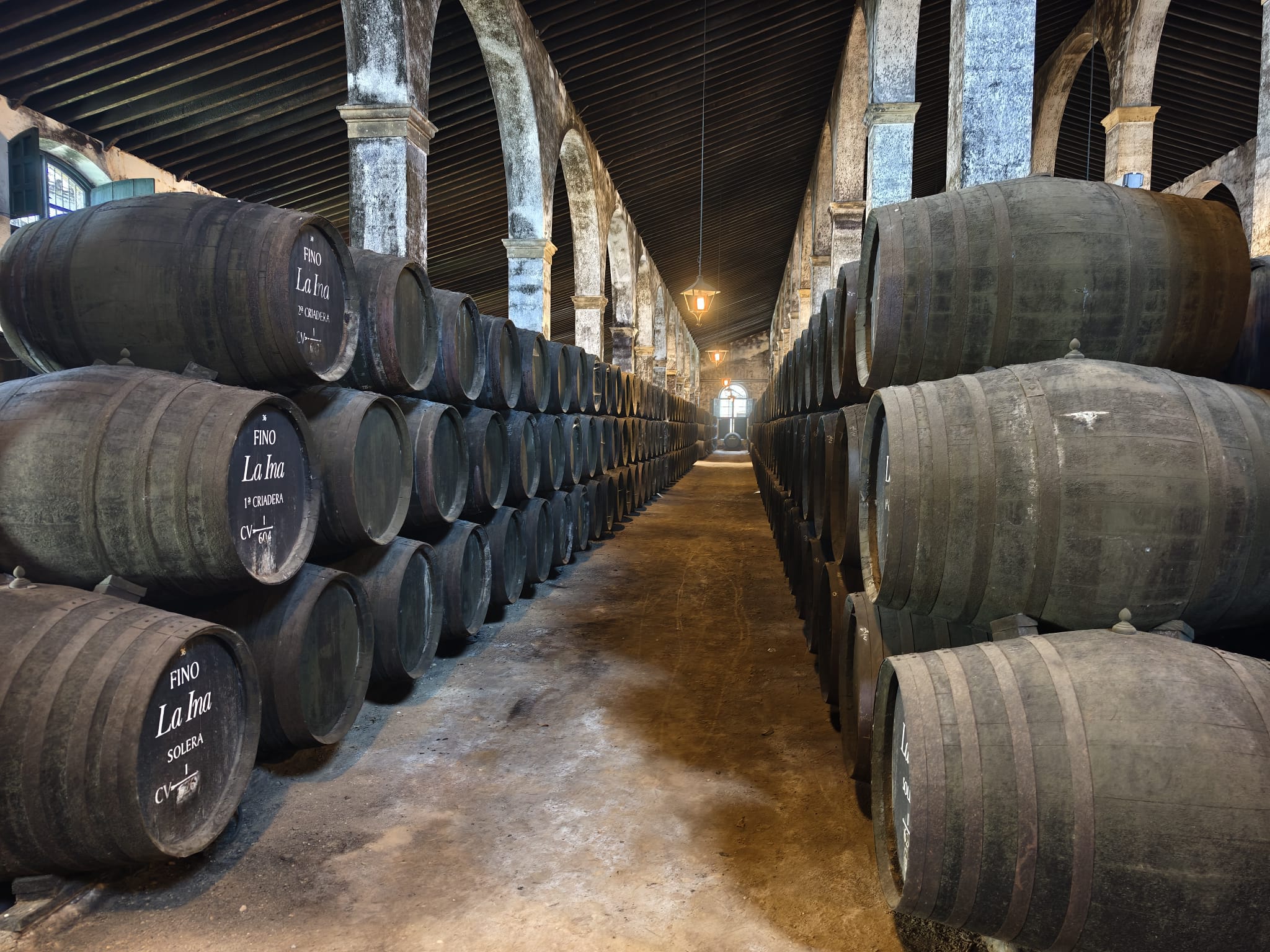
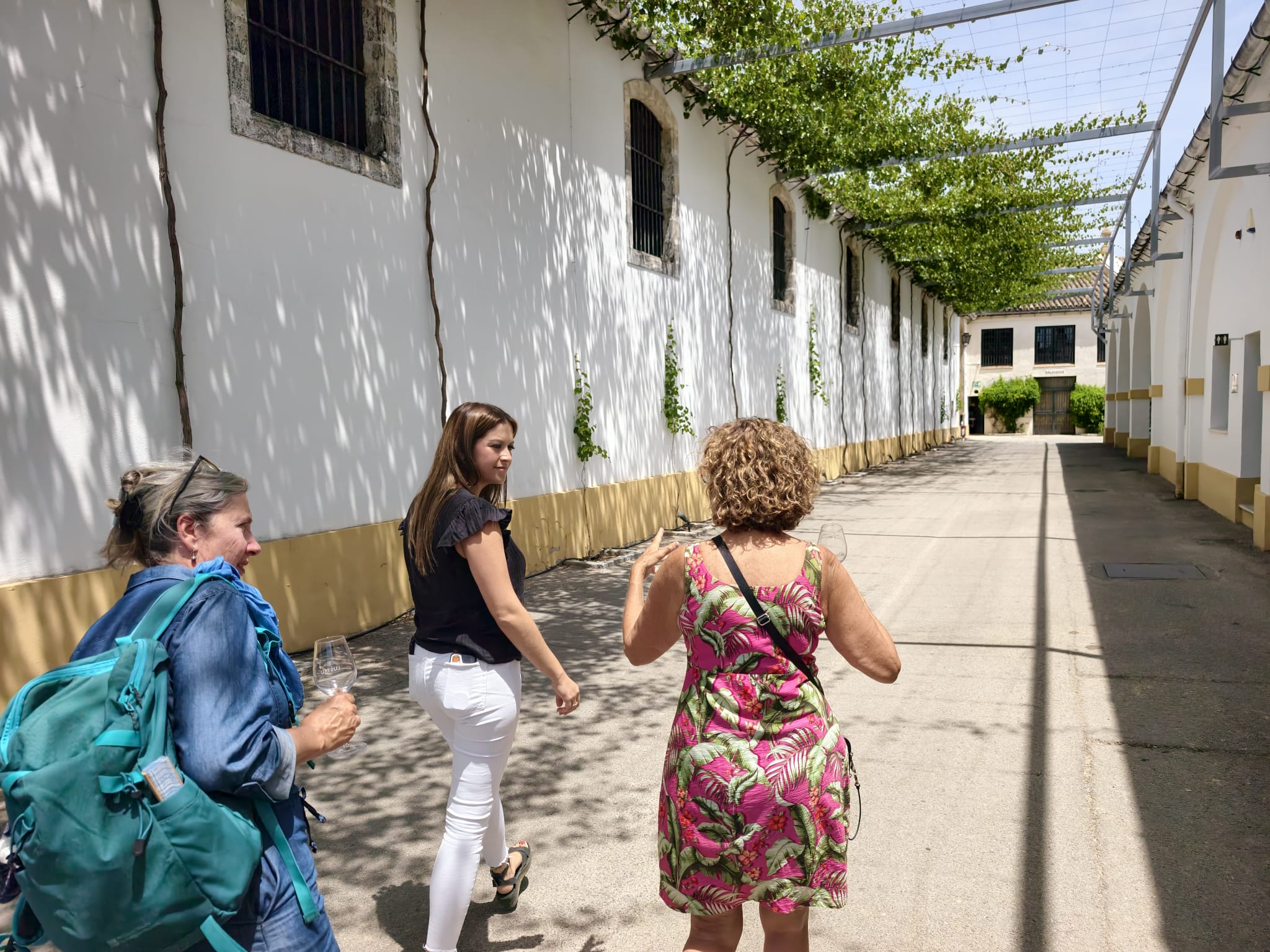
Tom & Marcia from the boat “Bird Song” are also here in the marina, and we take the train together to Jerez. Sher has booked a tour and sherry tasting at a big sherry house: Lustau. It’s an interesting tour and we taste some really special sherries, but both the tour and the sherries (especially comparing price-performance) don’t really impress us.
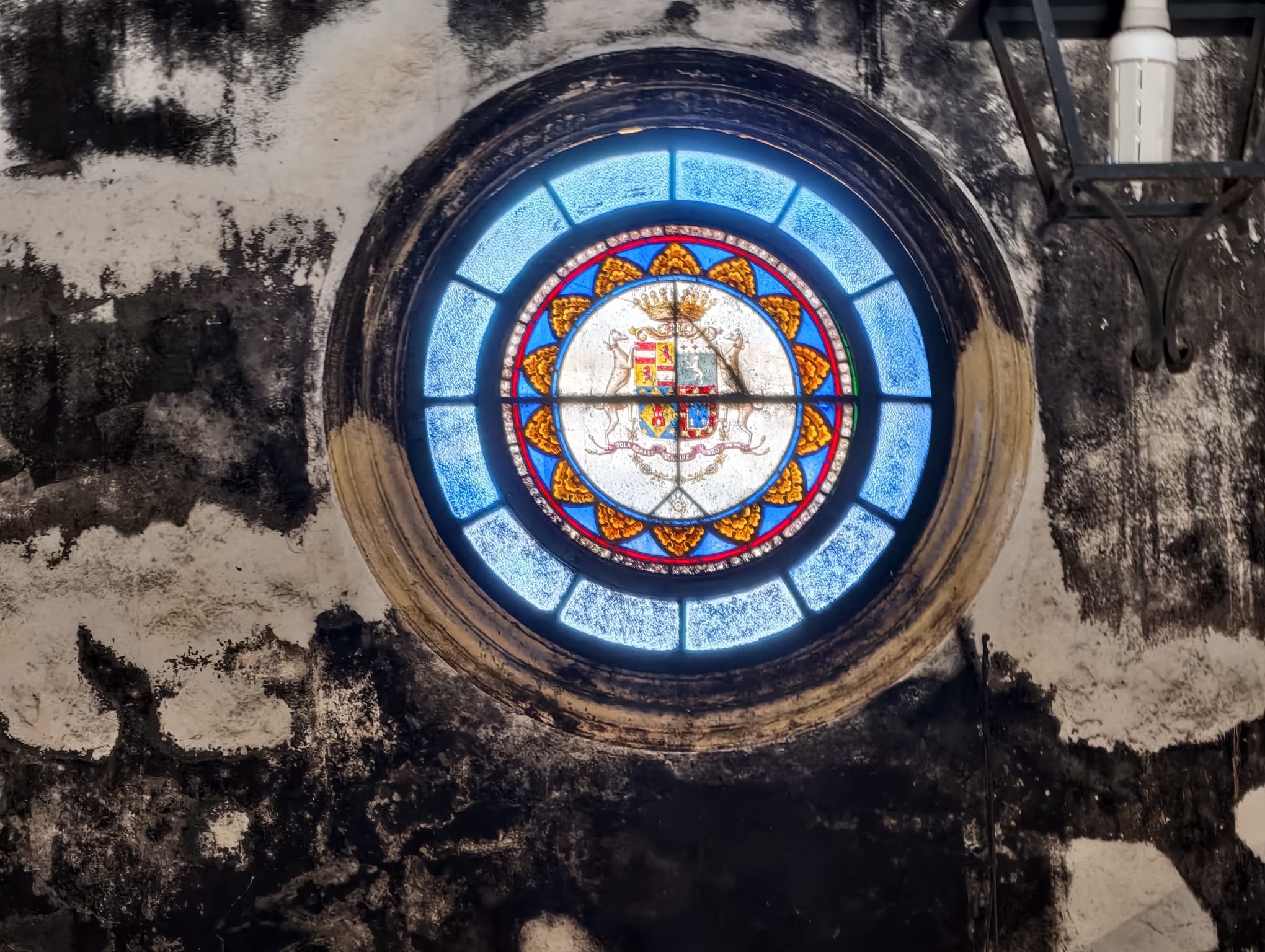
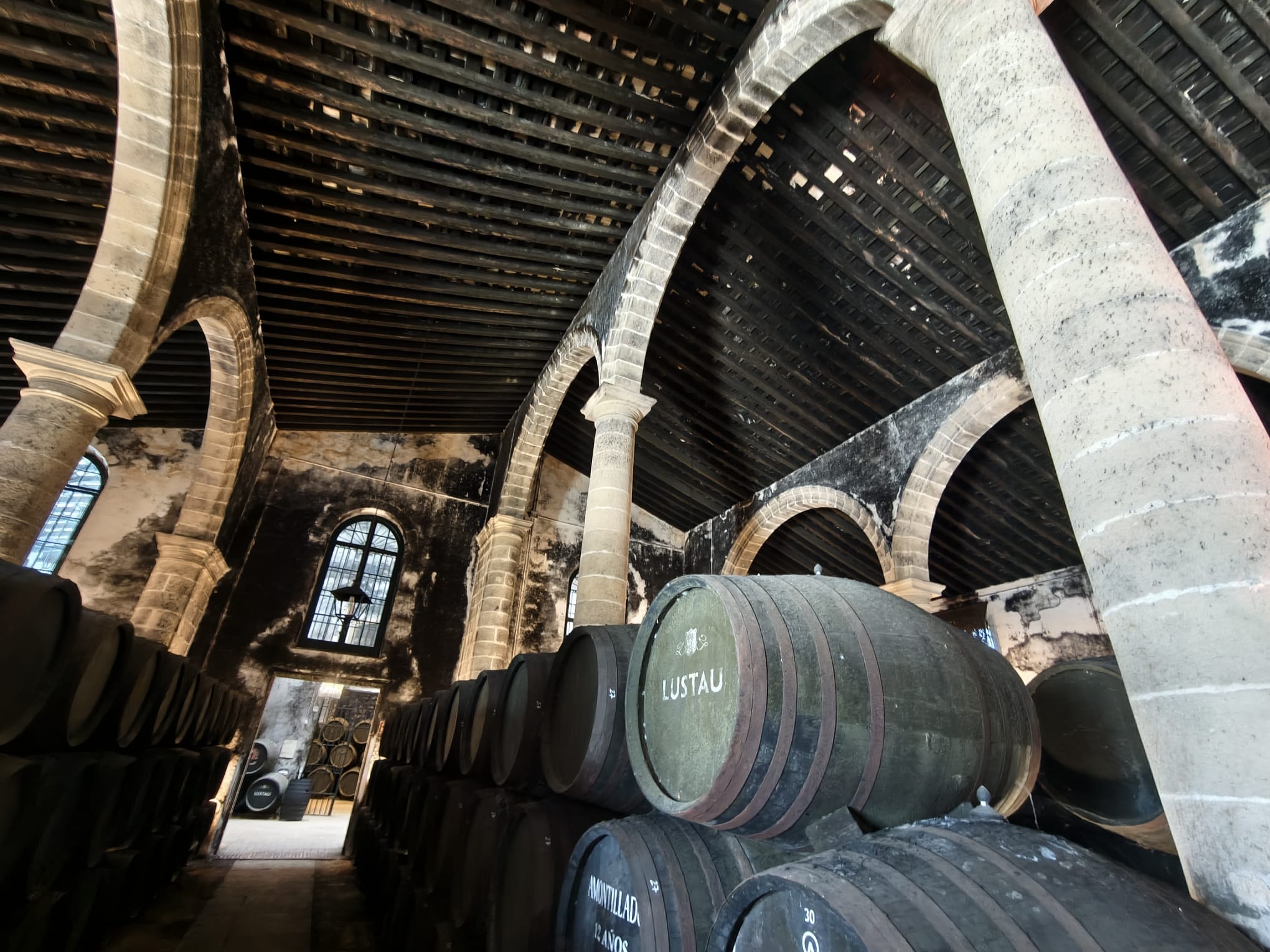
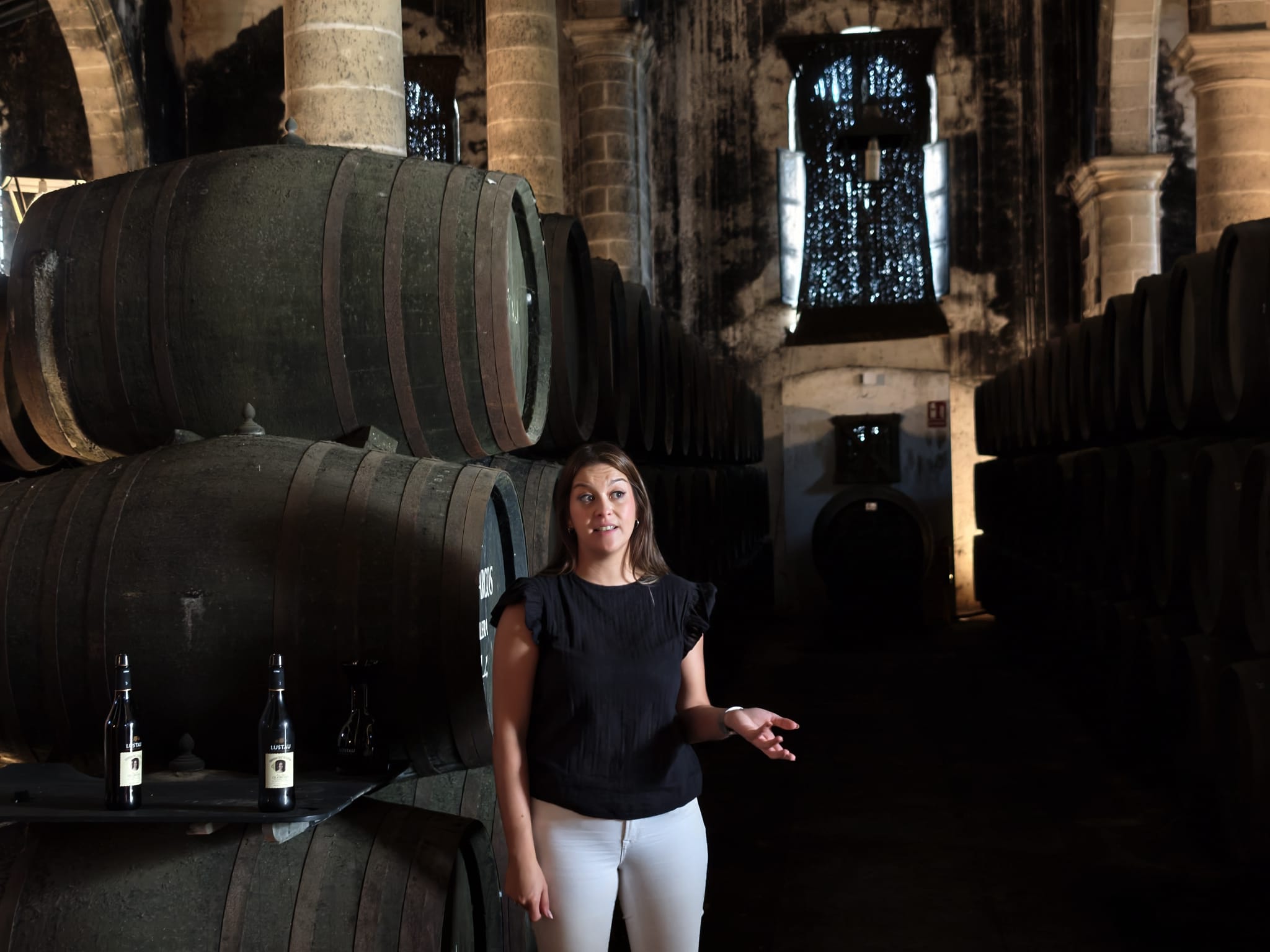
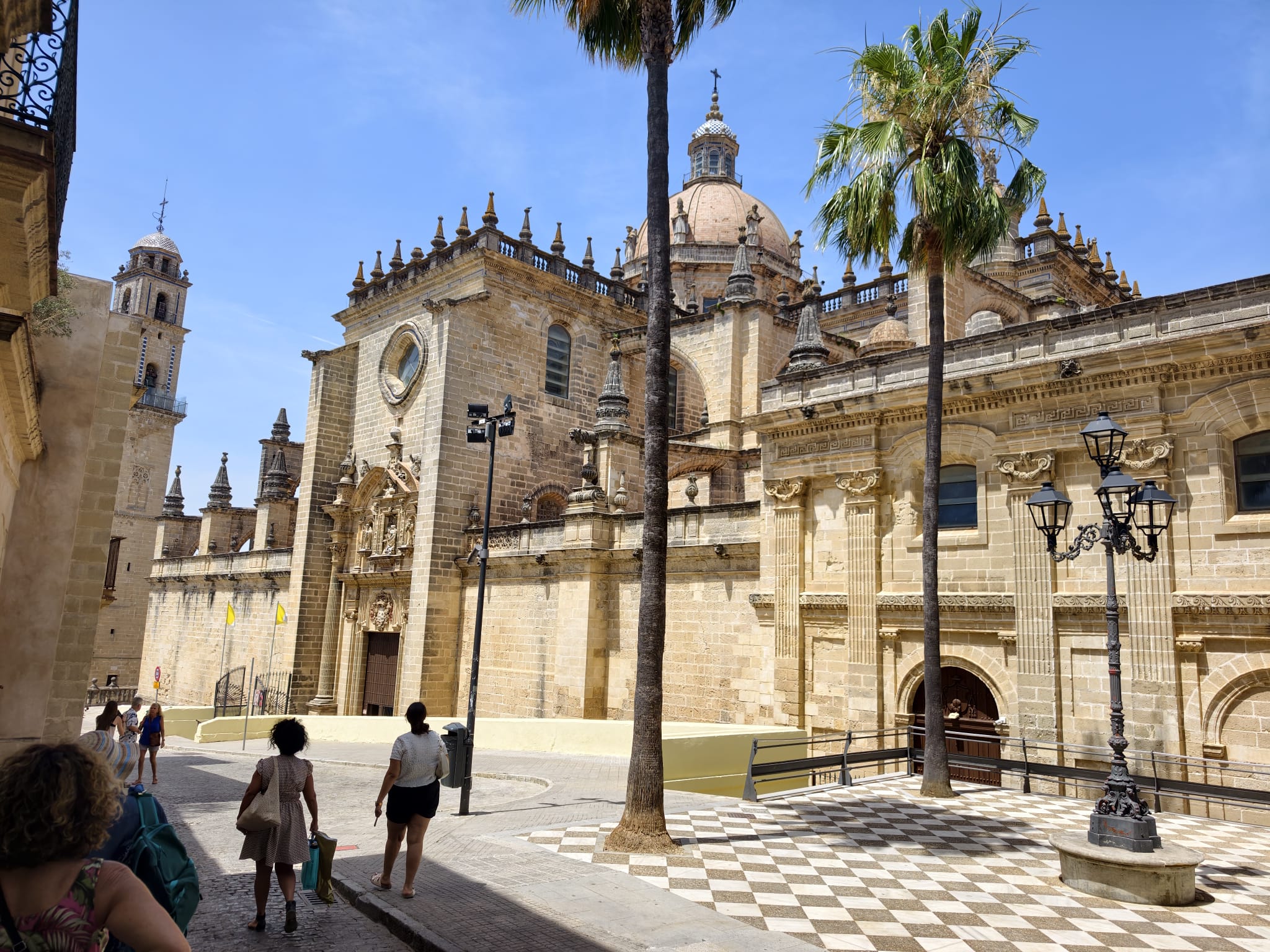
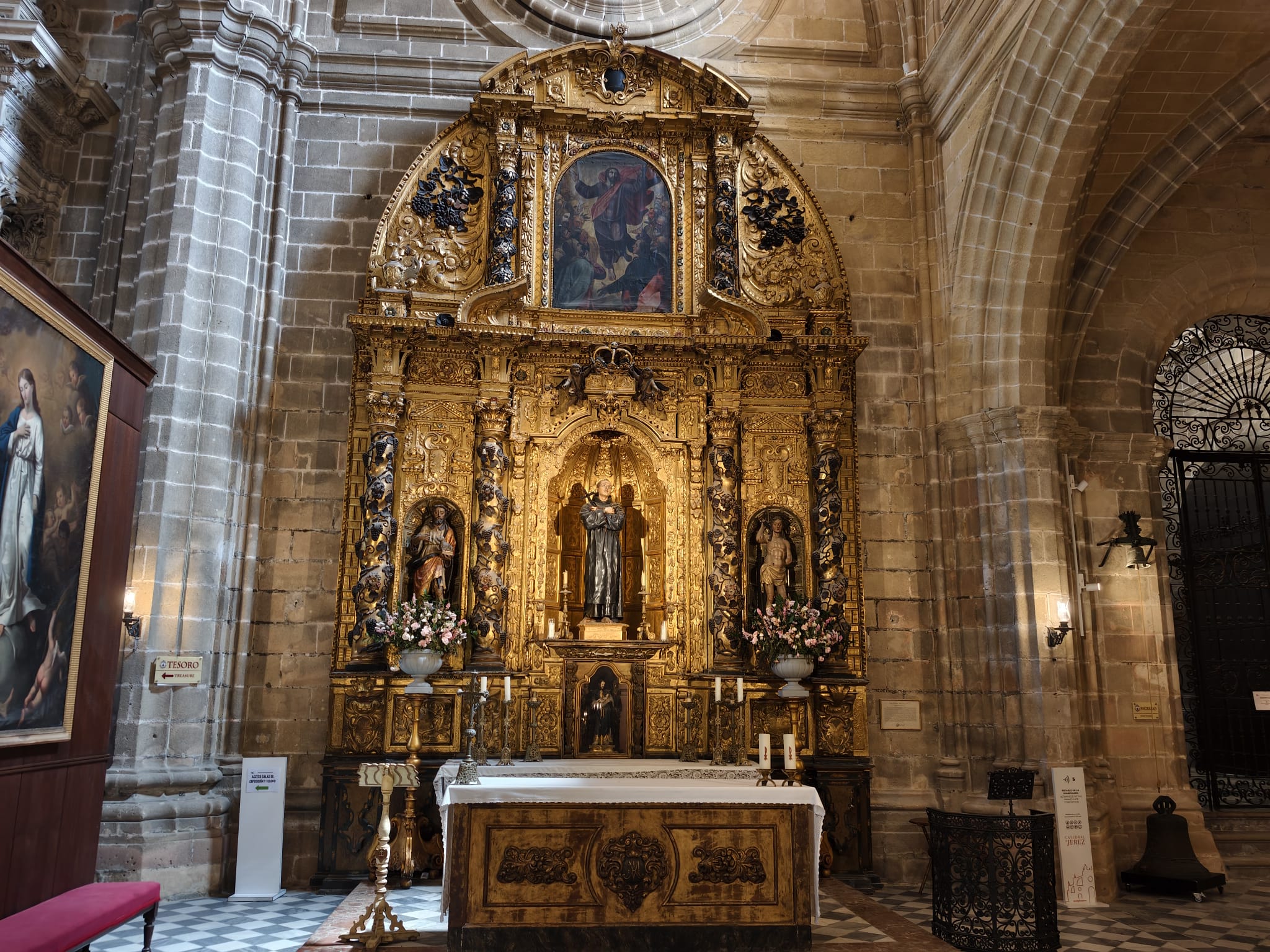
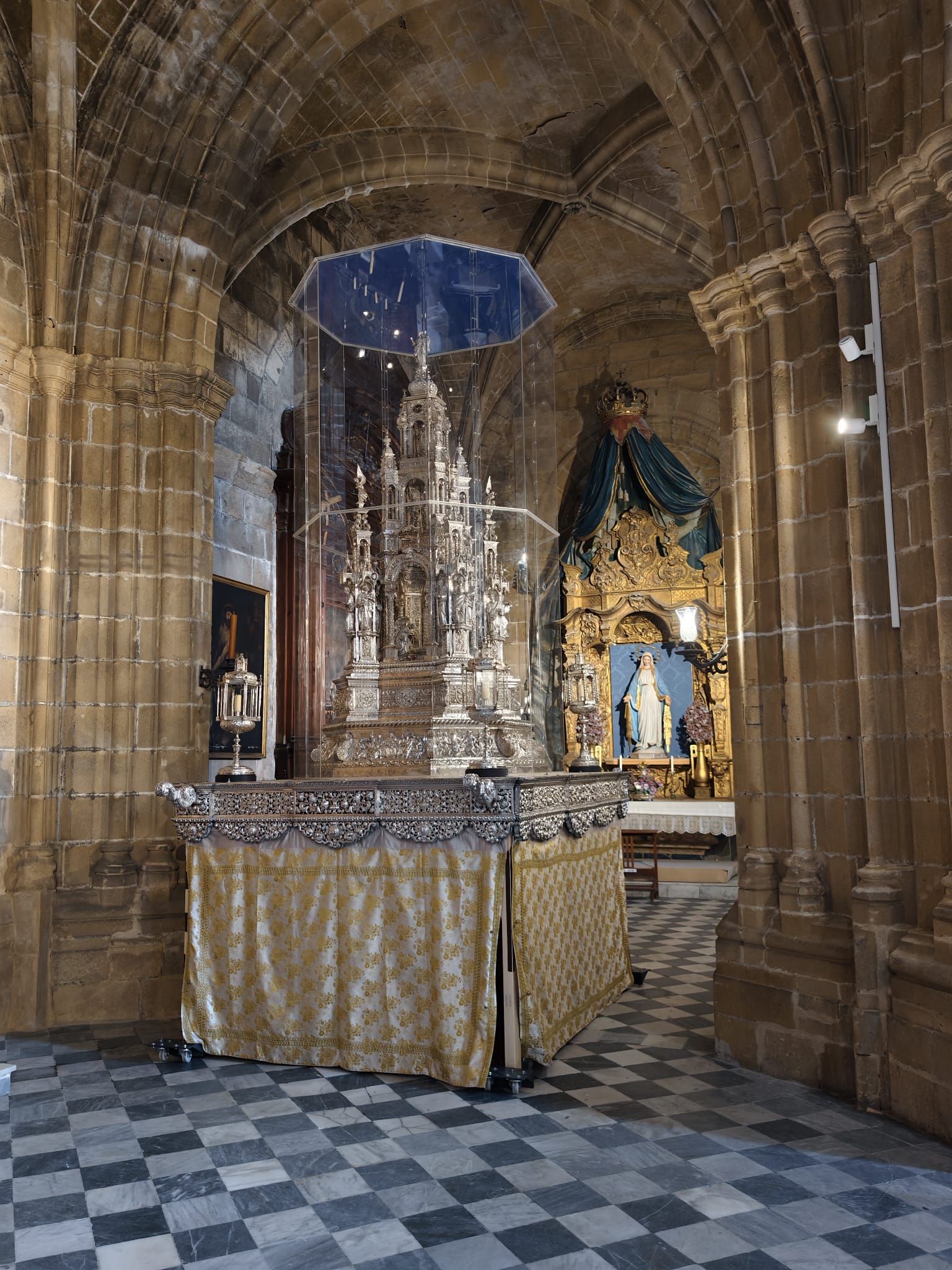
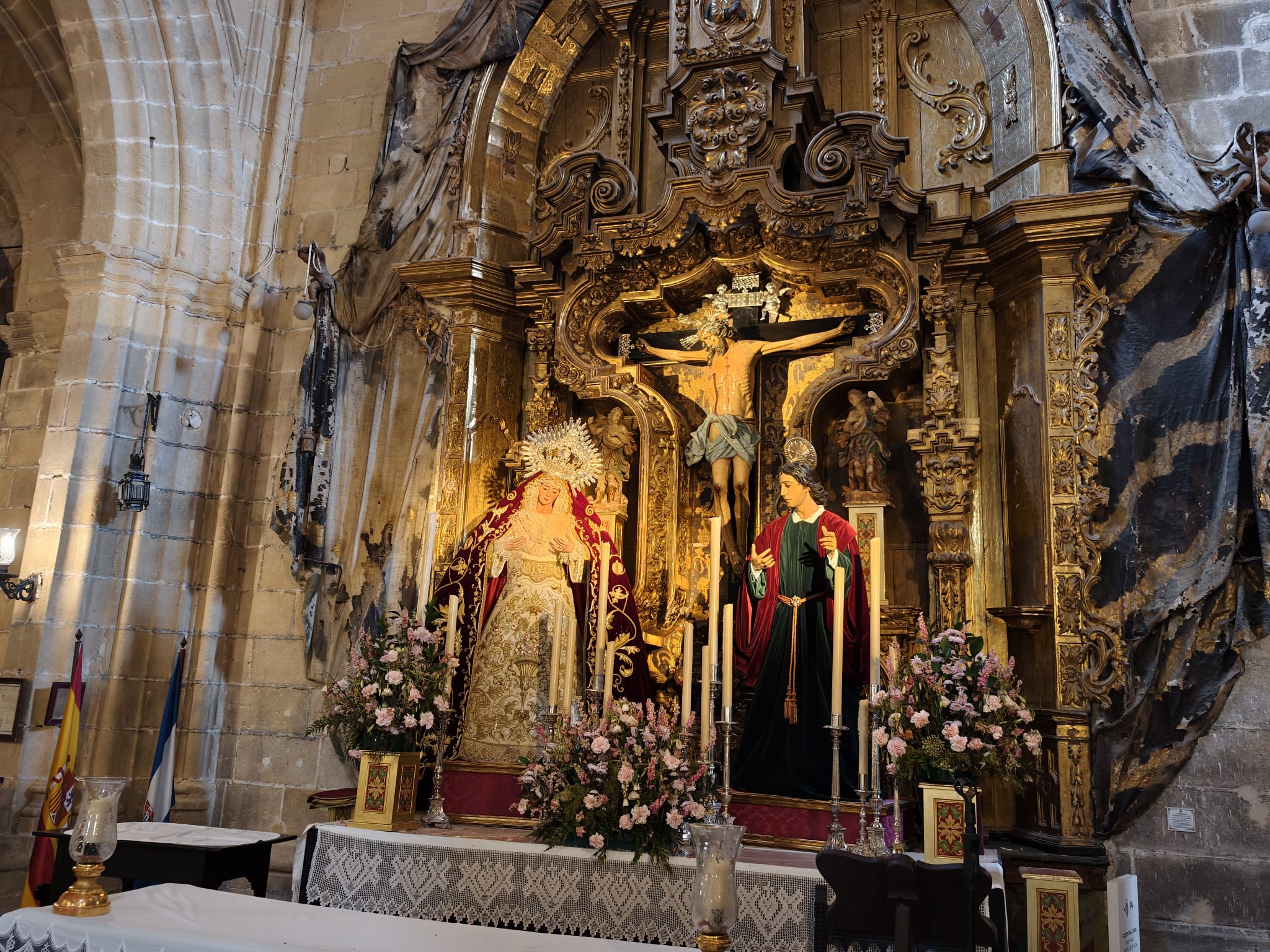
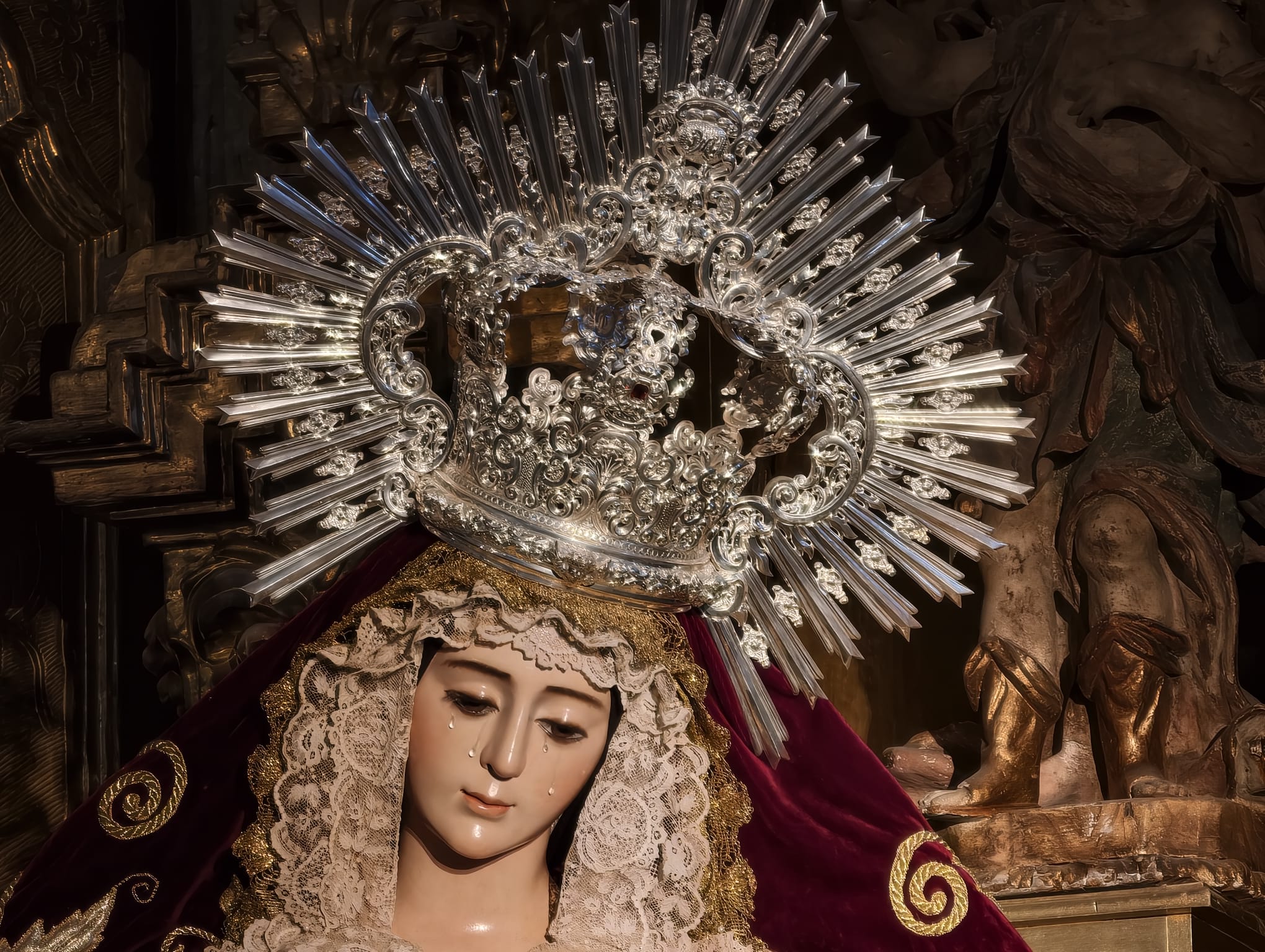
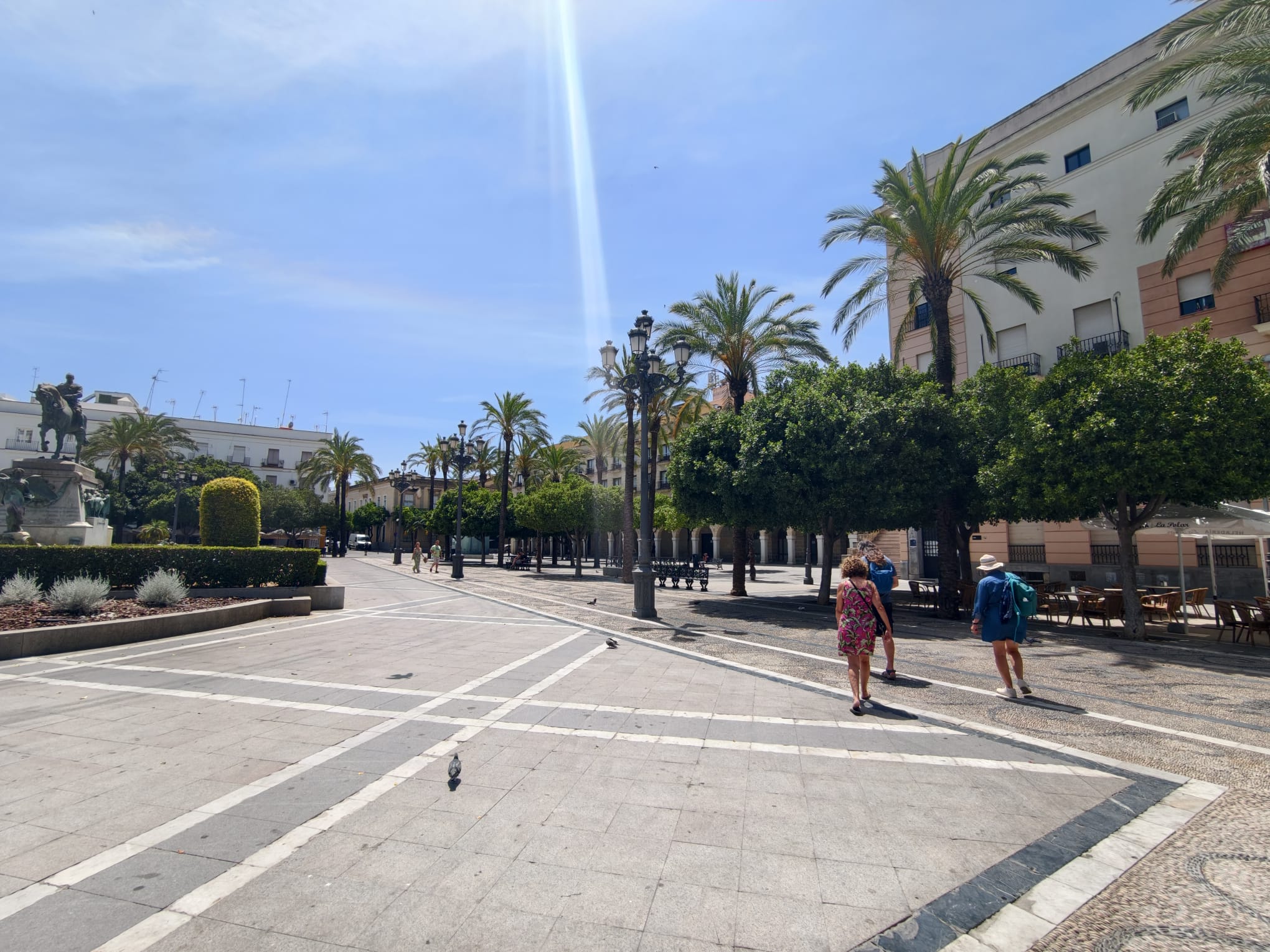
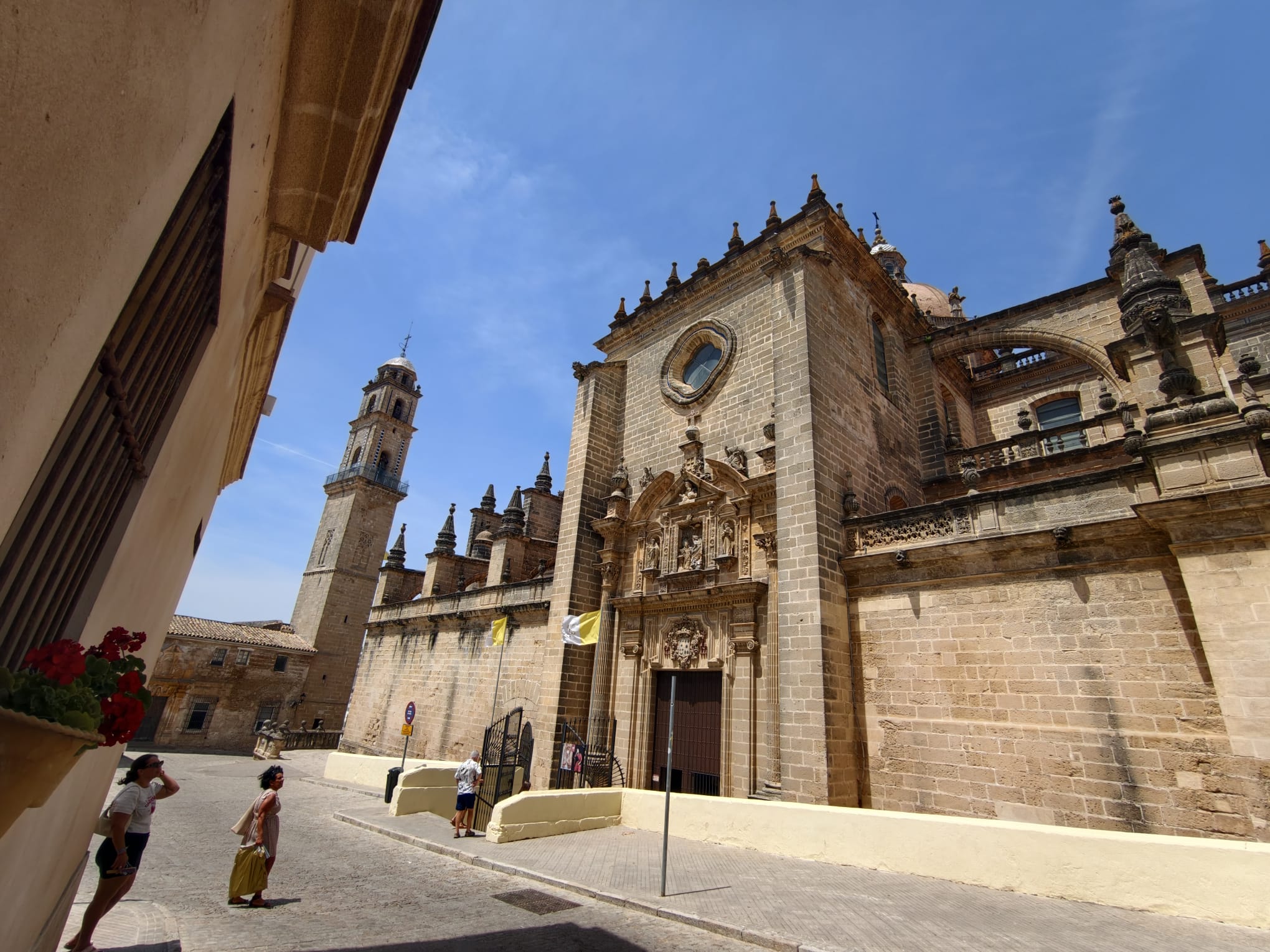
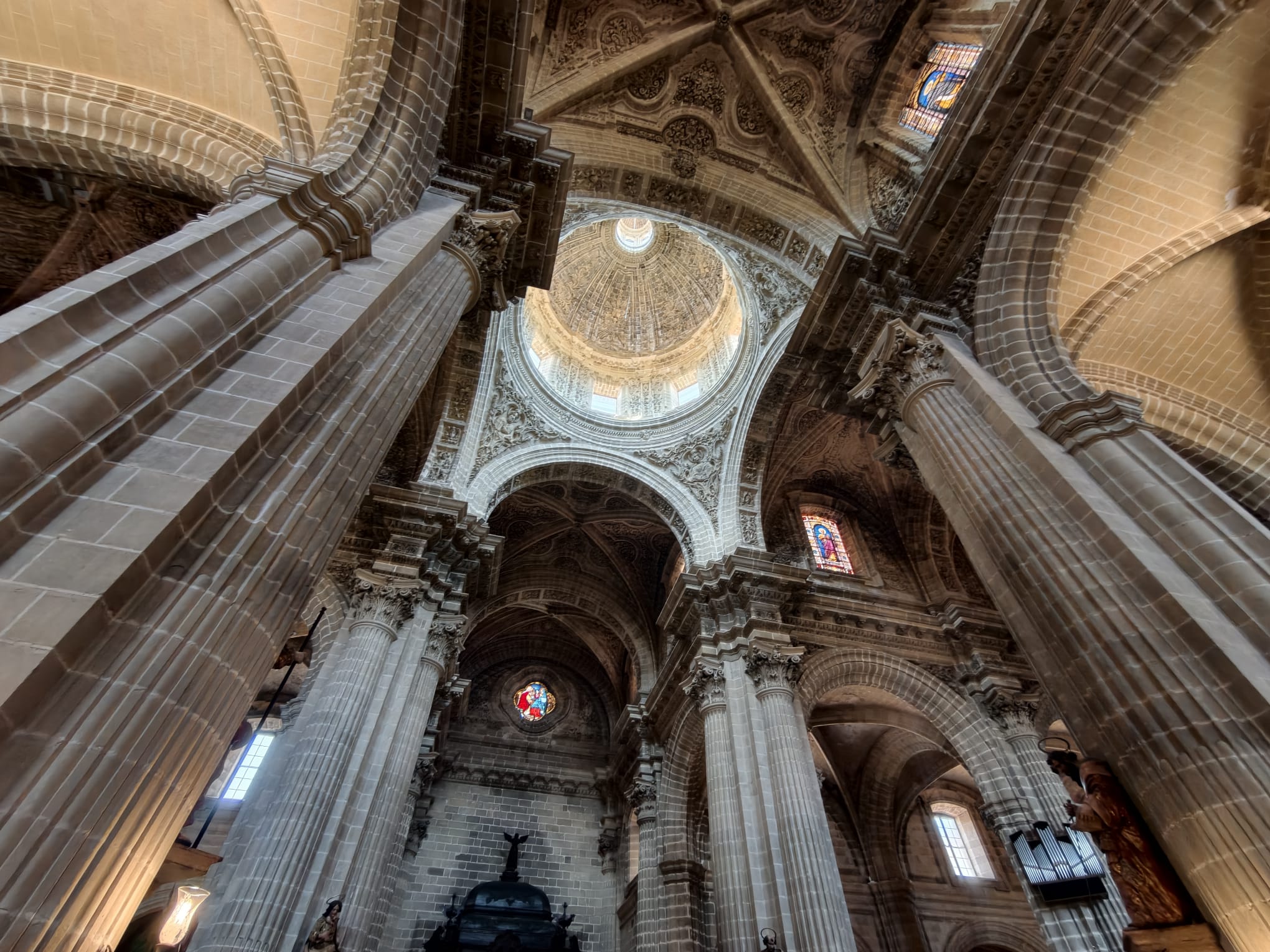
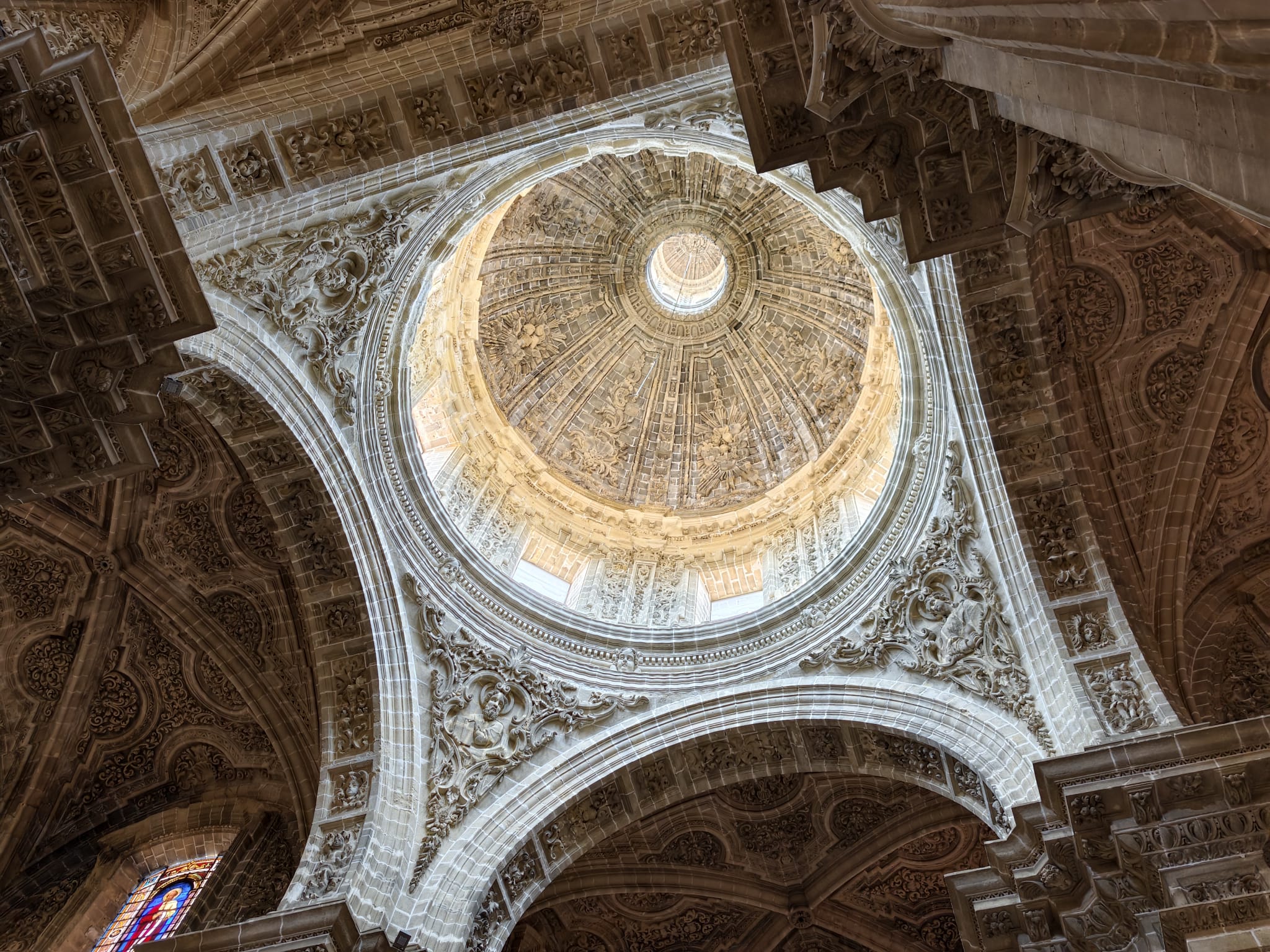
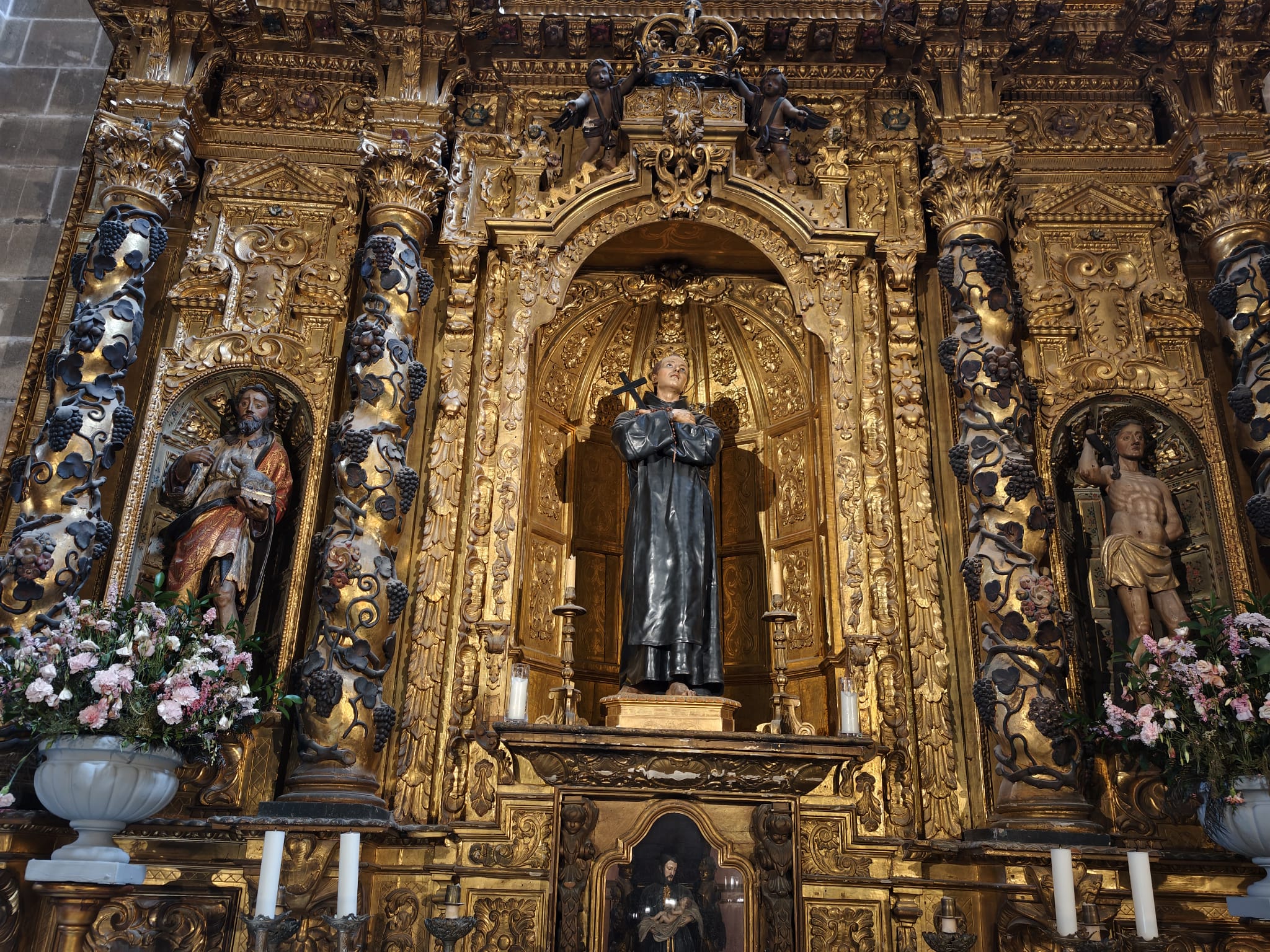
After a delicious tapas lunch we walk through the city of Jerez and visit the beautiful cathedral.
It’s another very windy night. There are wind gusts up to 40 knots from the east.
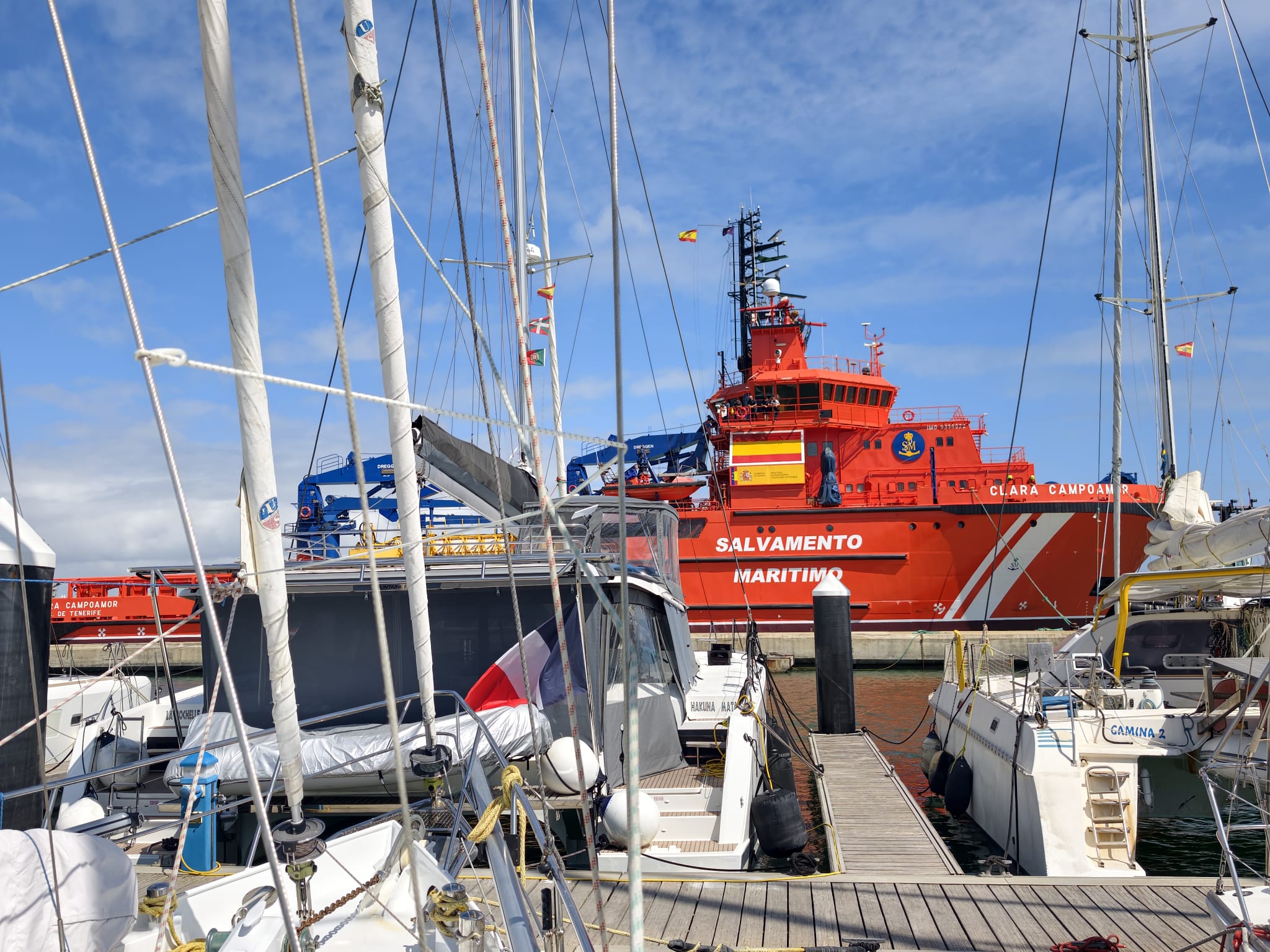
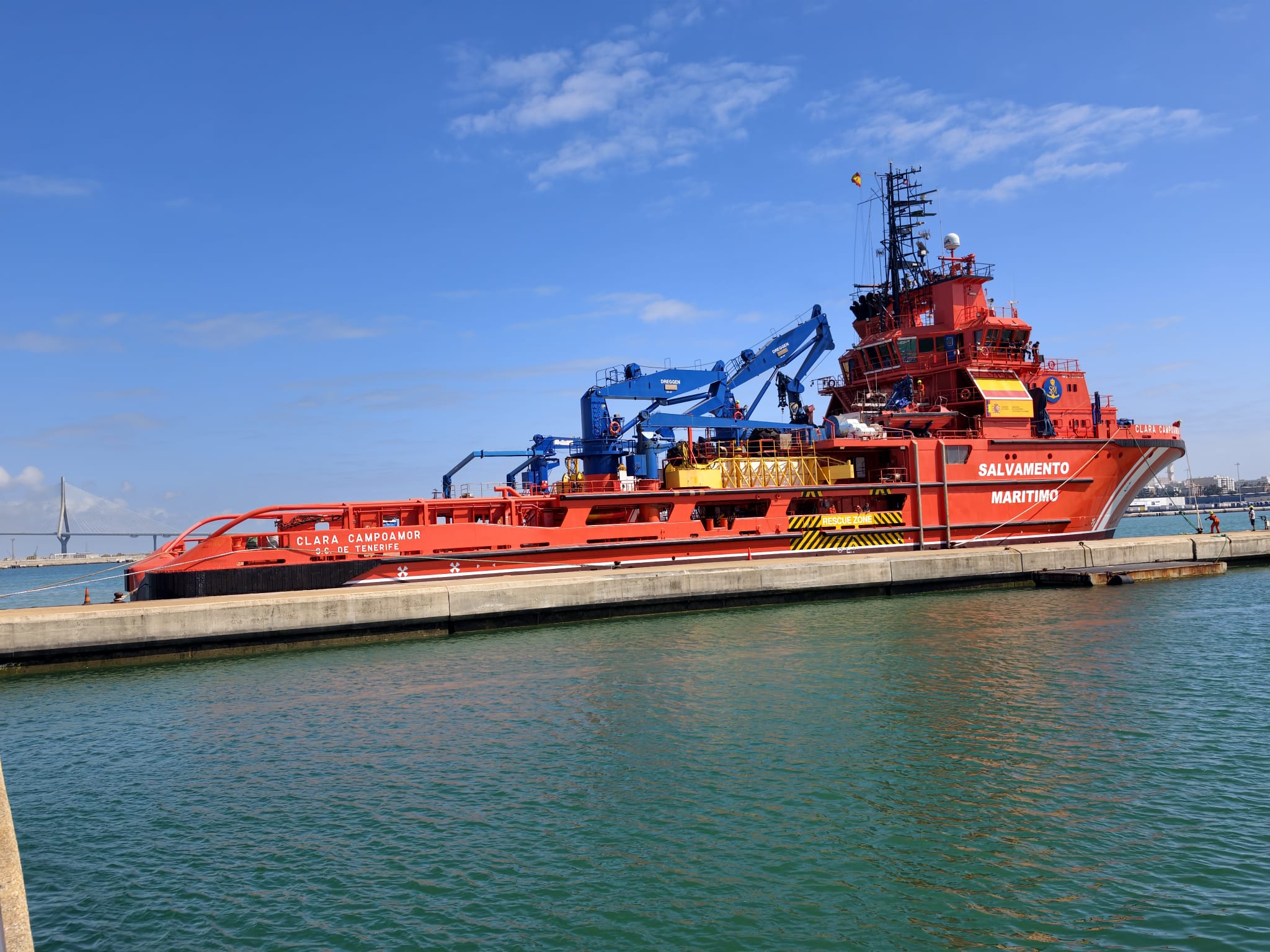
A BIG neighbor: 80m long rescue vessel “Clara Campoamor”. Wim speaks to one of the marineros from Puerto America. The guy proudly says she’s the jewel in the crown of the Spanish rescue organization. She’s been in Cadiz for maintenance and they are practicing, testing and calibrating now. She has 4 big engines and a computerized positioning system that can keep her positioned in any kind of weather without anchoring.
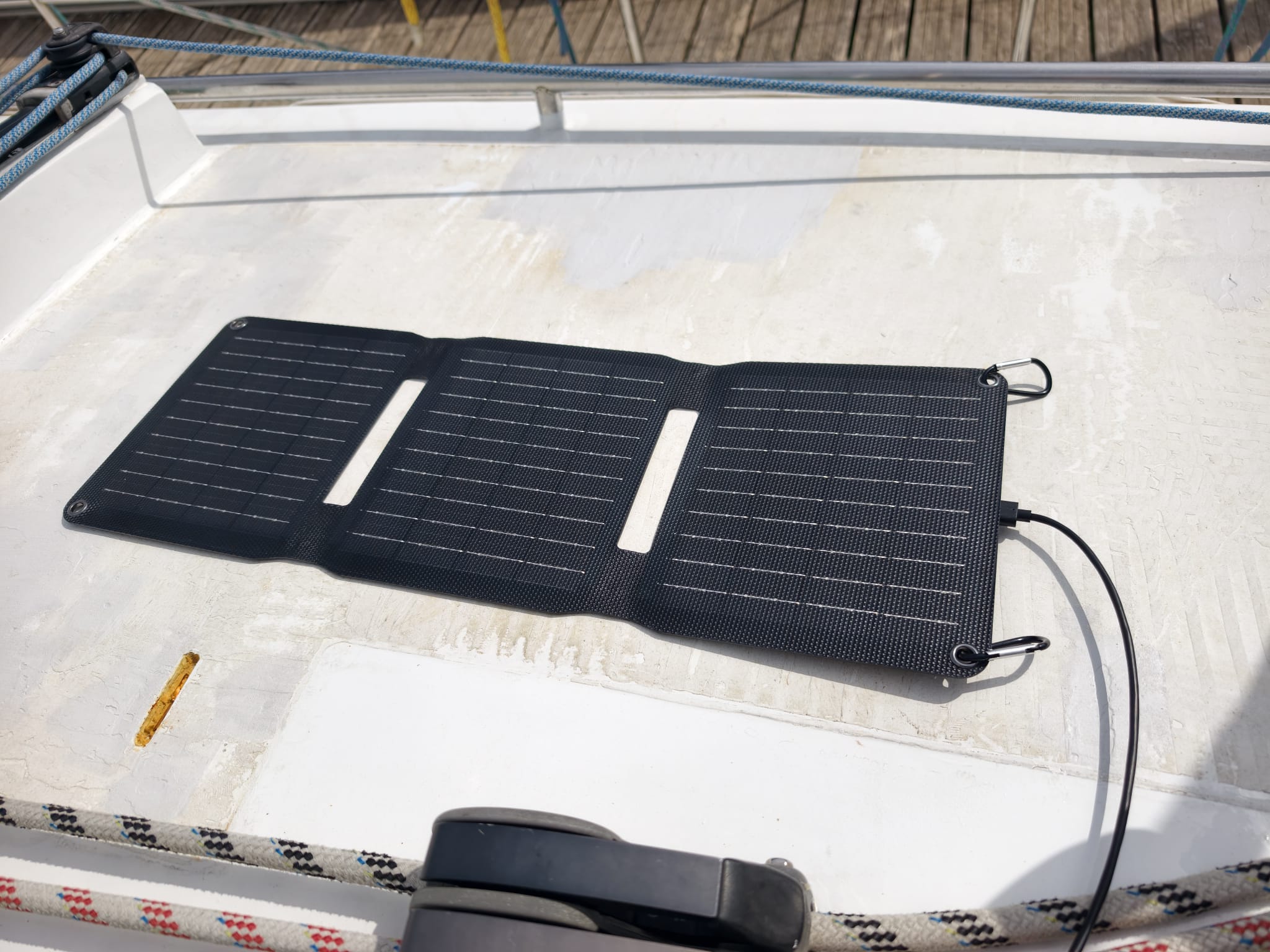
We’ve ordered 2 small folding solar panels on Amazon. They will be part of the equipment that will be in the grab bag to take into the life raft in an emergency at the ocean. They can charge a USB device. We test ‘m in the sun: they charge a phone by 20% per hour. And they will charge our Zoleo too!
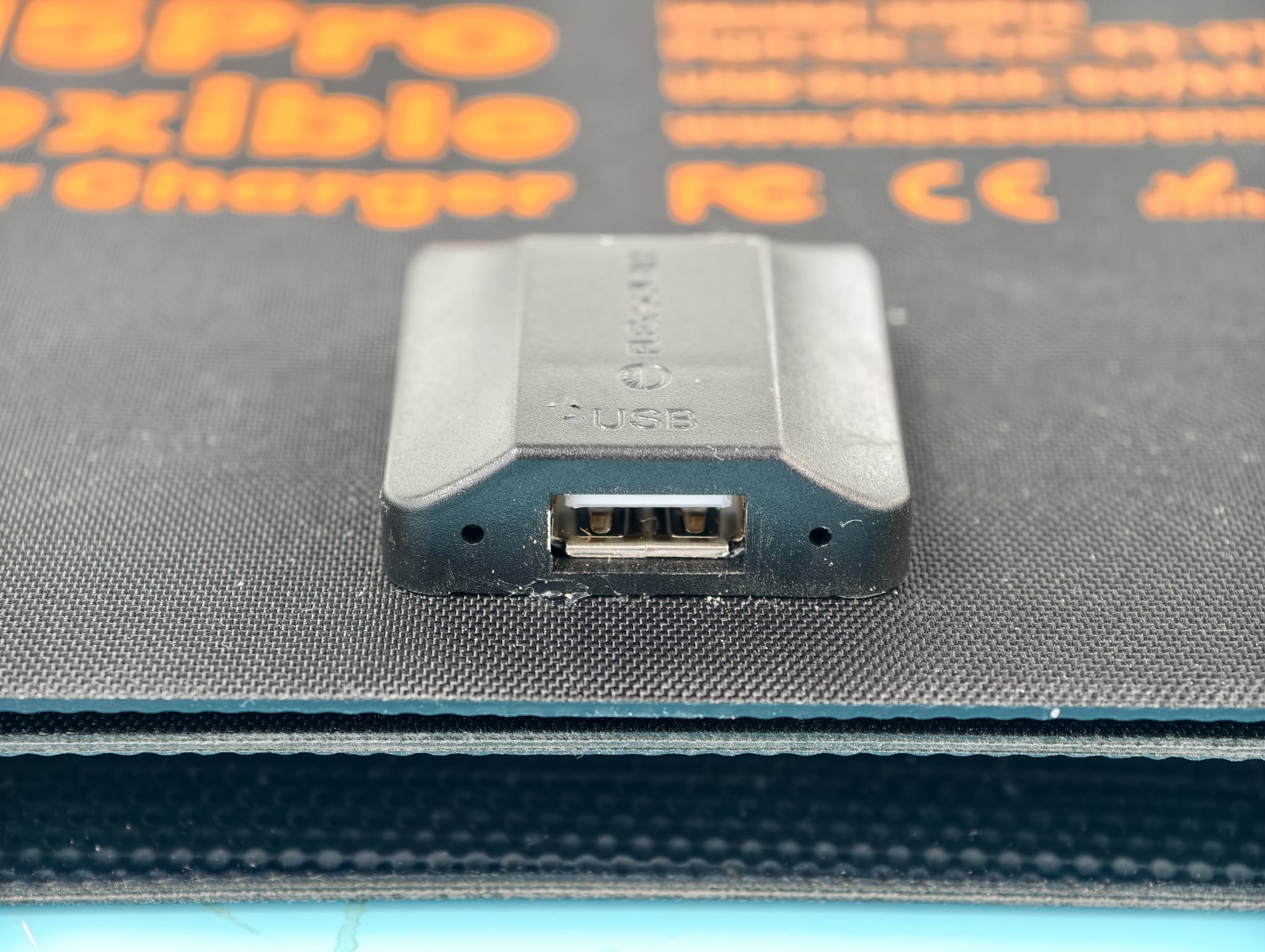
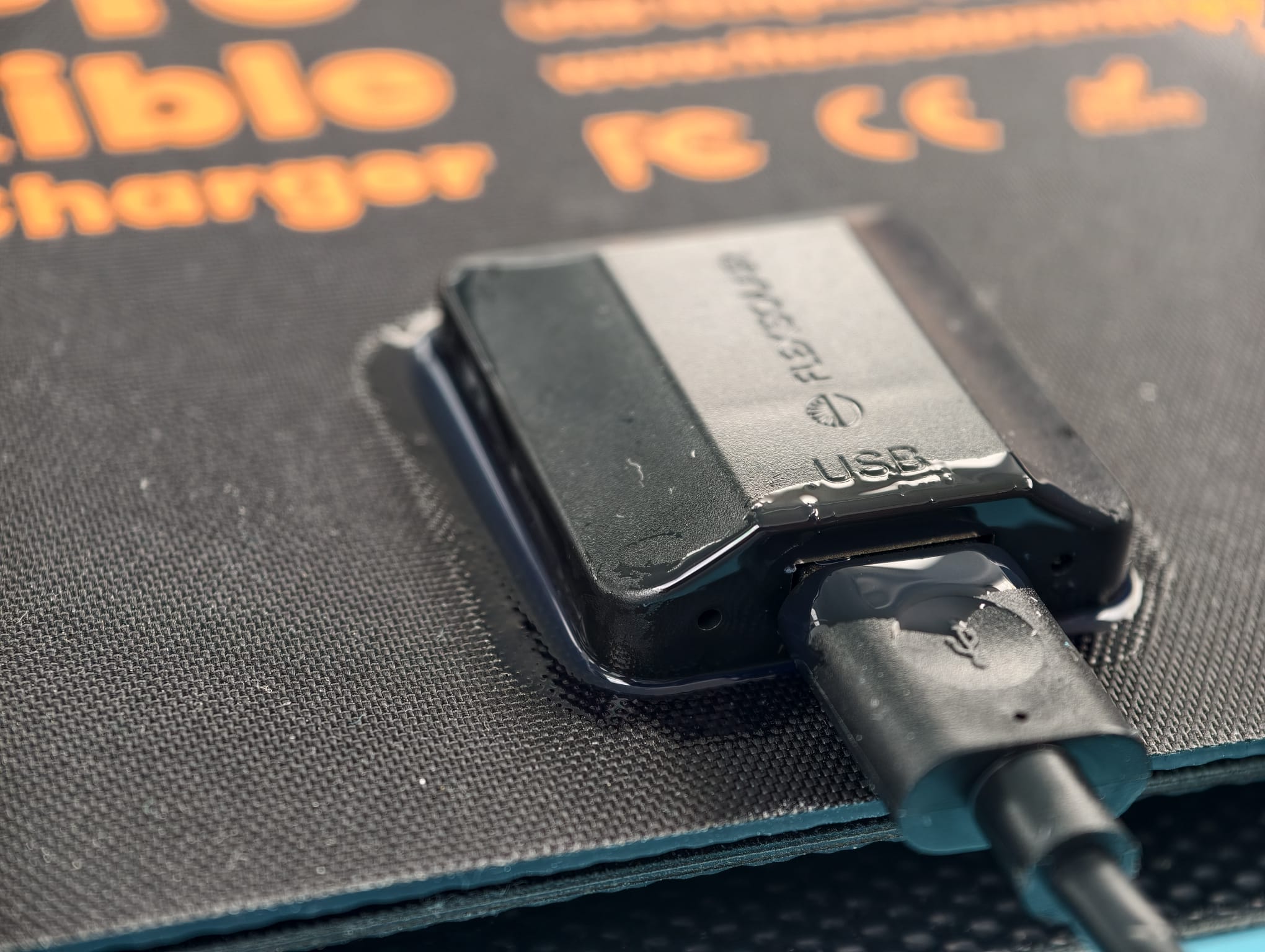
They were sold as IP68 (fully waterproof). Well, as usual, the Chinese definition of waterproof is very different from ours: This USB port and the junction box (which contains electronics to convert solar power to 5v, 3A) is fully open! 👎🏻👎🏻 And if we use it on the top of our life raft is very likely that it will get sprayed by sea water. That will kill it instantly.
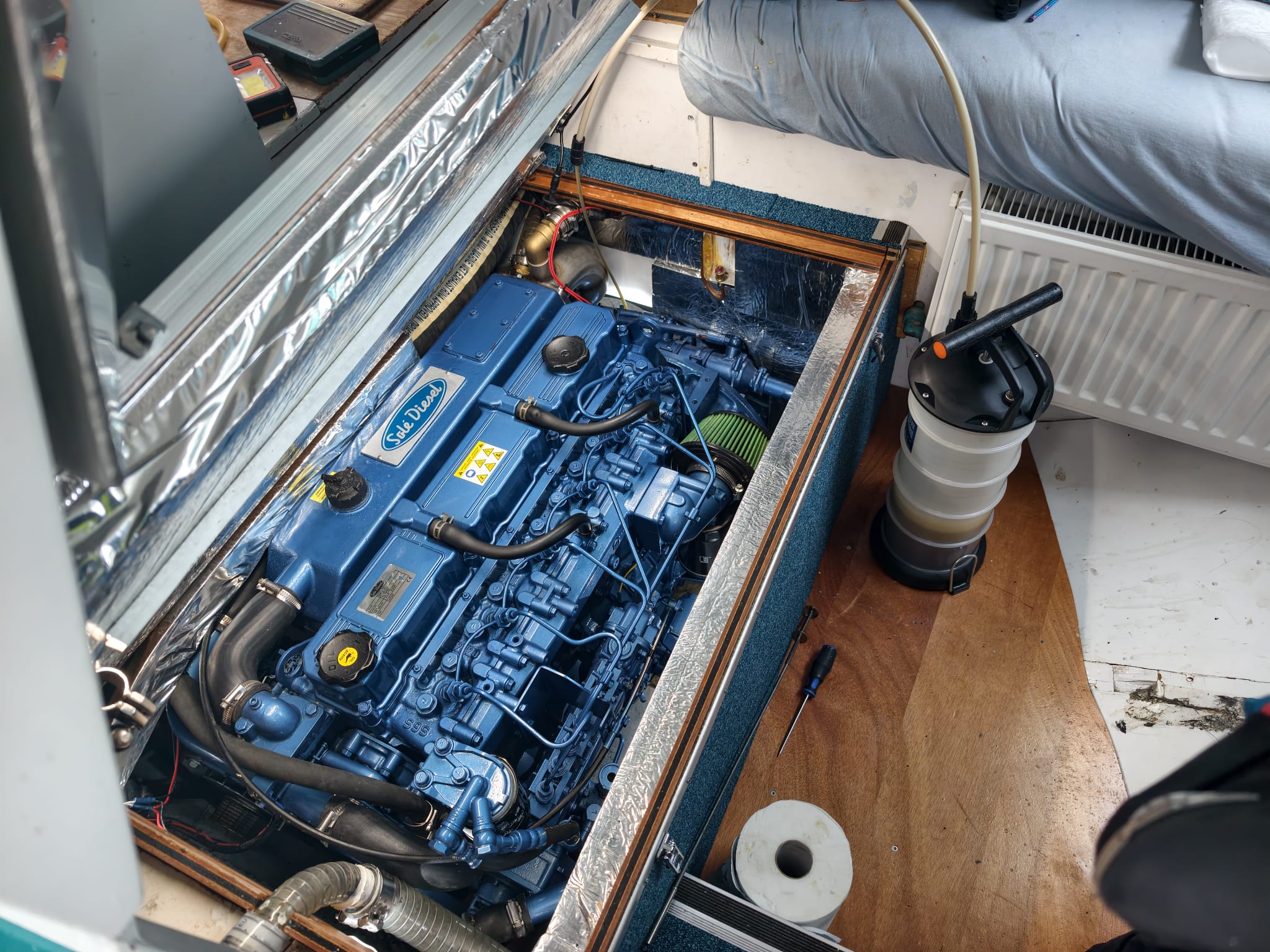
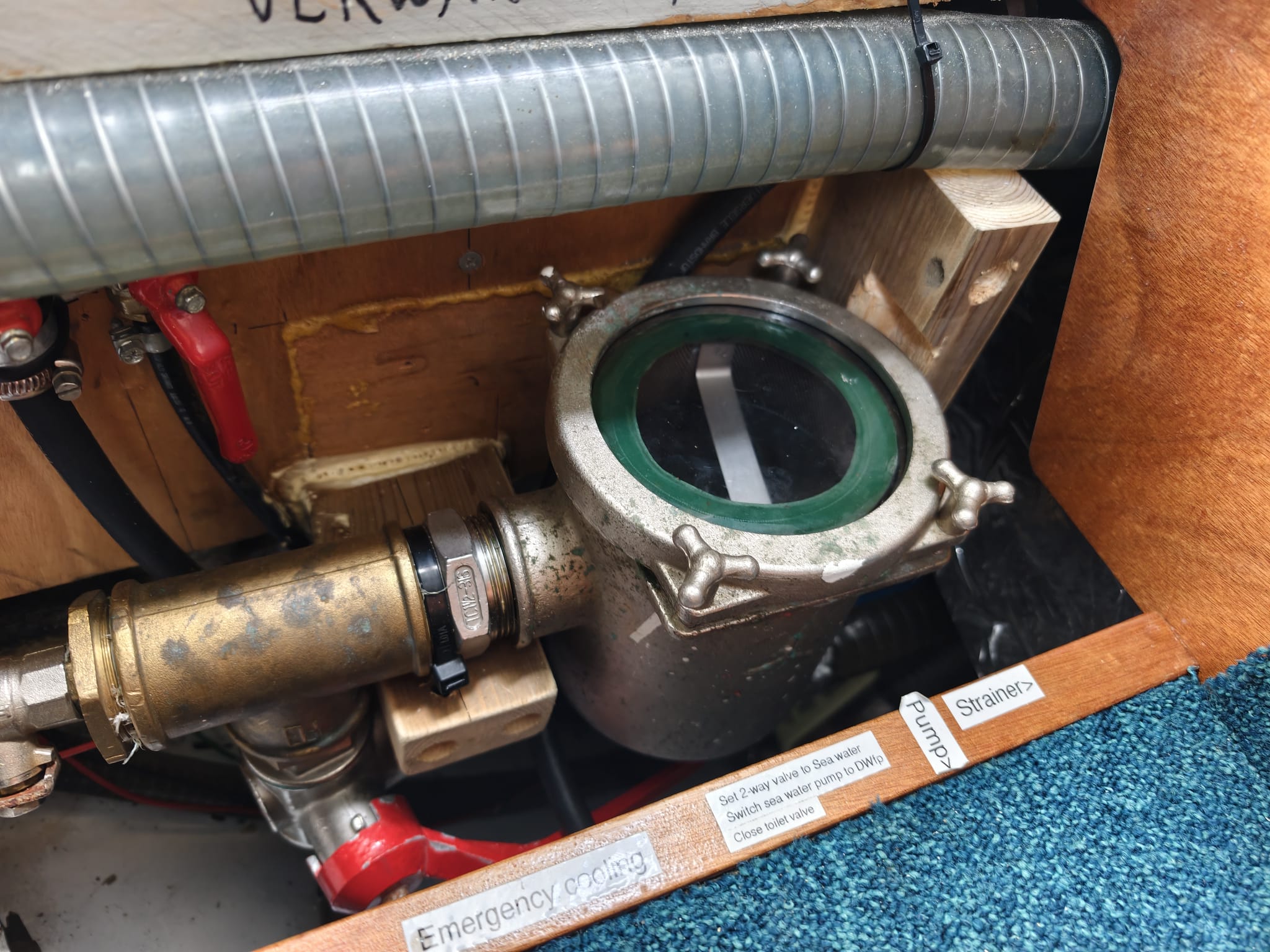
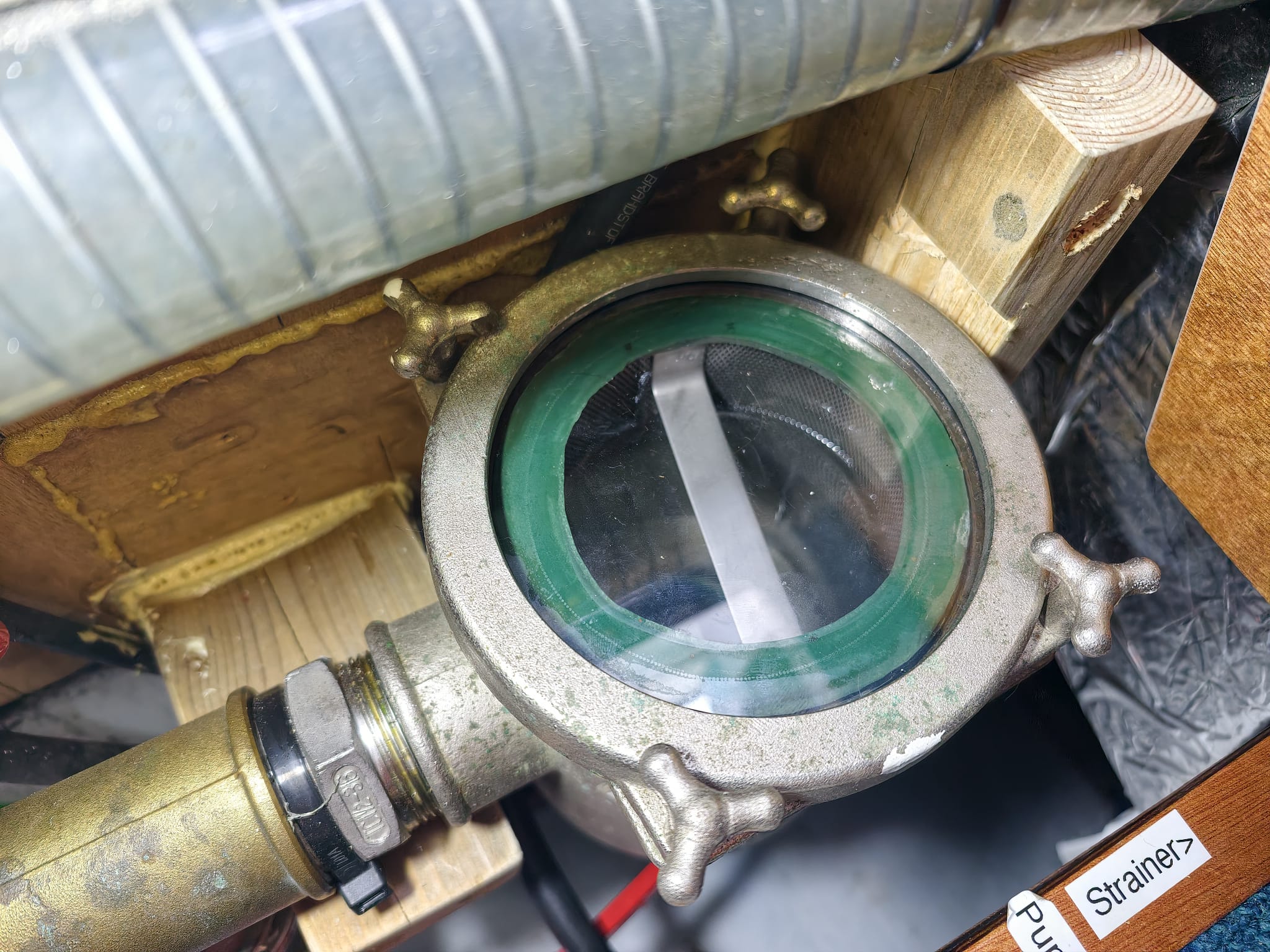
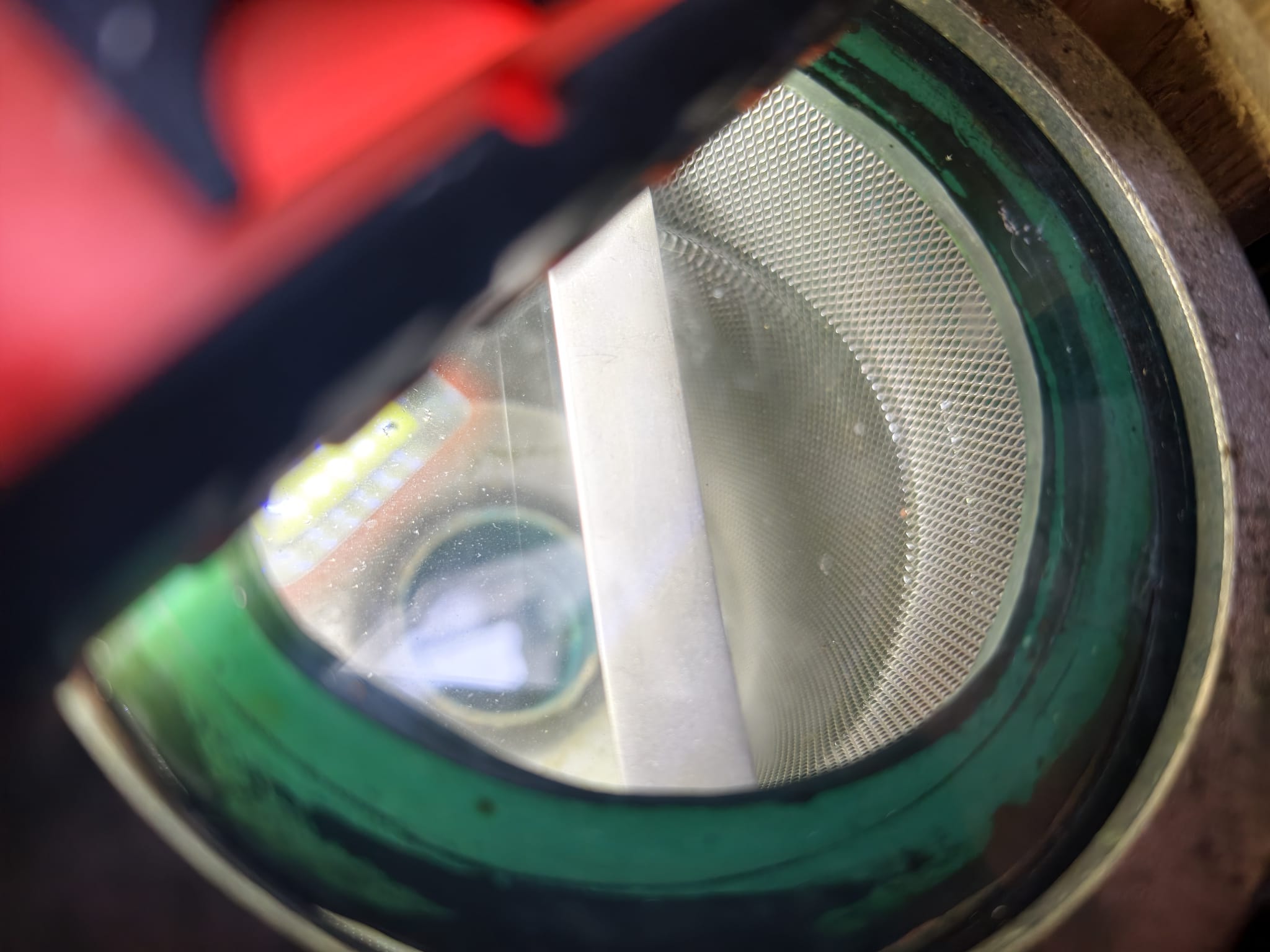
Engine maintenance. Mighty Mitsu has done 200 hours since last oil change in Viveiro so he gets fresh oil, oil filter, fuel filter and valve play check. Next, Wim replaces the sea water strainer and the transparent lid.
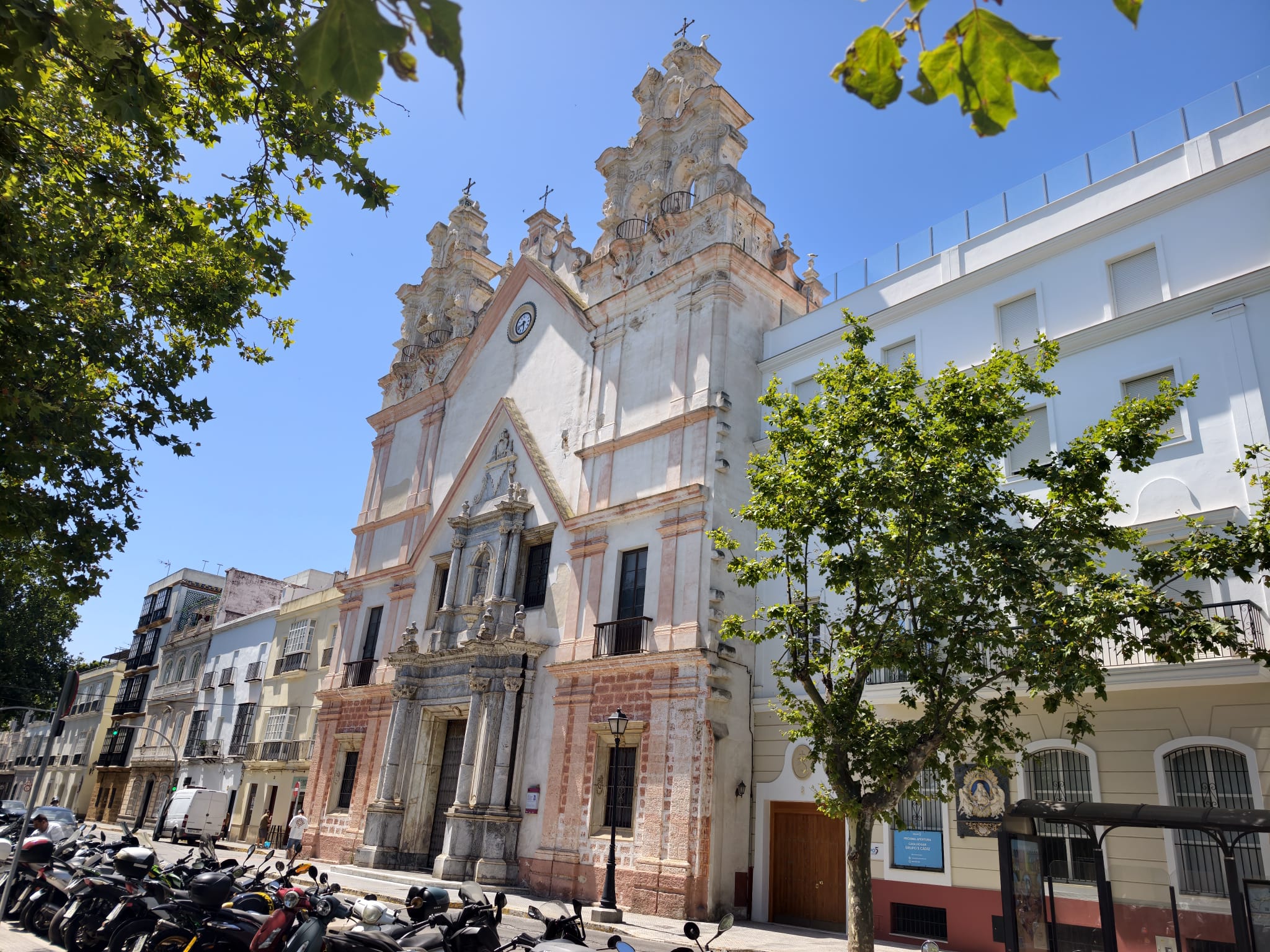
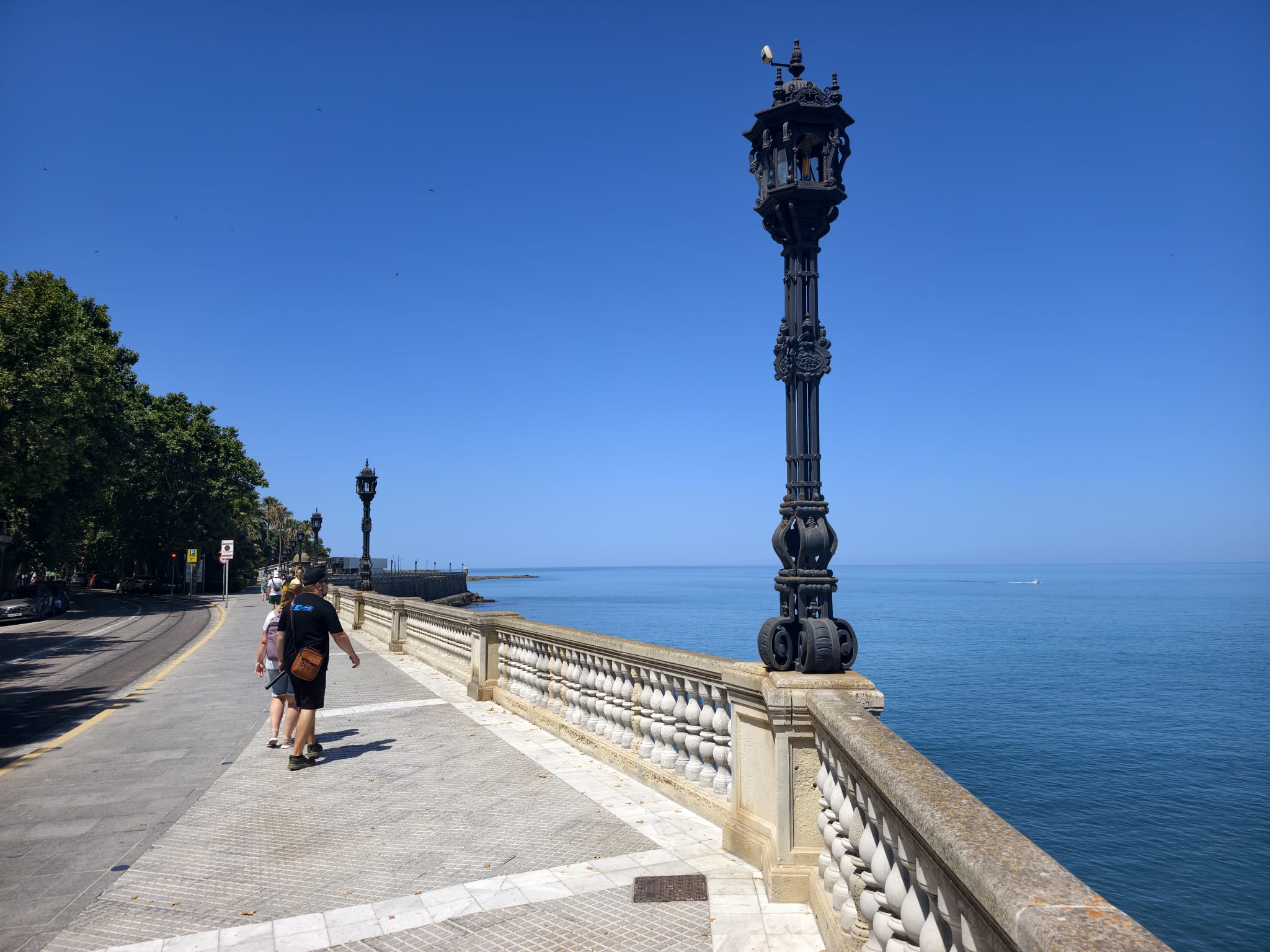
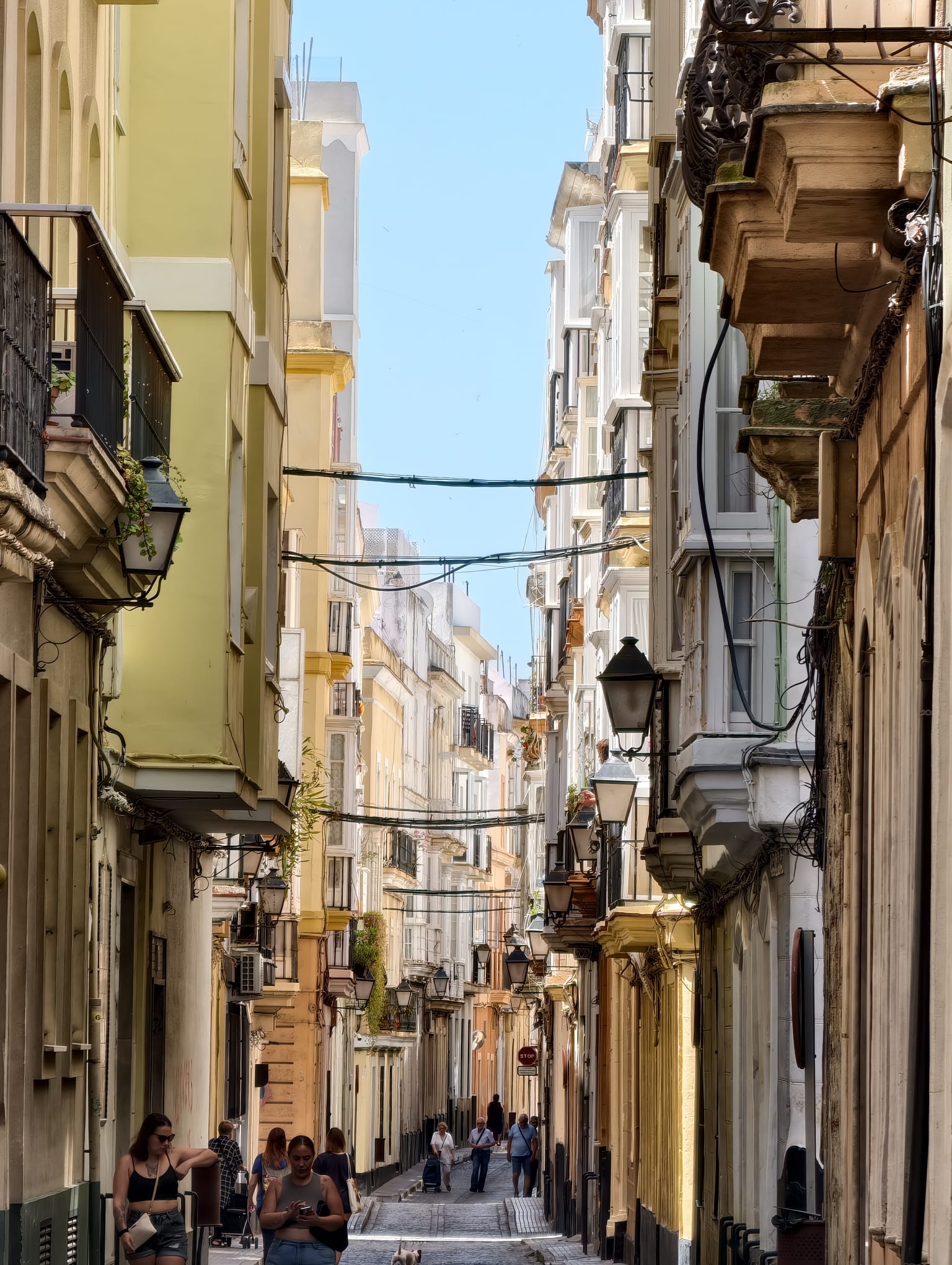
Wim goes for a scooter ride to the book shop in the old town to pick up a little replacement wind sensor bearing he’s ordered. It’s nice ride, the city is really beautiful!
We receive a message that the solar panels are ready for pick up at the DHL warehouse in Puerto Real. That’s 20 minutes by car. It’s a big package so we rent a car to collect the package and while we have the car we’ll go to Mar 7 in Sanlucar de Barrameda to buy some more of their delicious sherry.
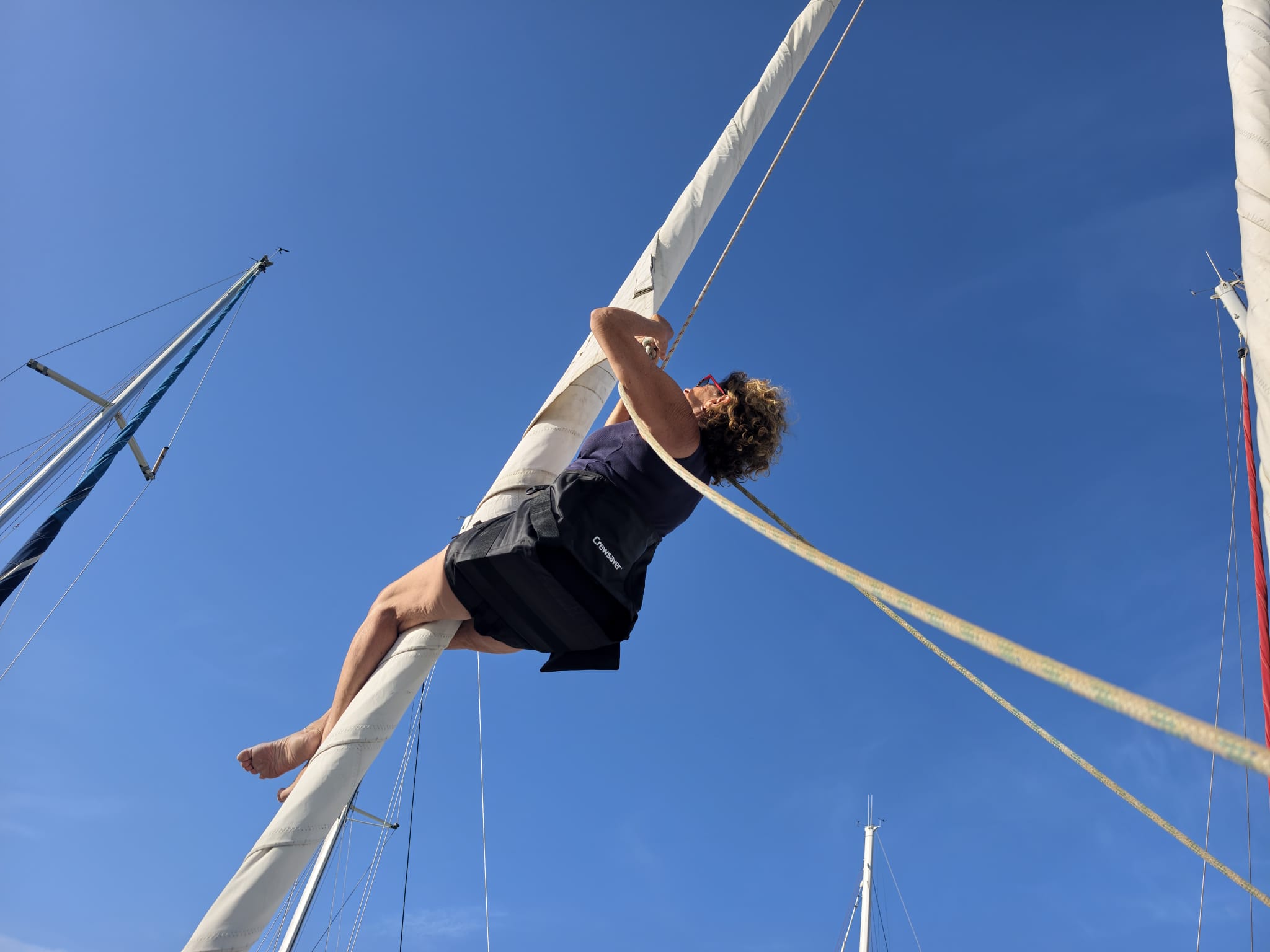
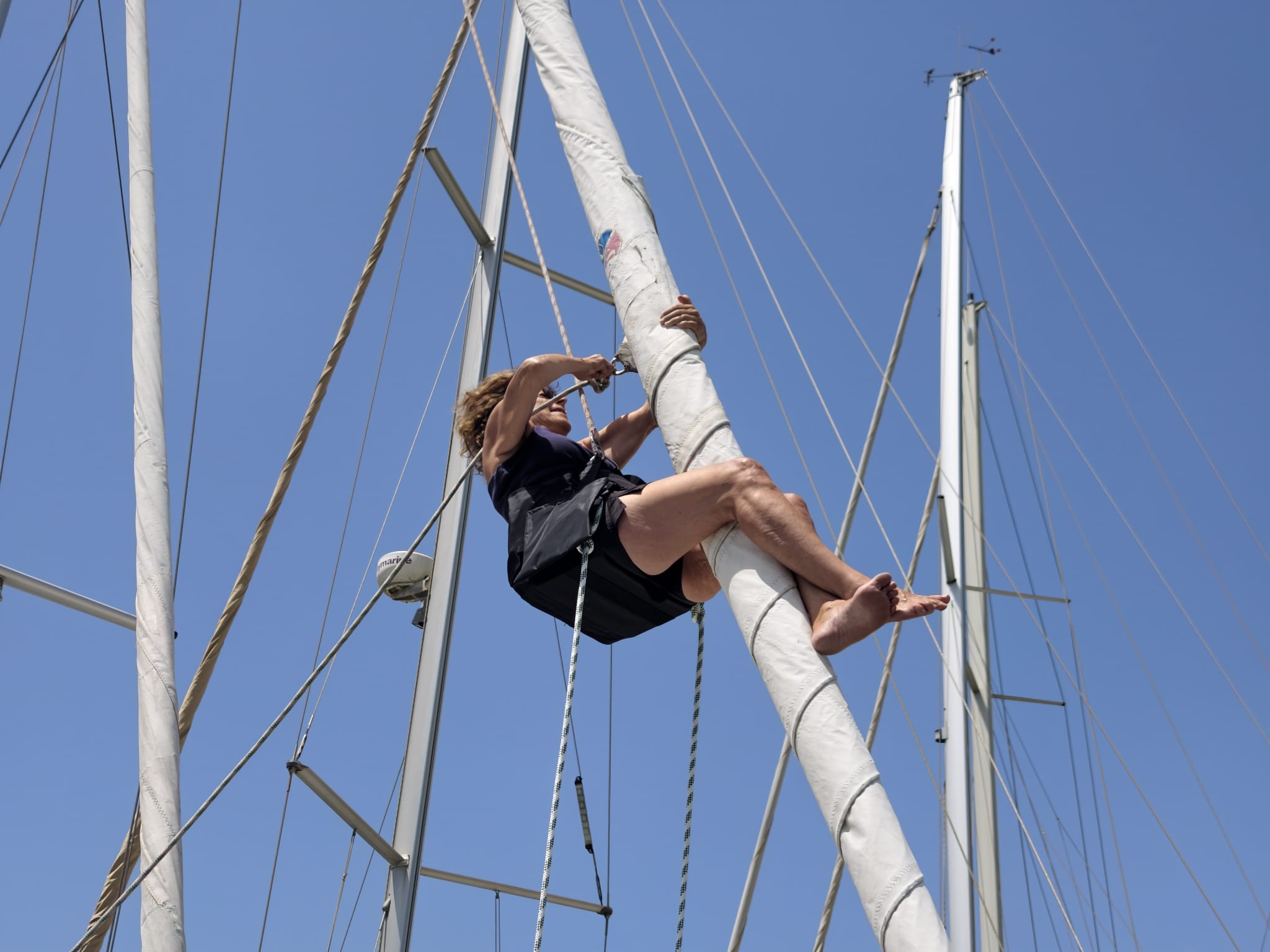
But first, Wim hoists Sher in the bosun chair to the Yankee sail sheets. The sheets show some wear from 10 years of use and we’ll have ‘m replaced. We take one of the sail sheets off to bring it to the little chandler here to have the same length.
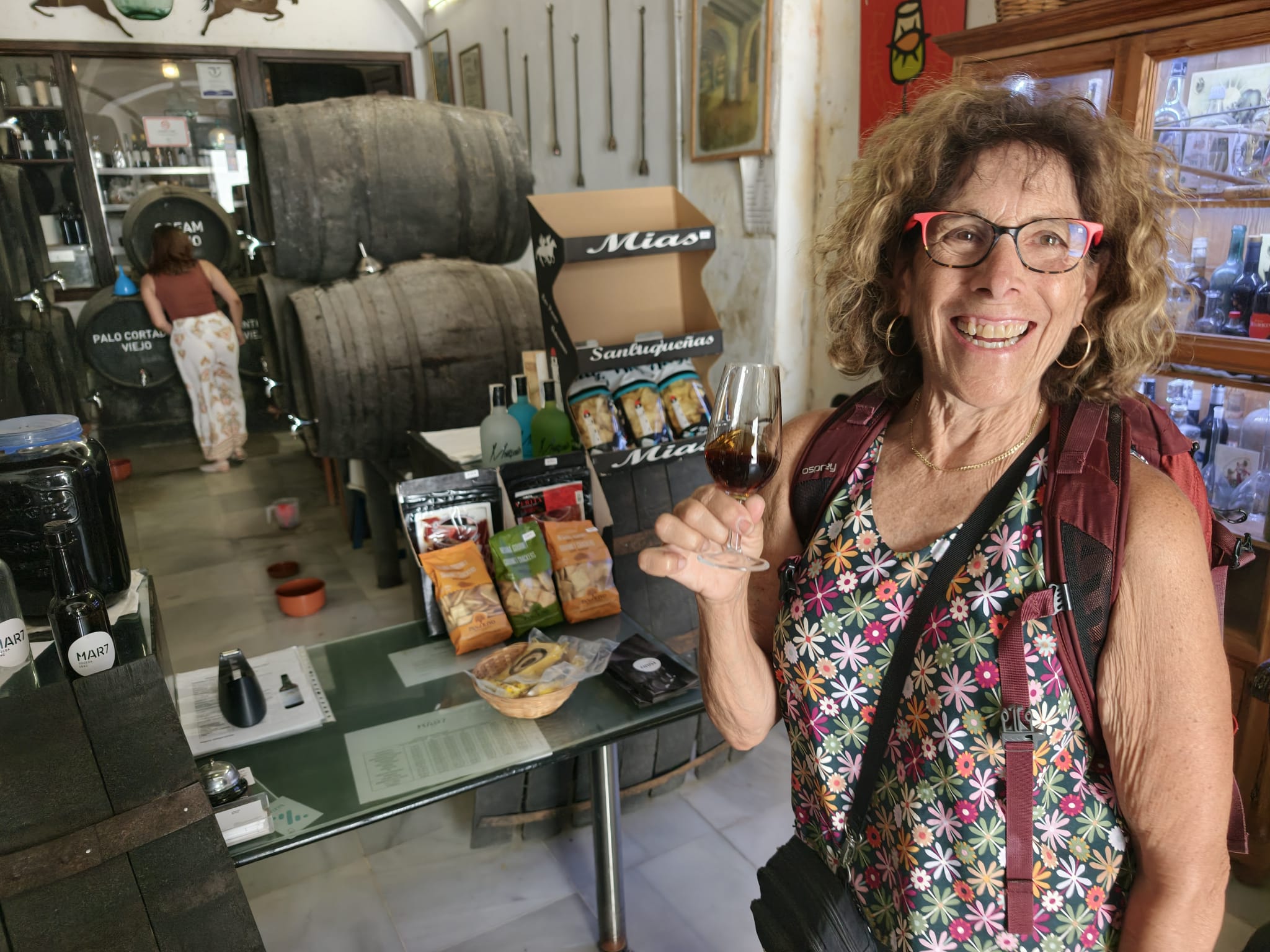
After picking up the panels at DHL, we drive to Sanlucar de Barrameda, buy some sherry, and have a delicious tapas lunch in a local cafe.
We finish the cask of Moscatel! We get the last drips 😅
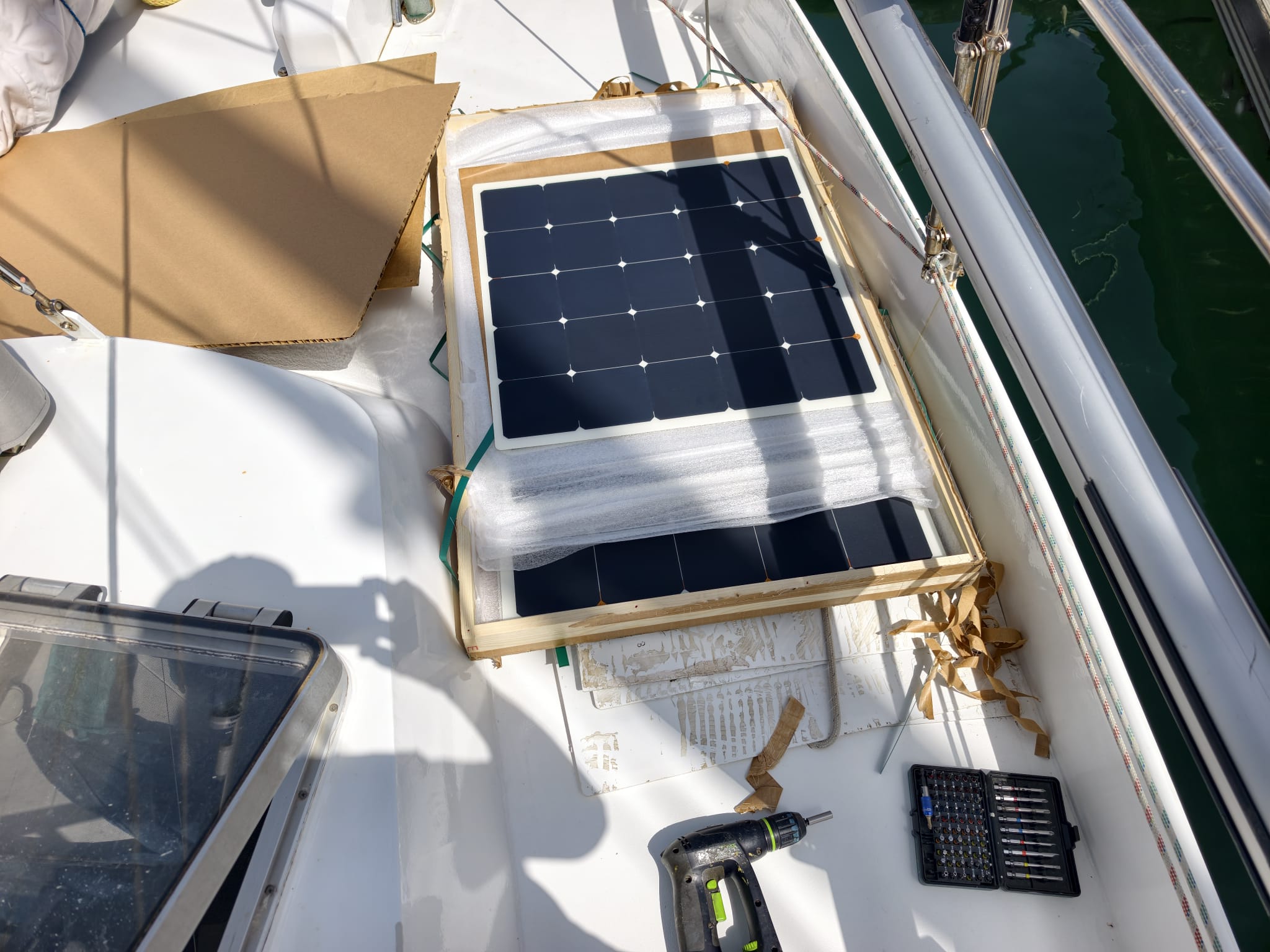
By the end of the afternoon we’re back on Dione IV and we unpack the solar panels. They’re very well packed and so, they’re in great shape 🙂
After about 20 layers of electronic silicone sealant, the little solar panels are really IP68 👊🏻. Let’s translate that for our Chinese readers: 😂 IP68 級防塵防水 😂
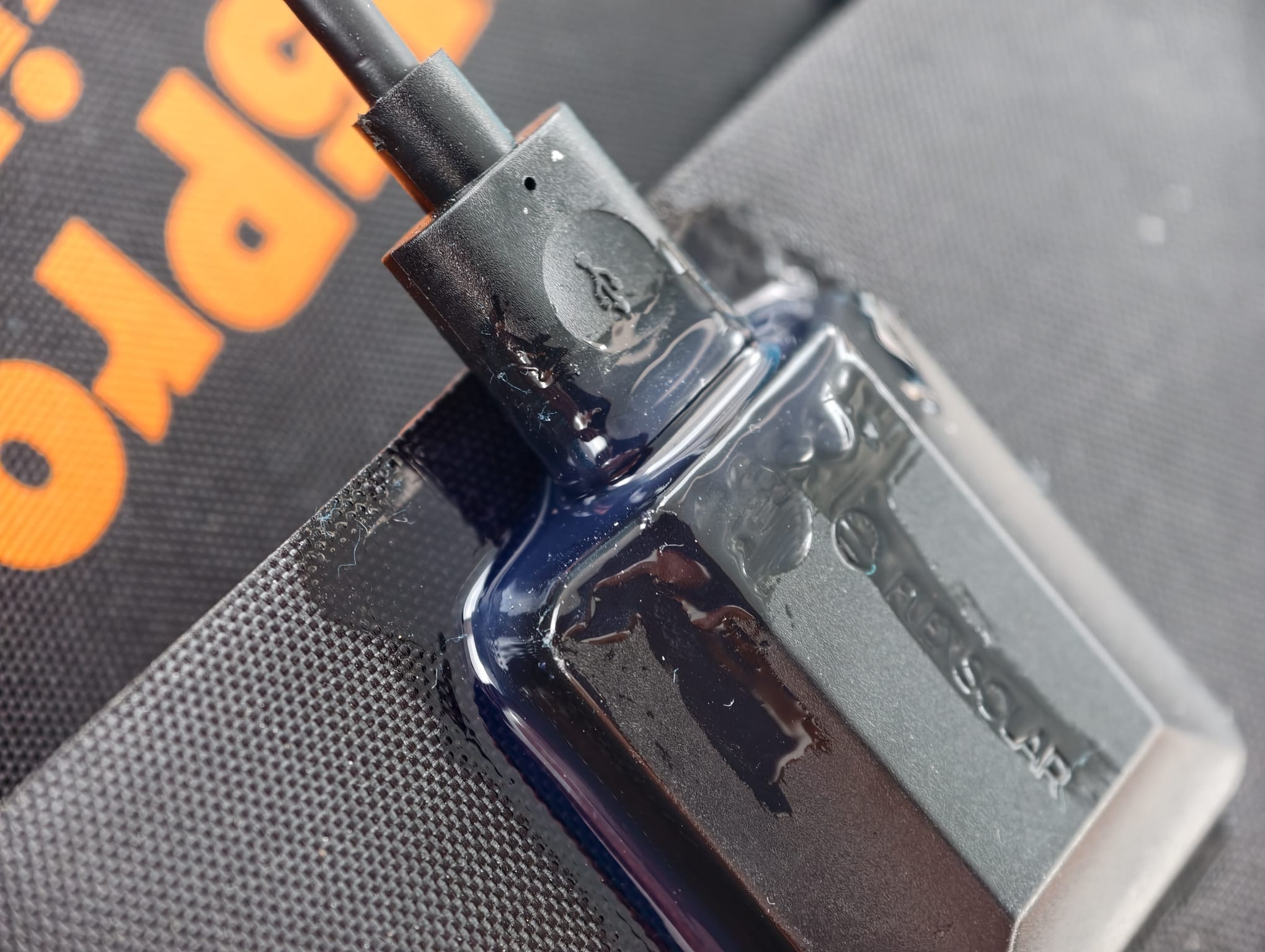
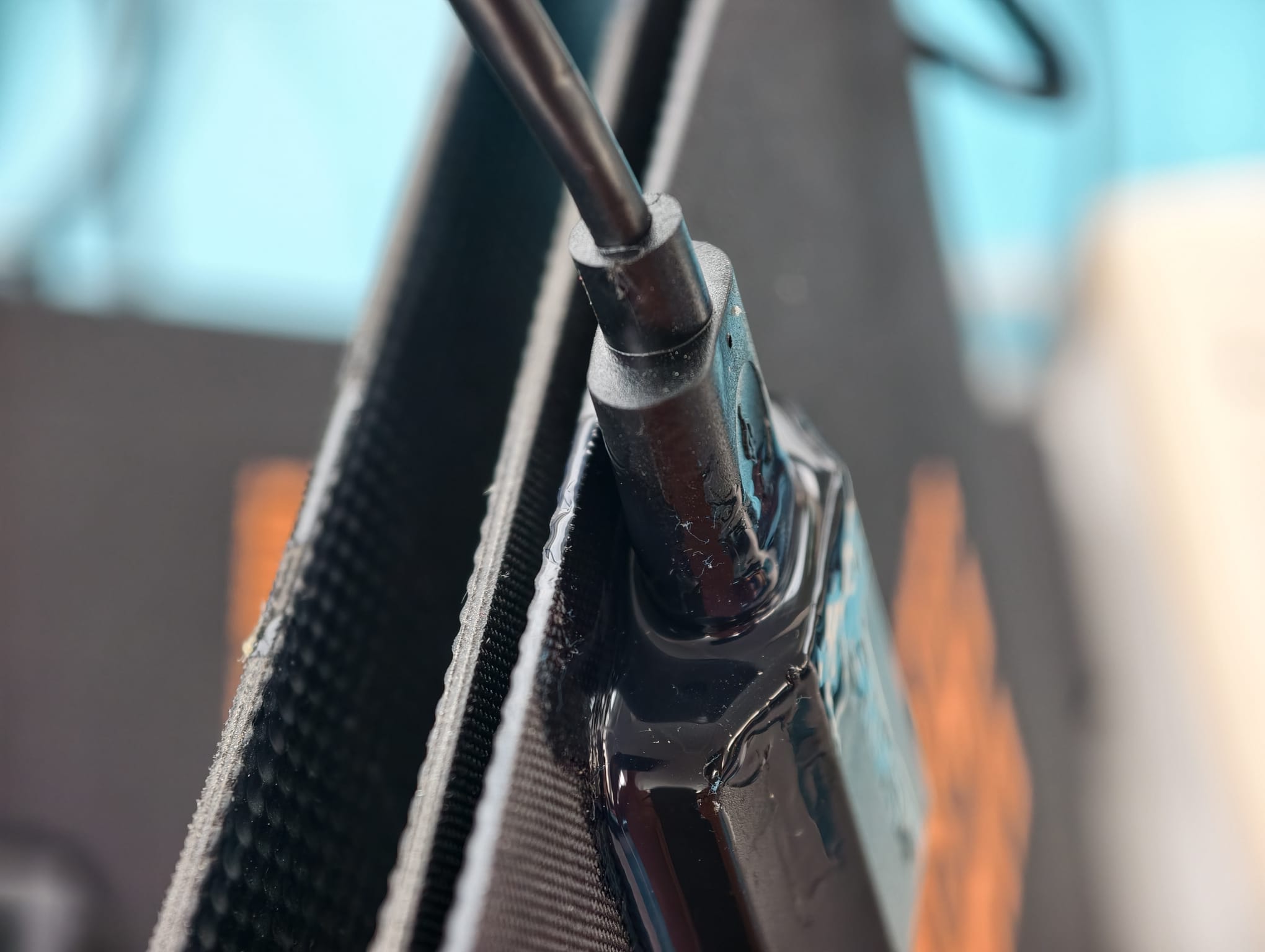
We test ‘m again in the full sun and they charge like a charm.
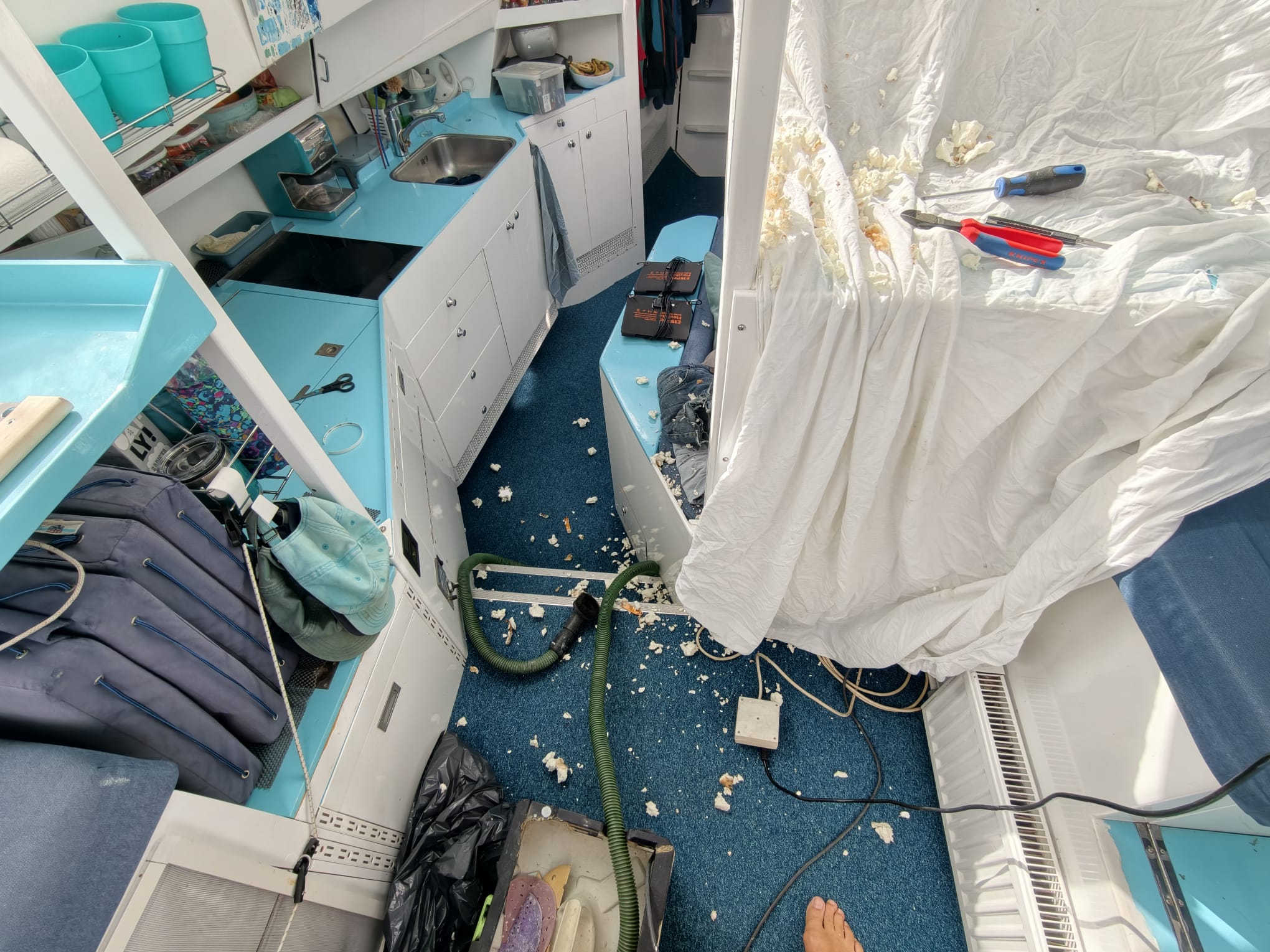
Now that we have the solar panels, we need to fit them. Wim cuts open the ceiling where the connectors need to come through, creating a terrible mess…
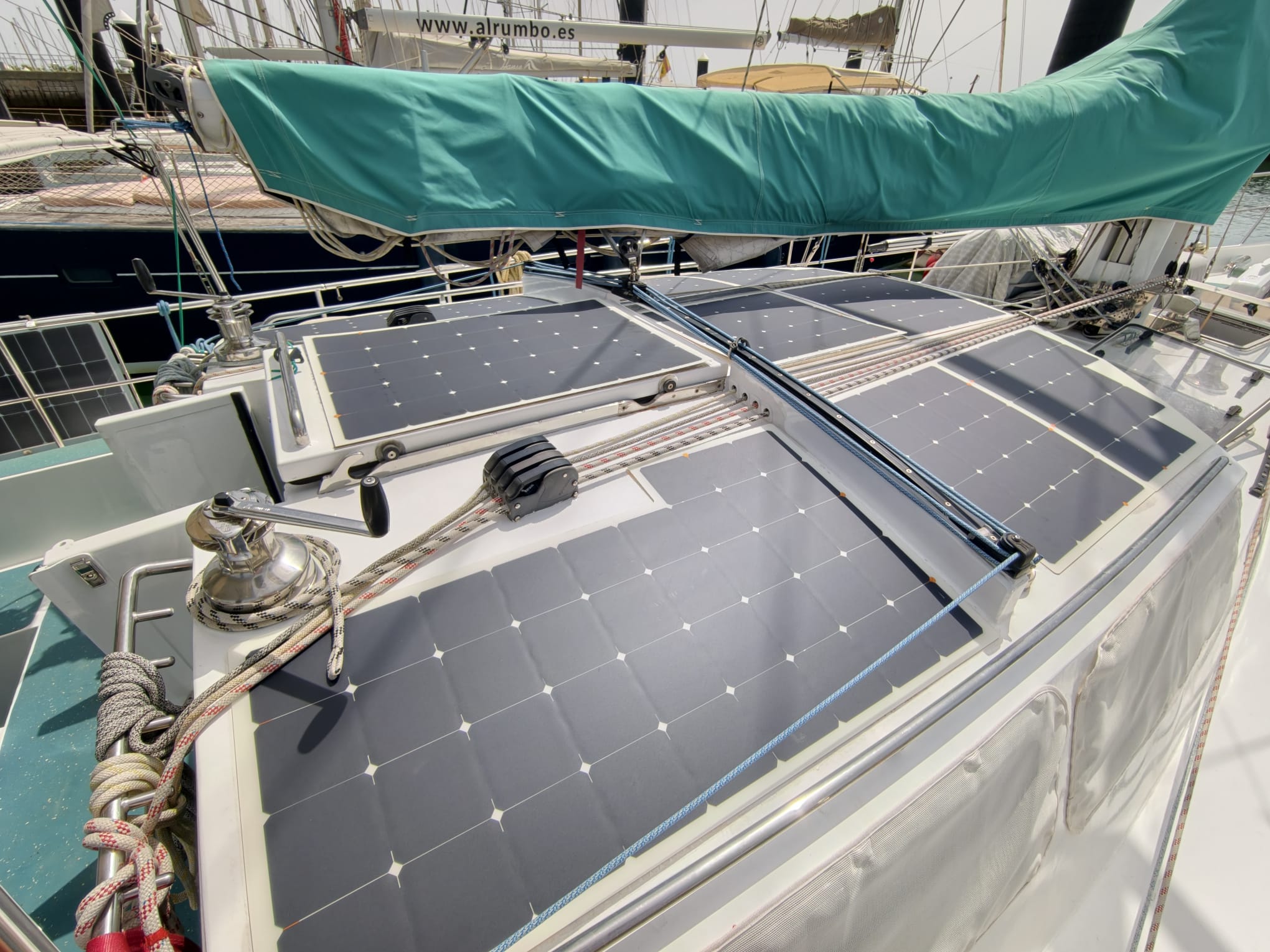
Then we position all panels on the roof and check how the connections fit the holes.
Well, it needs some shifting but it’s all within the tolerances.
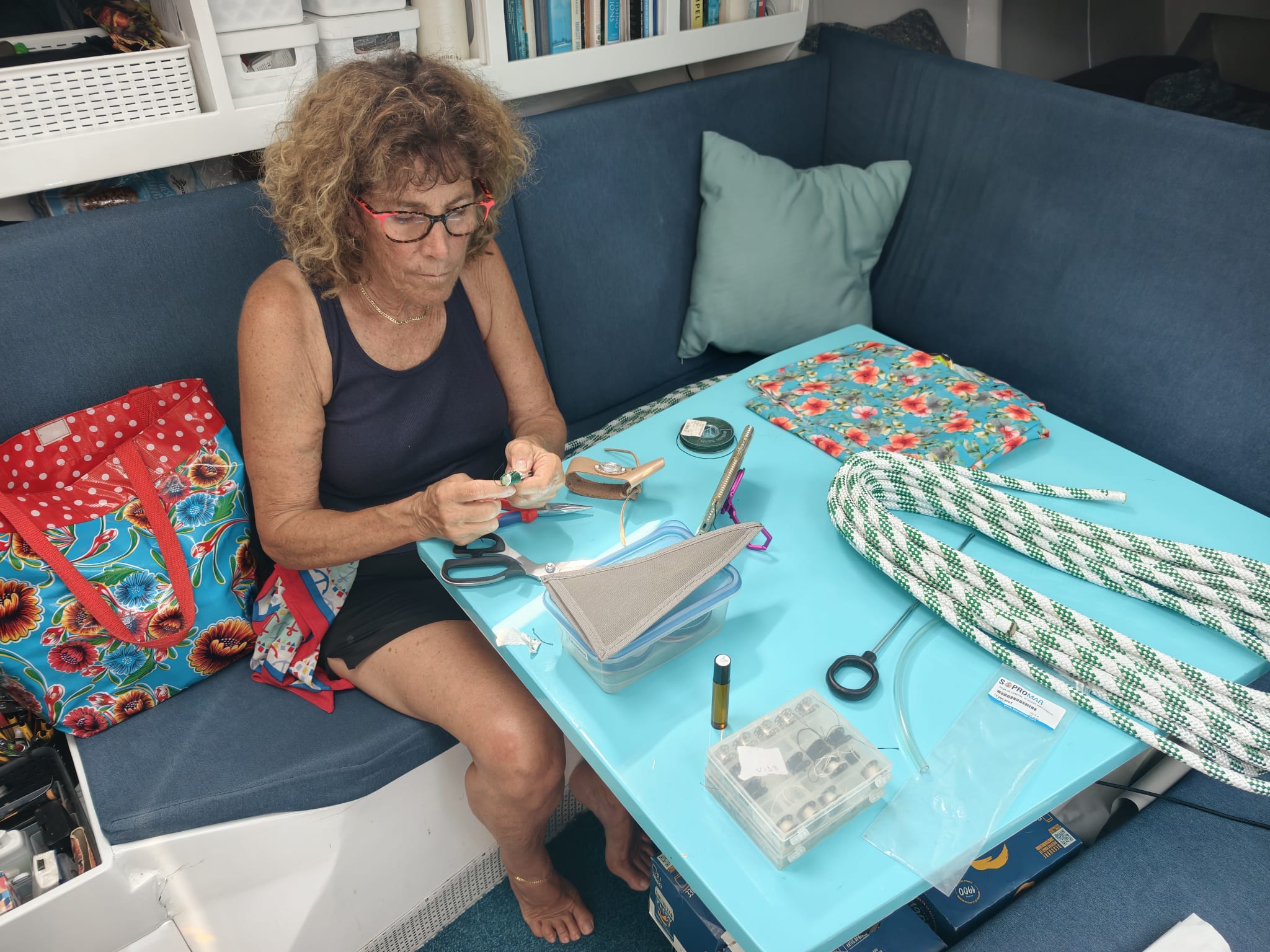
We’ve bought the new sail sheets for the Yankee and Sher makes the whippings at each end.
That looks great!
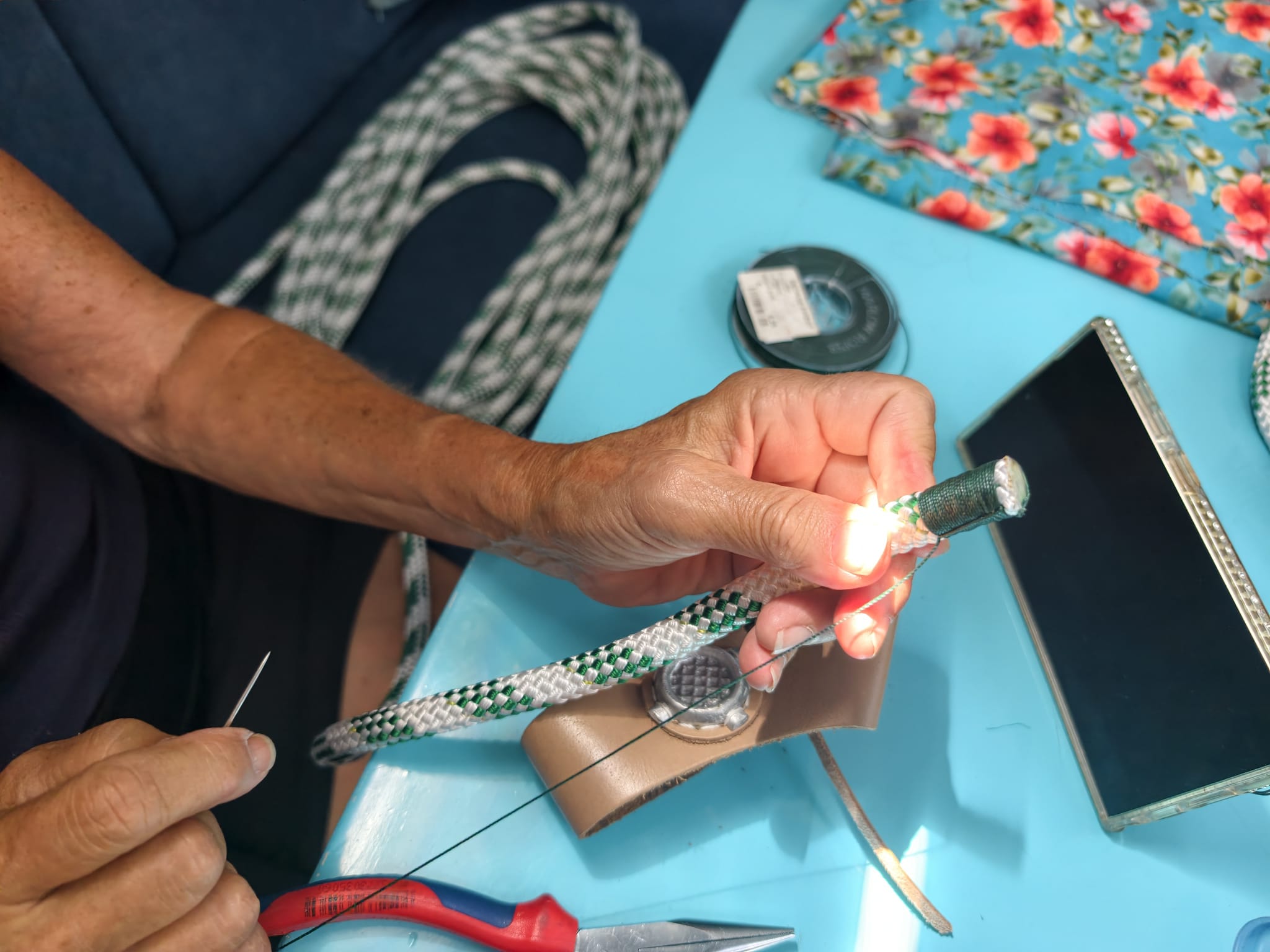
Then Sher gets hoisted back up to install the new sail sheets.
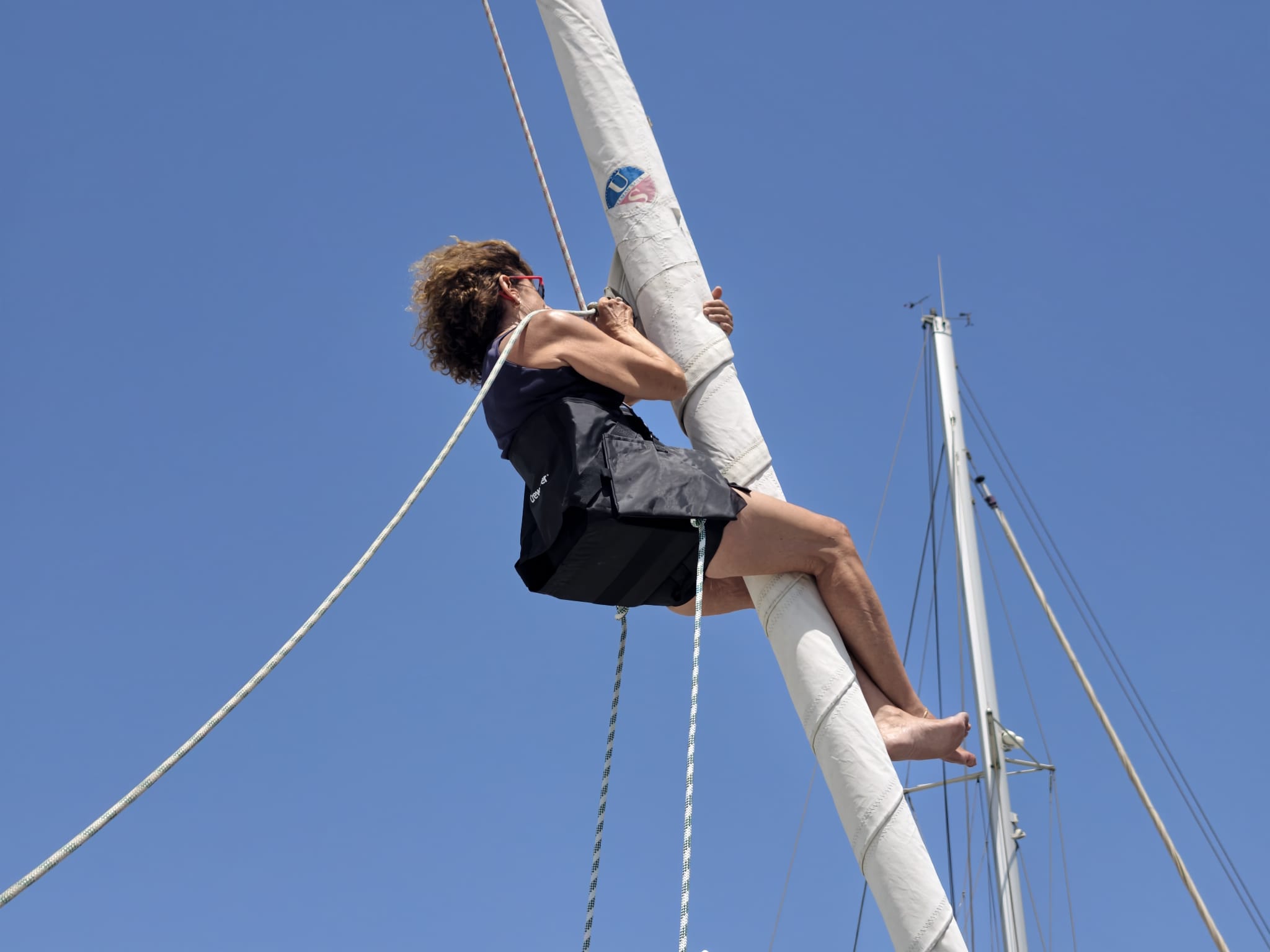
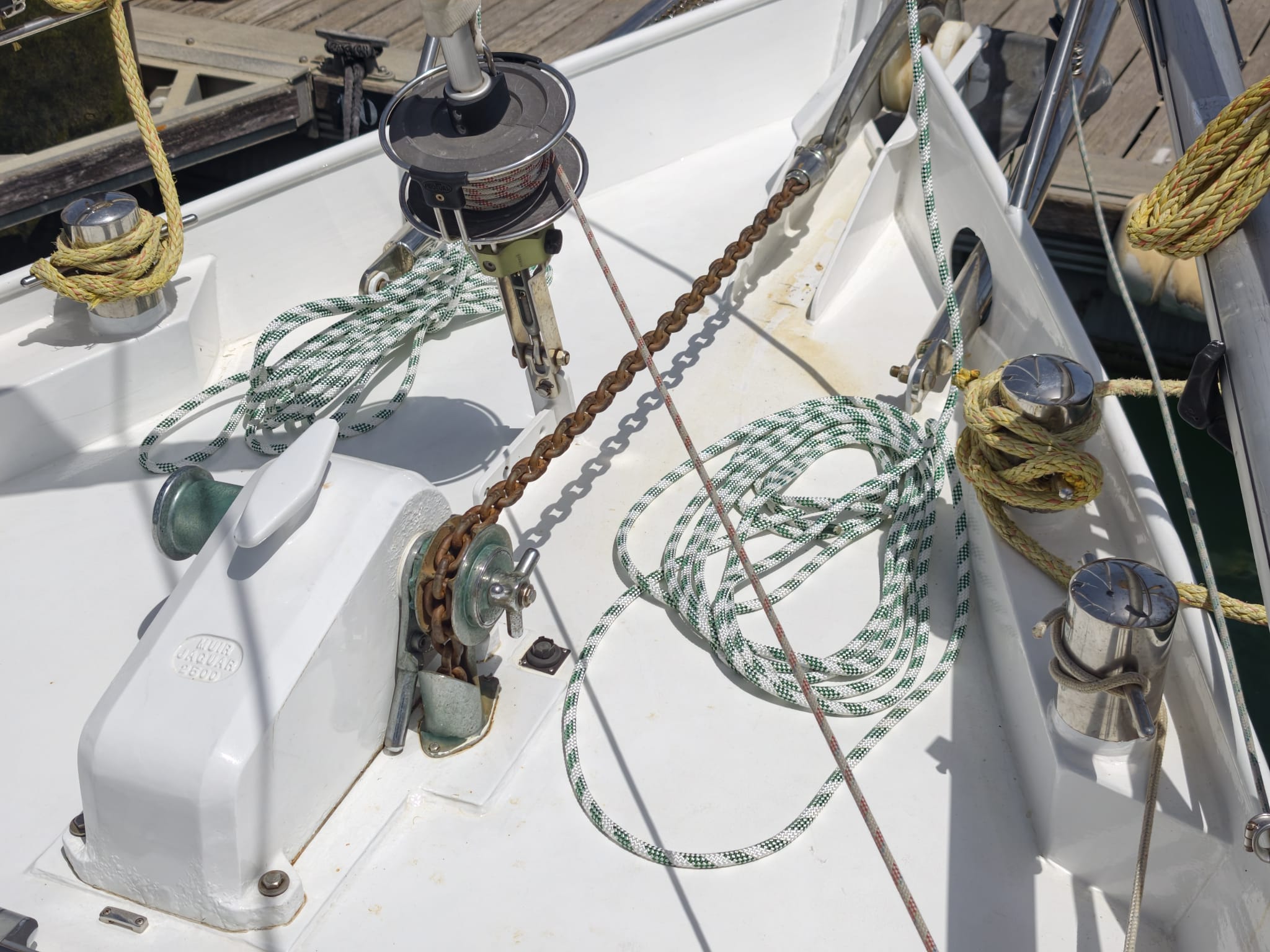
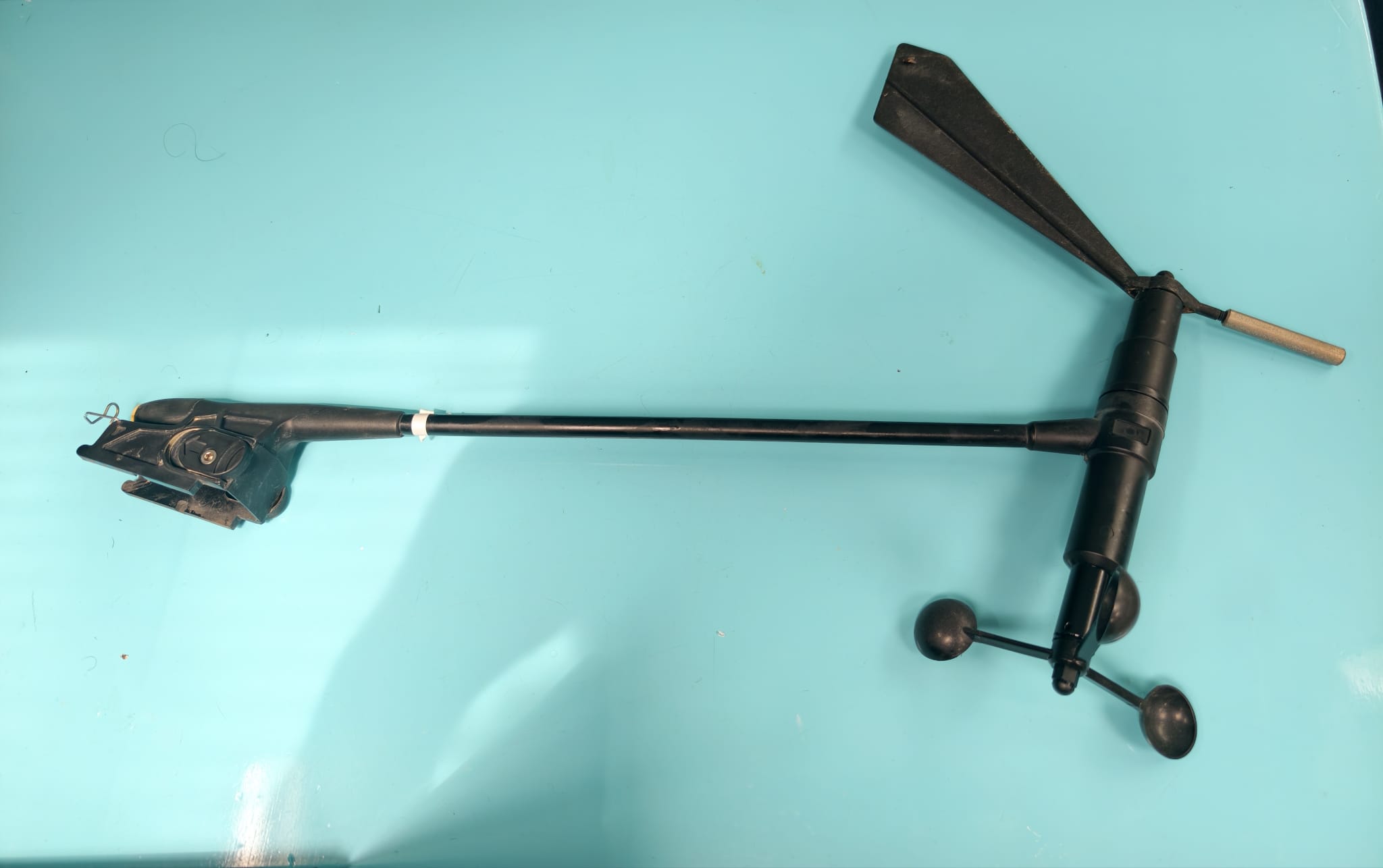
Then it’s Wim’s turn… he climbs up the main mast (while Sher is securing him with the main halyard at the safety harness) and takes down the wind set so he can replace the bearing. This is why the wind sensor hasn’t been registering the correct wind strength. Click here for details: Wind-Sensor-Bearing
Wim inspects the diesel tanks. We should do this annually, but we didn’t last year. To reach the inspection lids of the diesel tanks, we have to remove the decksalon floor and the middle water tank. We drain the water tank completely, Wim opens the inspection lids and sucks out the remaining water with the wet vac. The wet vac contains 20L of water and it’s filled twice. So, about 40L of water remains in the tank after the fresh water pump starts to suck air. We should remember this in an emergency in case we think we ran out of water… We still have 120L (3 tanks) after the pump stops draining. It will be hard to get out but when we’re dying of thirst every thing is possible…
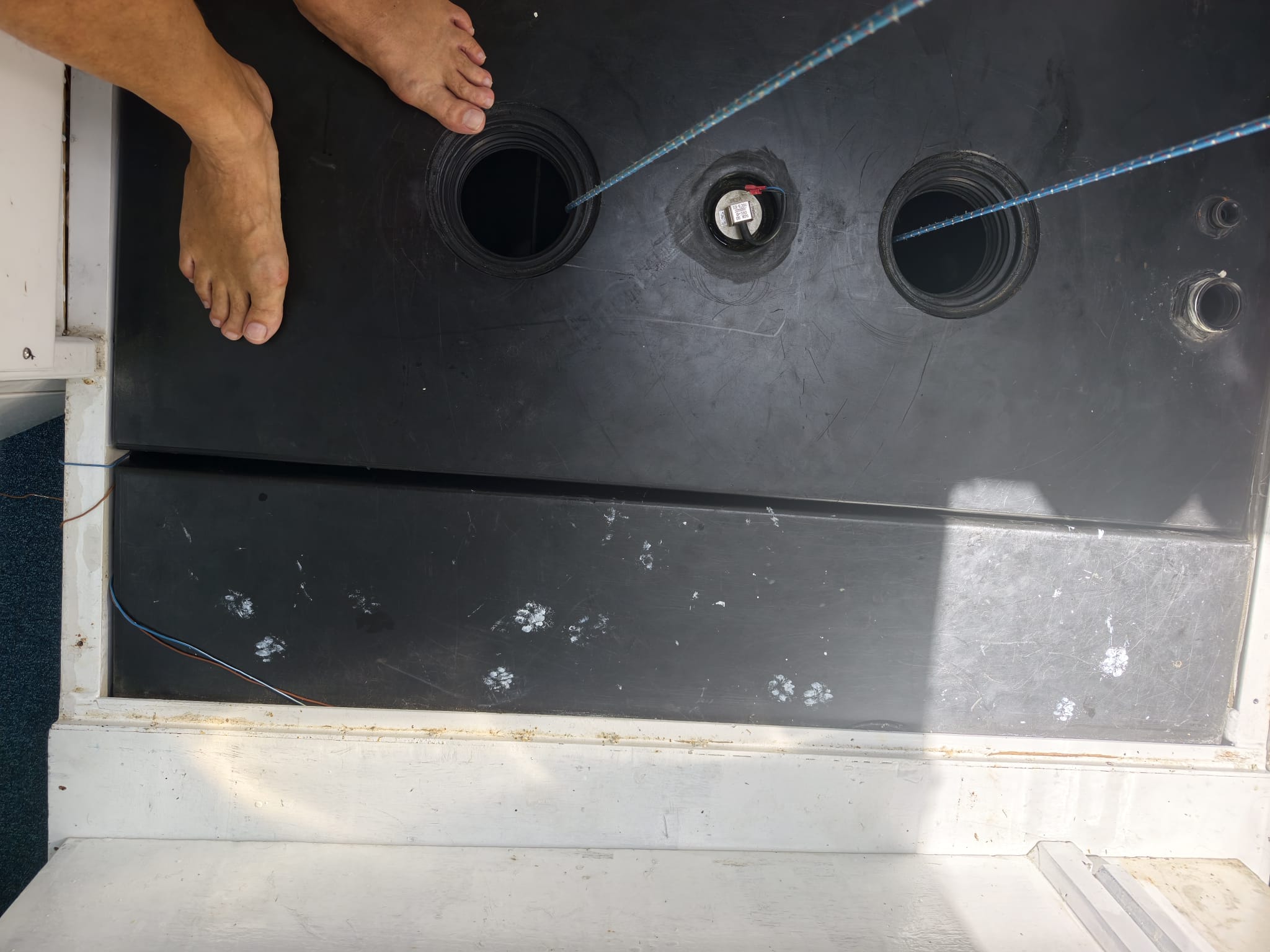
While Sher hoists the tank with the main halyard she’s laughing about the foot prints! Wim’s former cat walked over the wet paint…😅
Here we can see the diesel level sensor devices and the 2 inspection lids. They are positioned at the deepest point of the tanks, that’s where water will go.
After opening the inspection lids, Wim manually pumps out some diesel using a 60cm long extension tube to reach the bottom of the tank.
There’s no water at all. Only some dirty diesel caused by sediments and rust. That’s fine. This kind of dirt is filtered out long before it reaches Mighty Mitsu. Anyway, Wim pumps out a few liters of dirty diesel until clean diesel comes out of the hand pump.
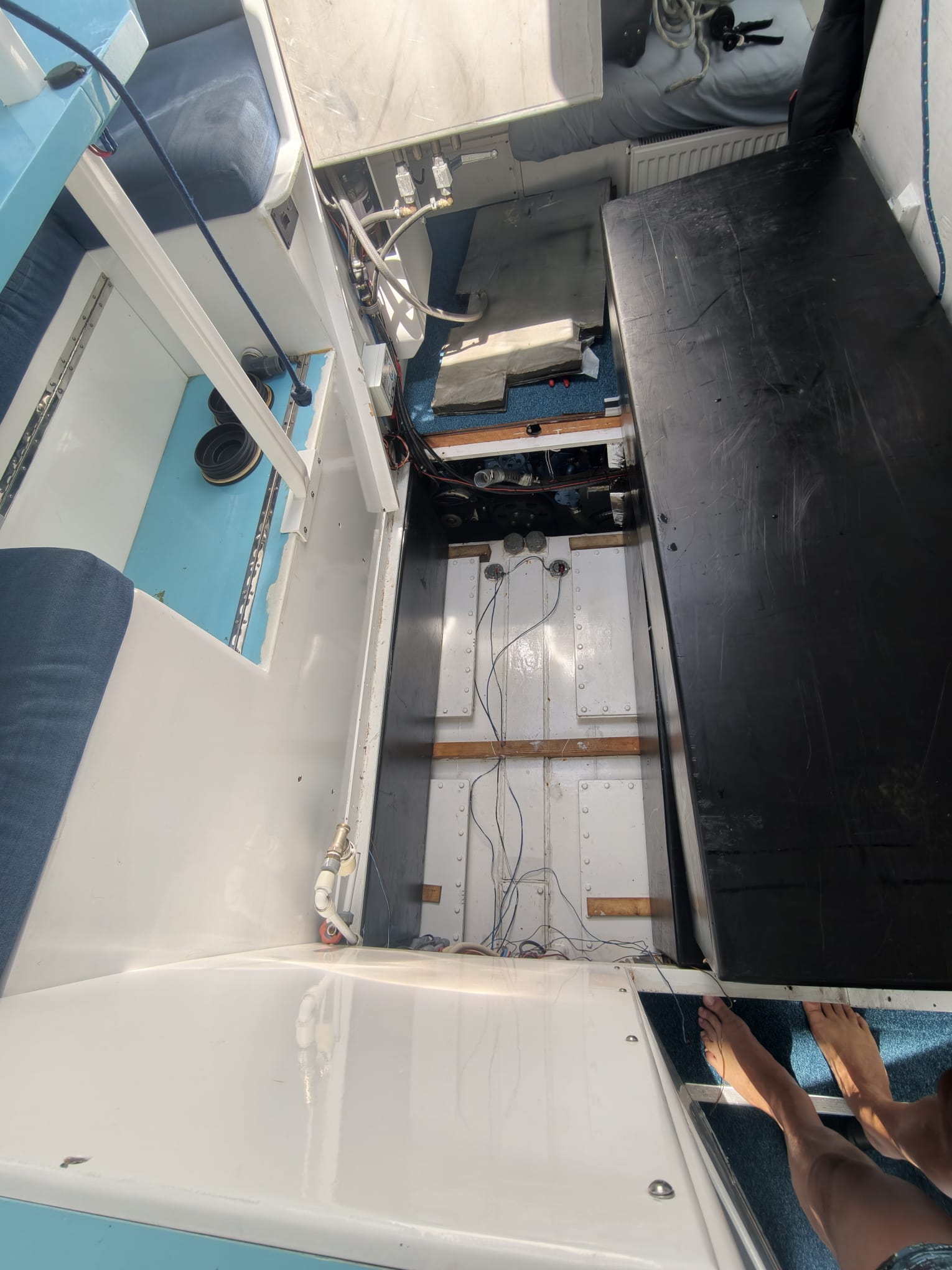
After that, Wim cleans everything, including the hard to reach bilge in front of the engine, we put back the middle water tank, the decksalon floor, the companion way stairs, the carpet, the heater. This took the entire day but it’s an important maintenance job.
All the joys of the cruising life and boat maintenance here in Cadiz continue in the next post: Cadiz – Part II…
The Captain’s Log – the complete story
Wind Sensor Bearing Replacement – Details
Diesel Tank Inspection – Details
June 6.
We decide to move to the bay near Cadiz. There’s swell from the west that enters this bay and we didn’t sleep well the last two nights. So, after some provisioning in the little supermarket in Puerto Sherry we lift anchor. There’s hardly any wind but it’s only 4 miles motoring.
Once we’re out of the bay we have a bigger swell than we expected. We roll heavily so we have to lower the centerboard. Once we get near the bridge the swell is gone.
We anchor in the shallow bay east of Cadiz, behind the bridge. After we drop the anchor we test the holding with the engine in reverse. Hm. It keeps dragging. We hoist it and try another spot. Again, it’s slowly dragging. It’s very soft, slimy mud with a lot of garbage in it. 3th try. Again we drag, on engine. In the wind, it holds us in place. Hm. Let’s give it some time to slowly dig in, that helps sometimes. Let’s have lunch first. And a siesta.
After siesta, we consider the options: there are no other anchorages here and the seabed will probably the same everywhere here. The only option is to go into a marina but we don’t like that idea. The wind has increased some and the current runs in the same direction. We are pulling firmly at the chain. The anchor seems to hold now. We decide to stay and keep a close watch on our position.
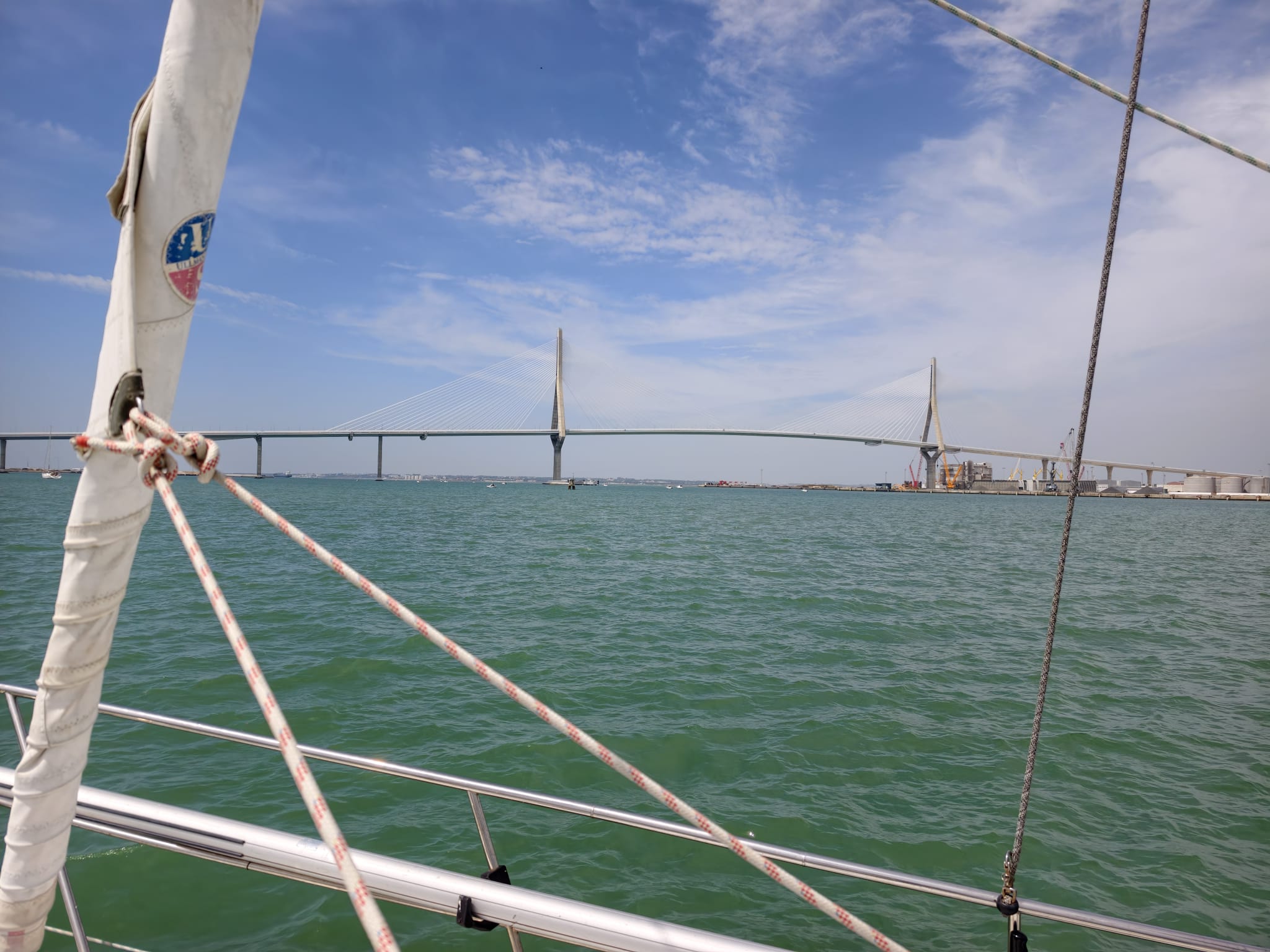
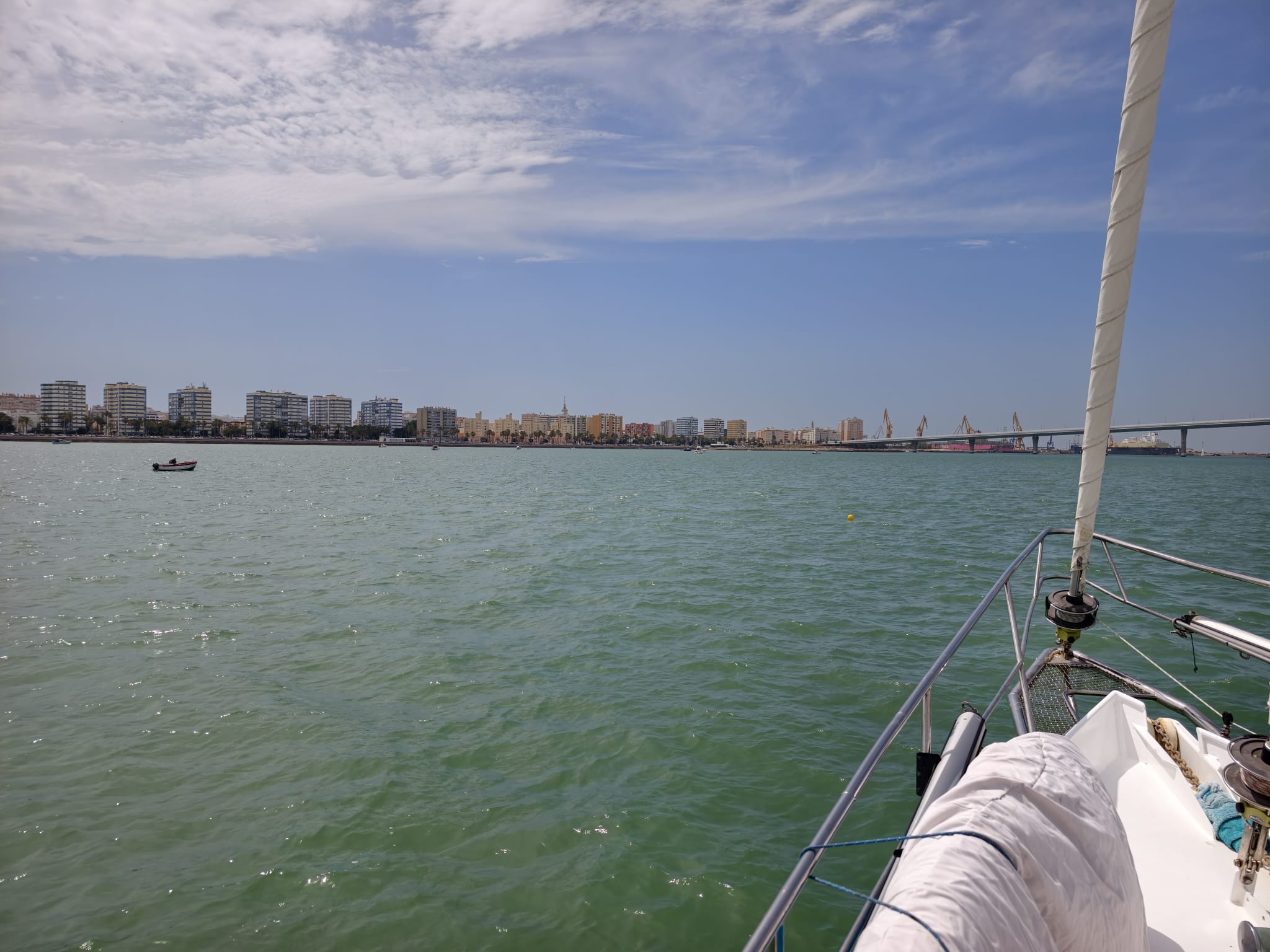
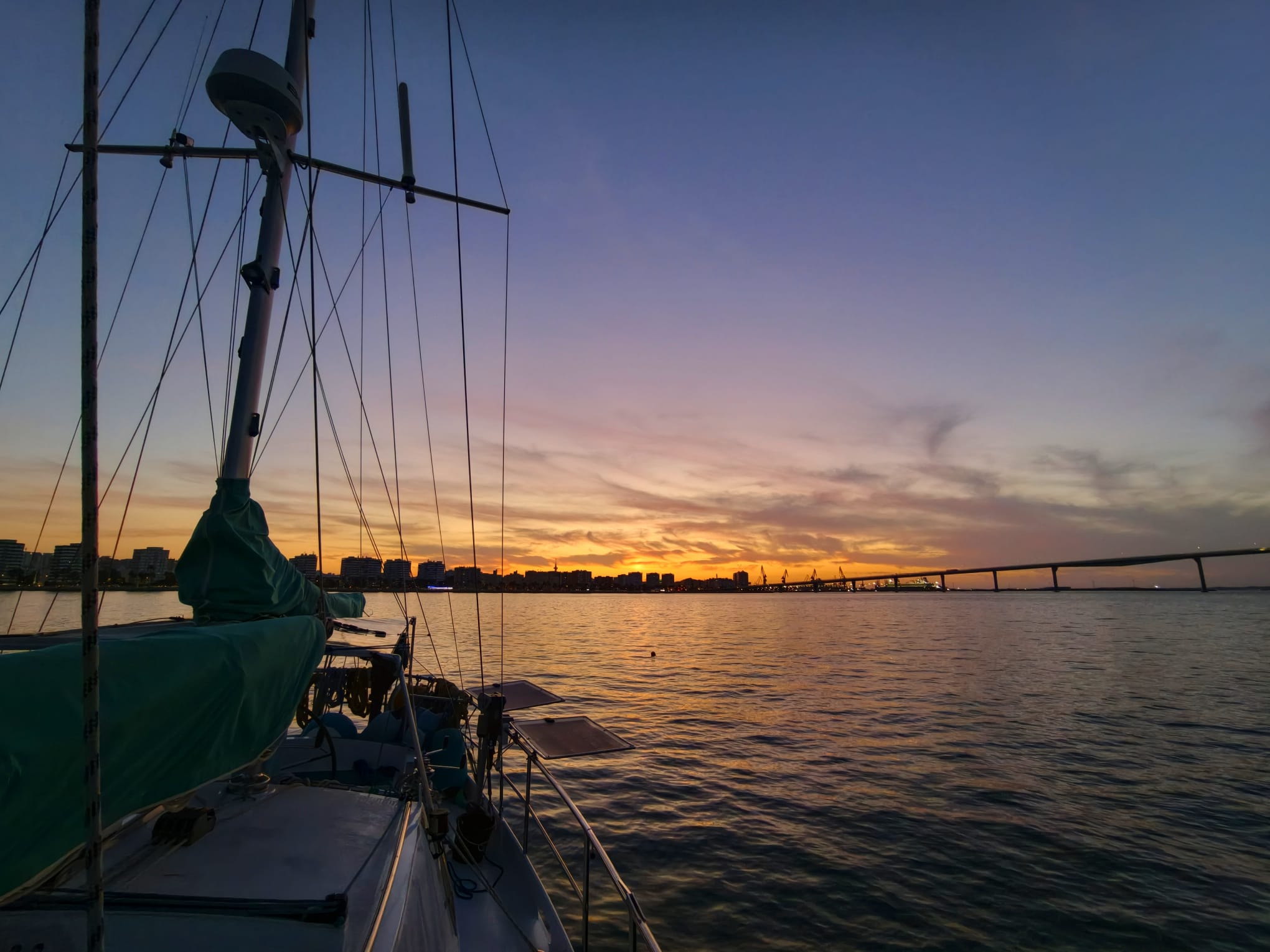
It’s a lovely afternoon and in the evening the wind dies down.
A beautiful sunset with a view at the impressive bridge.
We have a peaceful night without rocking like crazy, like the last 2 nights.
June 7.
The weather is lovely, clear skies and 25-30ºC every day.
Today we have a breeze from the south-east. Our wind speed sensor isn’t working well (it says around 6 knots) but we estimate 25 knots, gusts up till 30. In strong gusts we drag a bit. We keep a close watch on our position and 3-4 times we drag around 10m. Well, we have plenty of room here and as long as we don’t start drifting we should be okay.
The little yellow retriever line ball has a hard job 😅. It’s quite far away from us (around 40m) and it drowns at high tide 😅
We very happy with our new sturdy chain hook! Dione IV pulls strongly but it holds so nice. And we’re happy with the new bridle setup: these 2m Dyneema lines are great: almost no sounds from the chain. Even not when wind and current are opposite and we drift over our anchor.
June 8.
There’s a big street market on the boulevard and Sher wants to visit that and do some provisioning. We dinghy to a tiny stony beach near the small port and Sher jumps off the dinghy while Wim backs off. While Sher climbs the rocks to the boulevard a man with a walkie-talkie and a gun comes shouting at us: Prohibited! Go away! What an inhospitable rude asshole! A “Hijo de puta” we call that in Spanish (son of a whore). We dinghy along the boulevard and and the other end is a rocky place where Sher can jump off and climb to the road. Nearby is another little port and while Wim sails by, 2 men on a jetty (carrying guns) wave at him: go away! Hm. These “Hijos de puta” obviously have some criminal activity to hide… There’s a lot of drug trafficking here. We read about cargo ships shipping cocaine from South America to counties like Sierra Leone. In Sierra Leone the drugs are loaded in smaller cargo ships and they sail to the Spanish south coast (between Huelva and Gibraltar). There, the drug parcels are picked up by small boats and brought ashore here.
Anyway, we discover a nice small beach without “Hijos de puta” to pick Sher up in the afternoon 😀
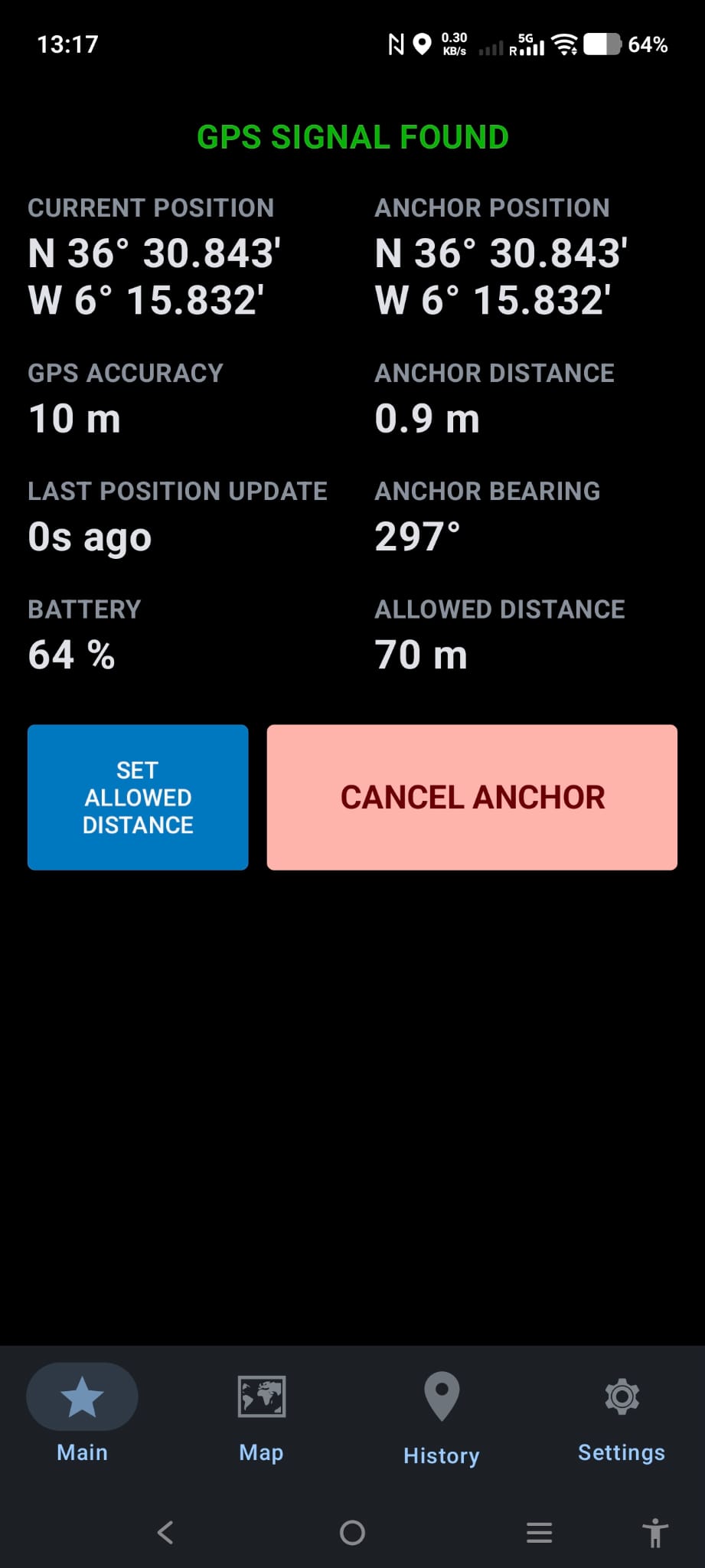
There’s a very light tidal current here, about half a knot. Combined with a light breeze from the opposite direction, that makes Dione IV floating over her anchor. Although we have 35m of chain at a depth of 3m out, there’s an anchor distance of 0,9m!
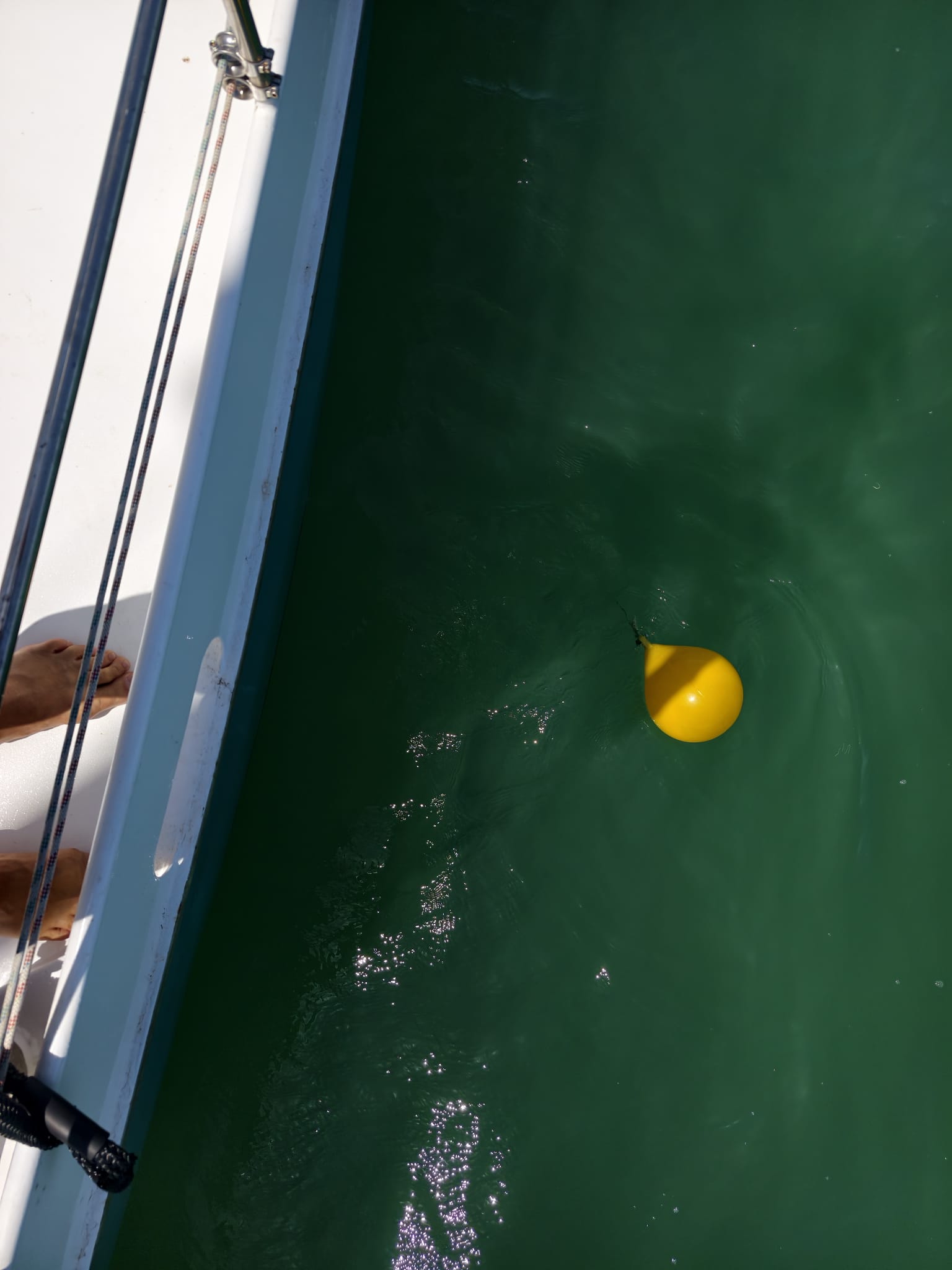
That’s right indeed! 😀 The yellow float is right on top of our anchor.
Meanwhile, there’s a lot of communication going on with Mito Solar about the positions of the solar panel connections. These connections have to match the holes in the roof but there seem to be a number of variables… So, while Mito is measuring their positions…
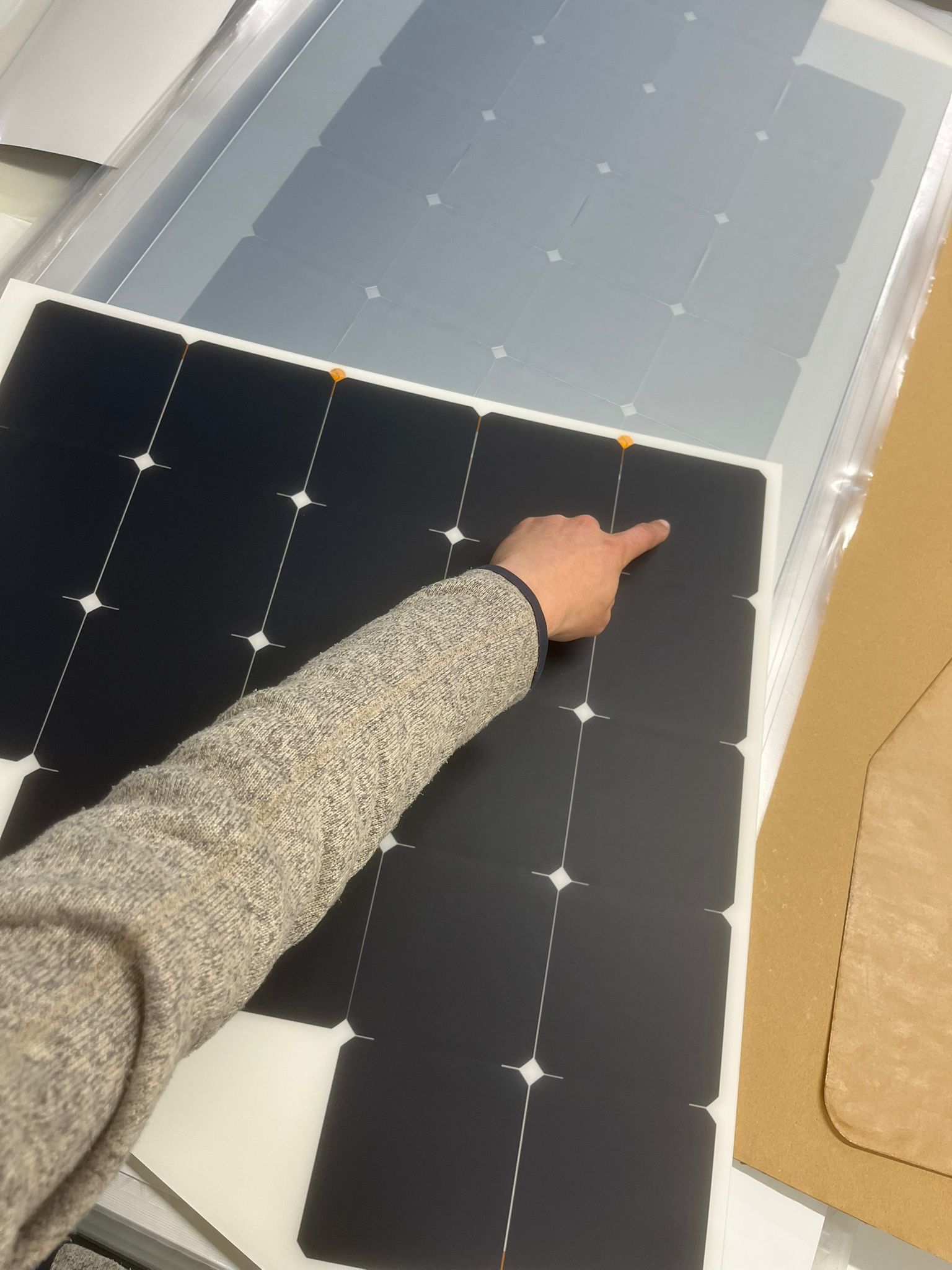
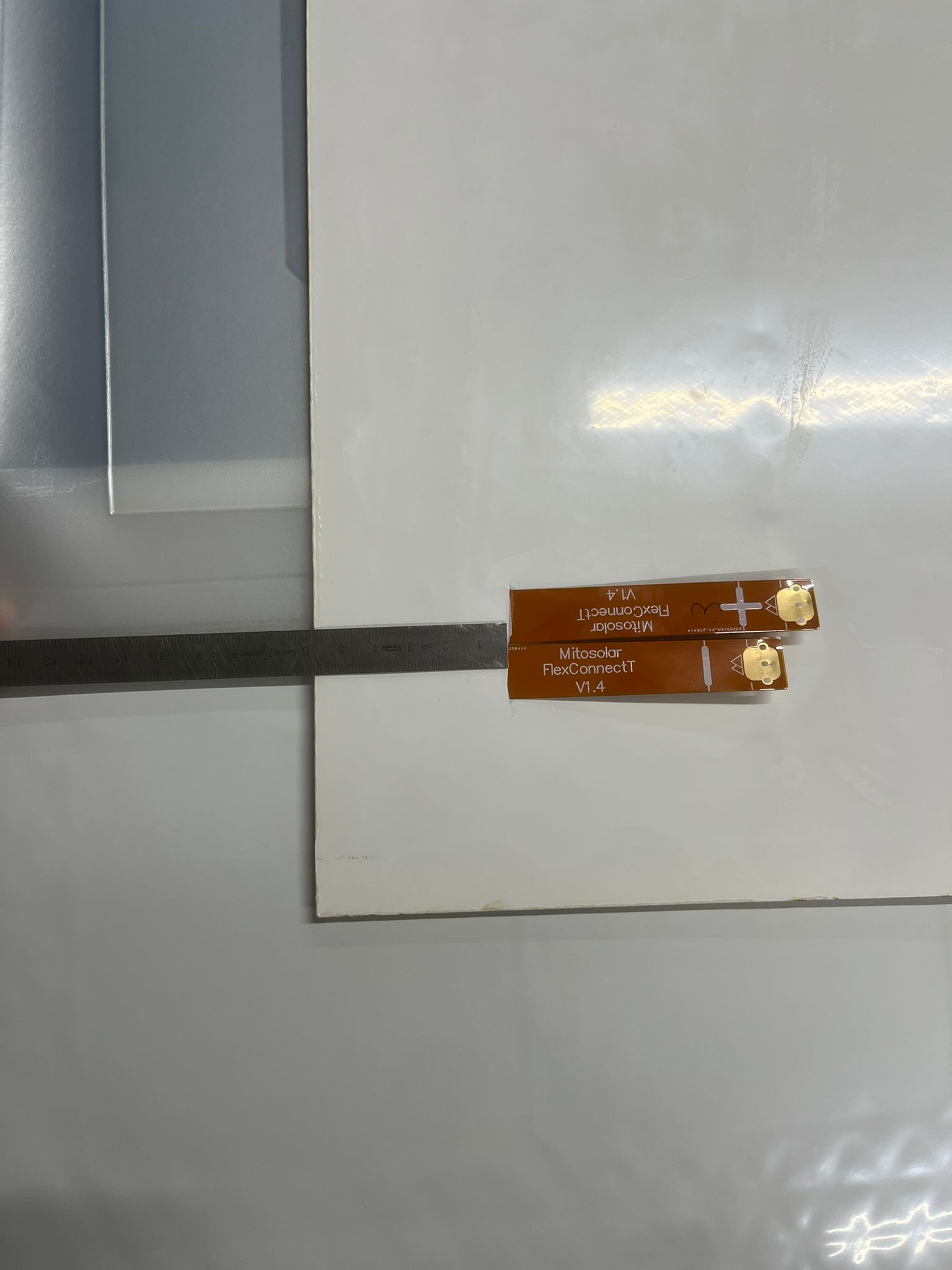
… Wim cross-checks the positions at the old panels.
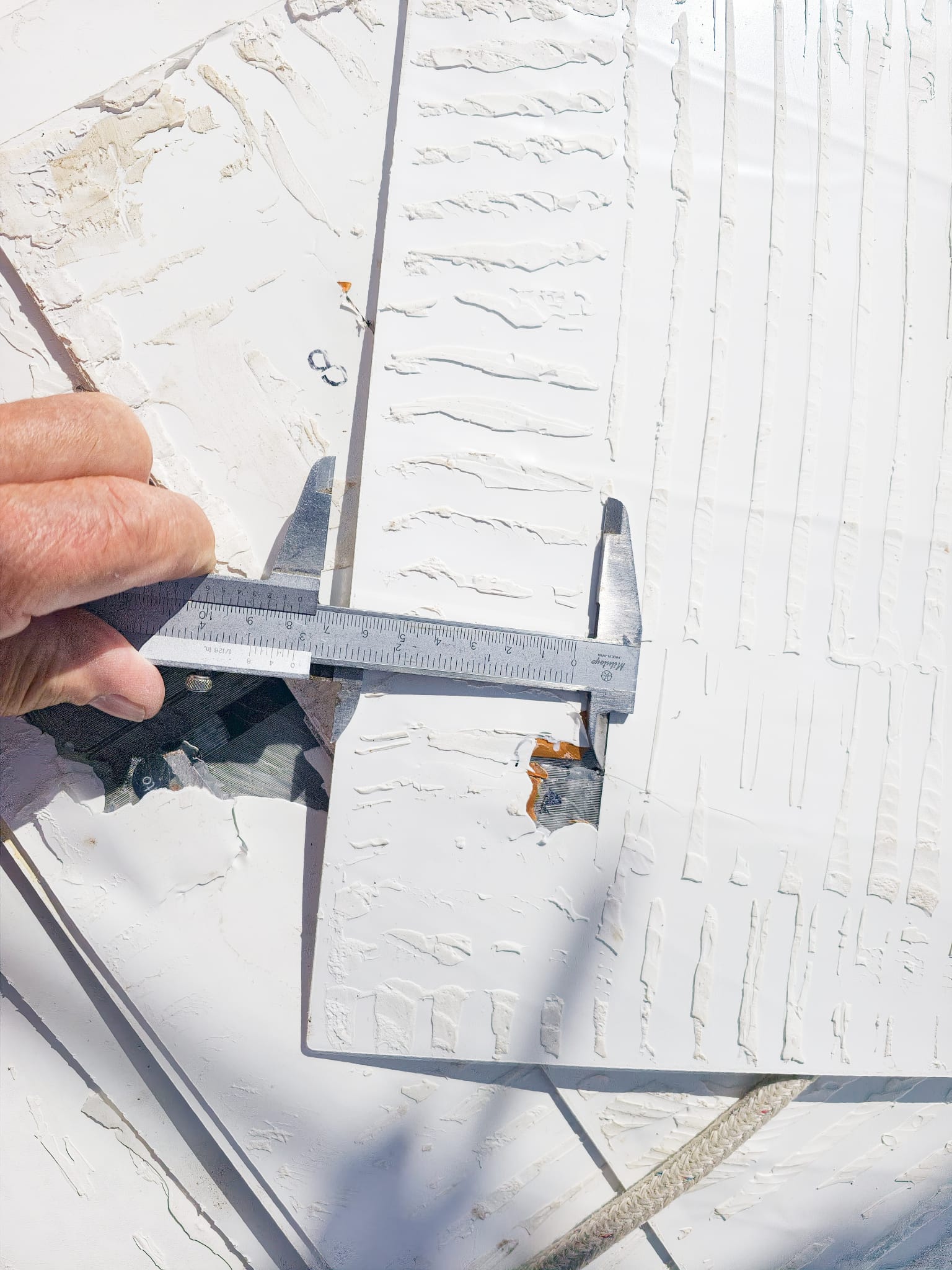
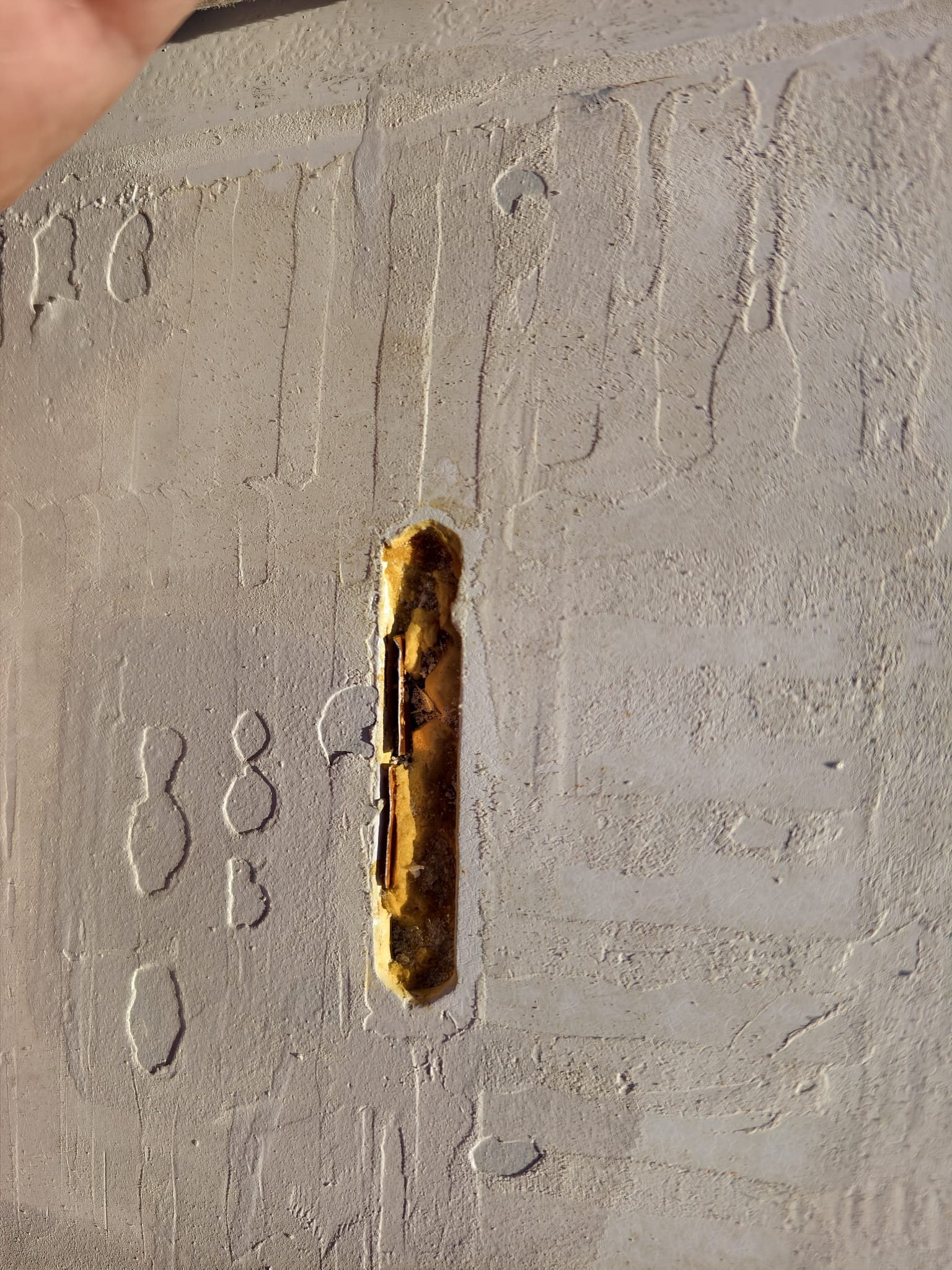
The conclusion is, we will probably have some differences but they shouldn’t be major. We’ll see…🫡
June 9.
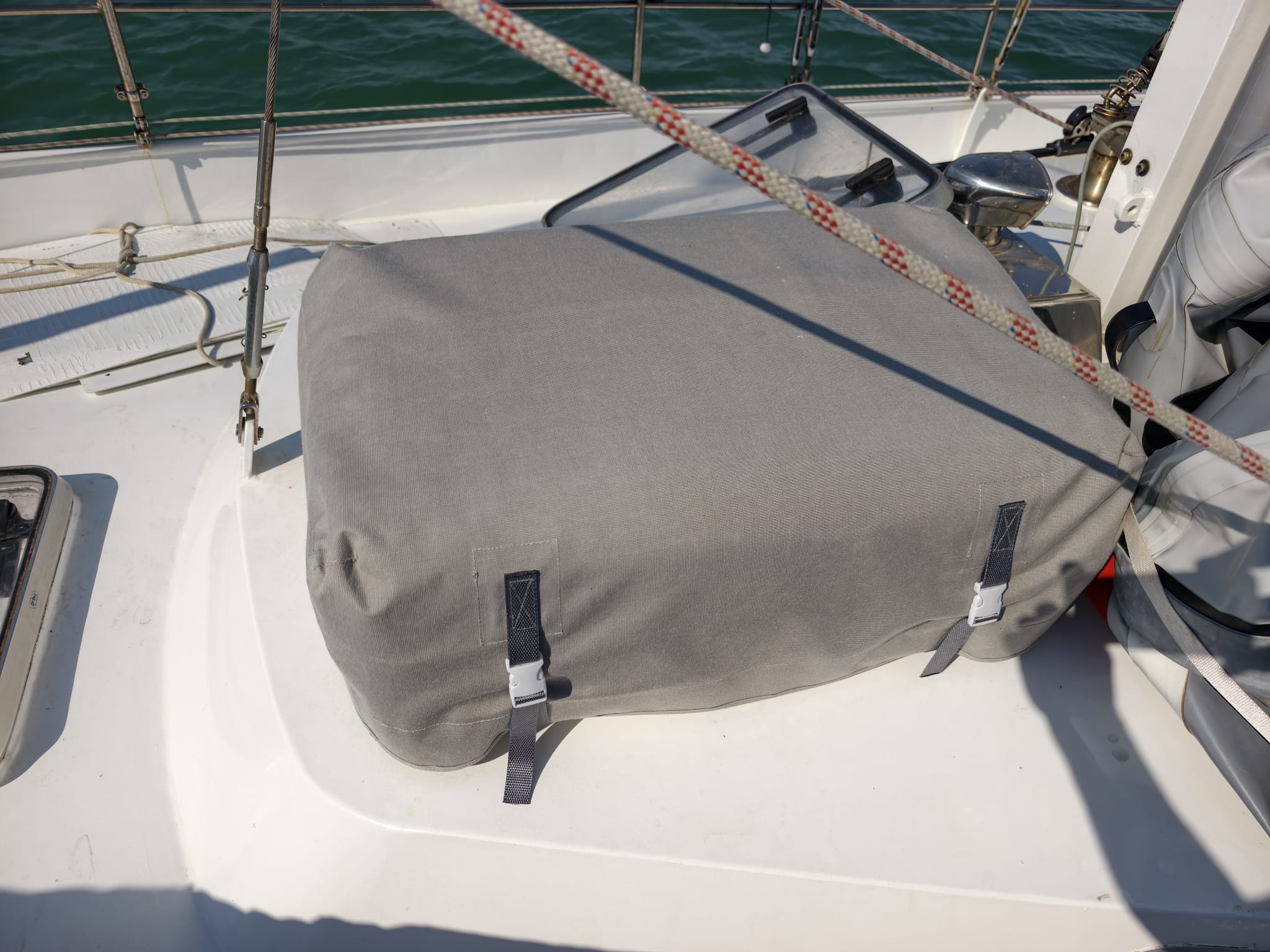
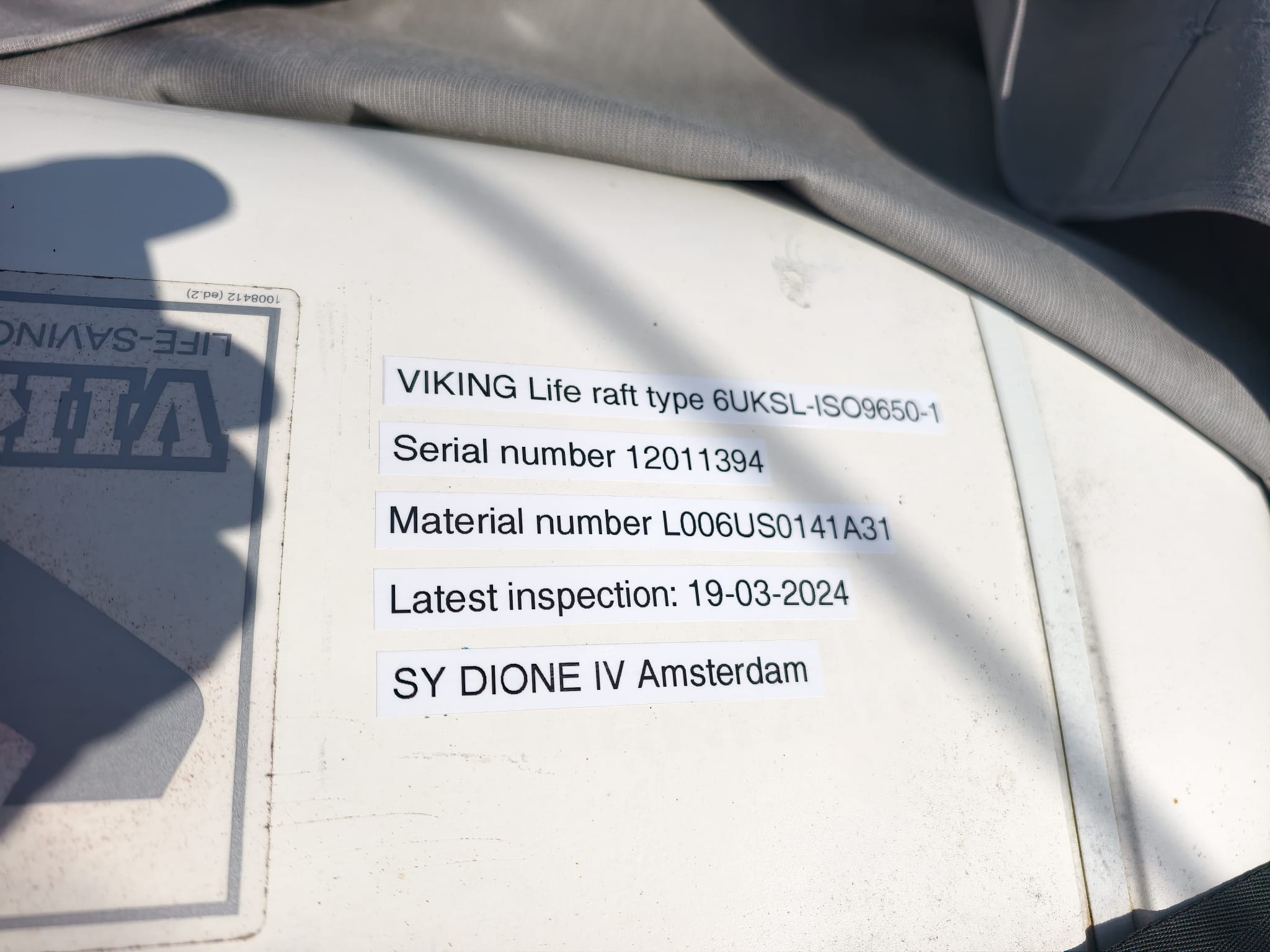
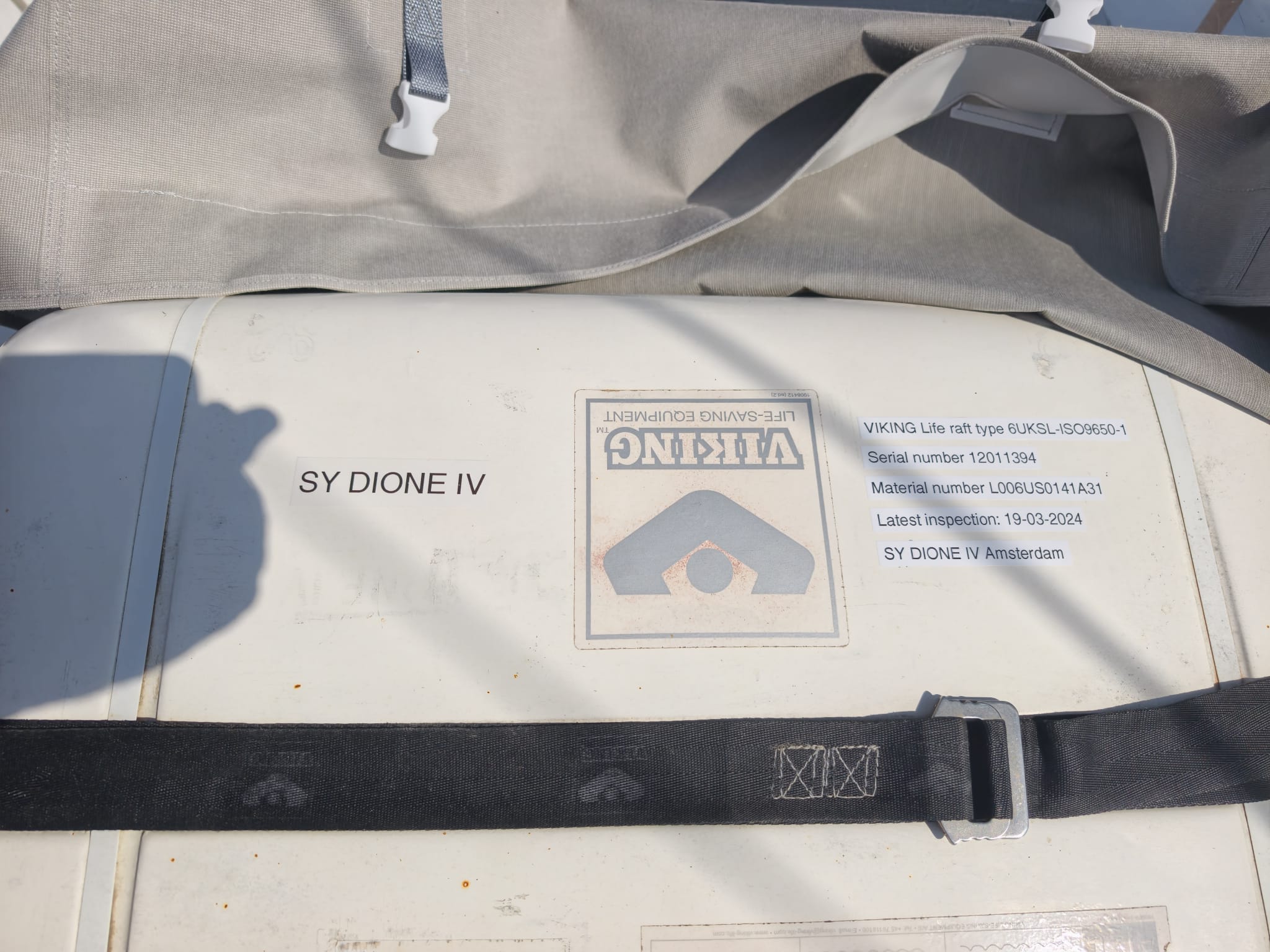
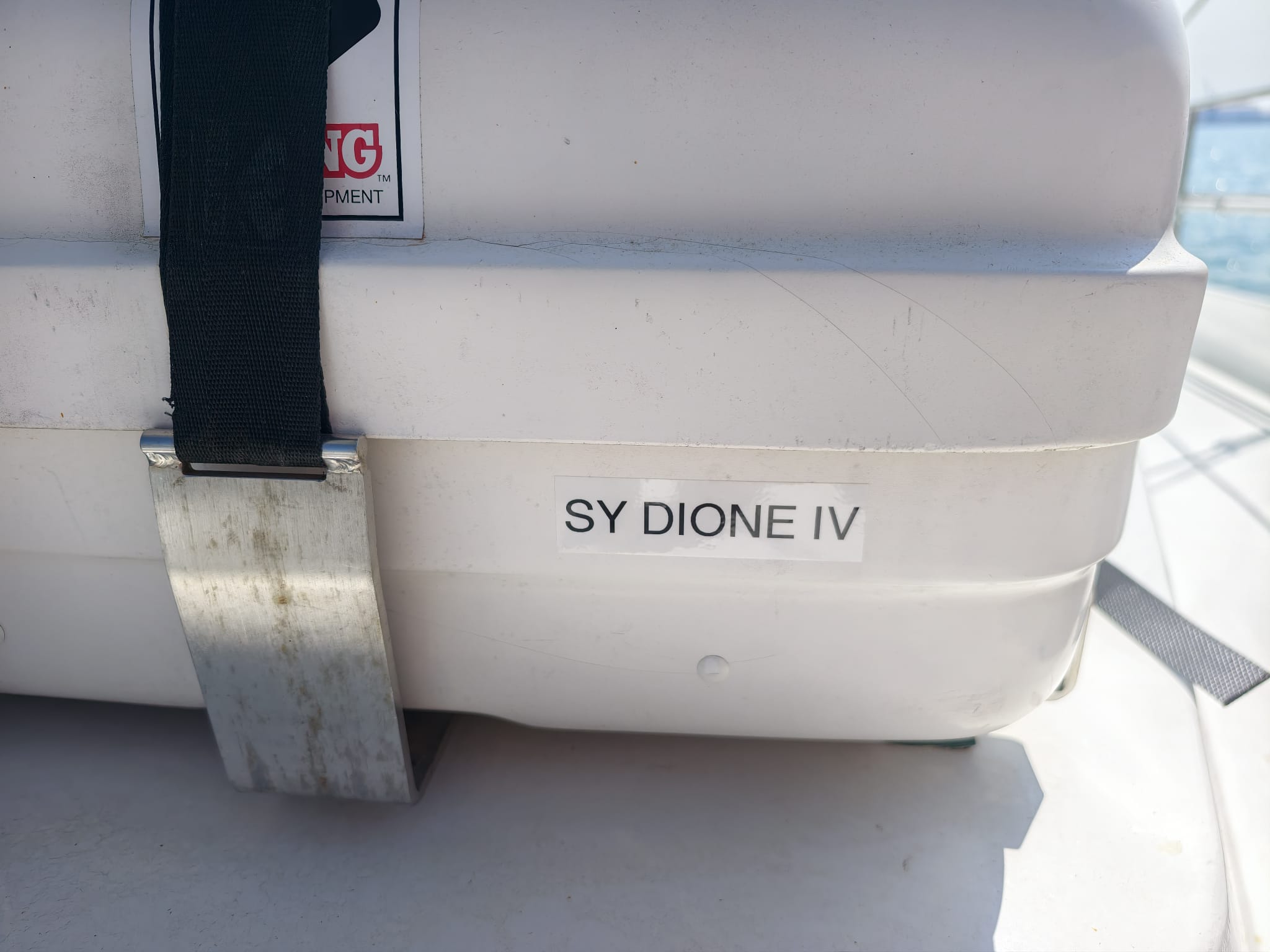
When we discovered the labels on our life raft were completely gone and Sher made a beautiful cover for it, we requested new stickers at Viking’s. Well, after a number of weeks and a number of emails they said the labels can only be made at an inspection 😤. Which is next year, for our life raft.
But these labels are important. For authorities checking our safety devices, for eventually (hopefully never) SAR actors and for ourselves. So, we decide to print them ourselves.
Tomorrow, we will go to the marina in Cadiz. Although the weather has been really lovely for the past weeks, for the next 3 days strong winds (up to 40 knots) are forecasted and we already know that the holding isn’t good here. So today we clean the dinghy covers, clean the dinghy itself , dry everything and store it on deck.
While Wim is doing most of that, Sher enjoys here newly bought fabric 😃
June 10.
At the end of the morning we hoist our anchor. The entire 40m of chain is full of mud and it takes quite a while clean that, using the fresh water hose.
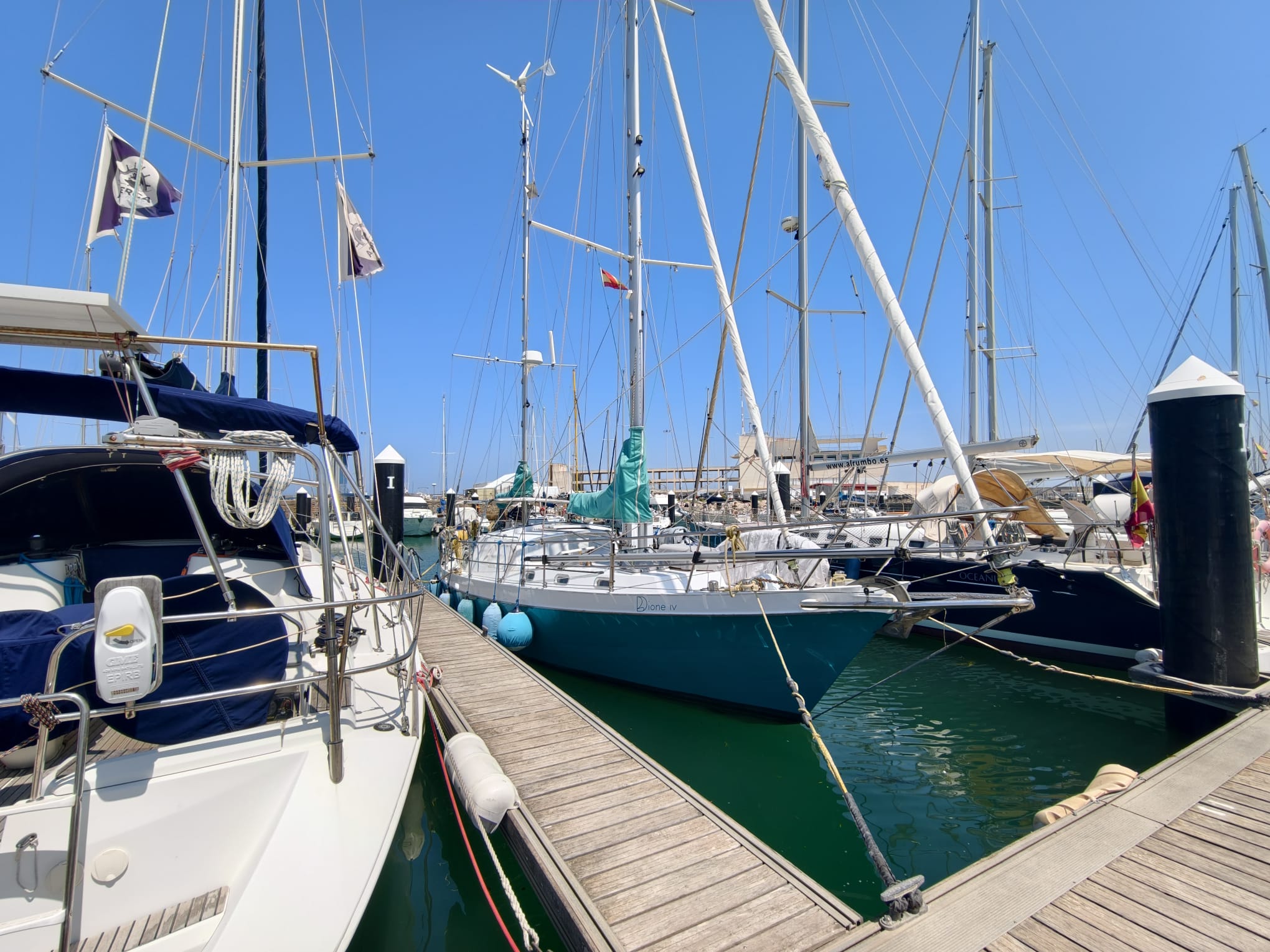
Puerto America is just around the corner after the bridge so half an hour later we are moored.
Since we’ll be in the marina for some time, we can order some things and have it delivered there. Although the marina office doesn’t want to receive packages for us we can can have stuff delivered at pick-up centers in Cadiz.
We have been researching a backup communication device in case we can’t make an SSB connection (short wave radio for long range communication) at the ocean (when we’re out of reach from mobile networks). After comparing a lot of possibilities (reliability, costs) we have decided to go for a “Zoleo” device. It’s a low cost, text only, satellite transponder. It uses the Iridium satellite network, one of the oldest and most reliable networks (mostly used by professional shipping).
We’ve ordered it from Amazon and we pick it up at a small shop with an Amazon counter in the old town of Cadiz.
We activate it, program it and send some test messages to Wim’s sister. She, and Sher’s friend Michele, will be our “Shore-captains” when we’re on an ocean crossing.
It works perfect!
The main reason for going into this marina is a storm coming up. Well, during the night it starts blowing 35 knots from the east. There are some wind waves rolling into the marina that make us rock a bit but it’s nothing bad.
June 12.
With Tom & Marcia from the boat “Bird Song”, which is in the marina, too, we take the train to Jerez. Sher has booked a tour and Sherry tasting at a big Sherry house: Lustau. It’s an interesting tour and we taste some really special Sherry’s but both the tour and the Sherry’s (especially comparing price-performance) don’t really impress us.
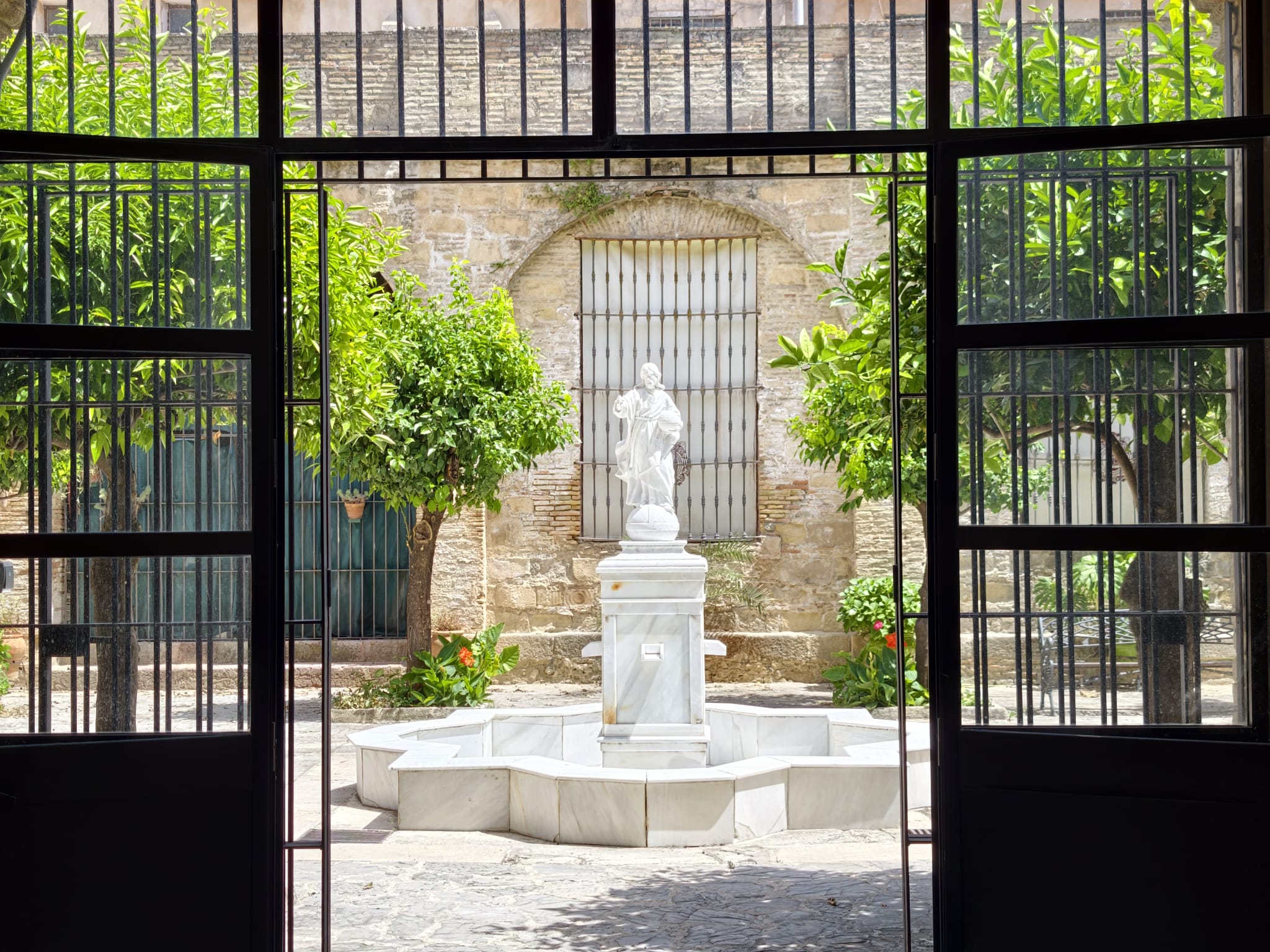
After a delicious tapas lunch we walk through the city of Jerez and visit the beautiful cathedral.
It’s another very windy night. There are wind gusts up to 40 knots from the east.
June 14.
A BIG neighbor: 80m long rescue vessel “Clara Campoamor”. Wim speaks to one of the marineros from Puerto America. The guy proudly says she’s the jewel in the crown of the Spanish rescue organization. She’s been in Cadiz for maintenance and they are practicing, testing and calibrating now. She has 4 big engines and a computerized positioning system that can keep her positioned in any kind of weather without anchoring.
June 15.
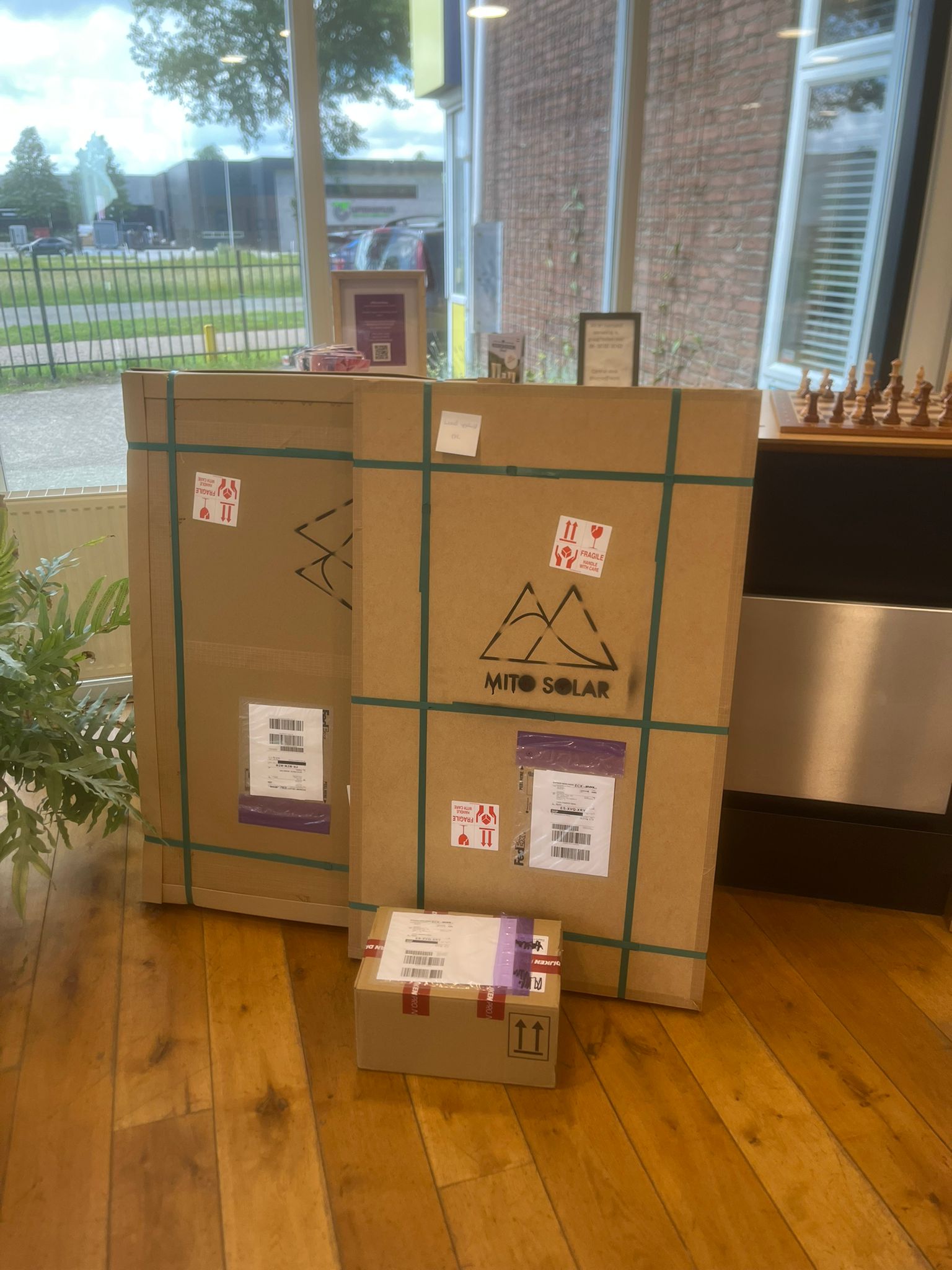
Yay! Our new solar panels are ready for transport at Mito Solar!
We’ve ordered 2 small folding solar panels on Amazon. They will be part of the equipment that will be in the grab bag to take into the life raft in an emergency at the ocean. They can charge a USB device. We test ‘m in the sun: they charge a phone by 20% per hour.
For instance, charge the Zoleo emergency device.
They were sold as IP68 (fully waterproof). Well, as usual, the Chinese definition of waterproof is very different from ours: This USB port and the junction box (which contains electronics to convert solar power to 5v, 3A) is fully open! 👎🏻👎🏻 And if we use it on the top of our life raft is very likely that it will get sprayed by sea water. That will kill it instantly.
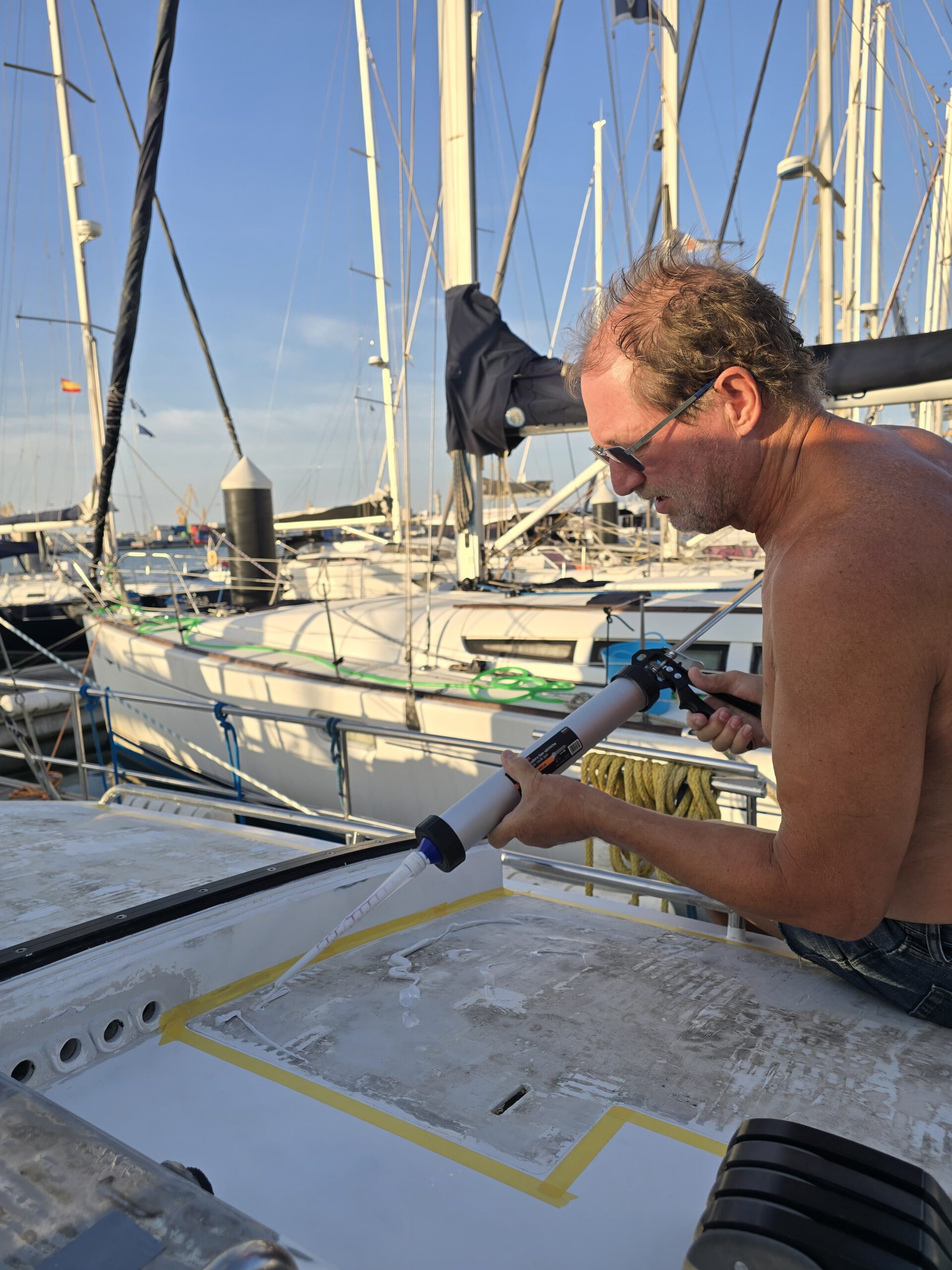
So, we order a 3m USB cable and fix it and seal it with the electronic protection compound that we have. It will need many layers. 2 layers a day.
June 16.
Engine maintenance. Mighty Mitsu has done 200 hours since last oil change in Viveiro so he gets fresh oil, oil filter, fuel filter and valve play check.
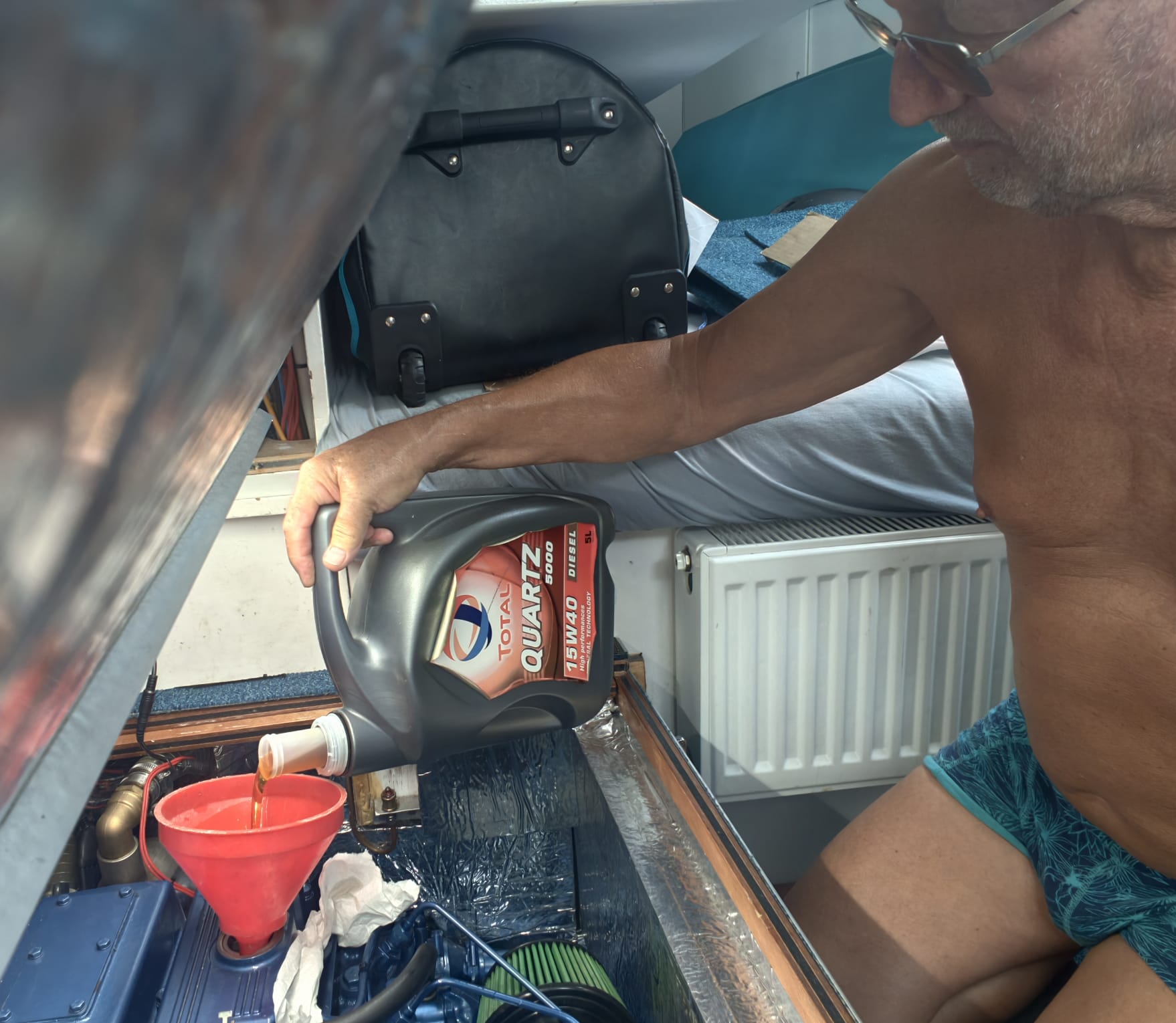
Wim bought good quality mineral oil in Gelves.
The sea water strainer replaced and the transparent lid replaced.
June 17.
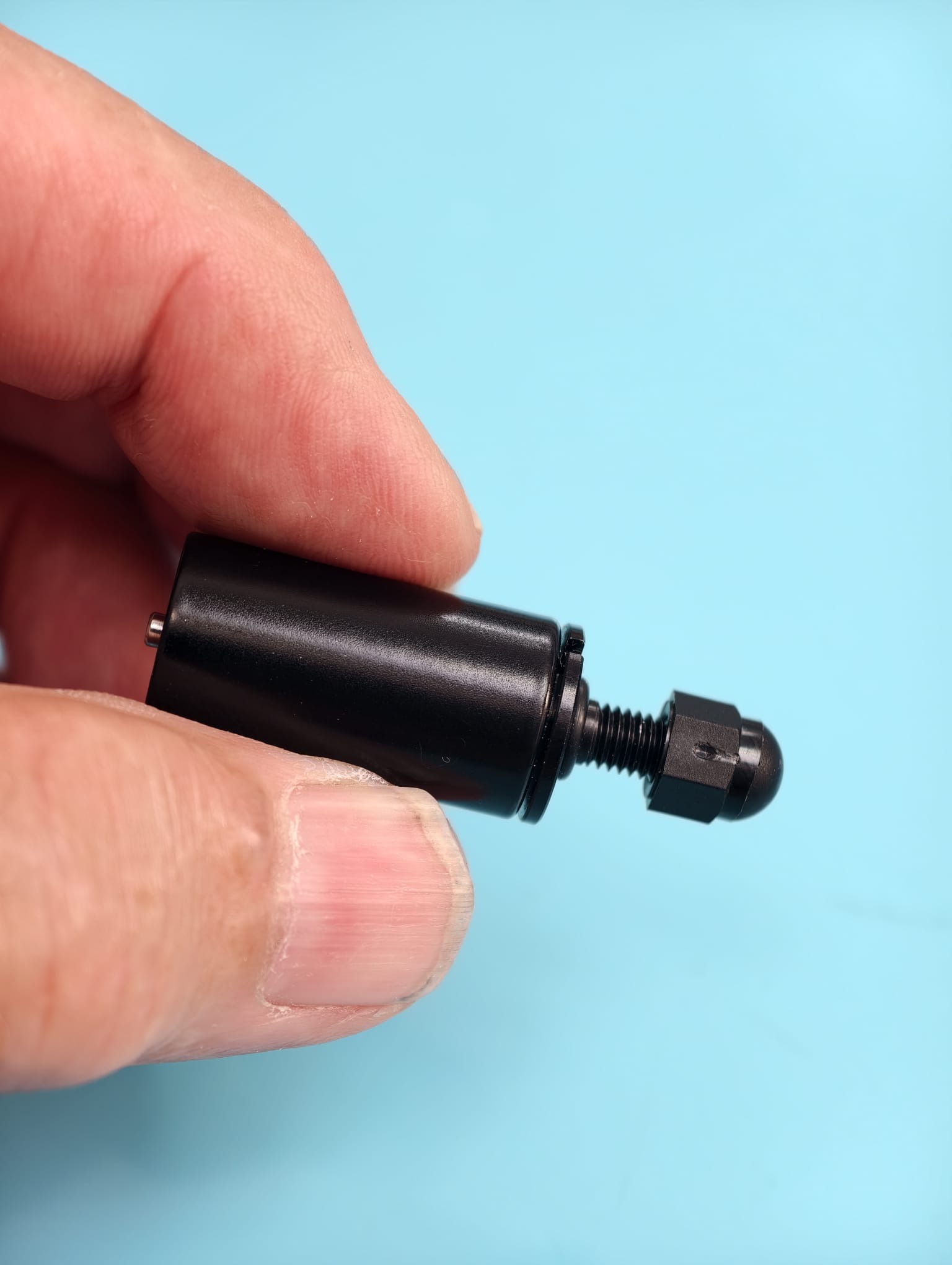
We’ve ordered a new bearing for the wind sensor. We found it at Comptoir Nautique in France and it has been sent to a book shop in the old town of Cadiz (a DPD counter). It’s a tiny piece for €100! Crazy. But a new wind set is a lot more expensive.
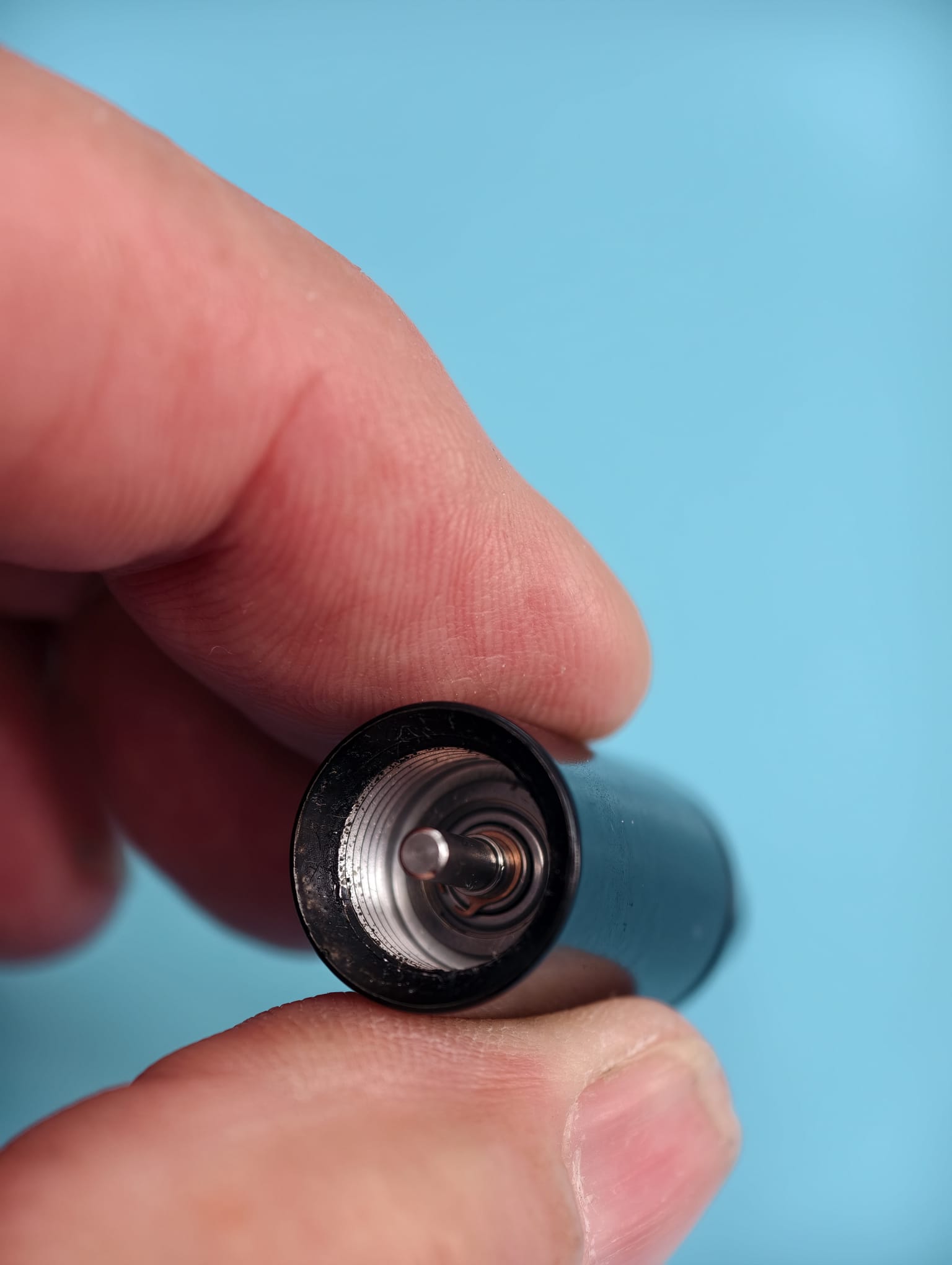
It has tiny little bearings.
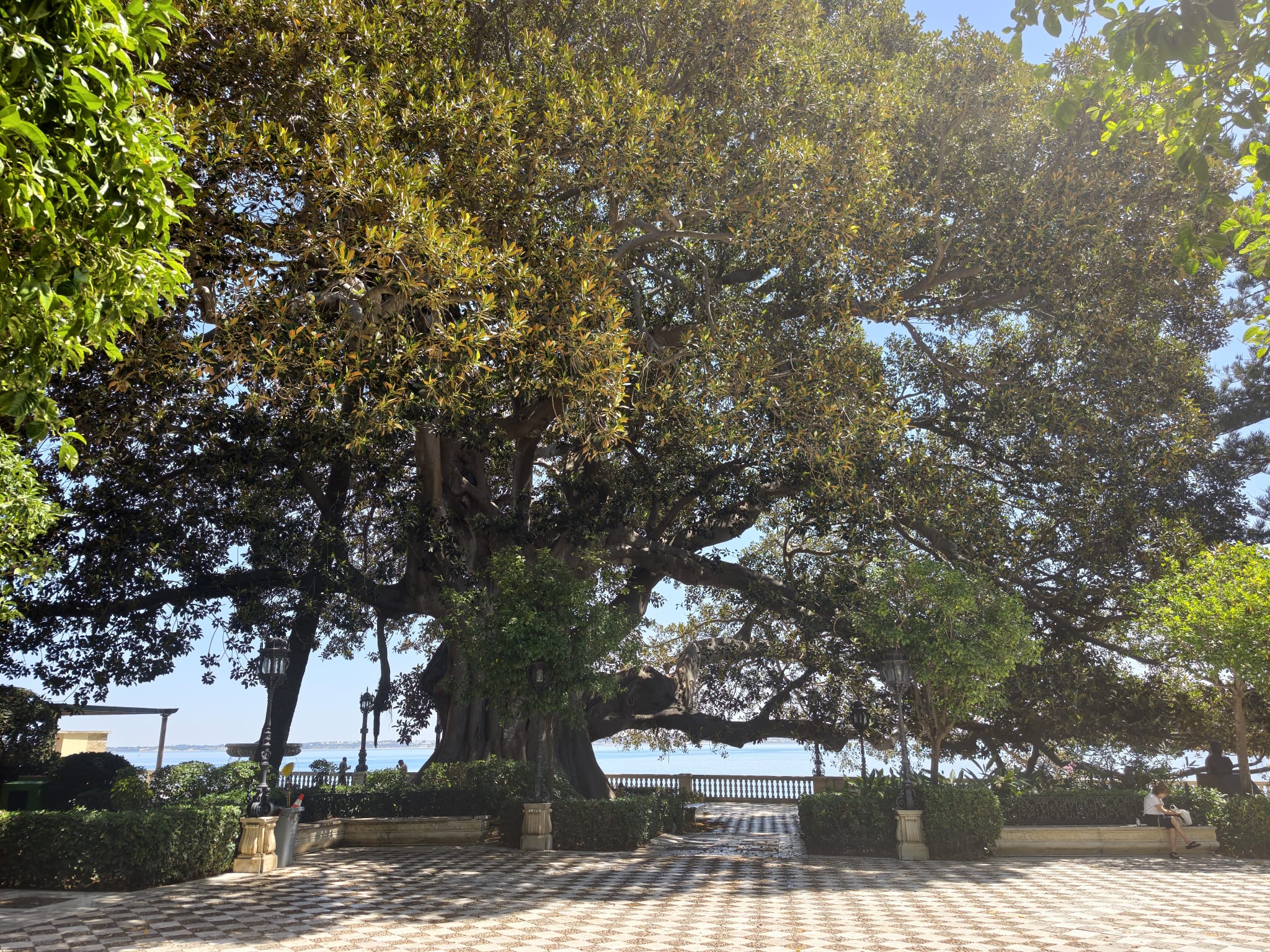
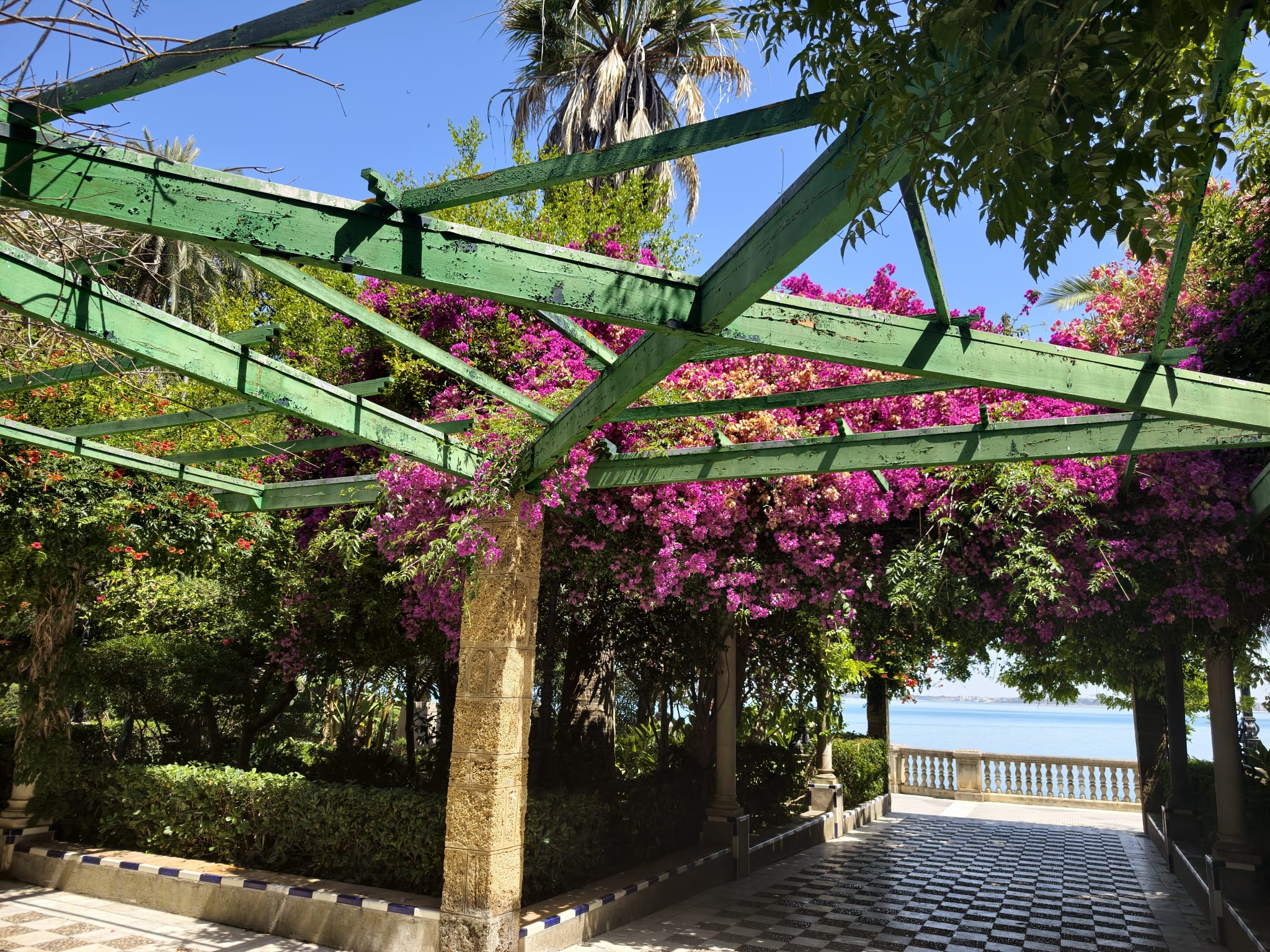
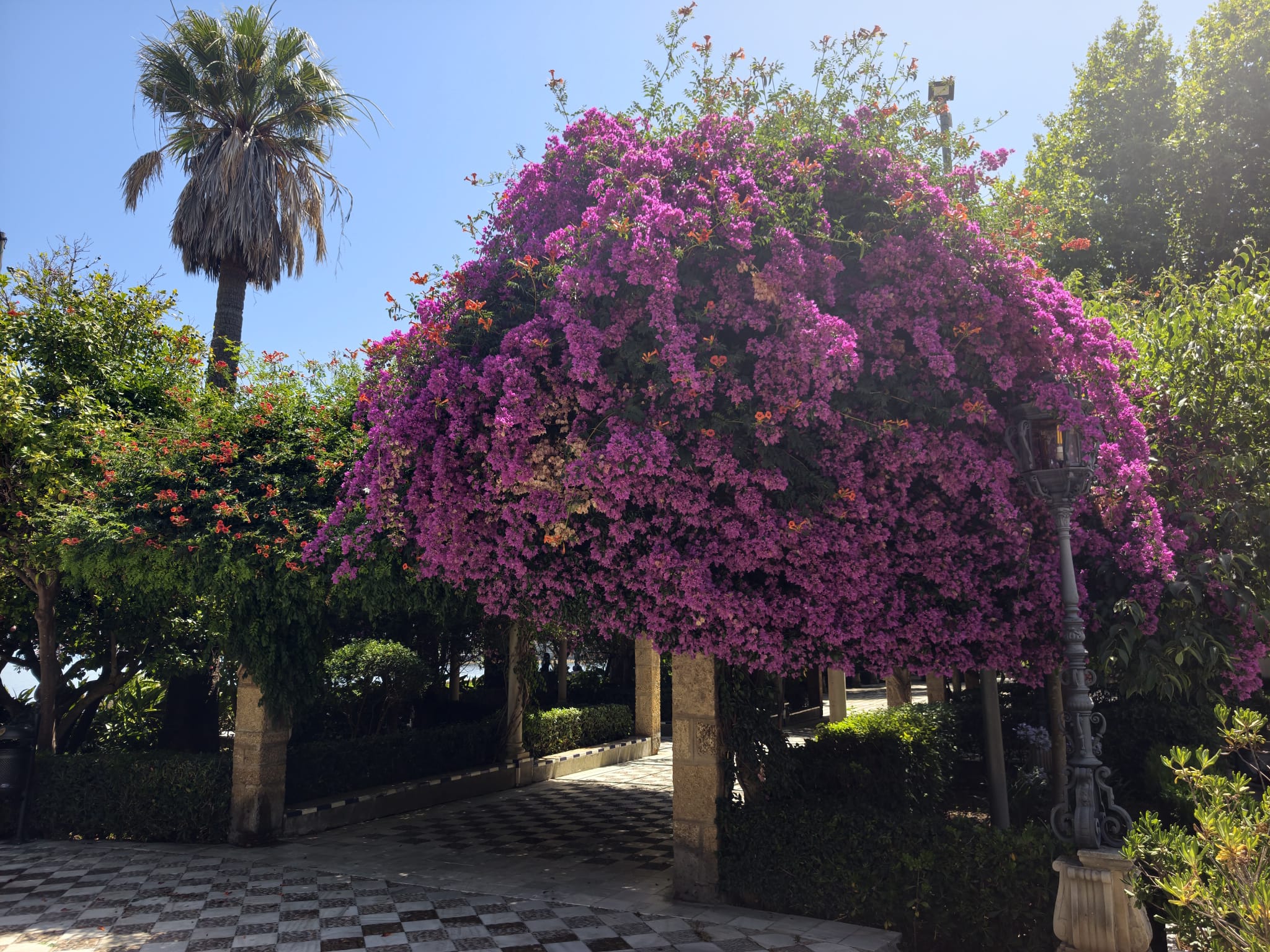
Wim goes for a scooter ride to the book shop in the old town. It’s nice ride, the city is really beautiful!
June 18.
We receive a message that the solar panels are ready for pick up at the DHL warehouse in Puerto Real. That’s 20 minutes by car. It’s a big package so we rent a car to collect the package and while we have the car we’ll go to Mar 7 in Sanlucar de Barrameda to buy some more of their delicious sherry.
But first, Wim hoists Sher in the bosun chair to the Yankee sail sheets. The sheets show some wear from 10 years of use and we’ll have ‘m replaced. We take one of the sail sheets off to bring it to the little chandler here to have the same length.
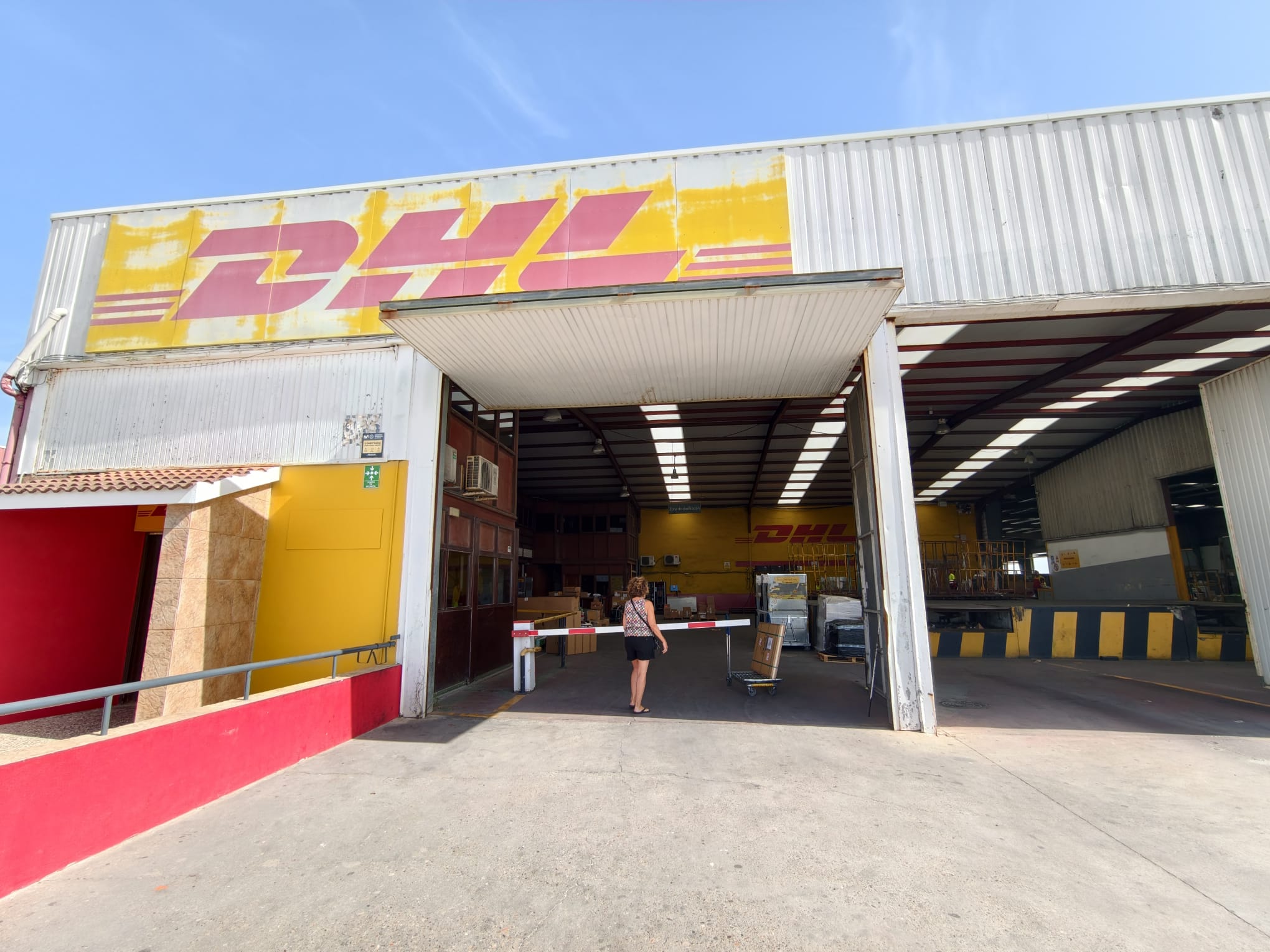
Then, We pick up the car at Cadiz train station and drive to the DHL warehouse in Puerto Real.
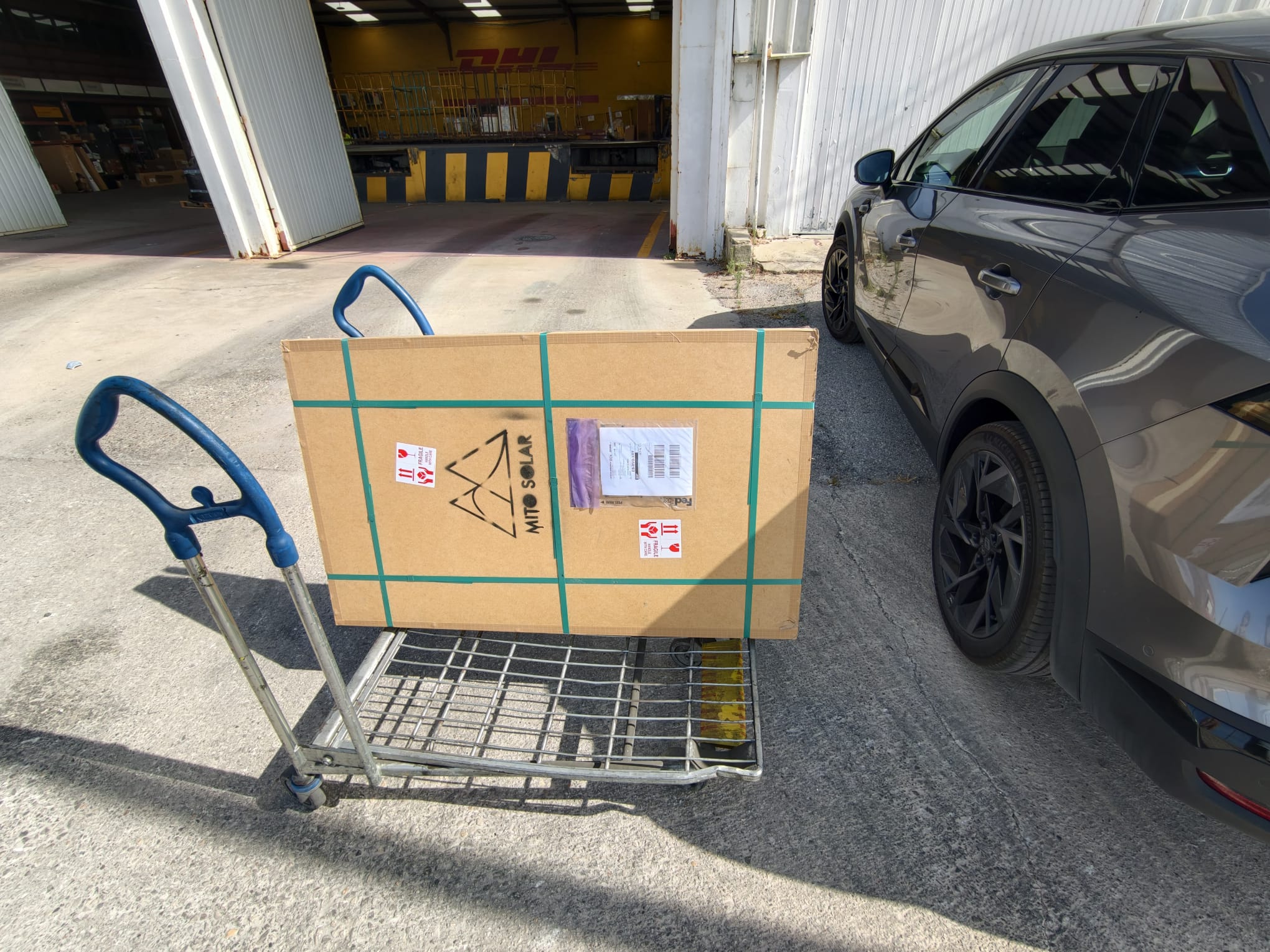
There they are! That went quick and smooth!
That is not to say for the box of sealant… That’s still on hold in Amsterdam. Suspected dangerous goods… which is not. But Mito Solar has to prove that with documents. This is going to take time…😕
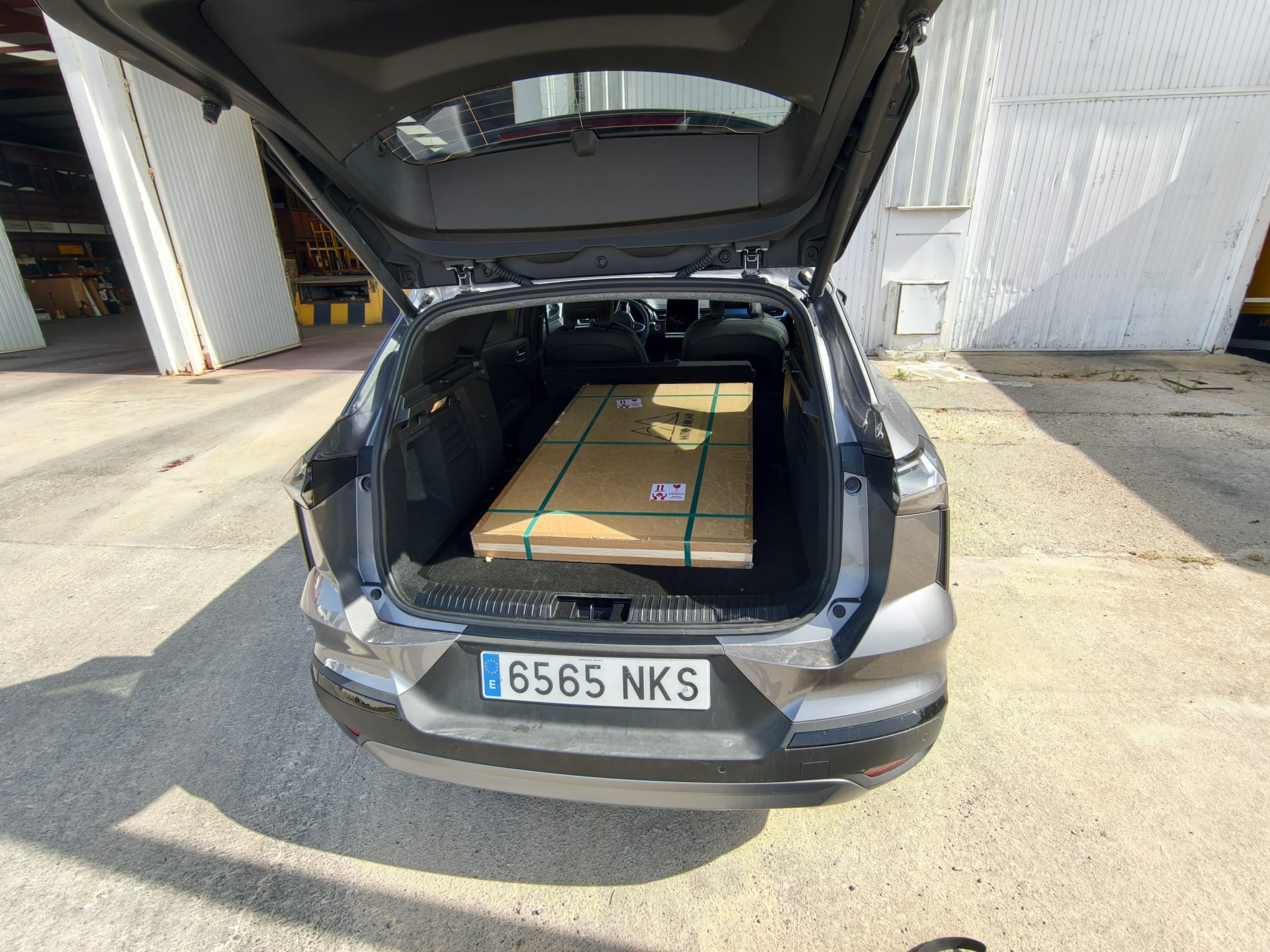
And it fits in the car 😃
After that, we drive to Sanlucar de Barrameda, buy some sherry and have a delicious tapas lunch in a local cafe.
We finish the cask of Moscatel! We get the last drips 😅
By the end of the afternoon we’re back on Dione IV and we unpack the solar panels. They’re very well packed and so, they’re in great shape 🙂
After about 20 layers of electronic silicone sealant, the little solar panels are really IP68 👊🏻. Let’s translate that for our Chinese readers: 😂 IP68 級防塵防水 😂
We test ‘m again in the full sun and they charge like a charm.
June 19.
Now that the new solar panels are here, we can try and fit them. Wim opens the holes in the ceiling (foam covered with filler) where the electrical connections are.
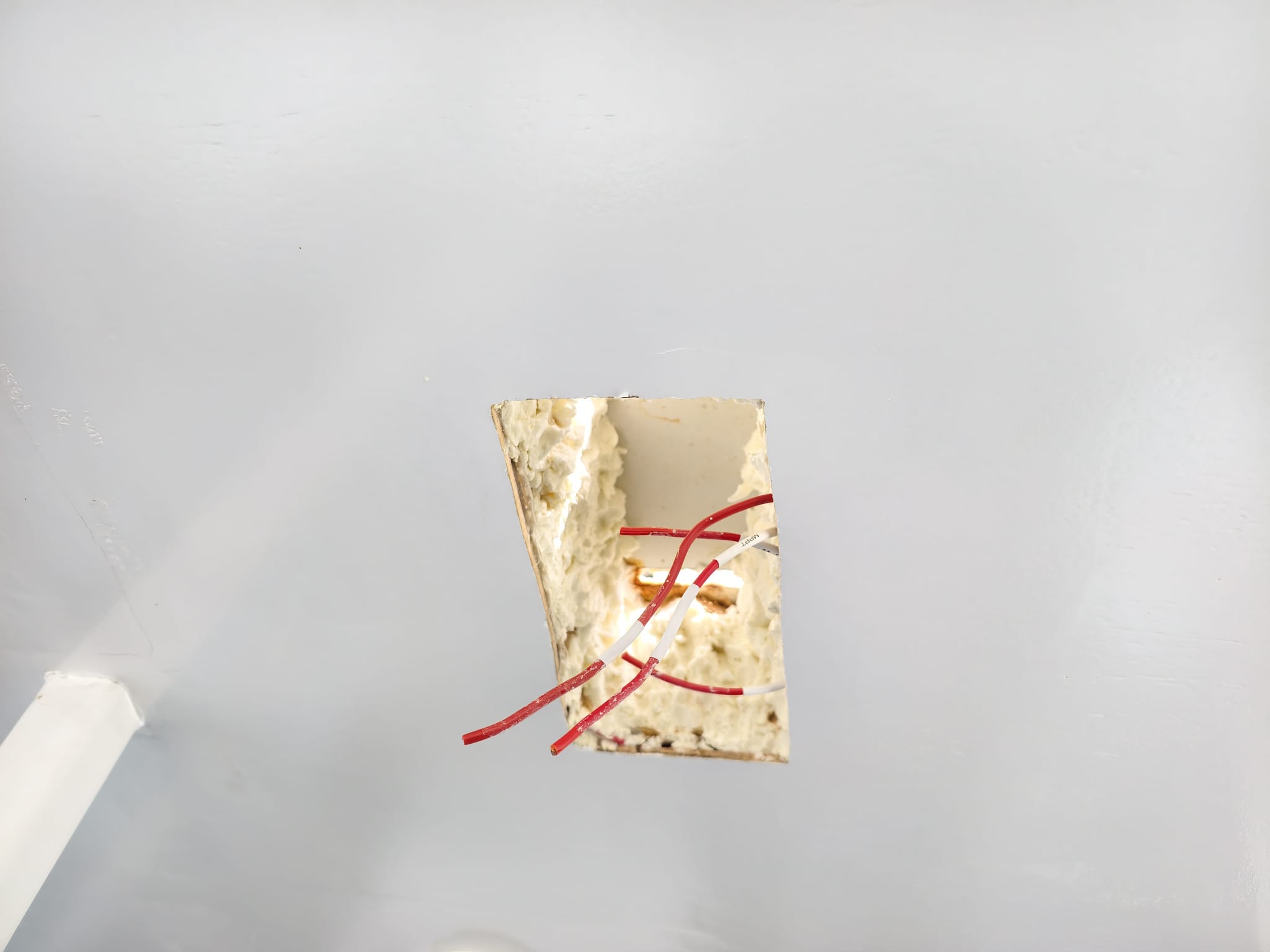
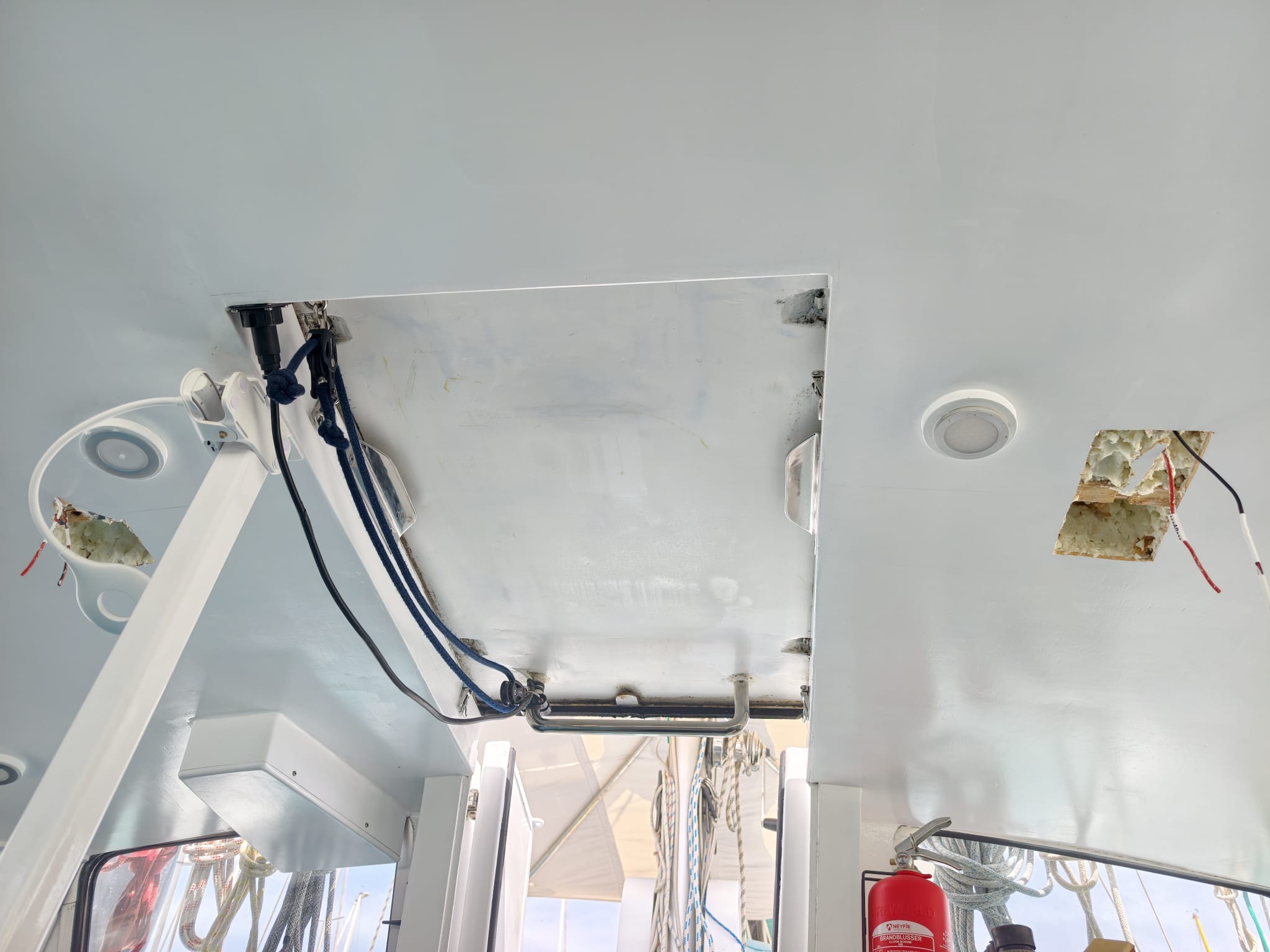
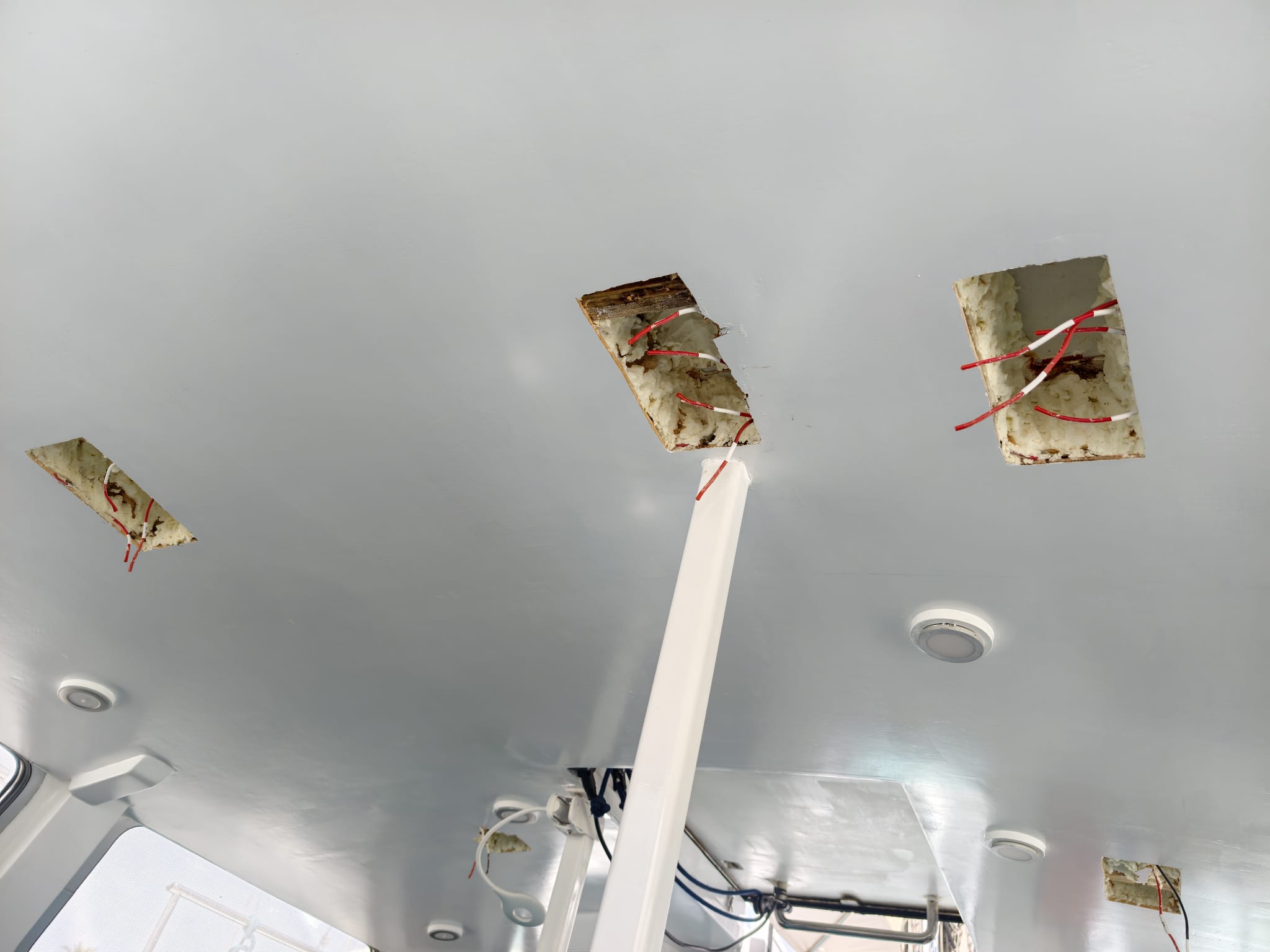
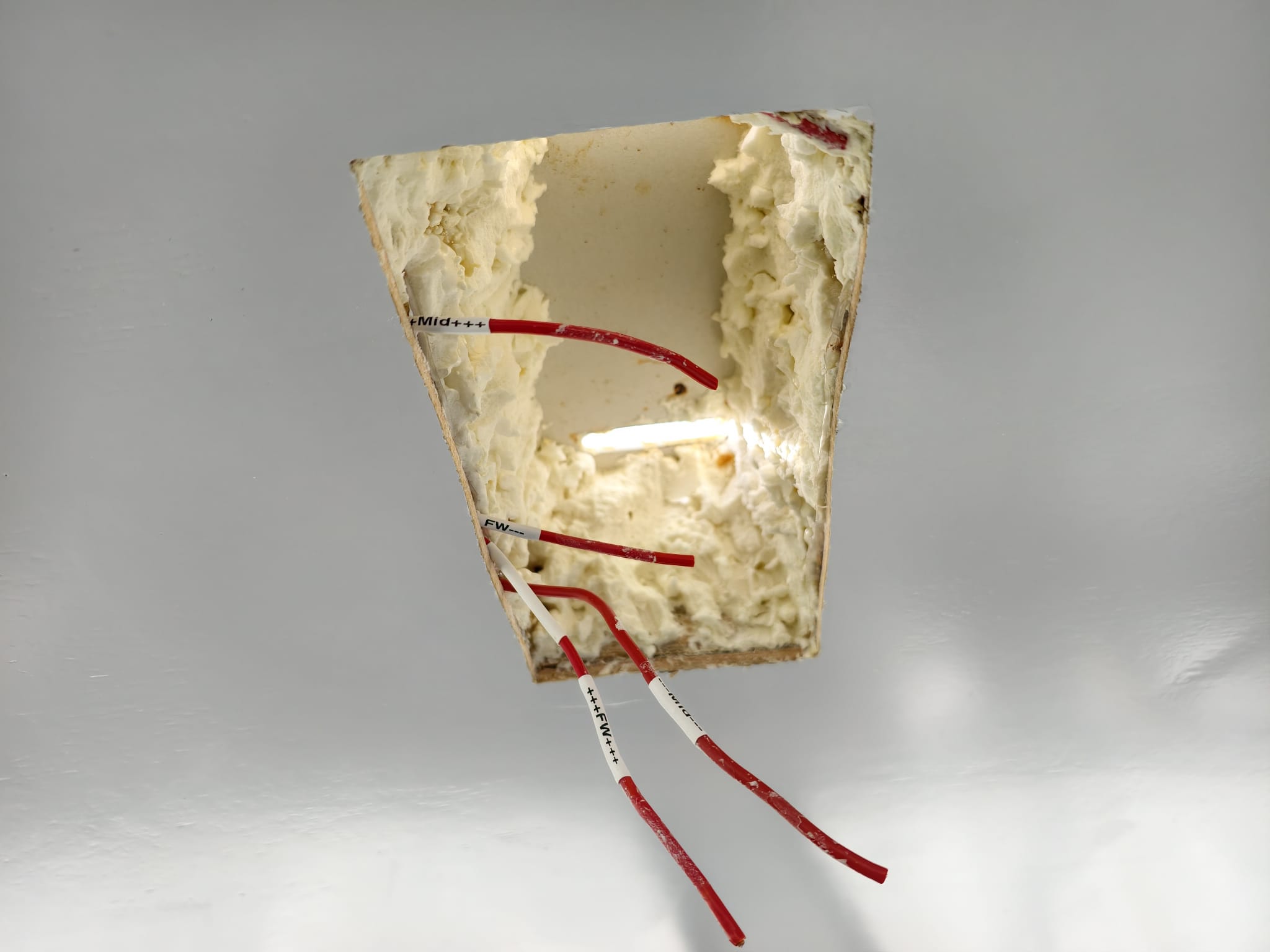
Creating a terrible mess…
Then we position all panels on the roof and check how the connections fit the holes.
Well, it needs some shifting but it’s all within the tolerances.
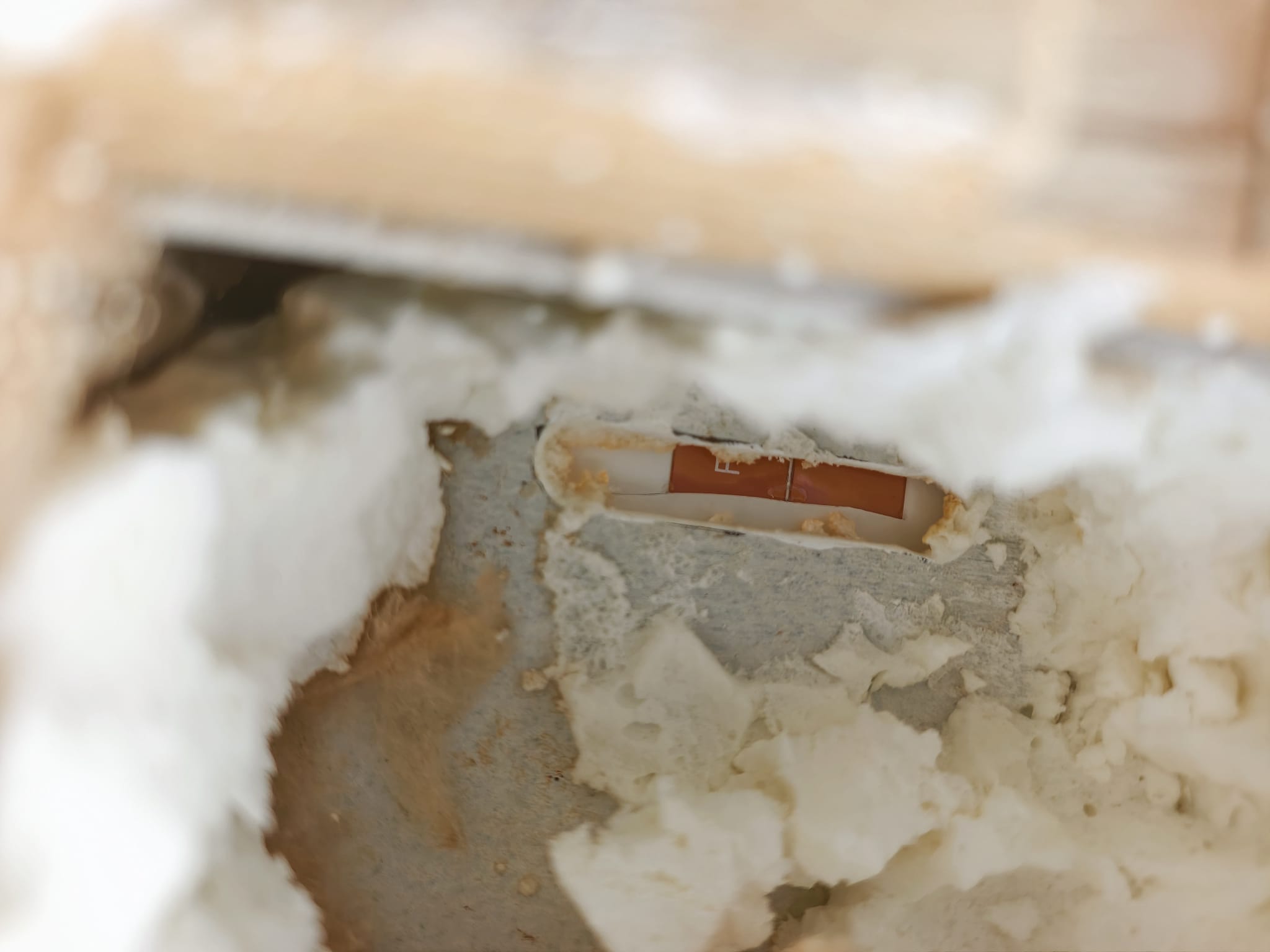
This it how the connections should fit the holes.
June 20.
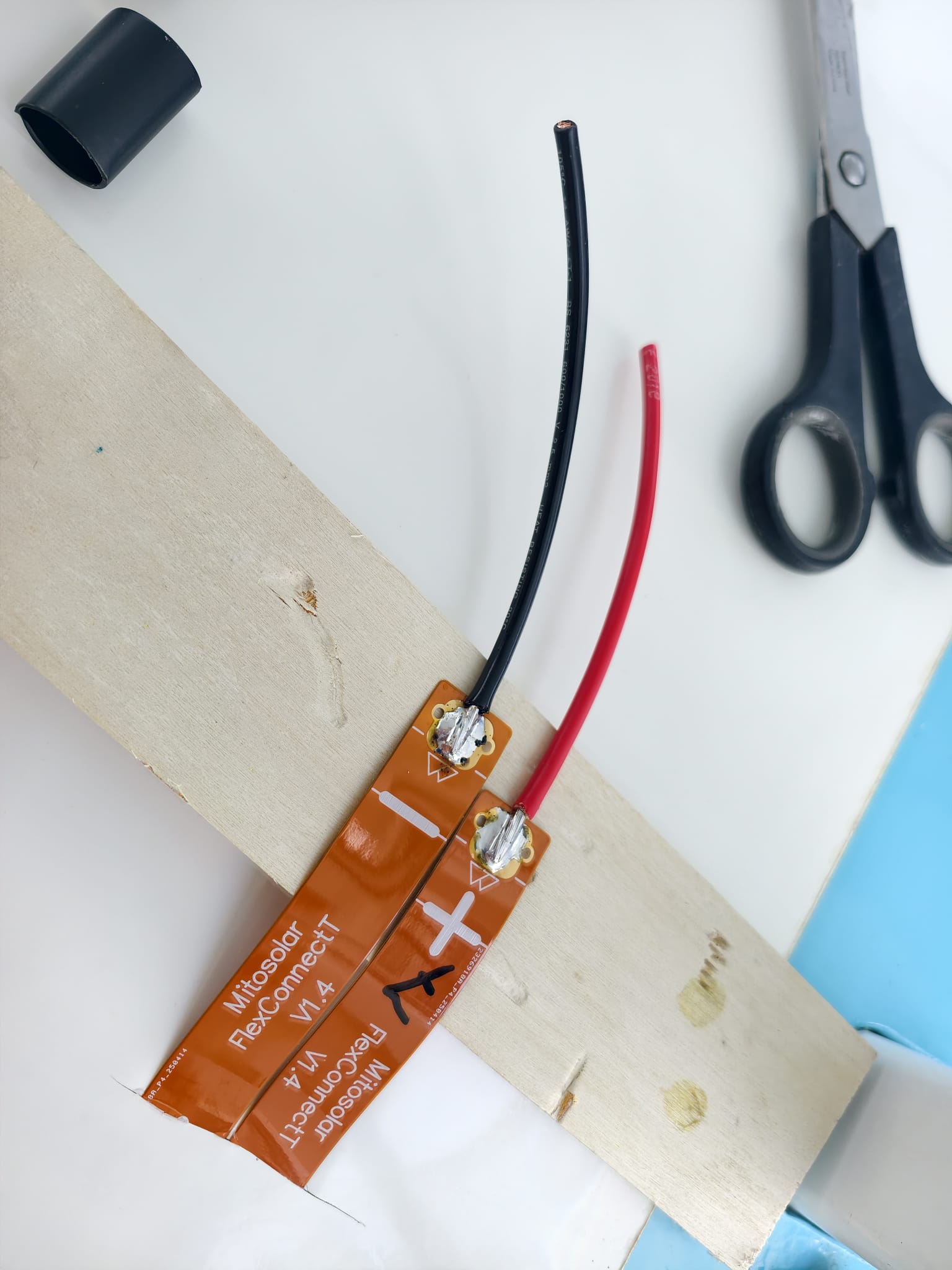
Wim solders short wires to the connections of the solar panels. They will connect with Wago connectors to the wires in ceiling. Soldering wires to the FlexConnects once the panels are mounted on the roof is a difficult job. It’s much easier and more reliable to do it now, with the solar panel on the table.
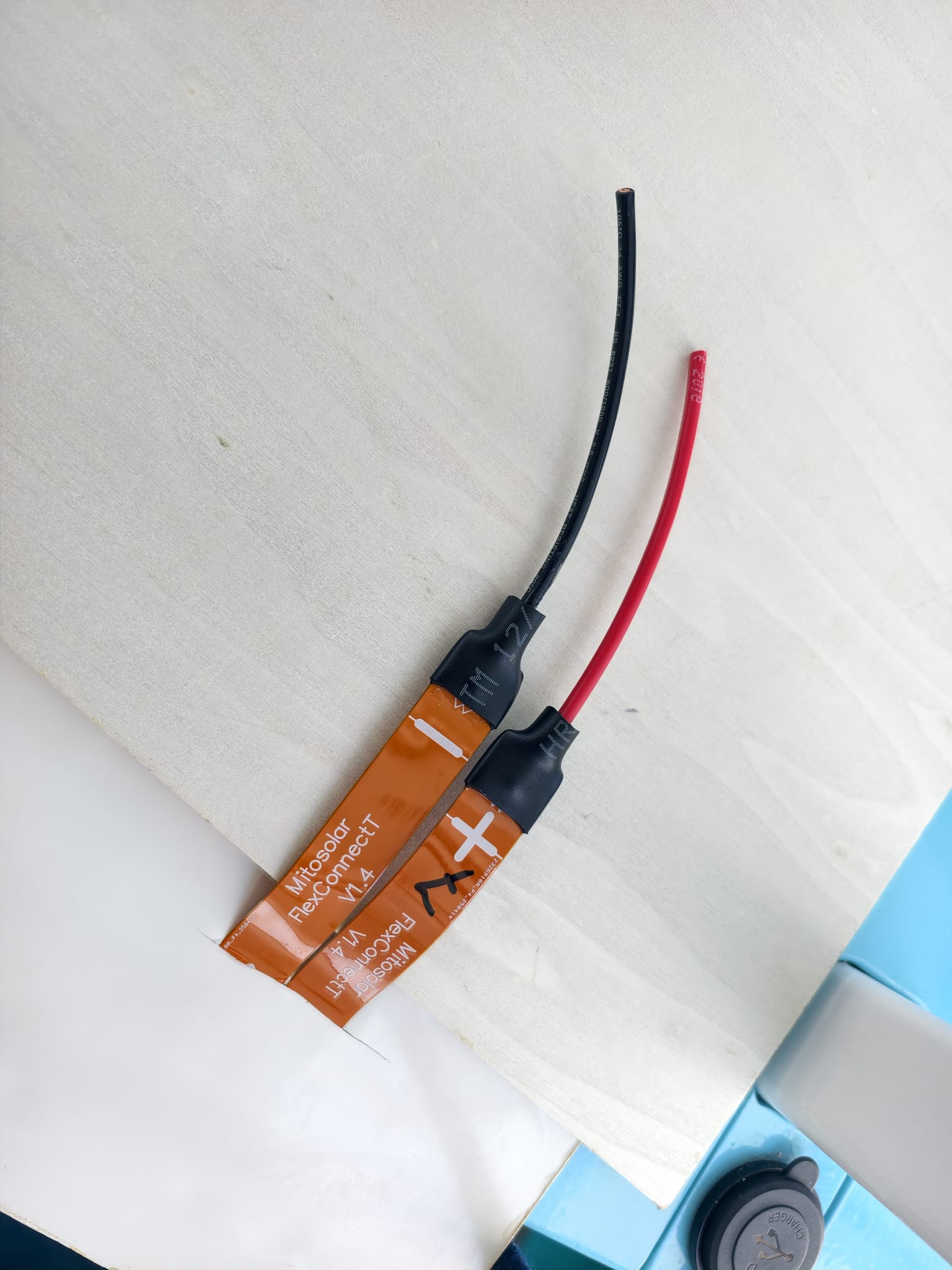
After soldering, the connections are insulated with heat shrink tube. This one shrinks by a factor 4 so it fits the FlexConnect and the 2,5㎟ wire.
We’ve bought the new sail sheets for the Yankee and Sher makes the whippings at each end.
That looks great!
June 21.
Installing the new sail sheets.
June 23.
This morning, there’s no wind so Wim climbs up the main mast (while Sher is securing him with the main halyard at the safety harness) and takes down the wind set.
We elaborate the process here for future reference. It’s a lot of “things to know”.
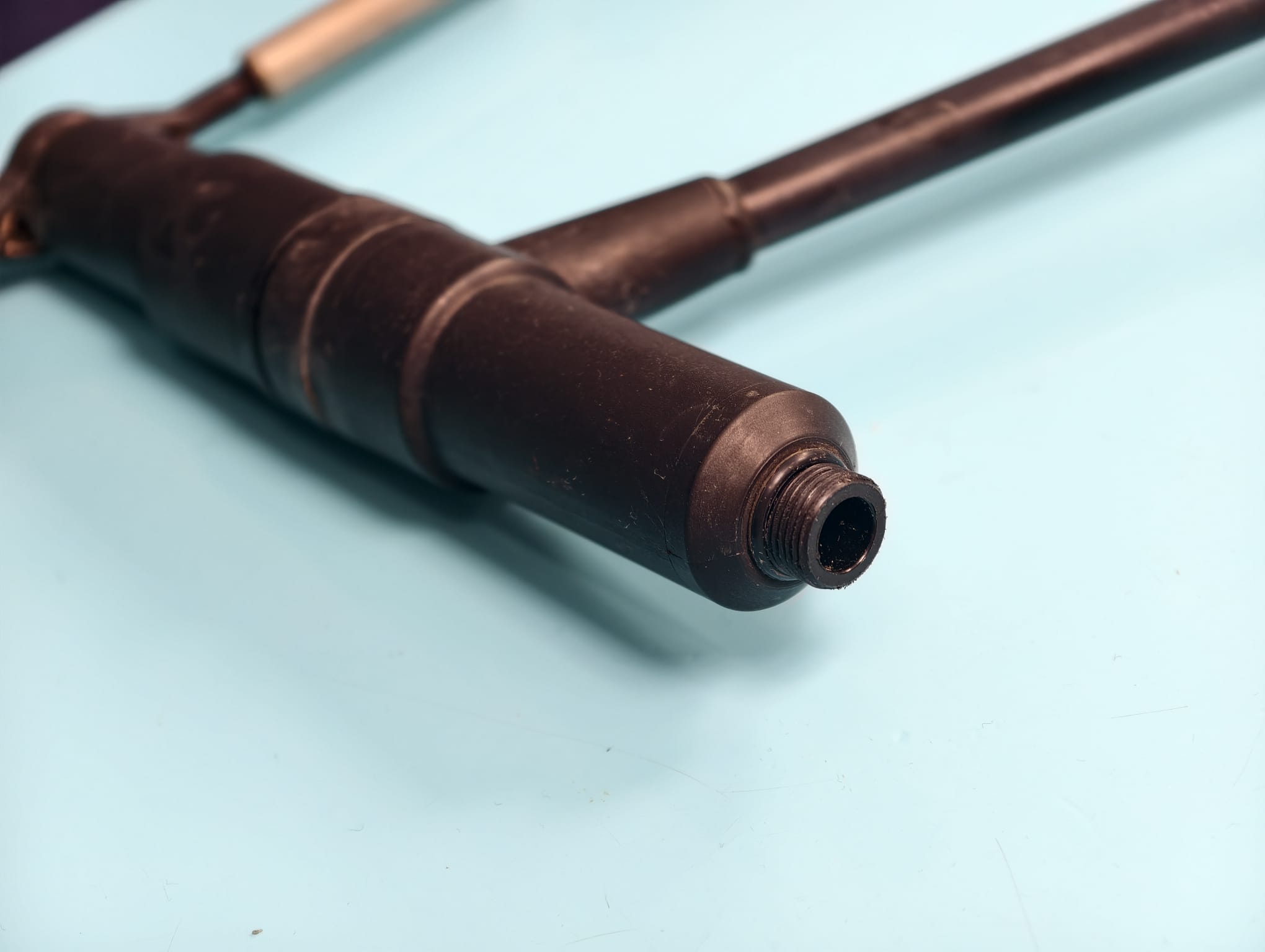
The little part with the bearings can easily be screwed off. It is sealed with a rubber o-ring and luckily there’s no corrosion (they are aluminum parts).
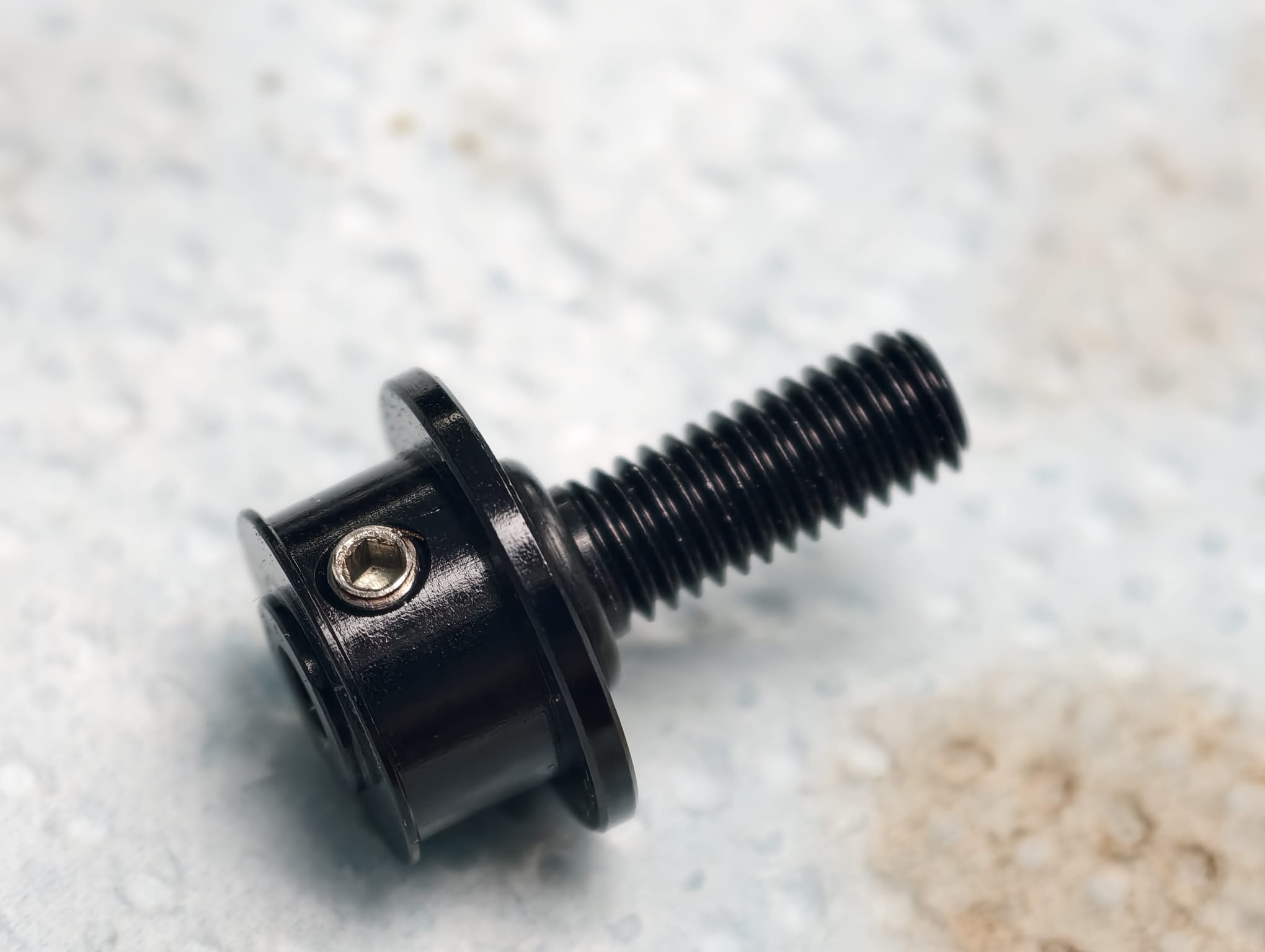
The screw (Allan key 1,5mm) that fixes the outer part to the little shaft is stuck. It needs to be soaked with WD40 for a while.
Then, the shaft can be pulled out.
The outer bearing is very rusty and completely blocked.
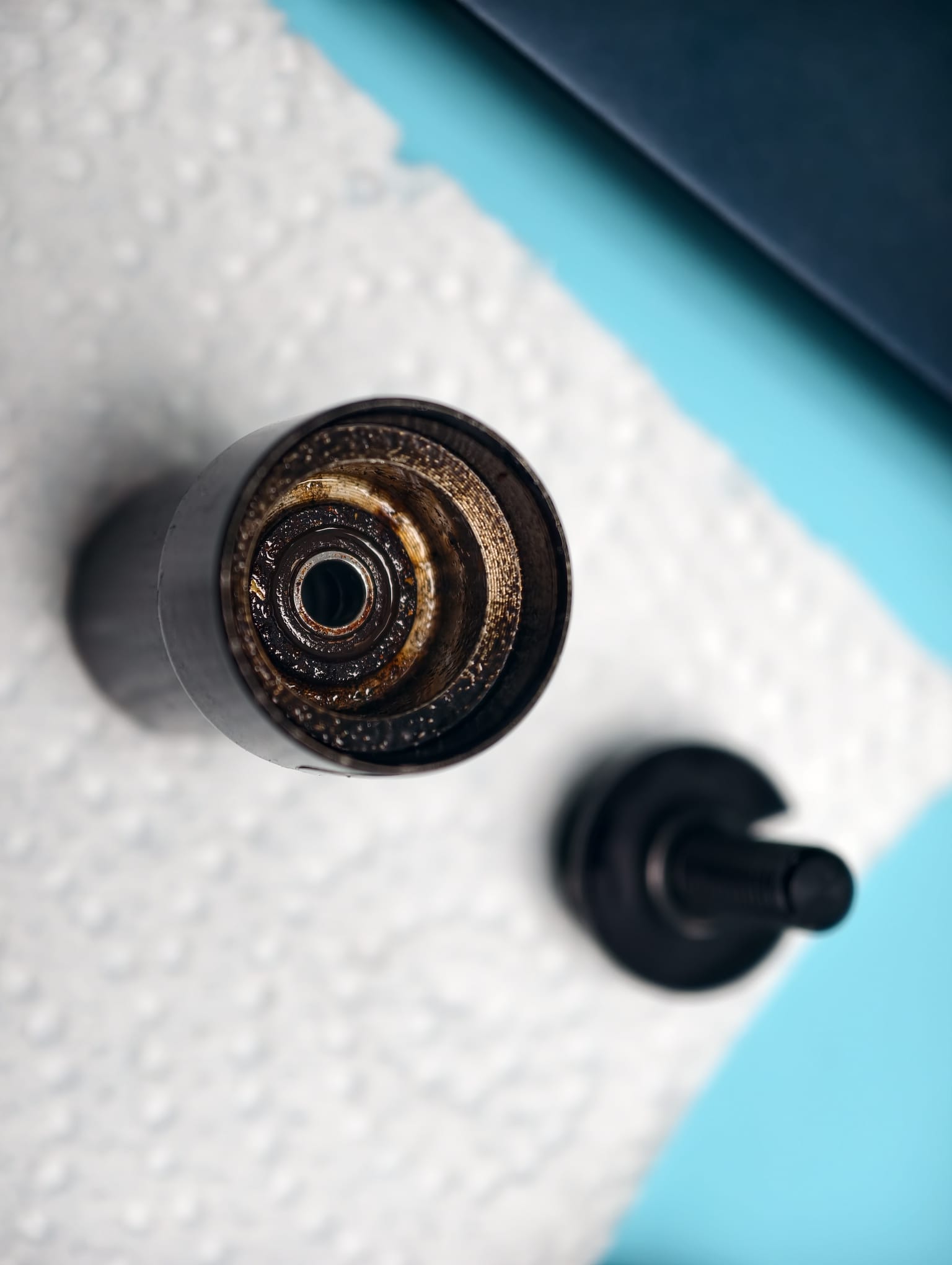
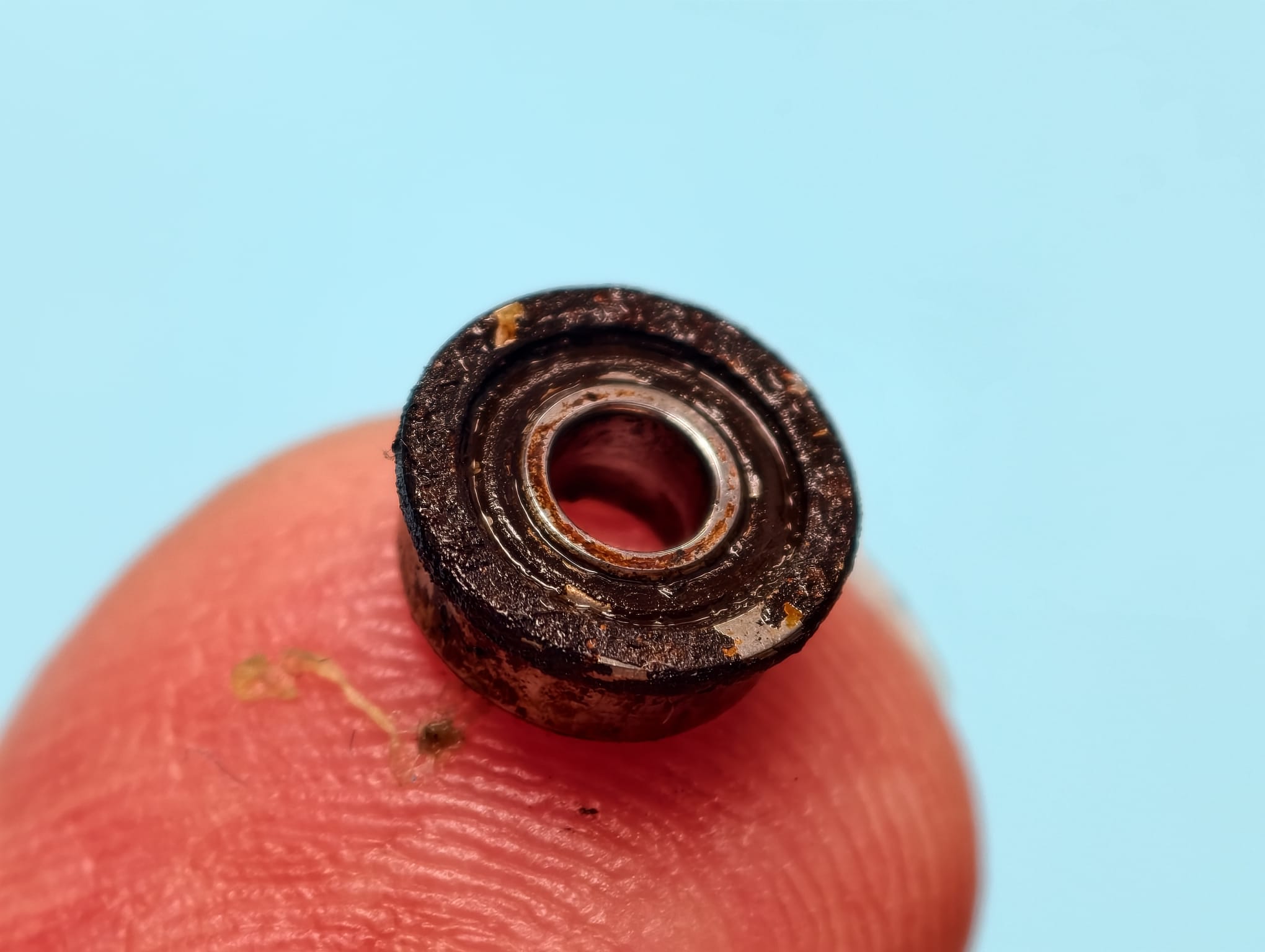
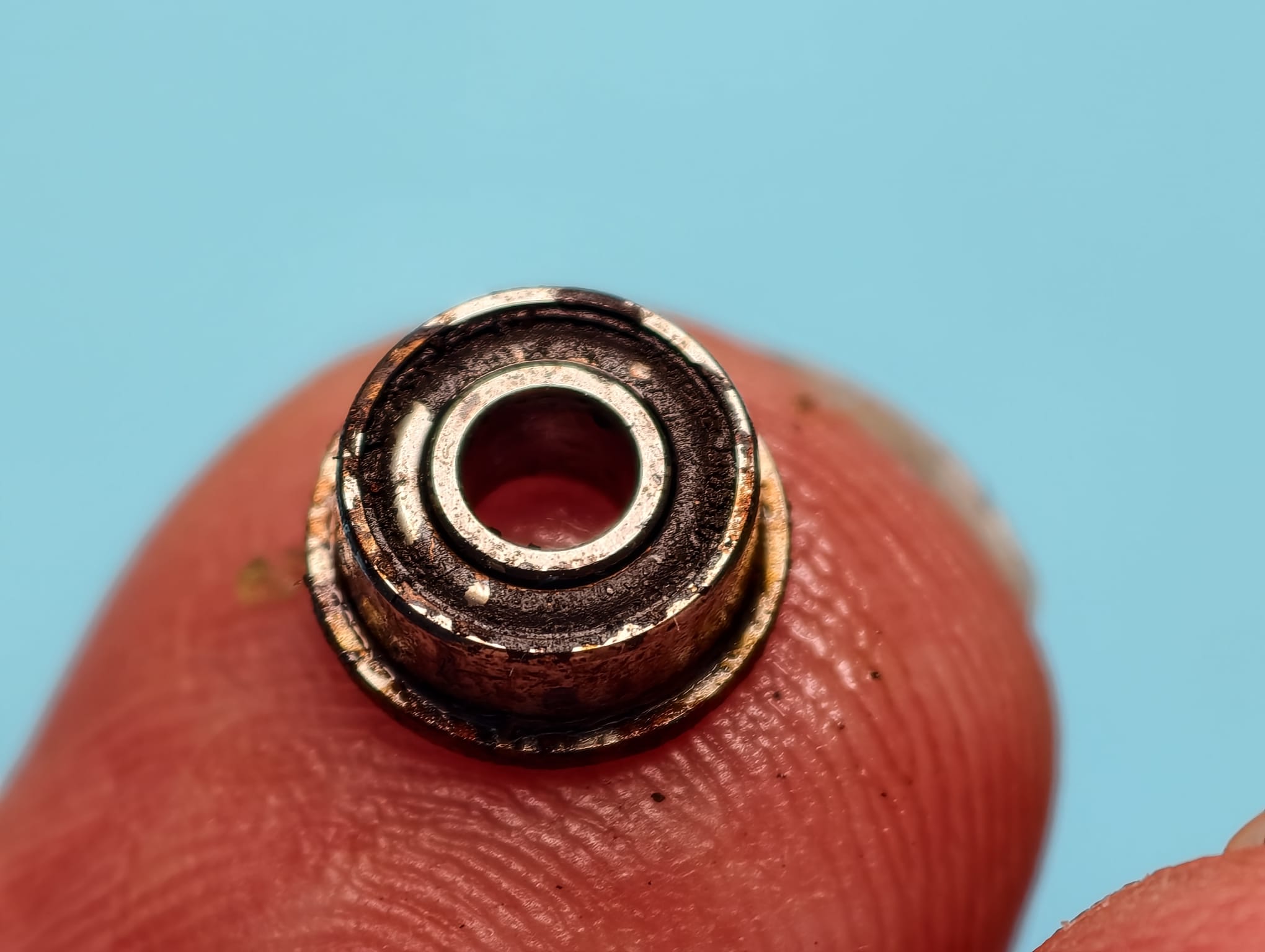
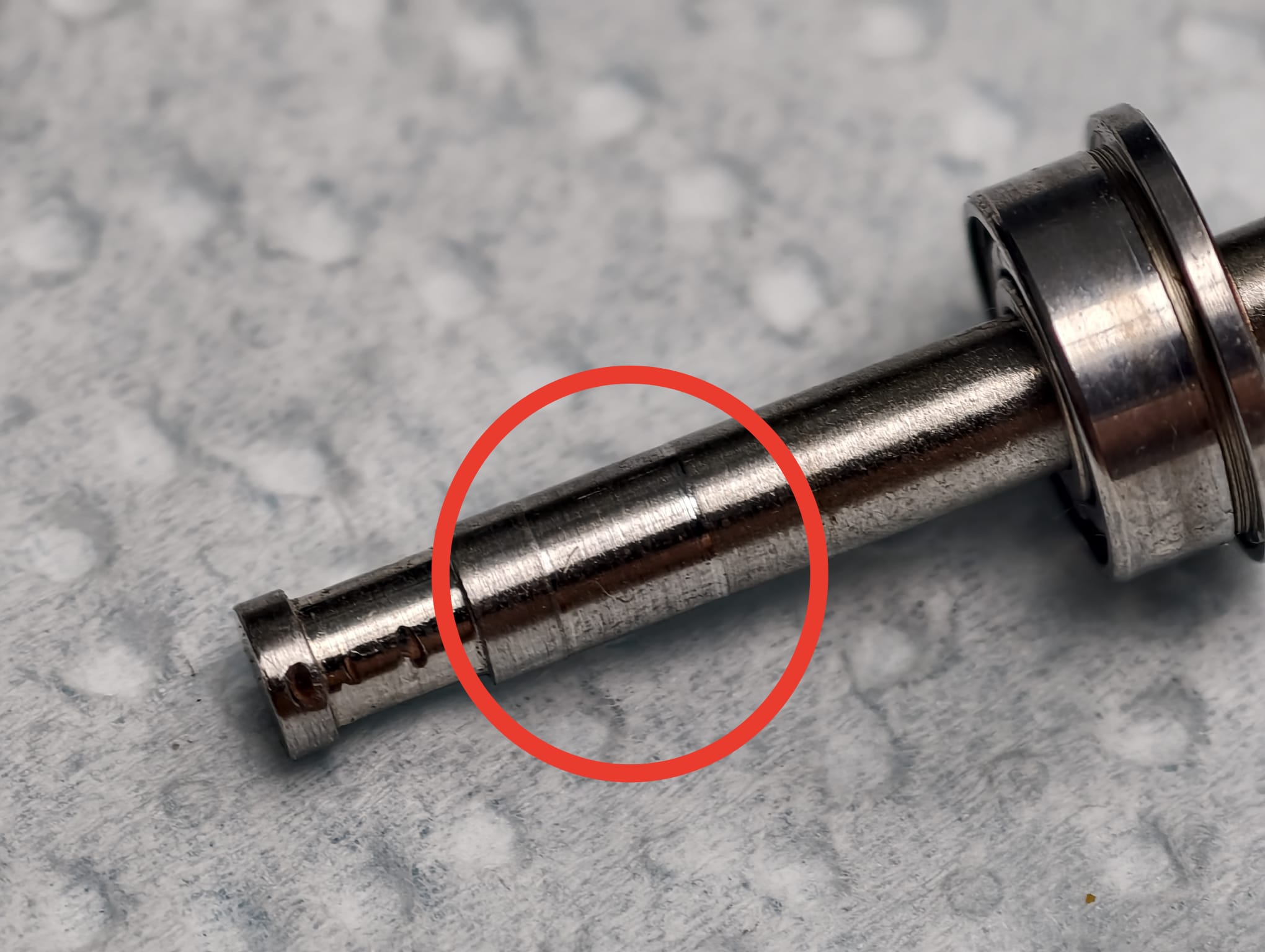
The shaft has been running inside the blocked bearing so it has some wear.
This was the reason the anemometer was still running but it had too much resistance. Resulting in a way too low wind speed number on the display.
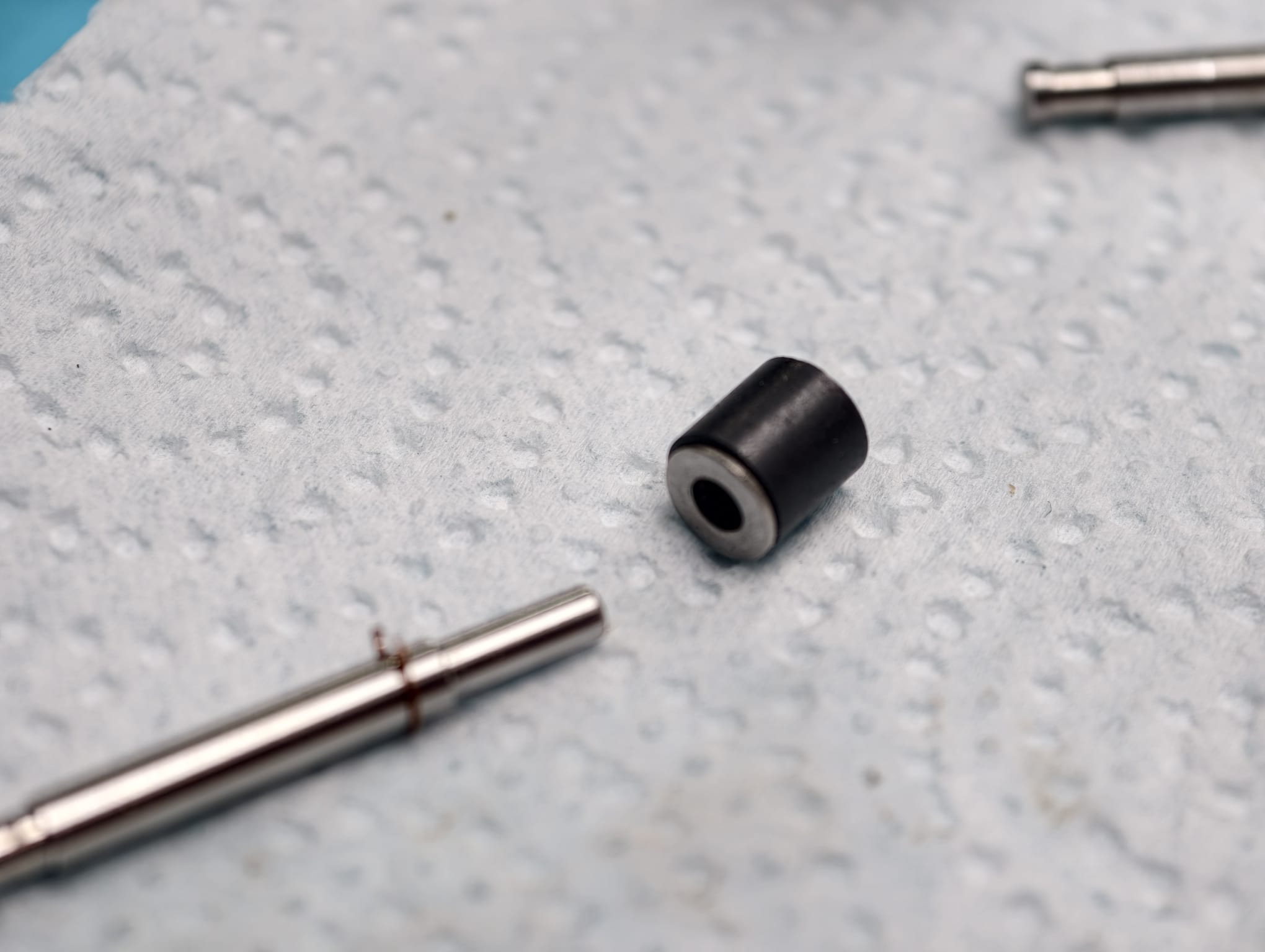
There’s a little magnet at the inner part of the shaft. The new part we got from France has no magnet! Bummer. It seems to be glued to the shaft. Wim heats it with the flame of a lighter and it slides off!
Then, glue the magnet to the new shaft.
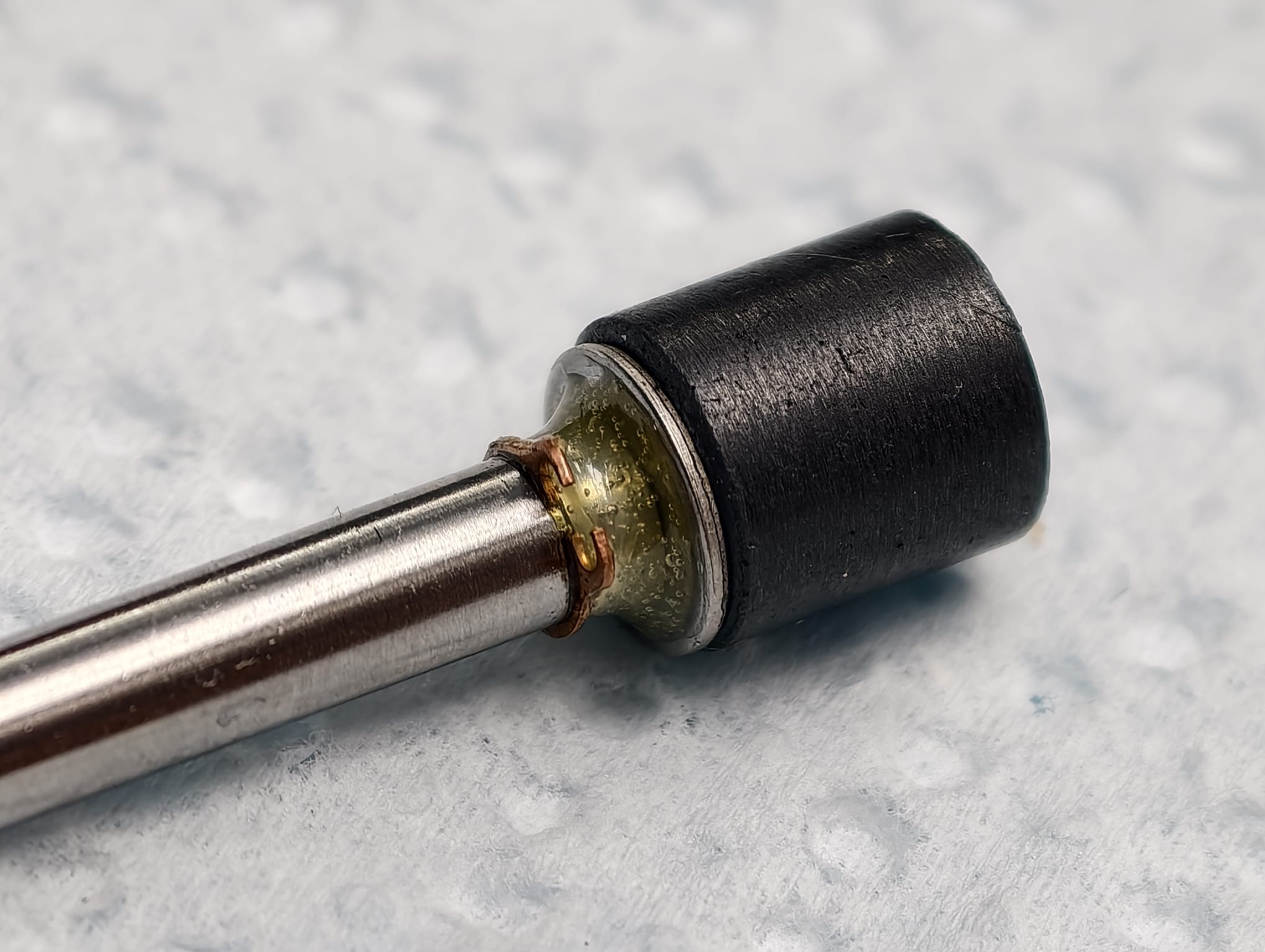
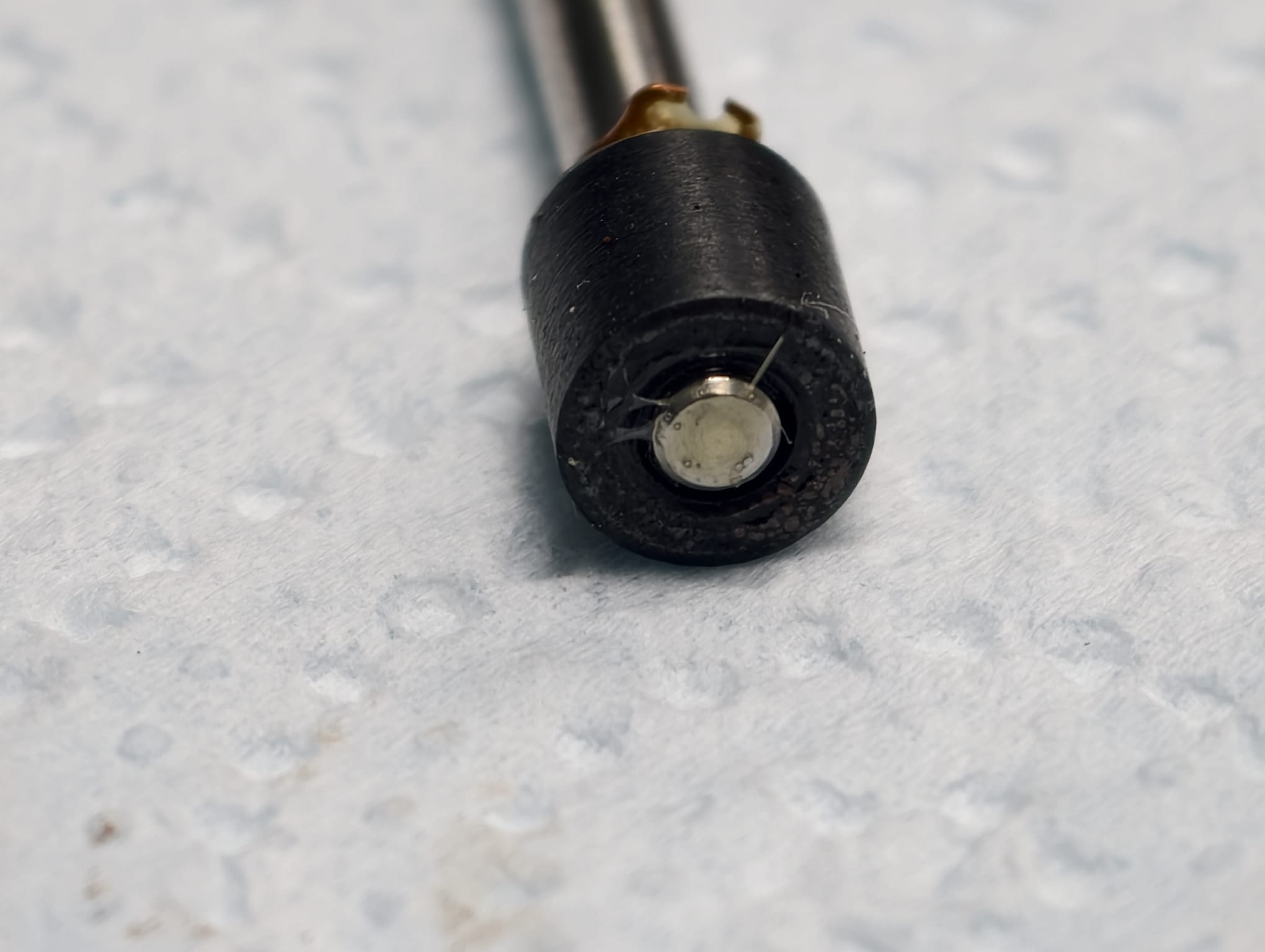
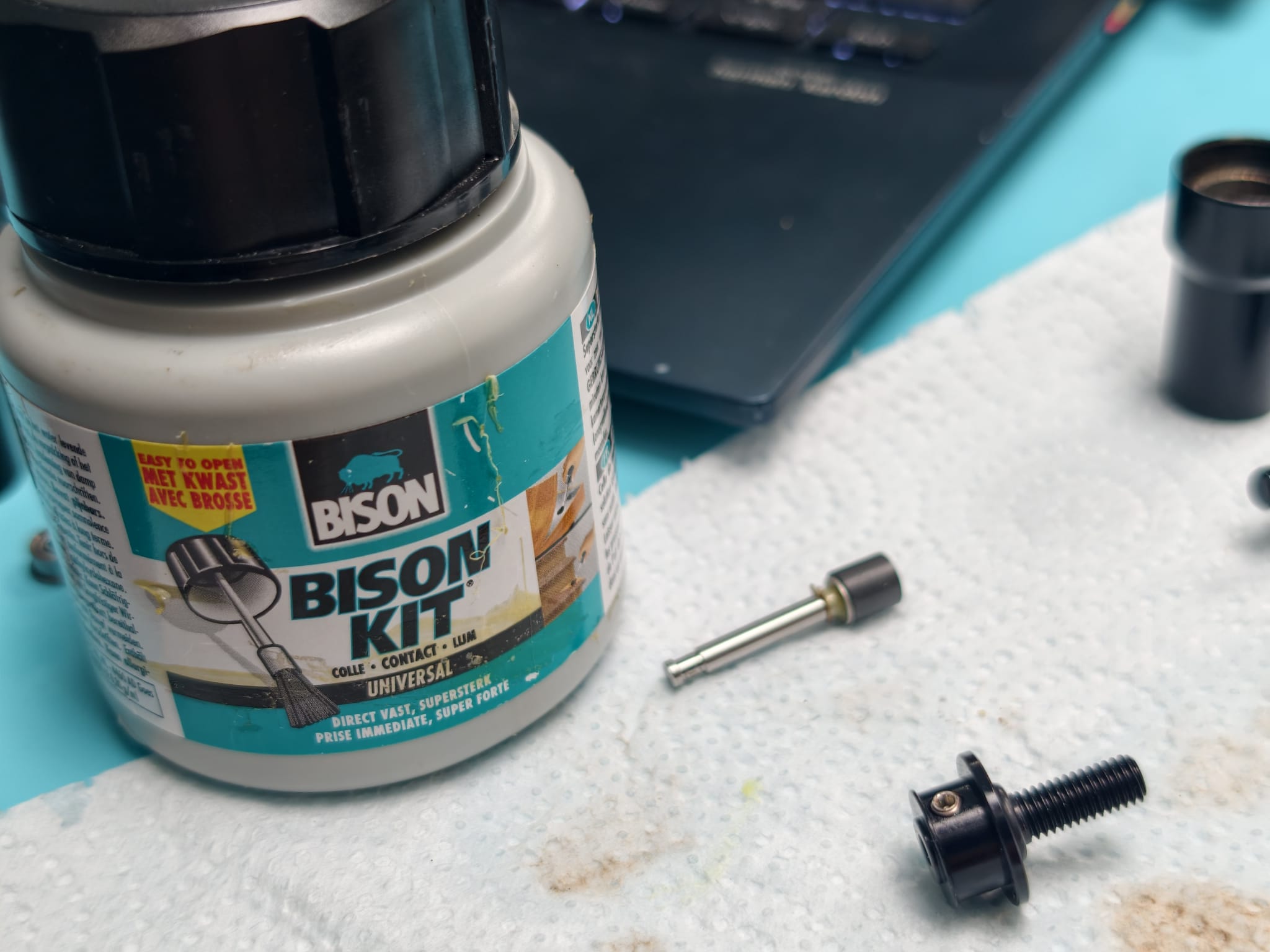
There are no forces on it so a drop of Bison Kit should be sufficient. Easier to disassemble next time…
Both little bearings are the same and the inner bearing is still in good shape so we have a spare one now!
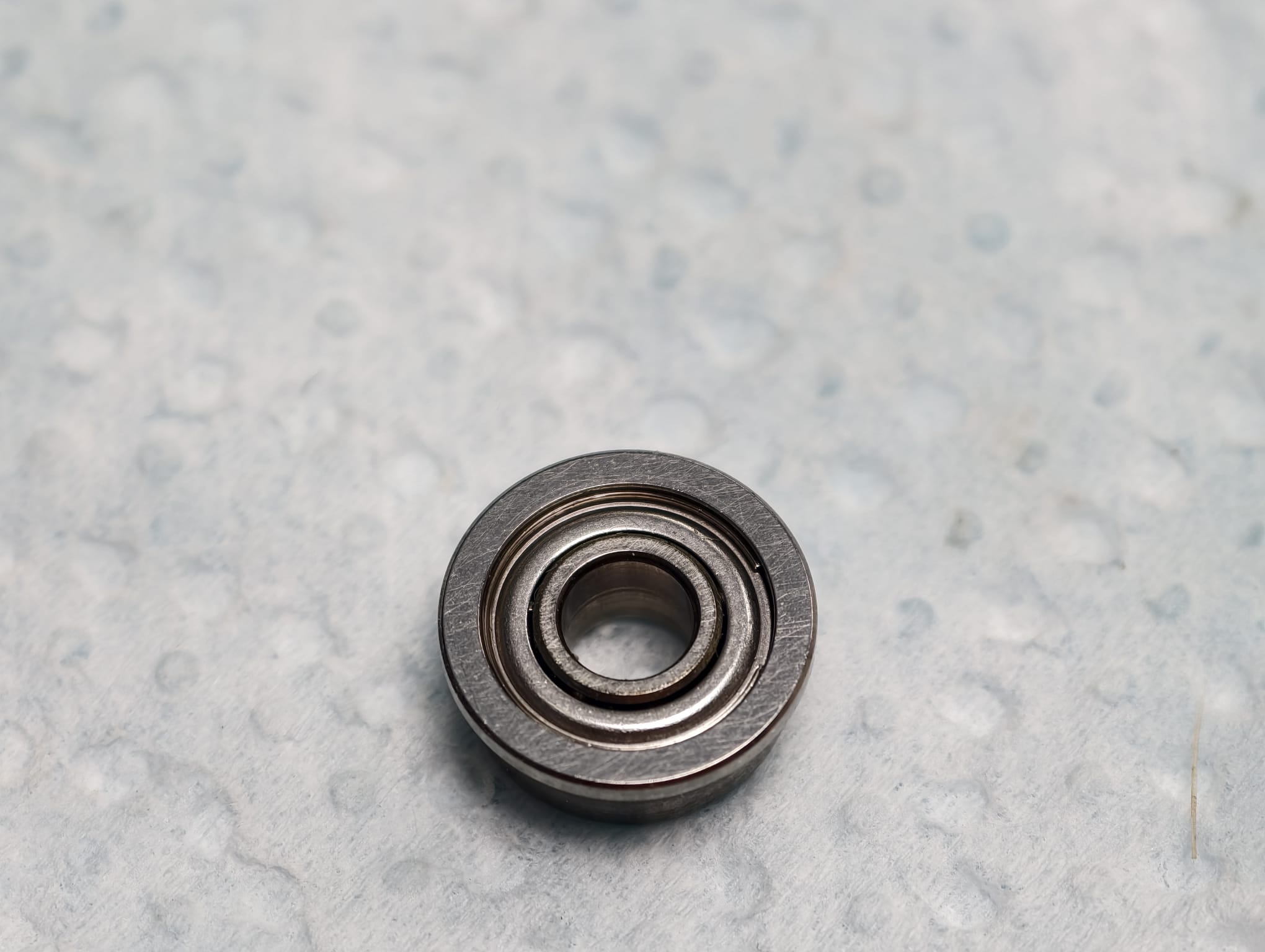
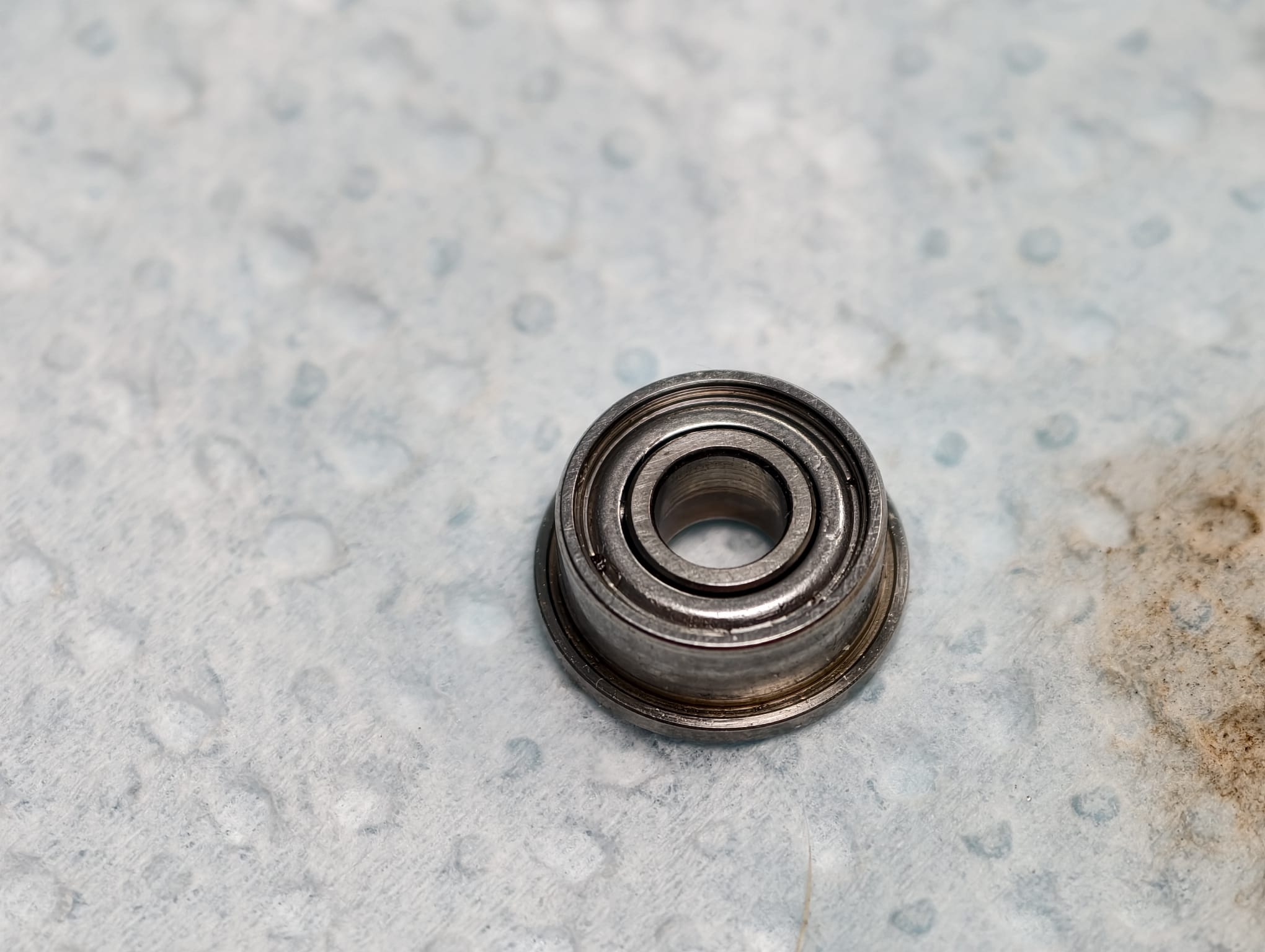
Assemble it with some Vaseline. Hopefully that will prevent it from getting rusty… This wind set was replaced in 2019 so it survived 6 years.
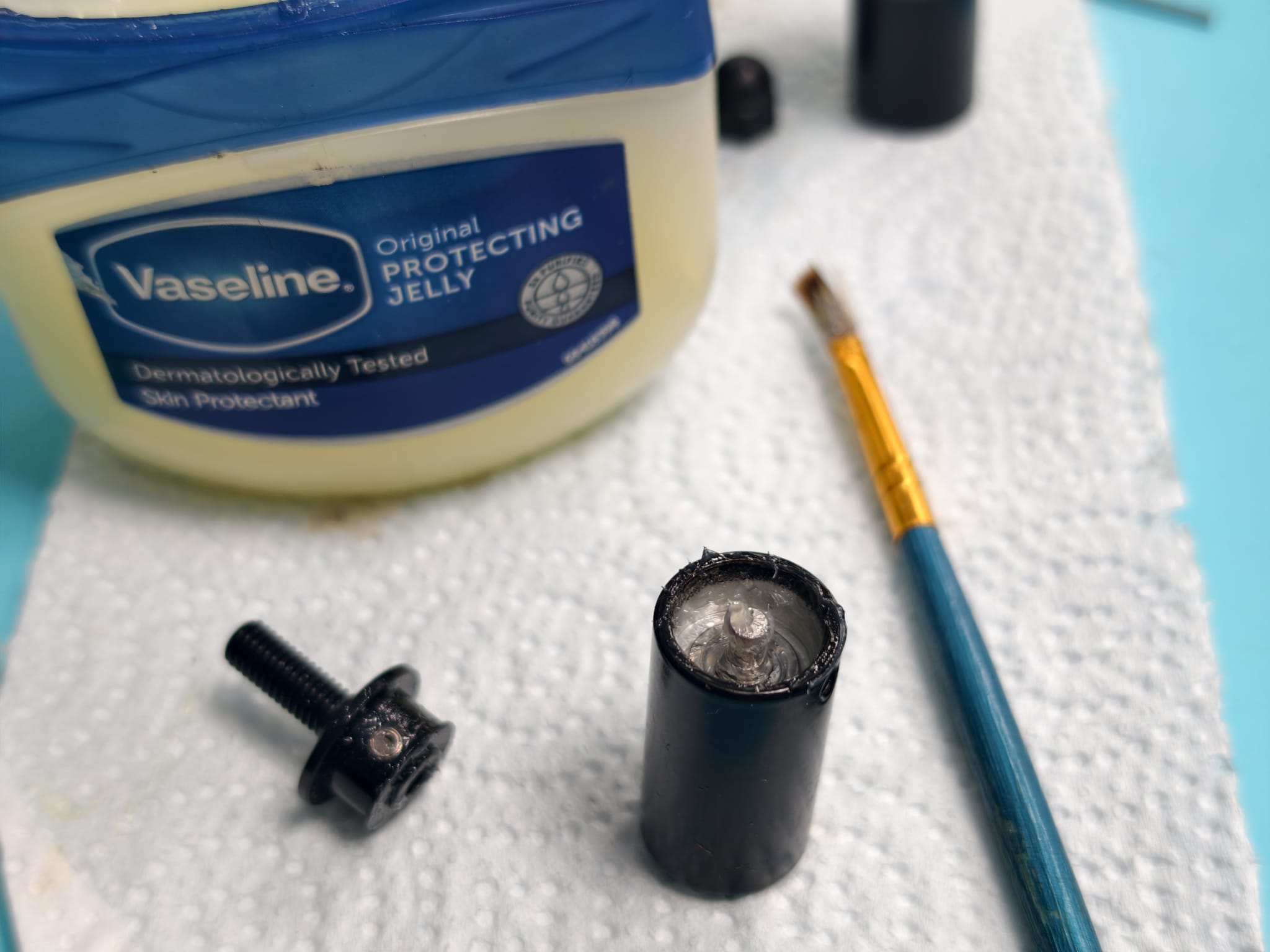
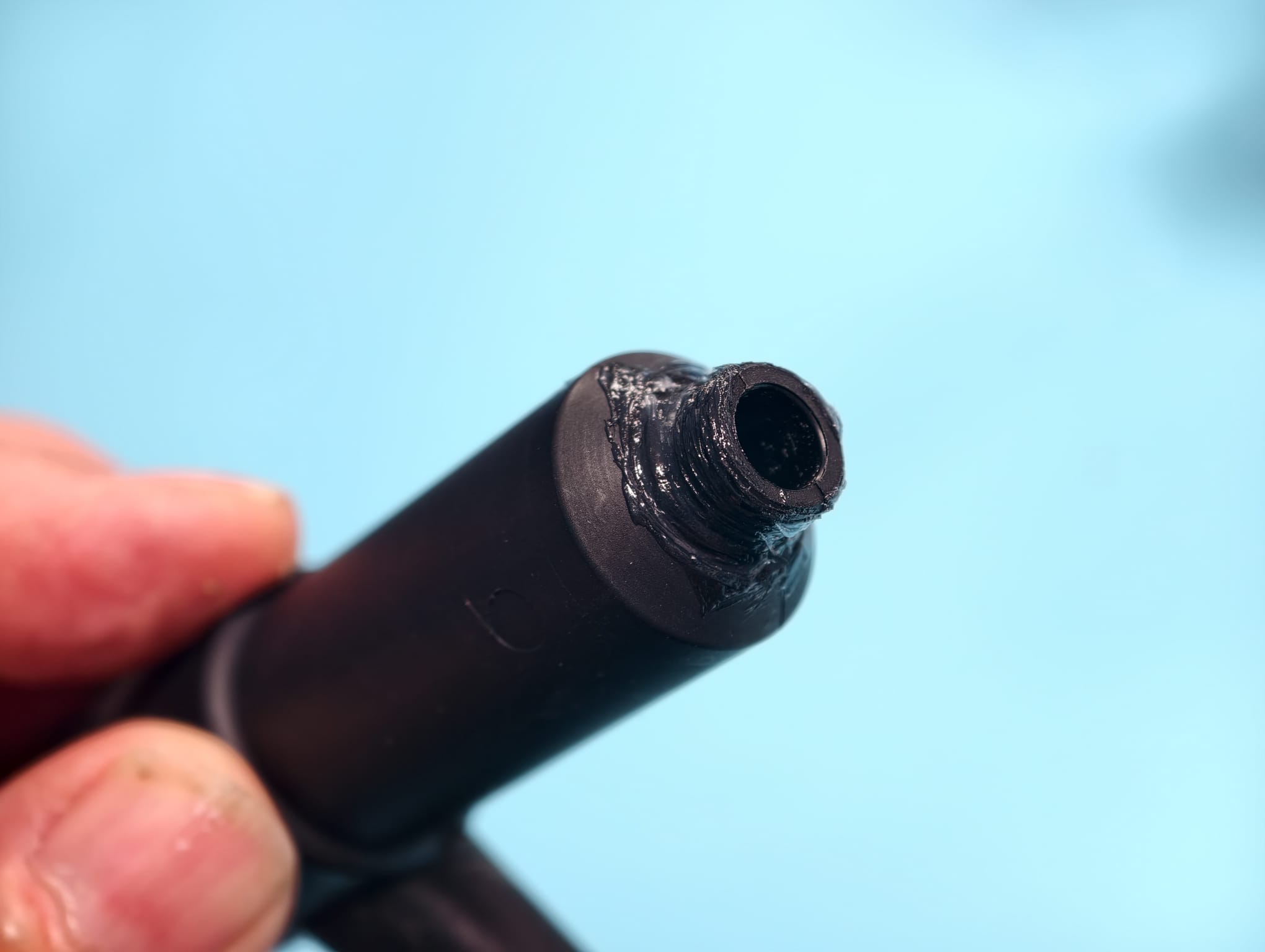
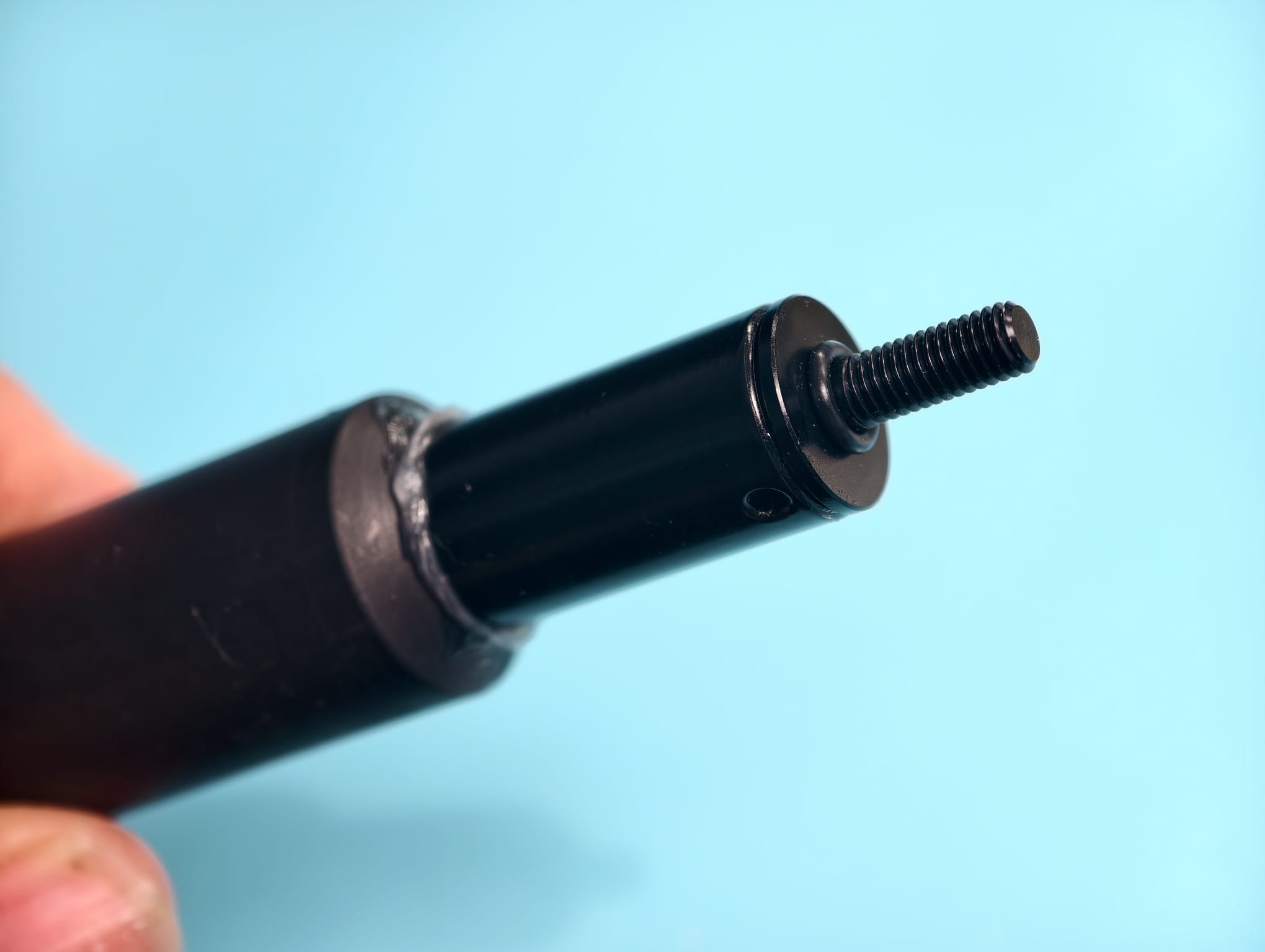
Put the rotor back on and test it.
It runs very smooth.
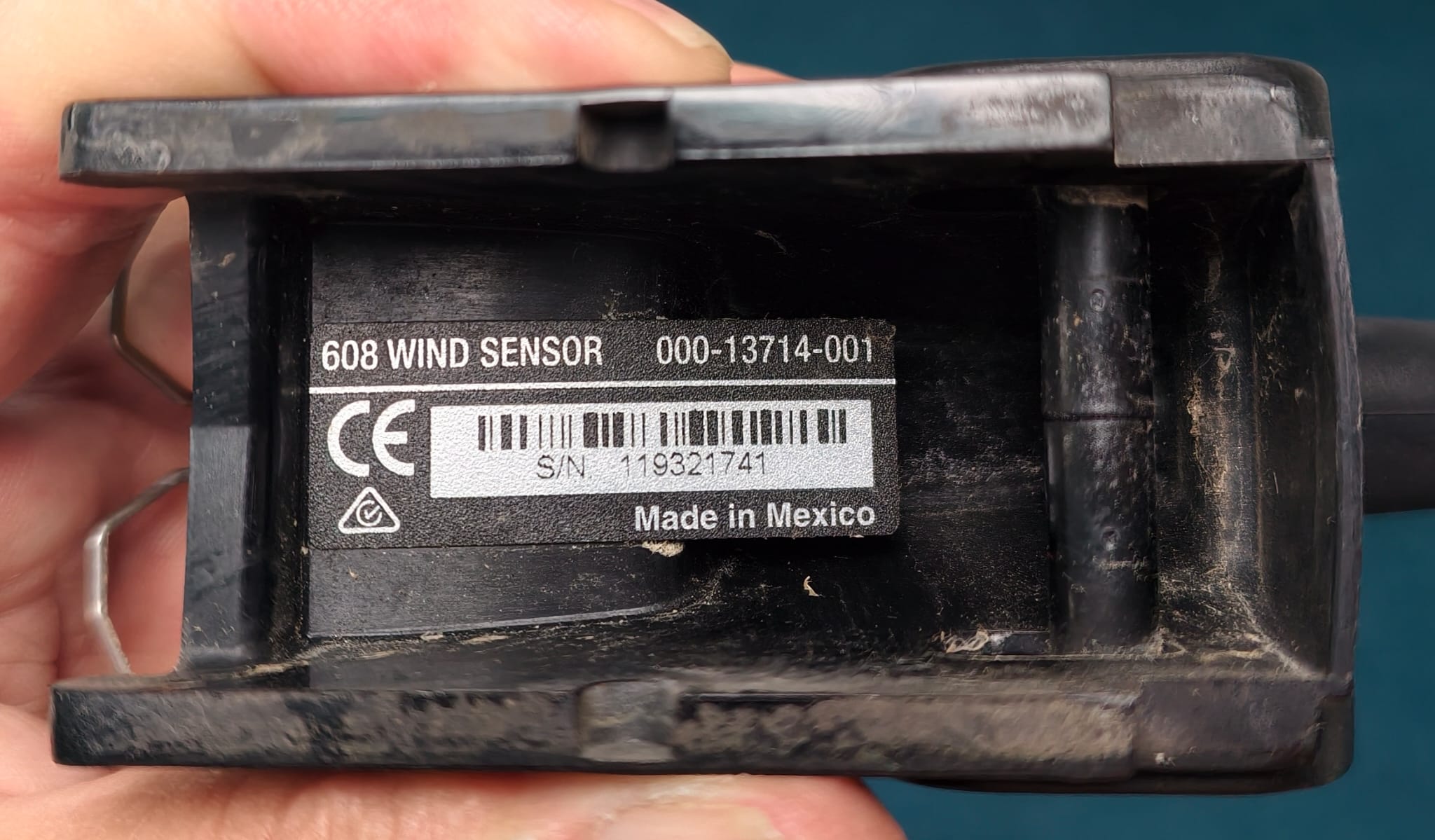
Equipment data for future reference.
June 24.
Wim has a habit of inspecting the main diesel tanks once a year. But we’ve skipped this last year. So, let’s do it now. The inspection concerns manually pumping out some diesel from the from the bottom of each tank to check it there’s no water. Although Dione IV has a very good filtering and water separating system before the diesel gets pumped into the day tank, we want to avoid water in the main tanks because of the chance of bacteria growth.
To reach the inspection lids of the diesel tanks, we have to remove the decksalon floor and the middle water tank.
We drain the water tank completely, Wim opens the inspection lids and sucks out the remaining water with the wet vac. The wet vac contains 20L of water and it’s filled twice. So, about 40L of water remains in the tank after the fresh water pump starts to suck air. We should remember this in an emergency in case we think we ran out of water… We still have 120L (3 tanks) after the pump stops draining. It will be hard to get out but when we’re dying of thirst every thing is possible…
While Sher hoists the tank with the main halyard she’s laughing about the foot prints! Wim’s former cat walked over the wet paint…😅
Here we can see the diesel level sensor devices and the 2 inspection lids. They are positioned at the deepest point of the tanks, that’s where water will go.
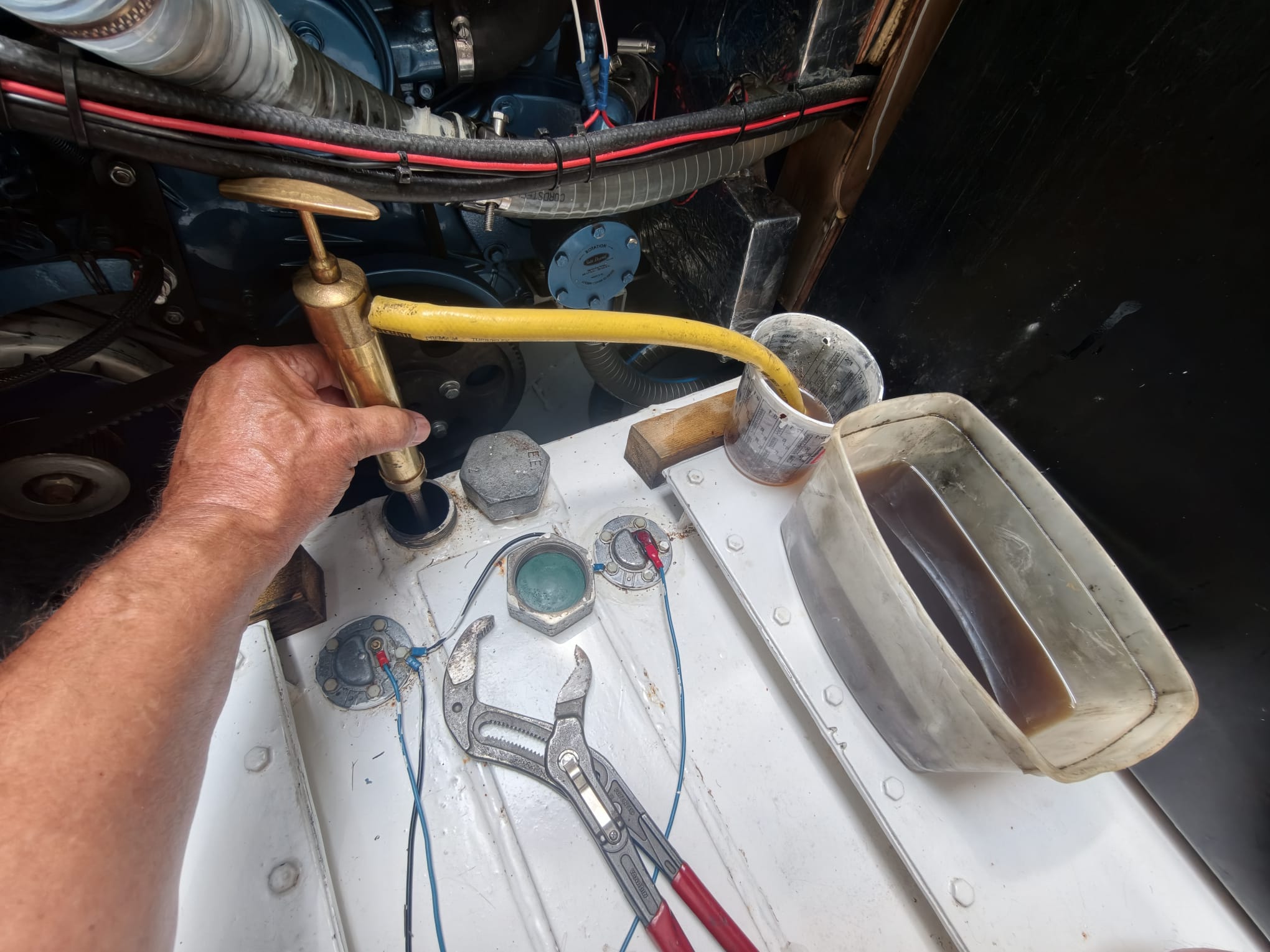
After opening the inspection lids, Wim manually pumps out some diesel using a 60cm long extension tube to reach the bottom of the tank.
There’s no water at all. Only some dirty diesel caused by sediments and rust. That’s fine. This kind of dirt is filtered out long before it reaches Mighty Mitsu. Anyway, Wim pumps out a few liters of dirty diesel until clean diesel comes out of the hand pump.
After that, Wim cleans everything, including the hard to reach bilge in front of the engine, we put back the middle water tank, the decksalon floor, the companion way stairs, the carpet, the heater. This took the entire day but it’s an important maintenance job.
All the joys of the cruising life and boat maintenance here in Cadiz continue in the next post: Cadiz – Part II…
Leave a Reply